
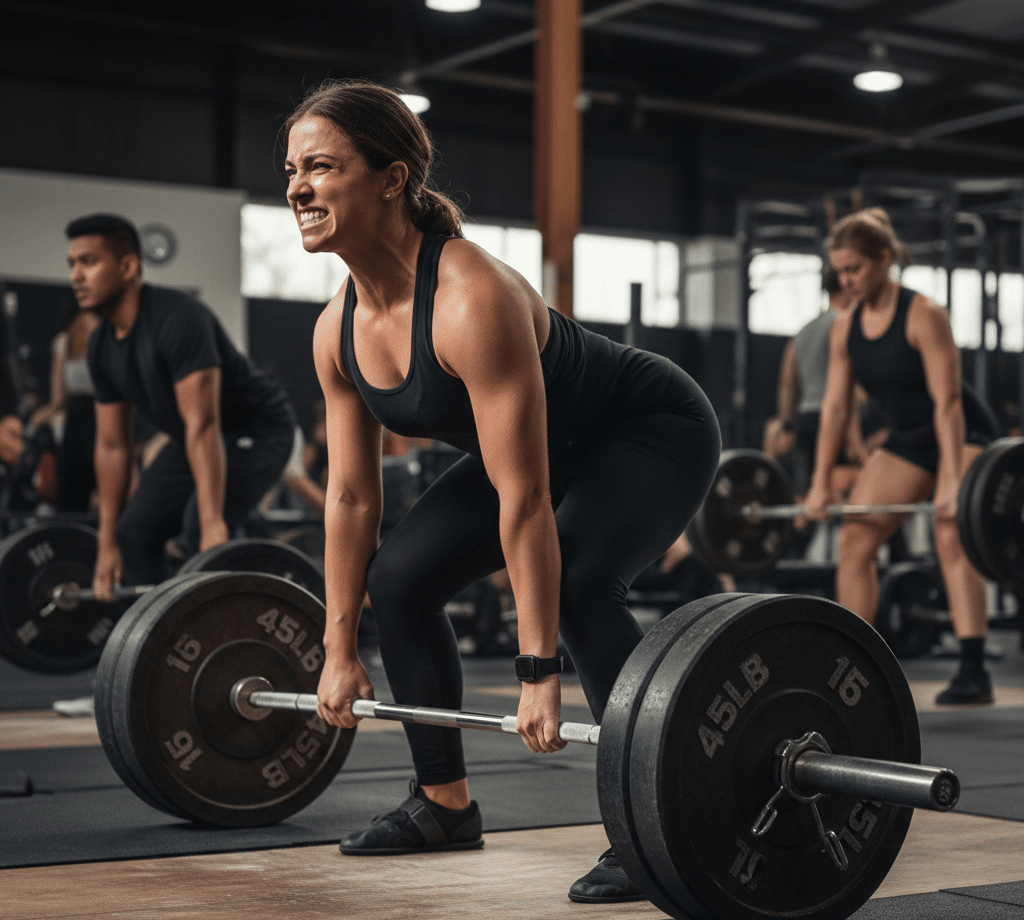



How long to rest between sets depends mostly on the exercise. Rest about 2 to 3 minutes after big lifts such as squats, deadlifts and bench presses, and about 1 to 2 minutes after smaller exercises such as curls and raises. For muscle growth, resting longer than about 60 to 90 seconds seems to add only a small extra benefit.
Many people I coach cut their rest short because they think a shorter break means a harder workout. Often it just means fewer good reps in the next set.
This guide gives you rest times by exercise type, and shows how to fit them into a 45 or 60 minute session. If you want the research on rest for each goal, such as strength, muscle growth, endurance and power, read our guide to optimizing rest between sets.
Why rest between sets matters
A hard set leaves your muscles tired. Rest lets them recover enough to lift well again. If you cut the rest too short, your reps tend to drop in the next set.
A review of rest interval research found that with moderate to heavy loads, resting 3 to 5 minutes let people complete more reps over several sets than shorter rests. More good reps across your sets means more total work for the same weight.
Research on muscle growth points the same way. In a 2024 meta-analysis of rest intervals, rests over 60 seconds gave a slightly larger gain in muscle size, but going past about 90 seconds made no clear difference. The authors think longer rest may help because it keeps your reps and weights up.
How long to rest between sets by exercise
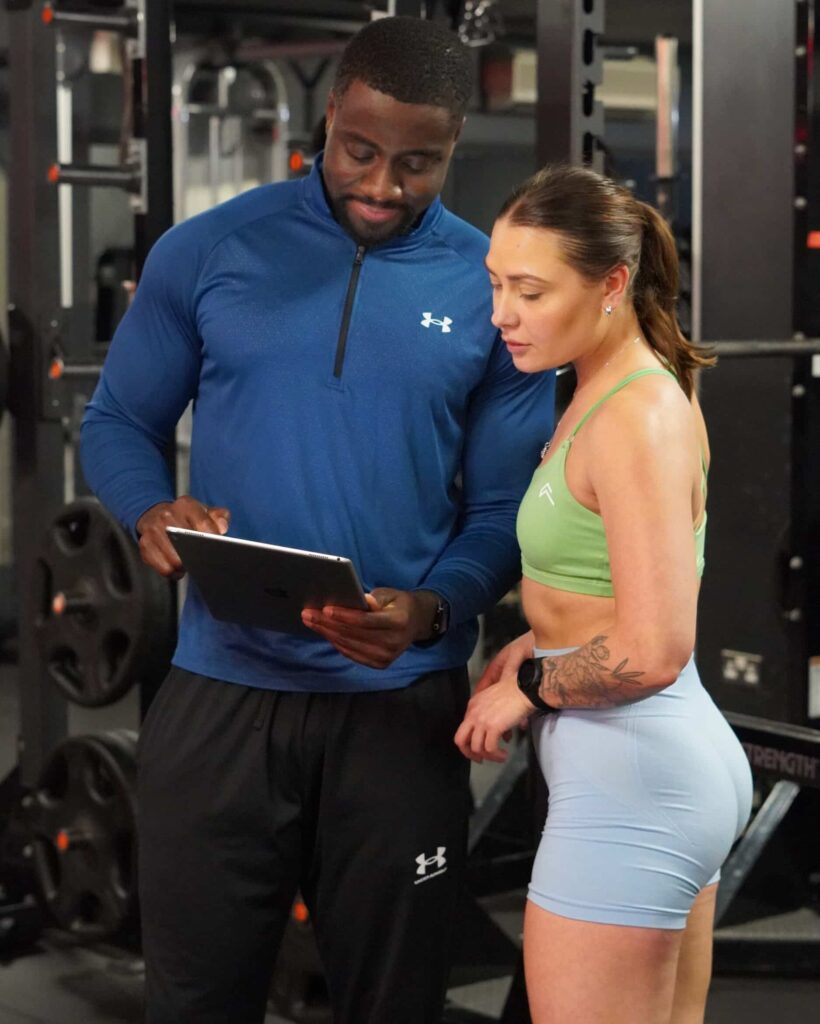
A 2021 review on making training take less time suggests shorter rest for small-muscle and single-joint exercises, and longer breaks for demanding multi-joint free-weight lifts. These are the ranges I use when I program sessions.
| Exercise type | Examples | Rest between sets |
|---|---|---|
| Heavy multi-joint free-weight lifts | Squat, deadlift, bench press, overhead press, barbell row | 2 to 3 minutes, up to 3 to 5 for very heavy sets of 1 to 5 reps |
| Other compound exercises and machines | Romanian deadlift, hip thrust, lunges, lat pulldown, leg press | About 2 minutes |
| Single-joint exercises | Biceps curl, triceps extension, lateral raise, leg curl, calf raise | 1 to 2 minutes |
| Bodyweight circuits and conditioning | Squats, push-ups and lunges done back to back | 30 to 60 seconds |
Treat these as starting points, not strict rules. The 2026 American College of Sports Medicine (ACSM) position stand compared rests shorter and longer than 1 minute. Across the reviews it looked at, rest length did not change strength gains. It found too little data to judge their effect on muscle growth.

Does rest time change with your goal?
A little, but the exercise you are doing matters more. Two points are worth knowing:
- Heavy strength work: the 2009 review found that resting 3 to 5 minutes gave greater strength gains with loads of 50 to 90% of your one-rep max. Your one-rep max is the most weight you can lift for one rep.
- Your experience: the 2021 review suggests newer lifters schedule 1 to 2 minutes of rest, and more experienced lifters 2 minutes or more.
For the research on rest for muscle growth, strength, endurance and power, see optimizing rest between sets, and our guide to strength vs hypertrophy training.
How to fit rest into a 45 or 60 minute workout
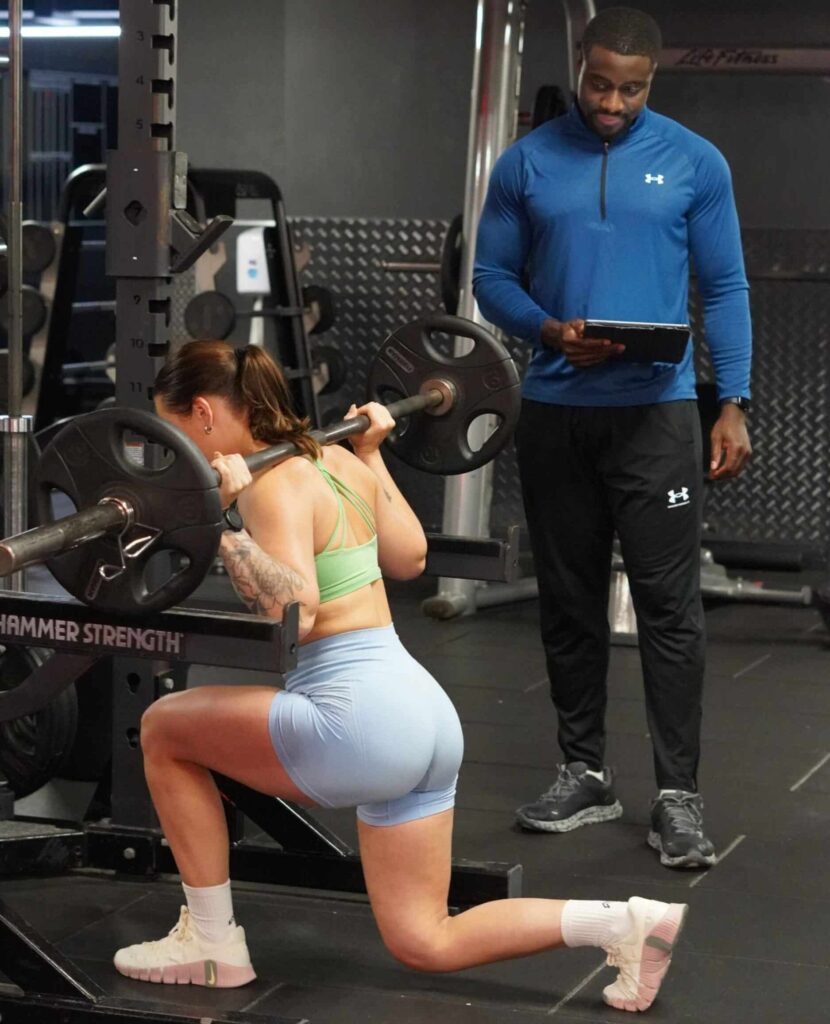
Longer rest makes sessions longer, so plan for it. A set usually takes under a minute. With 2 minutes of rest, three sets of one exercise take about 6 to 8 minutes, including setup.
That means a 60 minute session fits about six exercises with a short warm-up. A 45 minute session fits about four or five. Our guide to how many exercises per workout helps you choose.
Short on time? Try these options:
- Pair exercises for different muscles. Do a set of rows, rest, then a set of presses, and repeat. The 2021 review found that this kind of superset roughly halves training time while keeping your total sets. It is also more tiring. Our guide to supersets explains how to pair exercises.
- Keep long rests for your first lifts. Give your heavy compound lifts the full rest, then rest less on smaller exercises at the end.
- Cut an exercise rather than your rest. Fewer exercises done well often beat more exercises done tired.
Video: Dumbbell upper-body workout with the 12REPS app. Follow this full session and time your rests between sets to see how a real workout fits together.
How to time your rest
- Time every rest. Start a timer as soon as you rack the weight. Matching last week’s rest keeps your log a fair comparison: if you rested 2 minutes last week, rest 2 minutes this week. Our guide to logging your training explains what else to write down.
- Check yourself when it beeps. If your breathing has settled, start the set. If you are still gasping, take another 30 to 60 seconds.
- Use the time well. Load the bar, set up the bench and think about your next set.
- Stay warm. Walk around or stand rather than sitting still for long breaks.
- Put the phone down. A quick scroll can turn 2 minutes into 6.
Common rest mistakes
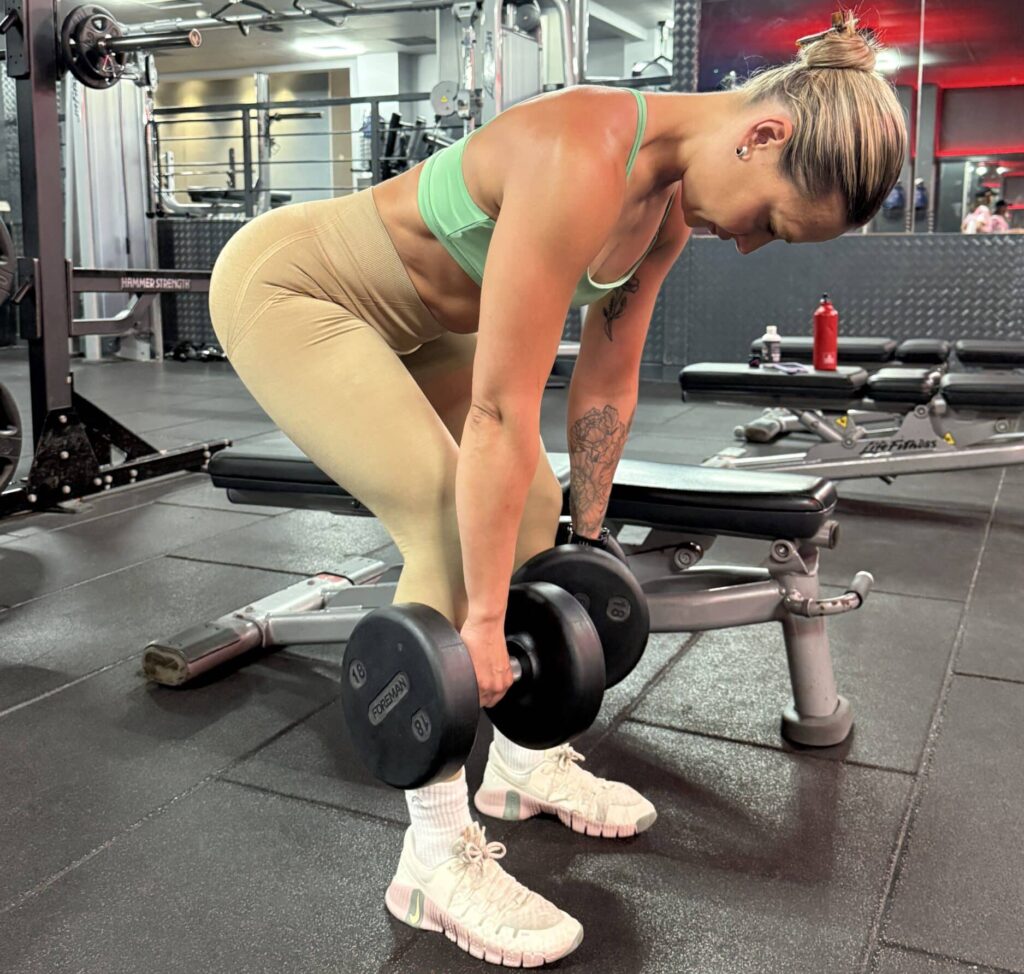
Resting too little on heavy lifts
Taking 30 to 60 seconds between heavy squat sets often means your reps fall away in later sets. Give big lifts at least 2 minutes.
Resting until you "feel ready"
Without a timer, your rest can swing from 1 minute to 5. Then you cannot tell whether a better set came from getting stronger or from resting longer.
Very long breaks
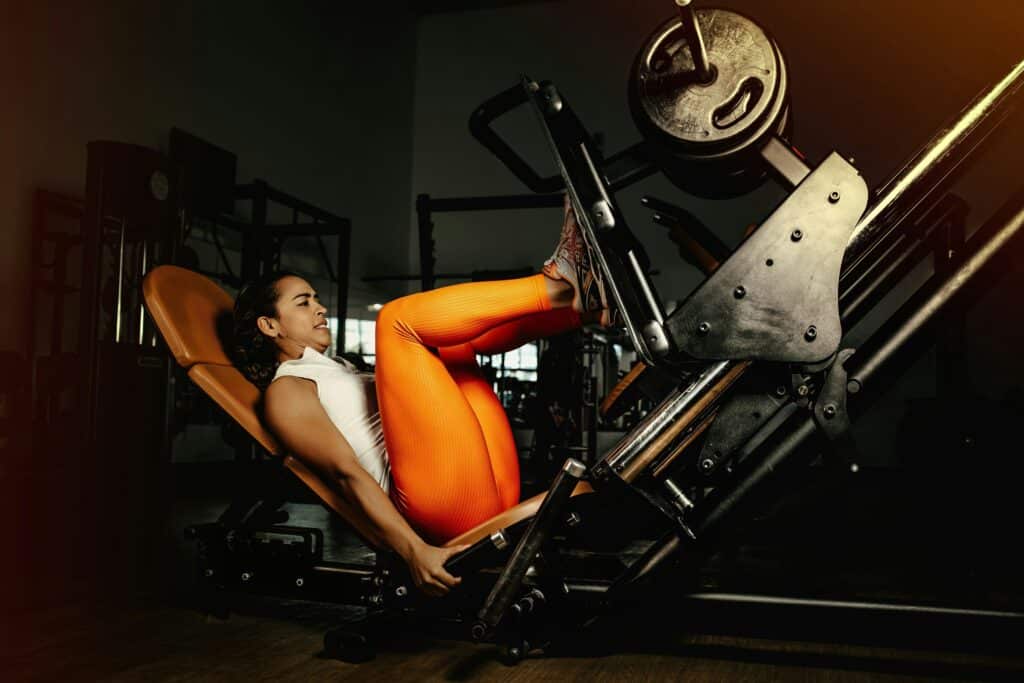
Resting 5 to 10 minutes between every set makes a 45 minute plan last two hours. Unless you are doing very heavy strength sets, keep most rests under 3 minutes.
The same rest for every exercise
A heavy squat and a lateral raise do not need the same break. Match your rest to the exercise, using the table above.
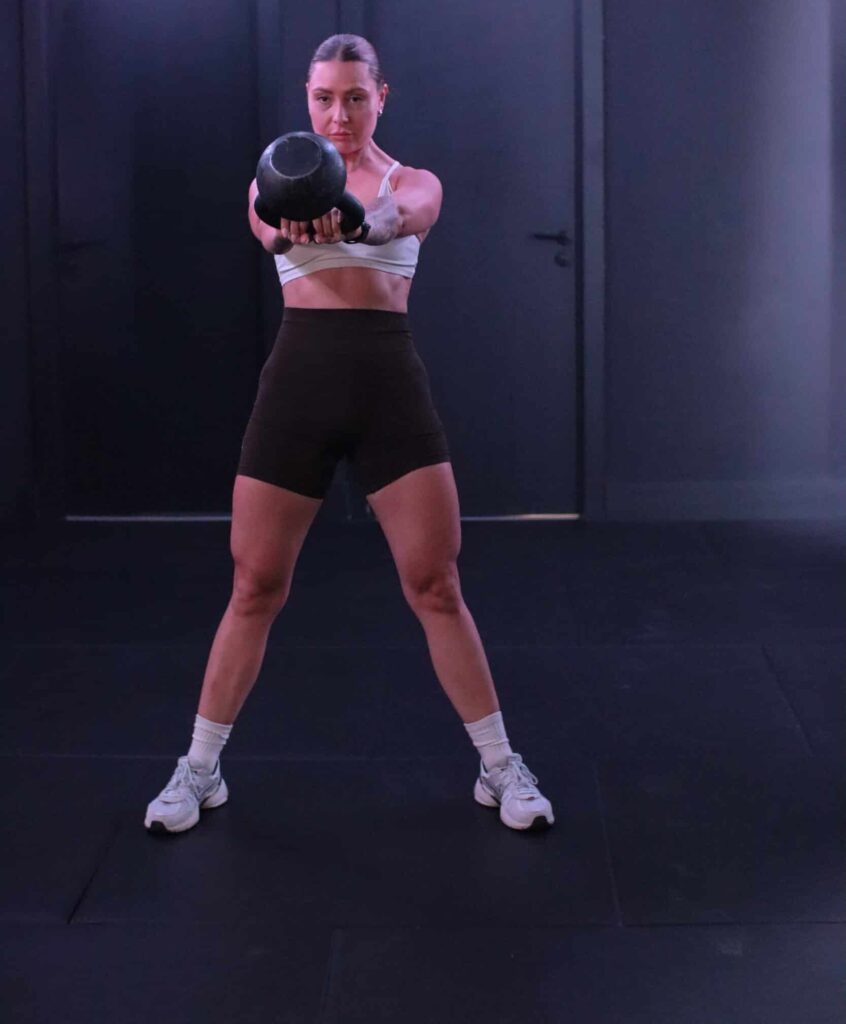
Conditioning work such as kettlebell swings and bodyweight circuits is different. There, shorter rest is part of the point.
The bottom line
- Rest about 2 to 3 minutes after heavy compound lifts, and longer for very heavy strength sets.
- Rest about 2 minutes after other compound and machine exercises, and 1 to 2 minutes after single-joint exercises.
- For muscle growth, going beyond about 90 seconds of rest seems to add little.
- Use a timer and keep your rests consistent from week to week.
Rest is one part of training well. Pair it with the right effort, explained in training to failure and how to know if you are training hard enough.
Planning rest is easier when the session already fits your time. In 12REPS, you set your goal, equipment and the time you have. Your workout is then ready when you open the app, for example a 60-minute Chest & Back session with six exercises.
Sources
- Give it a rest: a systematic review with Bayesian meta-analysis on the effect of inter-set rest interval duration on muscle hypertrophy. Singer A, Wolf M, Generoso L, et al. Frontiers in Sports and Active Living, 2024. https://doi.org/10.3389/fspor.2024.1429789
- Rest interval between sets in strength training. de Salles BF, Simao R, Miranda F, Novaes JS, Lemos A, Willardson JM. Sports Medicine, 2009. https://pubmed.ncbi.nlm.nih.gov/19691365/
- No Time to Lift? Designing Time-Efficient Training Programs for Strength and Hypertrophy: A Narrative Review. Iversen VM, Norum M, Schoenfeld BJ, Fimland MS. Sports Medicine, 2021. https://doi.org/10.1007/s40279-021-01490-1
- Resistance Training Prescription for Muscle Function, Hypertrophy, and Physical Performance in Healthy Adults: An Overview of Reviews (ACSM position stand). Currier BS, D’Souza AC, Fiatarone Singh MA, et al., American College of Sports Medicine. Medicine & Science in Sports & Exercise, 2026. https://doi.org/10.1249/MSS.0000000000003897
