

How long you rest between sets affects how many reps you can do and how much weight you can lift on your next set. For most muscle-building sets, rest at least 60 to 90 seconds. For heavy strength work, rest longer, often 3 minutes or more.
Rest isn’t wasted time. It’s a training variable, just like sets, reps and weight. Whether you’re a beginner or an experienced lifter, this guide explains what research says about rest for muscle growth, strength, endurance and power. It also covers how to stick to your rest periods.
Why rest between sets matters
Hard sets draw on phosphocreatine, a fast energy store in your muscles. It refills while you rest, but not instantly. If you start your next heavy set too soon, you have less of that quick energy to use.
Hard sets also leave your muscles fatigued for a short time. Rest gives that fatigue time to settle, so you can produce force again.
Rest also affects how much work you get done in a session. Volume load means sets x reps x weight. With longer rest, you can usually keep your reps and weight up on later sets. With very short rest, reps tend to drop off.
If you’ve ever started a second set too soon and managed only half your reps, you’ve felt this. In one 2016 study, the researchers suggested that lost volume load was the likely reason short rests produced smaller gains (Schoenfeld, 2016).
Resting much longer than you need has downsides too. You may lose focus, and your workout takes longer. The aim is enough rest to perform well on your next set, without wasting time.
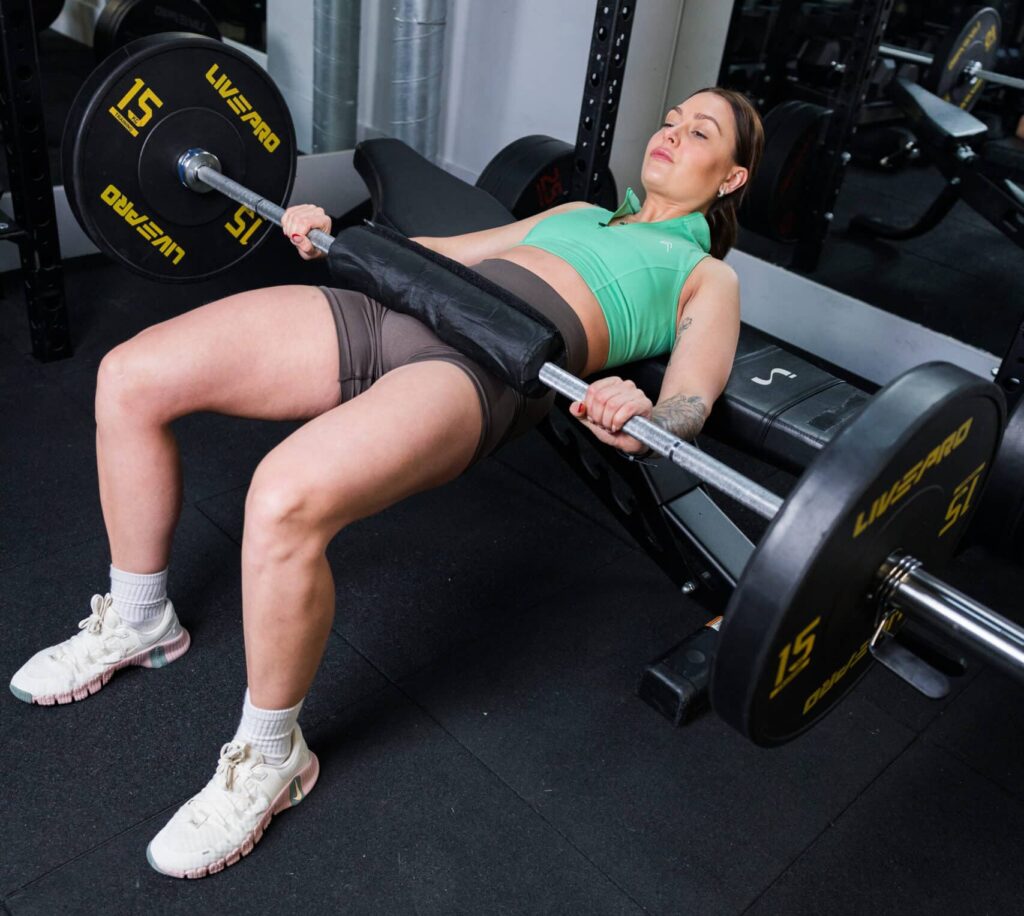
How long to rest between sets for each goal
Different goals call for different rest periods. Here’s a quick summary, followed by the detail.
| Goal | Typical rest | Evidence |
|---|---|---|
| Muscle growth (hypertrophy) | 60 seconds to 2 minutes; 2 to 3 minutes on big compound lifts | Trials and reviews |
| Strength | 3 minutes or more on heavy sets | Trials in trained lifters |
| Muscular endurance | Under 60 seconds | Mostly coaching practice |
| Power | Several minutes, so every rep stays fast | Mostly coaching practice |
Rest for muscle growth (hypertrophy)
Hypertrophy means an increase in muscle size. Short rests were once the standard advice for muscle growth because they increase metabolic stress, the “pump” and burn you feel during a set. Newer research suggests a bit more rest can help.
A 2024 Bayesian meta-analysis of 9 studies found a small benefit for resting longer than 60 seconds. It found no clear extra benefit from resting longer than 90 seconds (Singer et al., 2024). The authors noted that the evidence is still limited.
A 2017 systematic review concluded that both short and long rests can work for muscle growth. It noted a possible advantage for longer rests in trained lifters (Grgic et al., 2017).
In a 2016 study, 21 trained men did 3 sets of 8 to 12 reps on 7 exercises, 3 days a week for 8 weeks. One group rested 1 minute between sets. The other rested 3 minutes (Schoenfeld et al., 2016).
The 3-minute group gained more squat and bench press strength, and their muscle thickness tended to increase more. The authors suggested longer rests on big compound lifts and said shorter rests could work for single-joint moves.
Takeaway: rest at least 60 to 90 seconds on most muscle-building sets. On big compound lifts like squats, presses and rows, 2 to 3 minutes is reasonable if it helps you keep your reps and weight up. Shorter rests can work for moves like curls, pressdowns and leg extensions. For more on building muscle, read sets, reps and rest for muscle growth explained.
Rest for strength
For maximal strength, longer rest is usually better. Heavy sets need full effort, and you want enough recovery to lift close to your best on every set.
In the 2016 study above, the 3-minute group improved their one-rep max (1RM) more on both the squat and bench press. Your 1RM is the most weight you can lift for one full rep.
A 2024 study in 26 trained young men also compared 1 and 3 minutes of rest. The 3-minute group gained more in some strength measures, while gains were similar in others (Vuk et al., 2024).
In practice, give yourself at least 3 minutes on heavy, low-rep sets, such as sets of 5 on the barbell squat. Very heavy sets close to your max may need longer. Strength training rewards quality over speed. To compare the two goals, see strength training vs hypertrophy.
Rest for muscular endurance
For muscular endurance and circuit-style training, rest is usually much shorter, often under 60 seconds. The idea is to start the next set before you’ve fully recovered, so your muscles get used to working while tired.
The research here is thinner than for muscle growth and strength, so treat this range as common practice. Keep your technique tidy as you tire.
Rest for power
Power training means explosive moves like jumps, throws, kettlebell swings and Olympic lifts. Like strength work, it needs fuller rest, often several minutes. If you’re still tired, you jump lower and move slower, which defeats the point.
Rest until you can repeat the same quality of effort. Don’t turn power training into cardio.
How to stick to your rest periods
Knowing the right rest period is one thing. Sticking to it is another. It’s easy to rush your rest when you feel keen, or to drift into five minutes on your phone.
- Use a timer. A phone, watch or gym clock all work. Start it as soon as you put the weight down.
- Plan rest with your sets. Decide your rest for each exercise before you start, for example longer on squats and shorter on curls.
- Log every set. Record your reps and weight so you can see whether your rest is helping you keep performance up.
In the 12REPS app, you enter your reps and weight for each set, and the app remembers what you lifted. That gives you a number to beat next time and makes it easier to spot when rushed rest is holding you back.
Common rest period mistakes and how to fix them
Resting too little
Rushing into your next set before you’ve recovered often means fewer reps or a failed set. That lowers the total work you do.
Fix: set a minimum rest based on your goal and use a timer. It might feel like you could go again sooner, but give yourself the extra minute. You’ll often lift more weight or do more reps.
Resting too long
Long chats or scrolling between sets can stretch a 45-minute workout to 90 minutes. For muscle growth, the 2024 meta-analysis found no clear extra benefit, on average, from resting longer than 90 seconds.
Fix: use a timer to keep yourself accountable. For heavy sets, start again once you feel recovered, usually within a few minutes. For moderate loads, aim for about 1 to 2 minutes. It’s fine to rest longer when you truly need it.
Not tracking your rest
Your sense of time in the gym isn’t reliable. What feels like a minute might be 20 seconds, or 3 minutes if you got talking. Inconsistent rest makes it hard to judge your real progress.
Fix: keep your rest roughly the same for each exercise from week to week. Then, if your reps go up, you’ll know it’s because you got stronger, not because you rested longer.
This is part of progressive overload, which means gradually increasing the demands on your muscles over time. How hard you push each set matters too. Our guide to RPE vs RIR explains how to rate your effort.

Conclusion
Rest between sets is part of your training, not a gap in it. Use longer rests when you need full strength and power, and shorter rests for endurance work. For muscle growth, use moderate rests with enough recovery to push hard on each set.
For a quick reference, see our guide on how long to rest between sets.
If you want each session set out for you, 12REPS builds training around your goal, your equipment and the time you have. It shows a trainer demonstration for every exercise and logs your sets, so you can see your progress week to week. Explore the 12REPS app.
Sources
- Longer Interset Rest Periods Enhance Muscle Strength and Hypertrophy in Resistance-Trained Men. Journal of Strength and Conditioning Research, 2016. https://doi.org/10.1519/JSC.0000000000001272
- The effects of short versus long inter-set rest intervals in resistance training on measures of muscle hypertrophy: a systematic review. European Journal of Sport Science, 2017. https://www.bib.irb.hr/923458
- Give it a rest: a systematic review with Bayesian meta-analysis on the effect of inter-set rest interval duration on muscle hypertrophy. Frontiers in Sports and Active Living, 2024. https://frontiersin.org/journals/sports-and-active-living/articles/10.3389/fspor.2024.1429789/abstract
- Effects of short and long inter-set rest on maximal isokinetic strength at slow and fast angular velocities in trained young males after eight weeks of resistance training. Kinesiology, 2024. https://hrcak.srce.hr/clanak/459981