


By Will Duru, BSc (Hons) Sport and Exercise Science Award-winning Personal Trainer with over 10 years of experience in strength training and optimising recovery
Form vs lifting heavy is not an either-or choice. Learn technique you can repeat first, because it decides which muscles do the work and how far they move. Then add heavier loads, because they build maximal strength best. The order matters: form first, then weight.
In any gym you will see someone moving a big weight with a messy technique next to someone lifting less with slow, controlled reps. It is fair to wonder which one is doing it right. As a personal trainer who helps women get stronger, my answer is that it is a progression: master the form first, then earn the right to lift heavy.
This guide explains why technique comes first, what “good enough” form looks like, and when heavy lifting earns its place in your training.
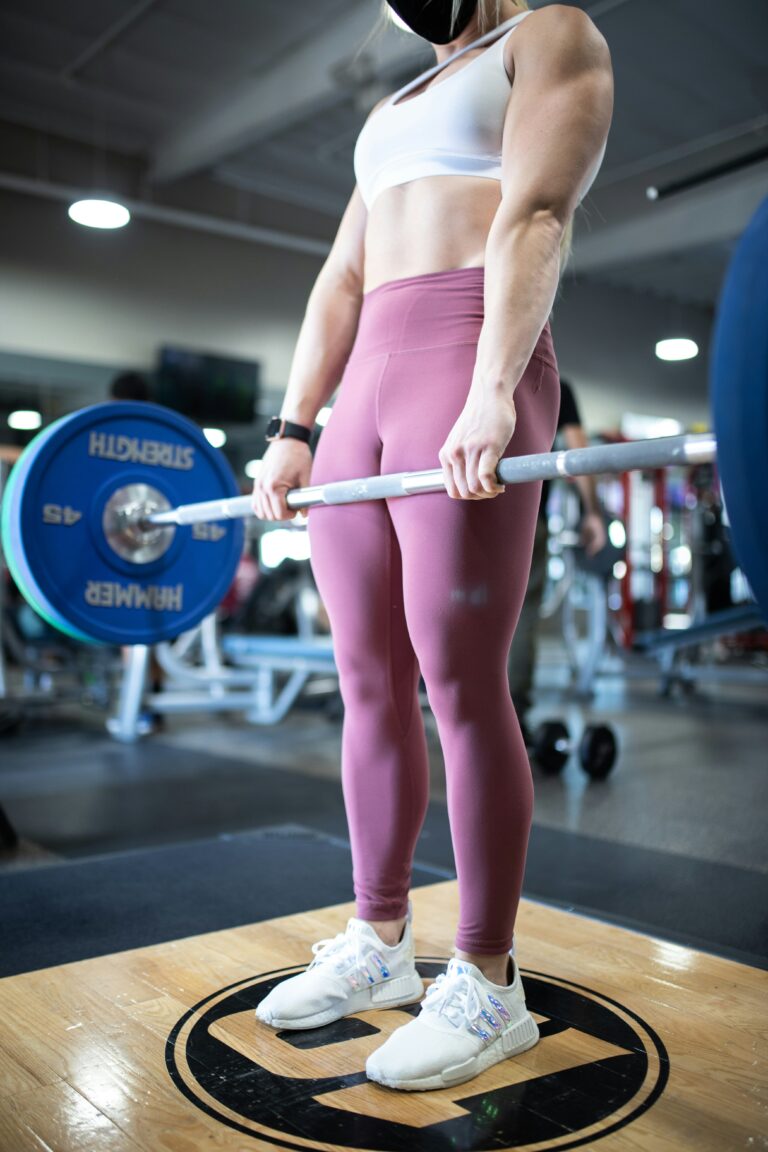
Why form comes first
It decides which muscles do the work
Every exercise has a job. A row trains your upper back; a squat trains your legs and hips. If you swing a row up with momentum, your back does less of the work. You move more weight but train the target muscle less.
It keeps your range of motion honest
The American College of Sports Medicine (ACSM) 2026 position stand recommends a full range of motion for strength gains (ACSM, 2026). If a heavier weight means half-depth squats or half-length presses, you are training a shorter range than before.
It makes your progress measurable
If your technique changes every session, the numbers in your log stop meaning much. A 20 kg squat to the same depth each week is a fair comparison. A 20 kg squat that gets shallower is not.
What good form cannot promise
Good technique cannot make you injury-proof, and nobody can honestly promise that. Injury rates in the weight-training sports appear relatively low compared with common team sports, though the research has limits (Keogh and Winwood, 2017). The case for good form is that it trains the right muscles through the right range, and makes your progress easier to measure.
What good form looks like on any exercise
- Control both directions. Lift with intent and lower the weight under control. No swinging or bouncing.
- Use the same range every rep. Same depth, same lockout, same path.
- Keep your position. Your back, hips and shoulders should look the same on rep 1 and rep 10.
- Feel the target area working. If a row is all in your arms and lower back, check your setup.
Video: How to do a barbell bent-over row. The row is one of the easiest exercises to swing. Watch this to see the hip hinge and a controlled pull before you add weight.
For a step-by-step version, read our barbell row technique guide for women.
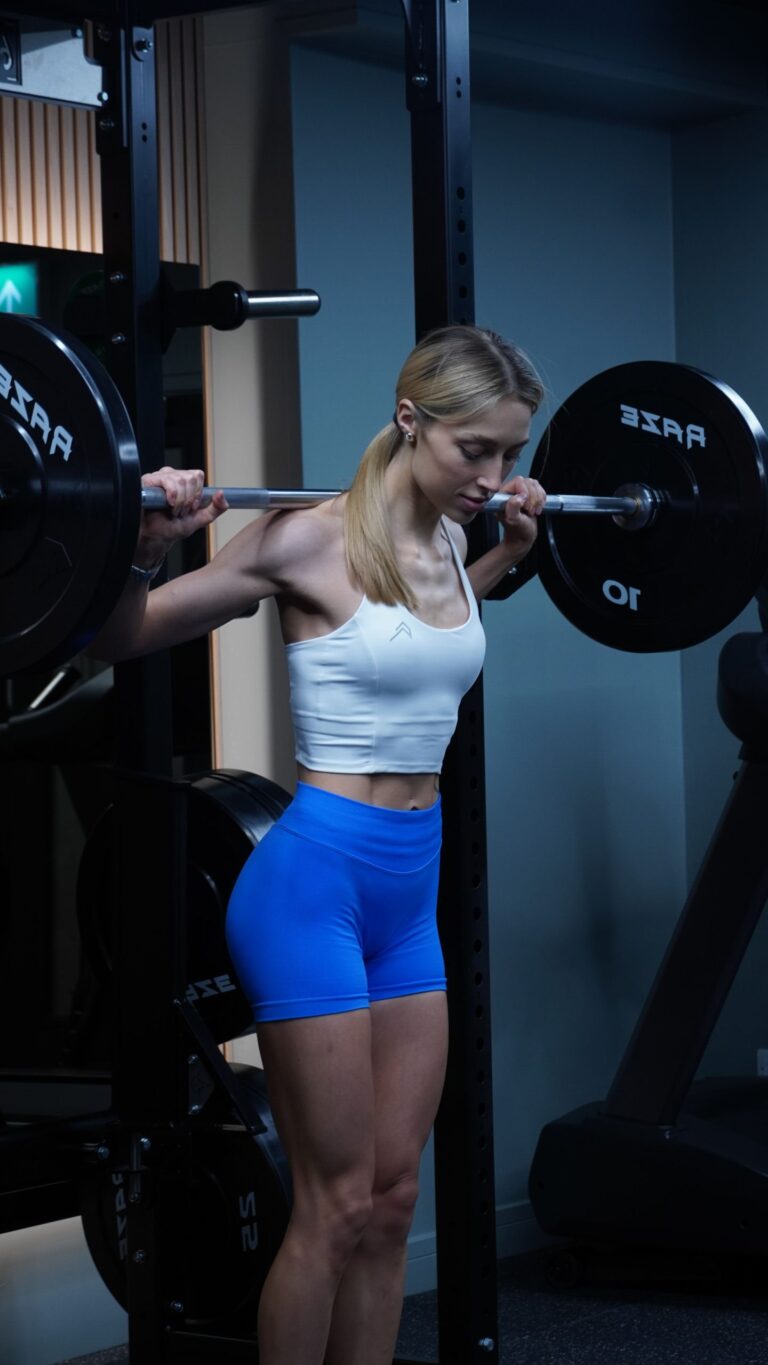
"Good enough" form: what is acceptable when the set gets hard
Perfect form on every rep is not realistic once you train with effort. Your last reps will slow down, and they may look a little less smooth. That is normal. The question is how much the movement changes.
| Acceptable on the last reps | Stop the set |
|---|---|
| Reps slow down | Your range of motion gets clearly shorter |
| You need to brace and push harder | You start swinging or bouncing the weight |
| A small wobble you can correct | Your back or hip position changes noticeably |
| The last rep looks close to the first | The last rep looks like a different exercise |
The point where you can no longer do a rep with good technique is sometimes called technical failure. It is a sensible place to stop. The ACSM 2026 position stand found that going all the way to failure did not add strength or muscle gains (ACSM, 2026).
Film a set
Prop your phone up and record one working set from the side. Compare your first and last reps. It is the simplest way to see what your technique really looks like when you are tired.
Why women benefit from lifting heavy
Once your technique is solid, heavier loads matter. The ACSM 2026 position stand found that heavier loads, about 80% of your one-rep max or more, were better for building maximal strength. For muscle growth, a wide range of loads worked (ACSM, 2026).
Your one-rep max is the most you can lift once with good technique. At around 80% of it, most people can do only a handful of reps.
Women respond to this training as well as men do. A meta-analysis found similar gains in muscle size and lower-body strength between the sexes. Women showed larger relative gains in upper-body strength (Roberts et al., 2020).
Heavy is also relative. It means heavy for you, today, not heavy compared with the person next to you. And a heavier dumbbell will not make you bulky; read will lifting weights make me bulky to see why.
How to earn heavier weights: a 3-stage approach
- Learn the pattern. Start a new exercise with bodyweight or a light load. Practice until it looks the same every rep for a few sessions.
- Build with moderate weights. Use a weight you can lift for about 8 to 12 reps, the range ACSM suggests for novices (ACSM, 2009). Stop with 2 to 3 reps left.
- Add heavy work to one or two main lifts. After warm-up sets, do some lower-rep sets, about 6 reps or fewer, on a big lift such as the squat or deadlift. Keep smaller exercises at moderate weights.
This keeps heavy sets for the exercises where they help most. It also limits how much fatigue you build up in each session.
Video: How to perform squats properly. The squat is a common choice for heavier sets. Watch this to check your depth and position before you add load.
Our guides to squatting properly and deadlifting properly cover each lift in detail. When you are ready to go up, use our guide to increasing your weights.
Know when to back off
Some days your warm-up feels smooth and heavier weights move well. Other days the same weights feel slow and your technique feels off. On those days, drop the load and train with good technique. That is a smart decision, not a weak one.
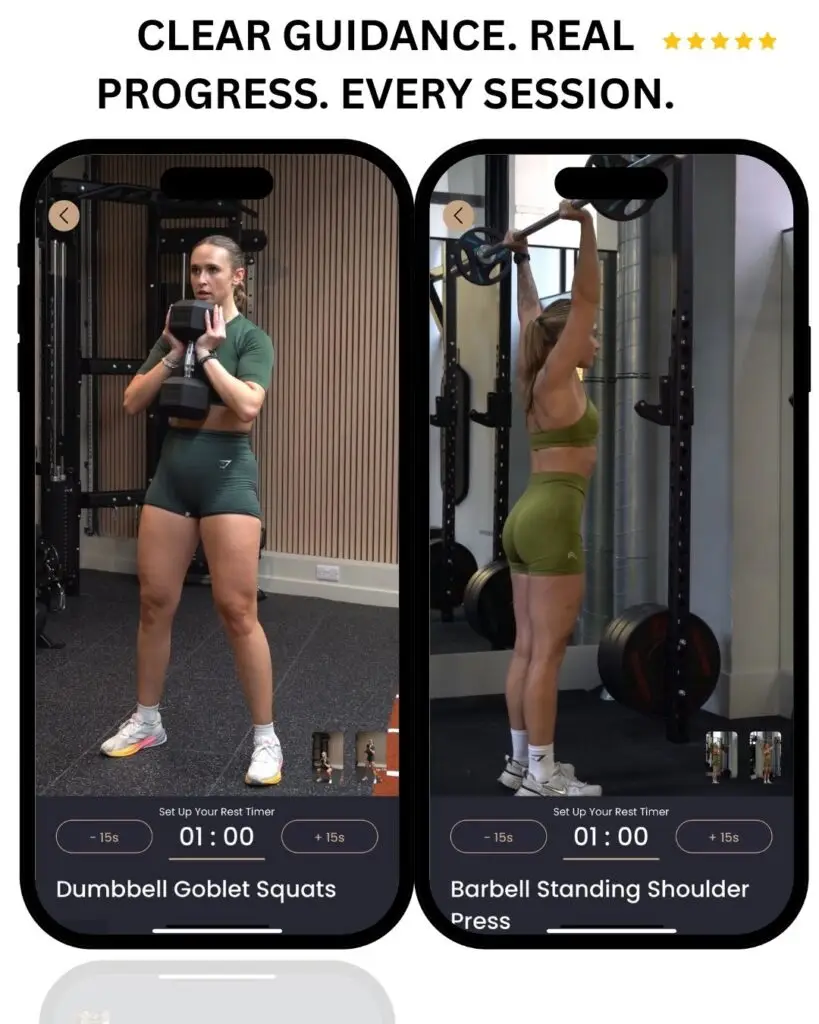
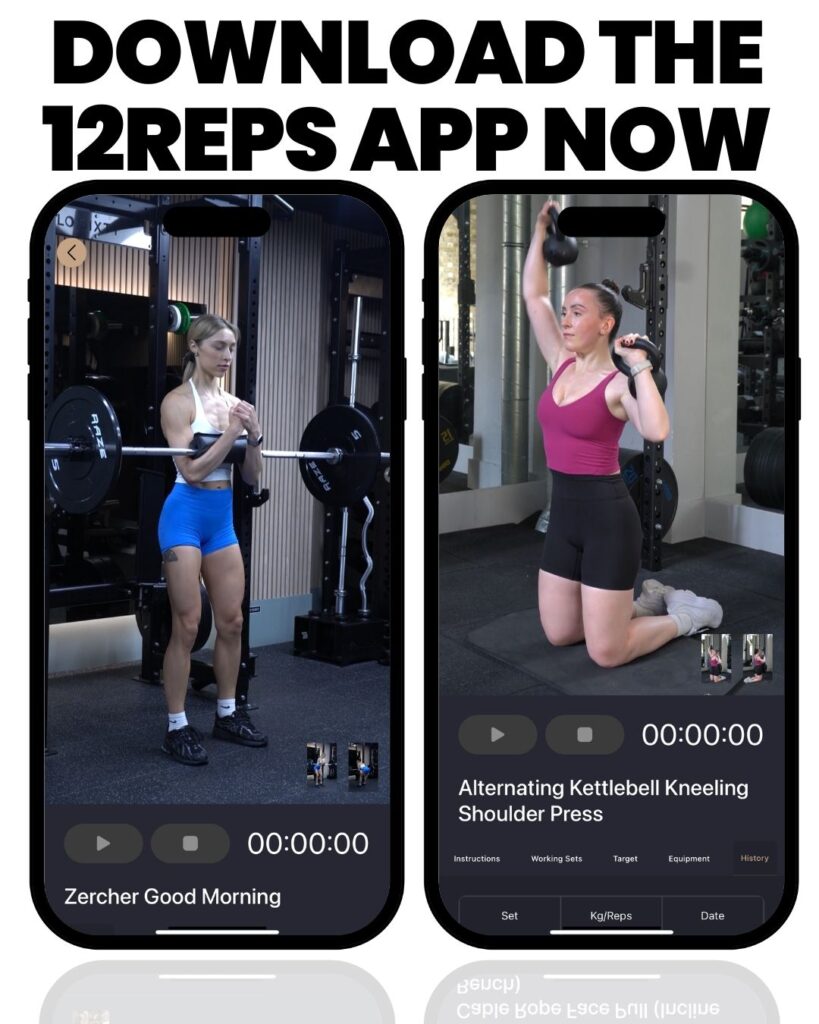
If you want help with technique and load, 12REPS shows a demonstration and technique breakdown from a qualified trainer for every exercise. It also records the weight and reps of each set, so you can see whether your heavier sets are real progress.
Form vs heavy lifting FAQs
Is it bad if my form slips on the last rep?
A small change is normal when a set is hard. If the last rep looks like a different exercise, the weight is too heavy or the set went too far.
Should beginners lift heavy?
Beginners should lift a weight that is challenging for their reps. Save very heavy, low-rep sets until the movement looks the same every time. To choose a first weight, read how much weight a woman should lift as a beginner.
How can I check my form without a trainer?
Film a set from the side and compare it with a demonstration of the same exercise. Look at depth, back position and whether the weight moves in a steady path.
Sources
- Resistance training prescription for muscle function, hypertrophy, and physical performance in healthy adults: an overview of reviews (ACSM position stand). Currier BS et al., American College of Sports Medicine, Medicine & Science in Sports & Exercise, 2026. https://doi.org/10.1249/MSS.0000000000003897
- The epidemiology of injuries across the weight-training sports. Keogh JWL, Winwood PW, Sports Medicine, 2017. https://doi.org/10.1007/s40279-016-0575-0
- Sex differences in resistance training: a systematic review and meta-analysis. Roberts BM, Nuckols G, Krieger JW, Journal of Strength and Conditioning Research, 2020. https://doi.org/10.1519/JSC.0000000000003521
- American College of Sports Medicine position stand. Progression models in resistance training for healthy adults. American College of Sports Medicine, Medicine & Science in Sports & Exercise, 2009. https://pubmed.ncbi.nlm.nih.gov/19204579/