

By Will Duru, BSc (Hons) Sport and Exercise Science, Award-winning Personal Trainer
This dumbbell and TRX leg workout trains your quads, glutes, hamstrings and core in one session. It uses seven exercises: three dumbbell lifts and four suspension or core moves. You do 4 sets of each, with 60 seconds of rest between sets.
In my 10+ years as a personal trainer, dumbbells and a TRX suspension trainer have stayed two of my favorite tools for the lower body and core. Both fit in a small space at home. The straps also pack into a suitcase, so this is the session to use when you travel and the hotel gym only has dumbbells.
Training somewhere else? Pick the version that matches your equipment:
- Only a pair of dumbbells at home: the dumbbell-only leg and core workout.
- A gym with a leg extension and an abductor machine: this beginner leg session on machines and dumbbells.
- A full gym that also has a TRX station: the eight-exercise legs and abs session for the gym.
- A full gym and a legs-only day: the leg day with kettlebells, a barbell and machines.
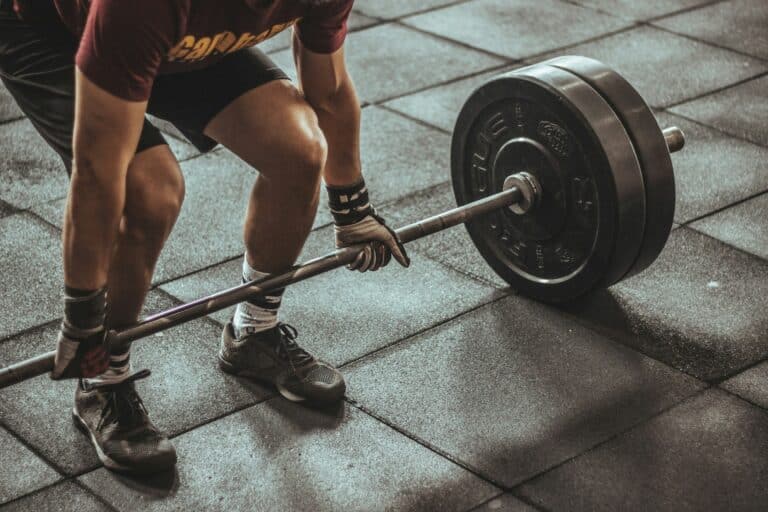
Why pair dumbbells with a TRX for legs and core?
Dumbbells let you add load. That makes progressive overload simple. Progressive overload means slowly raising the weight, reps or sets over time so your muscles keep adapting. When 12 good reps feel easy, you pick up a heavier pair.
A TRX is a suspension trainer: two adjustable straps with handles and foot cradles, fixed to an anchor above you. You use your body weight as resistance. With your feet in the straps, your trunk muscles must work to stop your hips sagging or swinging.
A systematic review of 18 studies found that upper-body and core muscles were generally more active during suspension exercises than during the same exercises done the traditional way. The inverted row was the exception, and results varied a lot between studies (Aguilera-Castells and colleagues, 2020).
Another study measured abdominal and oblique muscle activity in 17 active men during four suspension core exercises, including the pike and the knee tuck. The roll-out activated these muscles the most (Cugliari and Boccia, 2017). Once the pike and knee tuck feel easy, a TRX roll-out is a harder option to try.
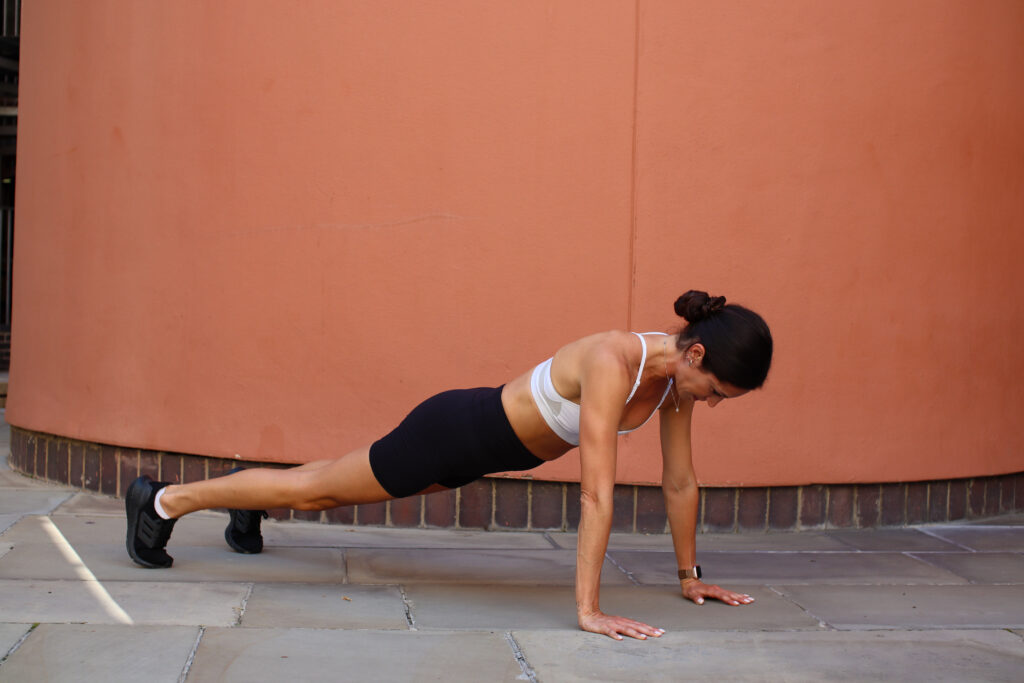
Every TRX core move in this workout starts from a plank. If you cannot yet hold a steady plank on the floor, start with this guide to doing a plank properly.
What you need and where to set it up
- Dumbbells: one pair, or one heavier dumbbell for the goblet squats. Adjustable dumbbells save space at home.
- A suspension trainer: a TRX or a similar strap system.
- An anchor point: a suspension rig or station in a gym, a solid beam, or a door anchor on a sturdy door that is shut and locked. Follow the strap maker’s setup instructions every time.
- Floor space: enough room to hold a plank in front of the anchor.
New to suspension training? These TRX moves for beginners show you how to adjust the straps and find your body angle.
The dumbbell and TRX leg workout
The session alternates a leg exercise with a core-focused move, so your legs get a short break while your core works. For beginners, two sessions a week on days that are not back to back, such as Monday and Thursday, work well. That matches the World Health Organization advice to do muscle-strengthening activities for the major muscle groups on 2 or more days a week (WHO).
| Exercise | Sets | Reps | Rest |
|---|---|---|---|
| Dumbbell goblet squat | 4 | 12 | 60 seconds |
| TRX pike | 4 | 12 | 60 seconds |
| Dumbbell reverse lunge | 4 | 16 (8 per leg) | 60 seconds |
| TRX knee tuck | 4 | 10 | 60 seconds |
| Dumbbell Romanian deadlift (RDL) | 4 | 12 | 60 seconds |
| Mountain climbers (TRX) | 4 | 20 seconds | 60 seconds |
| TRX jump squat | 4 | 12 | 60 seconds |
Warm up first with a few minutes of easy movement and a light set of goblet squats. Choose a dumbbell weight that makes the last few reps of each set hard while your form stays clean.
How to do each move
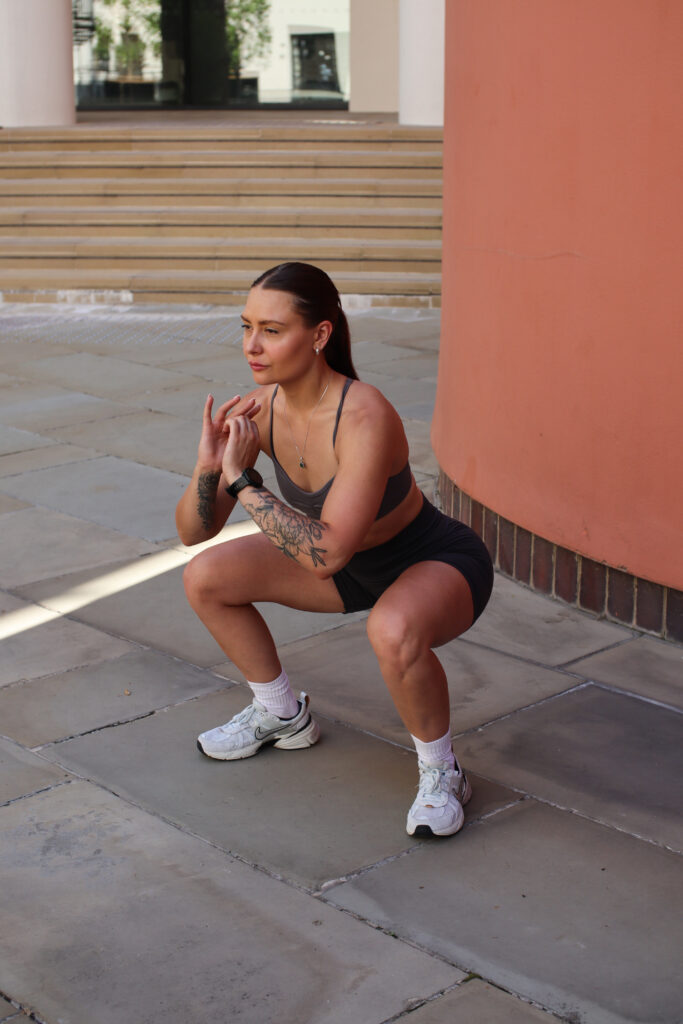
1. Dumbbell goblet squat
- Hold one dumbbell upright against your chest with both hands.
- Stand with your feet about shoulder-width apart.
- Sit down between your knees, keeping your chest up and your back flat.
- Push through your whole foot to stand back up.
For more detail, read the goblet squat form guide.
2. TRX pike
- Set the straps to about mid-calf height. Put your feet in the foot cradles and walk your hands out into a high plank.
- Brace your stomach and keep your legs straight.
- Lift your hips toward the ceiling until your body forms an upside-down V.
- Lower slowly back to a straight plank.
Keep your shoulders over your hands. If your hips sag between reps, make each rep smaller until you get stronger.
3. Dumbbell reverse lunge
- Hold a dumbbell in each hand at your sides.
- Step one foot straight back and lower until both knees bend to about 90 degrees.
- Keep most of your weight on your front foot.
- Push through your front foot to stand tall, then switch legs.
Do 8 reps on each leg in every set. This guide to forward, reverse and walking lunges covers the main variations.
4. TRX knee tuck
- Start in a high plank with your feet in the foot cradles.
- Keep your back flat and your hips level.
- Pull both knees in toward your chest.
- Push your legs back out to a straight plank with control.
Move at a steady pace. If the straps swing, slow down and reset your plank before the next rep.
5. Dumbbell Romanian deadlift (RDL)
- Stand tall holding the dumbbells in front of your thighs.
- Soften your knees and push your hips back.
- Slide the dumbbells down your legs with a flat back until you feel a strong stretch in your hamstrings.
- Squeeze your glutes and drive your hips forward to stand tall.
See the Romanian deadlift form guide for the most common mistakes.
6. Mountain climbers (TRX)
The demo shows mountain climbers with your feet in the TRX straps. Each set lasts 20 seconds.
- Start in a high plank with your feet in the foot cradles.
- Drive one knee toward your chest, then switch legs.
- Keep alternating at a steady rhythm until the 20 seconds are up.
- Keep your hips low and level the whole time.
7. TRX jump squat
- Hold the handles and lean back slightly so the straps stay tight.
- Squat down, keeping your chest up.
- Drive up into a jump, using the straps for balance.
- Land softly with bent knees and move straight into the next rep.
If jumping does not feel right for you today, do TRX squats without the jump.
No anchor point? Use floor swaps
Some hotel rooms and homes have no safe place to fix the straps. In that case, keep the dumbbell lifts and swap the TRX moves:
- TRX pike or knee tuck: a plank or a dead bug.
- TRX mountain climbers: mountain climbers with your hands and feet on the floor.
- TRX jump squats: bodyweight jump squats, or bodyweight squats without the jump.
Video: Mountain climbers. This 12REPS demo shows the floor version. Watch how the hips stay low and level while the knees drive in.
Video: Jump squats. Use this demo for the no-strap swap. Watch the soft, bent-knee landing before the next rep.
How to progress this workout
The American College of Sports Medicine suggests adding 2 to 10% to the load once you can do 1 to 2 reps more than your target (ACSM, 2009). For example, when 12 goblet squats turn into 14 clean reps, move up to the next dumbbell.
Hotel and home dumbbells can feel light. When you cannot go heavier, lower each rep more slowly or add a short pause at the bottom of squats and lunges. On the TRX moves, slow the movement down and hold a stricter plank. You can read more in this beginner’s guide to progressive overload.
Back home with a full gym nearby? Load up more with this leg workout for strength and size, or the intermediate lower body workout for women.
Want sessions planned around what you are training for, the kit you have with you and your schedule? 12REPS sets out each workout and shows a trainer demonstration for every exercise. It also keeps a record of each lift, so next time you know the weight to beat.
Sources
- Muscle activation in suspension training: a systematic review. Aguilera-Castells J, Buscà B, Fort-Vanmeerhaeghe A, Montalvo AM, Peña J. Sports Biomechanics, 2020. https://doi.org/10.1080/14763141.2018.1472293
- Core muscle activation in suspension training exercises. Cugliari G, Boccia G. Journal of Human Kinetics, 2017. https://doi.org/10.1515/hukin-2017-0023
- Physical activity. World Health Organization. https://who.int/initiatives/behealthy/physical-activity
- American College of Sports Medicine position stand. Progression models in resistance training for healthy adults. American College of Sports Medicine. Medicine and Science in Sports and Exercise, 2009. https://pubmed.ncbi.nlm.nih.gov/19204579/