

By Will Duru, BSc (Hons) Sport and Exercise Science, Award-winning Personal Trainer with over 10 years of experience in strength training and optimising recovery
Science-based strength training for women means following what research shows works. Train all your major muscle groups against challenging resistance at least twice a week, and add load gradually over time. Studies show women gain muscle and strength at similar relative rates to men, with benefits for bones, mood and long-term health.
For the past ten years, I have coached women and men in London. Many women walk into the gym for the first time feeling unsure. They have been told that lifting heavy will make them bulky, or that the weights area is not for them. The research says otherwise.
Below is what the evidence shows, what it does not show, and a 12-week program built on those principles.

What research shows about women and muscle
Women respond to strength training as well as men do, relative to where they start. A 2020 meta-analysis found similar gains in muscle size and lower body strength between the sexes. Women made larger relative gains in upper body strength.
So why don’t women get “bulky”? Women usually start with less muscle mass, and building a lot of muscle takes years of focused training. A well-run program makes you stronger and more defined. Our article will lifting weights make me bulky? explains more.
Age changes the picture a little. In a 2023 study of 41 women aged around 52, training twice a week for 10 weeks raised squat and bench press strength in everyone. Muscle size only increased in women who had not yet reached menopause. The authors suggest women after menopause may need more weekly sets to build muscle.

Bones: why lifting matters for women
Bone health is a bigger concern for women, especially after menopause. A UK consensus statement on exercise for osteoporosis recommends resistance and impact exercise to maximize bone strength.
Heavy lifting can be part of that, with good coaching. In the LIFTMOR trial, postmenopausal women with low bone mass did supervised heavy strength and impact training twice a week for 8 months. Their lower spine bone density rose by about 2.9%, while the control group lost about 1.2%. For a practical guide, see improving bone density after menopause.

Menopause and hormones: what we know
Many women ask whether strength training helps with menopause. A 2023 systematic review of 12 randomized trials found strength exercise improved leg and pelvic floor strength, physical activity and bone density. Some trials also reported metabolic and hormonal changes. The authors noted that the best type of strength training is still unclear.
Strength training supports your health through menopause, but it is not a treatment for menopause symptoms. If symptoms affect your daily life, talk to your GP. For training through the earlier stage, read our guide to strength training in perimenopause.

Mood, confidence and long-term health
The benefits are not only physical. A 2018 meta-analysis of 33 trials found resistance training was linked to a moderate reduction in depressive symptoms.
The long-term picture is encouraging too. A 2022 meta-analysis of cohort studies linked muscle-strengthening activity to a 10 to 17% lower risk of early death, heart disease, cancer and diabetes. The largest drop in risk came at about 30 to 60 minutes a week. These are associations, not proof of cause.
One small study even looked at skin. In a 2023 trial of 56 middle-aged Japanese women, 16 weeks of either aerobic or resistance training twice a week improved skin elasticity. The authors reported that only resistance training improved dermal thickness. It is one small study, so treat it as interesting rather than proven.
I see a similar change in my own coaching. Women who were nervous on day one often become some of the most confident people in the room.
Video: Why strength is the key to building confidence. A short video on why getting stronger in the gym often carries over to confidence outside it.
How to train, according to the evidence
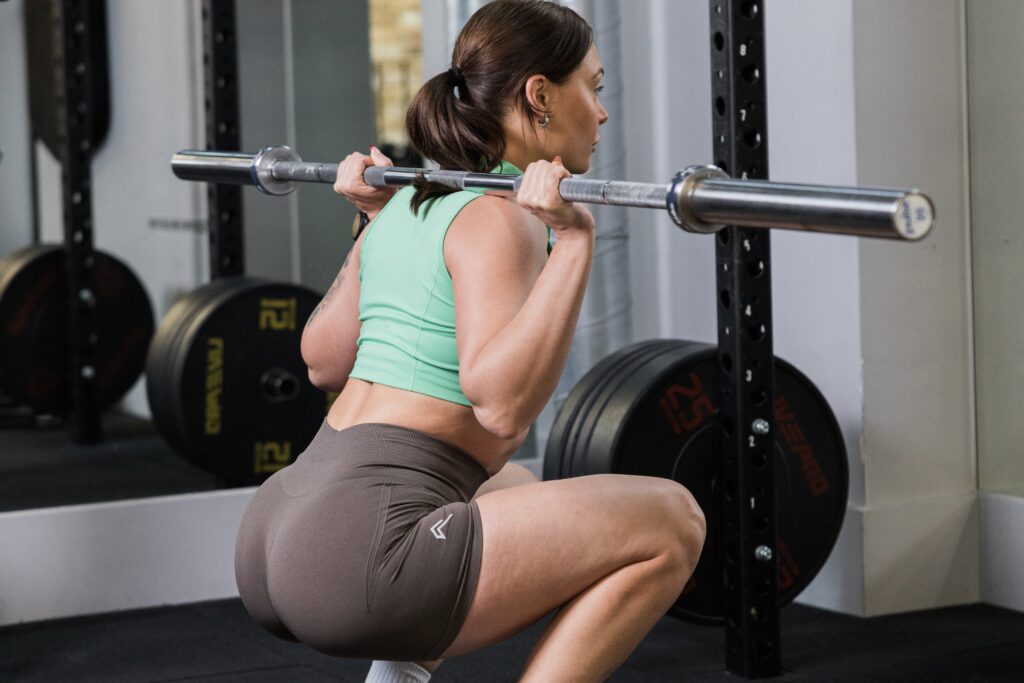
- Train at least twice a week. The NHS recommends strengthening activities for all major muscle groups on at least 2 days a week. The ACSM position stand suggests 2 to 3 days for beginners.
- Use compound lifts. Squats, deadlifts, rows and presses work several muscle groups at once, so you get more done in each session.
- Do enough sets. A meta-analysis on training volume found that more weekly sets were linked to more muscle growth.
- Spread it however suits you. A 2019 meta-analysis found that when weekly sets were equal, how often you trained a muscle made little difference to growth.
- Add load over time. This is progressive overload. The ACSM suggests adding 2 to 10% once you can beat your target reps by 1 to 2 on two sessions in a row.
Short on time? Our 2-day strength training split for women applies the same principles in two sessions a week.

Your 12-week science-based strength program
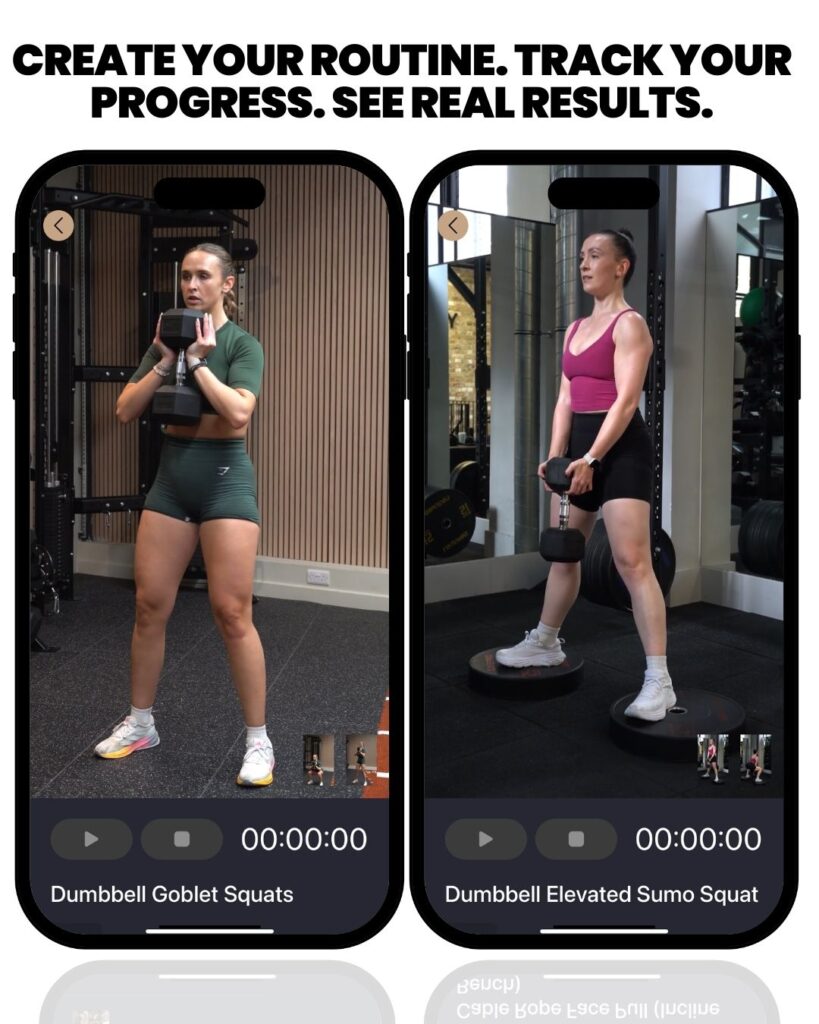
This program uses kettlebells, dumbbells, a TRX, barbells and machines. It runs in four 3-week phases.
| Phase | Weeks | Focus | Structure |
|---|---|---|---|
| 1 | 1 to 3 | Foundation | 6 exercises, 4 to 5 sets each |
| 2 | 4 to 6 | Strength development | 4 supersets plus one single exercise |
| 3 | 7 to 9 | Power and conditioning | 4 supersets plus one single exercise |
| 4 | 10 to 12 | Peak strength | 5 heavy exercises with longer rests |
In each phase, alternate Workout A (upper body) and Workout B (lower body) across your training days. Some weights are given as a percentage of your one-rep max (1RM), the most you can lift once with good form. If you do not know your 1RM, choose a weight that leaves 1 to 2 good reps in reserve at the end of each set.
Warm-up (10 minutes)
Begin each session with an incline treadmill walk (3.5 to 4.0 mph, 5 to 8% incline) or moderate rowing. Then do these mobility moves.
| Exercise | Duration | Description |
|---|---|---|
| World’s Greatest Stretch | 30 seconds each side | Step into lunge, place opposite hand on ground, rotate toward front leg |
| Cat-Cow Stretch | 10 repetitions | On hands and knees, alternate between arching and rounding spine |
| Hamstring Stretch | 30 seconds each leg | Seated or standing, reach toward toes with straight leg |
| Hip Circles | 10 each direction | Standing, hands on hips, make large circles |
| Arm Circles | 10 forward, 10 backward | Small to large circles, both directions |
Phase 1: Foundation (weeks 1 to 3)
Frequency: 3 times a week. Focus: learning good form and building base strength.
Workout A: Upper body
| Exercise | Sets | Reps | Weight | Rest | Equipment |
|---|---|---|---|---|---|
| Dumbbell Chest Press | 4-5 | 12-15 | 60-70% 1RM | 60-90 seconds | Dumbbells |
| TRX Rows | 4-5 | 10-12 | Bodyweight | 60-90 seconds | TRX |
| Dumbbell Shoulder Press | 4-5 | 10-12 | 60-70% 1RM | 60-90 seconds | Dumbbells |
| Lat Pulldown | 4-5 | 12-15 | 60-70% 1RM | 60-90 seconds | Machine |
| Dumbbell Bicep Curls | 4-5 | 12-15 | 60-70% 1RM | 45-60 seconds | Dumbbells |
| Tricep Dips (Assisted) or Rope Triceps Extension | 4-5 | 8-12 | Bodyweight | 45-60 seconds | Machine/Bench |
Workout B: Lower body
| Exercise | Sets | Reps | Weight | Rest | Equipment |
|---|---|---|---|---|---|
| Goblet Squats | 4-5 | 12-15 | Moderate | 90 seconds | Kettlebell |
| Dumbbell Romanian Deadlifts | 4-5 | 10-12 | 60-70% 1RM | 90 seconds | Dumbbells |
| Dumbbell Walking Lunges | 4-5 | 10 each leg | Bodyweight | 60-90 seconds | Bodyweight |
| Dumbbell Glute Bridges | 4-5 | 15-20 | Bodyweight | 60 seconds | Bodyweight |
| Standing Dumbbell Calf Raises | 4-5 | 15-20 | Bodyweight | 45 seconds | Bodyweight |
| TRX Jump Squats | 4-5 | 12-15 | Bodyweight | 60 seconds | TRX |
Phase 2: Strength development (weeks 4 to 6)
Frequency: 3 times a week. Focus: building strength with supersets. Do exercise A, then exercise B, then rest.
Workout A: Upper body supersets
| Superset | Exercise A | Exercise B | Sets | Reps A | Reps B | Rest |
|---|---|---|---|---|---|---|
| 1 | Dumbbell Bench Press | TRX Rows | 4 | 8-10 | 8-10 | 90 sec |
| 2 | Overhead Press | Lat Pulldown | 4 | 8-10 | 10-12 | 90 sec |
| 3 | Dumbbell Flyes | Face Pulls (TRX) | 4 | 10-12 | 12-15 | 60 sec |
| 4 | Hammer Curls | Tricep Extensions | 4 | 10-12 | 10-12 | 60 sec |
Single exercise: plank hold, 3 sets of 30 to 60 seconds.
Workout B: Lower body supersets
| Superset | Exercise A | Exercise B | Sets | Reps A | Reps B | Rest |
|---|---|---|---|---|---|---|
| 1 | Kettlebell Swings | Goblet Squats | 4 | 15-20 | 10-12 | 90 sec |
| 2 | Romanian Deadlifts | Bulgarian Split Squats | 4 | 8-10 | 8 each leg | 90 sec |
| 3 | Hip Thrusts | Single-Leg Glute Bridges | 4 | 12-15 | 8 each leg | 60 sec |
| 4 | Lateral Lunges | Calf Raises | 4 | 8 each leg | 15-20 | 60 sec |
Single exercise: wall sit, 3 sets of 30 to 45 seconds.
Phase 3: Power and conditioning (weeks 7 to 9)
Frequency: 3 times a week. Focus: explosive movements and conditioning.
Workout A: Upper body power
| Superset | Exercise A | Exercise B | Sets | Reps A | Reps B | Rest |
|---|---|---|---|---|---|---|
| 1 | Push-Up Variations | TRX High Rows | 4 | 8-12 | 8-10 | 90 sec |
| 2 | Dumbbell Thrusters | Pull-Ups (Assisted) | 4 | 8-10 | 5-8 | 90 sec |
| 3 | Medicine Ball Slams | TRX Y-Pulls | 4 | 10-12 | 10-12 | 60 sec |
| 4 | Battle Ropes | Plank to Push-Up | 4 | 30 sec | 8-10 | 60 sec |
Single exercise: farmer’s walk, 3 sets of 30 to 40 steps.
Workout B: Lower body power
| Superset | Exercise A | Exercise B | Sets | Reps A | Reps B | Rest |
|---|---|---|---|---|---|---|
| 1 | Jump Squats | Kettlebell Deadlifts | 4 | 8-10 | 8-10 | 90 sec |
| 2 | Reverse Lunges | Single-Leg RDL | 4 | 8 each leg | 6 each leg | 90 sec |
| 3 | Lateral Bounds | Sumo Squats | 4 | 6 each side | 12-15 | 60 sec |
| 4 | Step-Ups | Glute Bridges | 4 | 8 each leg | 15-20 | 60 sec |
Single exercise: mountain climbers, 3 sets of 30 seconds.
Phase 4: Peak strength (weeks 10 to 12)
Focus: maximum strength. These loads are heavy. Only use them if your technique stays solid on every rep. If it does not, use a lighter weight you can control.
Workout A: Upper body strength
| Exercise | Sets | Reps | Weight | Rest | Equipment |
|---|---|---|---|---|---|
| Bench Press | 5 | 3-5 | 85-90% 1RM | 3-4 minutes | Barbell/Machine |
| Weighted Pull-Ups | 4 | 3-6 | Added weight | 3 minutes | Pull-up bar |
| Overhead Press | 4 | 5-6 | 80-85% 1RM | 2-3 minutes | Dumbbells |
| Bent-Over Rows | 4 | 6-8 | 80-85% 1RM | 2-3 minutes | Dumbbells |
| Weighted Dips | 3 | 6-8 | Added weight | 2 minutes | Dip station |
Workout B: Lower body strength
| Exercise | Sets | Reps | Weight | Rest | Equipment |
|---|---|---|---|---|---|
| Back Squats | 5 | 3-5 | 85-90% 1RM | 3-4 minutes | Barbell/Machine |
| Deadlifts | 4 | 3-5 | 85-90% 1RM | 3-4 minutes | Barbell/Dumbbells |
| Bulgarian Split Squats | 4 | 6-8 each leg | Heavy DBs | 2-3 minutes | Dumbbells |
| Hip Thrusts | 4 | 8-10 | Heavy weight | 2 minutes | Barbell/Machine |
| Single-Leg RDL | 3 | 6-8 each leg | Moderate | 90 seconds | Dumbbells |
Cool-down (10 minutes)
End each session with 10 minutes on the StairMaster at a moderate pace, or an incline treadmill walk (3.0 mph, 8 to 10% incline).
Optional finishers
Daily routine: if you like, do this short routine in the morning or evening.
| Exercise | Sets | Reps | Rest |
|---|---|---|---|
| Squats/Knee Press | 4 | 10 | 30 seconds |
| Sit-Ups | 4 | 10 | 30 seconds |
| Calf Raises | 4 | 10 | 30 seconds |
| Glute Bridges | 4 | 10 | 30 seconds |
Core finisher (after your main workout):
| Exercise | Sets | Reps | Rest |
|---|---|---|---|
| Plank | 4 | 30-60 seconds | 30 seconds |
| Russian Twists | 4 | 20 total | 30 seconds |
| Dead Bug | 4 | 10 each side | 30 seconds |
| Bird Dog | 4 | 10 each side | 30 seconds |
Track your progress
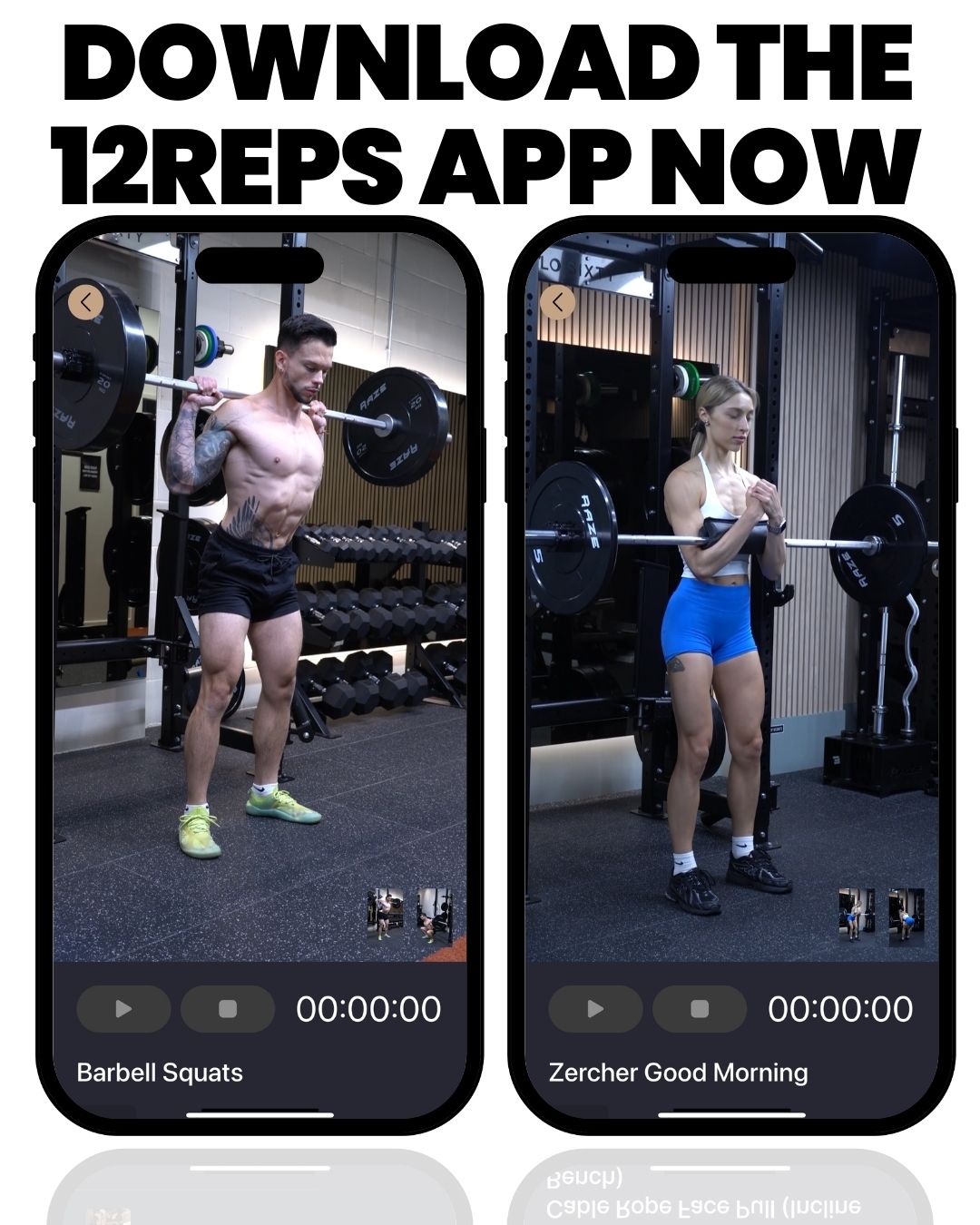
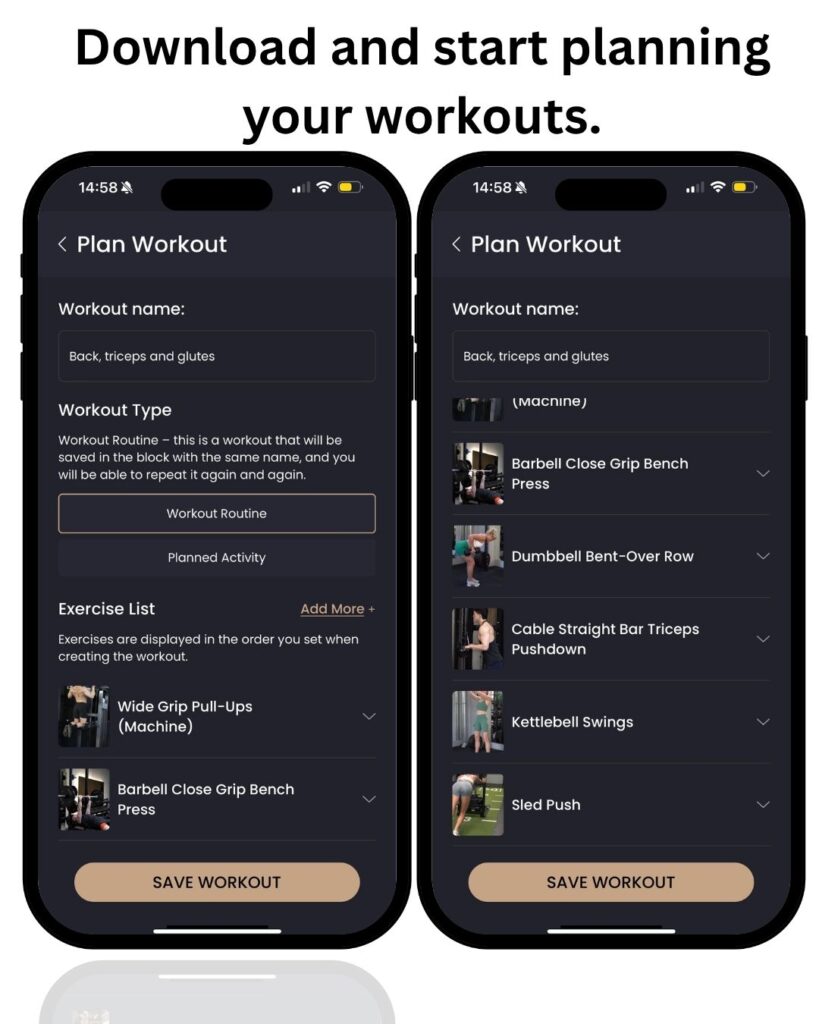
Progressive overload only works if you know what you did last time. In the 12REPS app, you start your workout, watch a trainer demonstration, then enter your reps and weight for each set. The app remembers what you lifted and tracks your workouts, streaks and weekly goal.
Video: How women should track progress: scale or photos. The scale is only one measure. This video covers other ways to see how your training is working.
Your next step
The science is clear on the basics: lift regularly, challenge yourself and progress gradually. The rest is consistency. There will be days when the weights feel heavy and you question your progress. Those are the days to show up anyway.
Over 50? Our strength training program for women over 50 adapts these principles with extra safety guidance.
Want a plan built around your goal, your equipment and your time? The 12REPS app sets out each session and shows a trainer demonstration for every exercise.

Sources
- Sex differences in resistance training: a systematic review and meta-analysis. Roberts BM, Nuckols G, Krieger JW. Journal of Strength and Conditioning Research, 2020. https://pubmed.ncbi.nlm.nih.gov/32218059/
- Resistance training alters body composition in middle-aged women depending on menopause: a 20-week control trial. Isenmann E et al. BMC Women’s Health, 2023. https://doi.org/10.1186/s12905-023-02671-y
- Strong, steady and straight: UK consensus statement on physical activity and exercise for osteoporosis. Brooke-Wavell K et al. British Journal of Sports Medicine, 2022. https://pubmed.ncbi.nlm.nih.gov/35577538/
- High-intensity resistance and impact training improves bone mineral density and physical function in postmenopausal women with osteopenia and osteoporosis: the LIFTMOR randomized controlled trial. Watson SL et al. Journal of Bone and Mineral Research, 2018. https://doi.org/10.1002/jbmr.3284
- The efficacy of strength exercises for reducing the symptoms of menopause: a systematic review. Capel-Alcaraz AM et al. Journal of Clinical Medicine, 2023. https://doi.org/10.3390/jcm12020548
- Association of efficacy of resistance exercise training with depressive symptoms: meta-analysis and meta-regression analysis of randomized clinical trials. Gordon BR et al. JAMA Psychiatry, 2018. https://doi.org/10.1001/jamapsychiatry.2018.0572
- Muscle-strengthening activities are associated with lower risk and mortality in major non-communicable diseases: a systematic review and meta-analysis of cohort studies. Momma H, Kawakami R, Honda T, Sawada SS. British Journal of Sports Medicine, 2022. https://bjsm.bmj.com/content/56/13/755
- Resistance training rejuvenates aging skin by reducing circulating inflammatory factors and enhancing dermal extracellular matrices. Nishikori S et al. Scientific Reports, 2023. https://doi.org/10.1038/s41598-023-37207-9
- Physical activity guidelines for adults aged 19 to 64. NHS, 2024. https://www.nhs.uk/live-well/exercise/physical-activity-guidelines-for-adults-aged-19-to-64/
- Progression models in resistance training for healthy adults (position stand). American College of Sports Medicine, Medicine & Science in Sports & Exercise, 2009. https://pubmed.ncbi.nlm.nih.gov/19204579/
- Dose-response relationship between weekly resistance training volume and increases in muscle mass: a systematic review and meta-analysis. Schoenfeld BJ, Ogborn D, Krieger JW. Journal of Sports Sciences, 2017. https://doi.org/10.1080/02640414.2016.1210197
- How many times per week should a muscle be trained to maximize muscle hypertrophy? A systematic review and meta-analysis. Schoenfeld BJ, Grgic J, Krieger J. Journal of Sports Sciences, 2019. https://doi.org/10.1080/02640414.2018.1555906