
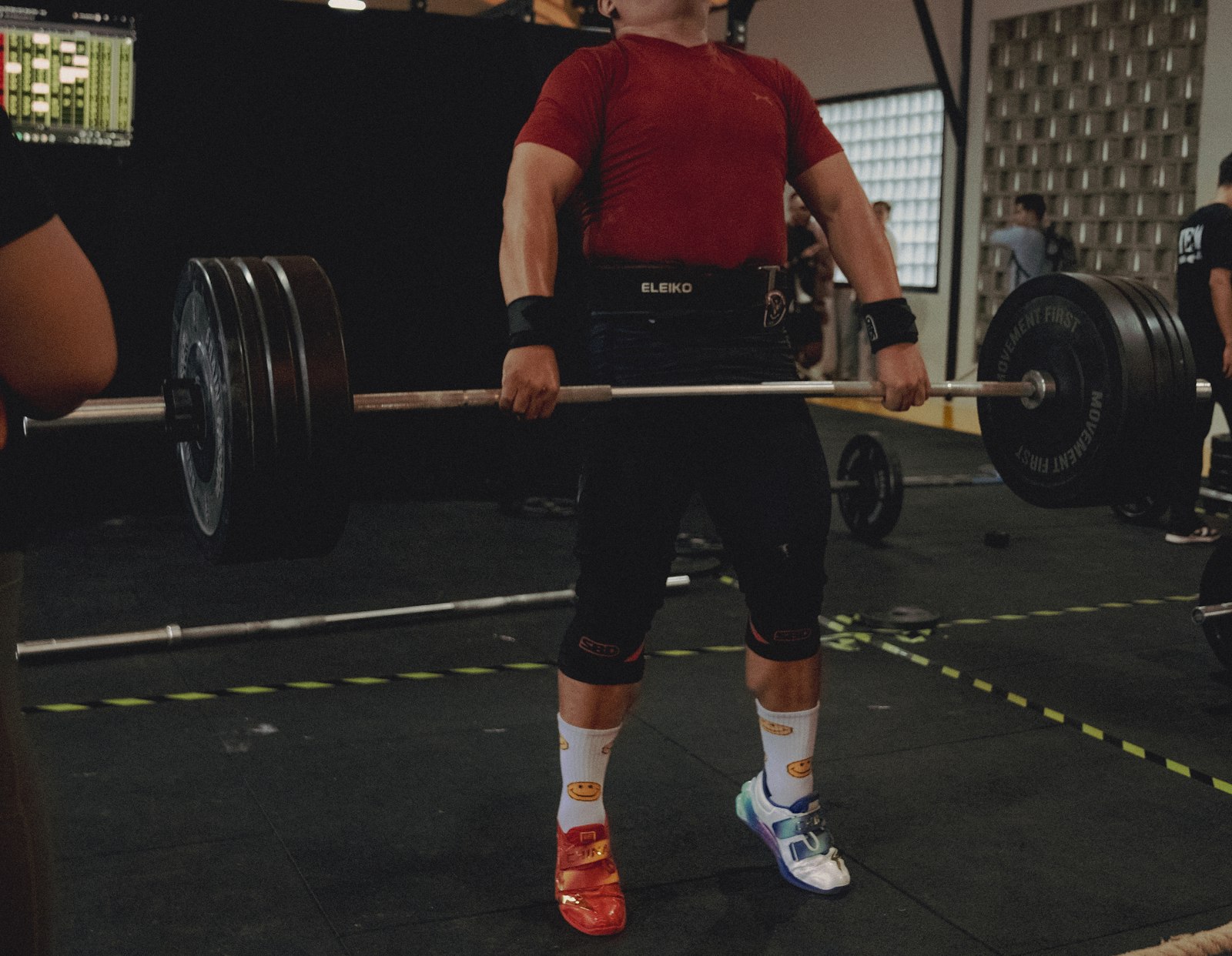



The short answer: the dumbbell RDL and the barbell RDL train the same movement, a hip hinge that works your hamstrings, glutes and lower back. The barbell lets you lift heavier and add weight in small steps, so it’s the better choice as a main strength lift. Dumbbells are easier to set up, work well at home and lead naturally into single-leg RDLs, but most people outgrow their dumbbells or their grip sooner. Pick the barbell if you want to build maximum strength and load, and dumbbells if you want convenience, variety or a simpler way to learn the movement.
This guide is for anyone who does Romanian deadlifts (RDLs) and wants to know which version to use, or anyone choosing between them for a home or gym program. I’ll cover the differences, what the research shows about RDLs, how to do both versions, common mistakes and how to program them. If you want a full technique deep dive, my RDL form guide covers the basics in more detail.
Dumbbell vs barbell RDL: the main differences
| Dumbbell RDL | Barbell RDL | |
|---|---|---|
| Where the weight sits | One dumbbell in each hand, in front of or beside your thighs | One bar in front of your thighs |
| How heavy you can go | Limited by the heaviest dumbbells and your grip | Much heavier, with small jumps in weight |
| Setup | Pick up the dumbbells and go | Needs a rack or a lift from the floor |
| Grip demand | High, because you hold two separate weights | High at heavy loads. Straps can help |
| Freedom of movement | Your hands and arms can find a natural path | Fixed path, with the bar staying close to your legs |
| Single-leg option | Easy to switch to single-leg RDLs | Possible, but awkward |
| Best for | Beginners, home training, higher reps, single-leg work | Strength, heavy loads, long-term progress |
What muscles do RDLs work?
| Muscle | Role |
|---|---|
| Hamstrings | Main mover. They lengthen as you lower and pull your hips forward as you stand |
| Glutes | Drive your hips forward to stand up |
| Lower back (erector spinae) | Hold your spine in position the whole time |
| Upper back and lats | Keep the weight close to your body |
| Forearms and grip | Hold the weight for every rep |
What the research says
I couldn’t find any study that compares dumbbell and barbell RDLs directly. There is useful research on the RDL itself and on hip-hinge exercises for the hamstrings.
- The RDL works the hamstrings hard. A 2014 study of 12 weight-trained men compared the leg curl, good morning, glute-ham raise and RDL at 85% of each lifter’s one-rep max. Hamstring activity was highest during the RDL and the glute-ham raise.
- Hip-hinge exercises favor a different part of the hamstrings. A 2017 study of 24 active men found that a hip-extension exercise (the 45° back extension) worked the biceps femoris long head, the outer hamstring that is often injured in sprinting, more selectively than knee-bending exercises like the Nordic curl, which favored the inner hamstrings.
- Hip-extension training can grow that muscle. In a 10-week training study of 30 active men, the group doing the 45° hip extension grew their biceps femoris long head more than a group doing Nordic curls. Both groups grew their inner hamstrings by a similar amount.
The hip extension in those two studies isn’t an RDL, but it’s the same hip-hinge pattern. Together, the research suggests RDLs are a strong choice for the hamstrings, and that pairing them with a knee-bending exercise like a leg curl covers the muscle group well. Whether you hold a barbell or dumbbells is a practical choice. The advice below comes from my coaching experience.
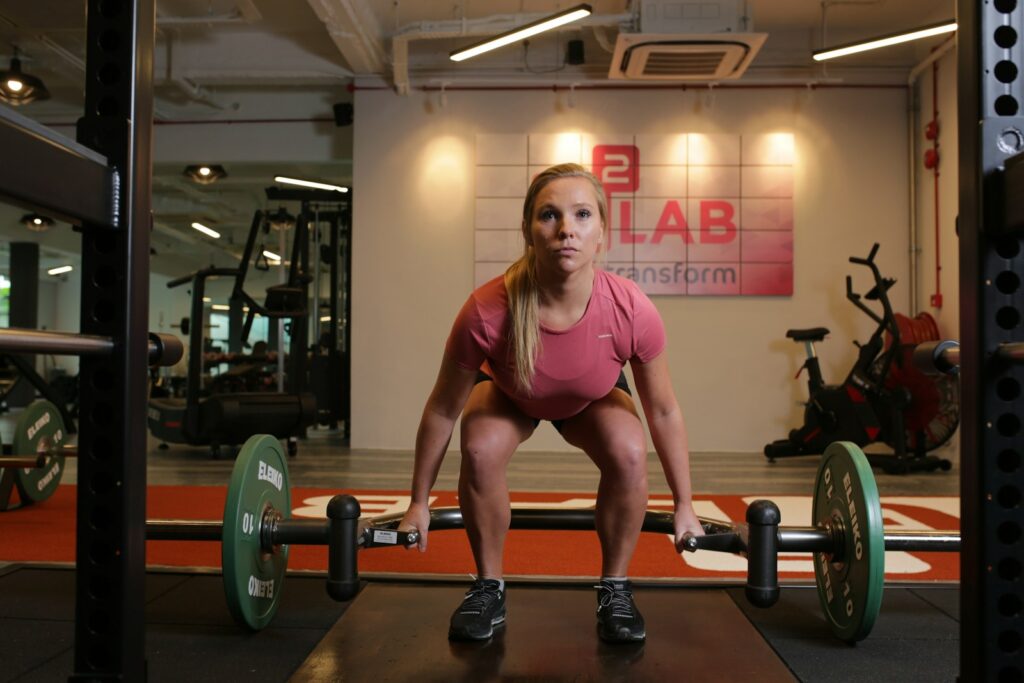
How to do a barbell RDL
- Set the bar in a rack at about mid-thigh height, or deadlift it from the floor to start.
- Stand with your feet about hip width apart. Hold the bar with an overhand grip just outside your thighs.
- Stand tall, brace your stomach and pull your shoulders back slightly.
- With a slight bend in your knees, push your hips back. Let the bar slide down the front of your thighs.
- Keep your back flat and lower the bar until you feel a strong stretch in your hamstrings. For most people, that’s around knee height to mid-shin.
- Drive your hips forward and squeeze your glutes to stand back up. Don’t lean back at the top.
How to do a dumbbell RDL
- Stand with your feet about hip width apart, holding a dumbbell in each hand in front of your thighs.
- You can hold the dumbbells with palms facing your legs or facing each other. Pick whichever feels better on your wrists and shoulders.
- Brace your stomach, keep a slight bend in your knees and push your hips back.
- Let the dumbbells travel down close to your legs, either in front of your thighs or slightly to the sides.
- Lower until you feel a strong stretch in your hamstrings, keeping your back flat.
- Drive your hips forward to stand tall and squeeze your glutes at the top.
Coaching cues I use for both: “push your hips back to the wall behind you,” “weight close to your legs” and “soft knees, not bent knees.” The movement comes from your hips. Your knees stay at roughly the same bend from start to finish.
Common mistakes and how to fix them
| Mistake | Why it matters | Fix |
|---|---|---|
| Rounding your back | Shifts the load onto your spine | Stop the rep where your back starts to round. Use a lighter weight |
| Bending your knees too much | Turns it into a squat-like deadlift and takes work off your hamstrings | Keep a slight, fixed knee bend |
| Weight drifting away from your legs | Increases strain on your lower back | Keep the bar or dumbbells brushing your thighs |
| Going too low | You lose your flat back and the hamstring stretch | Lower only until you feel a strong stretch |
| Leaning back at the top | Arches your lower back | Stand tall and squeeze your glutes |
| Looking up at the ceiling | Cranks your neck and can pull your back out of position | Keep your neck in line with your back, eyes a few feet ahead on the floor |
| Rushing the lowering phase | Misses much of the hamstring work | Take 2–3 seconds to lower |
Which should you do?
- You’re learning the RDL: start with dumbbells or a light barbell. Dumbbells are easier to set up and put down if something feels off.
- You train at home: dumbbells are the obvious choice. Use slower lowering and single-leg RDLs to keep them challenging.
- You want maximum hamstring and glute strength: make the barbell RDL your main hinge. You’ll be able to keep adding weight for longer.
- Your grip fails before your hamstrings: use lifting straps, or switch to the barbell, which is easier to hold heavy with a double overhand or mixed grip.
- You want both: use the barbell RDL as your heavy lift, and dumbbell or single-leg RDLs as a second hinge later in the week.
Sets, reps and where they fit
These are starting points I use with most lifters. Adjust them to your goal and the rest of your program.
| Version | Sets | Reps | Rest |
|---|---|---|---|
| Barbell RDL | 3–4 | 6–10 | 2–3 minutes |
| Dumbbell RDL | 3–4 | 8–15 | 90 seconds–2 minutes |
| Single-leg dumbbell RDL | 2–3 | 8–12 per leg | 60–90 seconds |
Do RDLs early in your lower-body session when you’re fresh. Once or twice a week is plenty for most people, because they’re demanding on your lower back and hamstrings.
What to do when your dumbbells get too light
- Slow down: take 3–4 seconds to lower each rep.
- Pause: hold for 2 seconds at the bottom, in the stretch.
- Go single-leg: the same dumbbell feels much heavier on one leg.
- Add a deficit: stand on a low, stable plate or step to increase the range, as long as your back stays flat.
- Use straps: if grip is the limit, straps let your hamstrings do more of the work.
Summary
- Dumbbell and barbell RDLs train the same hip hinge for your hamstrings, glutes and lower back.
- The barbell lets you lift heavier and progress for longer.
- Dumbbells are simpler to set up, great at home and make single-leg work easy.
- Research shows the RDL is one of the best hamstring exercises, but no study has compared the dumbbell and barbell versions directly.
- Pick by your goal and equipment, or use both in the same week.
Train your hamstrings with a clear plan
Choosing between dumbbells and a barbell is easy once you know your goal. Sticking to a plan that adds weight at the right time is harder. That’s where 12REPS helps.
12REPS gives you trainer-built programs with two demo videos for every exercise, so you can check your RDL form before you start. The gym log shows what you lifted last time, so you know when to add weight. Build Your Routine lets you add dumbbell or barbell RDLs to your own week, and the built-in timer keeps your rest on track. Every new account starts with a 7-day free trial.
Download 12REPS and see what you’ll get:
Sources
- McAllister MJ, Hammond KG, Schilling BK, Ferreria LC, Reed JP, Weiss LW. Muscle activation during various hamstring exercises. Journal of Strength and Conditioning Research. 2014;28(6):1573–1580.
- Bourne MN, Williams MD, Opar DA, Al Najjar A, Kerr GK, Shield AJ. Impact of exercise selection on hamstring muscle activation. British Journal of Sports Medicine. 2017;51:1021–1028.
- Bourne MN, Duhig SJ, Timmins RG, et al. Impact of the Nordic hamstring and hip extension exercises on hamstring architecture and morphology. British Journal of Sports Medicine. 2017;51(5):469–477.
Related reading
- Romanian Deadlift (RDL) Form: Complete Guide for Women
- Seated vs Lying Leg Curl: Which Builds Bigger Hamstrings?
- Good Morning Exercise: How to Do It, Muscles Worked and Benefits
- Sumo vs Conventional Deadlift
- Dumbbell Leg Day: 4 Simple Moves
I’m Will Duru, a personal trainer and the founder of 12REPS. I hold a BSc (Hons) in Sport and Exercise Science and have more than a decade of experience coaching people in strength training.
