

By Will Duru, BSc (Hons) Sport and Exercise Science, Award-winning Personal Trainer with over 10 years of experience in strength training and optimising recovery.
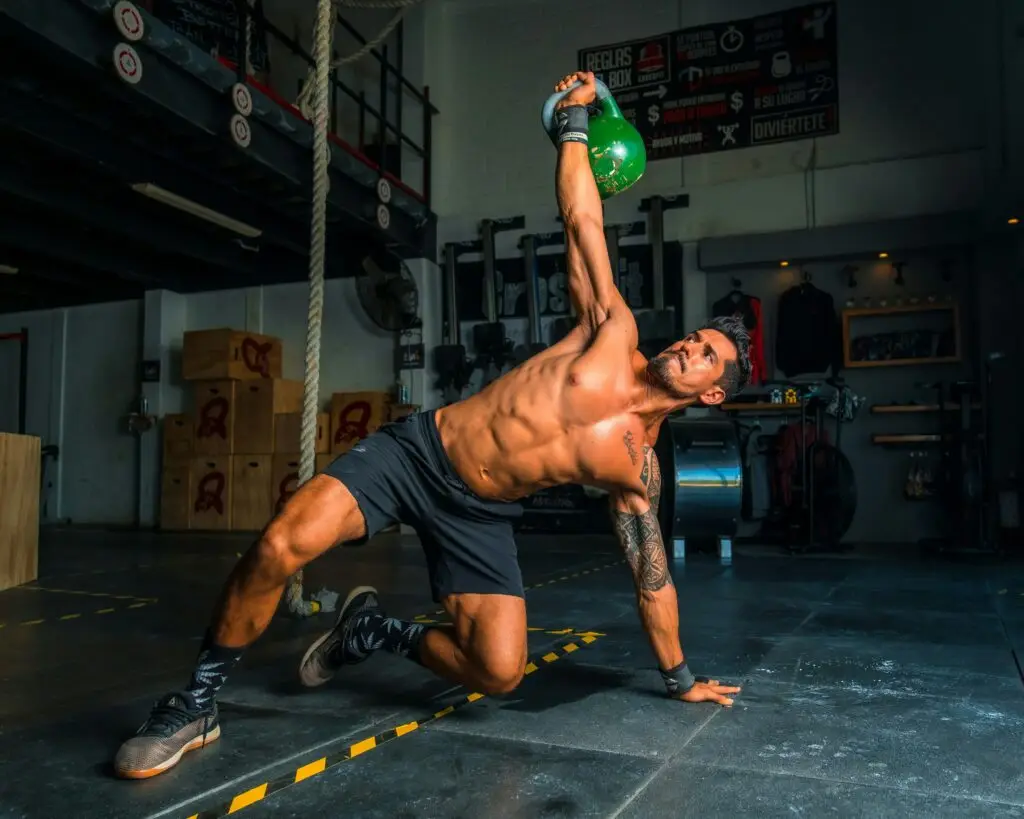
A functional kettlebell workout trains the movements you use in daily life: squatting, hinging, pulling, pressing overhead, and getting down to the floor and back up. This five-move plan covers all of them: box front squats, single-arm swings, renegade rows, burpee to rows and clean to alternating press. The plan uses 4 sets per exercise and 60 seconds of rest.
As a trainer, one of the most common things I hear is that people don’t have enough time to work out. My answer is often the same: grab a kettlebell.
Who this workout is for
- You want strength that carries over to lifting, carrying and moving around in everyday life.
- You have one or two kettlebells and a box or bench, at home or in the gym.
- You can already squat, hinge and hold a plank with good form.
If you mainly want the shortest possible session, see the kettlebell workout for busy people. New to kettlebells? Start with the full-body kettlebell workout for beginners.

What does "functional" training mean?
There is no single agreed definition. In practice, functional training means exercises that copy whole movement patterns. They often use several joints at once, and you usually do them standing or on the floor rather than seated in a machine.
Here is how each move in this plan links to everyday life:
| Exercise | Movement pattern | Everyday example |
|---|---|---|
| Box front squat | Squat | Sitting down and standing up from a chair |
| Single-arm swing | Hip hinge | Picking something up from the floor |
| Renegade row | Pull while holding a plank | Pulling a heavy door while keeping your trunk steady |
| Burpee to row | Getting down and up | Getting down to the floor and back to standing |
| Clean to alternating press | Lift to shoulder, then press overhead | Lifting a bag onto a high shelf |
A 2021 systematic review of functional training in athletes found improvements in strength, power, speed, balance and agility. Body composition did not change (Xiao and colleagues, 2021). Only nine studies met its criteria, and their quality was rated fair, so the evidence is still limited.

What the research says about kettlebells
The most quoted kettlebell study is small and industry-funded. The American Council on Exercise (ACE), a fitness certification organization, paid for it and published the results on its own website (ACE, 2013). Eighteen fit young adults did two hour-long kettlebell classes a week for 8 weeks, and 12 others acted as a comparison group.
The kettlebell group’s aerobic capacity rose by about 14%, and their leg press and grip strength improved. Their plank hold time rose by about 70%, and balance while reaching improved in two of the three directions tested. Body fat did not change.
That 70% figure is often quoted as “core strength”, but it measured how long people could hold a plank. With so few people and industry funding, treat these results as an early signal, not proof.
A scoping review of kettlebell research found most studies were small and reported mostly trivial to small effects (Meigh and colleagues, 2019). So kettlebells are not proven to be better than other tools. They are a practical way to train these movement patterns with very little equipment.
The functional full-body kettlebell workout
Spend a few minutes moving gently to warm up, then ease into the box front squats with a light set or two. Stay on each exercise until its sets are done.
| Exercise | Sets | Reps | Weight | Rest |
|---|---|---|---|---|
| Kettlebell Box Front Squats | 4 | 12 | Challenging | 60 seconds |
| Kettlebell Single Arm Swings | 4 | 10 per hand | Moderate | 60 seconds |
| Kettlebell Renegade Rows | 4 | 6 per arm | Challenging | 60 seconds |
| Kettlebell Burpees to Rows | 4 | 10 | Moderate | 60 seconds |
| Kettlebell Clean to Alternating Press | 4 | 5 per arm | Challenging | 60 seconds |
- Challenging: the closing reps of each set feel tough, but you can still do them well.
- Moderate: the set feels steady, and you could clearly do more good reps.
How to do each move
1. Kettlebell box front squat
This is your squat pattern. Hug the bell at chest height, lower until you just reach the box, and rise without rocking. The box front squat exercise page lists more cues.
2. Kettlebell single-arm swing
This is your hinge. Load your hips by passing the bell back behind you, then stand up sharply so it rises to chest height. Work one hand at a time, then change sides. Our kettlebell swing guide covers the details.
3. Kettlebell renegade row
- Set up in a high plank with one hand on the kettlebell handle and the other on the floor or a second bell.
- Set your feet wide to help you balance.
- Row the bell toward your ribs without letting your hips twist or sag.
- Lower it with control. Finish all reps, then switch arms.
4. Kettlebell burpee to row
This trains getting down to the floor and back up. One rep is a bent-over row plus a burpee: row with your back flat, place your hands down, step or jump into a plank, then come back up to standing. Copy the sequence in the demo.
5. Kettlebell clean to alternating press
- Hinge and take the handle in one hand.
- Use a sharp hip drive to bring the bell up along your body, so it rests on your forearm at shoulder height.
- Tighten your trunk and press overhead to a straight arm, then bring it back to the shoulder.
- Switch arms as shown in the demo, until you reach 5 reps per arm.
Each move has a 12REPS demo video below. Record the weight and reps for each set as you go.
Demo: kettlebell box front squat. Elbows down, chest up, brush the box.
Demo: kettlebell single-arm swing. Snap your hips; your arm just guides the bell.
Demo: kettlebell renegade row. Row without letting your hips twist.
Demo: kettlebell burpee to row. Step back instead of jumping if you need to.
Demo: kettlebell clean to press. Keep the bell close on the way up.
Easier options while you learn
Video: Kettlebell gorilla row. If you cannot hold a steady plank during the renegade row yet, try this row from a wide, hinged stance. This 12REPS demo shows the setup, and the kettlebell gorilla row exercise page has more cues.
Video: Kettlebell shoulder press. If the clean feels awkward, practice the press on its own first. This 12REPS demo shows a steady overhead press from the shoulder.
How to progress
Progressive overload means asking a bit more of your body as it adapts. Here are three ways to do it with this plan:
- Go heavier once every set is smooth from start to finish.
- Increase the reps or sets. If you do not have a heavier bell, add a few reps or a fifth set.
- Rest less. Cut your rest to 45 seconds to challenge your heart and lungs more.
Pick one of these at a time. Read the beginner guide to progressive overload for help choosing.
Fuel your training
Build your meals around a protein source, with vegetables, whole grains and some healthy fats. Our article on how much protein to eat to build muscle sets out daily targets.
Train it with 12REPS
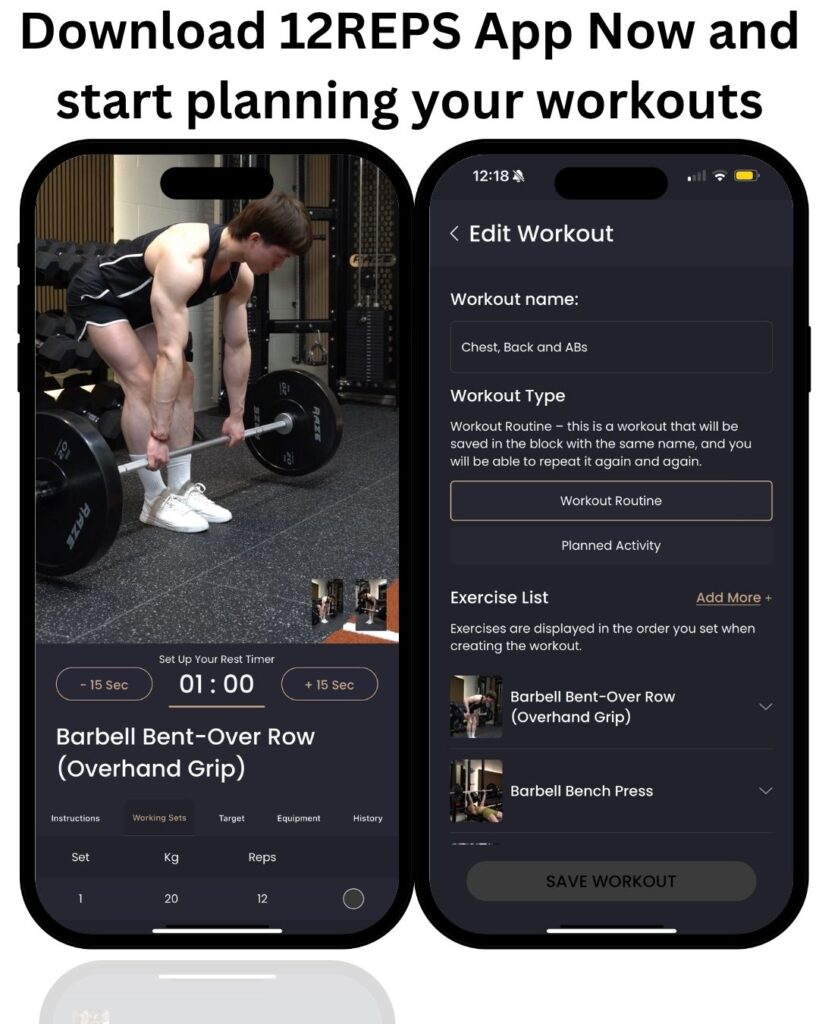
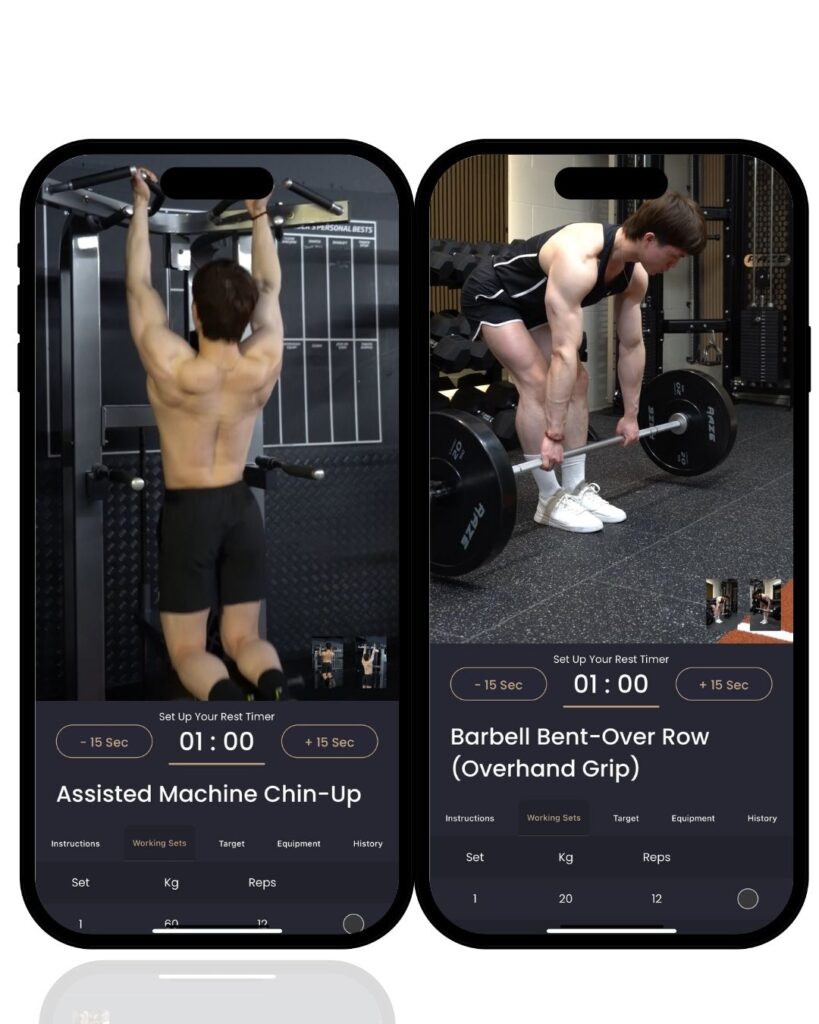
New movement patterns are easier to learn when you can see them done well. In 12REPS, every exercise comes with a demonstration from a qualified personal trainer, and your sessions are planned around your goal, equipment and available time. Enter your weight and reps as you train, and the app shows them next session as your number to beat.
Functional kettlebell FAQs
Is kettlebell training the same as functional training?
Not always. A kettlebell curl is not very functional. Kettlebell moves become functional when they train whole patterns, like the squat, hinge, row and press in this plan.
How often should I do this workout?
The CDC advises adults to strengthen all major muscle groups on 2 or more days each week (CDC). Two sessions of this plan a week is a sensible start.
Can this replace cardio?
It raises your heart rate, and the ACE study saw aerobic capacity improve. The same guidelines still advise 150 minutes of moderate aerobic activity a week (or 75 minutes of vigorous activity), so keep walking, cycling or running too.
For more ways to train these patterns, see our functional strength kettlebell and dumbbell workouts.

Start light, learn each pattern well and add weight over time. That is how this workout keeps paying off.
Sources
- Effect of Functional Training on Physical Fitness Among Athletes: A Systematic Review. Xiao W, Soh KG, Wazir MRWN, et al. Frontiers in Physiology, 2021. https://doi.org/10.3389/fphys.2021.738878
- ACE-Sponsored Research Study: Kettlebells Kick Butt. American Council on Exercise (study by Porcari JP, Beltz N, Erbes D, et al.), 2013. https://www.acefitness.org/certifiednewsarticle/3172/ace-sponsored-research-study-kettlebells-kick-butt/
- Kettlebell training in clinical practice: a scoping review. Meigh NJ, Keogh JWL, Schram B, Hing WA. BMC Sports Science, Medicine and Rehabilitation, 2019. https://doi.org/10.1186/s13102-019-0130-z
- Adult Activity: An Overview. Centers for Disease Control and Prevention (CDC), 2023. https://www.cdc.gov/physical-activity-basics/guidelines/adults.html