A superset workout pairs two exercises and does them back to back, resting only after both. To build one, pick pairs that work different muscles, set them up close together, and rest after each pair. Done well, a superset workout covers the same work as a regular session in less time.
This is a practical how-to. For what supersets are and how the types compare, read our guide to the types of supersets.
Most superset workouts are written as lettered pairs. A1 and A2 are the first pair, B1 and B2 the second, and so on.
The time saving comes from the rest you skip. While one muscle works, the other recovers. A 2021 review reported that supersets can roughly halve training time while keeping the same training volume (Iversen et al., 2021). Training volume is the total work you do, such as your number of hard sets.
If your main goal is maximal strength, keep your heaviest lift as regular sets with full rest. Time-saving methods are probably better for building muscle than for maximal strength (Iversen et al., 2021). Pair the lighter exercises that follow.
The simplest pairs use opposing muscles, like a push with a pull, or different body parts, like an upper-body move with a lower-body move. In a 2025 meta-analysis, opposing-muscle pairs let people do more reps than traditional sets. Pairs with similar movements lowered total volume load (Zhang et al., 2025).
Choose exercises you can do in one spot, such as two exercises on the same cable station or one pair of dumbbells. Long walks across the gym cancel out the time you save. In a busy gym, pick pairs that share one piece of equipment.
A superset changes the order of your exercises, not your sets and reps. Keep the same targets you would use for regular sets. Expect the session to feel harder than usual. Supersets raise perceived effort (Zhang et al., 2025).
Take your rest after you finish both exercises. If your form slips or you miss your target reps, rest a little longer. Our guide on how long to rest between sets explains how rest length affects strength and muscle gains.
Each exercise below links to its 12REPS exercise page, so you can check the technique before you start.
A classic push and pull. Both are seated and guided, which makes them a good first superset.
You only need one pair of dumbbells and a bench. Do the press on the incline bench, then use the same bench to support yourself for the row. Here is the dumbbell single-arm row demo.
The legs and back barely overlap, so each gets a break. Split squats raise your breathing, so take an extra moment before the pulldown if you need it.
Opposing arm muscles make a simple finisher at the end of a session.
An upper-lower pair that needs no equipment. For two full sessions, try our kettlebell and bodyweight superset workouts.
Here is how a full-body gym session could look using the pairs above. Use the sets, reps and loads from your current program.
| Pair | Exercise 1 | Exercise 2 | Why it works |
|---|---|---|---|
| A | Barbell squat | None (straight sets) | Heaviest lift, done fresh with full rest. |
| B | Incline dumbbell chest press | Dumbbell single-arm row | Push and pull on one bench. |
| C | Bulgarian split squat | Lat pulldown | Legs and back barely overlap. |
| D | Z-bar biceps curl | Rope triceps extension | Opposing arm muscles. |
Warm up before you start. Our guide on how to warm up before lifting weights covers what to do.
Record each exercise on its own line, with the weight and reps for every set. Next time, aim to beat one number, such as one more rep or a little more weight. This is progressive overload: making training gradually harder so you keep improving.
Our progressive overload guide explains more, and our workout tracking guide shows how to log sessions.
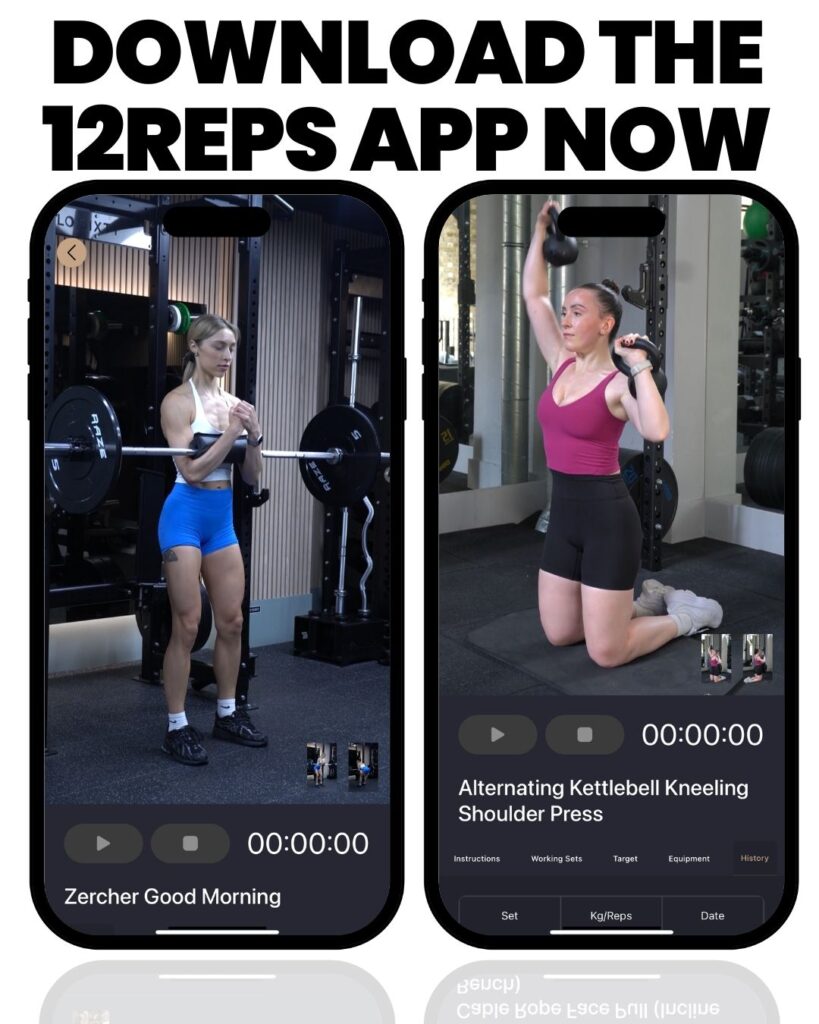
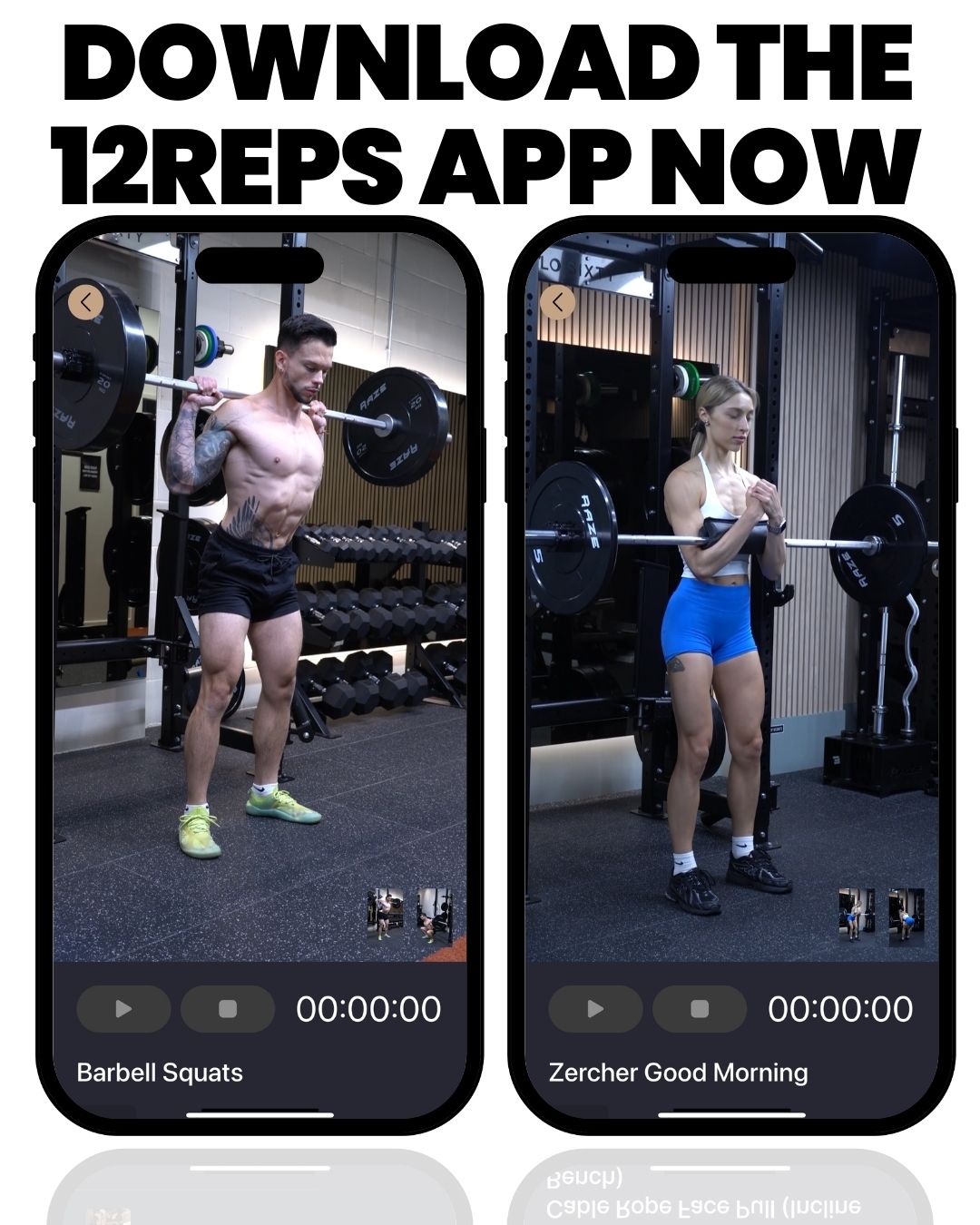
If you’d like your sessions planned for you, 12REPS builds each workout around your goal, equipment and time. You log reps and weight as you go, and the app remembers what you lifted, so you have a number to beat. Find out more about the 12REPS app.
Yes, if you start with simple pairs that work different muscles, like a chest press and a row. Keep the loads moderate while you learn the exercises.
Not on current evidence. Long-term studies show similar strength and muscle gains, with less time spent training (Zhang et al., 2025). Only a few long-term studies exist so far.
Yes. Bodyweight pairs such as press-ups with hip thrusts work well, and so do pairs that use one kettlebell or one set of dumbbells.
Disclaimer: The ideas in this blog post are not medical advice. They shouldn’t be used for diagnosing, treating, or preventing any health problems. Always check with your doctor before changing your diet, sleep habits, daily activities, or exercise. JUST12REP.COM isn’t responsible for any injuries or harm from the suggestions, opinions, or tips in this article.