



By Will Duru, BSc (Hons) Sport and Exercise Science, Award winning Personal Trainer with over 10 years of experience in strength training
Tom was 38 when he came to see me. Father of two, works in finance, commutes an hour each way. He used to play rugby at university and stayed reasonably fit through his twenties. Then kids happened.
“I haven’t properly exercised in four years,” he told me. “Between work and the kids, there’s just no time. I’ve put on about 15kg since my first child was born. My wife jokes about my dad bod, but honestly, I hate how I look and feel.”
Tom’s story is one I hear constantly. Men who were once active, who knew their way around a gym, but have let fitness slide as family responsibilities took over. The weight crept on gradually. The energy disappeared. The confidence faded.
Here is what most fitness advice gets wrong about dads. It assumes you have an hour every day to exercise. It assumes you can meal prep on Sundays. It assumes your schedule is predictable and your sleep is consistent. None of that applies when you have young children.
After training dozens of fathers over the past decade, I have developed an approach that actually works for men with demanding jobs and family responsibilities. It is not about finding more time. It is about using the time you have more effectively.
In this guide, I will share a realistic 12 week plan that has helped fathers like Tom transform their bodies without sacrificing family time or sanity.
Why the Dad Bod Happens
Before we fix the problem, let us understand why it develops. The dad bod is not just about eating too much or exercising too little. It is a perfect storm of physiological and lifestyle factors.
Testosterone decline begins around age 30, dropping roughly 1% per year. By 40, you may have 10 to 15% less testosterone than you did at 25. Lower testosterone makes it harder to build muscle and easier to store fat, particularly around the midsection.
Sleep deprivation is almost universal among new fathers. Research from the Sleep Foundation shows that new parents lose an average of six months worth of sleep in the first two years. Poor sleep increases cortisol, the stress hormone that promotes fat storage, and decreases growth hormone, which helps build muscle.
Stress from work, finances and parenting responsibilities keeps cortisol chronically elevated. A study in the Journal of Clinical Endocrinology found that chronic stress directly contributes to abdominal fat accumulation.
Sedentary behaviour increases dramatically when you have young children. The irony is that while you feel exhausted from parenting, you are actually moving less than you did before. Chasing toddlers feels tiring, but it is not the same as structured exercise.
Poor eating habits develop when you are tired and time poor. You eat whatever is quick and convenient. You finish your kids’ leftovers. You reward yourself with beer and snacks after a hard day.
Understanding these factors matters because it shows that the dad bod is not a character flaw. It is a predictable response to a challenging life stage. And it is completely reversible with the right approach.

The Three Principles of Dad Bod Transformation
My approach for busy fathers is built on three principles that differ from typical fitness advice.
Principle 1: Minimum Effective Dose
You do not need to train for an hour every day. Research from McMaster University has shown that shorter, more intense workouts can produce similar results to longer sessions. Three 45 minute workouts per week is enough to completely transform your body if you train intelligently.
The key is making every minute count. No scrolling your phone between sets. No chatting with other gym members. Focused, purposeful training with appropriate rest periods and progressive overload.
Principle 2: Consistency Over Intensity
The best workout is the one you actually do. A perfect programme that you follow 50% of the time will produce worse results than a decent programme you follow 90% of the time.
This means choosing workout times that realistically fit your schedule. For most dads I work with, this is either early morning before the kids wake up, lunchtime if they work near a gym, or immediately after work before going home. Find what works for your life and protect that time.
Principle 3: Compound Movements Only
When time is limited, you cannot waste it on bicep curls and calf raises. Every exercise needs to work multiple muscle groups simultaneously. Squats, deadlifts, bench press, rows and overhead press should form the foundation of your training.
Compound movements burn more calories, build more muscle and improve functional strength better than isolation exercises. You get more results in less time.
The 12 Week Dad Bod Fix Programme
This programme assumes you can train three times per week for approximately 45 minutes per session. If you can only manage twice per week, do Workouts A and B and alternate weekly.
Phase 1: Foundation (Weeks 1 to 4)
The first phase focuses on rebuilding your base. If you have not trained seriously in years, your body needs time to readapt to exercise. We start with moderate weights and higher reps to build work capacity and reinforce proper movement patterns.
Workout A: Push Focus
| Exercise | Sets | Reps | Rest |
|---|---|---|---|
| Barbell Bench Press | 3 | 10 to 12 | 90 sec |
| Dumbbell Shoulder Press | 3 | 10 to 12 | 90 sec |
| Incline Dumbbell Press | 3 | 10 to 12 | 60 sec |
| Tricep Pushdowns | 2 | 12 to 15 | 60 sec |
| Plank Hold | 3 | 30 sec | 45 sec |
Workout B: Pull Focus
| Exercise | Sets | Reps | Rest |
|---|---|---|---|
| Barbell Deadlift | 3 | 8 to 10 | 2 min |
| Seated Cable Row | 3 | 10 to 12 | 90 sec |
| Lat Pulldown | 3 | 10 to 12 | 90 sec |
| Dumbbell Bicep Curls | 2 | 12 to 15 | 60 sec |
| Face Pulls | 2 | 15 to 20 | 45 sec |
Workout C: Legs Focus
| Exercise | Sets | Reps | Rest |
|---|---|---|---|
| Barbell Back Squat | 3 | 10 to 12 | 2 min |
| Romanian Deadlift | 3 | 10 to 12 | 90 sec |
| Leg Press | 3 | 12 to 15 | 90 sec |
| Walking Lunges | 2 | 10 each leg | 60 sec |
| Calf Raises | 2 | 15 to 20 | 45 sec |
Phase 2: Building (Weeks 5 to 8)
In phase two, we increase the weight and decrease the reps slightly. Your body is now adapted to training and ready for more challenging loads. We also add supersets to increase workout density and keep sessions under 45 minutes.
Workout A: Push Focus
| Exercise | Sets | Reps | Rest |
|---|---|---|---|
| Barbell Bench Press | 4 | 8 to 10 | 90 sec |
| Dumbbell Shoulder Press | 3 | 8 to 10 | 90 sec |
| Incline Dumbbell Press superset with Tricep Dips | 3 | 10 each | 90 sec |
| Cable Flyes superset with Lateral Raises | 3 | 12 each | 60 sec |
Workout B: Pull Focus
| Exercise | Sets | Reps | Rest |
|---|---|---|---|
| Barbell Deadlift | 4 | 6 to 8 | 2 min |
| Weighted Pull Ups or Lat Pulldown | 3 | 8 to 10 | 90 sec |
| Barbell Row superset with Face Pulls | 3 | 10 each | 90 sec |
| Hammer Curls superset with Reverse Flyes | 3 | 12 each | 60 sec |
Workout C: Legs Focus
| Exercise | Sets | Reps | Rest |
|---|---|---|---|
| Barbell Back Squat | 4 | 8 to 10 | 2 min |
| Romanian Deadlift | 3 | 8 to 10 | 90 sec |
| Bulgarian Split Squat superset with Leg Curls | 3 | 10 each | 90 sec |
| Leg Press superset with Calf Raises | 3 | 12 each | 60 sec |
Phase 3: Intensification (Weeks 9 to 12)
The final phase pushes your limits with heavier weights and more advanced techniques. By now your strength has increased significantly and your body is capable of handling more intense training.
Workout A: Push Focus
| Exercise | Sets | Reps | Rest |
|---|---|---|---|
| Barbell Bench Press | 4 | 6 to 8 | 2 min |
| Overhead Press | 4 | 6 to 8 | 2 min |
| Incline Dumbbell Press | 3 | 8 to 10 | 90 sec |
| Weighted Dips superset with Cable Flyes | 3 | 10 each | 90 sec |
Workout B: Pull Focus
| Exercise | Sets | Reps | Rest |
|---|---|---|---|
| Barbell Deadlift | 4 | 5 to 6 | 2.5 min |
| Weighted Pull Ups | 4 | 6 to 8 | 2 min |
| Pendlay Row | 3 | 8 to 10 | 90 sec |
| Cable Row superset with Barbell Curls | 3 | 10 each | 90 sec |
Workout C: Legs Focus
| Exercise | Sets | Reps | Rest |
|---|---|---|---|
| Barbell Back Squat | 4 | 6 to 8 | 2.5 min |
| Barbell Hip Thrust | 4 | 8 to 10 | 90 sec |
| Front Squat or Leg Press | 3 | 8 to 10 | 90 sec |
| Nordic Curls or Leg Curls superset with Calf Raises | 3 | 10 each | 90 sec |
Nutrition for Busy Dads
I am not going to give you a complicated meal plan. You will not follow it. Instead, here are simple rules that work for time poor fathers.
Eat protein at every meal. Aim for a palm sized portion of meat, fish or eggs with breakfast, lunch and dinner. This typically provides 100 to 150 grams of protein daily, which is sufficient for muscle building. Good options include eggs for breakfast, chicken or tuna for lunch, and whatever protein you are cooking for family dinner.
Prepare protein in bulk. Spend 30 minutes on Sunday cooking a large batch of chicken breasts or mince. This gives you ready to eat protein for the week that you can add to any meal.
Stop drinking your calories. Beer, sugary drinks and fancy coffees add up quickly. One pint of beer is roughly 200 calories. Four pints on a Friday is 800 calories, nearly half a day’s intake. You do not have to eliminate alcohol entirely, but limit it to weekends and stick to lower calorie options like spirits with soda water.
Eat vegetables with every main meal. They fill you up, provide nutrients and have minimal calories. Frozen vegetables are fine. Tinned vegetables are fine. Do not let perfect be the enemy of good enough.
Do not finish your kids’ food. This is one of the sneakiest ways dads gain weight. Those leftover chicken nuggets and half eaten sandwiches add up. Bin them or save them for later. Your body is not a waste disposal unit.

Managing Recovery When Sleep Deprived
Perfect sleep is not realistic when you have young children. Here is how to maximise recovery with imperfect sleep.
Train early if possible. Morning workouts mean your training is complete before the chaos of the day begins. You cannot miss a workout because something came up at work or the kids need you.
Keep workouts under 45 minutes. Longer sessions create more fatigue that you cannot recover from properly when sleep deprived. Shorter, more intense sessions give you the stimulus for growth without excessive fatigue.
Do not train to absolute failure. Leave one or two reps in reserve on most sets. Training to failure dramatically increases recovery demands, which you cannot meet on broken sleep.
Prioritise sleep over training. If you had a terrible night with the kids and slept three hours, skip the gym and rest. One missed workout costs you nothing. Training in a severely sleep deprived state risks injury and produces minimal benefit.
Nap when possible. Even a 20 minute nap can significantly improve recovery. Nap during your lunch break or when the kids nap on weekends.
Common Mistakes Dads Make
Mistake 1: All or Nothing Thinking
Many dads believe that if they cannot train perfectly, there is no point training at all. This is backwards. A mediocre workout is infinitely better than no workout. Twenty minutes is better than nothing. Showing up when you are tired is better than waiting for the perfect day that never comes.
Mistake 2: Trying to Train Like You Did at 25
Your body has changed. Your recovery capacity has decreased. Your schedule has changed. Training programmes designed for young, single men with no responsibilities will not work for you. Accept where you are and train accordingly.
Mistake 3: Neglecting Compound Movements
Dads often gravitate towards machines and isolation exercises because they seem easier. But compound free weight movements build more muscle, burn more calories and improve functional strength. Spend your limited time on the exercises that give the best return.
Mistake 4: Not Tracking Progress
If you do not track your workouts, you do not know if you are progressing. Without progression, your body has no reason to change. Write down what you lift each session and aim to do slightly more over time.
Mistake 5: Waiting for Motivation
Motivation is unreliable. Dads who successfully transform their bodies do not feel like training most of the time. They train anyway because they have built the habit and committed to the schedule. Discipline beats motivation every time.
Back to Tom
Remember Tom from the beginning? After 12 weeks following this programme, he had lost 9kg and added noticeable muscle to his chest, shoulders and arms. His wife stopped joking about his dad bod and started commenting on how good he looked.
More importantly, he had more energy to play with his kids. He stopped feeling winded climbing stairs. He slept better despite still being woken by his children. His confidence at work improved because he felt better about himself.
“The biggest change is mental,” he told me. “I feel like myself again. Not the tired, soft version of me that developed after the kids were born. I feel like the guy my wife married, just older and hopefully wiser.”
Tom trained three times per week for 45 minutes. He did not follow a perfect diet. He still had beers on Friday nights with his mates. He still ate his kids’ birthday cake. He just applied the principles consistently, week after week, and let the results accumulate.

How to Get Started Today
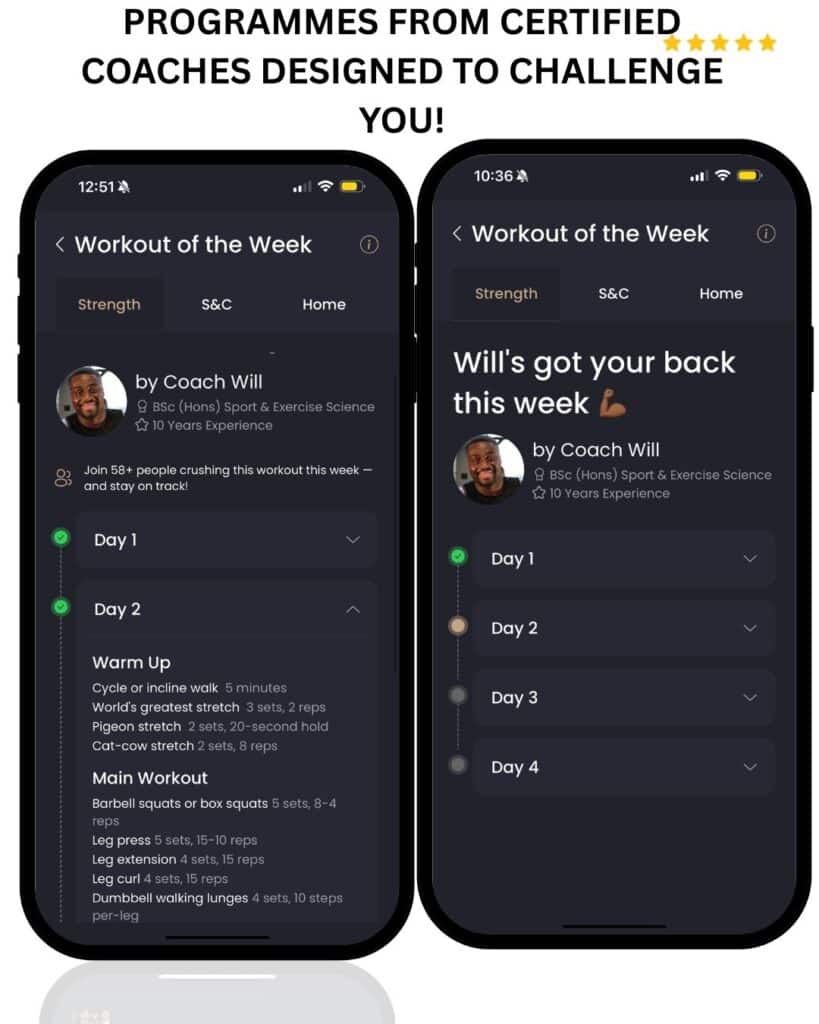
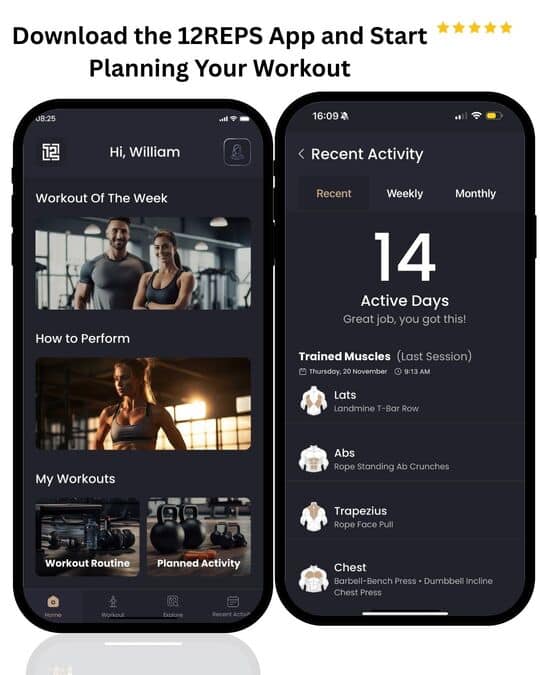
If you want to follow a structured programme without figuring out all the details yourself, the 12REPS app can help. It includes programmes designed for busy people who need efficient, effective workouts.
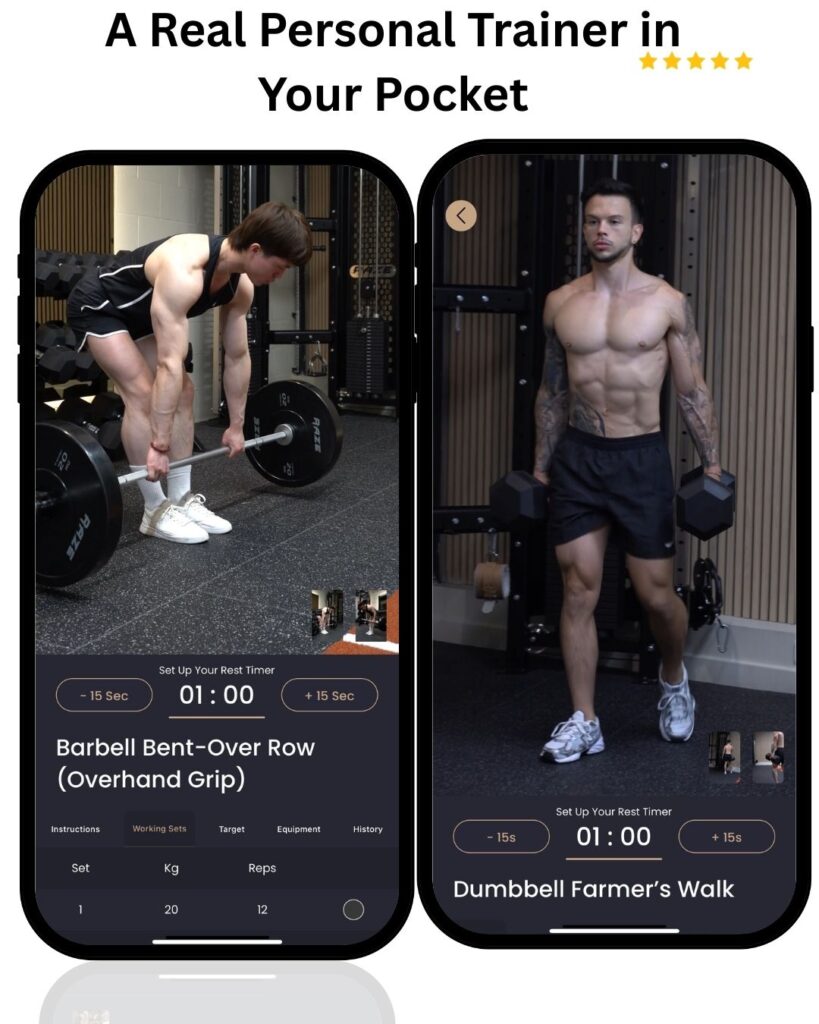
The app tracks your progress automatically, shows you video demonstrations of every exercise and tells you when to increase weight. You can build your own routine from the exercise library or follow one of the pre built programmes.
Whether you train at home with minimal equipment or at a commercial gym, the app adapts to what you have available. You can learn more about all the features and start your 7 day free trial at download 12reps app now.
Final Thoughts
The dad bod is not inevitable. It is a temporary state that can be reversed with the right approach. You do not need hours in the gym every day. You do not need a perfect diet. You need three focused workouts per week, adequate protein and consistency over months.
Your kids are watching you. The habits you model now will influence their relationship with fitness for their entire lives. Show them that looking after your health is a priority, not a luxury.
You became a father. You did not stop being a man who deserves to feel strong, energetic and confident in his own body.
The only question is whether you will start.
Related Articles on just12reps.com
Article | Description | Link |
3 Day Strength Training Split for Men: Build Muscle and Lose Fat | A complete 12 week programme for men wanting to transform their physique with just three gym sessions per week. | |
The Complete Beginner’s Guide to Strength Training | If you have not trained in years, start here. This guide covers everything from proper form to nutrition basics. | |
Strength Training for Men Over 50 | For older dads, this guide addresses the specific challenges of building muscle and staying fit in your fifties and beyond. | |
The Science Behind 12 Rep Training | Understand why the 10 to 12 rep range is optimal for building muscle and how to apply it to your training. | |
No Gym, No Problem: Bodyweight Exercises for Home | Cannot get to the gym? This guide shows you how to build strength at home with zero equipment. |
References
[1] Travison, T.G. et al. (2007). A Population Level Decline in Serum Testosterone Levels in American Men. Journal of Clinical Endocrinology and Metabolism. https://academic.oup.com/jcem/article/92/1/196/2598434
[2] Sleep Foundation. Sleep Deprivation and New Parents. https://www.sleepfoundation.org/pregnancy/sleep-deprivation-and-new-parents
[3] Epel, E.S. et al. (2000). Stress and Body Shape: Stress Induced Cortisol Secretion Is Consistently Greater Among Women With Central Fat. Psychosomatic Medicine. https://journals.lww.com/psychosomaticmedicine/pages/default.aspx
[4] Gibala, M.J. et al. (2012). Physiological adaptations to low volume, high intensity interval training in health and disease. Journal of Physiology. https://physoc.onlinelibrary.wiley.com/journal/14697793
[5] McMaster University. Short Workouts Can Be As Effective As Longer Sessions. https://dailynews.mcmaster.ca/
[6] Schoenfeld, B.J. et al. (2017). Strength and Hypertrophy Adaptations Between Low vs High Load Resistance Training. Journal of Strength and Conditioning Research. https://journals.lww.com/nsca-jscr/pages/default.aspx
About the Author: Will Duru holds a BSc (Hons) in Sport and Exercise Science and is an award winning personal trainer with over 10 years of experience specialising in strength training and body transformation. He has helped hundreds of busy professionals and parents achieve their fitness goals through efficient, science based training programmes. Will is the creator of the 12REPS app, designed to bring professional training guidance to everyone.