


By Will Duru, BSc (Hons) Sport and Exercise Science, Award-winning Personal Trainer with over 10 years of experience in strength training
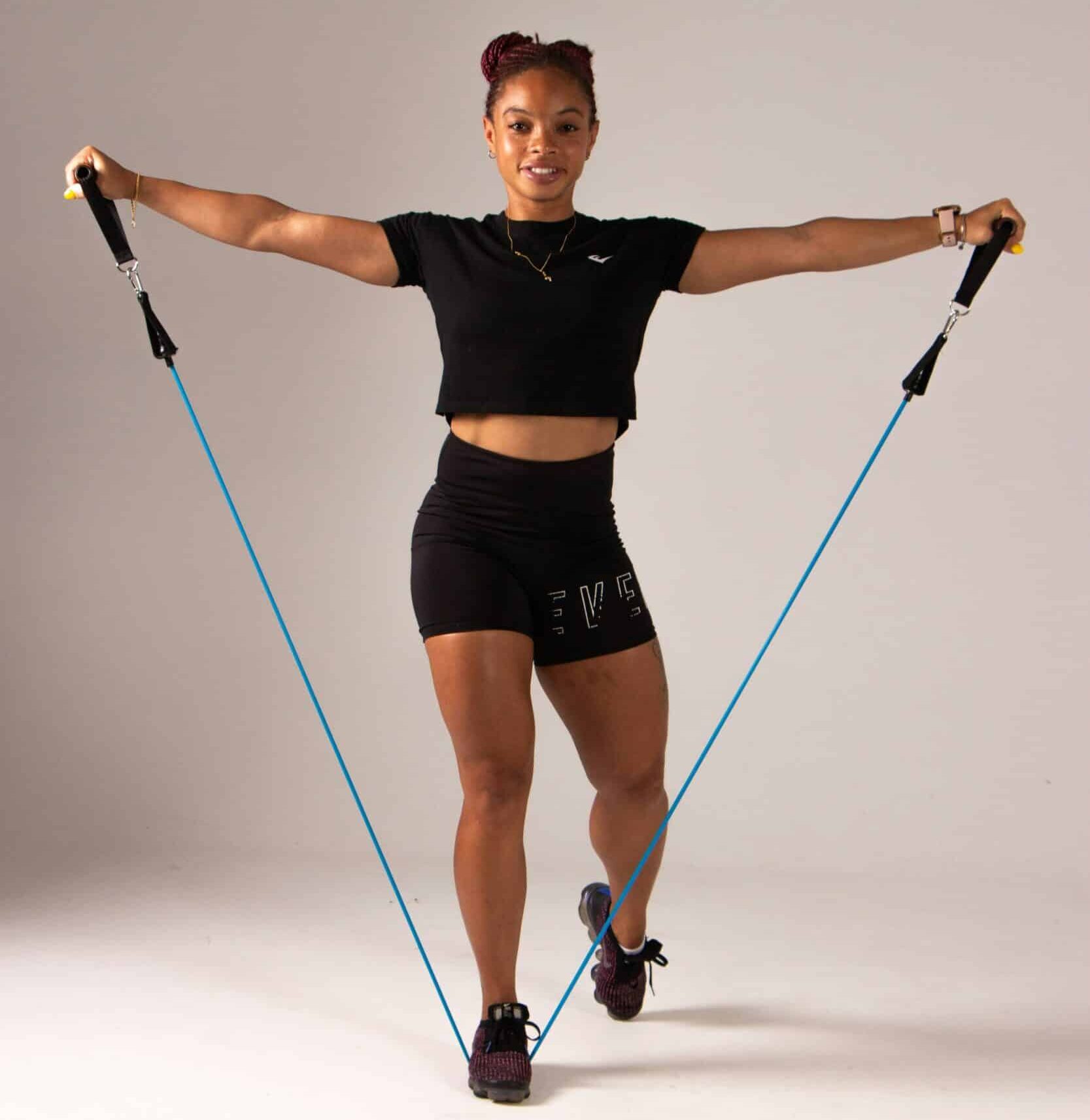
Resistance bands are not just for rehabilitation or warm ups. They are legitimate strength training tools that can build real muscle when used correctly.
I have trained clients who built impressive physiques using nothing but bands. Travellers who maintain muscle during months on the road. Home trainers who cannot fit equipment in small flats. Gym goers who use bands to enhance their barbell and dumbbell work.
The key is understanding the different types of bands, how to use each effectively, and following a structured programme with progressive overload.
This guide covers everything you need to know about resistance band training. I will explain the three main types of bands, their strengths and limitations, and provide a complete training programme you can start today.
Understanding the Three Types of Resistance Bands
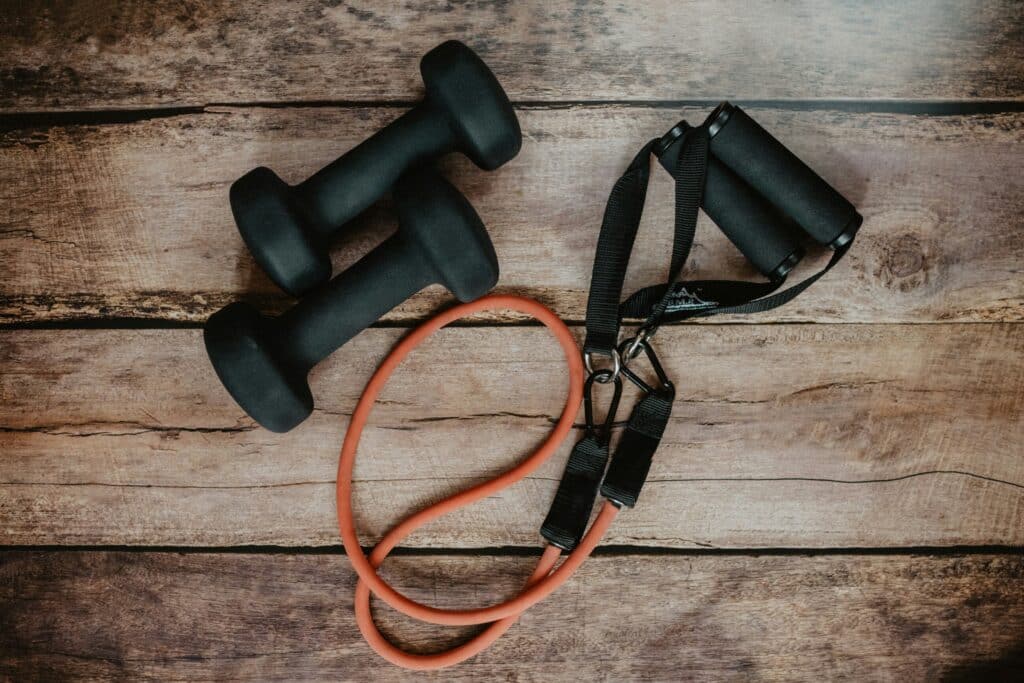
Not all resistance bands are created equal. Each type serves different purposes and works better for certain exercises.
Loop Bands (Power Bands)
Loop bands are large continuous loops, typically made from layered latex. They range from very light (providing perhaps 5kg of resistance) to extremely heavy (providing 50kg or more).
Best for:
- Compound movements (squats, deadlifts, presses, rows)
- Assisted pull ups and dips
- Heavy resistance work
- Adding resistance to barbell exercises
Characteristics:
- Long loops (typically 100 to 120cm)
- Colour coded by resistance level
- Can be doubled or combined for more resistance
- Anchor to doors, poles, or under feet
Loop bands are the foundation of serious resistance band training. If you buy only one type, make these your choice.
Mini Loop Bands (Booty Bands)
Mini loop bands are small continuous loops, typically 25 to 30cm in circumference. They are designed to wrap around your legs, usually above or below the knees.
Best for:
- Glute activation and strengthening
- Hip abduction and external rotation
- Adding lateral resistance to squats and lunges
- Warm up and activation work
Characteristics:
- Small loops worn around legs
- Fabric or latex material
- Lower resistance than full loop bands
- Excellent for targeting glutes and hip stabilisers
Mini loop bands are not primary strength builders on their own, but they enhance lower-body training significantly when combined with other exercises.
Resistance Bands with Handles (Tube Bands)
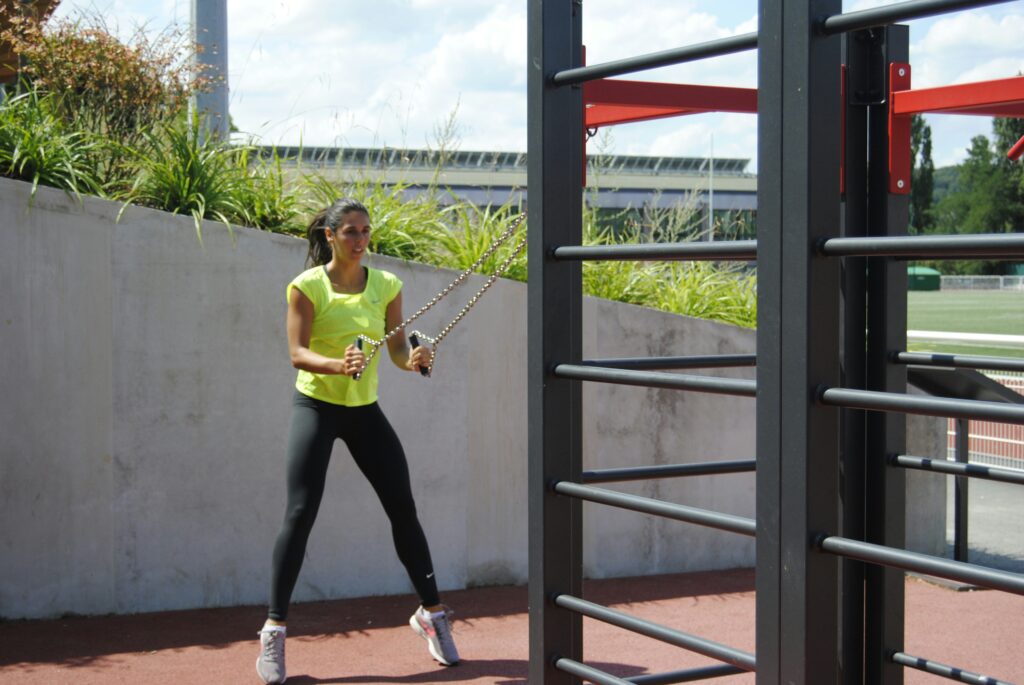
Handle bands consist of a latex tube with plastic or foam handles attached at each end. They often come in sets with multiple resistance levels and door anchors.
Best for:
- Upper body isolation exercises
- Exercises that mimic cable machine movements
- Travel training kits
- Beginners who find loop bands awkward
Characteristics:
- Fixed handles for comfortable grip
- Tubes rather than flat bands
- Often sold in sets with door anchors
- Easier to use for many upper-body exercises
Handle bands trade versatility for convenience. They are easier to grip but less adaptable than loop bands.
Why Resistance Bands Build Muscle
Some people dismiss bands as inferior to free weights. This is a mistake.
Muscle growth requires mechanical tension, metabolic stress, and muscle damage. Resistance bands provide all three.
Variable Resistance
Unlike free weights where resistance is constant, bands provide increasing resistance as they stretch. At the bottom of a squat, resistance is lower. At the top, resistance is highest.
This matches your strength curve. You are strongest at the top of most movements where bands provide most resistance. This creates intense peak contraction that free weights cannot replicate.
Constant Tension
With free weights, there are points in most exercises where tension drops. At the top of a bicep curl, for example, gravity provides minimal resistance.
Bands maintain tension throughout the entire range of motion. There is no resting point. This constant tension increases time under tension and metabolic stress.
Joint Friendly Loading
Bands are easier on joints than heavy free weights. The resistance increases gradually rather than hitting you immediately. This makes bands excellent for people with joint issues or those recovering from injury.
Research Support
Studies confirm that resistance band training produces muscle and strength gains comparable to free weight training. A 2019 systematic review found that elastic resistance training produced similar strength improvements to conventional resistance training across multiple studies.
The key, as with any training method, is progressive overload and consistency.
Choosing Your Bands
Loop Bands: Resistance Guide
Colour (Common) | Approximate Resistance | Best For |
Yellow/Tan | 2 to 7kg | Warm up, mobility, light isolation |
Red | 5 to 15kg | Beginners, isolation exercises |
Black | 12 to 25kg | Intermediate, compound movements |
Purple | 18 to 35kg | Advanced, heavy compounds |
Green | 25 to 50kg | Very advanced, assisted pull ups |
Blue | 30 to 65kg | Strongest, heavy assistance work |
Note: Resistance varies by brand. These are approximate ranges. The resistance changes throughout the movement as the band stretches.
Mini Loop Bands: Resistance Guide
Resistance Level | Best For |
Light | Warm up, activation, beginners |
Medium | Most glute work, standard training |
Heavy | Advanced glute training, added challenge |
Start with a set that includes light, medium, and heavy options. You will use different levels for different exercises.
Handle Bands: Resistance Guide
Handle band sets typically include multiple tubes that can be used individually or combined. A good starter set includes:
- Light (5 to 10kg equivalent)
- Medium (10 to 15kg equivalent)
- Heavy (15 to 25kg equivalent)
- Door anchor
- Ankle straps
The Complete Resistance Band Programme
This programme uses all three band types strategically. Train four days per week with at least one rest day between sessions.
Weekly Schedule
Day | Focus |
Monday | Lower Body (Loop Bands + Mini Bands) |
Tuesday | Upper Body Push (Loop Bands + Handle Bands) |
Wednesday | Rest |
Thursday | Lower Body (Loop Bands + Mini Bands) |
Friday | Upper Body Pull (Loop Bands + Handle Bands) |
Saturday | Rest |
Sunday | Rest |
Day 1: Lower Body (Loop Bands + Mini Bands)
Warm Up with Mini Loop Band:
Exercise | Sets | Reps | Notes |
Banded Glute Bridge | 2 | 15 | Mini band above knees |
Banded Clamshell | 2 | 12 each side | Mini band above knees |
Banded Lateral Walk | 2 | 10 each direction | Mini band above knees |
Main Workout with Loop Bands:
Exercise | Sets | Reps | Rest | Notes |
Banded Squat | 4 | 12, 10, 10, 8 | 90 seconds | Loop band under feet, over shoulders |
Banded Romanian Deadlift | 3 | 12, 10, 10 | 90 seconds | Loop band under feet, hands at hip height |
Banded Split Squat | 3 | 10 each leg | 60 seconds | Loop band under front foot, over shoulders |
Banded Good Morning | 3 | 12, 12, 10 | 60 seconds | Loop band under feet, behind neck |
Banded Glute Kickback | 3 | 12 each leg | 45 seconds | Loop band anchored low, around ankle |
Finisher with Mini Loop Band:
Exercise | Sets | Reps | Notes |
Banded Squat Pulse | 2 | 20 | Mini band above knees, quarter squat pulses |
Banded Fire Hydrant | 2 | 15 each side | Mini band above knees |

Day 2: Upper Body Push (Loop Bands + Handle Bands)
Main Workout:
Exercise | Sets | Reps | Rest | Band Type | Notes |
Banded Push Up | 4 | 12, 10, 10, 8 | 90 seconds | Loop | Band across back, under hands |
Banded Overhead Press | 3 | 12, 10, 10 | 90 seconds | Loop | Band under feet, press overhead |
Banded Floor Press | 3 | 12, 10, 10 | 60 seconds | Loop | Lying down, band under upper back |
Banded Chest Fly | 3 | 15, 12, 12 | 60 seconds | Handle | Band anchored behind, fly motion |
Banded Lateral Raise | 3 | 15, 12, 12 | 45 seconds | Handle | Stand on band, raise to sides |
Banded Front Raise | 3 | 12, 12, 10 | 45 seconds | Handle | Stand on band, raise to front |
Banded Tricep Pushdown | 3 | 15, 12, 12 | 45 seconds | Handle | Band anchored high, push down |
Banded Overhead Tricep Extension | 3 | 12, 12, 10 | 45 seconds | Handle | Band anchored low, extend overhead |
Day 3: Lower Body (Loop Bands + Mini Bands)
Warm Up with Mini Loop Band:
Exercise | Sets | Reps | Notes |
Banded Monster Walk | 2 | 10 each direction | Mini band around ankles |
Banded Squat to Stand | 2 | 10 | Mini band above knees |
Banded Hip Circle | 2 | 10 each direction | Mini band above knees |
Main Workout with Loop Bands:
Exercise | Sets | Reps | Rest | Notes |
Banded Sumo Squat | 4 | 12, 10, 10, 8 | 90 seconds | Wide stance, band under feet, held at chest |
Banded Single Leg Deadlift | 3 | 10 each leg | 60 seconds | Band under working foot |
Banded Reverse Lunge | 3 | 10 each leg | 60 seconds | Band under front foot, over shoulders |
Banded Hip Thrust | 4 | 12, 12, 10, 10 | 60 seconds | Loop band over hips, anchored under glutes |
Banded Leg Curl | 3 | 15, 12, 12 | 45 seconds | Lying prone, band anchored, around ankles |
Finisher with Mini Loop Band:
Exercise | Sets | Reps | Notes |
Banded Glute Bridge March | 2 | 10 each leg | Mini band above knees, alternate lifting feet |
Banded Side Lying Hip Abduction | 2 | 15 each side | Mini band above knees |
Day 4: Upper Body Pull (Loop Bands + Handle Bands)
Main Workout:
| Exercise | Sets | Reps | Rest | Band Type | Notes |
|---|---|---|---|---|---|
| Banded Bent Over Row | 4 | 12, 10, 10, 8 | 90 seconds | Loop | Stand on band, row to chest |
| Banded Lat Pulldown | 3 | 12, 10, 10 | 90 seconds | Loop | Band anchored high, pull to chest |
| Banded Seated Row | 3 | 12, 10, 10 | 60 seconds | Handle | Band around feet, row to torso |
| Banded Face Pull | 3 | 15, 12, 12 | 60 seconds | Handle | Band at face height, pull apart |
| Banded Reverse Fly | 3 | 15, 12, 12 | 45 seconds | Handle | Arms extended, pull apart |
| Banded Bicep Curl | 3 | 12, 12, 10 | 45 seconds | Handle | Stand on band, curl |
| Banded Hammer Curl | 3 | 12, 12, 10 | 45 seconds | Handle | Neutral grip curl |
| Banded Concentration Curl | 2 | 12 each arm | 45 seconds | Loop | Single arm, focused curl |
Exercise Technique Guide
Loop Band Exercises
Banded Squat:
- Stand on the loop band with feet shoulder width apart
- Bring the band up and over your shoulders, crossing at chest if needed
- Squat down, keeping chest up and knees tracking over toes
- Drive through heels to stand, fighting the increasing band tension at the top
Banded Romanian Deadlift:
- Stand on the band with feet hip width apart
- Hold the band at hip height with both hands
- Hinge at hips, pushing glutes back while keeping spine neutral
- Lower until you feel hamstring stretch
- Drive hips forward to return, squeezing glutes at top
Banded Push Up:
- Loop the band across your upper back
- Hold each end under your hands in push up position
- Perform push up with band providing resistance at the top
- The exercise is hardest at lockout where you are strongest
Banded Bent Over Row:
- Stand on the band with feet shoulder width apart
- Hinge forward at hips, keeping back flat
- Row the band to your lower chest, squeezing shoulder blades
- Lower with control and repeat
Mini Loop Band Exercises
Banded Glute Bridge:
- Place mini band above knees
- Lie on back with feet flat, knees bent
- Push knees out against band resistance
- Drive hips up, squeezing glutes at top
- Lower with control while maintaining outward knee pressure
Banded Clamshell:
- Place mini band above knees
- Lie on side with knees bent at 90 degrees
- Keep feet together as you raise top knee
- Open legs like a clamshell against band resistance
- Lower with control and repeat
Banded Lateral Walk:
- Place mini band above knees or around ankles
- Assume quarter squat position
- Step sideways, maintaining tension in the band
- Keep toes pointing forward throughout
- Complete steps in one direction, then reverse
Handle Band Exercises
Banded Chest Fly:
- Anchor band behind you at chest height
- Hold handles with arms extended to sides
- Bring hands together in front of chest, squeezing pecs
- Return to start with control
Banded Tricep Pushdown:
- Anchor band high (door frame or overhead point)
- Face the anchor, grip handles with palms down
- Keep elbows pinned to sides
- Extend arms fully, squeezing triceps at bottom
- Return with control
Banded Bicep Curl:
- Stand on the band with feet shoulder width
- Hold handles with palms facing up
- Curl handles toward shoulders, keeping elbows stationary
- Squeeze biceps at top
- Lower with control

Progressive Overload with Bands
Progressive overload is essential for continued progress. With bands, you have several options:
Increase Band Resistance
Move to a heavier band when current resistance becomes too easy. You should struggle to complete the final reps of each set.
Increase Reps
Before moving to a heavier band, increase reps within your current band. Go from 10 to 12 to 15 reps before upgrading resistance.
Slow the Tempo
Make each rep harder by slowing down. A 3 second lowering phase dramatically increases time under tension.
Add Pauses
Pause at the hardest point of the movement. A 2 second pause at the bottom of a squat or top of a row increases difficulty without changing bands.
Decrease Rest Periods
Shorter rest means less recovery, making subsequent sets harder. Progress from 90 seconds to 60 seconds to 45 seconds over time.
Combine Bands
Use two bands simultaneously for increased resistance. This works particularly well with loop bands.
Increase Range of Motion
Stand on a platform to increase range of motion on deadlifts and rows. The extra stretch increases difficulty.
Tracking Your Band Training
Resistance band training requires tracking just like any other training method.
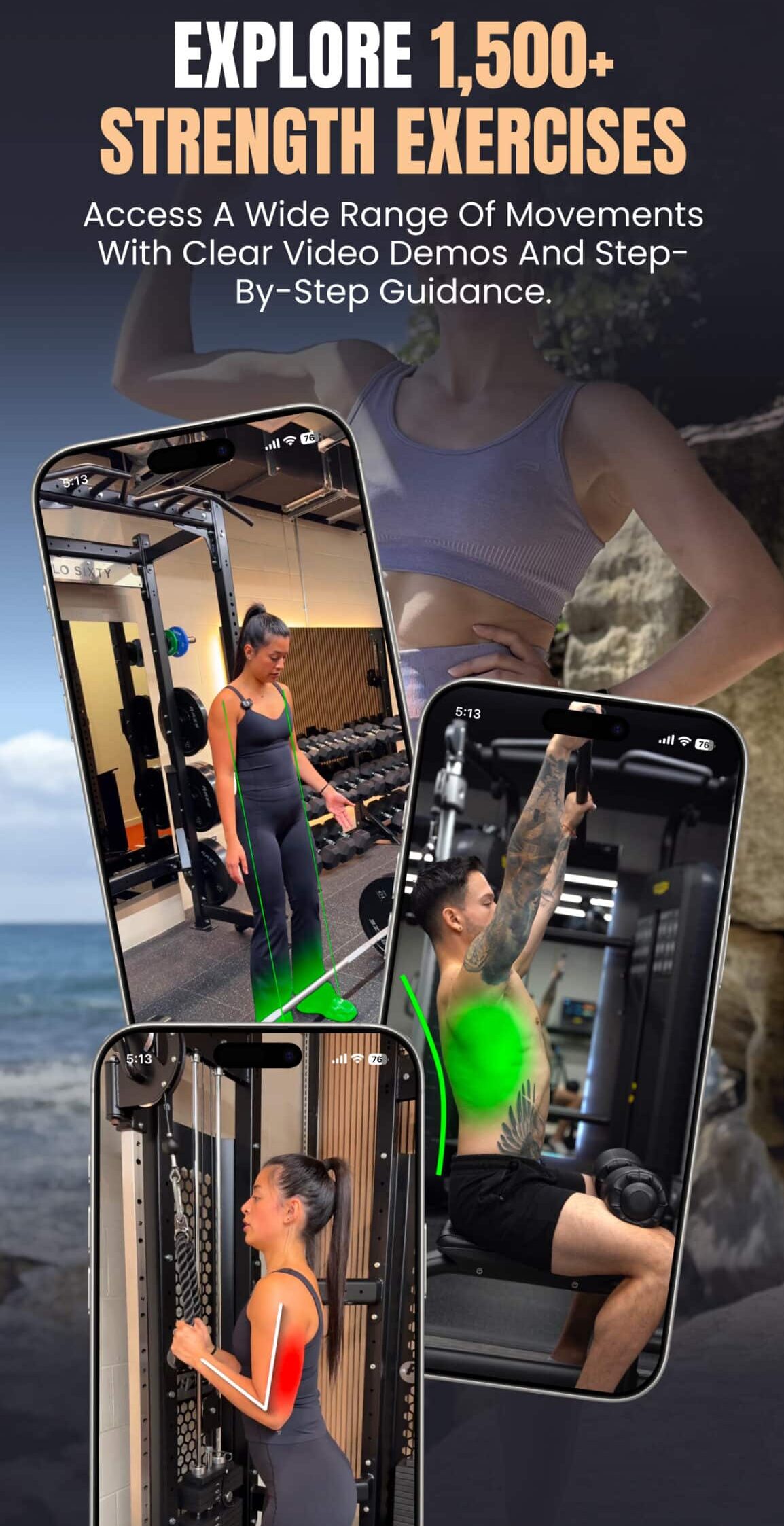
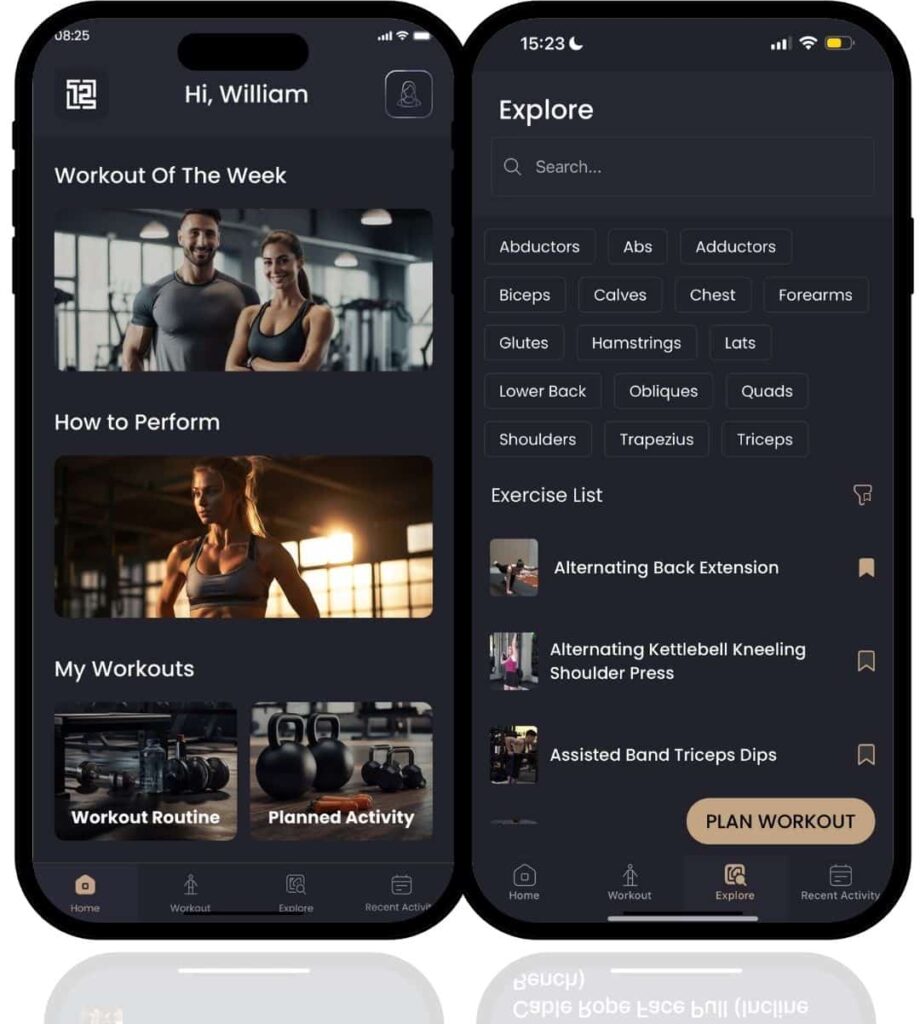
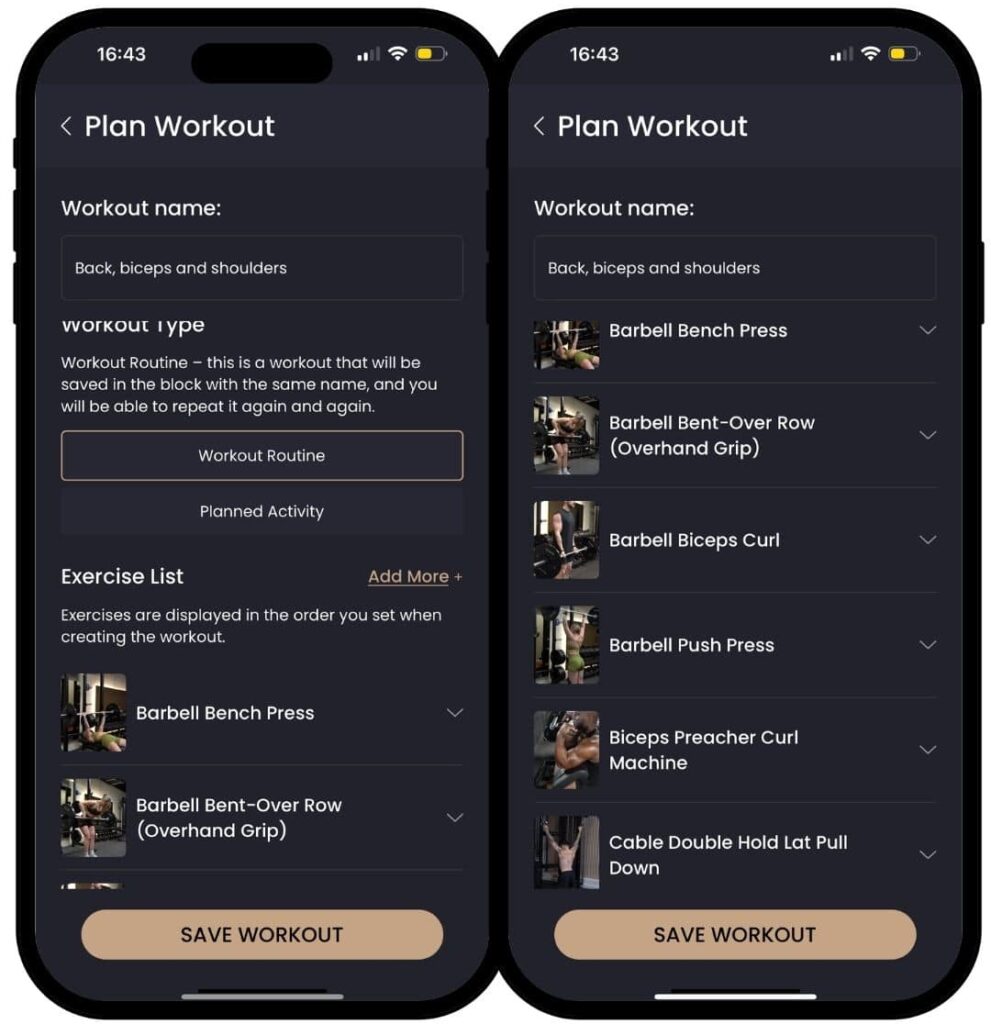
The 12REPS app lets you log band exercises with notes about which band colour you used. You can track progressions from lighter to heavier bands and monitor your rep increases over time.
Without tracking, you will forget which band you used last session. You will lose the progressive overload that drives results. The app prevents this by keeping a complete record of every workout.
Common Mistakes to Avoid
Using Bands That Are Too Light
Many people underestimate how heavy a band they can use. If you can easily complete 15 or more reps, the band is too light for strength building. Choose a band that makes the last few reps genuinely challenging.
Neglecting the Eccentric Phase
Bands make it tempting to let them snap back. This wastes half the exercise. Control the return phase deliberately. The eccentric contraction builds as much muscle as the concentric.
Poor Anchor Points
A band slipping mid exercise is dangerous and disrupts your workout. Use proper door anchors, sturdy poles, or other secure points. Test the anchor before loading it with your bodyweight.
Only Using Mini Bands
Mini loop bands are excellent for glute activation but cannot provide enough resistance for serious lower body development. Use mini bands as supplements to loop band exercises, not replacements.
Ignoring Band Condition
Latex degrades over time, especially with sun exposure. Inspect bands before each workout. A snapped band mid exercise can cause injury. Replace bands that show signs of wear, small tears, or discolouration.
Who Should Use Resistance Band Training
Ideal For:
Travellers who cannot access gyms but want to maintain muscle. A complete band set weighs under 1kg and fits in any bag.
Home trainers with limited space. Bands require almost no storage space compared to dumbbells or barbells.
People with joint issues who find free weights painful. The variable resistance and gradual loading is easier on joints.
Anyone wanting workout variety. Bands provide a different stimulus than free weights, useful for breaking plateaus.
Beginners learning movement patterns. Bands allow you to practice form with lower injury risk.
Limitations:
Maximum strength development. For absolute strength, heavy barbells remain superior. Bands cannot match the loading of a heavy squat or deadlift.
Precise loading. You cannot add exactly 2.5kg to a band the way you can with plates. Progression is less granular.
Certain exercises. Some movements do not translate well to bands. Heavy pulling movements like deadlifts are limited by grip and band positioning.
Sample Progression Over 12 Weeks
Here is how you might progress through the programme:
Weeks 1 to 4:
- Use lighter bands to learn movements
- Focus on form and full range of motion
- Complete all prescribed reps with good technique
- Rest periods at the longer end (90 seconds)
Weeks 5 to 8:
- Move to medium resistance bands
- Add pauses to increase difficulty
- Reduce rest periods to 60 to 75 seconds
- Increase reps where possible before changing bands
Weeks 9 to 12:
- Use heavier bands for compound movements
- Combine bands for maximum resistance exercises
- Rest periods at 45 to 60 seconds
- Consider adding a fifth training day
Getting Started
You do not need every band immediately. Start with:
Essential purchases:
- One set of loop bands (light, medium, heavy)
- One set of mini loop bands (light, medium, heavy)
- A door anchor
Nice to have:
- Handle band set with multiple resistances
- Ankle straps for handle band exercises
- Additional loop bands for combining
Begin with the programme as written. Track every workout with the 12REPS app. Progress systematically using the methods described above.
Bands are not inferior to weights. They are different. Used correctly with progressive overload and consistency, they build real muscle and strength.
Download the 12REPS app and start your resistance band training today.
Frequently Asked Questions
Can you really build muscle with just resistance bands?
Yes. Research confirms that resistance bands produce muscle and strength gains comparable to free weights. The key is using challenging resistance and applying progressive overload consistently.
Which type of band should I buy first?
Start with loop bands (power bands). They are the most versatile and can be used for nearly every exercise. Add mini bands and handle bands later as supplements.
How do I know which band resistance to use?
Choose a band that makes the last two to three reps of each set challenging. If you can easily complete all reps, move to a heavier band. If you cannot complete the minimum reps, use a lighter band.
Can I combine resistance band training with weights?
Absolutely. Many lifters use bands to supplement their weight training. Bands add accommodating resistance to barbell exercises and provide variety in accessory work.
How often should I replace my bands?
Inspect bands before each workout. Replace any band showing wear, small tears, discolouration, or loss of elasticity. With regular use, expect to replace bands every six to twelve months.
Are fabric or latex mini bands better?
Both work. Fabric bands are more comfortable and less likely to roll up. Latex bands are typically thinner and provide more resistance options. Personal preference determines which is better for you.
References
- Lopes, J.S.S. et al. (2019). Effects of training with elastic resistance versus conventional resistance on muscular strength: A systematic review and meta-analysis. SAGE Open Medicine. https://pubmed.ncbi.nlm.nih.gov/31019713/
- Iversen, V.M. et al. (2017). Multiple-joint exercises using elastic resistance bands vs. conventional resistance-training equipment: A cross-over study. European Journal of Sport Science. https://pubmed.ncbi.nlm.nih.gov/28151089/
- Bergquist, R. et al. (2018). Muscle activity in upper-body single-joint resistance exercises with elastic resistance bands vs. free weights. Journal of Human Kinetics. https://pubmed.ncbi.nlm.nih.gov/30429904/
Related Articles on just12reps.com
Article | Description | Link |
Complete Beginner’s Guide to Strength Training | Start your journey with proper fundamentals. | |
Bodyweight Exercises for Strength Training at Home | Train effectively with minimal equipment. | |
The Science of Progressive Overload | Understand the principle that drives all progress. | |
Best Workout App for Home Gym | Find the right app for home training. | |
Glute Focused Strength Training for Women | Build strong glutes with targeted training. |
About the Author: Will Duru holds a BSc (Hons) in Sport and Exercise Science and is an award-winning personal trainer with over 10 years of experience. He has helped clients build muscle using resistance bands during travel, at home, and as supplements to gym training. Will created the 12REPS app to track all forms of resistance training including band exercises.