By Will Duru, BSc (Hons) Sport and Exercise Science, Award-winning Personal Trainer with over 10 years of experience in strength training and optimising recovery
A good weight training routine for women who are new to lifting trains the whole body across the week, starts light to learn technique, and adds weight or reps step by step. This 12-week beginner program uses four sessions a week: push, pull, legs and core, and a conditioning day. It runs in three 4-week phases that build from light loads to moderate and heavy ones.
As a personal trainer with over a decade of experience, I’ve seen a big shift in the gym. More and more women are lifting weights, and for good reason. Lifting is no longer seen as a men-only pursuit. Strength training brings real benefits for women of all ages.
Below you’ll find why it is worth it, how the program works, every session for all 12 weeks, and how to progress and track your lifts. The program uses free weights, machines and bodyweight exercises, so you will need a gym.
If you are pregnant, have recently given birth, have a medical condition or take medication, check with your doctor before you start a new training program.
Why weight training is worth it for women
Many women worry that lifting weights will make them “bulky”. In reality, muscle builds gradually, and you control how much through your training and eating. For the full answer, read will lifting weights make me bulky?
Women respond well to strength training
A meta-analysis comparing men and women found similar relative muscle growth from resistance training. Women showed larger relative gains in upper-body strength (Roberts et al., 2020). In other words, the same training principles work for you.
Bone and muscle as you age
Bone and muscle mass tend to decline with age. Bone responds to loads heavier than those of daily life. A review describes resistance training as highly beneficial for keeping both bone and muscle mass (Hong and Kim, 2018).
Mood and confidence
Setting a goal and lifting a heavier weight than last month builds confidence. A meta-analysis of 33 trials also found that resistance training was linked to fewer depressive symptoms (Gordon et al., 2018). It is not a replacement for treatment, so talk to your doctor if you are struggling with your mood.
Everyday strength
Carrying shopping, lifting children or moving furniture all get easier when you are stronger. The World Health Organization recommends muscle-strengthening activity on at least 2 days a week for adults (WHO). This program gives you three strength days plus a conditioning day.
New to the gym? Start with how to start lifting weights, then come back to this plan.
The 12-week beginner weight training program
This program takes you from beginner to a confident lifter in 12 weeks. It uses a push/pull/legs split, which trains your whole body across the week while giving each area time to recover. A fourth session adds conditioning.
| Phase | Weeks | Focus | Loads |
|---|---|---|---|
| 1. Foundation | 1 to 4 | Learn each movement and build a routine | Light to moderate |
| 2. Strength development | 5 to 8 | Lift heavier with good form | Moderate |
| 3. Advanced strength | 9 to 12 | Harder exercises and heavier loads | Moderate to heavy |
How to run the program
- Weekly plan: Push, pull, legs and core, then conditioning. Leave at least one rest day in the week, and avoid putting the legs and conditioning days back to back if you can.
- Sets and reps: Most exercises use 4 sets of 10 to 12 reps. Rest times are in each table.
- Loads: “Light” means you finish the set with plenty left. “Moderate” means the last couple of reps are hard but your form holds. “Heavy” means the last reps are a real effort.
- Progression: Progressive overload means asking a little more of your muscles over time. The American College of Sports Medicine suggests adding 2 to 10% to the load when you can beat your target by one or two reps. Wait until you have done that in two sessions in a row (ACSM, 2009).
- Optional cardio: On the conditioning day, you can add a run of 5 to 7 km or a 10 to 15 km cycle.
If you want a 3-day option instead, see the beginner push, pull, legs program for women.
Video: 5 tips for ladies new to the gym. Watch this before your first session for simple pointers that make the weights area feel less daunting.
Phase 1: Foundation (weeks 1 to 4)
The focus is learning good form and building a routine. Do not worry about heavy weights yet. Watch each exercise demo before you try it, and stay at a weight you control.
Session 1: Push day
| Exercise | Sets | Reps or time | Load | Rest |
|---|---|---|---|---|
| Dumbbell chest press | 4 | 10-12 | Light to moderate | 60-90 s |
| Dumbbell shoulder press | 4 | 10-12 | Light | 60-90 s |
| Dumbbell lateral raises | 4 | 10-12 | Light | 45-60 s |
| Triceps dips (assisted) | 4 | 10-12 | Bodyweight | 60 s |
| Push-ups (modified) | 4 | 10-12 | Bodyweight | 60 s |
Video: How to do a dumbbell chest press. The dumbbell chest press opens every push day for the first 8 weeks. Watch this to set up on the bench and control the dumbbells on the way down.
Session 2: Pull day
| Exercise | Sets | Reps or time | Load | Rest |
|---|---|---|---|---|
| Lat pulldown (machine) | 4 | 10-12 | Light to moderate | 60-90 s |
| Seated cable row | 4 | 10-12 | Light to moderate | 60-90 s |
| Dumbbell bent-over row | 4 | 10-12 | Light | 60 s |
| Dumbbell biceps curls | 4 | 10-12 | Light | 45-60 s |
| TRX rows | 4 | 10-12 | Bodyweight | 60 s |
Session 3: Legs and core day
| Exercise | Sets | Reps or time | Load | Rest |
|---|---|---|---|---|
| Goblet squats (dumbbell) | 4 | 10-12 | Light to moderate | 60-90 s |
| Dumbbell Romanian deadlifts | 4 | 10-12 | Light | 60-90 s |
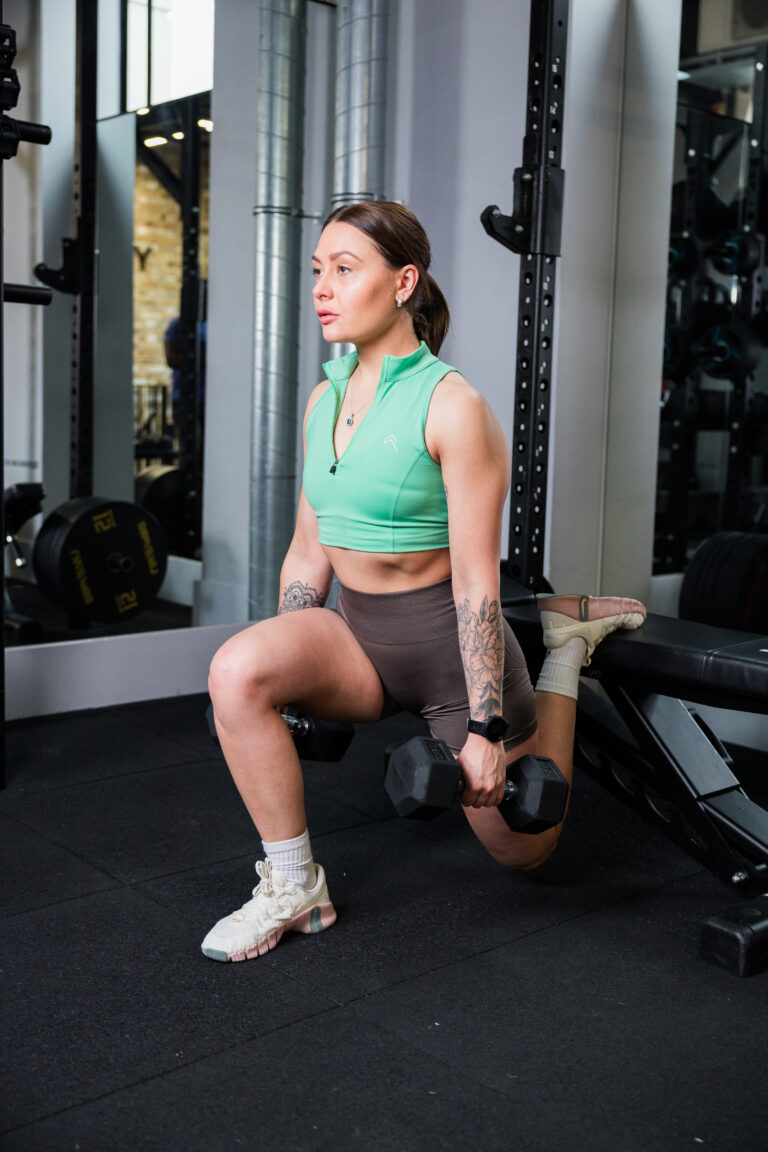
| Dumbbell lunges | 4 | 10-12 each leg | Light | 60 s |
| Plank hold | 4 | 30-45 s | Bodyweight | 45 s |
| Glute bridges | 4 | 10-12 | Bodyweight | 45 s |
Session 4: Conditioning day
| Exercise | Sets | Reps or time | Load | Rest |
|---|---|---|---|---|
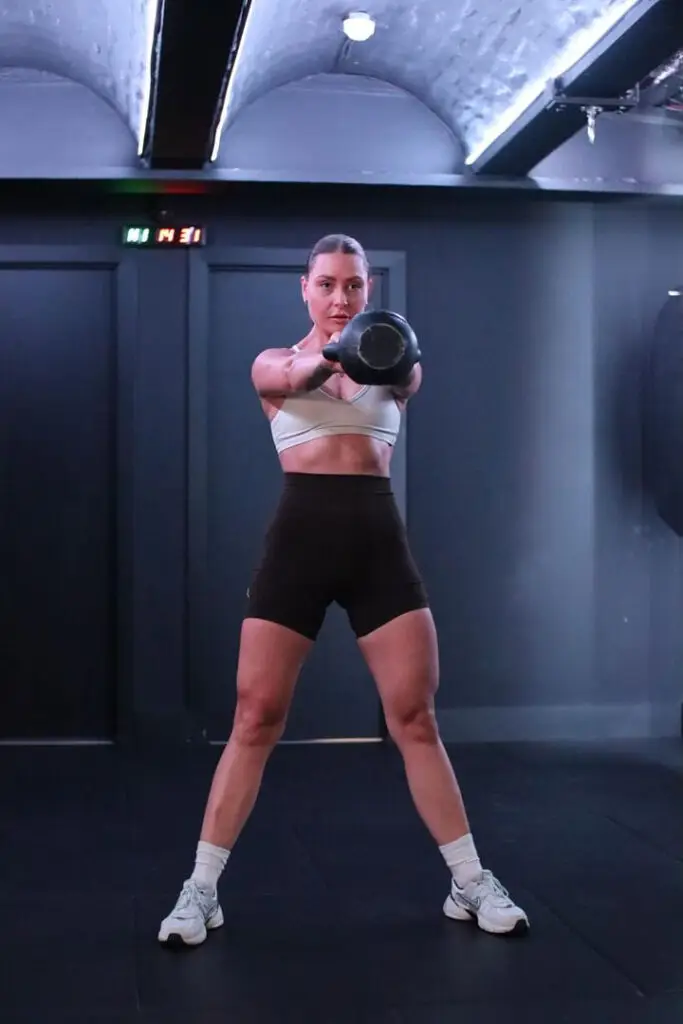
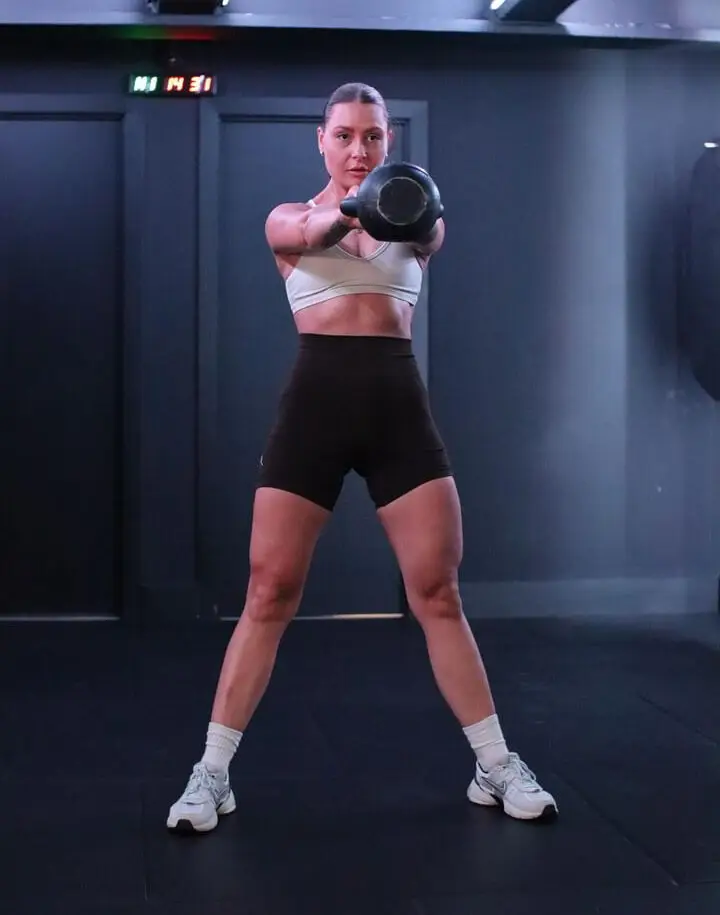
| Kettlebell swings | 4 | 30 s | Light kettlebell | 30 s |
| Medicine ball slams | 4 | 10-12 | Light medicine ball | 45 s |
| TRX mountain climbers | 4 | 30 s | Bodyweight | 30 s |
| Sandbag carries | 4 | 20 meters | Light sandbag | 60 s |
| Burpees (modified) | 4 | 8-10 | Bodyweight | 60 s |
Log every set
Write down the weight and reps for every set. Next week, aim to match or beat them. That record is what turns this plan into progressive overload.
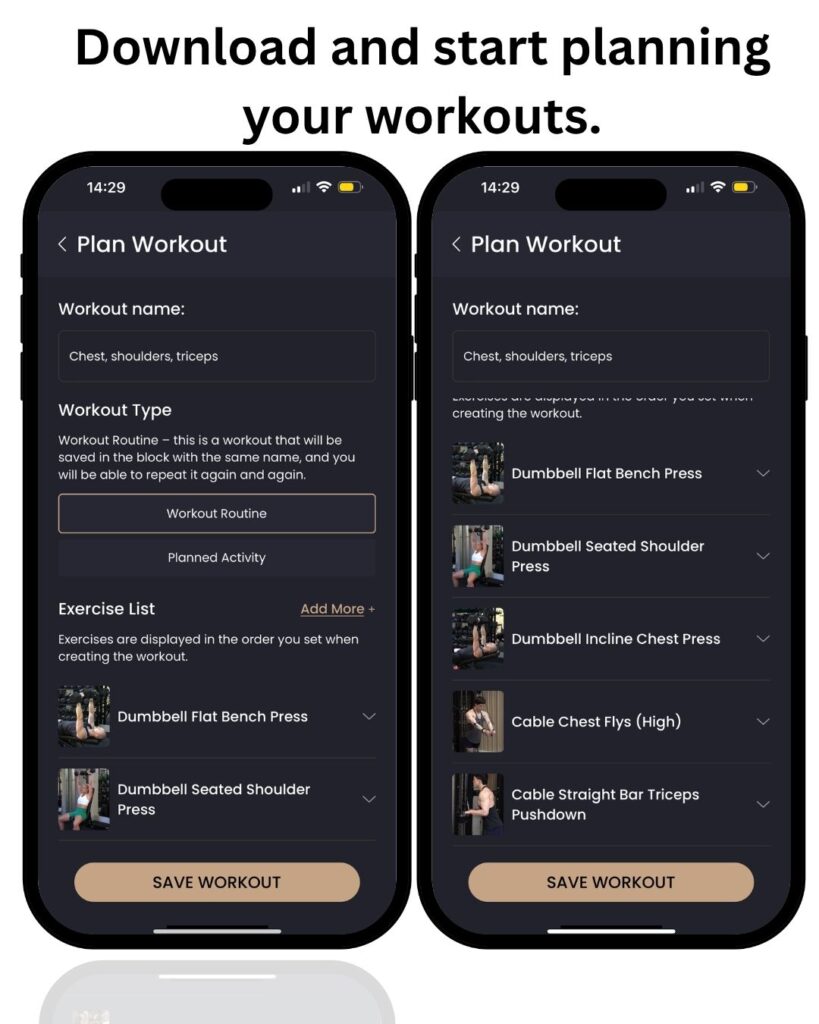
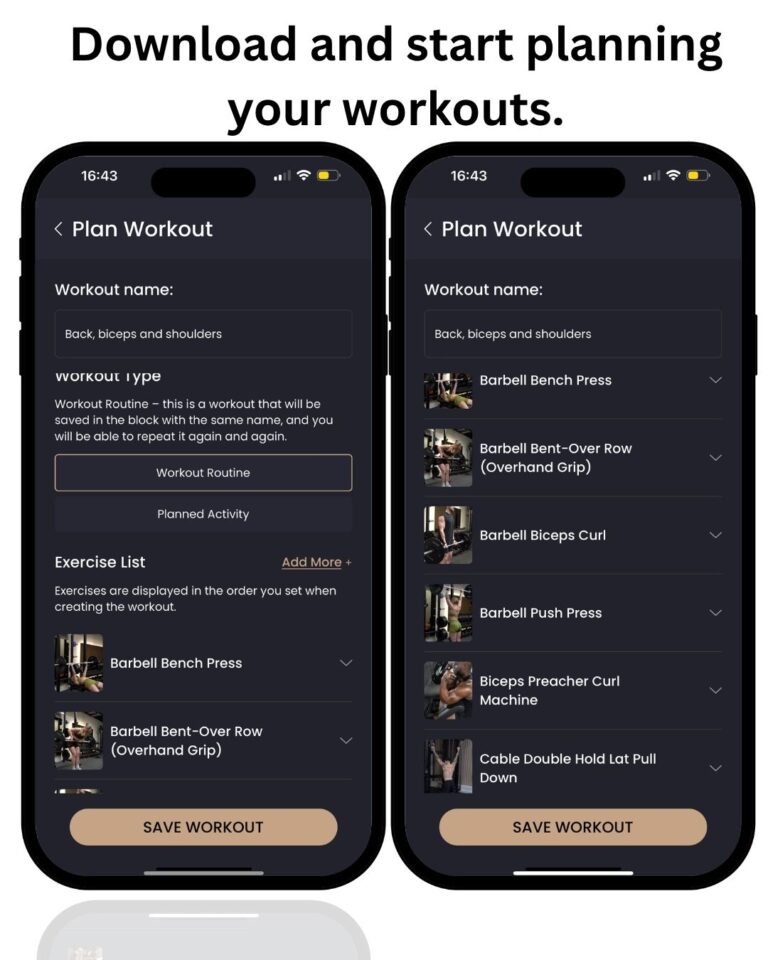
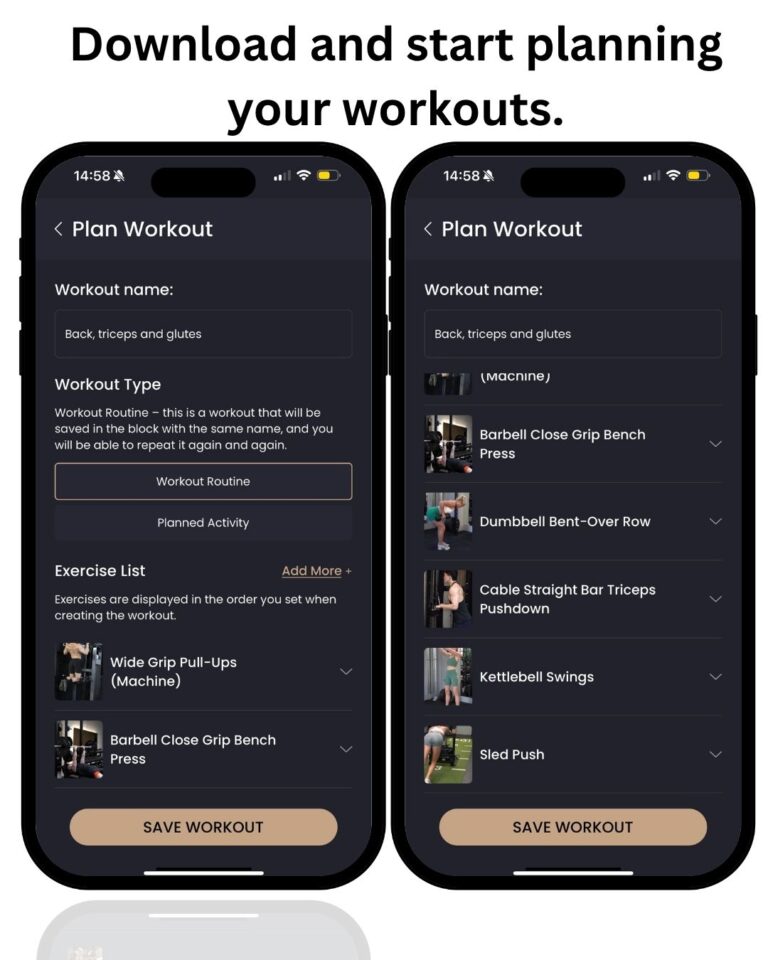
In 12REPS you can build a session with Build your own by choosing the muscle, equipment and time, then log your reps and weight for each set. The app remembers what you lifted, so you always know the number to beat.
Phase 2: Strength development (weeks 5 to 8)
Now you start lifting heavier. You know the exercises, so you can push a little harder while keeping your form. Full dips and standard push-ups replace the easier versions.
Session 1: Push day
| Exercise | Sets | Reps or time | Load | Rest |
|---|---|---|---|---|
| Dumbbell chest press | 4 | 10-12 | Moderate | 90 s |
| Dumbbell shoulder press | 4 | 10-12 | Light to moderate | 90 s |
| Dumbbell lateral raises | 4 | 10-12 | Light to moderate | 60 s |
| Triceps dips (full) | 4 | 10-12 | Bodyweight | 60 s |
| Push-ups (standard) | 4 | 10-12 | Bodyweight | 60 s |
Session 2: Pull day
| Exercise | Sets | Reps or time | Load | Rest |
|---|---|---|---|---|
| Lat pulldown (machine) | 4 | 10-12 | Moderate | 90 s |
| Seated cable row | 4 | 10-12 | Moderate | 90 s |
| Dumbbell bent-over row | 4 | 10-12 | Light to moderate | 60 s |
| Dumbbell biceps curls | 4 | 10-12 | Light to moderate | 60 s |
| TRX rows | 4 | 10-12 | Bodyweight | 60 s |
Session 3: Legs and core day
| Exercise | Sets | Reps or time | Load | Rest |
|---|---|---|---|---|
| Goblet squats (dumbbell) | 4 | 10-12 | Moderate | 90 s |
| Dumbbell Romanian deadlifts | 4 | 10-12 | Light to moderate | 90 s |
| Dumbbell lunges | 4 | 10-12 each leg | Light to moderate | 60 s |
| Plank hold | 4 | 45-60 s | Bodyweight | 45 s |
| Glute bridges (weighted) | 4 | 10-12 | Light dumbbell | 45 s |
Session 4: Conditioning day
| Exercise | Sets | Reps or time | Load | Rest |
|---|---|---|---|---|
| Kettlebell swings | 4 | 45 s | Moderate kettlebell | 30 s |
| Medicine ball slams | 4 | 12-15 | Moderate medicine ball | 45 s |
| TRX mountain climbers | 4 | 45 s | Bodyweight | 30 s |
| Sandbag carries | 4 | 30 meters | Moderate sandbag | 60 s |
| Burpees (standard) | 4 | 10-12 | Bodyweight | 60 s |
Phase 3: Advanced strength (weeks 9 to 12)
The final phase adds barbell lifts and harder variations, and keeps raising the load. Rest periods get longer for the heaviest lifts so you can keep your reps up.
Session 1: Push day
| Exercise | Sets | Reps or time | Load | Rest |
|---|---|---|---|---|
| Barbell bench press | 4 | 10-12 | Moderate to heavy | 2 min |
| Dumbbell shoulder press | 4 | 10-12 | Moderate | 90 s |
| Dumbbell lateral raises | 4 | 10-12 | Moderate | 60 s |
| Triceps dips (weighted) | 4 | 10-12 | Light added weight | 60 s |
| Push-ups (feet elevated) | 4 | 10-12 | Bodyweight | 60 s |
Session 2: Pull day
| Exercise | Sets | Reps or time | Load | Rest |
|---|---|---|---|---|
| Lat pulldown (machine) | 4 | 10-12 | Moderate to heavy | 2 min |
| Seated cable row | 4 | 10-12 | Moderate to heavy | 90 s |
| Barbell bent-over row | 4 | 10-12 | Moderate | 90 s |
| Dumbbell biceps curls | 4 | 10-12 | Moderate | 60 s |
| TRX rows (single arm) | 4 | 10-12 each arm | Bodyweight | 60 s |
Session 3: Legs and core day
| Exercise | Sets | Reps or time | Load | Rest |
|---|---|---|---|---|
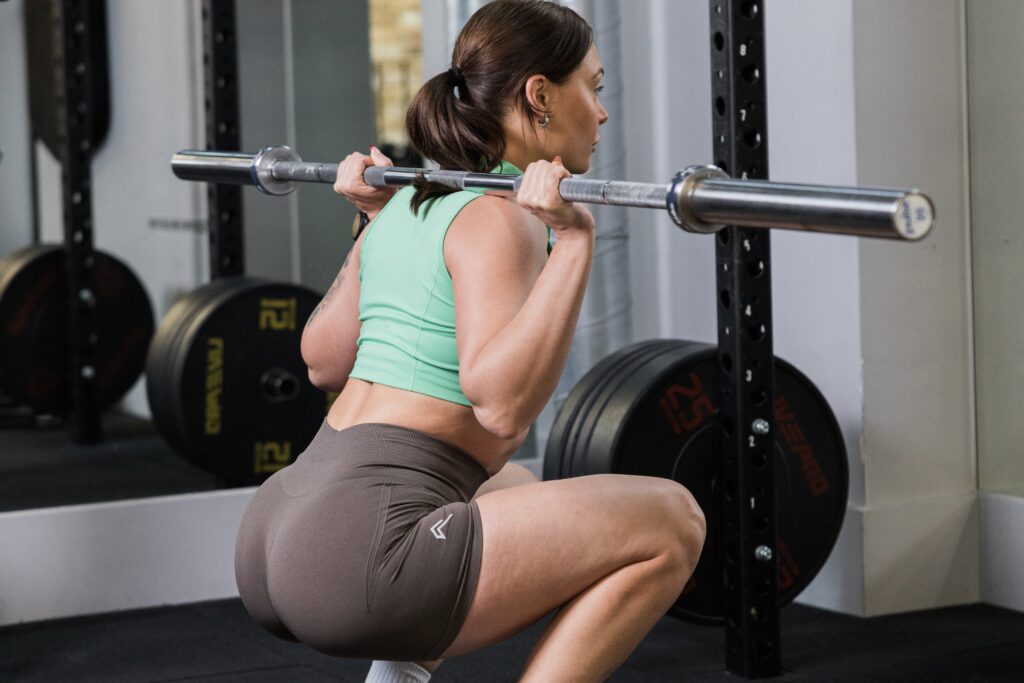
| Barbell back squats | 4 | 10-12 | Moderate to heavy | 2 min |
| Barbell Romanian deadlifts | 4 | 10-12 | Moderate | 2 min |
| Dumbbell Bulgarian split squats | 4 | 10-12 each leg | Moderate | 90 s |
| Weighted plank hold | 4 | 60+ s | Light added weight | 60 s |
| Hip thrusts (barbell) | 4 | 10-12 | Moderate | 90 s |
Session 4: Conditioning day
| Exercise | Sets | Reps or time | Load | Rest |
|---|---|---|---|---|
| Kettlebell swings | 4 | 60 s | Heavy kettlebell | 30 s |
| Medicine ball slams | 4 | 15-20 | Heavy medicine ball | 45 s |
| Sled push | 4 | 20 meters | Moderate weight | 90 s |
| Sandbag carries | 4 | 40 meters | Heavy sandbag | 90 s |
| Burpees (jump variation) | 4 | 12-15 | Bodyweight | 60 s |
Technique basics for every session
Good technique keeps the work on the right muscles and makes it easier to progress. Keep these in mind:
- Keep a neutral spine. For most exercises, keep your back long and your core braced. Avoid rounding or over-arching.
- Control the movement. Lift and lower with control, rather than swinging the weight.
- Breathe. A simple rule is to breathe out on the hardest part of the movement and breathe in as you return.
- Listen to your body. Muscle soreness after training is normal. Sharp or shooting pain is not. If you feel pain, stop the exercise and speak to a healthcare professional if it continues.
Track your progress
Tracking helps you decide when to add weight, when to stay put and when you need a rest day. Seeing your numbers climb is also motivating.
- Lifts: 12REPS logs your sets, reps and weights and tracks your workouts and streaks.
- Body weight: You can log your weight in the app and see the trend from your start.
- Progress photos: Before, mid and final photos are stored privately so you can compare stages.
To get the most from your sessions, read what to eat before and after a workout and how much protein you need to build muscle.
Frequently asked questions
Can I do this program at home?
Not as written, because it uses machines, cables, barbells and a sled. For a home option, see strength training at home for women.
What if I miss a week?
Repeat the last week you completed, then carry on. Twelve weeks is a guide, not a deadline.
How long will each session take?
Five exercises of 4 sets with the listed rest usually take 45 to 60 minutes with a warm-up. See how long a workout should be for ways to shorten it.
Is four days a week too much for a beginner?
Not if you leave a rest day and keep the early weeks light. If four days is too many for your week, read strength training frequency for 2 and 3-day options.
Stick with the plan, log your lifts and celebrate the small wins along the way. Want each session set out for you? 12REPS builds your workouts around your goal, your equipment and your time. It shows a trainer demonstration for every exercise and keeps your last weights ready to beat.
Sources
- Effects of resistance exercise on bone health. Hong AR, Kim SW, Endocrinology and Metabolism, 2018. https://doi.org/10.3803/EnM.2018.33.4.435
- Sex differences in resistance training: a systematic review and meta-analysis. Roberts BM, Nuckols G, Krieger JW, Journal of Strength and Conditioning Research, 2020. https://doi.org/10.1519/JSC.0000000000003521
- Association of efficacy of resistance exercise training with depressive symptoms: meta-analysis and meta-regression analysis of randomized clinical trials. Gordon BR et al., JAMA Psychiatry, 2018. https://doi.org/10.1001/jamapsychiatry.2018.0572
- Physical activity. World Health Organization, n.d.. https://who.int/initiatives/behealthy/physical-activity
- American College of Sports Medicine position stand. Progression models in resistance training for healthy adults. American College of Sports Medicine, Medicine & Science in Sports & Exercise, 2009. https://pubmed.ncbi.nlm.nih.gov/19204579/