
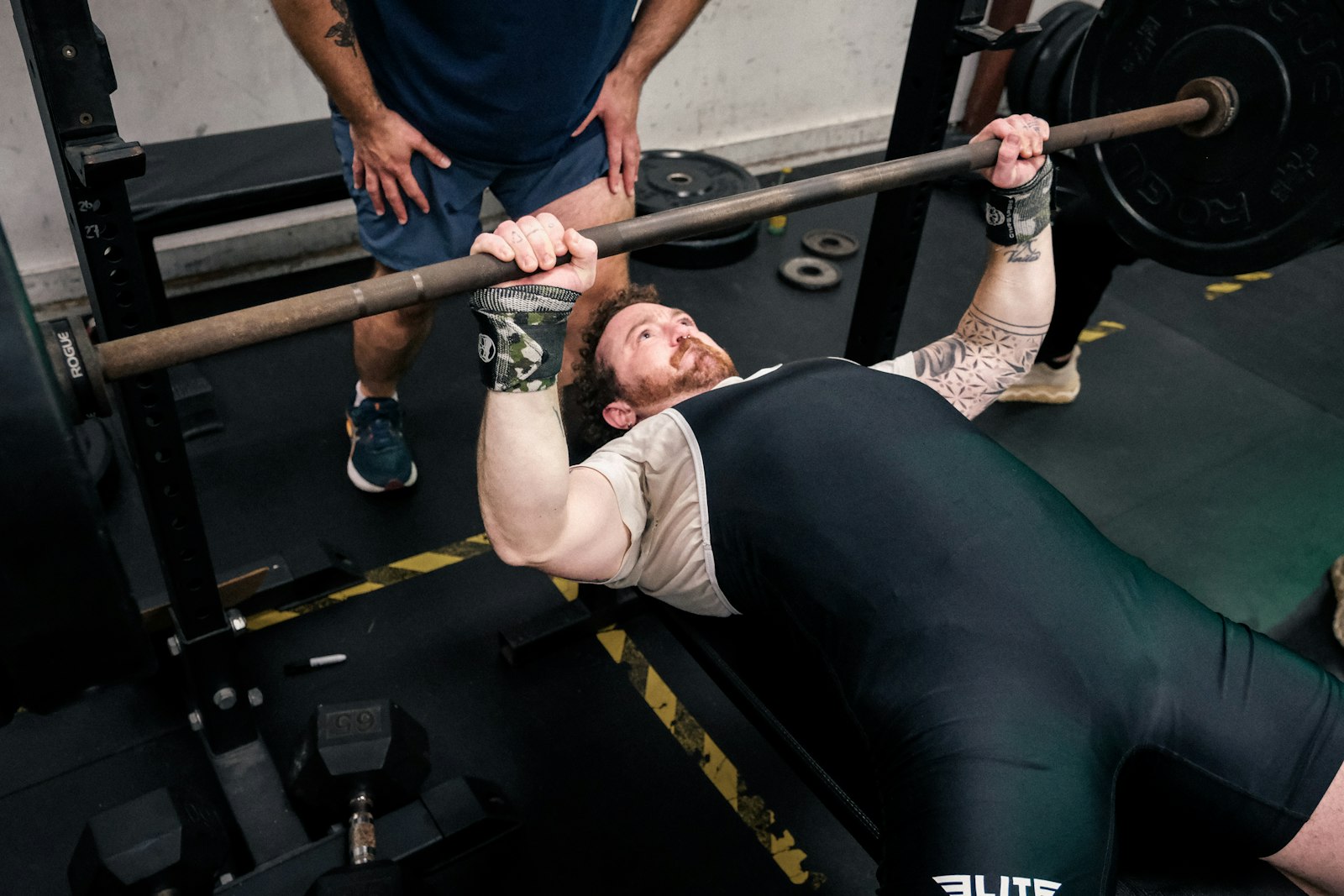



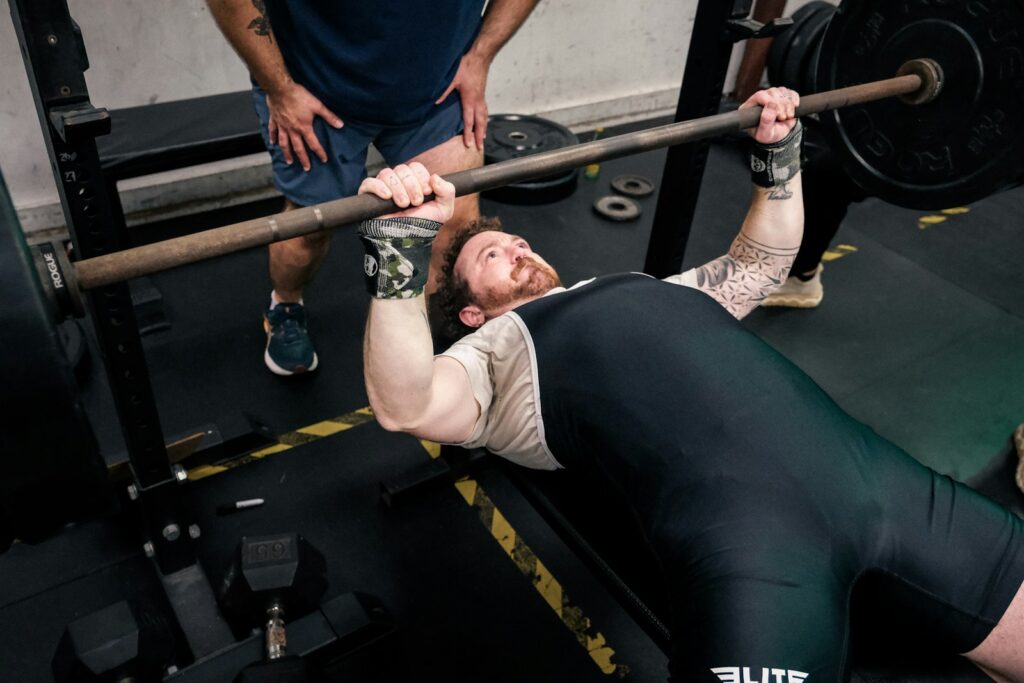
The short answer: the decline bench press is a useful exercise, but you don’t need it. It trains your chest, especially the lower part, along with your triceps and front shoulders. Research shows it works the lower chest about as well as a flat bench press and puts a bit less demand on the front of your shoulders. But it hasn’t been shown to build more chest muscle than the flat bench. Use it if the flat bench bothers your shoulders, if you want variety, or if you want extra lower chest work. Otherwise, the flat bench press covers most of what you need.
This guide is for anyone who has seen the decline bench in the gym and wondered if it belongs in their program. I’ll cover what it works, what the research says, how to do it safely, common mistakes and where it fits in your training.
What muscles does the decline bench press work?
| Muscle | Role in the decline bench press |
|---|---|
| Pectoralis major (chest), lower fibers | Main mover. The decline angle lines up well with these fibers |
| Pectoralis major, middle fibers | Works hard, as in a flat bench press |
| Triceps | Straighten your elbows to lock out the bar |
| Front deltoids (front shoulders) | Help press the bar, but less than in flat or incline pressing |
| Upper back and lats | Keep your shoulders stable and control the bar on the way down |
Decline vs flat vs incline bench press
| Decline | Flat | Incline | |
|---|---|---|---|
| Bench angle | Head lower than hips, usually 15–30° | Level | Head higher than hips, usually 15–45° |
| Main chest focus | Lower and middle chest | Whole chest | Upper chest |
| Front shoulder demand | Lowest | Moderate | Highest, especially at steeper angles |
| Range of motion | Shortest | Medium | Longer |
| Setup and safety | Harder to unrack. A spotter helps | Easiest | Easy |
| Best use | Variation or shoulder-friendly option | Main chest lift for most people | Extra upper chest work |
What the research says
Most bench angle research measures muscle activity with EMG, which tracks electrical signals in a muscle during a lift. High activity doesn’t always mean more growth, so these studies show how a lift works, not which one builds the most muscle.
- The decline hits the lower chest well. An older 1997 study, summarized in a 2020 paper, compared a 15° decline with a 30° incline. The decline produced more lower chest activity, and upper chest activity was similar between the two.
- But the flat bench does about as well. A 2016 study of 14 trained men compared a 15° decline, flat, 30° incline and 45° incline at 65% of each lifter’s one-rep max. Lower chest activity was higher in the flat and decline positions than at 30° incline. Front shoulder activity was lower in the decline. Triceps activity was higher in the inclines than in the decline. The authors concluded that the decline added little or no benefit over the flat bench for chest training.
- Steeper inclines shift work away from the lower chest. A 2020 study of 30 trained adults tested angles from flat to 60°. The flat bench produced the highest middle and lower chest activity, and both dropped as the bench rose. The upper chest peaked at around 30°, and the front shoulders took over at 45° and 60°. Their one-rep max also fell from about 81 kg (179 lb) flat to about 52 kg (115 lb) at 60°.
So the research says the decline works your chest well and goes a little easier on your front shoulders, but it doesn’t beat the flat bench. No study I found has compared muscle growth from decline and flat pressing over weeks of training. The advice below comes from my coaching experience.
How to do a decline bench press
Setup
- Set the bench to a slight decline, around 15–30°. A small angle is enough. Steeper doesn’t make it better.
- Sit on the bench and hook your feet or legs under the pads so you can’t slide down.
- Lie back with your eyes roughly under the bar.
- Grip the bar slightly wider than shoulder width, with your wrists stacked over your elbows.
- Pull your shoulder blades back and down into the bench, and keep your upper back tight.
The lift
- Unrack the bar with straight arms and move it over your lower chest. Ask a spotter to help with the liftoff, as unracking from a decline is awkward.
- Take a breath and brace your stomach.
- Lower the bar under control to the bottom of your chest, around your lower sternum. Keep your elbows at about 45–70° from your body, not flared straight out.
- Touch your chest lightly, then press the bar up and slightly back until your arms are straight over your shoulders.
- Finish your reps and rack the bar carefully, ideally with your spotter’s help.
Coaching cues I use: “shoulders down and back,” “bar to the bottom of your chest” and “press up and back.” If the bar drifts toward your neck, you’ve lost your path. Lower it to the bottom of your chest every rep.
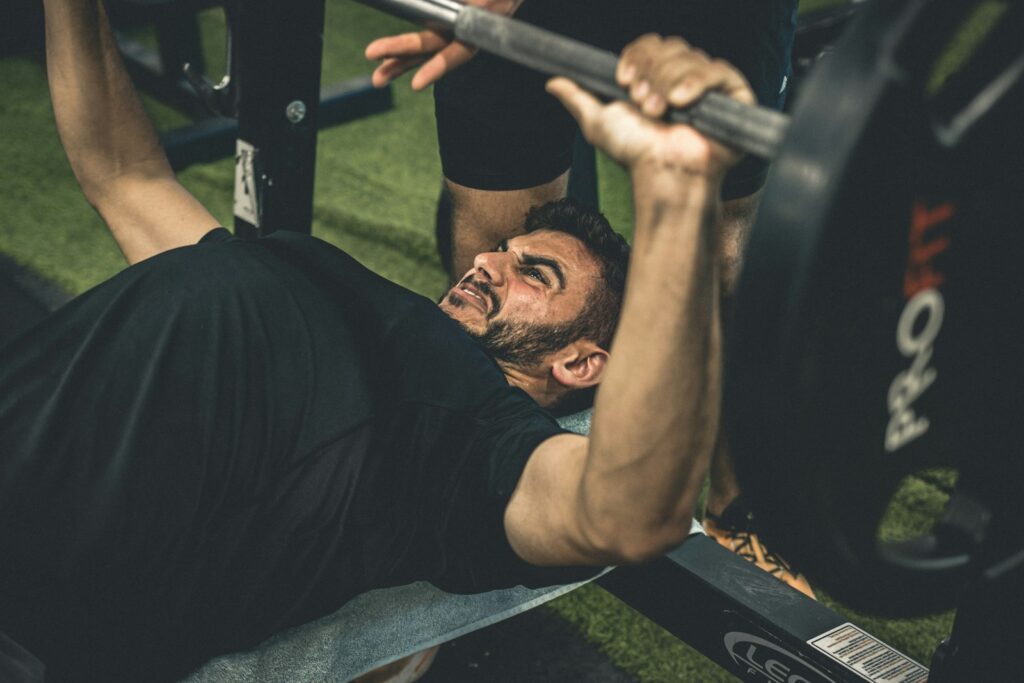
Safety: always use a spotter, safety arms or a Smith machine when you go heavy. Getting stuck under a bar in a head-down position is harder to escape than on a flat bench. If lying head-down makes you dizzy or uncomfortable, use the flat bench or dips instead.
Common mistakes and how to fix them
| Mistake | Why it matters | Fix |
|---|---|---|
| Bench angle too steep | Shortens the range and makes unracking harder | Use a slight decline of about 15–30° |
| Lowering the bar too high | Puts more stress on your shoulders | Lower the bar to the bottom of your chest |
| Elbows flared straight out | Increases strain on the front of your shoulders | Keep your elbows at about 45–70° from your body |
| Bouncing the bar off your chest | Loses control and uses momentum | Touch lightly and press |
| Loose upper back | The bar path wobbles and your shoulders roll forward | Pull your shoulder blades back and keep them pinned |
| Going heavy without a spotter | Hard to escape if you fail a rep | Use a spotter, safety arms or a Smith machine |
Should you do the decline bench press?
- You’re a beginner: start with the flat bench press. It trains the whole chest and is easier to set up safely.
- Flat pressing irritates your shoulders: try the decline. It puts less demand on your front shoulders, and many lifters find it more comfortable.
- You want more lower chest work: add the decline as a second press, or use dips, which hit a similar area.
- You train at home without a decline bench: you don’t need one. A flat bench press, push-ups and dips cover the lower chest well.
- Your chest progress has stalled: rotating in a decline block for 4–6 weeks can give you a fresh way to train it.
Sets, reps and where it fits
These are starting points I use with most lifters. Adjust them to your program.
| Use | Sets | Reps | Rest |
|---|---|---|---|
| Main chest lift | 3–4 | 5–8 | 2–3 minutes |
| Second chest exercise | 2–3 | 8–12 | 90 seconds–2 minutes |
Do the decline after your main press if you use both in the same session. Most people do well with one or two chest pressing exercises per workout, not three.
Decline bench press alternatives
- Dips: lean slightly forward to bias your chest. See the triceps dip demo for the movement.
- Dumbbell decline press: lets each arm move freely and is easier to bail out of than a barbell.
- High-to-low cable fly: pull the handles down and together toward your hips for steady tension on the lower chest.
- Flat bench press: still the best all-round chest builder for most people.
Summary
- The decline bench press works your chest, especially the lower part, plus your triceps and front shoulders.
- Research shows it works the lower chest about as well as a flat bench and uses the front shoulders less.
- It hasn’t been shown to build more muscle than the flat bench, so it’s optional.
- Use a slight decline, lower the bar to the bottom of your chest and always lift heavy with a spotter or safety arms.
- Choose it if flat pressing bothers your shoulders or you want more variety and lower chest work.
Build your chest with a clear plan
Picking the right press is one part of building your chest. Knowing how many sets to do, when to add weight and how to balance pressing with pulling is the rest. That’s where 12REPS helps.
12REPS gives you trainer-built programs with two demo videos for every exercise, so you can check your setup before you load the bar. The gym log shows what you lifted last time, so you know when it’s time to add weight. You can use Build Your Routine to add the decline press to your own week, and the built-in timer keeps your rest periods on track. Every new account starts with a 7-day free trial.
Download 12REPS and see what you’ll get:
Sources
- Lauver JD, Cayot TE, Scheuermann BW. Influence of bench angle on upper extremity muscular activation during bench press exercise. European Journal of Sport Science. 2016;16(3):309–316.
- Rodríguez-Ridao D, Antequera-Vique JA, Martín-Fuentes I, Muyor JM. Effect of five bench inclinations on the electromyographic activity of the pectoralis major, anterior deltoid, and triceps brachii during the bench press exercise. International Journal of Environmental Research and Public Health. 2020;17(19):7339. Also summarizes Glass SC, Armstrong T (1997).
Related reading
- Best Push-Pull Exercises for Muscle Building and Strength
- How to Increase Your Bench Press: 60kg to 100kg+
- Best Exercises for Each Muscle Group
- Barbell Bench Press: exercise demo
- Barbell Incline Press: exercise demo
I’m Will Duru, a personal trainer and the founder of 12REPS. I hold a BSc (Hons) in Sport and Exercise Science and have more than a decade of experience coaching people in strength training.
