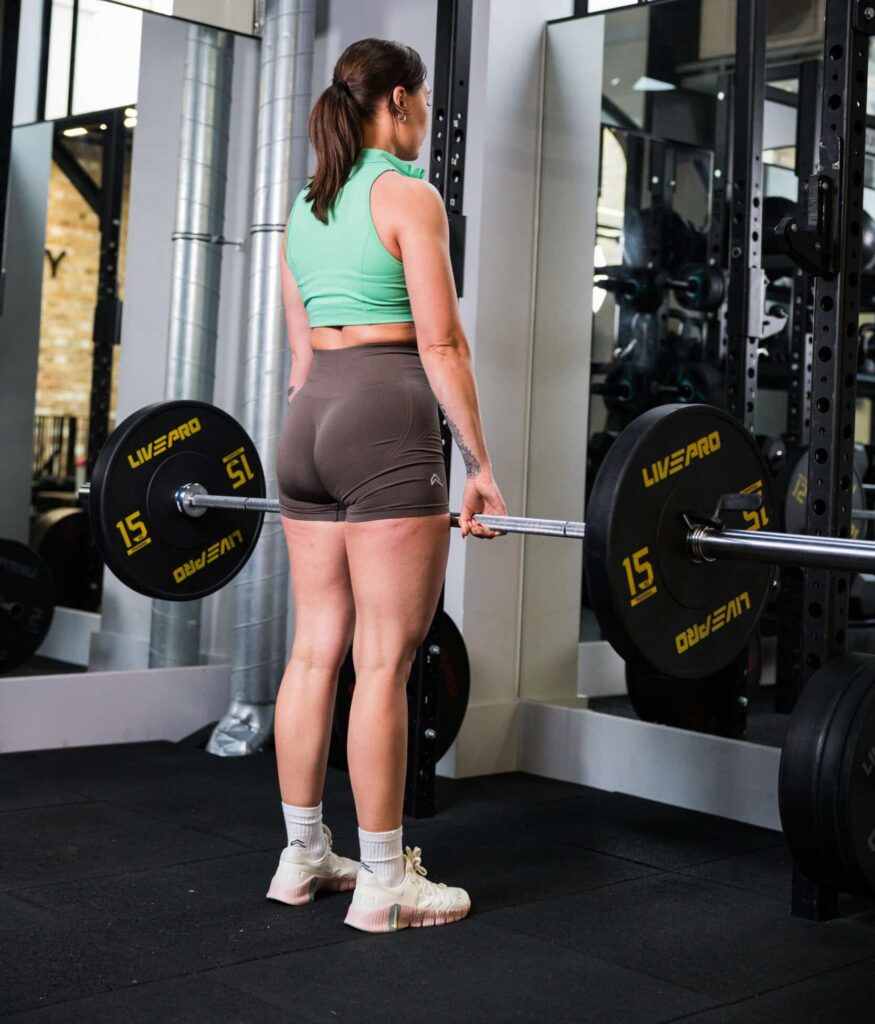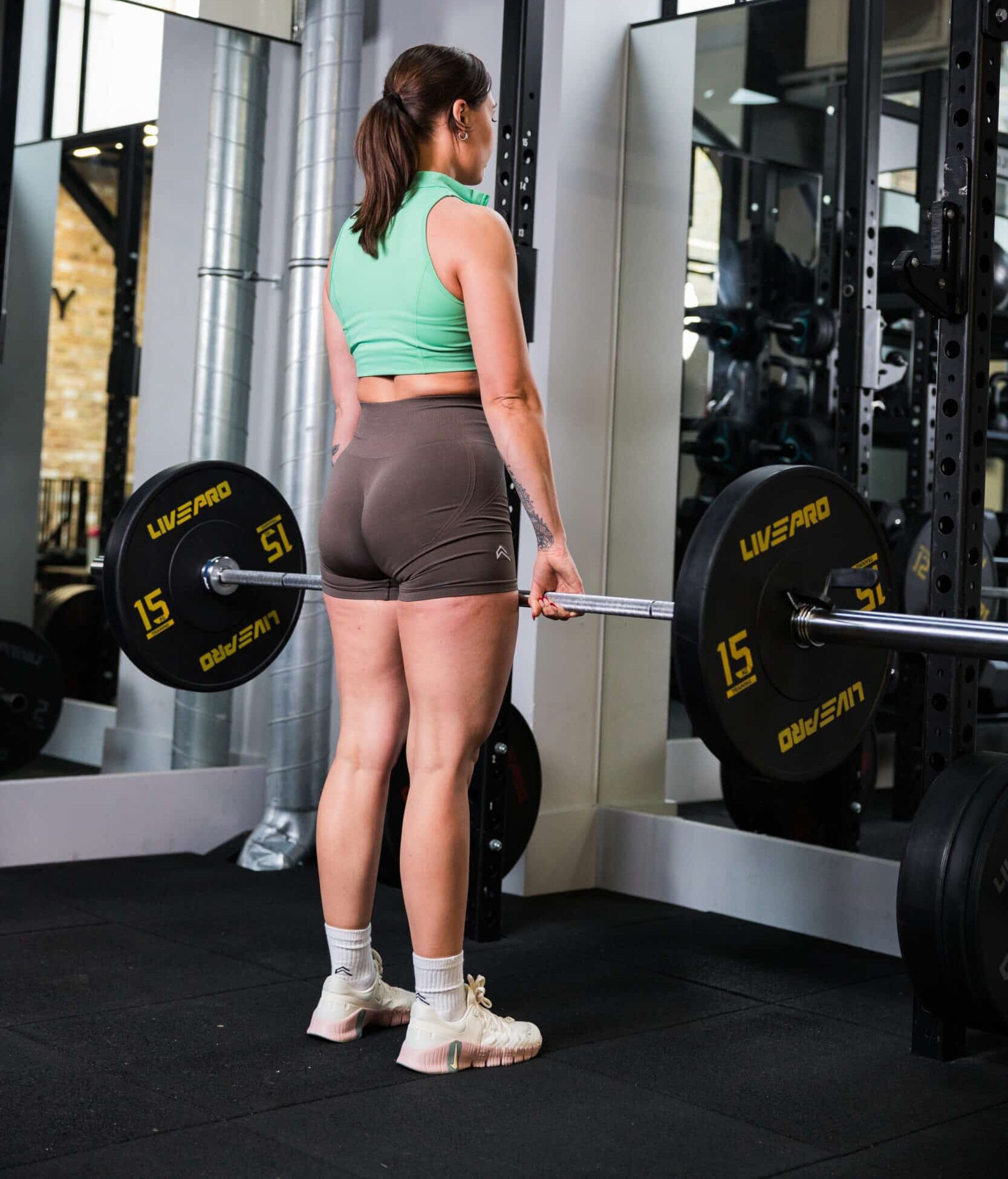




You’ve been told you need to choose: either bulk up and gain muscle (accepting some fat gain), or cut down and lose fat (accepting some muscle loss). The conventional wisdom says you can’t do both simultaneously—they’re opposing goals that require opposite approaches.
Here’s what usually happens: you spend months in a “bulk” eating more and training hard, gaining muscle but also gaining fat. Then you spend months in a “cut” eating less and doing more cardio, losing fat but also losing some of the muscle you worked hard to build. It’s exhausting, inefficient, and frankly unnecessary for most women.
The encouraging truth: research shows that building muscle whilst losing fat simultaneously (body recomposition) is absolutely possible—especially for beginners, returning trainees, and women carrying excess body fat.
I’m Will Duru, a personal trainer with over 10+ years’ experience in London. I’ve guided hundreds of women through successful body recomposition—building visible muscle whilst dropping body fat, without the traditional bulk/cut cycles.
My observation from 10+ years: The women who make the best transformations don’t obsess over bulking or cutting phases. They focus on body recomposition—training hard with progressive overload, eating adequate protein, staying near maintenance calories. Over 6-12 months, they build noticeable muscle whilst simultaneously dropping body fat percentage. The scale might barely move, but their body completely transforms.
Real client example (Sarah, 34): Started at 68kg, 32% body fat. After 9 months of body recomp approach—strength training 3x weekly, eating 1,900 calories, 130g protein daily—she ended at 67kg but 24% body fat. The scale barely changed (1kg loss), but she lost 6.4kg of fat and gained 5.4kg of muscle. She looked completely different—visible muscle definition, smaller waist, tighter physique—despite weighing nearly the same.
This guide explains what body recomposition actually is (and the research proving it works), who can successfully build muscle and lose fat simultaneously (it’s more people than you think), exactly how to eat for body recomposition with specific calorie and protein targets, how to train for optimal muscle gain and fat loss, and realistic timelines based on my decade of client results.

What Is Body Recomposition?
Body recomposition (often called “recomp”) is the process of simultaneously decreasing body fat percentage whilst increasing lean muscle mass.
The key difference from traditional approaches:
- Traditional bulk: Eat in calorie surplus → gain muscle + fat → then cut to lose fat
- Traditional cut: Eat in calorie deficit → lose fat + some muscle
- Body recomposition: Eat near maintenance calories + high protein + strength train → gain muscle whilst losing fat simultaneously
Why it challenges conventional wisdom: The fitness industry has long taught that muscle gain requires a calorie surplus and fat loss requires a calorie deficit—they’re supposedly mutually exclusive. Body recomposition proves this isn’t entirely true.
Will’s perspective: “The bulk/cut mentality comes from bodybuilding culture—male bodybuilders trying to gain maximum muscle mass. But most women aren’t trying to gain 20kg of muscle. They want to look toned, strong, athletic. Body recomposition achieves this without the uncomfortable bulk phase or the muscle-wasting cut phase.”

Does Body Recomposition Actually Work? (The Research)
Study 1: Trained Individuals CAN Build Muscle and Lose Fat
A 2020 review in Strength & Conditioning Journal examined whether trained individuals can achieve body recomposition.
Key findings:
- Body recomposition is well-documented in untrained and overweight individuals
- Critical insight: Contrary to popular belief, trained individuals can also achieve body recomposition
- Multiple studies showed resistance-trained participants building muscle whilst losing fat simultaneously
Conclusion: “Despite the common belief that building muscle and losing fat at the same time is only plausible in novice/obese individuals, the literature supports that trained individuals can achieve this.”
Will’s confirmation: “This matches exactly what I see with clients. Beginners make fastest progress, but intermediate trainees (6-18 months experience) absolutely recomp successfully. I’ve had clients training 12+ months who still build muscle whilst dropping body fat—it’s slower than beginners but it happens.”
Study 2: High Protein + Resistance Training = Body Recomposition
Research consistently shows body recomposition occurs when high protein intake (2.3-3.4g/kg) is combined with resistance training.
What the research demonstrates:
- Adequate protein preserves and builds muscle even in calorie deficit
- Strength training provides stimulus for muscle growth
- The combination allows simultaneous fat loss and muscle gain
Will’s practical application: “I keep protein high for all clients—minimum 1.8g/kg bodyweight, often 2.0-2.2g/kg. This isn’t just for muscle building. High protein preserves muscle during fat loss, keeps you full (reducing calorie intake naturally), and has higher thermic effect (you burn more calories digesting it).”
Study 3: Body Recomposition in Professional Athletes
Research has documented body recomposition even in elite athletes—professional football players squatting over 175kg and benching over 130kg still gained muscle whilst losing fat.
Why this matters: If elite athletes with years of training can recomp, beginners and intermediates certainly can.
Will’s take: “If a professional athlete who’s been lifting for 10+ years can still recomp, then a woman who’s been training 6-12 months definitely can. The potential for body recomposition extends much further than people think.”
Who Can Successfully Build Muscle and Lose Fat Simultaneously?
Group 1: Complete Beginners (Highest Potential)
Definition: Never strength trained before, or minimal sporadic training.
Why recomp works exceptionally well: Untrained muscles respond dramatically to any resistance training stimulus. Your body is extremely sensitive to the new stress.
Typical results: Significant muscle gain + significant fat loss simultaneously.
Will’s beginner client results (first 6 months):
- Average: +3-4kg muscle, -4-6kg fat
- Body weight: -1 to -2kg total (sometimes stays same if eating at maintenance)
- Visible transformation: Arms defined, shoulders rounder, glutes firmer, waist smaller
Real example (Emma, 29): Complete beginner, 70kg, 30% body fat. After 6 months: 68kg, 23% body fat. Lost 5.3kg fat, gained 3.3kg muscle. She looked completely different despite only 2kg scale weight loss.
Will’s note: “Emma was frustrated at month 3—scale only showed 1kg loss. I reminded her we’re building muscle simultaneously. By month 6, her transformation photos showed the real story—completely different body despite minimal scale change.”
Group 2: Returning After Break (Strong Potential)
Definition: Previously trained, took months/years off, now returning.
Why recomp works: “Muscle memory”—muscles regrow faster than they initially grew. Your body remembers previous adaptations.
Typical results: Rapid muscle regain + fat loss for first 3-6 months.
Will’s returning client results:
- Average: +2-3kg muscle, -3-5kg fat in first 6 months
- Progress faster than true beginners initially, then similar pace
Real example (Lisa, 36): Trained seriously for 2 years in her 20s, stopped for 8 years, returned at 72kg, 33% body fat. After 6 months: 70kg, 26% body fat. Lost 5.4kg fat, gained 3.4kg muscle. Her comment: “It came back way faster than I expected. Within 3 months I was lifting weights I used to lift after 12 months the first time.”
Will’s observation: “The muscle memory phenomenon is real. Returning clients make incredibly fast progress initially, sometimes faster than true beginners. But it levels off after 4-6 months to similar pace.”
Group 3: Carrying Excess Body Fat (Moderate to Strong Potential)
Definition: Currently carrying excess body fat (typically >28-30% body fat for women).
Why recomp works: Your body can mobilise stored fat as energy to fuel muscle building, even in slight calorie deficit.
Typical results: Significant fat loss + moderate muscle gain.
Will’s client results (women starting 30-35% body fat):
- Average first 6 months: +2-3kg muscle, -6-8kg fat
- Often larger total scale weight loss than other groups due to more fat to lose
Real example (Rachel, 42): Started 75kg, 34% body fat. After 9 months: 68kg, 25% body fat. Lost 9.3kg fat, gained 2.3kg muscle. Dramatic visual transformation—lost 2 dress sizes, built visible muscle definition.
Will’s note: “Rachel’s scale showed 7kg loss—sounds like simple weight loss. But body composition testing revealed she’d built 2.3kg muscle simultaneously. Her body fat dropped 9% points. That’s body recomposition.”
Group 4: Intermediate Trainees (Moderate Potential)
Definition: Been strength training consistently for 6-18 months.
Why recomp still works: Not yet reached genetic potential for muscle building. Still responsive to training stimulus, just slower than beginners.
Typical results: Slow but steady muscle gain + fat loss.
Will’s intermediate client results:
- Average 6 months: +1-2kg muscle, -2-4kg fat
- Slower than beginners but absolutely achievable
Real example (Sophie, 31): Trained consistently for 10 months, then focused on recomp. Started at 65kg, 26% body fat. After 6 months: 64kg, 22% body fat. Lost 2.9kg fat, gained 1.9kg muscle. She said: “The scale barely moved but I look way more toned. My jeans fit differently—tighter in glutes and thighs, looser in waist.”
Will’s coaching for intermediates: “Progress is slower than beginners, maybe half the rate. But it’s still happening. The key is patience and trusting the process even when scale barely moves.”

Who Has Limited Potential for Body Recomposition?
Advanced trainees (3+ years consistent training):
- Already built substantial muscle mass
- Close to genetic potential
- Recomp possible but extremely slow (might take 12 months for changes beginners achieve in 3 months)
Very lean individuals (<20-22% body fat for women):
- Limited fat stores to mobilise as energy
- Body protective of remaining fat
- Better off with traditional bulk/cut if wanting further muscle gain
Will’s guidance: “If you’ve trained hard for 3+ years and you’re already lean (22% body fat or less), body recomp becomes very difficult. At that point, small bulk/cut cycles become more effective. But that’s a tiny percentage of women—most can successfully recomp.”
How to Eat for Body Recomposition
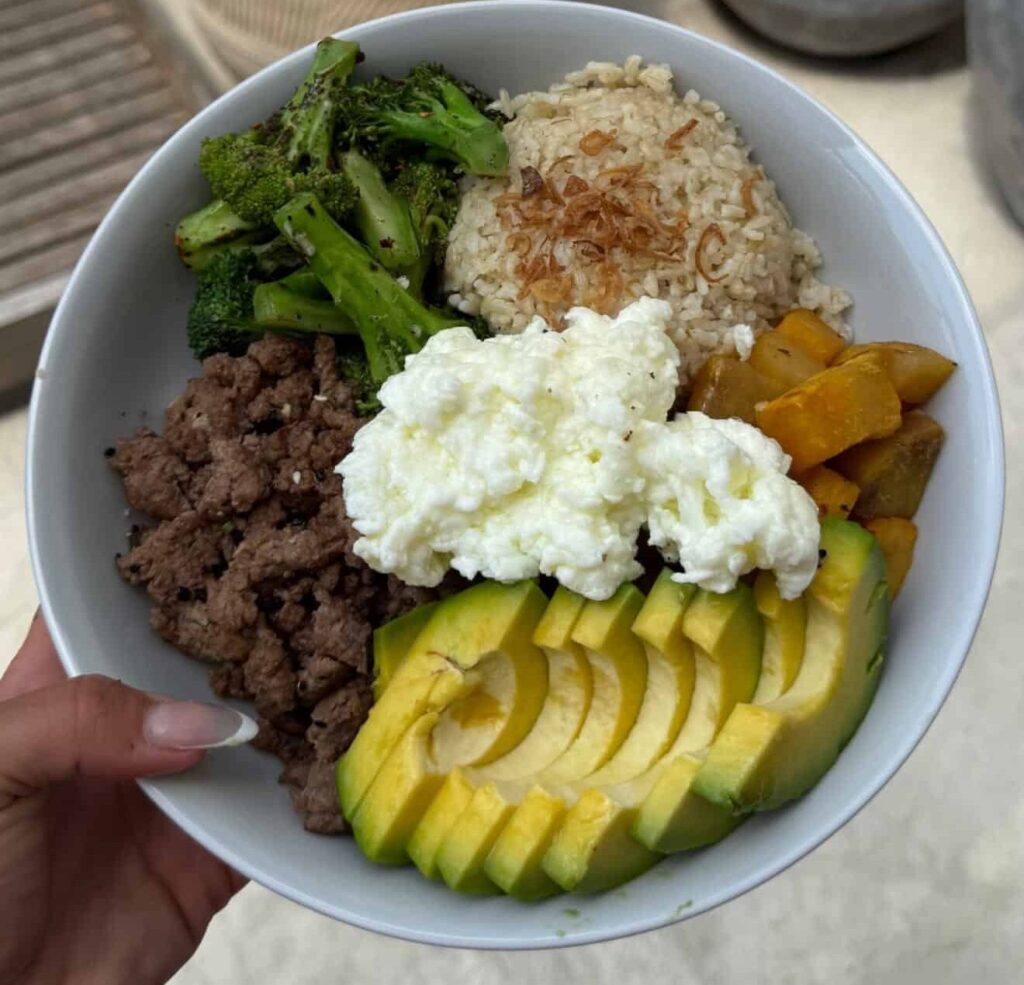
Step 1: Calculate Maintenance Calories
Your maintenance calories = the amount you need to eat to maintain current body weight.
Why maintenance matters: Body recomp typically occurs eating at or slightly below maintenance (0-300 calorie deficit maximum).
Rough calculation:
- Sedentary: Bodyweight (kg) × 31-33 calories
- Moderately active (strength training 3-4x weekly): Bodyweight (kg) × 33-35 calories
- Very active: Bodyweight (kg) × 35-37 calories
Example for 65kg woman training 3x weekly:
- 65kg × 34 = 2,210 calories (maintenance)
- For recomp: 2,000-2,210 calories daily
Will’s practical approach: “I typically start clients at their estimated maintenance, track for 2 weeks. If weight stable = we’ve found maintenance. If gaining = reduce 200 calories. If losing fast (>0.5kg weekly) = increase 100-200 calories. We want weight stable or very slow loss (0.25kg weekly maximum).”
Step 2: Prioritise Protein (Most Critical Factor)
Protein target for body recomposition: 1.8-2.4g per kg bodyweight
Why this range:
- 1.8g/kg = minimum for muscle building in calorie deficit
- 2.0-2.2g/kg = optimal for most women
- 2.4g/kg = maximum useful amount (more doesn’t add benefit)
Example for 65kg woman:
- Minimum: 117g protein daily
- Optimal: 130-143g protein daily
- Maximum: 156g protein daily
Will’s typical prescription: “I aim for 2.0g/kg for most clients. For 65kg woman, that’s 130g protein daily. This ensures muscle preservation and growth even if they end up in slight deficit some days.”
Why protein is crucial for body recomp:
- Preserves muscle mass during fat loss
- Provides amino acids for muscle protein synthesis
- Higher thermic effect (burns ~30% of calories during digestion)
- Most satiating macronutrient (keeps you fuller longer)
Real client data (Will’s tracking): “Clients eating 1.8-2.2g/kg protein consistently built muscle and lost fat. Clients eating <1.5g/kg either lost muscle or made minimal muscle gains—even with perfect training. I’ve tracked this across hundreds of clients over 10 years. Protein intake is THE difference.”
Step 3: Distribute Remaining Calories Between Carbs and Fats
After protein, distribute remaining calories:
Typical split:
- Protein: 30-35% of calories
- Carbohydrates: 35-45% of calories
- Fats: 25-30% of calories
Example for 65kg woman eating 2,100 calories:
- Protein: 130g (520 calories, 25%)
- Carbohydrates: 220g (880 calories, 42%)
- Fats: 75g (675 calories, 32%)
Will’s flexibility: “I’m not dogmatic about carb/fat split. Some women feel better with more carbs (220-250g), some prefer more fats (80-90g). As long as protein is high (2.0g/kg) and total calories near maintenance, the carb/fat ratio is personal preference.”
Step 4: Meal Timing and Distribution
Important timing considerations:
- Pre-workout: Some carbs for energy
- Post-workout: Protein + carbs within 45 minutes (women’s 30-45 min window)
- Distribute protein across day: 25-40g per meal (breakfast, lunch, dinner, snacks)
Will’s typical meal structure:
- Breakfast: 30g protein, 40g carbs, 15g fat
- Lunch: 35g protein, 50g carbs, 20g fat
- Post-workout snack: 25g protein, 35g carbs
- Dinner: 40g protein, 60g carbs, 25g fat
- Total: 130g protein, 185g carbs, 60g fats = ~1,900 calories
Will’s observation: “Women who eat protein at every meal (not just dinner) make better progress. Spreading 130g protein across 4 meals (32-33g each) is far easier than trying to eat it in 2-3 meals.”
How to Train for Body Recomposition
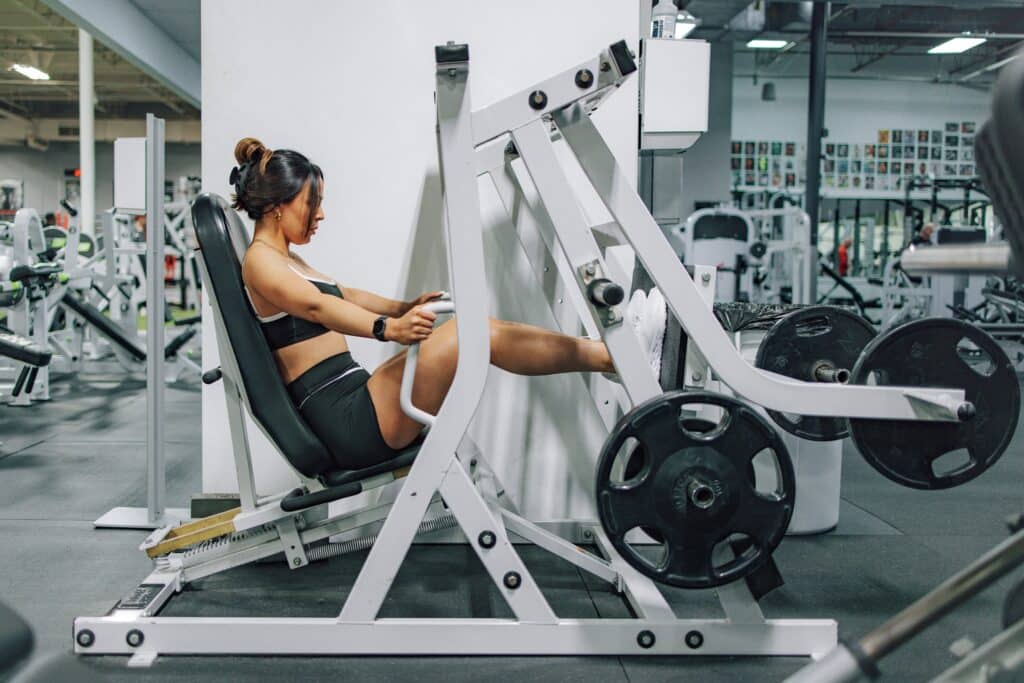
Foundation: Progressive Strength Training (Non-Negotiable)
Minimum: 3 sessions weekly Optimal: 3-4 sessions weekly Structure: Full body or upper/lower split
Why strength training is essential:
- Provides stimulus for muscle growth
- Prevents muscle loss during fat loss
- Increases metabolic rate
- Improves insulin sensitivity
Will’s typical programmes:
- Beginners: 3x weekly full body (Monday/Wednesday/Friday)
- Intermediates: 4x weekly upper/lower (Monday upper, Tuesday lower, Thursday upper, Friday lower)
Key principle: Progressive Overload
You must progressively increase demands on muscles—more weight, more reps, more sets over time.
Example progression (squats):
- Week 1-2: 40kg × 8 reps × 3 sets
- Week 3-4: 42.5kg × 8 reps × 3 sets
- Week 5-6: 45kg × 8 reps × 3 sets
- Week 7-8: 47.5kg × 8 reps × 3 sets
Will’s firmest rule: “If you’re not getting stronger over time, lifting more weight or doing more reps—you’re not building muscle. Progressive overload is non-negotiable for body recomp. I track every client’s lifts meticulously. The ones who progress consistently on weights build muscle. The ones who lift same weights for months don’t.”
Training Intensity: Lift Close to Failure
Research shows: Sets taken within 0-3 reps of failure maximise muscle growth.
What this means practically:
- If you could do 12 reps maximum, stop at 9-12 reps
- Last 2-3 reps should feel challenging
Will’s coaching: “Most women don’t train hard enough. They stop at 8 reps when they could do 12. For body recomp, you need to push close to failure, not injure yourself, but genuinely challenge your muscles. That final rep should be hard. I constantly coach clients: ‘Could you have done 2 more reps?’ If yes, you didn’t train hard enough.”
Training Volume: How Much Is Enough?
Per muscle group weekly:
- Minimum for growth: 10 sets weekly
- Optimal for most: 12-16 sets weekly
- Maximum useful: 20 sets weekly
Example for glutes (14 sets weekly):
- Monday: Squats 4 sets, Hip thrusts 3 sets = 7 sets
- Thursday: Deadlifts 4 sets, Bulgarian split squats 3 sets = 7 sets
- Total: 14 sets glutes weekly
Will’s approach: “I programme 12-16 sets per muscle weekly for most clients. More than 20 sets and recovery becomes problematic. Less than 10 sets and muscle growth is suboptimal.”
Cardio: Helpful But Not Essential
Cardio’s role in body recomp:
- Increases calorie deficit (helps fat loss)
- Improves cardiovascular health
- NOT required for body recomp success
Will’s cardio recommendations:
- If prioritising body recomp: 2-3 sessions weekly, 20-30 minutes moderate intensity
- Type: Walking, cycling, swimming—whatever you enjoy
- Avoid: Excessive cardio (5-6+ sessions, 60+ minutes) impairs recovery
Will’s observation: “Client doing 3x strength training + 2x 30-min walks weekly makes better body recomp progress than client doing 3x strength + 5x 60-min runs. The excessive cardio impairs recovery and muscle building. I’ve seen this pattern hundreds of times over 10 years.”

Realistic Timeline: How Long Does Body Recomposition Take?
Months 1-3: Initial Changes
What to expect:
- Strength increasing rapidly (neurological adaptations)
- Slight visible changes in muscle definition (subtle)
- Body composition improving but scale weight relatively stable
- Clothes fitting slightly differently
Will’s typical first 3 months (beginner):
- Muscle gain: +1-1.5kg
- Fat loss: -2-3kg
- Scale weight: -0.5 to -1.5kg total
- Visual: Subtle muscle definition emerging, waist slightly smaller
Real example: Emma (complete beginner) after 3 months: +1.2kg muscle, -2.6kg fat, scale 70kg → 68.6kg. She said: “I see small changes, my arms look less soft, my jeans fit better—but I expected more dramatic results.”
Will’s typical coaching at 3 months: “This is when I remind clients to be patient. The first 3 months lay the foundation. The dramatic visual changes happen months 4-9. Trust the process.”
Months 4-6: Visible Transformation
What to expect:
- Clear muscle definition visible
- Noticeable fat loss
- Strength continuing to increase
- Others commenting on your appearance
Will’s typical months 4-6 (beginner):
- Muscle gain: +2-2.5kg total (from start)
- Fat loss: -4-5kg total (from start)
- Scale weight: -1.5 to -2.5kg total from start
- Visual: Obvious transformation, arms/shoulders defined, waist smaller, glutes firmer
Real example: Emma after 6 months: +3.3kg muscle, -5.3kg fat, scale 70kg → 68kg. She said: “NOW I see it. The last 3 months the changes accelerated. People constantly comment that I look different.”
Months 7-12: Continued Improvement
What to expect:
- Continued muscle building and fat loss (slower pace than months 1-6)
- Body approaching a trained state
- Sustainable physique you can maintain long-term
Will’s typical full year (beginner):
- Muscle gain: +3-5kg total
- Fat loss: -6-9kg total
- Scale weight: -2 to -4kg total (sometimes more if starting higher body fat)
- Visual: Dramatic transformation, athletic physique, visible muscle definition throughout
Real example: Sarah (mentioned earlier) after 9 months: +5.4kg muscle, -6.4kg fat, scale 68kg → 67kg. Her transformation photos showed completely different body, muscular shoulders and arms, defined abs visible, prominent glutes, smaller waist.
Will’s reflection: “Sarah’s scale showed 1kg loss in 9 months. Anyone judging by scale would think she failed. But her body fat dropped from 32% to 24%, an 8 percentage point drop, whilst building over 5kg muscle. That’s one of the best body recompositions I’ve overseen.”
Factors Affecting Timeline
Faster progress:
- Complete beginner
- Higher starting body fat (30%+)
- Consistent training (never missing sessions)
- Protein intake 2.0g/kg+
- Adequate sleep (7-9 hours)
Slower progress:
- Intermediate trainee (6-18 months experience)
- Leaner starting point (25% body fat)
- Inconsistent training
- Protein intake <1.6g/kg
- Poor sleep (<6 hours)
Will’s experience: “The clients making fastest body recomp progress are complete beginners who train consistently 3-4x weekly, eat 2.0g/kg protein daily, and sleep 7-8 hours nightly. The clients making slowest progress are intermediates who train inconsistently, eat 1.4g/kg protein, and sleep 5-6 hours. The difference in 6-month results is dramatic.”

Why the Scale Is Misleading During Body Recomposition
The Problem With Scale Weight
What the scale shows: Total body weight (muscle + fat + water + food in system + glycogen)
What the scale doesn’t show:
- How much is muscle vs fat
- Body composition changes
- Visual transformation
Common body recomp scenario:
- Lose 4kg fat
- Gain 3kg muscle
- Scale shows: 1kg loss
- Reality: Dramatic body composition improvement
Will’s most common client frustration: “Client trains hard for 3 months, eats properly, makes excellent progress. Scale shows 1kg loss. She’s disappointed, thinks it’s not working. Then we do body composition measurement, she’s lost 3kg fat, gained 2kg muscle. The scale completely misrepresented her progress. This happens constantly.”
Better Progress Tracking Methods
Method 1: Progress Photos (Most Visual)
- Same location, lighting, time of day
- Weekly or fortnightly
- Front, side, back views
Will’s experience: “The 3-month progress photo comparison is what convinces clients their body recomp is working. They see visible muscle definition, smaller waist, firmer glutes—all things the scale never showed.”
Method 2: Body Measurements
- Waist (narrowest point)
- Hips (widest point)
- Thighs (mid-thigh)
- Arms (flexed, mid-bicep)
Typical body recomp pattern:
- Waist: Decreasing (fat loss)
- Arms/thighs: Staying same or slightly increasing (muscle gain)
- Hips: Depends on fat distribution
Method 3: Clothing Fit
- Jeans: Tighter in glutes/thighs (muscle), looser in waist (fat loss)
- Tops: Tighter in shoulders/arms (muscle)
- Overall: Fitting smaller size
Will’s client quote: “Sophie said her jeans were ‘fitting weird.’ Tight in glutes and thighs but loose in waist. I explained that’s perfect body recomp, building muscle where you want it (glutes/legs) whilst losing fat where you want (waist). The ‘weird fit’ is success.”
Method 4: Strength Progression
- Squat weight increasing = building muscle
- Deadlift weight increasing = building muscle
- All lifts increasing = definitely building muscle
Will’s definitive test: “If your squat goes from 40kg to 70kg in 6 months, you’ve absolutely built muscle, regardless of what the scale says. Strength is objective proof of muscle gain. I use this to reassure clients when scale doesn’t move.”
Method 5: Body Composition Testing (Most Accurate)
- DEXA scan (most accurate)
- InBody scan (reasonably accurate)
- Bioelectrical impedance (least accurate but better than nothing)
Frequency: Every 8-12 weeks
Will’s practice: “I refer clients for DEXA scans every 12 weeks. The data is irrefutable, exact kg of muscle gained, kg of fat lost. When clients see +3kg muscle, -5kg fat on the scan, they stop worrying about the scale.”
Common Body Recomposition Mistakes
Mistake 1: Eating Too Little (Excessive Deficit)
The problem: Creating 500-700 calorie daily deficit thinking it accelerates fat loss.
Why it backfires: Insufficient energy for muscle building, recovery suffers, strength gains stall, potential muscle loss.
Will’s typical scenario: “Client eating 1,400 calories whilst training 4x weekly. She’s not building muscle—her lifts aren’t increasing, she’s exhausted, recovery terrible. We increase calories to 1,900—suddenly strength starts increasing, muscle development visible, energy improves. She needed more food to fuel muscle building.”
The fix: Eat at or slightly below maintenance (maximum 300 calorie deficit).
Mistake 2: Insufficient Protein
The problem: Eating 80-100g protein daily when you need 130g+.
Why body recomp fails: Not enough amino acids for muscle protein synthesis.
Will’s observation: “I track every client’s protein intake meticulously. The ones eating 1.8-2.2g/kg consistently build muscle. The ones eating 1.2-1.4g/kg barely build muscle even with perfect training. Over 10 years, I’ve never seen successful body recomp with protein <1.6g/kg. Protein intake is THE difference.”
The fix: Minimum 1.8g/kg, optimal 2.0g/kg bodyweight in protein daily.
Mistake 3: Not Progressive Overloading
The problem: Lifting same weights for months—40kg squat week 1, still 40kg squat week 12.
Why body recomp fails: No increasing stimulus for muscle growth.
Will’s frustration: “Client says ‘I’ve been training 6 months but haven’t built muscle.’ I ask what weight she squats. Same as 6 months ago. That’s not strength training—that’s weight maintenance. Progressive overload is non-negotiable. If lifts aren’t increasing, you’re not building muscle.”
The fix: Increase weight, reps, or sets every 1-2 weeks.
Mistake 4: Too Much Cardio
The problem: 5-6 cardio sessions weekly (60+ minutes each) on top of strength training.
Why body recomp fails: Excessive training volume, impaired recovery, insufficient energy for muscle building.
Will’s typical case: “Client strength trains 3x weekly, runs 5x weekly (45-60 min), eats 1,700 calories. She’s exhausted, lifts aren’t increasing, not building muscle, constantly sore. We cut cardio to 2x weekly—suddenly lifts increase, energy improves, muscle development starts, recovery much better.”
The fix: Maximum 2-3 moderate cardio sessions weekly during body recomp phase.
Mistake 5: Impatience and Inconsistency
The problem: Expecting dramatic changes in 4 weeks, getting discouraged, changing approach constantly.
Why body recomp fails: Insufficient time for adaptations, never staying consistent long enough.
Will’s observation: “Body recomp requires patience. Visible changes take 8-12 weeks minimum, dramatic transformation takes 6-9 months. The clients who succeed train consistently for 6+ months without constantly changing their approach. The ones who fail switch between body recomp, keto, intermittent fasting, HIIT challenges every 4-6 weeks—never giving anything time to work.”
The fix: Commit to 6 months minimum before judging results.
The Bottom Line
Can you build muscle and lose fat at the same time? The research-backed answer: Yes—body recomposition is absolutely possible, especially for beginners, returning trainees, women with higher body fat, and intermediates.
Who can successfully body recomp:
✅ Complete beginners (highest potential—significant muscle gain + fat loss)
✅ Returning after break (strong potential—muscle memory accelerates regain)
✅ Carrying excess body fat 30%+ (moderate to strong potential—body mobilises fat as energy)
✅ Intermediate trainees 6-18 months experience (moderate potential—slower but achievable)
Who has limited potential:
⚠️ Advanced trainees 3+ years (possible but extremely slow)
⚠️ Very lean <20-22% body fat (difficult—better off with small bulk/cut cycles)
How to eat for body recomp:
✅ Maintenance calories or slight deficit max 300 cal (for 65kg woman: 2,000-2,200 daily)
✅ High protein 1.8-2.4g/kg bodyweight (for 65kg woman: 117-156g, optimal 130g)
✅ Distribute remaining calories: 35-45% carbs, 25-30% fats
✅ Protein at every meal (25-40g per meal, 4 meals daily)
✅ Post-workout within 45 minutes (20-30g protein + 40-60g carbs)
How to train for body recomp:
✅ Strength training 3-4x weekly (full body or upper/lower split)
✅ Progressive overload (increase weight/reps/sets consistently—non-negotiable)
✅ Train close to failure (within 0-3 reps of max)
✅ Adequate volume (12-16 sets per muscle weekly)
✅ Moderate cardio only (2-3 sessions, 20-30 min—not excessive)
Realistic timeline (Will’s decade of client data):
✅ Months 1-3: +1-1.5kg muscle, -2-3kg fat, subtle visible changes
✅ Months 4-6: +2.5-3.5kg muscle, -4-5kg fat, obvious transformation
✅ Months 7-12: +3-5kg muscle, -6-9kg fat, dramatic athletic physique
Why scale weight is misleading:
✅ Example: -4kg fat, +3kg muscle = scale shows 1kg loss (dramatic body composition improvement hidden)
✅ Better tracking: progress photos (most visual), measurements (waist decreasing, arms/thighs increasing), clothing fit (tighter shoulders/glutes, looser waist), strength progression (lifts increasing = muscle building), body composition testing (DEXA scan every 8-12 weeks)
Will’s decade of experience summarised:
✅ “Complete beginner client: +3.3kg muscle, -5.3kg fat in 6 months. Scale showed 2kg loss—she looked completely different despite minimal scale change”
✅ “Client eating 1,400 cal wasn’t building muscle. Increased to 1,900—strength increased, muscle development visible. She needed more food to fuel muscle building”
✅ “Clients eating 1.8-2.2g/kg protein consistently build muscle. Those eating <1.5g/kg barely build muscle even with perfect training. Over 10 years, never seen successful body recomp with protein <1.6g/kg”
✅ “Client strength trains 3x + runs 5x weekly—exhausted, not building muscle. Cut cardio to 2x—lifts increase, energy improves, muscle develops. Excessive cardio impaired recovery”
✅ “Body recomp requires patience. Visible changes 8-12 weeks minimum, dramatic transformation 6-9 months. Clients who succeed stay consistent 6+ months without constantly switching approaches”
Common mistakes to avoid:
❌ Eating too little (500-700 cal deficit—insufficient energy for muscle building)
❌ Insufficient protein (<1.6g/kg—not enough amino acids for muscle synthesis)
❌ Not progressive overloading (same weights for months—no increasing stimulus)
❌ Too much cardio (5-6 sessions 60+ min—impairs recovery, prevents muscle building)
❌ Impatience (expecting results in 4 weeks, constantly changing approach)
Real client transformation (Sarah, 34):
✅ Start: 68kg, 32% body fat
✅ After 9 months: 67kg, 24% body fat
✅ Results: -6.4kg fat, +5.4kg muscle
✅ Scale barely changed (1kg loss) but body completely transformed
Try 12REPS free for 7 days. Get structured programmes designed for body recomposition—progressive strength training 3-4x weekly, built-in tracking, and nutrition guidance for optimal muscle building and fat loss simultaneously.
Stop choosing between building muscle or losing fat. Start body recomposition. Train hard with progressive overload, eat adequate protein at maintenance calories, be patient for 6-9 months—and watch your body transform.
The scale might barely move. But your body composition, appearance, and strength will change dramatically.

References
- Barakat, C., Pearson, J., Escalante, G., Campbell, B., De Souza, E.O. (2020). Body Recomposition: Can Trained Individuals Build Muscle and Lose Fat at the Same Time? Strength and Conditioning Journal, 42(5), 7-21. https://doi.org/10.1519/SSC.0000000000000584
- Longland, T.M., Oikawa, S.Y., Mitchell, C.J., Devries, M.C., Phillips, S.M. (2016). Higher Compared with Lower Dietary Protein During an Energy Deficit Combined with Intense Exercise Promotes Greater Lean Mass Gain and Fat Mass Loss: A Randomized Trial. The American Journal of Clinical Nutrition, 103(3), 738-746. https://doi.org/10.3945/ajcn.115.119339
- Antonio, J., Peacock, C.A., Ellerbroek, A., Fromhoff, B., Silver, T. (2014). The Effects of Consuming a High Protein Diet (4.4 g/kg/d) on Body Composition in Resistance-Trained Individuals. Journal of the International Society of Sports Nutrition, 11, 19. https://doi.org/10.1186/1550-2783-11-19
- Schoenfeld, B.J., Aragon, A.A., Krieger, J.W. (2013). The Effect of Protein Timing on Muscle Strength and Hypertrophy: A Meta-Analysis. Journal of the International Society of Sports Nutrition, 10, 53. https://doi.org/10.1186/1550-2783-10-53
- Hector, A.J., Phillips, S.M. (2018). Protein Recommendations for Weight Loss in Elite Athletes: A Focus on Body Composition and Performance. International Journal of Sport Nutrition and Exercise Metabolism, 28(2), 170-177. https://doi.org/10.1123/ijsnem.2017-0273