

Written by Will Duru, BSc (Hons) Sport and Exercise Science, award-winning Personal Trainer with over 10 years of experience in strength training and optimising recovery
You Do Not Need to Avoid Heavy Lifting to Look or Feel Strong
Many women enter the gym with the same message in their heads: use light weights, complete more repetitions and stay away from the barbell area.
That advice can hold you back. Barbell squats and deadlifts are not exercises reserved for powerlifters or advanced athletes. They are trainable movement patterns that can help you build muscle, strengthen your lower body and become more confident using the gym.
You do not need to lift the heaviest bar in the room. You need a starting point that matches your experience, a setup you can control and a plan for gradual progress.
What Squats and Deadlifts Can Give You
- Stronger glutes, quadriceps, hamstrings and back muscles.
- A measurable way to build strength over time.
- More confidence lifting free weights.
- Better control when sitting, standing, lifting and carrying.
- A strong foundation for muscle-building and body-composition goals.
- Training that challenges your muscles and bones at the same time.
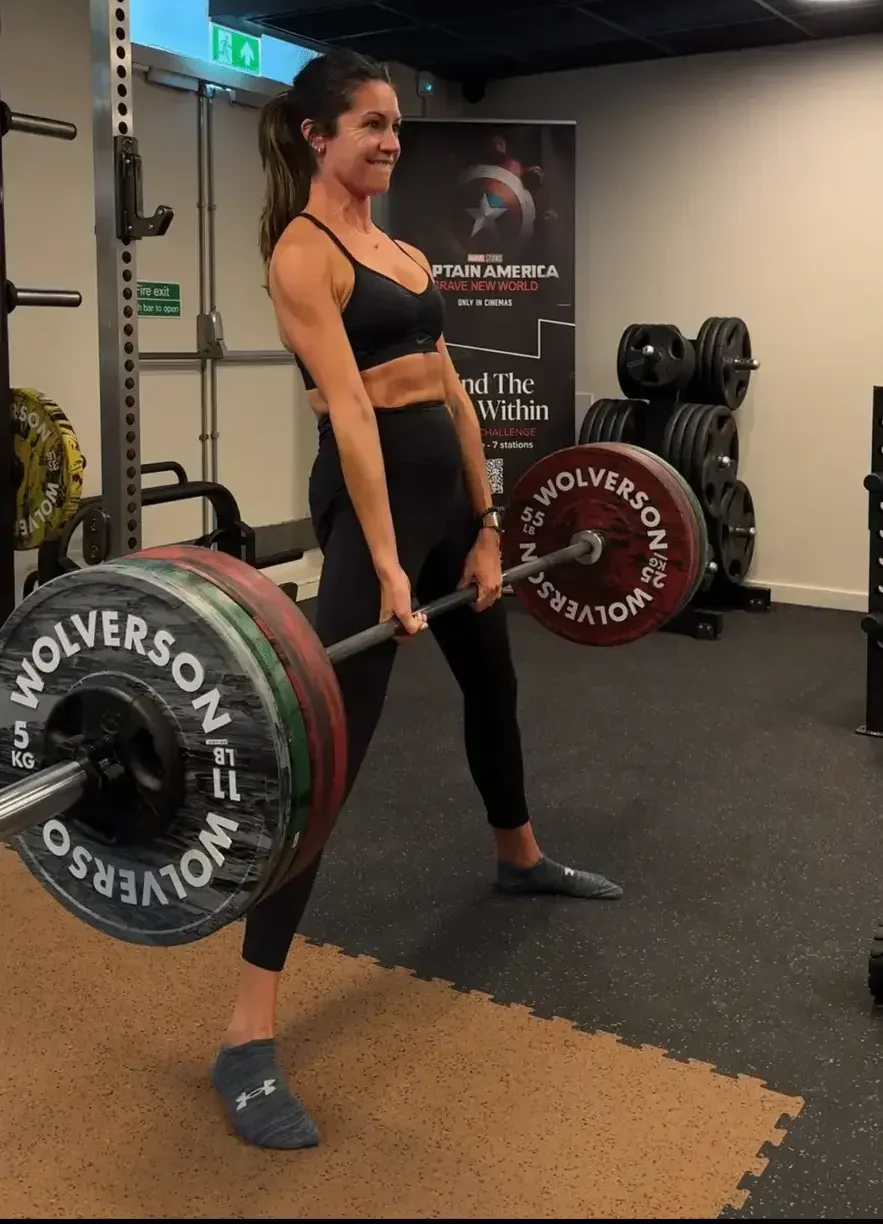
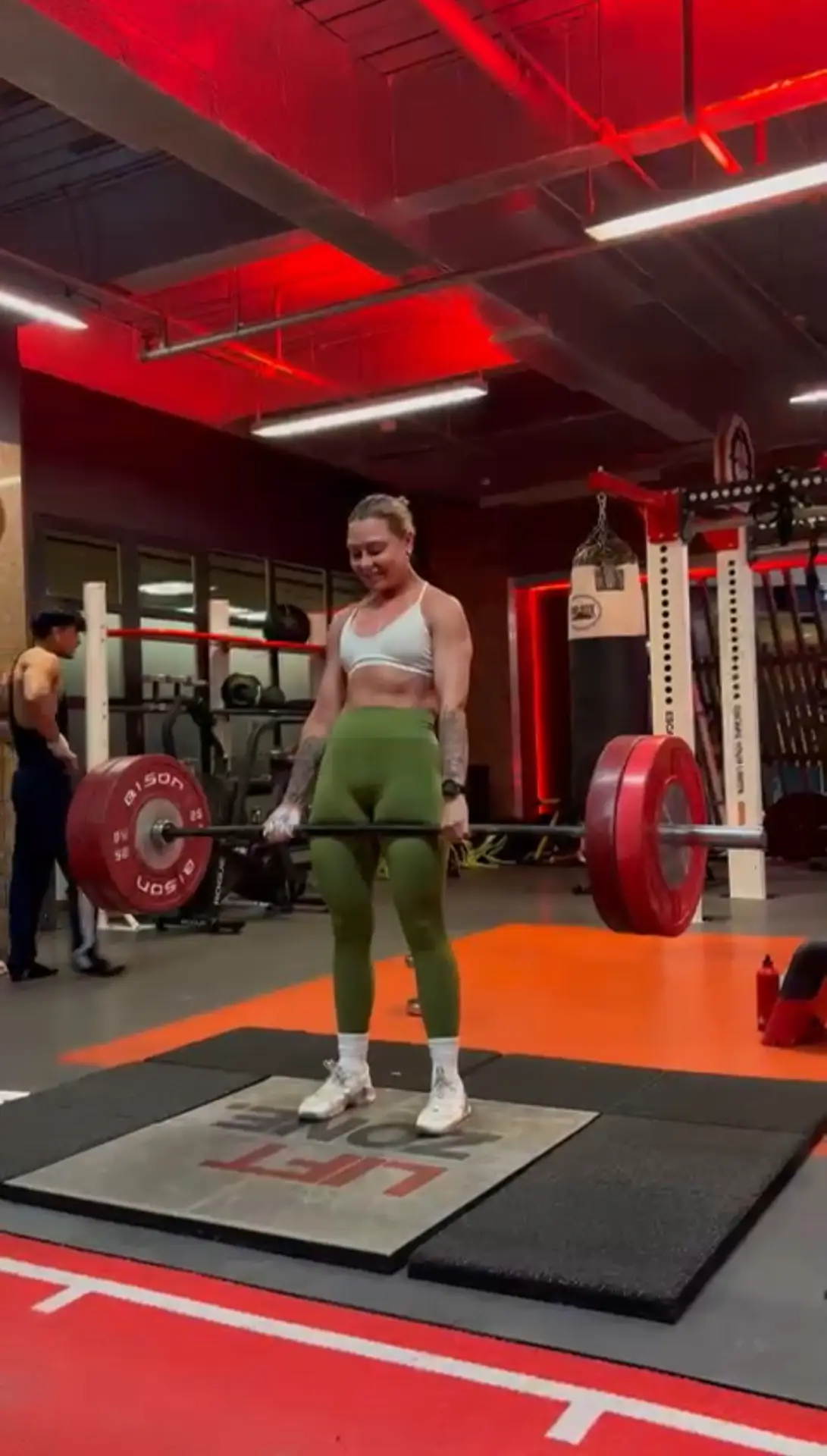
Lucy ( left )– Vijune (right)
Squats and Deadlifts Are Different
The squat is a knee-dominant movement. You bend your knees and hips together, lower your body and stand back up. Your quadriceps and glutes perform much of the work.
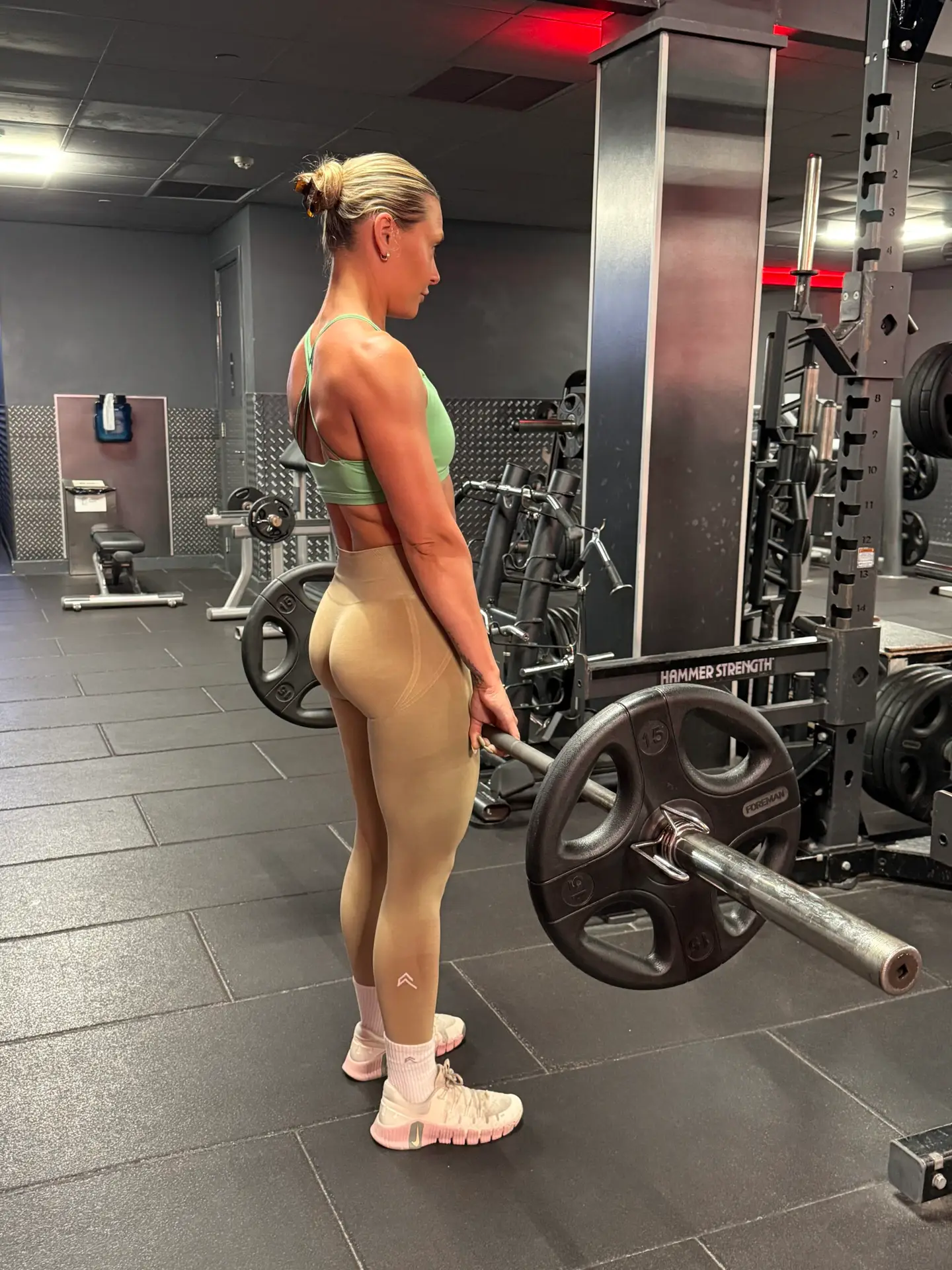
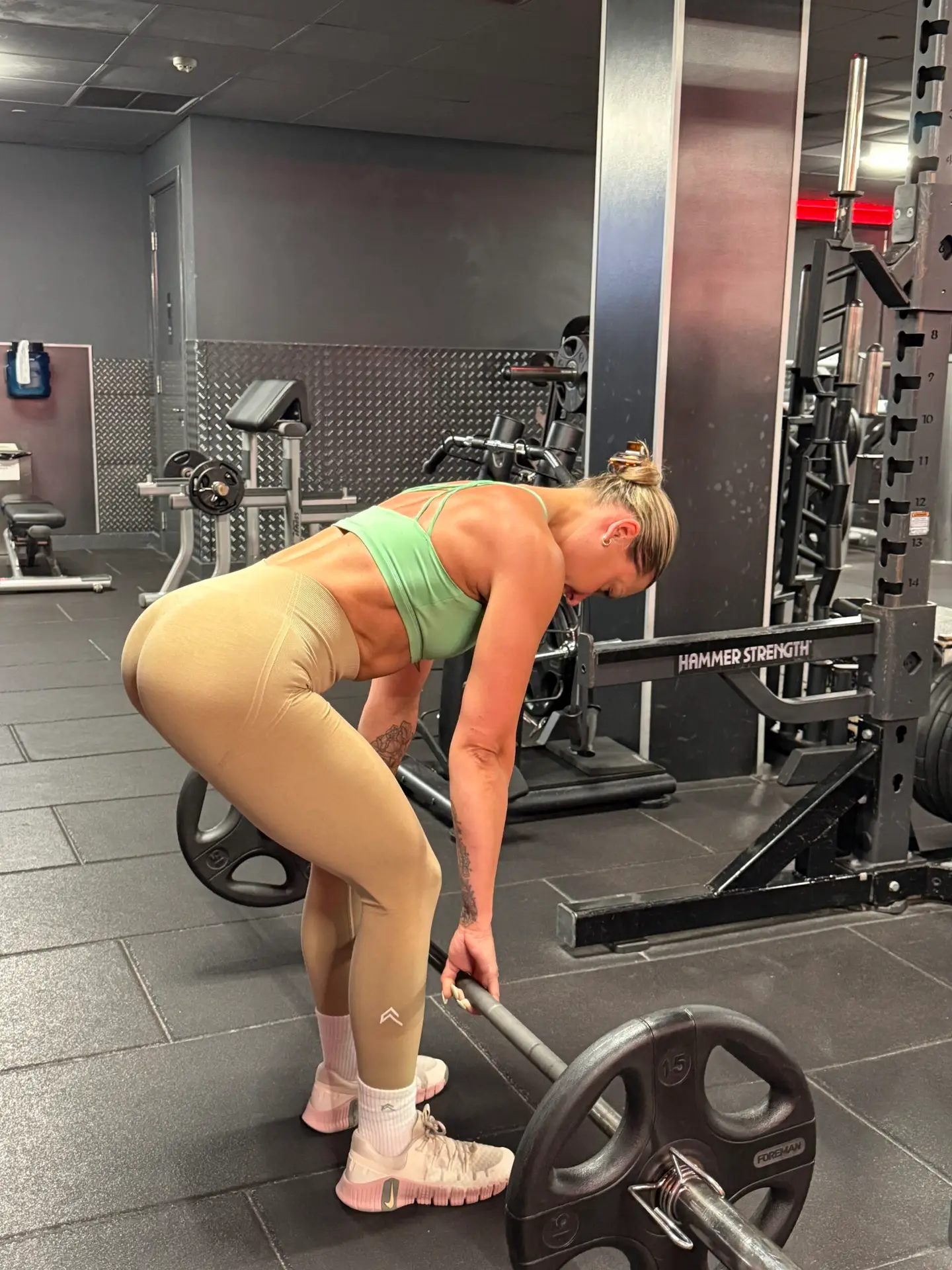
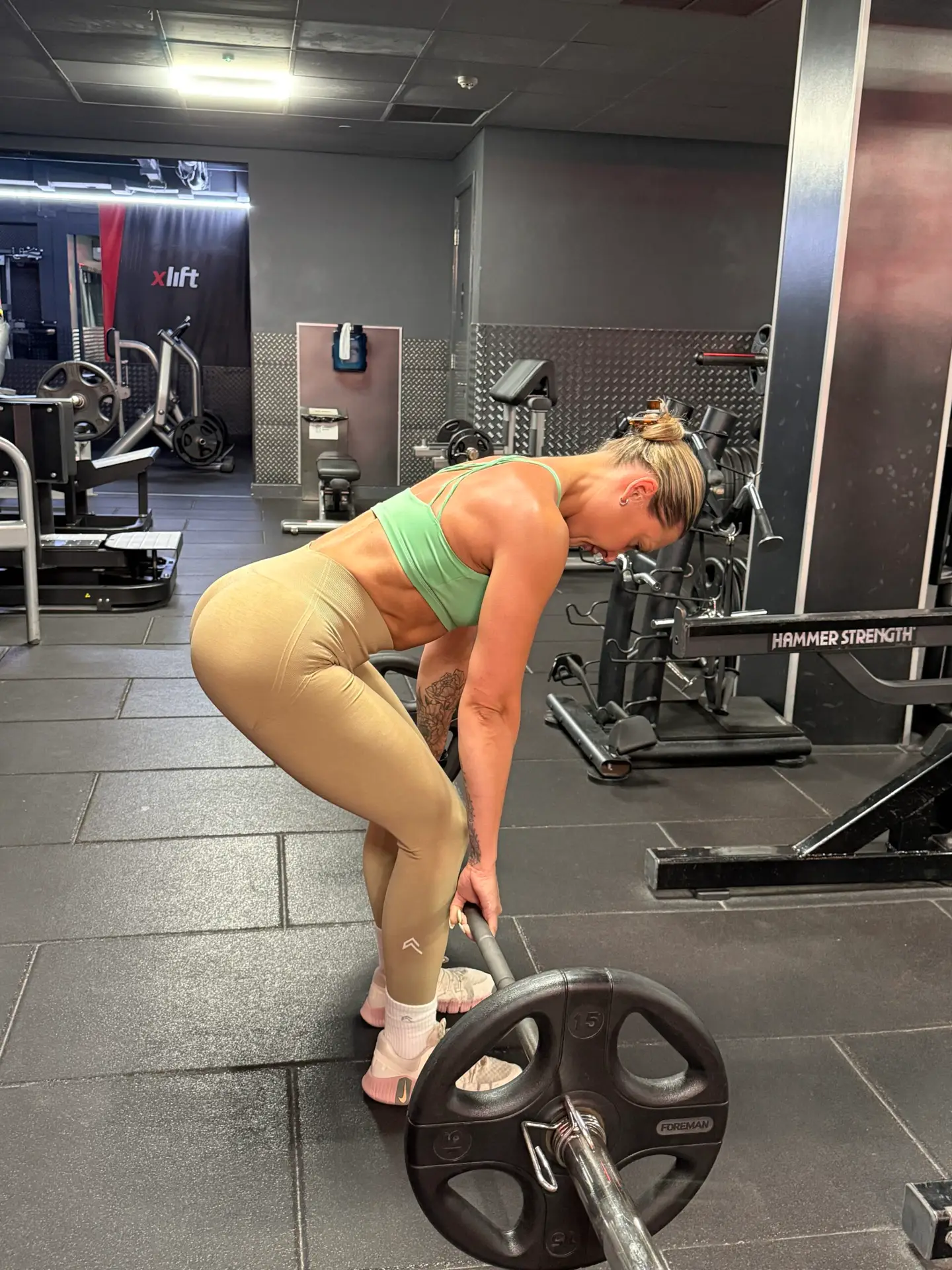
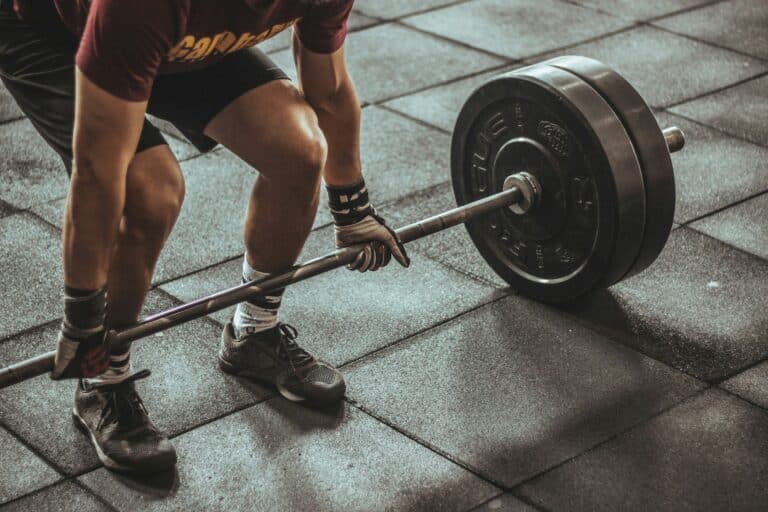
The deadlift is a hip-dominant movement. You push your hips backwards, keep the weight close and stand by driving through the floor. Your glutes, hamstrings, and back work together.
One movement does not replace the other. Training both gives your lower body a more complete strength stimulus.
How to Barbell Squat With Better Form
- Set the bar around upper-chest height so you do not need to stand on your toes to unrack it.
- Place the bar securely across your upper back, not directly on your neck.
- Grip the bar firmly and bring your upper back into a stable position.
- Step back carefully and place your feet around shoulder width apart.
- Brace your mid-section before you descend.
- Bend your knees and hips together while keeping your whole foot connected to the floor.
- Lower only as far as you can maintain control.
- Drive through the floor and stand tall without forcing your hips forward.
PT Will’s Squat Cues
- Keep your whole foot connected to the floor.
- Let your knees track in the same direction as your toes.
- Keep the bar balanced over the middle of your foot.
- Brace before every repetition.
- Use a depth you can control, then improve it gradually.
How to Deadlift With Better Form
- Stand close enough that the bar sits over the middle of your feet.
- Place your feet around hip width apart.
- Push your hips backwards and bend your knees enough to reach the bar.
- Grip the bar just outside your legs.
- Brace your mid-section and pull the slack out of the bar before lifting.
- Keep the bar close to your legs as you push the floor away.
- Stand tall by extending your hips and knees together.
- Lower the bar by pushing your hips backwards before bending your knees.
PT Will’s Deadlift Cues
- Keep the bar close enough to almost brush your legs.
- Push the floor away rather than pulling with your arms.
- Keep your arms long.
- Stand tall without leaning backwards.
• Reset your position when each repetition starts from the floor
Common Squat Mistakes
Starting too heavy
A heavy bar can hide weak positions until the repetition breaks down. Start with a load you can control for every set.
Letting the heels lift
Reduce the depth, adjust your stance or use a small heel lift while you work on ankle mobility.
Knees collapsing inward
Keep your knees tracking over your feet. Reduce the load when you cannot maintain that position.
Losing your brace
Take a breath and brace before each repetition instead of rushing through the set.
Forcing the same stance as someone else
Your stance should reflect your hip structure, comfort and control. Small changes in width and toe angle are normal.
Common Deadlift Mistakes
Starting with the bar too far away
A distant bar increases the demand on your back. Begin with the bar over your mid-foot and keep it close.
Squatting the deadlift
Do not drop your hips so low that the bar moves around your knees. Find a position where your hips can drive the movement.
Jerking the bar from the floor
Create tension first. Brace, grip, and remove the slack before the bar leaves the floor.
Rounding because the weight is too heavy
Reduce the load and use a raised starting position when needed.
Leaning backwards at the top
Finish tall with your ribs controlled. The repetition ends when your hips are extended.
Do Squats and Deadlifts Make Women Bulky?
Muscle growth happens gradually. It depends on training volume, progressive overload, nutrition, recovery and genetics.
Adding squats and deadlifts to your programme will not suddenly change your body overnight. They give you a strong way to develop muscle and shape while improving what your body can do.
How Many Sets and Reps Should Women Use?
Goal | Sets | Reps | Rest |
Learn the movement | 3 | 8-12 | 90 seconds |
Build muscle | 3-5 | 6-12 | 90-180 seconds |
Build strength | 4-5 | 3-6 | 2-4 minutes |
Technique practice | 2-3 | 5-8 | 60-90 seconds |
Beginner Progressions
You do not need to begin with a loaded barbell. Build confidence through these stages:
- Squat progression: box squat, goblet squat, cable front squat, empty-bar squat, loaded barbell squat.
- Deadlift progression: hip-hinge drill, kettlebell deadlift, cable Romanian deadlift, raised barbell deadlift, floor deadlift.
- Use the same variation for several weeks so your technique has time to improve.
- Increase the load only when your repetitions stay controlled.
What Changes When You Train These Movements Consistently?
You stop treating the weight area as somewhere you do not belong. You begin to understand your setup, recognise good repetitions and know what number you want to improve next.
- The empty bar becomes a working weight.
- Your stance and setup start to feel familiar.
- You can see your squat and deadlift numbers increase.
- Daily lifting and carrying may feel easier.
- Your lower body develops more strength and muscle.
- You train with a plan instead of repeating random exercises.
20 Strength, Bodyweight and Cable Exercises From the 12REPS Library
The exercise names below link to their 12REPS exercise guides. Use the sets and repetitions as starting points and adjust them around your programme, experience and technique.
Exercise | Main focus | Sets | Recommended reps | Best use |
Quadriceps and glutes | 3-4 | 8-12 | Squat progression | |
Quadriceps and glutes | 3-4 | 8-15 | Beginner squat | |
Legs and glutes | 3 | 10-15 | Home squat | |
Lower-body power | 3 | 5-10 | Power training | |
Leg strength and control | 3 | 6-10 each leg | Advanced single-leg work | |
Hamstrings and glutes | 3-4 | 8-12 | Hip-hinge progression | |
Glutes | 3-4 | 10-20 | Glute strength | |
Quads and glutes | 3 | 8-12 each leg | Single-leg strength | |
Legs and glutes | 3 | 8-12 each leg | Lunge pattern | |
Glutes and quadriceps | 3 | 8-12 each leg | Single-leg strength | |
Legs and balance | 3 | 10-15 each leg | Beginner single-leg work | |
Glutes | 3 | 12-20 each leg | Glute isolation | |
Chest, triceps and core | 3 | 8-15 | Upper-body push | |
Chest and triceps | 3-4 | 8-12 | Cable push | |
Back and biceps | 3-4 | 8-12 | Vertical pull | |
Mid-back | 3-4 | 8-12 | Horizontal pull | |
Rear shoulders and upper back | 3 | 12-20 | Shoulder balance | |
Biceps | 3 | 8-15 | Arm training | |
Mid-section | 3 | 30-60 seconds | Core stability | |
Grip, core and full body | 4 | 20-40 metres | Loaded carry |
A Simple Two-Day Strength Plan
Workout One
- Squat variation: 4 sets of 6-10 repetitions.
- Cable Romanian deadlift: 3 sets of 8-12 repetitions.
- Cable step-up: 3 sets of 10 repetitions per leg.
- Seated cable chest press: 3 sets of 8-12 repetitions.
- Cable lat pulldown: 3 sets of 8-12 repetitions.
- Bodyweight plank: 3 sets of 30-45 seconds.
Workout Two
- Deadlift variation: 4 sets of 5-8 repetitions.
- Bulgarian split squat: 3 sets of 8-10 repetitions per leg.
- Bodyweight hip thrust: 3 sets of 12-15 repetitions.
- Cable wide-bar row: 3 sets of 8-12 repetitions.
- Bodyweight press-up: 3 sets of 8-15 repetitions.
- Kettlebell farmer’s walk: 4 sets of 30 metres.
Why 12REPS Is the Best Next Step
Reading about technique can help you understand the movement. Progress comes from applying it repeatedly and recording what you did.
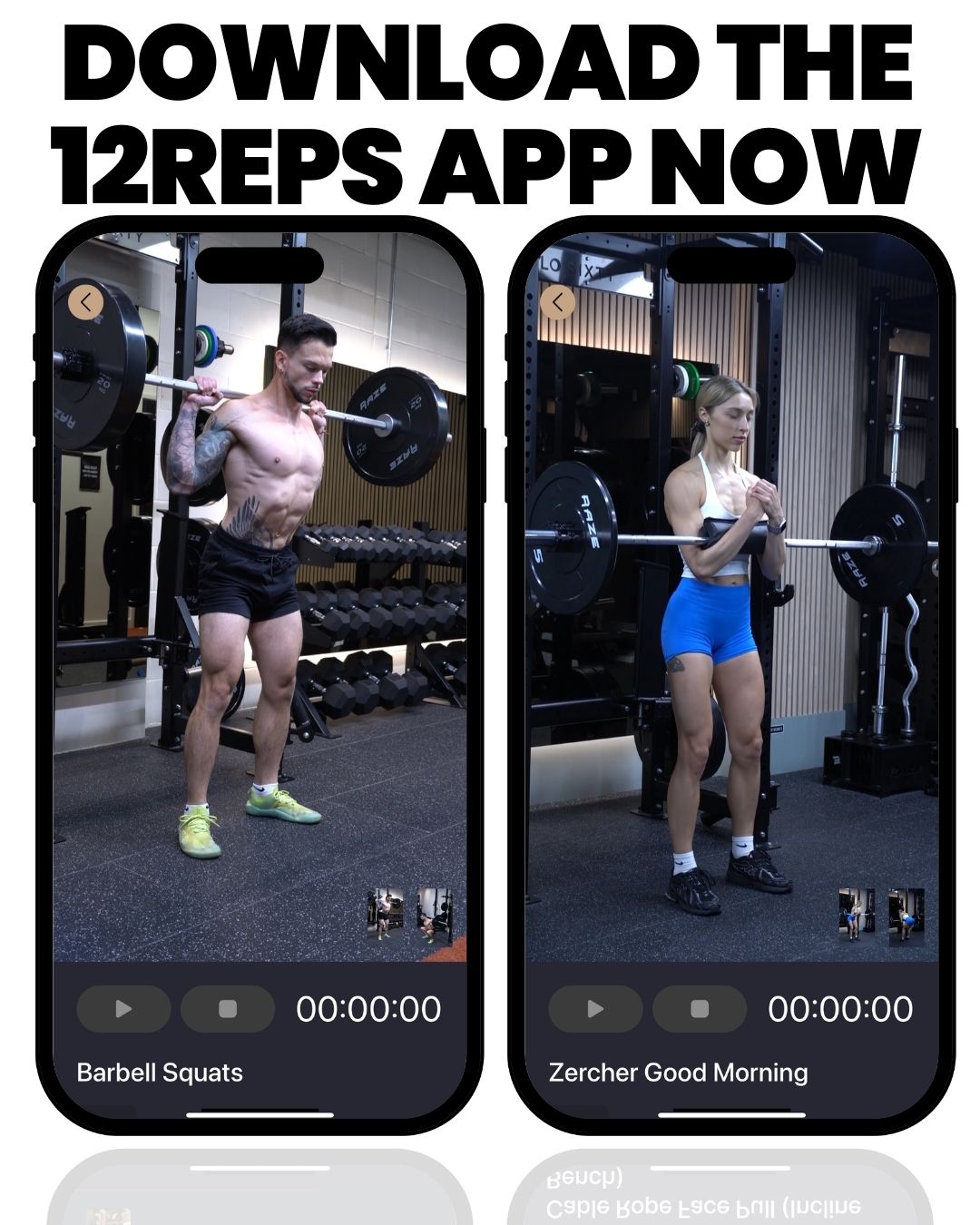
- Watch exercise demonstrations before your working sets.
- Filter exercises by muscle group and equipment.
- Start with beginner-friendly squat and deadlift progressions.
- Build a complete lower-body or full-body workout.
- Record your sets, repetitions and weight.
- Follow structured strength programmes when you do not want to plan alone.
Build Strength Without Guessing
You do not need to prove anything on your first day under a barbell. Start with the variation you can control, track every session and let your strength build over time.
12REPS gives you the exercise library, workout structure and progress tracking needed to turn squats and deadlifts into skills rather than exercises you avoid.
Learn the movement. Follow the plan. Track every rep.
Explore the 12REPS strength training exercise library before your next session.
About PT Will Duru
Will Duru is a personal trainer with more than a decade of experience and a Sport and Exercise Science BSc (Hons). He created 12REPS to help people follow structured strength training and make measurable progress. Learn more at PTWill.com.
Will has been featured in Men’s Health, The Times, The Telegraph, The Sun and Men’s Fitness.