


Written by Will Duru, BSc (Hons) Sport and Exercise Science, award-winning Personal Trainer with over 10 years of experience in strength training and optimising recovery .
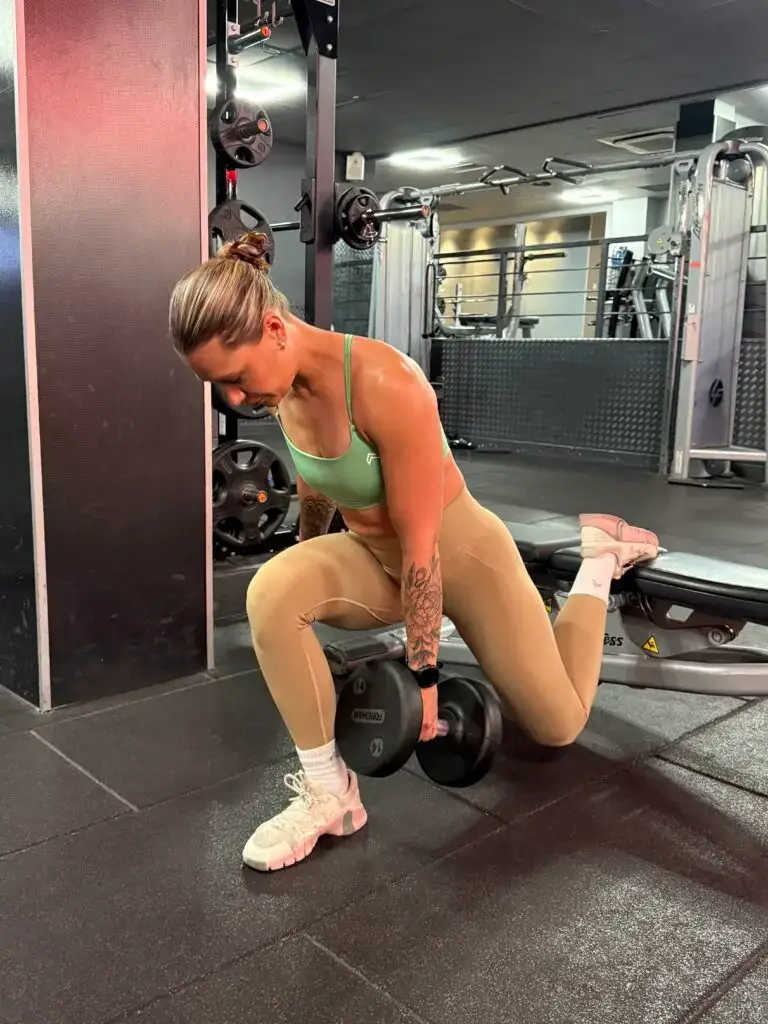
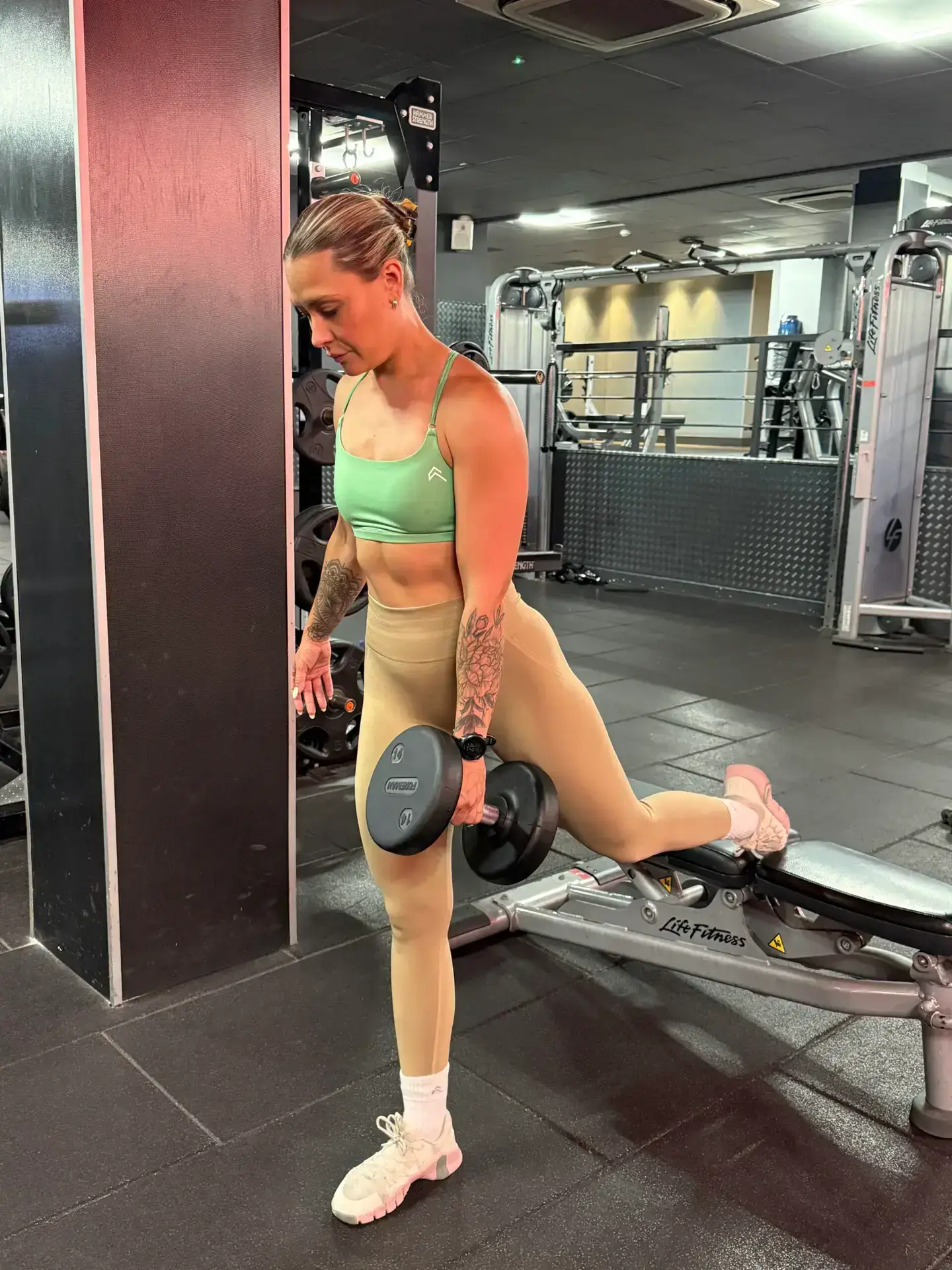
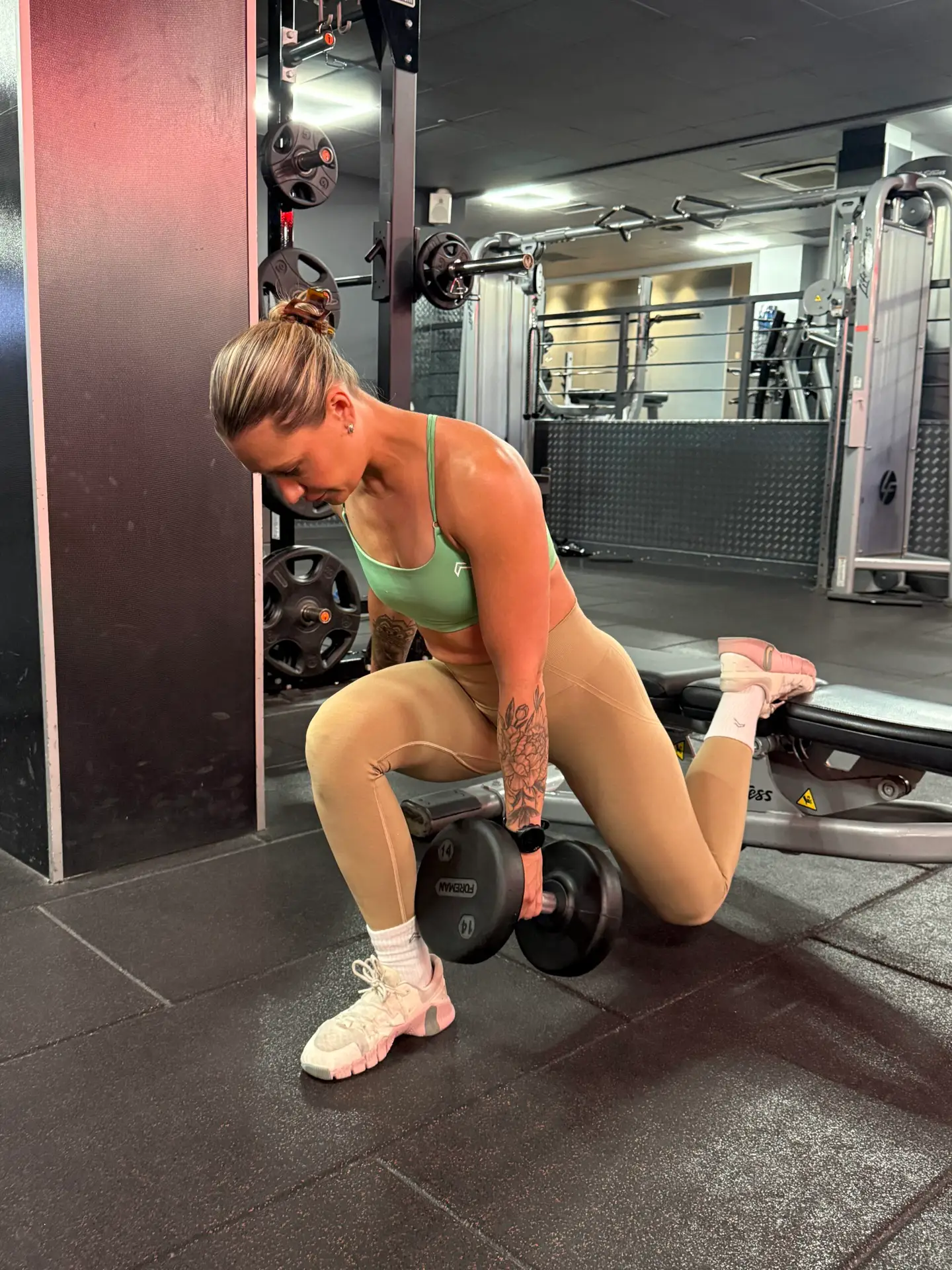
This women’s leg day workout with dumbbells uses four exercises: Bulgarian split squats, step-ups, goblet squats and Romanian deadlifts. Together they train your glutes, quads and hamstrings with a set of dumbbells and a sturdy bench or step. Below you’ll find the sets, reps and rest, how to do each move, and how to know when to go heavier.
Each exercise works several muscles at once, so four moves are enough for a complete leg session at home or in the gym.
Why Train Legs With Dumbbells
Dumbbells sit in the middle ground between bodyweight training and a fully loaded barbell. They suit women who have outgrown bodyweight moves but don’t want to queue for a squat rack.
- Easy to progress: you can move up in small jumps as you get stronger.
- Train one leg at a time: split squats and step-ups make each leg do its own work, which shows you if one side is weaker.
- Home or gym: a few pairs of dumbbells and a bench cover the whole session.
Strong legs and glutes also help in daily life. Climbing stairs, lifting a child or carrying shopping all rely on them.
What About Hormones?
You may read that heavy leg days release hormones that build muscle and boost energy. The evidence does not support this. In a study of young men, short-term hormone rises after exercise did not add to muscle growth or strength. Muscle grows because you train hard, progress over time and recover well.
There are real benefits for how you feel, though. A meta-analysis of 33 trials linked resistance training with fewer depressive symptoms.
New to leg training? Start with our beginner’s guide to women’s lower body strength training, or build a base with these no-equipment lower body exercises first.
The Women's Leg Day Workout With Dumbbells
Workout Overview
Do the exercises in the order shown in the table. Start each exercise with one light warm-up set. Then do your working sets, adding a little weight from set to set when your form allows.
| Exercise | Warm-up set | Working sets | Rest between sets |
|---|---|---|---|
| Dumbbell Bulgarian split squats | 1 x 15 each leg (light) | 4 x 10 to 12 each leg | 90 to 120 seconds |
| Dumbbell step-ups | 1 x 15 each leg (light) | 4 x 10 to 12 each leg | 60 to 90 seconds |
| Dumbbell Romanian deadlifts (RDL) | 1 x 15 (light) | 4 x 10 to 12 | 90 to 120 seconds |
| Dumbbell goblet squats | 1 x 20 (light) | 4 x 10 to 12 | 60 to 90 seconds |
How heavy? Pick a weight that leaves you with 1 to 2 reps in reserve (RIR) at the end of each working set. RIR means the number of good reps you could still have done.
Exercise 1: Dumbbell Bulgarian Split Squats
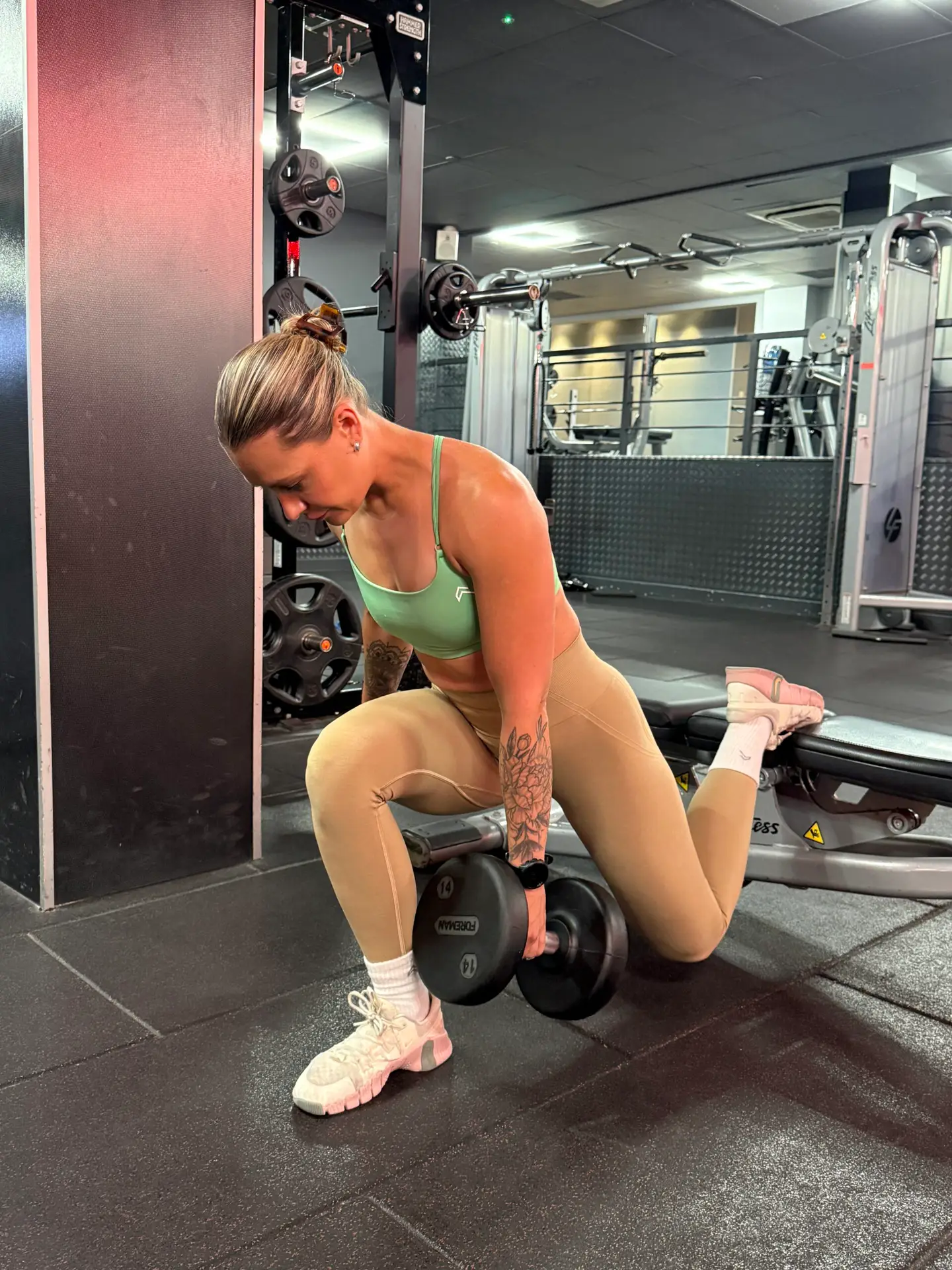
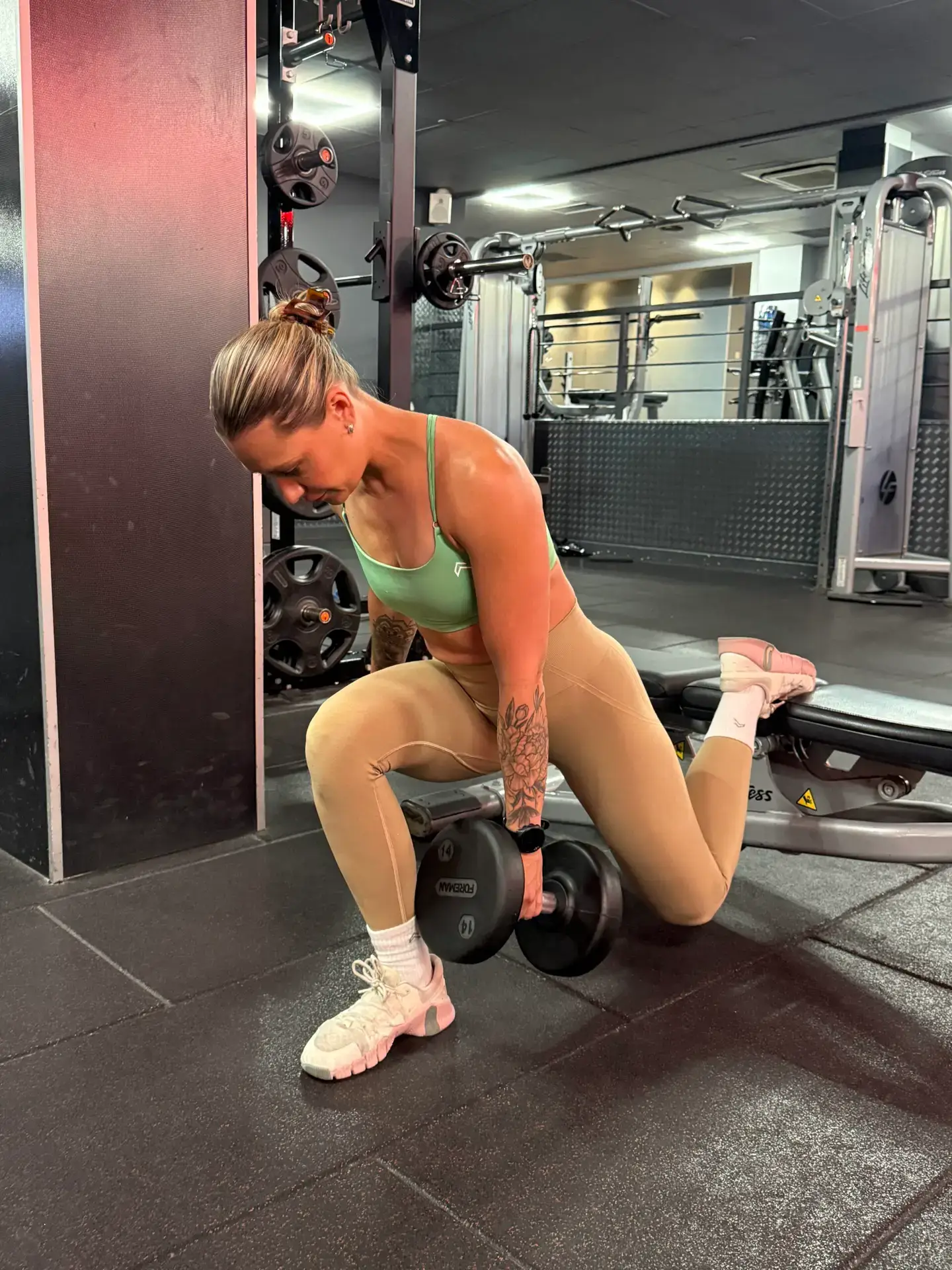
The Bulgarian split squat trains one leg at a time. It works your quads and glutes hard and challenges your balance.
- Stand about two feet in front of a bench or sturdy chair, holding a dumbbell in each hand at your sides.
- Place the top of one foot behind you on the bench. Your front leg does most of the work.
- Keep your torso tall and your core braced.
- Bend your front knee and lower until your front thigh is about parallel to the floor. Your back knee drops toward the floor without touching it.
- Push through your front foot to stand back up, squeezing your glute as you rise.
Common mistakes: leaning too far forward, pushing off the back leg, and cutting the depth short. Lower with control and start light.
Easier option: learn the movement with no weight first, using the Bodyweight Bulgarian Split Squat demo. For more detail, read how to do Bulgarian split squats correctly.
Exercise 2: Dumbbell Step-Ups
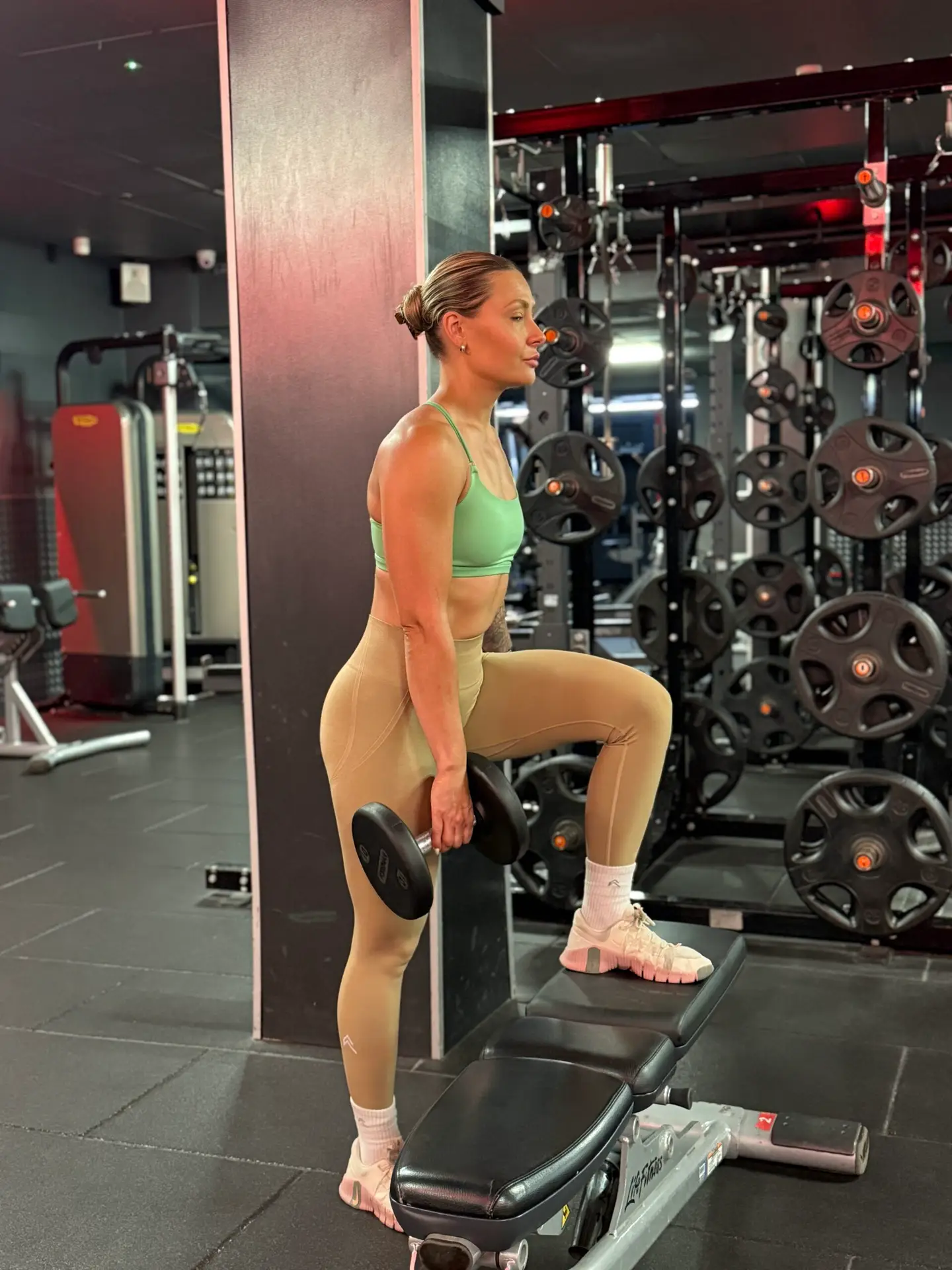
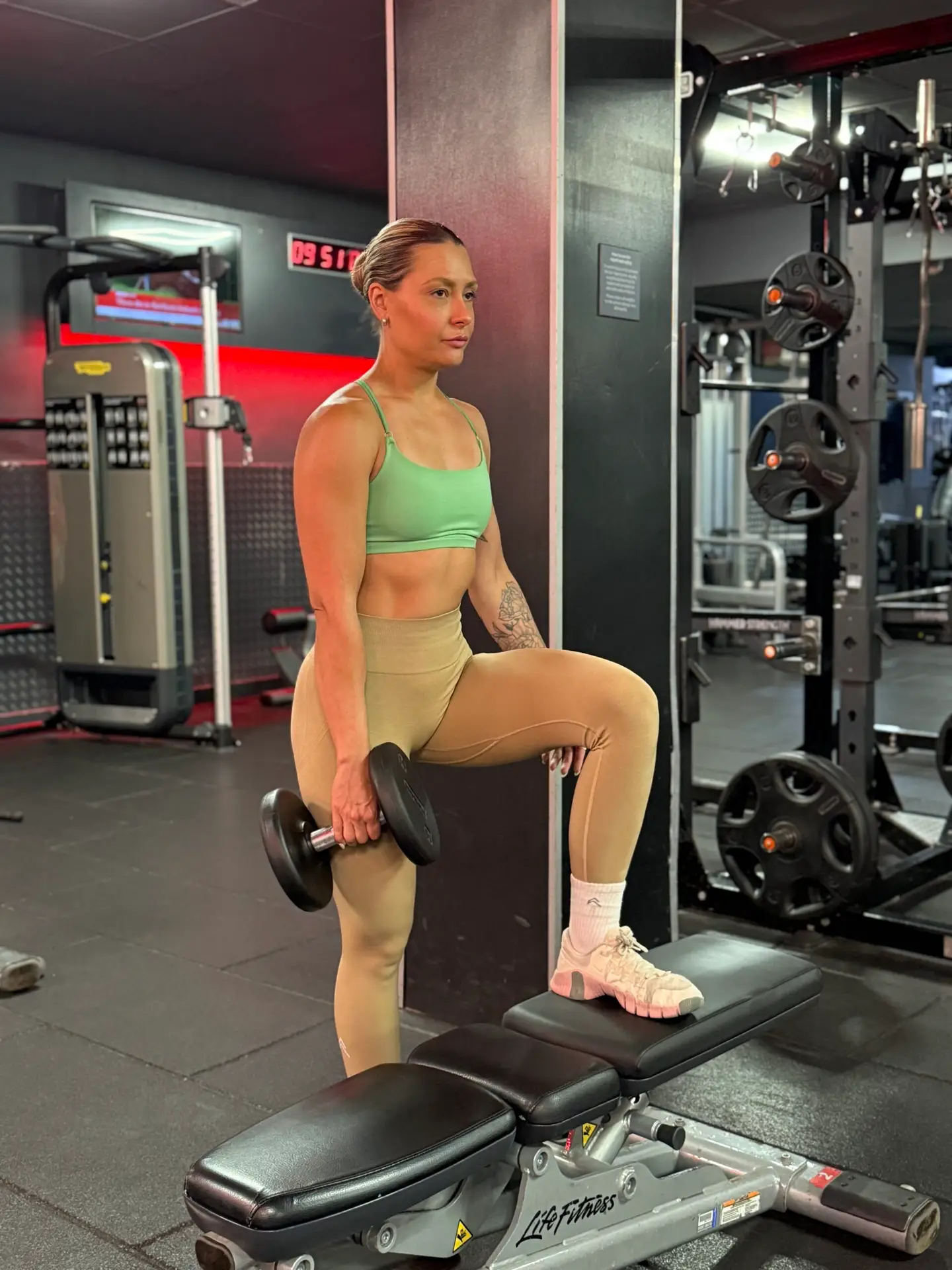
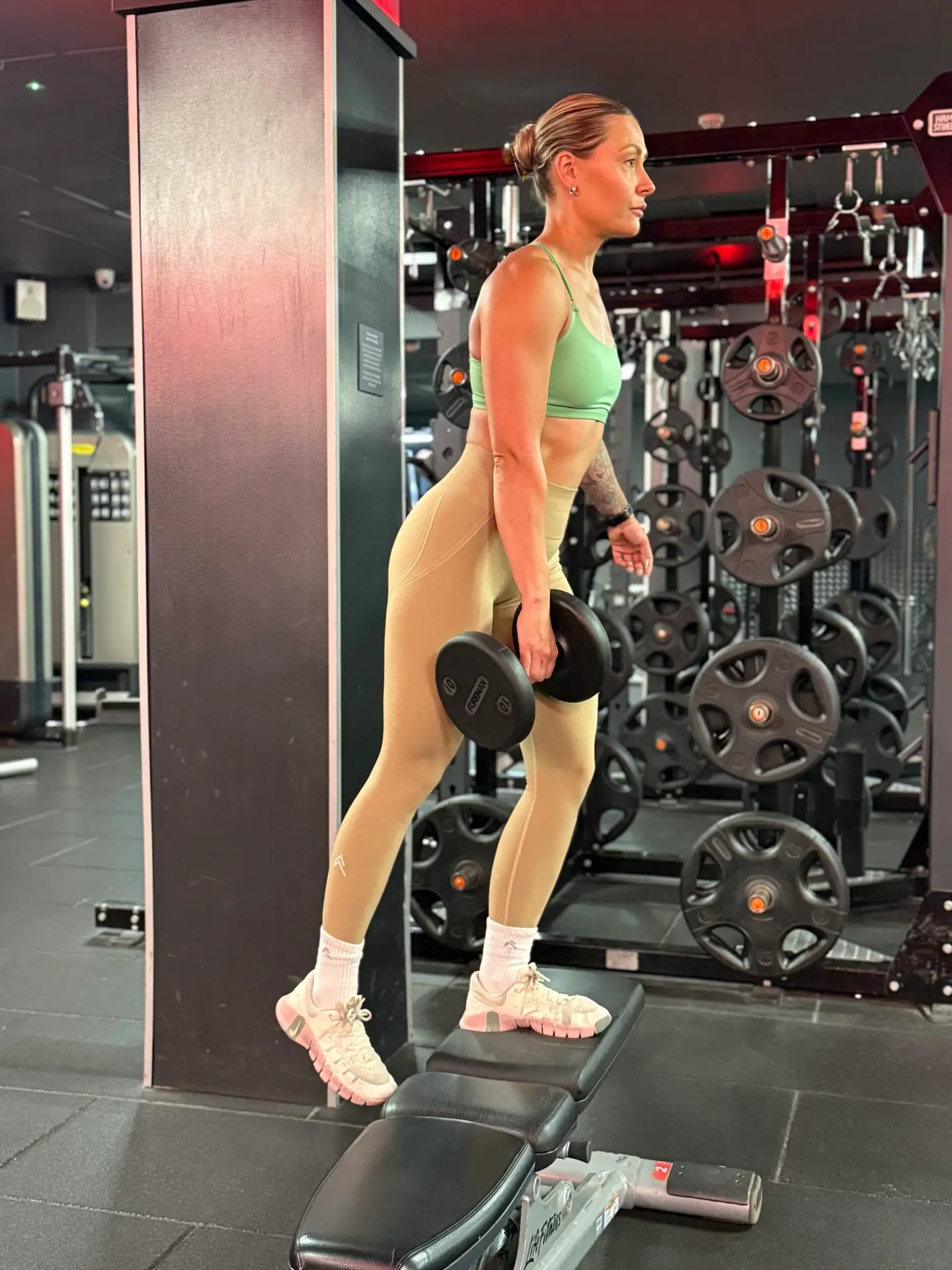
Step-ups train your glutes and quads with a movement you already use on the stairs. The dumbbells add the challenge.
- Find a stable bench, box or step about knee height. Hold a dumbbell in each hand at your sides.
- Place your whole right foot on the platform.
- Drive through your right foot to stand up on the platform. Try not to push off with your back foot.
- Step back down with control, leading with your left foot.
- Finish all reps on one leg before switching.
Platform height: if the step is so high that you lean far forward or push off your back foot, use a lower one. If it is very low, the exercise becomes too easy to load well.
Easier option: practice without weights using the Bodyweight Step-Up demo.
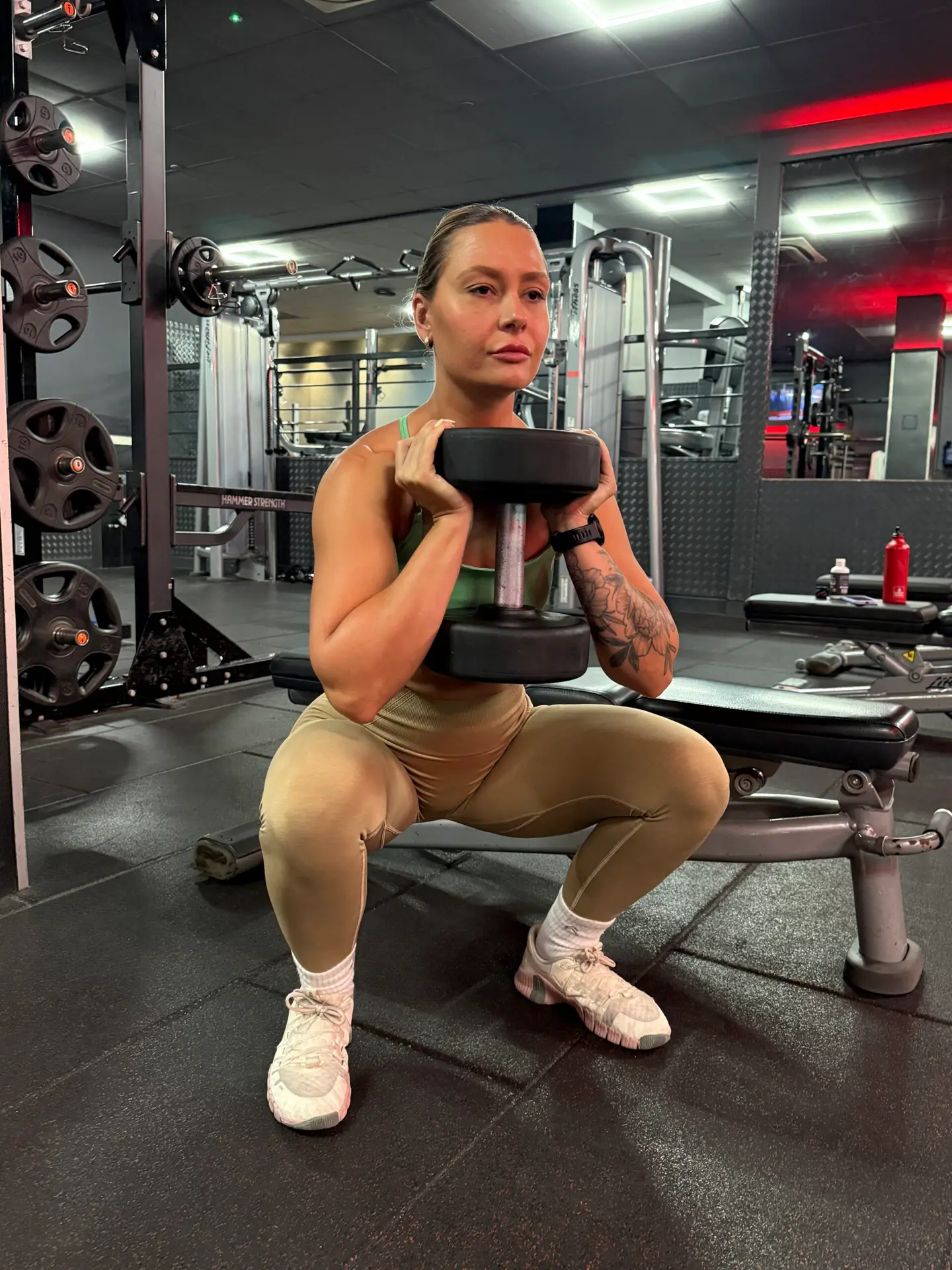
Exercise 3: Dumbbell Goblet Squats
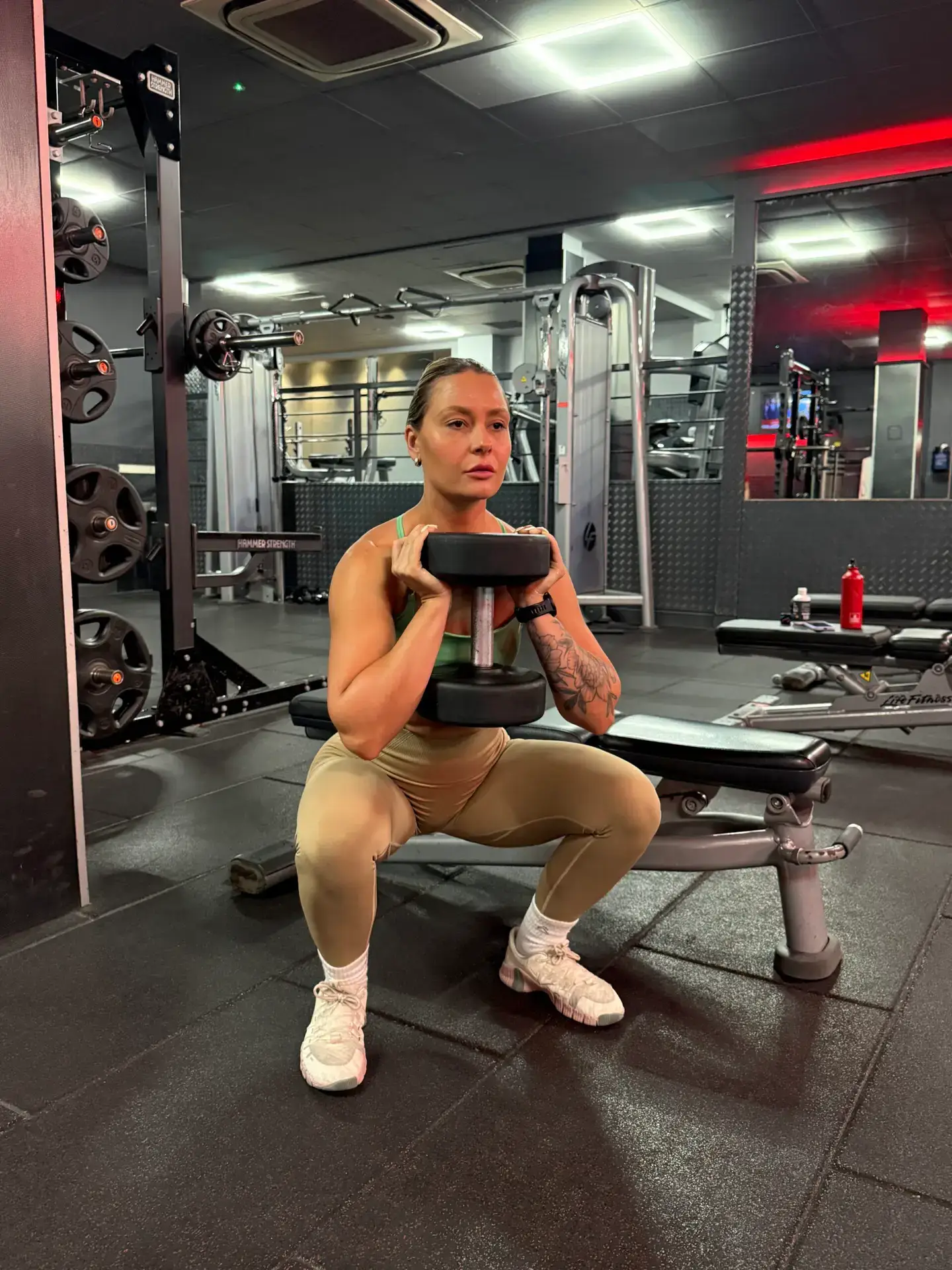
The goblet squat trains your quads, glutes and inner thighs. Holding the weight in front of your chest helps you stay upright, which makes it a good squat for learning.
- Hold one dumbbell upright against your chest, cupping the top end with both hands.
- Stand with your feet slightly wider than shoulder-width and your toes turned out a little.
- Keep your chest up and your core braced. Push your hips back and bend your knees.
- Lower until your thighs are at least parallel to the floor, or as low as you can with good form.
- Drive through your whole foot to stand, and squeeze your glutes at the top.
Why depth matters: in one study, full squats increased glute and inner-thigh muscle size more than half squats. So work toward a full, comfortable range rather than short reps with more weight.
For step-by-step cues and common errors, read how to do a goblet squat.
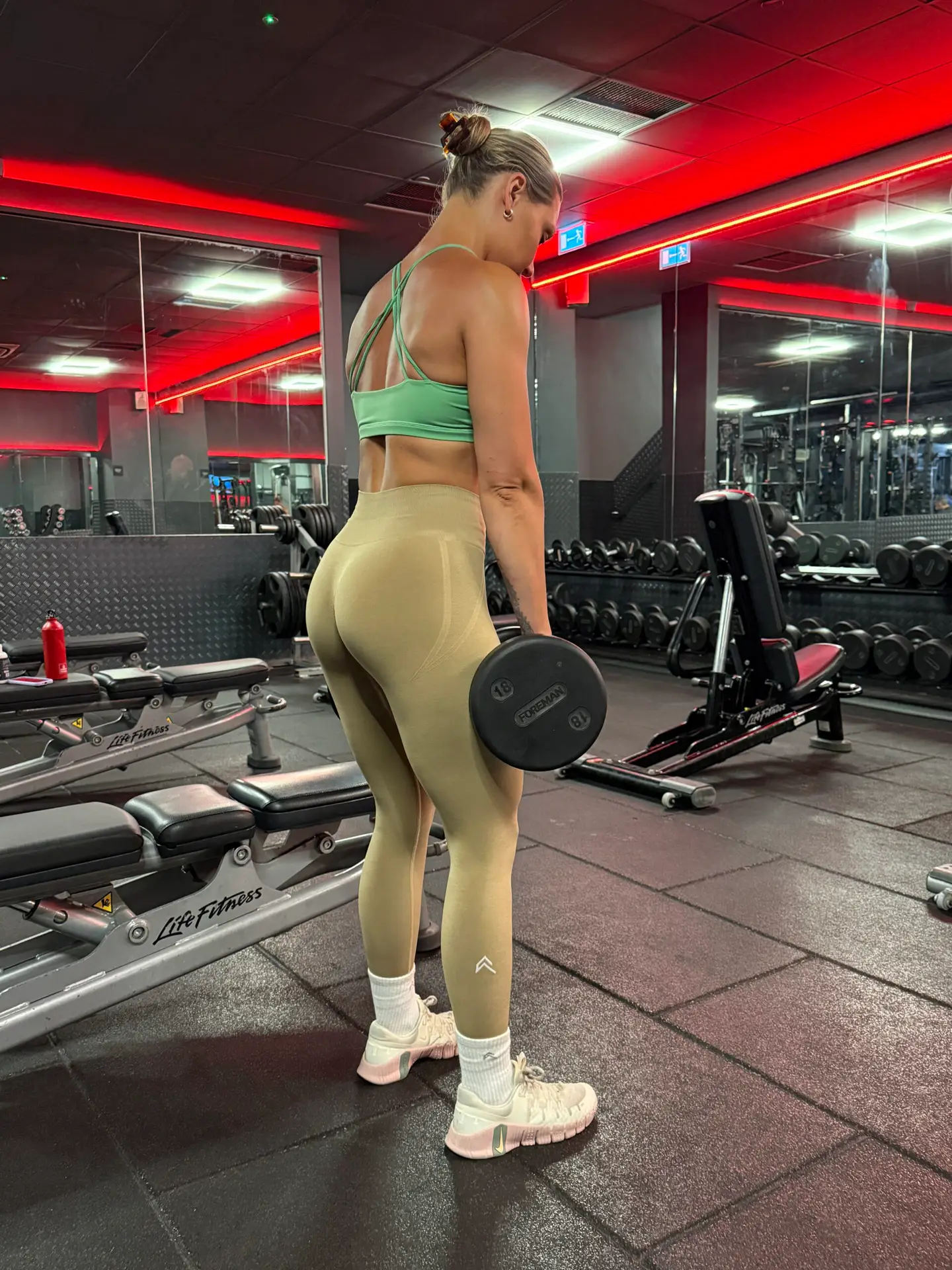
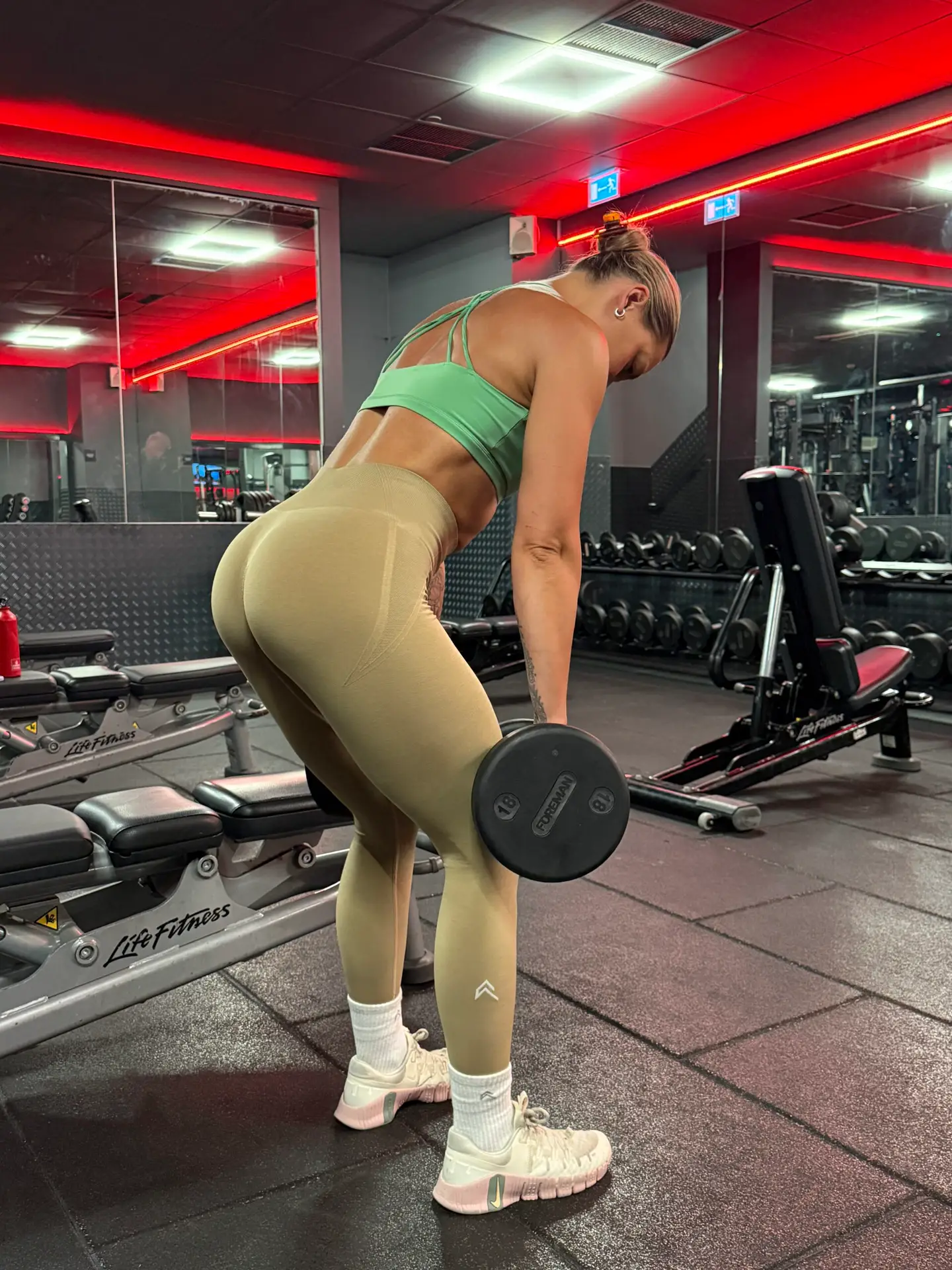
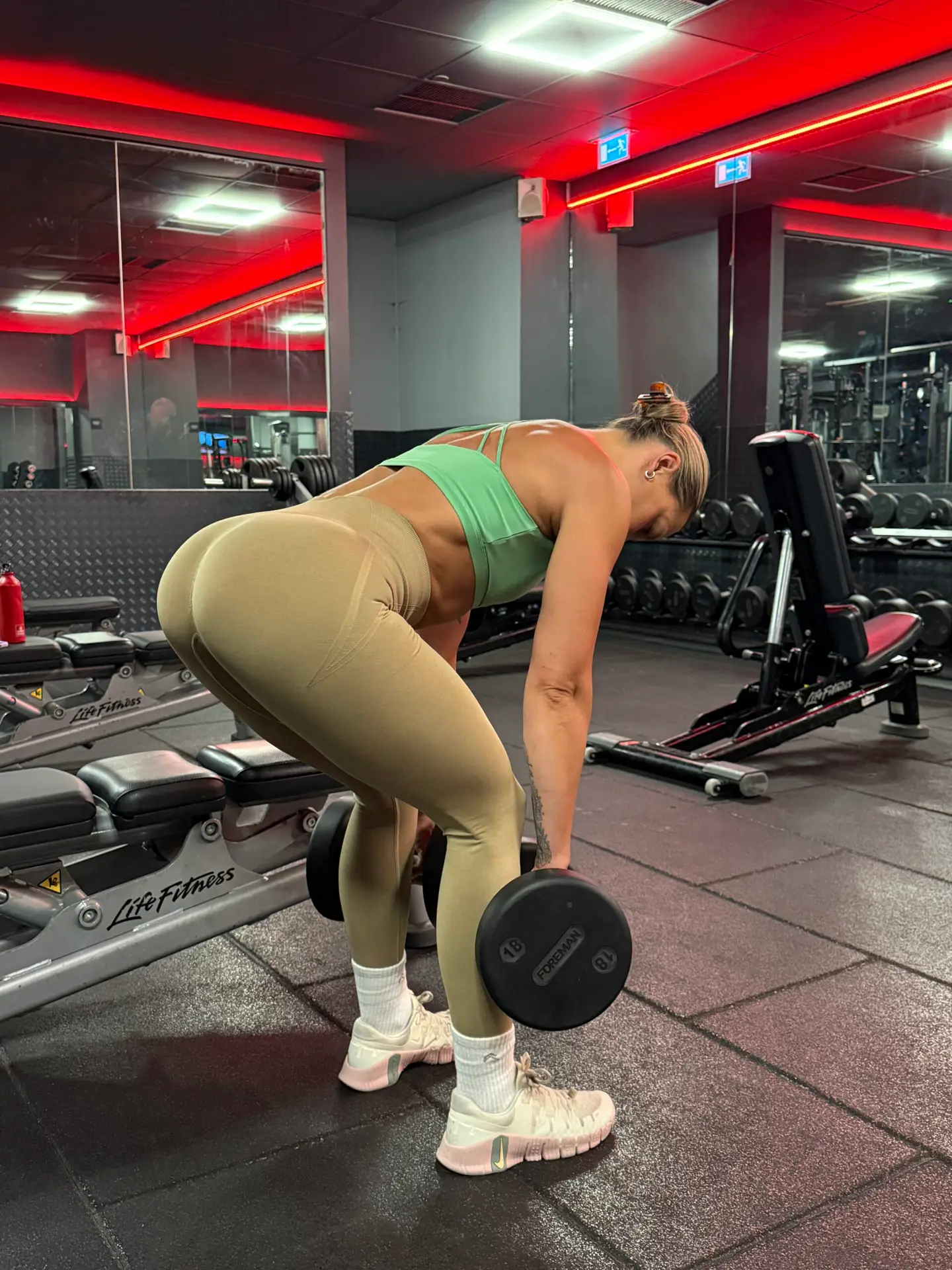
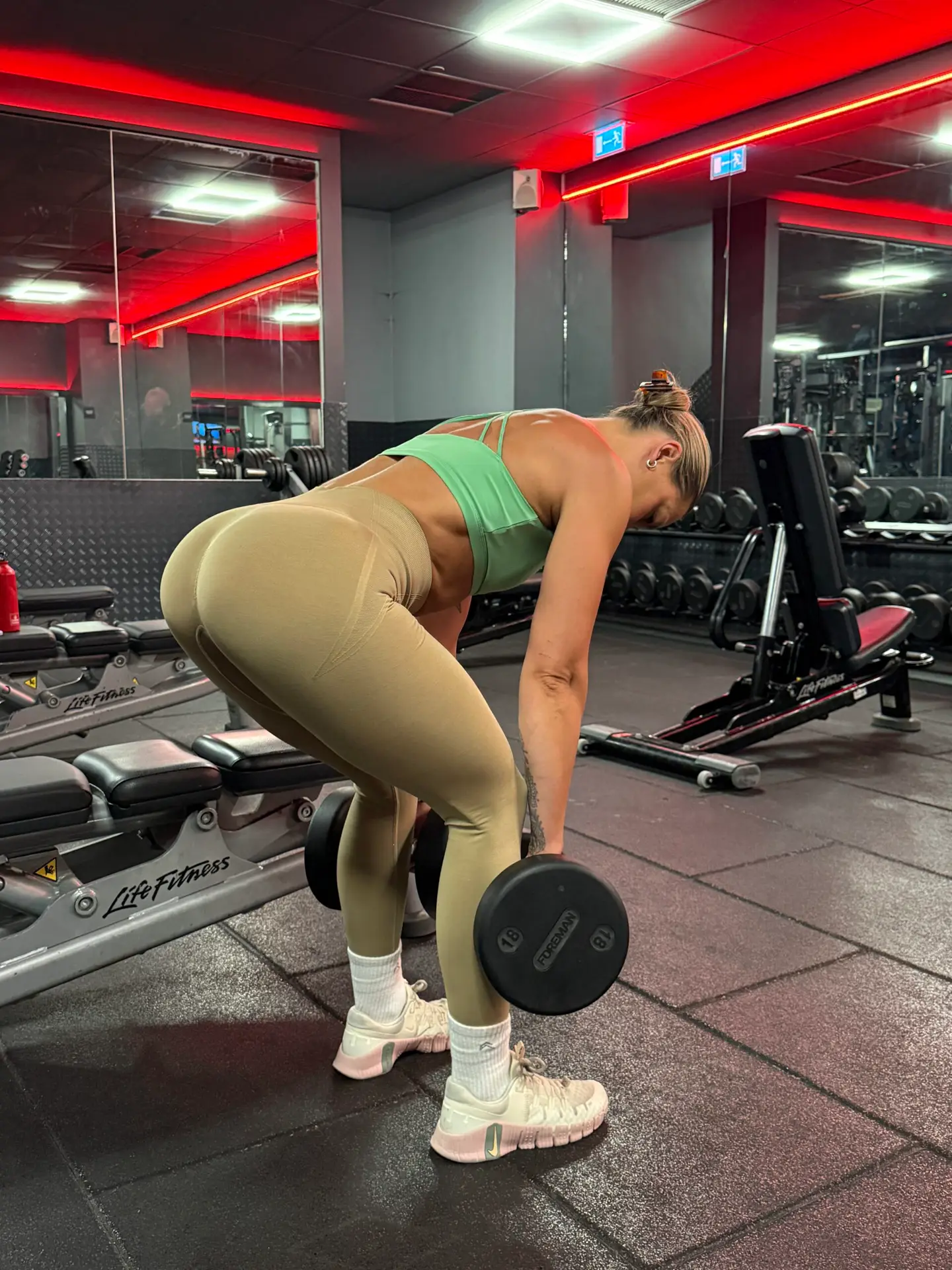
Exercise 4: Dumbbell Romanian Deadlifts (RDL)
The Romanian deadlift trains your hamstrings and glutes through a hip hinge. Your lower back muscles work to hold your spine in position.
- Stand with your feet hip-width apart, holding a dumbbell in each hand in front of your thighs.
- Keep a slight bend in your knees for the whole movement. This is not a squat.
- Push your hips back and lower the dumbbells close to your legs. Keep your chest proud and your back long.
- Stop when you feel a strong stretch in your hamstrings, often around mid-shin.
- Drive your hips forward to stand up, and squeeze your glutes at the top.
Coaching cue: think about pushing your hips back toward the wall behind you, not bending down toward the floor.
Start light and focus on the hamstring stretch. Our Romanian deadlift form guide for women covers the details.
Programming and Progress
Do this leg workout up to twice a week, depending on your fitness and recovery. If you are new to strength training, start with one session a week and see how you feel.
When to go heavier: once you can complete all four working sets of 12 good reps, increase the weight next session. This is close to the American College of Sports Medicine guidance. It suggests adding about 2 to 10 percent once you can beat your target by one or two reps in two sessions in a row.
Recovery: leave at least 48 hours between hard leg sessions. Muscles adapt while you recover, so sleep and food matter too.
- Sleep: the CDC, citing sleep experts, says adults aged 18 to 60 need at least 7 hours a night.
- Protein: a large review found that gains in muscle leveled off at around 1.6 g of protein per kg of body weight per day.
To fit this session into a full week, read our strength training schedule for women. Prefer a gym session built around the hip thrust? See the glute-focused lower body gym plan.
The Confidence Factor
Building strong legs is not only about how they look. Watching your numbers go up week after week shows you that you are stronger than you thought.
That confidence often carries over into daily life, from carrying heavy bags to walking into the weights area without second-guessing yourself.
Conclusion: Your Dumbbell Leg Day Plan
Bulgarian split squats, step-ups, goblet squats and Romanian deadlifts give you a full leg day with just dumbbells. Train them consistently and add weight when you hit the top of the rep range.
Start where you are and be patient. Steady progressive overload is what drives results.
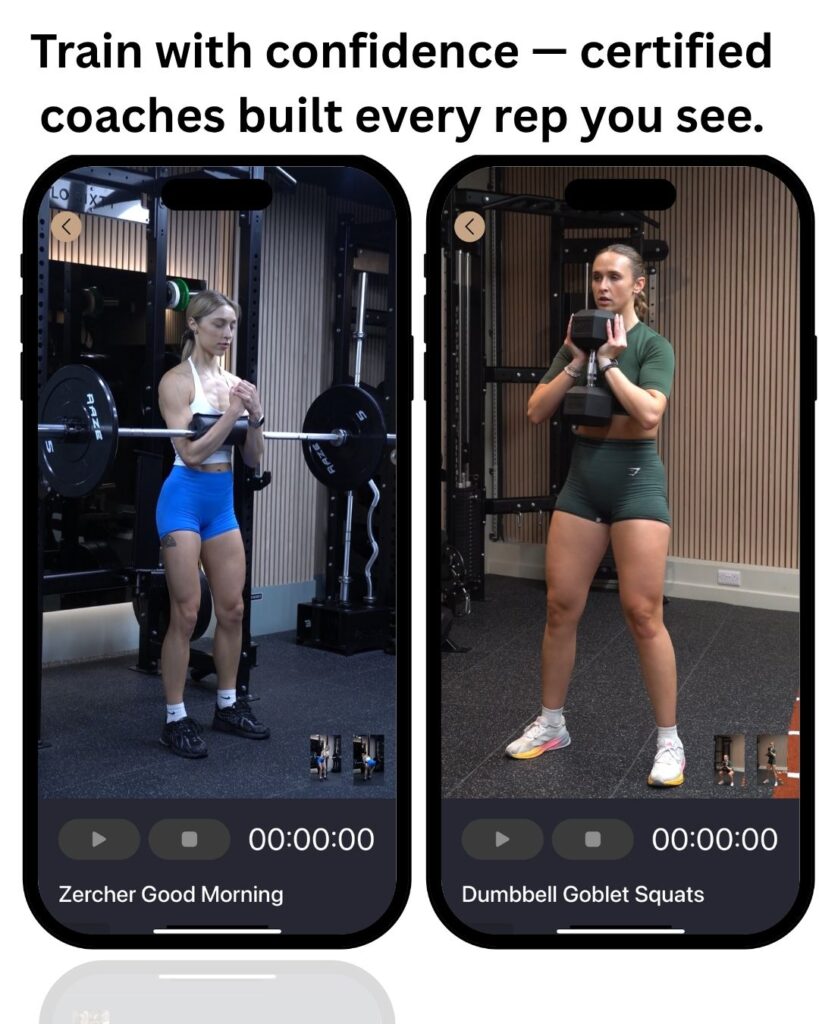
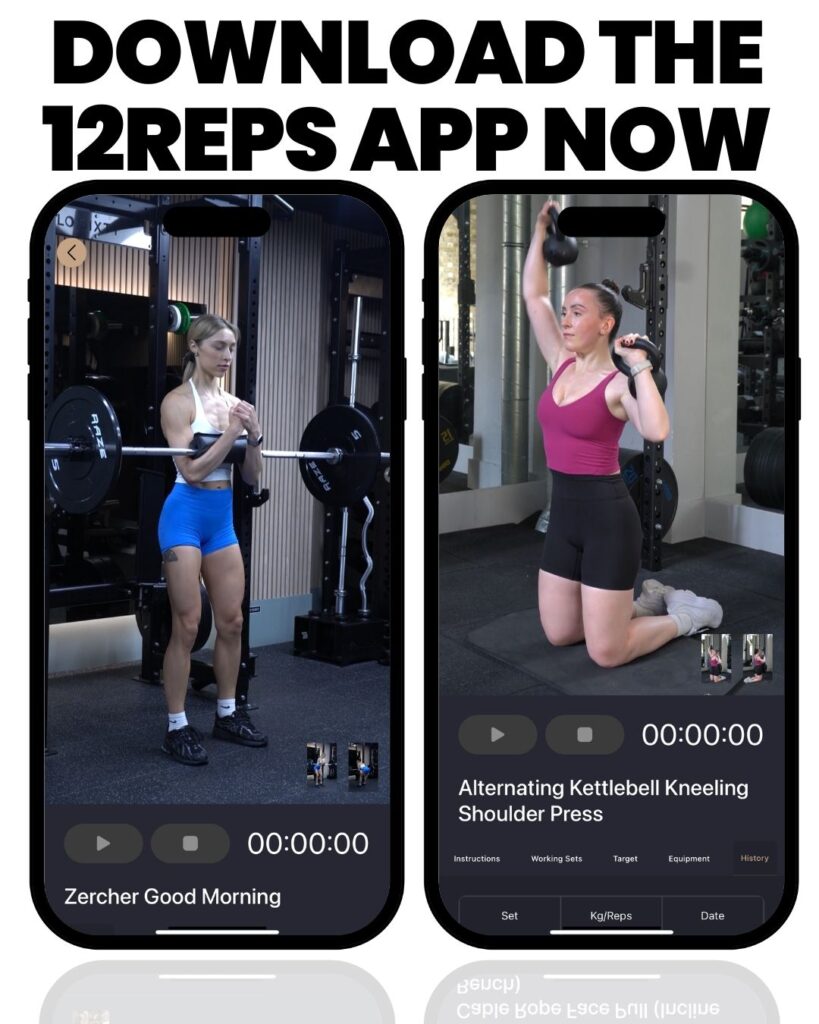
If you’d like a plan that tells you what to lift each session, 12REPS builds workouts around your goal, the equipment you have and your time. It shows a trainer demo for each exercise and remembers what you lifted last time, so you always have a number to beat.
Sources
- Elevations in ostensibly anabolic hormones with resistance exercise enhance neither training-induced muscle hypertrophy nor strength of the elbow flexors (West et al.). Journal of Applied Physiology, 2010. https://experts.mcmaster.ca/scholarly-works/61800
- Association of efficacy of resistance exercise training with depressive symptoms: meta-analysis and meta-regression analysis of randomized clinical trials (Gordon et al.). JAMA Psychiatry, 2018. https://search.pedro.org.au/search-results/record-detail/53565
- Effects of squat training with different depths on lower limb muscle volumes (Kubo, Ikebukuro and Yata). European Journal of Applied Physiology, 2019. https://link.springer.com/doi/10.1007/s00421-019-04181-y
- American College of Sports Medicine position stand: Progression models in resistance training for healthy adults. Medicine & Science in Sports & Exercise, 2009. https://sfu.ca/~ryand/kin343/ACSMresistance.pdf
- 1 in 3 adults don’t get enough sleep. Centers for Disease Control and Prevention (CDC), 2016. https://archive.cdc.gov/www_cdc_gov/media/releases/2016/p0215-enough-sleep.html
- A systematic review, meta-analysis and meta-regression of the effect of protein supplementation on resistance training-induced gains in muscle mass and strength in healthy adults (Morton et al.). British Journal of Sports Medicine, 2018. https://bjsm.bmj.com/content/52/6/376.abstract