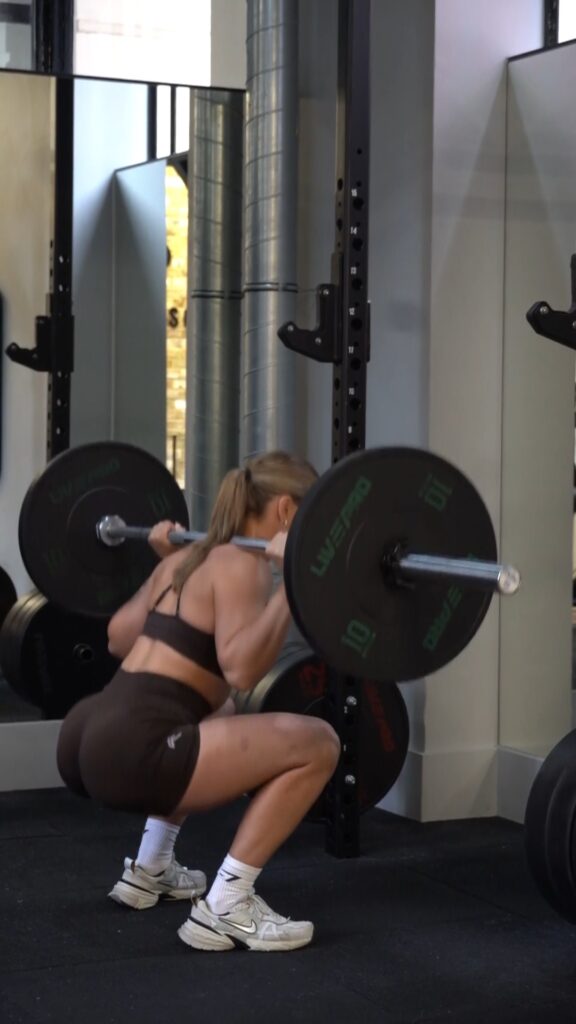
Short answer: A pause squat is a normal squat with a short stop at the bottom, usually about 2 seconds, before you stand back up. The pause takes away the “bounce” you normally get out of the bottom, so you will lift less weight. That is the point. Pause squats make you control the bottom position and drive up from a standstill. In one 10-week study, men who trained with paused squats improved their squat strength and bar speed at least as much as those who squatted normally.
This guide is for lifters who already know how to squat and want a variation that builds control and strength at the bottom. I cover what pause squats do, what the research shows and how to add them to your program.
What is a pause squat?
In a regular squat, you lower down and then reverse straight back up. Your muscles and tendons stretch as you lower, then recoil as you push up. This is called the stretch-shortening cycle. It works a bit like a spring, and it helps you lift more.
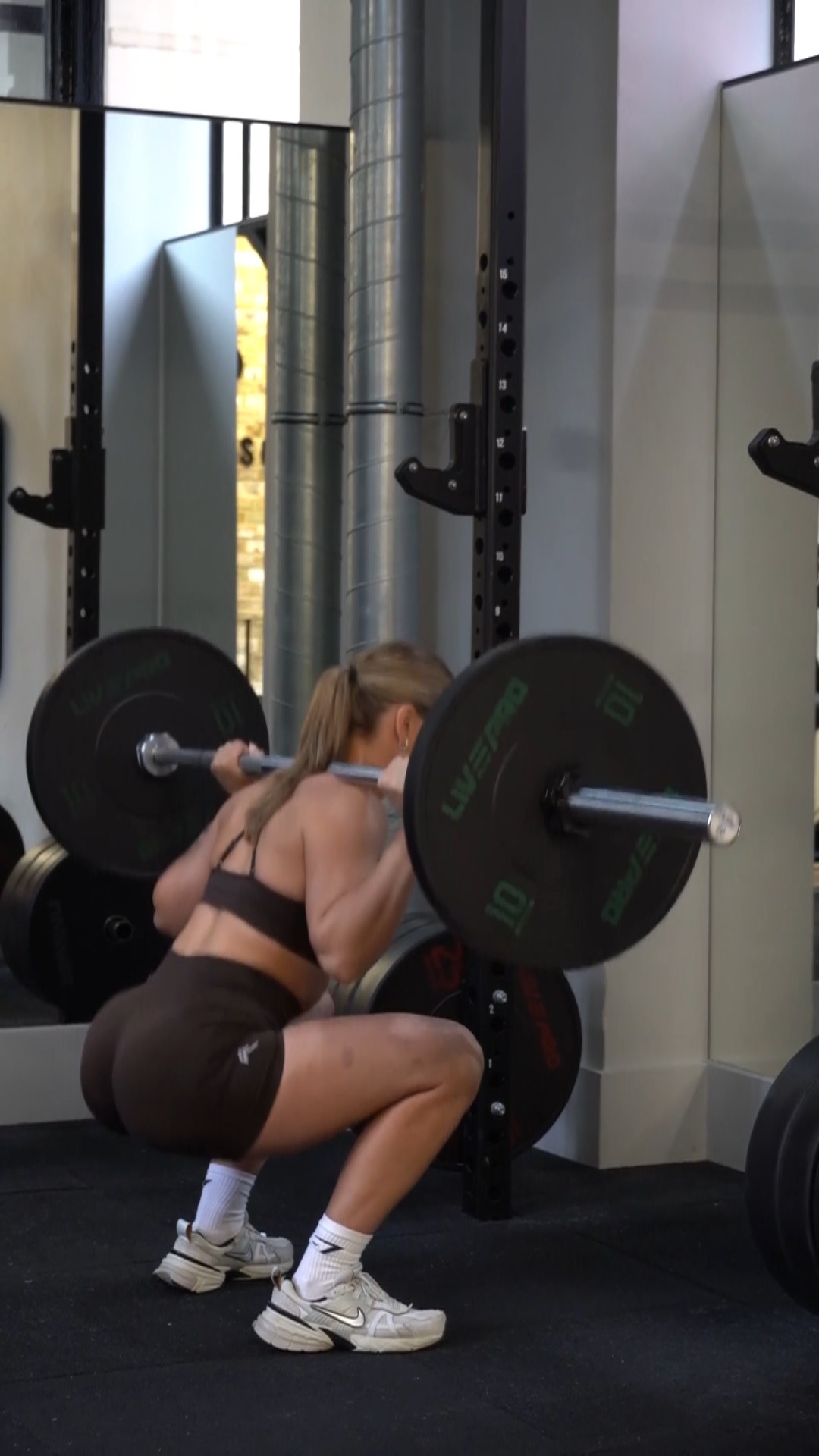
In a pause squat, you lower to your normal depth, hold still for a set time, then stand up. The pause lets much of that spring effect fade, so your muscles have to do more of the work from a dead stop.
What the research says about pause squats
There isn’t a large body of research on pause squats. These are the most useful studies I found.
- The bounce fades fast. In a classic study, 12 experienced male lifters did bench presses at 95% of their max with different pause lengths (Wilson et al., 1991). The extra help from the bounce faded quickly as the pause got longer, with a half-life of 0.85 seconds. In other words, about half of the benefit was gone in under a second. This was a bench press study, but the same spring effect applies to the squat.
- Paused reps are more consistent. When 17 trained athletes did bench presses and squats with and without a 2-second pause, the paused reps gave more consistent bar speed readings from test to test (Pallarés et al., 2014). The pause removes some of the variation caused by how hard you bounce.
- Paused squat training worked at least as well. In a 10-week study, 26 men trained the squat either with a 2-second pause or with a normal rebound (Martínez-Cava et al., 2021). Both groups improved. The pause group showed larger improvements in one-rep max strength and bar speed, based on effect sizes (a measure of how big a change is). The rebound group did slightly better on jump height. The authors suggested pauses may suit sports that rely on starting from a standstill, while rebound squats may suit jumping sports.
Keep the limits in mind. These are small studies, mostly in trained men. The training study measured strength and speed, not muscle growth. So I see pause squats as a useful variation, not a replacement for regular squats.
Benefits of pause squats
This section is my coaching view, not research findings.
- Better control at the bottom. You can’t rush or bounce through the hardest part of the lift. That teaches you to stay tight and balanced where many people lose position.
- More honest depth. Holding still at the bottom makes it obvious whether you are reaching your intended depth.
- Strength out of the bottom. If you tend to get stuck just above the bottom of a heavy squat, pause squats train that exact range.
- Good practice for bracing. You have to hold your brace for the whole pause, which is good practice for heavier sets. My guide to breathing and bracing explains how.
- Less weight on the bar. Because the pause makes the lift harder, you get a hard set with a lighter load.
How to do a pause squat
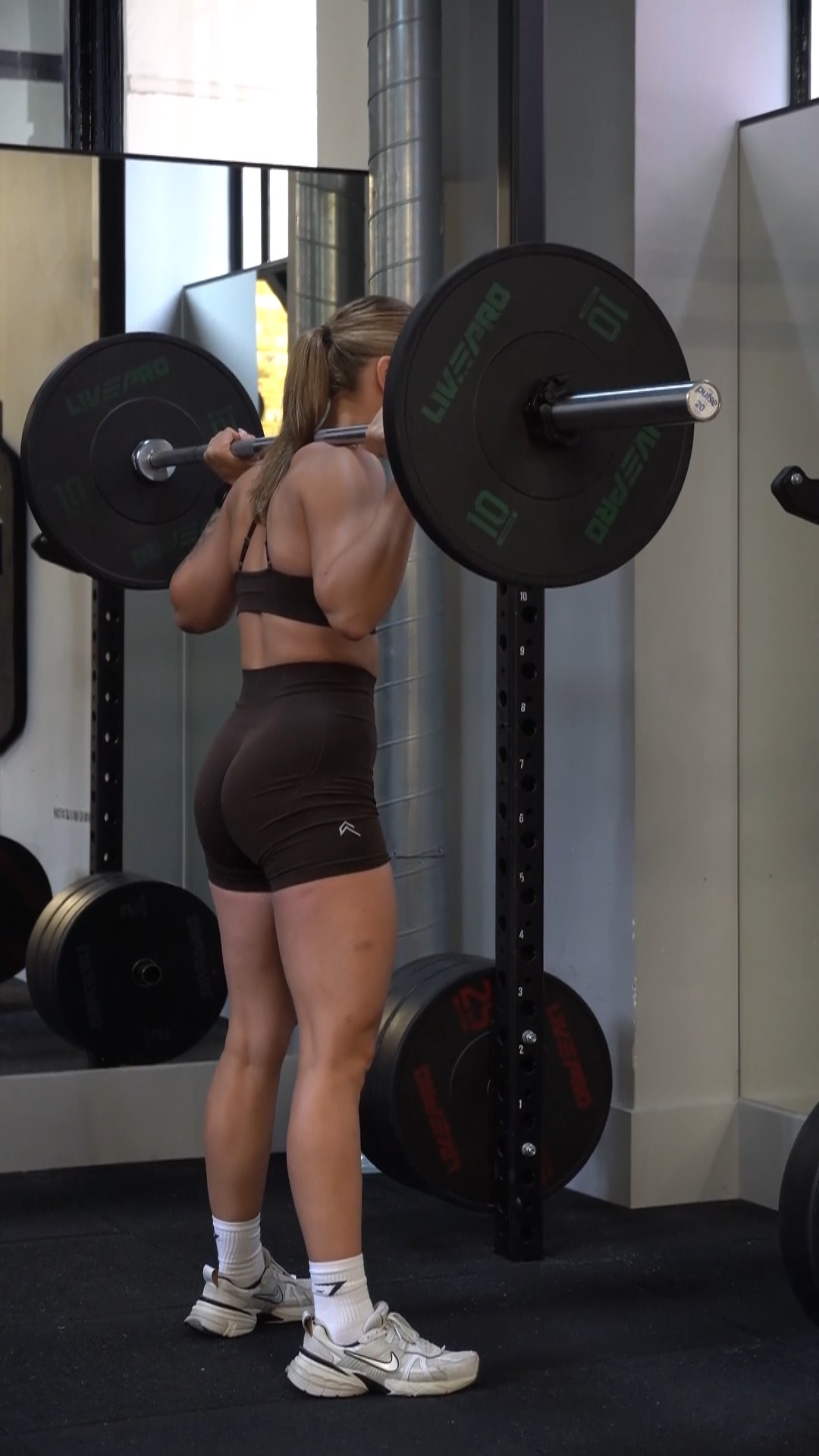
- Set up as for a normal back squat. Bar on your upper back, feet about shoulder-width apart, toes turned out slightly.
- Brace. Take a breath into your belly and tighten your midsection before you lower.
- Lower under control. Sit down to your normal squat depth at a steady pace.
- Pause for about 2 seconds. Stay tight. Keep your chest up, your weight over the middle of your feet and your knees in line with your toes. Count “one thousand, two thousand” in your head.
- Drive up. Push the floor away and stand up without rocking or bouncing first.
- Reset and repeat. Take a breath at the top before the next rep if you need it.
Common mistakes
- Relaxing at the bottom. The pause is not a rest. If you lose tension, your back may round or your hips may shift.
- Cutting the pause short. A quick touch at the bottom is just a slower squat. Count the full pause.
- Bouncing after the pause. Some people dip slightly to get a bounce before standing. Drive straight up.
- Going too heavy. Start well below the weight you use for normal squats and build up from there.
How to add pause squats to your program
Again, this is how I would set them up, not a fixed rule.
- As your main squat for a training block. For example, 3 or 4 sets of 3 to 5 reps with a 2-second pause, using a weight that leaves a couple of reps in reserve.
- After your regular squats. Do your normal squat sets first, then 2 or 3 lighter sets of paused reps to practice position.
- With a goblet squat if you’re newer. Holding a dumbbell or kettlebell at your chest is a good way to learn the paused position before adding a barbell. My goblet squat guide covers the basics.
Rest 2 to 3 minutes between heavy sets. Log the pause length along with your sets and reps, so you can compare your sessions fairly.
Pause squat vs box squat
Both add a stop at the bottom. In a box squat, you sit back onto a box and briefly take some weight off your legs. In a pause squat, nothing supports you, so you have to hold the position with your own strength and balance. A box also sets your depth for you, while a pause squat asks you to find it yourself.
Watch: squat technique
There isn’t a separate pause squat video yet, so here are two 12REPS squat demonstrations with form cues. Use the same setup, and add a 2-second pause at the bottom.
Summary
- A pause squat is a squat with a hold of about 2 seconds at the bottom.
- The pause removes most of the bounce, so you lift less weight but must drive up from a standstill.
- In a 10-week study, paused squat training improved strength and bar speed at least as well as regular squats.
- Pause squats build control, depth awareness and strength out of the bottom.
- Start lighter than usual, stay braced during the pause and drive straight up.
Plan your squat sessions
Knowing when to use pause squats, and how heavy to go, is easier with a plan. That’s what I built 12REPS to help with. You set your goal, your available time and your equipment, and the app builds your workouts. Every exercise comes with a trainer demonstration, and you can log your sets and reps to see your progress over time.
Download 12REPS and see what you’ll get:
Sources
- Martínez-Cava A, Hernández-Belmonte A, Courel-Ibáñez J, Conesa-Ros E, Morán-Navarro R, et al. Effect of pause versus rebound techniques on neuromuscular and functional performance after a prolonged velocity-based training. Int J Sports Physiol Perform. 2021;16(7):927–933.
- Pallarés JG, Sánchez-Medina L, Pérez CE, De La Cruz-Sánchez E, Mora-Rodriguez R. Imposing a pause between the eccentric and concentric phases increases the reliability of isoinertial strength assessments. J Sports Sci. 2014;32(12):1165–1175.
- Wilson GJ, Elliott BC, Wood GA. The effect on performance of imposing a delay during a stretch-shorten cycle movement. Med Sci Sports Exerc. 1991;23(3):364–370.
Related reading
- Box Squats: How to Do Them, Benefits and Box Squat vs Regular Squat
- How Deep Should You Squat? What the Research Says
- Rep Tempo: How Fast Should You Lift to Build Muscle and Strength?
- Isometric Exercises: Do They Build Muscle and Strength?
- Front Squat vs Back Squat: Differences, Benefits and Which to Choose
I’m Will Duru, a personal trainer and the founder of 12REPS. I hold a BSc (Hons) in Sport and Exercise Science and have more than a decade of experience coaching people in strength training.