




By Will Duru, personal trainer and founder of 12REPS.
The Short Answer
Yes, isometric exercises can build muscle and strength. An isometric exercise is one where your muscle works hard but doesn’t change length, like holding a plank, a wall sit or the bottom of a split squat.
Research shows isometric holds work best for muscle growth when your muscles are in a lengthened (stretched) position. They’re a useful addition to regular lifting, especially when you’re short on equipment or working around pain, but most people will build more muscle with full-range exercises.

What Is an Isometric Exercise?
Most exercises have a lifting phase and a lowering phase. In an isometric exercise, you hold one position instead. There are two main types:
- Holding isometrics: you hold a position against a load, like a wall sit, plank or holding the bottom of a squat.
- Pushing (overcoming) isometrics: you push or pull as hard as you can against something that won’t move, like pushing a barbell into the safety pins of a rack.
What the Research Says
A systematic review by Oranchuk and colleagues looked at 23 studies on long-term isometric training. Here’s what it found:
- Isometric training builds strength and muscle. The studies showed substantial gains in maximum strength and muscle size, regardless of training intensity.
- Lengthened positions build more muscle. Holding with your muscles in a longer, stretched position led to more muscle growth (about 0.9 to 1.7% per week) than the same amount of training in shorter positions (about 0.1 to 0.8% per week).
- Lengthened positions also carry over better to normal lifting and movement.
- Heavier efforts help your tendons. High-intensity holds (70% of maximum effort or more) were needed to improve tendon structure and function.
- Pushing explosively builds speed. Trying to push as fast and hard as possible improved rapid force production more than slower efforts.
This fits with research on regular lifting showing that training in the stretched position matters for growth. See partial reps vs full range of motion.
Isometric Exercise Examples
| Exercise | Muscles worked | Muscle length |
|---|---|---|
| Wall sit | Quads | Medium to long |
| Split squat hold (bottom position) | Quads and glutes | Long |
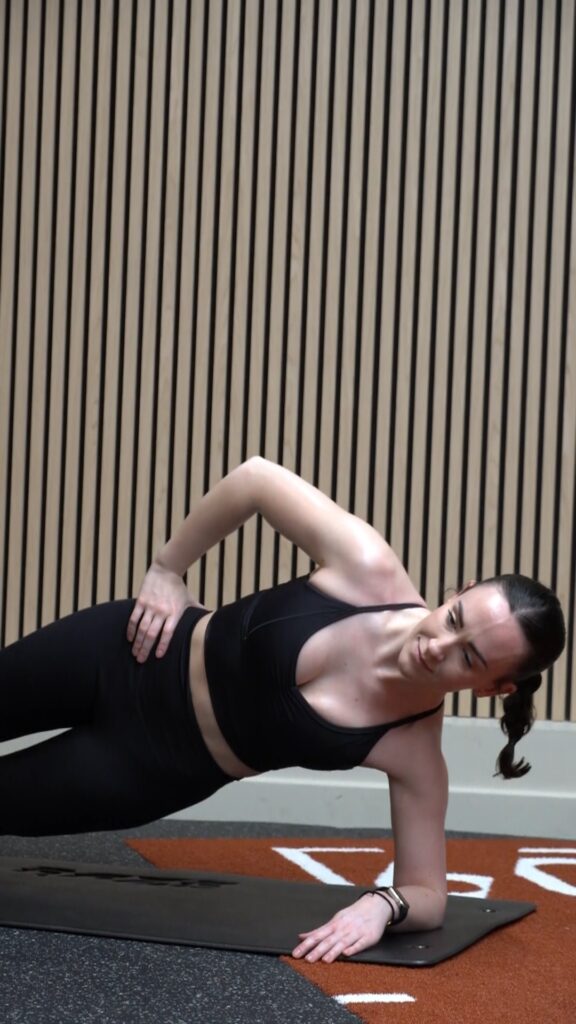
| Plank and side plank | Core | N/A (stability) |
| Glute bridge hold (top position) | Glutes and hamstrings | Short |
| Dead hang | Grip and lats | Long |
| Romanian deadlift hold (bottom position) | Hamstrings and glutes | Long |
Here are a few from the 12REPS exercise library:
For a lengthened hold, lower into the bottom of a split squat and hold it there:
Benefits of Isometric Exercises
- No equipment needed: many holds use just your bodyweight and a wall or floor.
- Joint-friendly: holding a position without moving can be more comfortable when certain movements are painful. That’s why physical therapists often use them.
- Strength in weak positions: holding the bottom of a squat or the middle of a press can help you get stronger where you usually get stuck.
- Blood pressure: isometric exercise has been linked with lower blood pressure. See wall sits for blood pressure.
How to Add Isometrics to Your Training
- Choose lengthened positions when your goal is muscle growth, such as the bottom of a split squat or a Romanian deadlift.
- Holds: 3 to 4 sets of 20 to 45 seconds, resting about a minute between sets.
- Pushing isometrics: 3 to 5 efforts of 3 to 5 seconds at maximum effort, resting about a minute between each.
- Add them to your lifting, rather than replacing full-range exercises. Use them as a finisher or on days when you’re short on time or equipment.
- Progress by holding longer, adding weight or moving to a harder position.
These sets and times are my coaching guidelines, not specific research recommendations. The review didn’t identify a single best hold time.
Safety Tips
- Keep breathing. Holding your breath during long holds can spike your blood pressure. Breathe steadily.
- Stop if it’s painful. A burning feeling in the muscle is normal; sharp joint pain is not.
- Check with your doctor if you have high blood pressure or a heart condition before doing maximum-effort pushing isometrics.
Summary
- Isometric exercises build strength and muscle by holding a position under tension.
- Holding in a lengthened (stretched) position builds more muscle and carries over better to normal lifting.
- Use them alongside full-range exercises, not instead of them.
- Keep breathing, start with bodyweight holds and progress gradually.
Add Variety With 12REPS
Want planks, holds and lifts in one plan? In 12REPS, tap the muscles you want to train, pick your workout time and equipment, and the app builds your session.
Every exercise has a demo and a coach tutorial from me, and your log tracks your progress so you know when to make each exercise harder.
Download 12REPS and see what you’ll get:
Sources
Related Reading
- Wall sits for blood pressure
- How to do a plank properly
- Partial reps vs full range of motion
- Can stretching build muscle?
- Grip strength
I’m Will Duru, a personal trainer and the founder of 12REPS. I hold a BSc (Hons) in Sport and Exercise Science and have more than a decade of experience coaching people in strength training. This article is for general education and isn’t medical advice.
