



Short answer: To bench press, lie on a flat bench with your eyes under the bar, grip it slightly wider than shoulder-width, set your shoulder blades down and back, and keep your feet flat on the floor. Lift the bar out, lower it under control to your lower chest, then press it back up until your arms are straight. Always set the safety arms in the rack or use a spotter, and start with a weight you can lift for 8 to 12 smooth reps.
This guide is for beginners and anyone who wants to check their technique. I cover setup, each step of the lift, breathing, common mistakes, safety, and how to choose your sets and reps.
What muscles does the bench press work?
- Chest (pectoralis major): the main muscle that drives the bar up.
- Front of the shoulders (anterior deltoids): they help press the bar.
- Triceps: they straighten your elbows, especially near the top.
- Upper back and lats: they keep your shoulders stable and help control the bar on the way down.
In a study of 30 trained adults, a flat bench produced higher activity in the middle and lower chest than inclined benches, while the front of the shoulders worked hardest at steeper angles (Rodríguez-Ridao et al., 2020). That is one reason the flat bench press is a good general chest exercise.
Set up safely first
Safety matters more on the bench press than on most lifts, because the bar is over your chest and face. A US study of emergency department visits found that weights dropping on the person were the most common way people were injured during weight training, accounting for about two-thirds of cases (Kerr et al., 2010).
- Use the safety arms. If you bench in a squat rack or a bench with safety catches, set them just below the height of your chest at the bottom of the lift. If the bar gets stuck, you can lower it onto them.
- Use a spotter for heavy sets. If there are no safety arms, ask someone to spot you, especially when you are close to your limit.
- Set the hooks at the right height. You should be able to lift the bar out with your arms nearly straight, without reaching up a long way.
- Start light. A standard Olympic barbell weighs about 45 pounds (20 kg). Many gyms also have lighter bars. Learn the movement with the bar alone before adding plates.
How to bench press, step by step
1. Get into position
Lie on the bench with your eyes directly under the bar. Your head, upper back and glutes should touch the bench. Plant your feet flat on the floor, roughly under or slightly behind your knees.
2. Set your grip
Grip the bar slightly wider than shoulder-width, so your forearms are roughly vertical when the bar is on your chest. Wrap your thumbs around the bar. Keep your wrists stacked over your elbows rather than bent back. My bench press grip width guide explains how close, medium and wide grips differ.
3. Set your shoulders
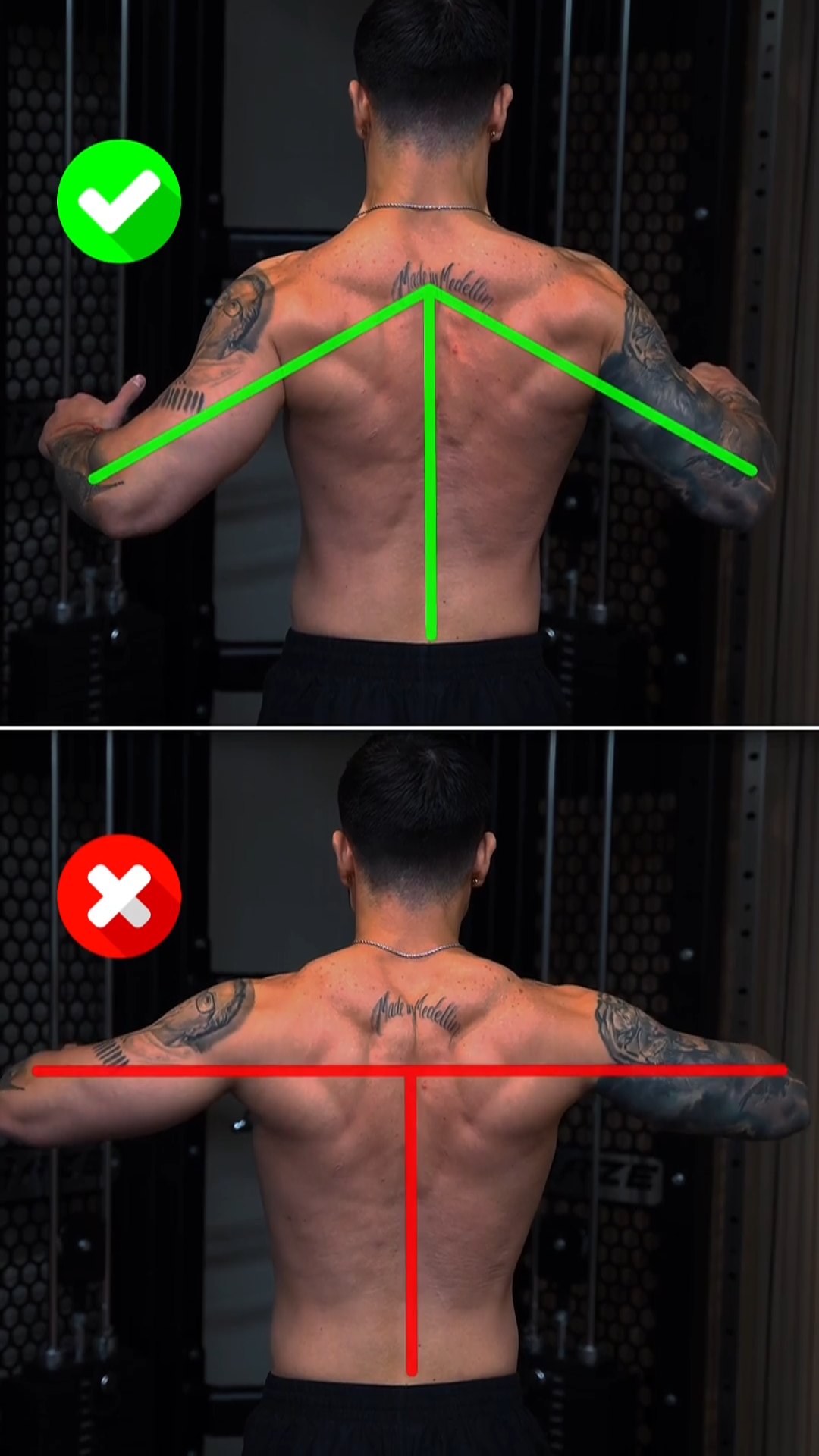
Pull your shoulder blades down and back, as if you are tucking them into your back pockets. This gives you a stable base and keeps your shoulders in a stronger position. A small natural arch in your lower back is fine, but your glutes should stay on the bench.
4. Unrack the bar
Take a breath, brace your stomach and lift the bar off the hooks. Move it forward until it sits over your shoulders with your arms straight. Pause for a second to feel balanced.
5. Lower the bar
Lower the bar under control toward your lower chest, around the level of your nipples or just below. Keep your elbows tucked at a moderate angle to your body, not flared straight out to the sides. Take about 2 seconds on the way down.
6. Press the bar up
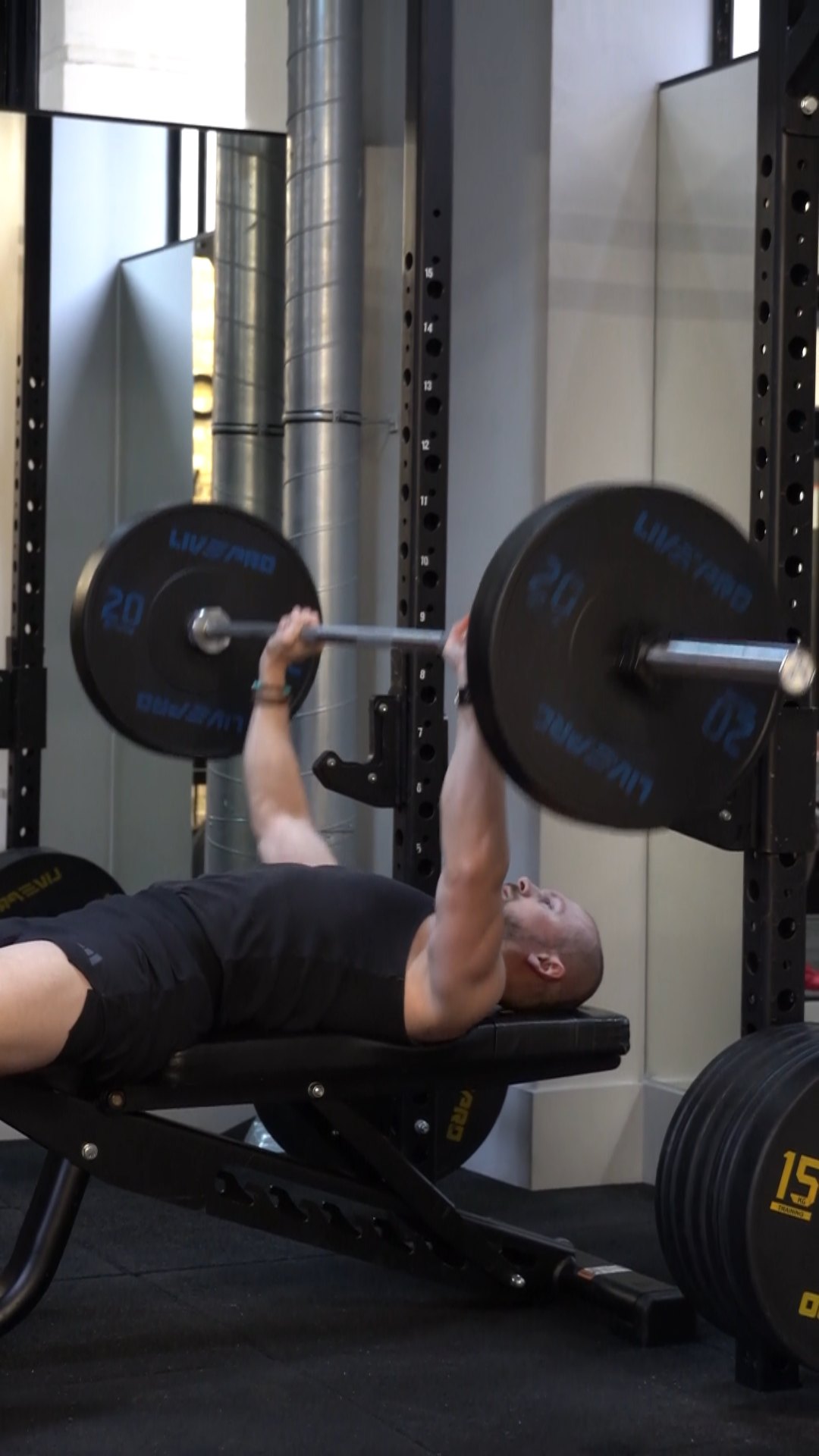
Once the bar lightly touches your chest, press it back up. It should travel slightly back toward your face as it rises, finishing over your shoulders. Push your feet into the floor and keep your shoulder blades set.
7. Finish and rack
Straighten your arms at the top without slamming your elbows. After your last rep, move the bar back to the hooks and lower it onto them before you let go.
How to breathe during the bench press
Breathe in and brace your stomach before you lower the bar. Hold that brace as you lower and start the press, then breathe out near the top. Reset your breath between reps. Holding your breath briefly raises your blood pressure, so if you have high blood pressure or a heart condition, check with a doctor about how to breathe while lifting.
Coaching cues I use
- “Shoulders in your back pockets.” This helps you set your shoulder blades down and back.
- “Bend the bar.” Imagine trying to bend the bar into a U shape. It helps you keep your elbows tucked and your upper back tight.
- “Drive your feet into the floor.” Your legs do not lift the bar, but they keep you stable on the bench.
- “Touch, don’t bounce.” Lower the bar to your chest under control, then press.
Common bench press mistakes
| Mistake | What it looks like | The fix |
|---|---|---|
| Bouncing the bar off your chest | The bar drops fast and rebounds | Lower in about 2 seconds and touch your chest lightly. |
| Elbows flared out | Your upper arms are at 90° to your body at the bottom | Tuck your elbows to a moderate angle. Think “bend the bar.” |
| Bar too high on the chest | The bar comes down near your neck or collarbones | Aim for your lower chest, around nipple level. |
| Shoulders rolling forward | Your shoulders lift off the bench at the top | Keep your shoulder blades pinned down and back for every rep. |
| Glutes lifting off the bench | Your hips rise as you push | Keep your glutes on the bench and drive through your feet. |
| Bent-back wrists | Your wrists fold back under the bar | Hold the bar lower in your palm, over your forearm bones. |
| Uneven press | One side of the bar rises faster | Use a lighter weight and keep your grip even. Check your hand position using the rings on the bar. |
What the research says about bench press technique
- Technique changes as you tire. In 18 recreational lifters doing as many reps as possible at 75% of their one-rep max, the bar slowed down a lot as the set went on and its path changed, ending up more directly over the shoulders. The authors suggested that newer lifters should focus on a consistent bar path before training to failure (Duffey and Challis, 2007).
- A flat bench works the chest well. The middle and lower chest were most active on a flat bench in trained adults, compared with incline angles (Rodríguez-Ridao et al., 2020).
- Dropped weights are a real risk. In US emergency department data from 1990 to 2007, about 65% of weight training injuries happened when weights dropped on the person (Kerr et al., 2010).
My take: for most people, the biggest technique gains come from a consistent setup and a controlled bar path. I would rather see someone stop a set 1 or 2 reps early with clean form than grind out sloppy reps.
Bench press variations
| Variation | What changes | Learn more |
|---|---|---|
| Close-grip bench press | Narrower grip, more triceps work | See the demo below |
| Dumbbell bench press | Each arm works on its own, with more freedom of movement | Dumbbell vs barbell bench press |
| Incline bench press | Bench raised, more upper chest and shoulders | Best incline bench angle |
| Decline bench press | Bench lowered, slightly shorter range of motion | Decline bench press guide |
| Push-up | No equipment, body weight as resistance | Push-ups vs bench press |
| Machine chest press | Fixed path, easier to use alone | Machine chest press guide |
Close-grip bench press
Sets, reps and how much weight to use
These are my coaching suggestions, not research-based targets:
| Goal | Sets and reps | Rest |
|---|---|---|
| Learning the lift | 3 sets of 8 to 10 with the bar or a light weight | 1 to 2 minutes |
| Building muscle | 3 to 4 sets of 6 to 12 | 2 minutes |
| Building strength | 3 to 5 sets of 3 to 6 | 2 to 3 minutes |
Pick a weight you can lift for your target reps with 1 to 3 good reps left. When you can hit the top of your rep range on every set, add a small amount of weight, such as 5 pounds in total. My guide on how much weight to lift explains this in more detail.
Summary
- Set the safety arms or use a spotter before you start.
- Lie with your eyes under the bar, grip slightly wider than shoulder-width and set your shoulder blades down and back.
- Lower the bar under control to your lower chest with your elbows tucked at a moderate angle.
- Press up and slightly back until the bar is over your shoulders.
- Start light, keep a consistent bar path and add weight in small steps.
Get a bench press plan that fits you
Good technique is the first step. The next is knowing what weight to use, when to add more and how the bench press fits with the rest of your training.
That is what I built 12REPS to help with. You set your goal, your available time and your equipment, and the app builds your workouts. Every exercise comes with a trainer demonstration, and you can log your sets and reps to see your progress over time.
Download 12REPS and see what you’ll get:
Sources
- Duffey MJ, Challis JH. Fatigue effects on bar kinematics during the bench press. J Strength Cond Res. 2007;21(2):556–560.
- Kerr ZY, Collins CL, Comstock RD. Epidemiology of weight training-related injuries presenting to United States emergency departments, 1990 to 2007. Am J Sports Med. 2010;38(4):765–771.
- Rodríguez-Ridao D, Antequera-Vique JA, Martín-Fuentes I, Muyor JM. Effect of five bench inclinations on the electromyographic activity of the pectoralis major, anterior deltoid, and triceps brachii during the bench press exercise. Int J Environ Res Public Health. 2020;17(19):7339.
Related reading
- Dumbbell vs Barbell Bench Press: Which Is Better for Your Chest?
- Best Incline Bench Angle for Upper Chest: What the Research Says
- Push-Ups vs Bench Press: Which Is Better for Chest and Strength?
- Machine Chest Press: How to Use It and Is It as Good as the Bench Press?
- How Much Weight Should I Lift? Match the Weight to Your Reps
- How to Do Dumbbell Bench Press Correctly: A Women’s Guide
I’m Will Duru, a personal trainer and the founder of 12REPS. I hold a BSc (Hons) in Sport and Exercise Science and have more than a decade of experience coaching people in strength training.

