




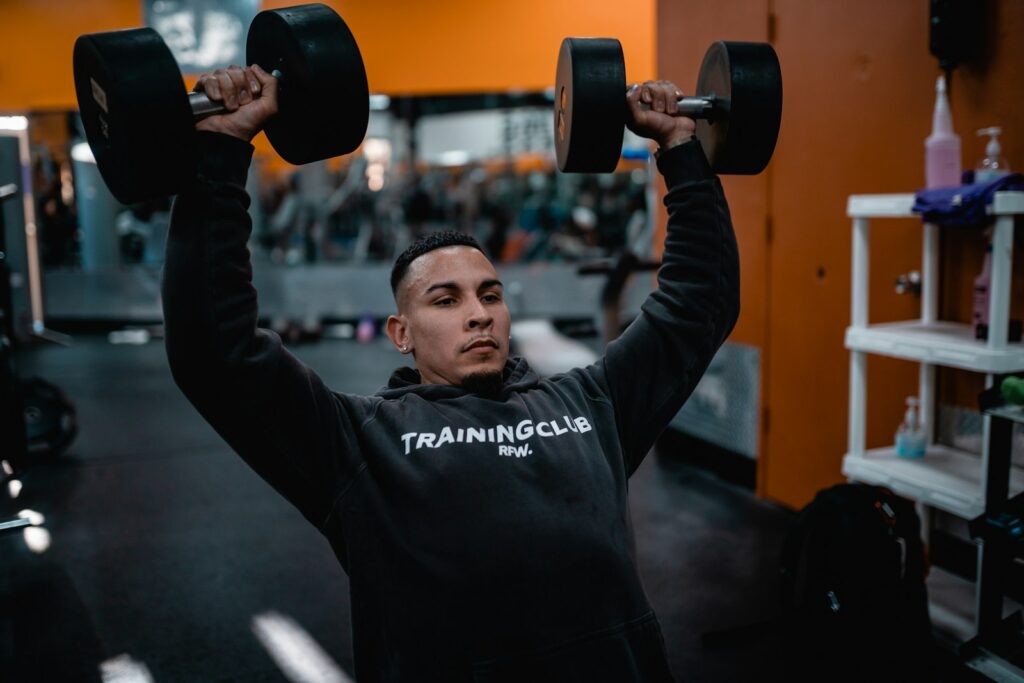
The short answer: for most people, the best incline bench angle for the upper chest is around 30 degrees. In research, upper chest activity peaked at about 30°, while steeper angles of 45° and 60° shifted more of the work onto the front shoulders and reduced how much weight people could lift. A lower incline of 15–30° is a good range for most lifters. If you want to train your upper chest, set the bench low, not steep.
This guide is for anyone who has stood at an adjustable bench wondering which notch to use. I’ll cover what each angle does, what the research shows, how to set up and do the incline press, common mistakes and how to program it.
Incline bench angles compared
| Angle | What it emphasizes | Notes |
|---|---|---|
| 0° (flat) | Middle and lower chest | The heaviest press. Upper chest still works |
| 15° | Upper and middle chest | A good option if 30° bothers your shoulders |
| 30° | Upper chest | The sweet spot in most research |
| 45° | Upper chest and front shoulders | The front shoulders start to take over |
| 60° | Mostly front shoulders | Closer to a shoulder press than a chest press |
What the research says
- Upper chest activity peaks around 30°. A 2020 study of 30 trained adults tested bench angles of 0°, 15°, 30°, 45° and 60° at 60% of each lifter’s max. Upper chest activity rose from flat to 15° and peaked at 30°, then dropped sharply at 60°. Middle and lower chest activity was highest on the flat bench and fell as the bench rose. The front shoulders were most active at 45° and 60°. One-rep max fell at every step, from about 81 kg (179 lb) flat to 72 kg (159 lb) at 15°, 63 kg (139 lb) at 30°, 58 kg (128 lb) at 45° and 52 kg (115 lb) at 60°.
- Flat and 30° look like the best pair. A 2016 study of 14 trained men compared a 15° decline, flat, 30° and 45°. Upper chest activity was higher at 30° and 45° for part of the lift, and lower chest activity was higher on the flat and decline benches. The authors recommended flat and 30° benches and concluded that a 45° incline added little extra benefit.
- Incline training may grow the upper chest more. In an 8-week study of 47 untrained young men, groups trained the flat bench, the incline bench or both, once a week with the same number of sets. The incline group gained more muscle thickness at the upper chest measurement site than the other two groups. Strength gains were similar across all groups.
- A steep incline shifts the work upward. A 2022 study of 13 trained men compared a 45° incline with a flat bench. The incline produced more activity in the upper chest than the middle chest, and the flat bench did the opposite. Lifters’ incline one-rep max was about 85% of their flat one-rep max.
Most of these studies measure muscle activity in single sessions, and the one training study was short and used beginners. Still, they point the same way: a low incline targets the upper chest, and going steeper mostly adds shoulder work. My coaching advice below builds on that.
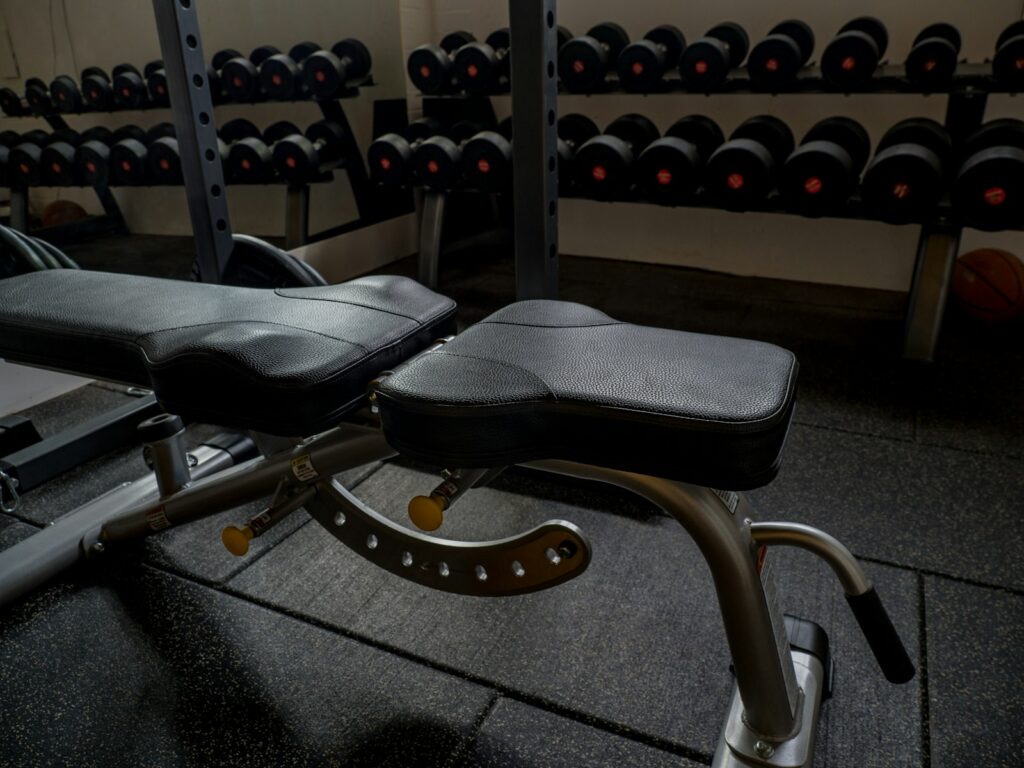
How to find 30° on your bench
Bench notches aren’t standard, so “the second notch” means different things on different benches. To check, use the level or angle tool in your phone’s measure app. Lay your phone on the backrest and adjust until it reads about 30°. Once you know which notch that is on your gym’s bench, you won’t need to check again.
How to do an incline barbell press
- Set the bench to about 30° and position yourself so your eyes are under the bar.
- Plant your feet flat, pull your shoulder blades back and down, and keep a slight arch in your upper back.
- Grip the bar slightly wider than shoulder width.
- Unrack the bar and lower it under control to your upper chest, just below your collarbones.
- Press the bar up and slightly back until your arms are straight over your shoulders.
How to do an incline dumbbell press
- Set the bench to about 30°. Sit with a dumbbell on each thigh, then kick them up one at a time as you lie back.
- Hold the dumbbells at chest height with your elbows about 45–60° from your body.
- Press the dumbbells up until your arms are straight, bringing them slightly together at the top.
- Lower them slowly until you feel a stretch across your chest.
Coaching cues I use: “shoulder blades in your back pockets,” “chest up to the ceiling” and “lower to the collarbones, not the belly.” If you feel it mostly in the front of your shoulders, lower the bench a notch.
Common mistakes and how to fix them
| Mistake | Why it matters | Fix |
|---|---|---|
| Bench set too steep | Turns the lift into a shoulder press | Use about 15–30° |
| Shoulders rolling forward | Takes work off the chest and strains the shoulders | Pull your shoulder blades back and down before every set |
| Lowering the bar too low on the chest | The bar path drifts and the press gets awkward | Lower to your upper chest, just below your collarbones |
| Elbows flared straight out | Increases stress on the front of your shoulders | Keep your elbows about 45–60° from your body |
| Lifting your hips off the bench | Turns the incline into a flat press | Keep your hips and upper back on the bench |
How to program the incline press
These are starting points I use with most lifters.
| Use | Sets | Reps | Rest |
|---|---|---|---|
| Main chest lift | 3–4 | 6–10 | 2–3 minutes |
| Second chest exercise | 2–3 | 8–12 | 90 seconds–2 minutes |
- If upper chest is your priority, do the incline press first in your session.
- Otherwise, do a flat press first and an incline press second. Together they cover the whole chest.
- Dumbbells allow a deeper stretch and let each arm move freely. A barbell lets you lift heavier. Both work well.
Summary
- The best incline angle for the upper chest is around 30°. A range of 15–30° works for most people.
- Above about 45°, the front shoulders take over and you lift less weight.
- The flat bench still trains the upper chest, but less than a low incline.
- One 8-week study found incline training grew the upper chest more than flat training.
- Use your phone’s level to find 30° on your gym’s bench, and pair the incline press with a flat press for the whole chest.
Build your chest with a clear plan
The right angle helps, but steady progress over weeks is what builds your chest. That’s where 12REPS helps.
12REPS gives you trainer-built programs with two demo videos for every exercise, including the incline barbell and dumbbell press. The gym log shows what you lifted last time, so you know when to add weight. Build Your Routine lets you add incline pressing to your own week, and the built-in timer keeps your rest periods on track. Every new account starts with a 7-day free trial.
Download 12REPS and see what you’ll get:
Sources
- Rodríguez-Ridao D, Antequera-Vique JA, Martín-Fuentes I, Muyor JM. Effect of five bench inclinations on the electromyographic activity of the pectoralis major, anterior deltoid, and triceps brachii during the bench press exercise. International Journal of Environmental Research and Public Health. 2020;17(19):7339.
- Lauver JD, Cayot TE, Scheuermann BW. Influence of bench angle on upper extremity muscular activation during bench press exercise. European Journal of Sport Science. 2016;16(3):309–316.
- Chaves SFN, Rocha-Júnior VA, Encarnação IGA, et al. Effects of horizontal and incline bench press on neuromuscular adaptations in untrained young men. International Journal of Exercise Science. 2020;13(6):859–872.
- Albarello JCDS, Cabral HV, Leitão BFM, et al. Non-uniform excitation of pectoralis major induced by changes in bench press inclination leads to uneven variations in the cross-sectional area measured by panoramic ultrasonography. Journal of Electromyography and Kinesiology. 2022;67:102722.
Related reading
- How to Do Dumbbell Bench Press Correctly
- Build a Stronger Chest: 4-Exercise Workout
- Barbell Incline Press: exercise demo
- Dumbbell Incline Press: exercise demo
- How to Increase Your Bench Press
I’m Will Duru, a personal trainer and the founder of 12REPS. I hold a BSc (Hons) in Sport and Exercise Science and have more than a decade of experience coaching people in strength training.
