



By Will Duru, personal trainer and founder of 12REPS.
The Short Answer
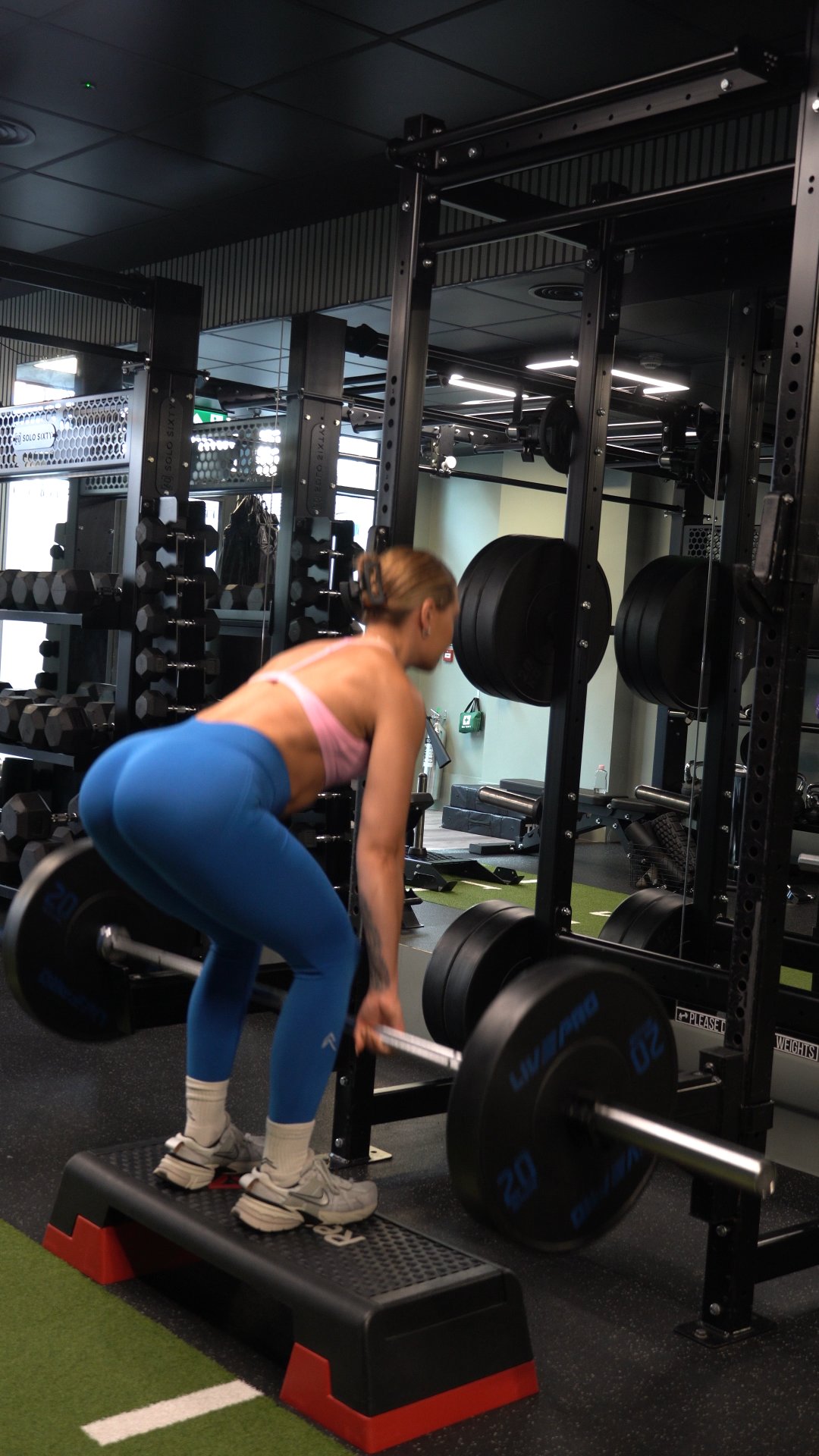
A rack pull is a deadlift that starts with the bar resting on the safety pins of a power rack, usually around knee height. Because you lift through a shorter range, you can handle more weight than in a full deadlift.
Rack pulls train your glutes, hamstrings, back muscles, upper back and grip. They work well as an extra exercise alongside deadlifts, or as a starting point if you can’t yet pull from the floor with good form. For most people, they shouldn’t fully replace the deadlift.

What Muscles Do Rack Pulls Work?
- Glutes: drive your hips forward to stand up.
- Hamstrings: work with your glutes to extend your hips.
- Spinal erectors: the muscles along your spine that keep your back flat.
- Upper back and traps: hold your shoulders in place under a heavy bar.
- Forearms and grip: hold on to the bar.
Your quads do less work than in a full deadlift because your knees start partly straight.
How to Do a Rack Pull
- Set the pins. Place the safety pins so the bar sits just below or at knee height. Load the bar while it rests on the pins.
- Step in. Stand with your feet about hip width apart and the bar over your midfoot, close to your shins.
- Grip the bar. Push your hips back and hold the bar just outside your legs with straight arms.
- Brace. Take a breath into your belly, tighten your midsection and pull the slack out of the bar so it presses against the pins without lifting.
- Stand up. Drive your hips forward and stand tall. Keep the bar close to your thighs.
- Lower with control. Push your hips back and set the bar down on the pins. Reset your brace before the next rep.

Which Pin Height Should You Use?
| Pin height | Range of motion | Typical use |
|---|---|---|
| Just below the knee | Longest | Closest to a deadlift. A good starting point for most people. |
| At the knee | Medium | Heavier loads, with more focus on the upper back and lockout. |
| Above the knee | Shortest | Very heavy loads for lockout strength and grip. Best for experienced lifters. |
The higher the pins, the more weight you can lift, and the less your legs have to work. I suggest starting just below the knee and keeping that height the same each session so you can track your progress fairly.
Rack Pull vs Deadlift
| Rack pull | Deadlift | |
|---|---|---|
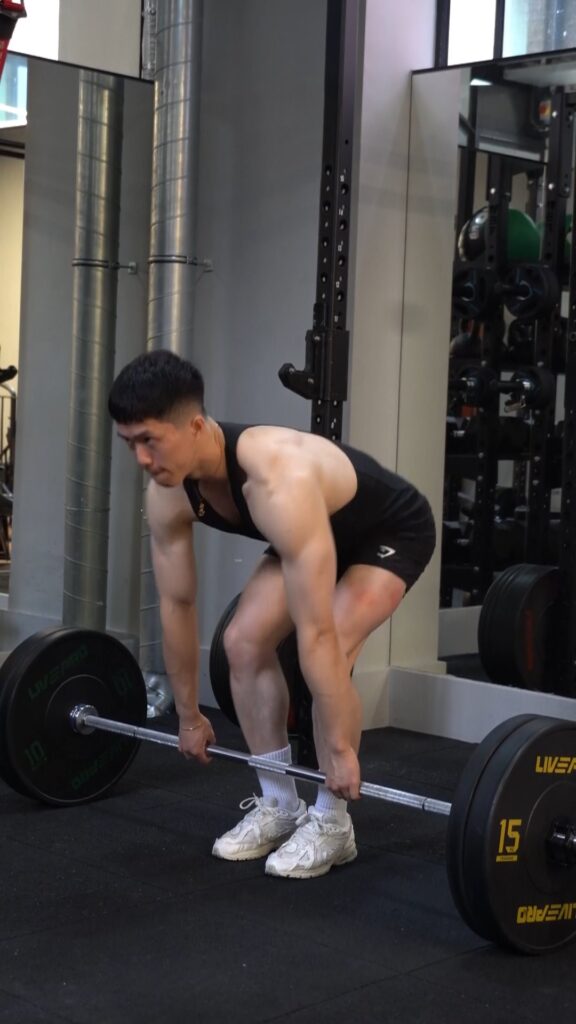
| Starting position | Bar on pins, usually near the knee | Bar on the floor |
| Range of motion | Shorter | Full |
| Weight lifted | Heavier | Lighter |
| Quad involvement | Less | More |
| Best for | Lockout, upper back, grip, limited mobility | Overall strength and full-body muscle |
Research comparing the two is limited. In a study by Gillingham and colleagues, 18 college wrestlers tested their one-rep max in a full deadlift and in a partial deadlift from a rack, with the bar about 1 inch above the kneecap. They lifted on average 226 kg (about 498 lb) in the partial version and 191.7 kg (about 423 lb) in the full deadlift. The two results were strongly related. The authors suggested the two lifts may be interchangeable in a training program.
That study measured strength on one day, not the effects of training over weeks. Research on partial reps also suggests that training through the stretched part of a movement matters for muscle growth, and rack pulls skip the bottom of the lift. See my article on partial reps vs full range of motion. That is why I use rack pulls alongside the deadlift, not instead of it.
Common Rack Pull Mistakes
- Setting the pins too high. Very high pins let you lift a lot of weight through a tiny range. Start below the knee.
- Leaning back at the top. Stand tall and stop. Arching backward adds stress to your lower back without working your glutes harder.
- Bouncing off the pins. Let the bar settle and reset between reps.
- Rounding your back. If your back rounds as you pull, the weight is too heavy.
- Hitching the bar. Don’t rest the bar on your thighs and jerk it up. Lighten the load if you need to.
How to Add Rack Pulls to Your Program
- As an extra lift: do 3 sets of 4 to 6 reps after your main squat or deadlift work, once a week.
- As a deadlift alternative: if you can’t reach the floor with a flat back yet, start with rack pulls from below the knee and lower the pins over time.
- Warm up first. Use lighter sets before your working weight. See my 3-phase warm-up guide.
- Consider a belt for heavy sets. See do you need a lifting belt.
If you have back pain, start light and see a health professional if pain gets worse. My guide to exercises for back pain covers safer ways to build a stronger back.
Summary
- A rack pull is a deadlift from pins, usually set near your knees.
- It lets you lift heavier and focuses on your glutes, back, upper back and grip.
- Start with the pins just below the knee and avoid leaning back at the top.
- Research is limited, so use rack pulls alongside the deadlift rather than as a full replacement.
Train Your Deadlift With a Plan
Not sure where rack pulls fit in your week? 12REPS builds a strength program around your goal, schedule and equipment, including deadlift variations that suit your level.
Every exercise in the 12REPS exercise library has a demo and a coach tutorial from me, and your log shows what you lifted last time, so you know when to add weight.
Download 12REPS and see what you’ll get:
Sources
Related Reading
- How to deadlift properly
- Sumo vs conventional deadlift
- How to do a trap bar deadlift
- Partial reps vs full range of motion
- Do you need a lifting belt?
I’m Will Duru, a personal trainer and the founder of 12REPS. I hold a BSc (Hons) in Sport and Exercise Science and have more than a decade of experience coaching people in strength training.
