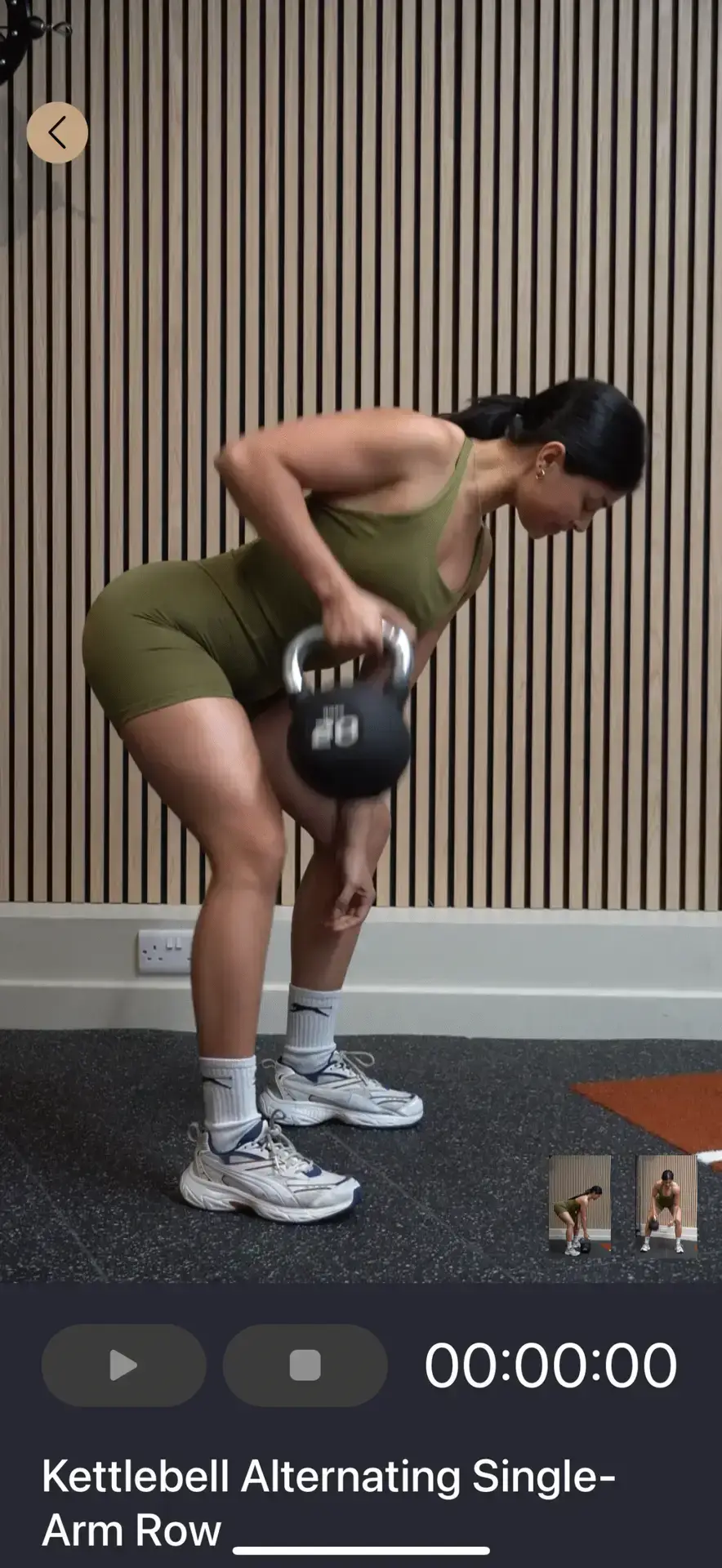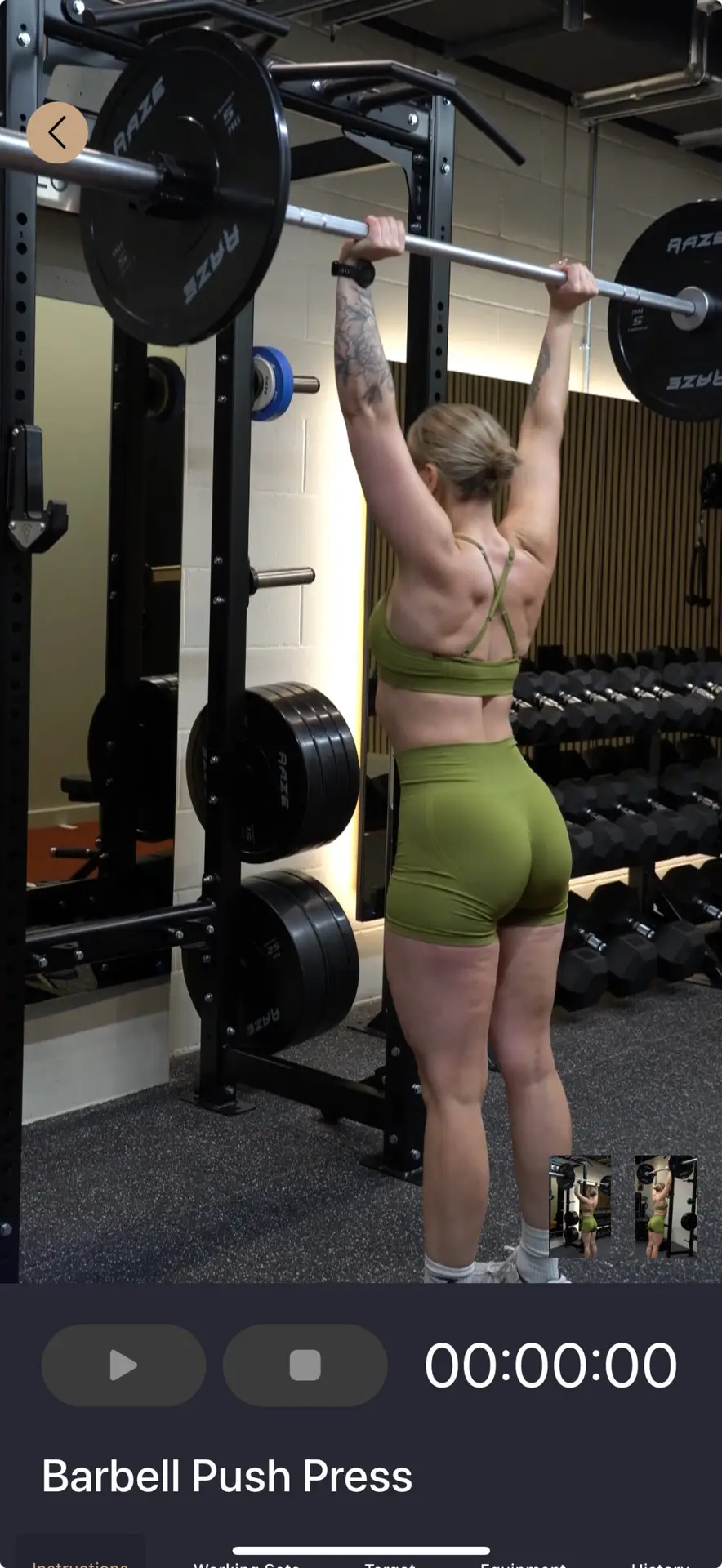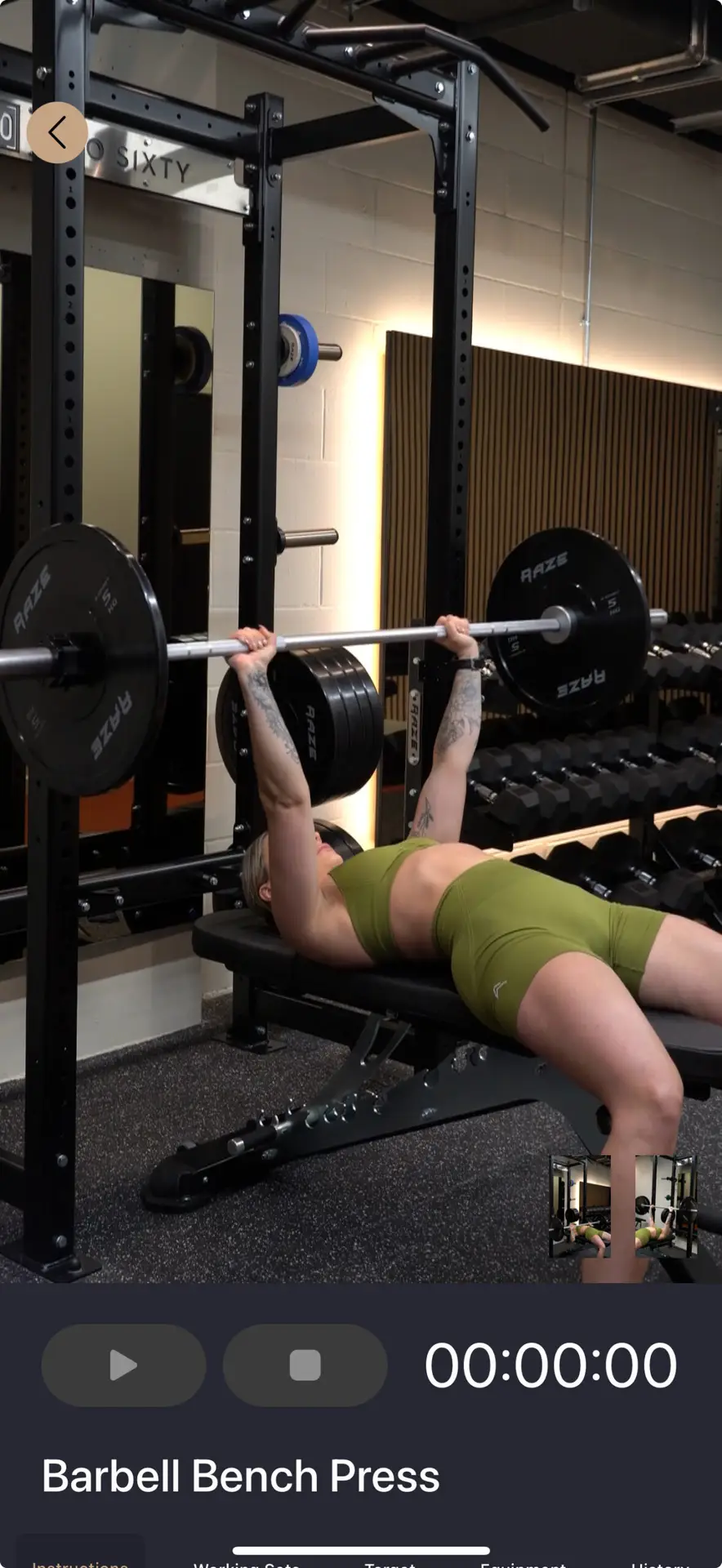



Written by Will Duru, BSc (Hons) Sport and Exercise Science, award-winning Personal Trainer with over 10 years of experience in strength training and optimising recovery .
A 2-day gym workout split is a plan where you train your whole body twice a week, on two non-consecutive days. This 12-week plan uses two full-body workouts, A and B, across three 4-week phases. Each phase raises the challenge a little.
It suits beginners and intermediate lifters who can get to the gym twice a week. Adapt it to your needs, and always put good form first.
Why a 2-Day Full-Body Split Works
Two full-body sessions train every major muscle group twice a week. A 2016 meta-analysis found that training a muscle twice a week led to more muscle growth than once a week, when total volume was the same.
It also meets the NHS guideline of strengthening activities that work all major muscle groups on at least 2 days a week. And it leaves plenty of time to recover between sessions.
Want to know more about how often to train each muscle? Read our guide on how often you should lift.
Understanding Progression: The Key to Long-Term Gains
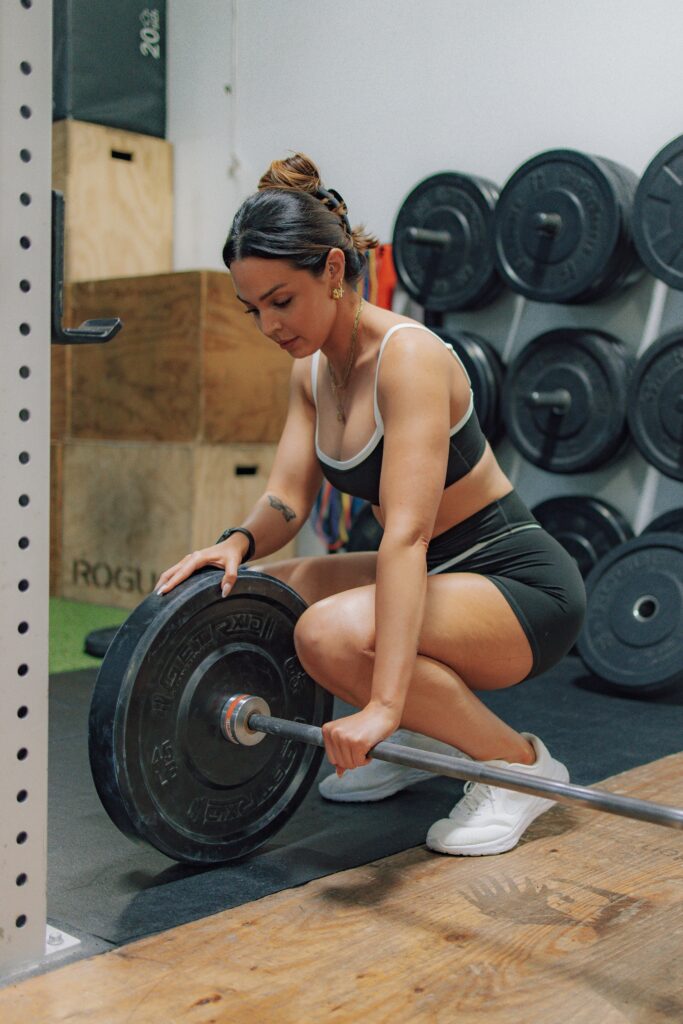
Progressive overload means slowly increasing the demands on your muscles over time, so they keep adapting. In this 12-week plan, you will do that through:
- Increasing reps: Aim for the top of the rep range before you increase the weight.
- Increasing weight: Once you can hit the top of the rep range for all sets with good form, increase the weight slightly.
- Increasing sets: The plan adds a set to the main lifts from Phase 2 to raise your overall volume.
- Improving form and tempo: Master each movement and control the eccentric (lowering) phase of each lift.
Both approaches work. A 2022 study found that adding reps and adding load both improved muscle size and strength over 8 weeks.
Make sure your form is solid before you add weight. If your form breaks down, reduce the weight. For more detail, see our beginner’s guide to progressive overload.
The 12-Week 2-Day Gym Workout Plan
The plan has three phases of 4 weeks each. Each phase builds on the last. Warm up before each session and cool down afterward. If you feel pain, stop the exercise.
Phase 1: Foundation and Form (Weeks 1-4)
Focus: Learn good form, build consistency and set a solid strength base. Keep the weight light enough to keep your technique clean.
Workout Day 1: Full Body A
| Exercise | Sets | Reps | Notes |
|---|---|---|---|
| Barbell Back Squats | 3 | 10-12 | Focus on depth and controlled movement. Watch the 12REPS demo first. |
| Dumbbell Bench Press | 3 | 10-12 | Control the eccentric (lowering phase). |
| Bent-Over Barbell Rows | 3 | 10-12 | Squeeze your shoulder blades at the top. |
| Overhead Dumbbell Press (Seated) | 3 | 10-12 | Keep your core tight and press straight up. |
| Plank | 3 | 30-45 sec | Keep a straight line from head to heels. |
| Biceps Curls (Dumbbell) | 3 | 12-15 | Control the movement and avoid swinging. |
| Triceps Pushdowns (Cable) | 3 | 12-15 | Fully extend your elbows and squeeze your triceps. |
Workout Day 2: Full Body B
| Exercise | Sets | Reps | Notes |
|---|---|---|---|
| Romanian Deadlifts (Dumbbell) | 3 | 12-15 | Hinge at the hips and feel the stretch in your hamstrings. |
| Lat Pulldowns (Machine) | 3 | 10-12 | Pull with your back, not just your arms. |
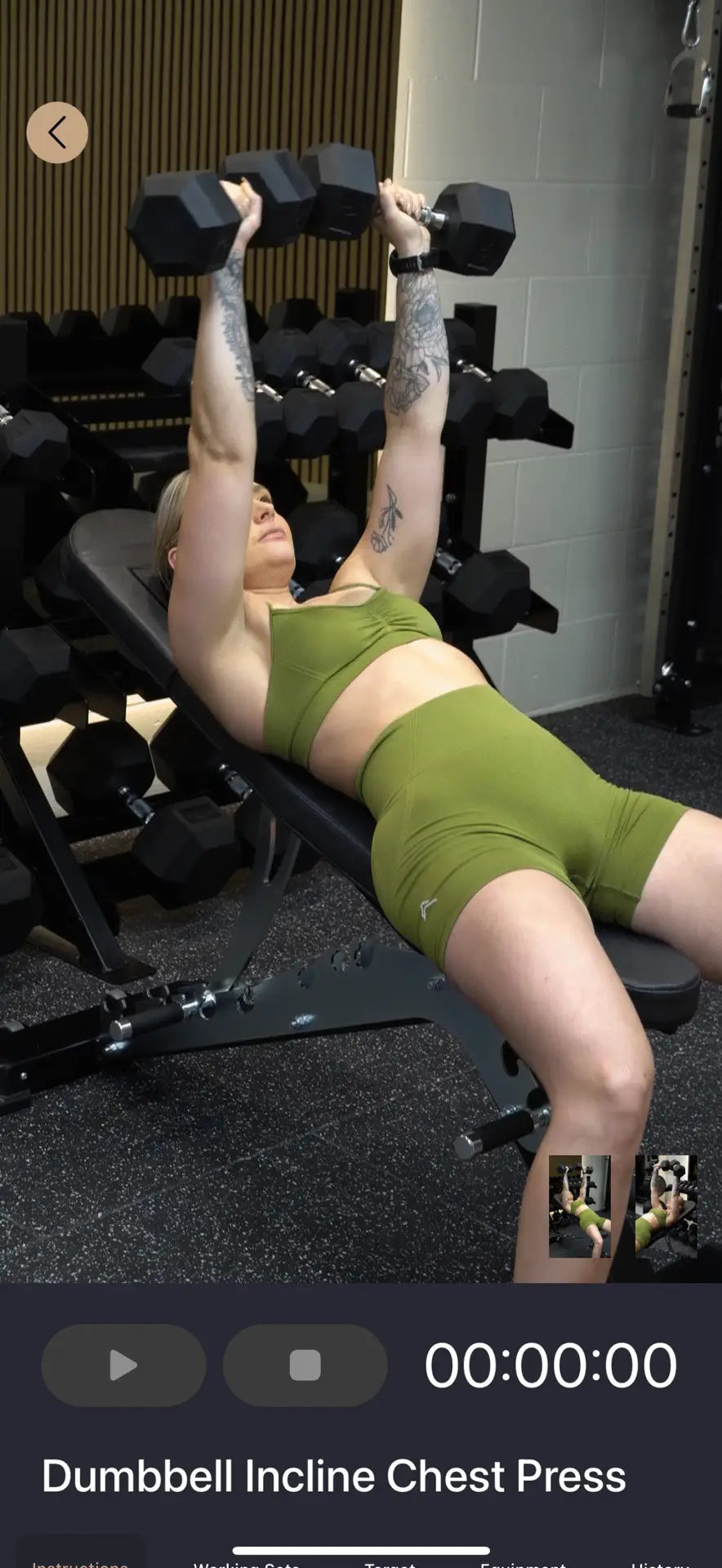
| Incline Dumbbell Press | 3 | 10-12 | Targets the upper chest. Pause briefly at the bottom. |
| Leg Press (Machine) | 3 | 12-15 | Push through your heels and don’t lock your knees. |
| Face Pulls (Cable) | 3 | 15-20 | Focus on external rotation and your rear delts. |
| Calf Raises (Standing) | 3 | 15-20 | Use a full range of motion and squeeze your calves. |
| Ab Crunches (Machine/Floor) | 3 | 15-20 | Control the movement and brace your core. |
Progression in Phase 1: Try to add reps within the given range each week. Once you can hit the top of the rep range for all sets with good form, make a small weight increase the following week.
Learn the main lifts
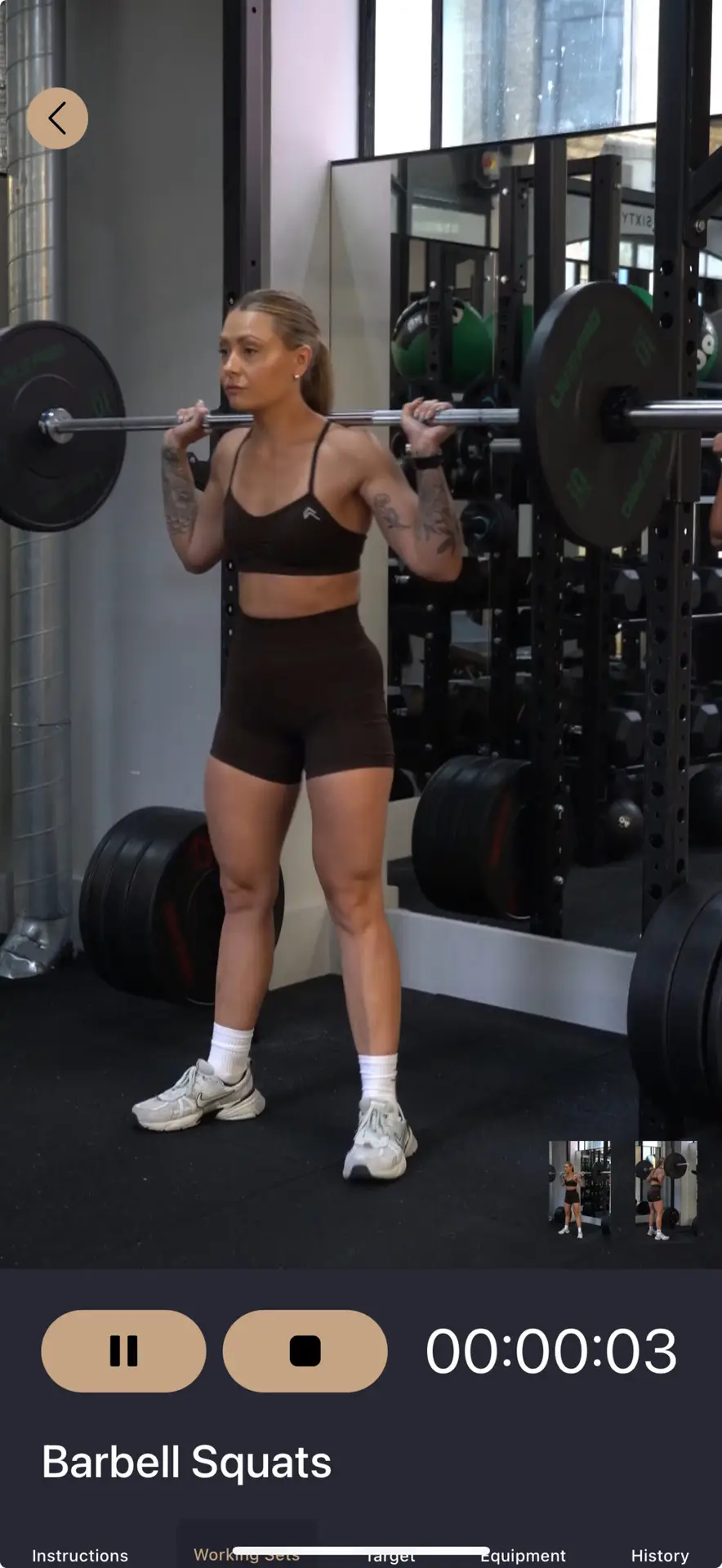
Phase 1 is the time to learn your technique. Here are 12REPS demonstrations of two of the main compound lifts in this plan.
Barbell back squat:
Barbell bent-over row:
Phase 2: Building Strength and Volume (Weeks 5-8)
Focus: Slowly increase intensity and volume to keep building muscle and strength. You should be comfortable with the movements by now.
Workout Day 1: Full Body A
| Exercise | Sets | Reps | Notes |
|---|---|---|---|
| Barbell Back Squats | 4 | 8-10 | Increase the weight slightly from Phase 1. |
| Dumbbell Bench Press | 4 | 8-10 | Press with control. |
| Bent-Over Barbell Rows | 4 | 8-10 | Keep strict form. |
| Overhead Dumbbell Press (Seated) | 4 | 8-10 | Press hard and keep your core braced. |
| Plank | 3 | 45-60 sec | Increase your hold time. |
| Biceps Curls (Dumbbell) | 3 | 10-12 | Squeeze at the top of each rep. |
| Triceps Pushdowns (Cable) | 3 | 10-12 | Squeeze your triceps at the bottom. |
Workout Day 2: Full Body B
| Exercise | Sets | Reps | Notes |
|---|---|---|---|
| Romanian Deadlifts (Dumbbell) | 4 | 10-12 | Increase the weight slightly. |
| Lat Pulldowns (Machine) | 4 | 8-10 | Feel the stretch at the top and the squeeze at the bottom. |
| Incline Dumbbell Press | 4 | 8-10 | Drive through your upper chest. |
| Leg Press (Machine) | 4 | 10-12 | Controlled movement. Don’t rush. |
| Face Pulls (Cable) | 3 | 12-15 | Slower, more deliberate reps. |
| Calf Raises (Standing) | 3 | 12-15 | Deeper stretch, harder squeeze. |
| Ab Crunches (Machine/Floor) | 3 | 12-15 | Focus on squeezing your abs. |
Progression in Phase 2: Keep increasing the weight when you can hit the top of the rep range for all sets with good form. The main compound lifts now have 4 sets instead of 3.
Phase 3: Intensification and Refinement (Weeks 9-12)
Focus: Push the intensity, refine your technique and build on your strength gains. If you feel comfortable, you can try supersets or drop sets on the accessory exercises. Always put form first.
Workout Day 1: Full Body A
| Exercise | Sets | Reps | Notes |
|---|---|---|---|
| Barbell Back Squats | 4 | 6-8 | Heavier weight. Drive up hard while keeping control. |
| Dumbbell Bench Press | 4 | 6-8 | Keep tension and control the lowering phase. |
| Bent-Over Barbell Rows | 4 | 6-8 | Pull with purpose and squeeze hard. |
| Overhead Dumbbell Press (Seated) | 4 | 6-8 | Press strongly with a stable core. |
| Plank | 3 | 60+ sec | Push for longer holds. |
| Biceps Curls (Dumbbell) | 3 | 8-10 | Strict form. Feel the muscle work. |
| Triceps Pushdowns (Cable) | 3 | 8-10 | Full lockout and a hard squeeze. |
Workout Day 2: Full Body B
| Exercise | Sets | Reps | Notes |
|---|---|---|---|
| Romanian Deadlifts (Dumbbell) | 4 | 8-10 | Heavier weight with a clean hip hinge. |
| Lat Pulldowns (Machine) | 4 | 6-10 | Pull down hard and get a full stretch. |
| Incline Dumbbell Press | 4 | 6-8 | Strong press with an upper chest focus. |
| Leg Press (Machine) | 4 | 8-12 | Controlled, powerful push. |
| Face Pulls (Cable) | 3 | 10-12 | Slower tempo. Focus on your rear delts. |
| Calf Raises (Standing) | 3 | 10-12 | Full squeeze and a controlled stretch. |
| Ab Crunches (Machine/Floor) | 3 | 10-12 | Squeeze hard and focus on your abs. |
Progression in Phase 3: Keep working toward weight increases while keeping excellent form. The lower rep ranges let you use heavier loads. If you feel recovered and strong, consider adding a fourth set to some accessory exercises.
Important Guidelines for the Plan
Warm-up
Before each workout, do a 5 to 10 minute warm-up:
- 5 minutes of light cardio (treadmill, stationary bike or rowing machine).
- Moving stretches, such as leg swings and arm circles, for the muscles you will train.
- Light activation exercises with bodyweight or very light weights.
Rest periods
- Compound exercises (squats, deadlifts, bench press, rows): 2 to 3 minutes between sets.
- Isolation exercises (biceps curls, triceps pushdowns, calf raises): 1 to 2 minutes between sets.
- Core exercises: 1 minute between sets.
Longer rests on the big lifts are supported by research. A 2016 study found 3-minute rests led to more strength and muscle gains than 1-minute rests in trained men. Read more in our guide on how long to rest between sets.
Training schedule
- Do Workout Day 1 and Workout Day 2 with at least one rest day between them.
- Suggested schedule: Monday (Day 1) and Thursday (Day 2), with weekends off.
- Alternative: Tuesday (Day 1) and Friday (Day 2), with weekends off.
- Allow at least 48 hours of recovery between sessions.
Tracking Your Progress with 12REPS
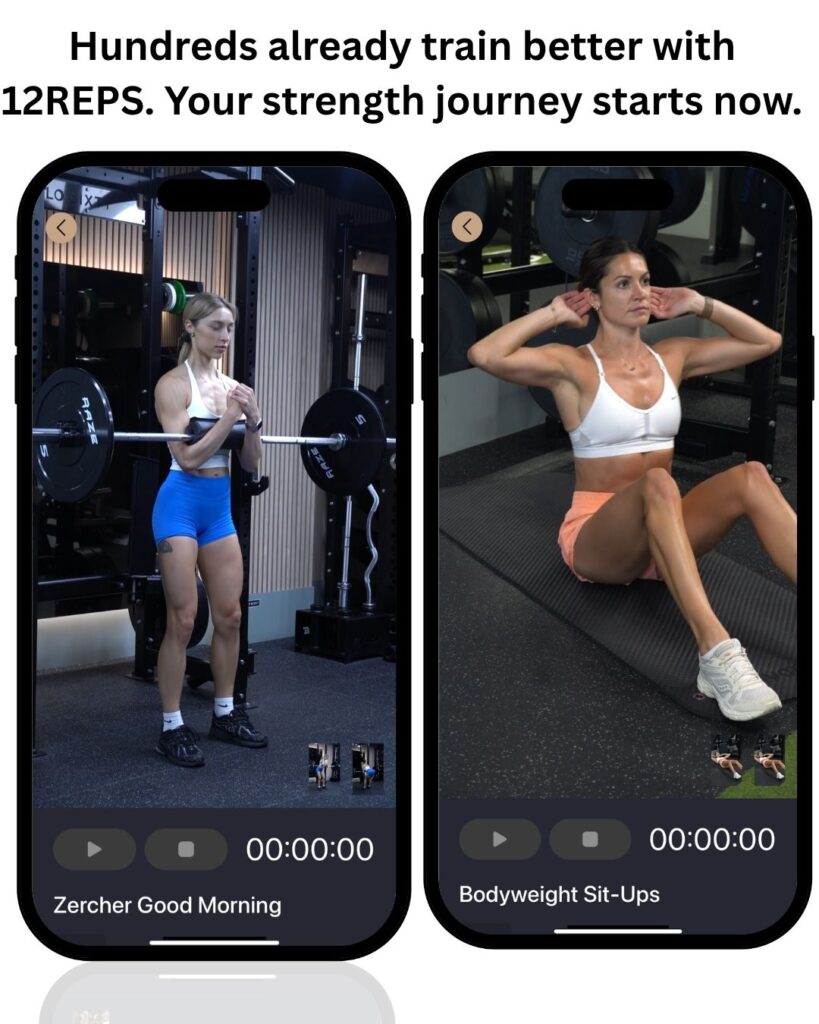
The 12REPS app can help you follow this program:
- Log the reps and weight for every set. The app remembers what you lifted, so you have a number to beat.
- Watch the trainer demonstrations before you try a new exercise.
- Track your workouts, streaks and weekly goal to stay consistent.
- Log your body weight and see your trend over the 12 weeks.
Nutrition and Recovery Tips
- Eat enough protein. A 2018 meta-analysis found that, on average, intakes above about 1.6 g per kg of body weight a day (about 0.7 g per pound) gave no further muscle gains.
- Stay hydrated. The NHS suggests 6 to 8 cups or glasses of fluid a day, and more if you are active for long periods.
- Get enough sleep. Adults aged 18 to 60 are advised to sleep at least 7 hours a night.
- Allow for proper recovery between sessions.
- Listen to your body and take extra rest days if you need them.
Conclusion
This 12-week progressive plan builds a solid base of strength and muscle for beginners and intermediate lifters. The 2-day full-body split trains each muscle twice a week and leaves time to recover.
Consistency matters more than perfection. Show up, follow the plan and track your progress. Celebrate small wins, learn from setbacks, and always put your health and safety first.
When you finish the 12 weeks and have a third day free, our 3-day gym workout split is a good next step. To design your own plan, see how to build a strength training program.
If you want your sessions set out for you, 12REPS builds training around your goal, your equipment and your time. Each exercise has a trainer demonstration, and every set you log gives you a target for next time.
This workout plan was created by a certified personal trainer. Always check with a healthcare professional before starting a new exercise program, especially if you have a health condition or take medication.
Sources
- Schoenfeld BJ, Ogborn D, Krieger JW. Effects of Resistance Training Frequency on Measures of Muscle Hypertrophy: A Systematic Review and Meta-Analysis. Sports Medicine, 2016. https://pubmed.ncbi.nlm.nih.gov/27102172/
- Physical activity guidelines for adults aged 19 to 64. NHS, 2024. https://www.nhs.uk/live-well/exercise/physical-activity-guidelines-for-adults-aged-19-to-64/
- Plotkin D, et al. Progressive overload without progressing load? The effects of load or repetition progression on muscular adaptations. PeerJ, 2022. https://peerj.com/articles/14142
- Schoenfeld BJ, et al. Longer interset rest periods enhance muscle strength and hypertrophy in resistance-trained men. Journal of Strength and Conditioning Research, 2016. https://www.pubmed.gov/26605807/
- Morton RW, et al. A systematic review, meta-analysis and meta-regression of the effect of protein supplementation on resistance training-induced gains in muscle mass and strength in healthy adults. British Journal of Sports Medicine, 2018. https://bjsm.bmj.com/content/52/6/376.abstract
- Water, drinks and hydration. NHS. https://www.nhs.uk/live-well/eat-well/food-guidelines-and-food-labels/water-drinks-nutrition/
- 1 in 3 adults don’t get enough sleep. Centers for Disease Control and Prevention, 2016. https://archive.cdc.gov/www_cdc_gov/media/releases/2016/p0215-enough-sleep.html