


Written by Will Duru, BSc (Hons) Sport and Exercise Science, Level 3 Personal Trainer
A personalized workout plan is a strength program built around your goal, your experience, the equipment you have, the time you’ve got and how often you can train. It also tells you how to progress and how to track your sessions. You can build one yourself in seven steps, and this guide walks you through each of them.
The key idea is simple. The best plan is one that fits your life well enough that you keep doing it. The American College of Sports Medicine (ACSM) makes the same point in its 2026 resistance training guidelines: a program you stick with matters more than a “perfect” one.

Why Generic Workout Plans Often Fall Short
Generic plans are written for an average person who does not exist. They may suit someone with a full gym and five free evenings, but not someone with two dumbbells and 30 minutes.
When a plan does not fit, common problems show up:
- Wrong focus. The plan trains for endurance when you want strength, or the other way around.
- Missing equipment. It lists machines you don’t have, so you skip exercises or guess at swaps.
- Wrong size. Sessions run longer than your schedule allows, so you miss workouts.
- No clear progression. It doesn’t tell you when to add weight or reps, so progress stalls.
Personalizing your plan fixes these problems one at a time. Work through the seven steps below in order.

Step 1: Choose One Main Goal
Pick the one result that matters most to you right now. Your goal decides how heavy you lift and how much work you do. The ACSM’s 2026 position stand summary matches training to the goal like this:
| Main goal | What the plan emphasizes |
|---|---|
| Strength | Heavier loads, about 80% of your one-rep max, for 2 to 3 sets per exercise |
| Muscle size | More total weekly work, about 10 sets per muscle group per week |
| Power | Moderate loads, 30% to 70% of your one-rep max, lifted as fast as you can with control |
| General health | Training all major muscle groups at least twice a week |
Your one-rep max (1RM) is the most weight you could lift once with good form. You don’t need to test it. It simply explains why strength work feels heavy and muscle-building work involves more sets.
If fat loss is your main aim, your plan should cover nutrition as well as training. Strength training is still a useful part of it.
Step 2: Be Honest About Your Experience
Your experience level changes what the plan should look like. A beginner needs to learn technique. Someone with years of training needs more structure to keep progressing.
- Beginner (new or returning after a long break): Learn the main movement patterns first: squat, hinge, push, pull and carry. Keep the exercise list short and repeat it often.
- Intermediate (training regularly for a year or more): You can handle more exercises and more weekly sets. Progress comes more slowly, so tracking matters more.
- Advanced or sport-focused: You may need a more detailed, sport-specific plan, often with a coach.
Whatever your level, you don’t need to train to failure on every set. The ACSM found that training to failure did not consistently change results for average healthy adults. Many lifters use reps in reserve (RIR) instead. RIR is how many more reps you could have done at the end of a set. Our guide to RPE vs RIR explains how to use it.

Step 3: Match the Plan to Your Equipment
List exactly what you can use: a full gym, a few dumbbells, resistance bands, or just your bodyweight. Then build the plan from that list, not from a plan written for someone else.
A gym is not required to get stronger. The ACSM’s 2026 guidance says elastic bands, bodyweight exercises and home training can all build strength and function. You can swap most exercises for a version that uses the same movement pattern:
| Movement | Gym | Dumbbells at home | Bodyweight or bands |
|---|---|---|---|
| Squat | Barbell back squat | Goblet squat | Bodyweight squat or split squat |
| Hinge | Barbell Romanian deadlift | Dumbbell Romanian deadlift | Glute bridge or banded hip hinge |
| Push | Bench press | Dumbbell floor press | Push-up |
| Pull | Lat pulldown or cable row | One-arm dumbbell row | Band row |
If you train at home, our home workout plan guide shows how to set up sessions without a gym.
Step 4: Fit the Plan to Your Time
Choose a session length you can repeat every week, even on a busy week. A 30-minute session you do every time beats a 90-minute session you keep skipping.
- Short sessions (20 to 30 minutes): Use a few compound exercises. Compound exercises, such as squats, rows and presses, work several muscles at once.
- Medium sessions (45 to 60 minutes): Add one or two isolation exercises, which work one main muscle, such as a biceps curl.
- Long sessions (over 60 minutes): Useful for higher-volume goals, but only if your schedule allows it every week.
Count your warm-up in the session time. It is part of the workout, not an extra.
Step 5: Set How Often You Train
The World Health Organization recommends muscle-strengthening activities that involve the major muscle groups on 2 or more days a week. The ACSM gives the same minimum. Start with the number of days you can commit to, then choose a split that fits:
| Days per week | A simple structure |
|---|---|
| 2 | Full body each session |
| 3 | Full body each session, or alternate upper body and lower body |
| 4 | Upper body and lower body, each twice a week |
| 5 or more | Push, pull and legs, or another split that trains each muscle about twice a week |
For a closer look at the options, read our workout split guide.

Step 6: Plan How You Will Progress
A plan that never changes will stop working. Your body adapts to the work you give it, so the work needs to get a little harder over time. This is called progressive overload: gradually increasing the challenge, for example by adding weight, reps or sets.
You can progress in more than one way. In an 8-week study in PeerJ, trained adults who added weight and those who added reps both improved strength and muscle size. Adding weight was slightly better for maximal strength. Adding reps is a useful option when you can’t go heavier, for example at home.
A simple way to apply this:
- Choose a rep range for each exercise.
- Use a weight you can lift for the low end of that range with good form.
- Add a rep or two each session while your form stays the same.
- When you reach the top of the range on every set, add a small amount of weight and start again at the low end.
Progress will not be a straight line. If your performance drops for several sessions, look at sleep, stress and recovery before adding more work. Our beginner’s guide to progressive overload covers this in more detail.
Step 7: Track Every Workout
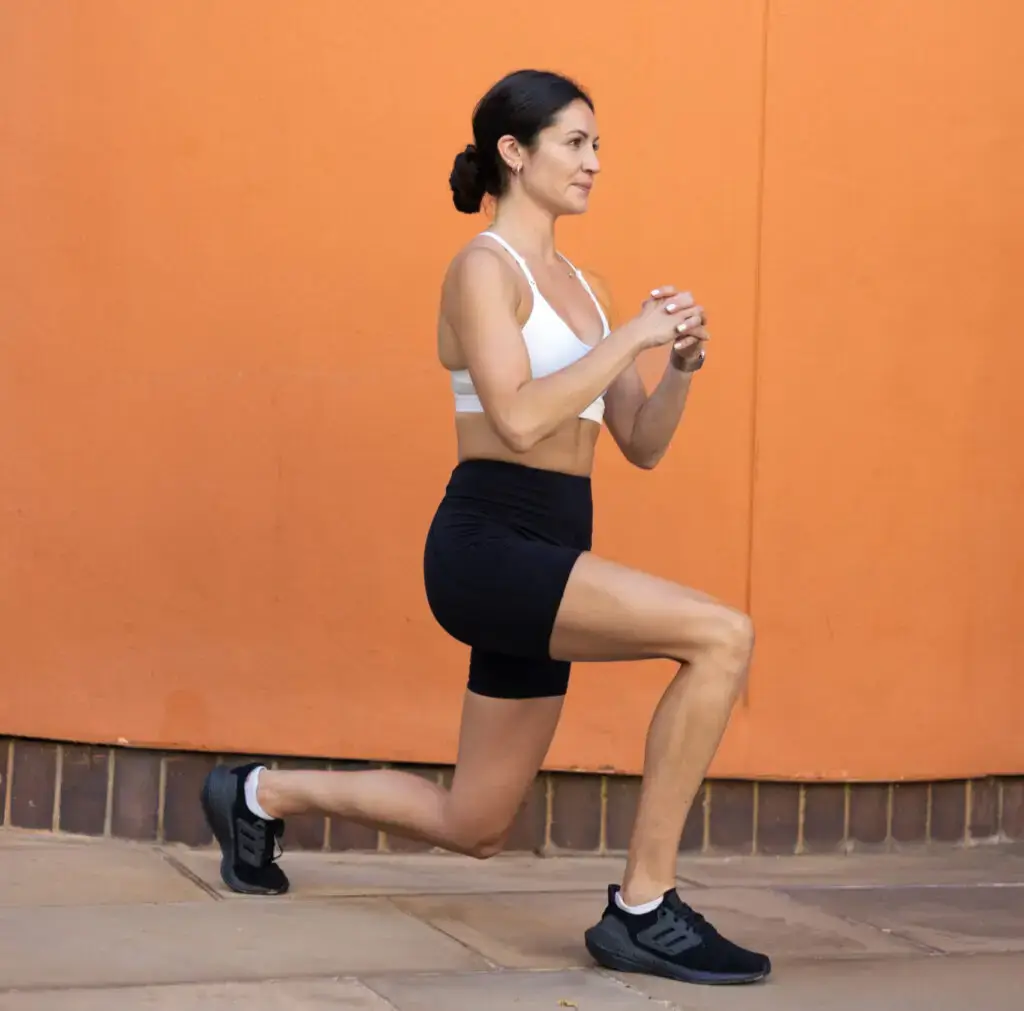
Tracking turns your plan into a record you can learn from. You can’t progress on purpose if you don’t know what you lifted last time.
Research on behavior change supports this. A meta-regression in Health Psychology found that physical activity and healthy eating programs worked better when they combined self-monitoring with other techniques, such as setting goals. This is evidence about habits in general, not about strength training alone, but the idea transfers well.
For each session, write down:
- The date and the workout you did
- Each exercise, with the weight and reps for every set
- Your reps in reserve on the last set, if you use RIR
- A short note on anything unusual, such as poor sleep or a new exercise
Our guide on how to track your workouts shows simple ways to set up a training log.
Example Personalized Plans
Here is how the seven steps can combine into different plans. These are examples of structure, not prescriptions.
| Situation | Goal | Plan structure |
|---|---|---|
| Beginner at home with two dumbbells, 30 minutes, 2 days a week | General health | Two full-body sessions with one squat, hinge, push and pull exercise each, progressing reps first |
| Gym member, one year of training, 45 to 60 minutes, 3 days a week | Muscle size | Alternating upper and lower sessions, building toward about 10 weekly sets per muscle group |
| Experienced lifter, full gym, 60 minutes, 4 days a week | Strength | Upper and lower split, with heavier main lifts for 2 to 3 sets and lighter accessory work |
When to Review Your Plan
You don’t need to change your plan often. Review it when:
- Your goal changes
- Your schedule or equipment changes
- Progress on your main exercises has stalled for several weeks, even with good sleep and steady training
If you have a medical condition or an injury, or you take regular medication, check with your doctor before you start a new training program.

Your Next Step
A personalized workout plan comes down to seven decisions: your goal, experience, equipment, time, frequency, progression and tracking. Get those right and you have a plan built for you, not for an average person.
If you play a sport, you may need more than this. The ACSM notes that athletes and very experienced lifters often need sport-specific plans, so a coach can help.
If you’d rather not build every session yourself, the 12REPS app sets out each workout around your goal, your equipment and the time you have. It shows a trainer demonstration for every exercise and remembers what you lifted, so you have a number to beat next time. You can read how 12REPS builds and guides each workout to see how it works.
Sources
- Resistance Training Position Stand infographic. American College of Sports Medicine, 2026. https://acsm.org/wp-content/uploads/2026/03/Resistance-Training-Position-Stand-infographic.pdf
- ACSM Unveils Landmark 2026 Resistance Training Guidelines: First Update in 17 Years. American College of Sports Medicine via Newswise, 2026. https://www.newswise.com/articles/acsm-unveils-landmark-2026-resistance-training-guidelines-first-update-in-17-years
- Physical activity. World Health Organization, accessed 2026. https://who.int/initiatives/behealthy/physical-activity
- Plotkin D, et al. Progressive overload without progressing load? The effects of load or repetition progression on muscular adaptations. PeerJ, 2022. https://peerj.com/articles/14142
- Michie S, et al. Effective techniques in healthy eating and physical activity interventions: a meta-regression. Health Psychology, 2009. https://ore.exeter.ac.uk/repository/handle/10871/13754