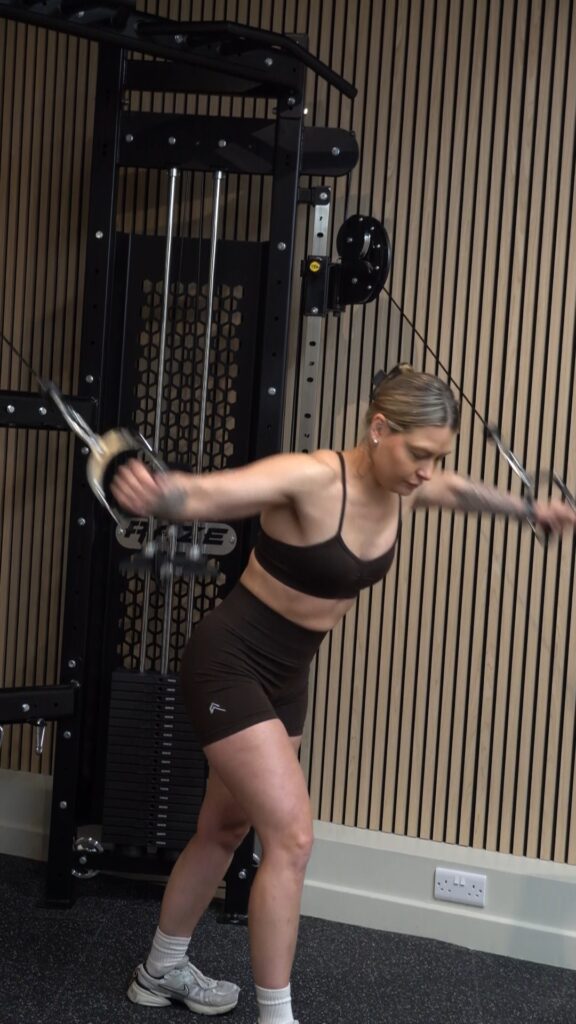
Short answer: Myo-reps are a type of rest-pause training. You do one longer set close to failure, called the activation set, then several short “mini-sets” of a few reps, resting only a few breaths between them. In an 8-week study, men who used myo-reps on chest exercises gained about the same muscle size and strength as men using normal sets, in less time and with about 30% less total weight lifted. That is one study, so the evidence is promising but thin.
This guide is for lifters who want to save time in the gym without losing results. I explain how myo-reps work, what the research shows, how to do them and which exercises suit them best.
How myo-reps work
A myo-rep set has two parts.
- The activation set. You choose a light-to-moderate weight and do a higher number of reps, stopping close to failure. Failure means you can’t complete another rep with good form.
- The mini-sets. You rest for a few deep breaths, usually around 15 to 20 seconds, then do a small number of reps. You repeat this several times with the same weight.
The idea is that the activation set gets you close to failure. The mini-sets then let you add several hard reps without the easy, warm-up-like reps at the start of a normal set. You get a lot of challenging work done in a short time.
Myo-reps vs rest-pause vs drop sets
| Method | How it works | Weight |
|---|---|---|
| Myo-reps | One activation set close to failure, then several short mini-sets with a few breaths of rest between | Stays the same |
| Rest-pause | A set close to failure, a short rest, then more reps. Often just one or two extra rounds | Stays the same |
| Drop sets | A set close to failure, then you lower the weight and keep going with little or no rest | Goes down |
Myo-reps are really a structured form of rest-pause. My guides to rest-pause training and drop sets cover those methods in more detail.
What the research says about myo-reps
The one direct study
As far as I can find, only one published study has tested myo-reps by name (Bradshaw et al., 2026). It had two parts.
- A single-session test. Nine trained men did the bench press with both a myo-rep protocol and a traditional protocol. The myo-rep session was significantly shorter. Muscle activity, measured with sensors on the skin, and bar speed were no different between the two.
- An 8-week training study. Twenty-two trained men did the flat bench press, incline bench press and seated cable fly twice a week, using either myo-reps or traditional sets. Both groups increased muscle size and strength, with no difference between them. The myo-rep group lifted about 30% less total weight (sets × reps × load) to get there.
The authors concluded that myo-reps can be a good option for getting similar results in less time.
The wider research on rest-pause and time-saving methods
- A 2021 review on time-efficient training concluded that methods like supersets, drop sets and rest-pause can roughly halve training time while keeping training volume similar. The authors added that these methods are probably better for building muscle than for building maximum strength (Iversen et al., 2021).
- A 2026 meta-analysis of 23 studies in recreationally trained adults found that advanced training methods as a group didn’t clearly beat normal sets for muscle growth. Rest-pause training showed a modest advantage for muscle growth in that analysis (Tsartsapakis et al., 2026). That covers rest-pause in general, not myo-reps specifically.
So the fair summary is this. Myo-reps seem to work about as well as normal sets for muscle and strength, and they save time. There isn’t good evidence that they work better. The direct evidence comes from one study in trained men, and it only tested chest exercises.
How to do myo-reps
This is the common way to set up myo-reps, and how I would suggest you start. It is coaching guidance, not a protocol taken from the study.
- Pick a suitable exercise. Machines, cables and dumbbell isolation exercises work best (more on this below).
- Choose a weight for 12 to 20 reps. It should be light enough to do a high-rep set with good form.
- Do the activation set. Stop when you have about 1 or 2 good reps left in you.
- Rest for 3 to 5 deep breaths. Keep the weight in your hands or stay in position on the machine if you can.
- Do a mini-set of 3 to 5 reps. Use the same weight.
- Repeat. Do 3 to 5 mini-sets in total. Stop early if you can’t reach your target reps with good form.
- Log it. Write down the weight, your activation set reps and each mini-set, so you can progress next time.
Example myo-rep sets
| Exercise | Activation set | Mini-sets | Rest between mini-sets |
|---|---|---|---|
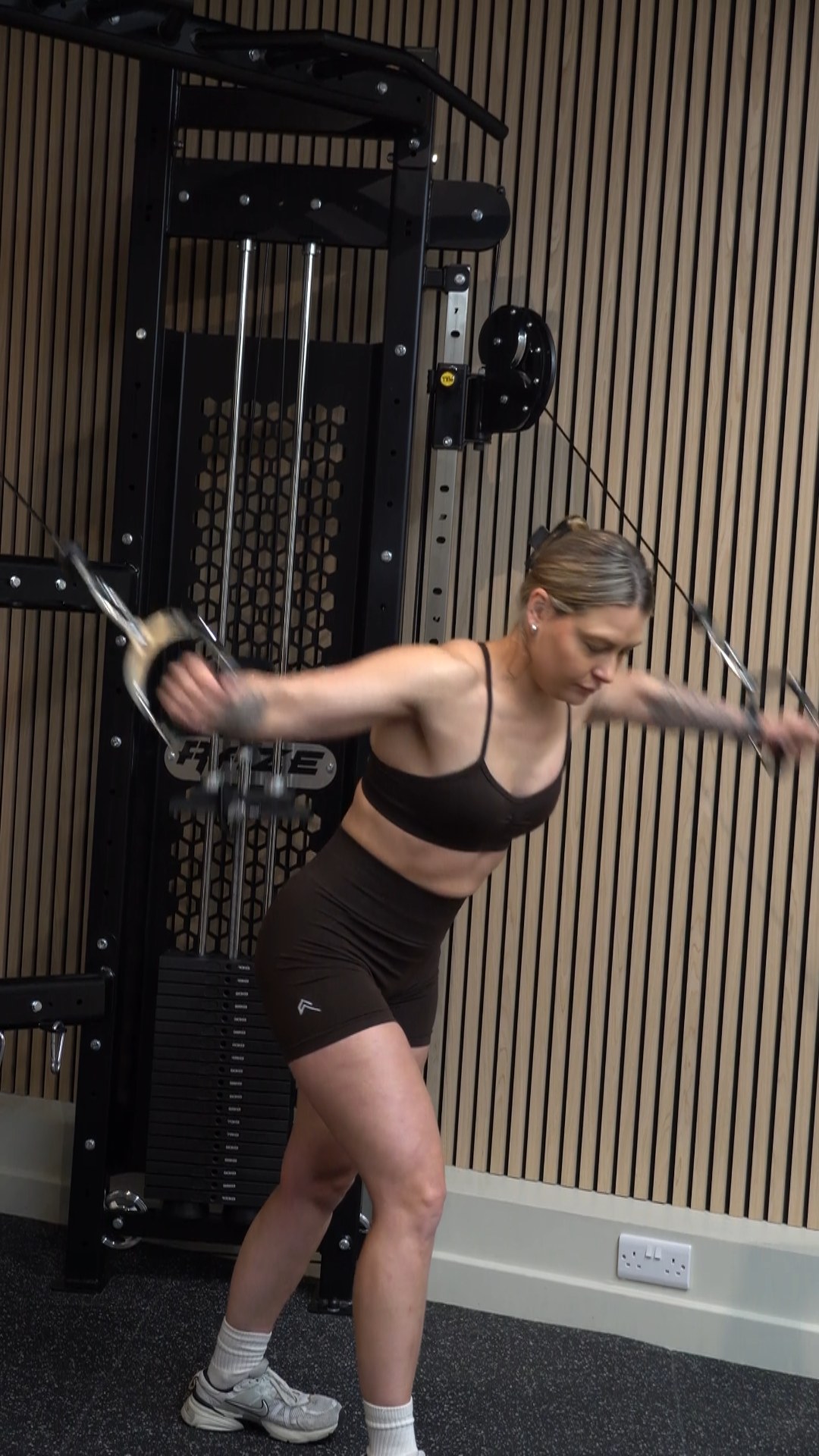
| Cable chest fly | 15 reps | 4 sets of 4 reps | 3 to 5 deep breaths |
| Dumbbell lateral raise | 15 to 20 reps | 4 sets of 3 to 5 reps | 3 to 5 deep breaths |
| Leg extension | 15 reps | 3 to 4 sets of 4 reps | 3 to 5 deep breaths |
Best exercises for myo-reps
This section is my coaching view.
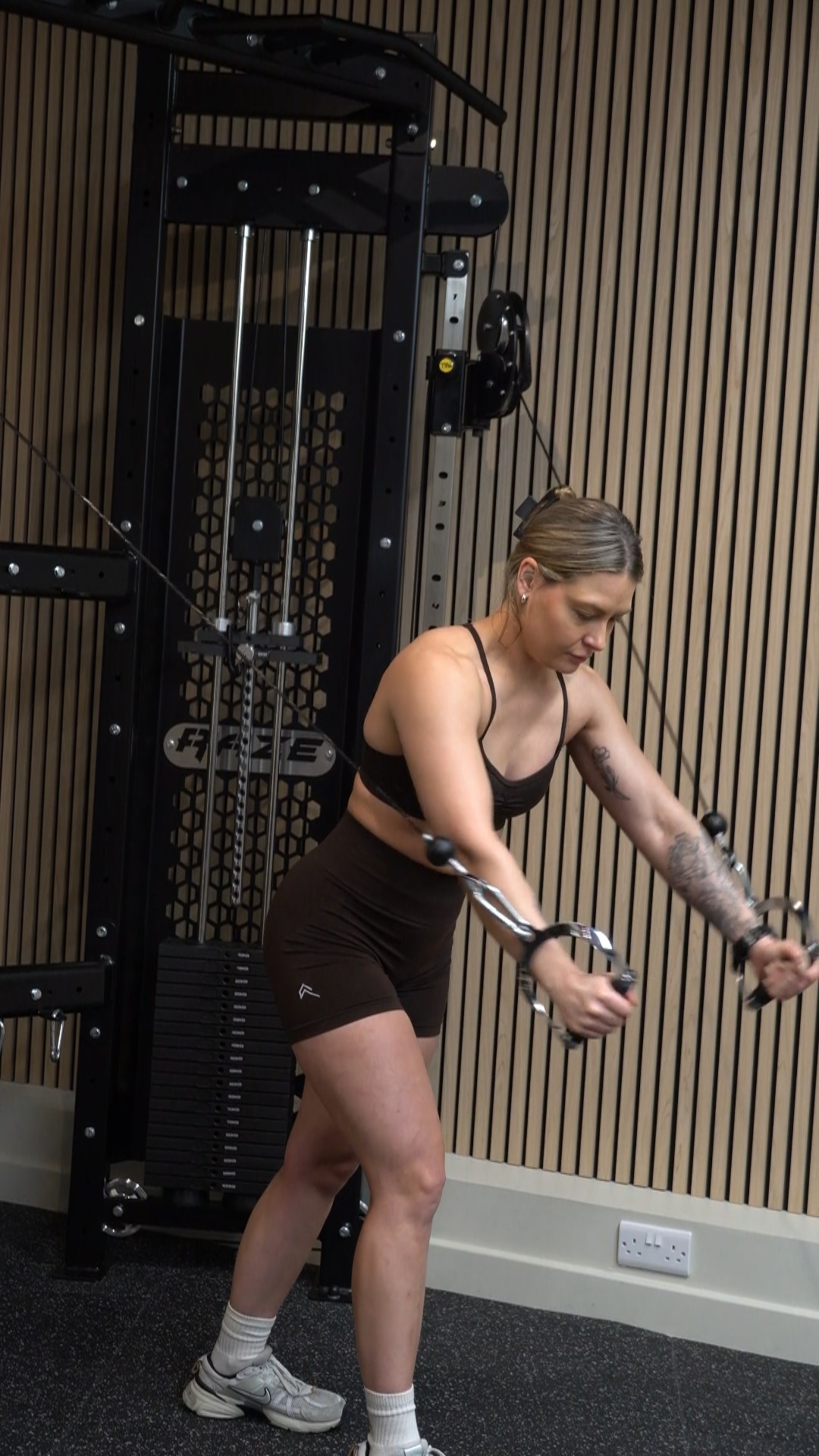
- Good choices: cable flys, lateral raises, leg extensions, leg curls, biceps curls, triceps pushdowns, machine chest presses and lat pulldowns. These are easy to set up, safe to take close to failure and quick to restart after a short rest.
- Use with care: barbell bench press. The study used it, but have a spotter or use safety bars if you’re going close to failure.
- Avoid: heavy barbell squats, deadlifts and other complex lifts. Technique tends to slip when you’re very tired, and the short rests don’t give you time to reset properly.
Who should try myo-reps?
- People short on time. Myo-reps are a good way to get hard sets done quickly, especially for smaller muscles at the end of a workout.
- Intermediate lifters. If you already know how close to failure you can go with good form, myo-reps are easy to add.
- Not ideal for beginners. If you’re new, normal sets are simpler and help you learn what “close to failure” feels like.
Common mistakes
- Going too heavy. If you can’t do at least 12 reps in the activation set, the weight is probably too heavy for myo-reps.
- Resting too long. If you rest for a minute, you’re just doing normal sets. Count your breaths.
- Letting form slip. The mini-sets are hard. Stop the set when your form breaks down, not when the weight stops moving.
- Using them for everything. Myo-reps are very fatiguing. Use them on one or two exercises per session.
Watch: exercises that suit myo-reps
Here are two 12REPS demonstrations, with form cues, of exercises that work well with myo-reps.
Summary
- Myo-reps are one activation set close to failure, followed by several short mini-sets with a few breaths of rest.
- In an 8-week study, myo-reps built similar muscle and strength to normal sets in less time.
- The evidence is limited to one study in trained men, so they are a time-saver, not a proven upgrade.
- Use them on machines, cables and isolation exercises, not heavy squats or deadlifts.
- Start with one or two exercises per workout and log every mini-set.
Make your workouts fit your schedule
If time is your biggest barrier, a plan built around your schedule helps. That’s what I built 12REPS to help with. You set your goal, your available time and your equipment, and the app builds your workouts. Every exercise comes with a trainer demonstration, and you can log your sets and reps to see your progress over time.
Download 12REPS and see what you’ll get:
Sources
- Bradshaw JT, Sanzo K, Barakat C, Barshun A, Inglima S, et al. Similar strength and hypertrophic adaptations in less time? Myo-reps vs. traditional straight-sets in resistance-trained men. J Strength Cond Res. 2026;40(6):638–649.
- Iversen VM, Norum M, Schoenfeld BJ, Fimland MS. No time to lift? Designing time-efficient training programs for strength and hypertrophy: a narrative review. Sports Med. 2021;51(10):2079–2095.
- Tsartsapakis I, Zafeiroudi A, Kouthouris C. Effects of advanced resistance training systems on muscle hypertrophy and strength in recreationally trained adults: a systematic review and meta-analysis. J Funct Morphol Kinesiol. 2026;11(1):80.
Related reading
- Rest-Pause Training: What It Is, Does It Work and How to Do It
- Drop Sets: Do They Build More Muscle, and How Do You Do Them?
- What Are Supersets? Types of Supersets Explained
- Training to Failure: When It Helps and When to Stop Short
- Time-Efficient Workouts: Build Strength and Muscle in Less Time
- How to Do Lateral Raises: Form, Weight and Common Mistakes
I’m Will Duru, a personal trainer and the founder of 12REPS. I hold a BSc (Hons) in Sport and Exercise Science and have more than a decade of experience coaching people in strength training.