Short answer: A hack squat is a machine squat. You stand on an angled platform with your back against a padded sled and your shoulders under pads, then squat down and up along a fixed track. Because the machine supports your upper body and guides the path, you can focus on your legs, especially your quads (the muscles on the front of your thighs). In research, people lifted more weight on the hack squat than the back squat, but their trunk muscles worked less. Over weeks of training, machine squats and free-weight squats build similar strength and muscle.
This guide is for anyone who has seen the hack squat machine at the gym and wondered how to use it, or whether it can replace barbell squats. I cover how to do it, what it works, what the research says and what to do if your gym doesn’t have one.
What muscles does the hack squat work?
- Quadriceps. The main muscles worked. The fixed track and back support let you push your knees forward and sink deep, which loads the front of your thighs.
- Glutes. They help you stand up, especially from the bottom of a deep rep.
- Adductors. Your inner thigh muscles help at the bottom of the squat.
- Less trunk work. Because the pad supports your back, your core and lower back work less than in a barbell squat (more on this below).
How to do a hack squat
- Set up. Stand on the platform with your back flat against the pad and your shoulders under the shoulder pads. Place your feet about shoulder-width apart, roughly in the middle of the platform.
- Release the safety handles. Push up slightly to take the weight, then turn the handles to unlock the sled.
- Brace. Take a breath into your belly and tighten your midsection.
- Lower under control. Bend your knees and hips and sink down. Keep your back and hips against the pad, and let your knees travel forward over your toes.
- Go as deep as you can control. Aim for at least thighs parallel to the platform, deeper if you can keep your heels down and your hips on the pad.
- Drive up. Push through your whole foot to stand back up. Stop just short of locking your knees hard at the top.
- Re-lock the safety handles when you finish your set, before you step out.
Foot placement
This is my coaching view, not research findings.
- Feet lower on the platform lets your knees travel further forward, which tends to focus more on your quads. It needs good ankle mobility.
- Feet higher on the platform means more hip bend, so your glutes and hamstrings do more of the work.
- Feet wider with toes turned out brings your inner thighs in more.
- If you’re unsure, start in the middle at shoulder width. That suits most people.
Common mistakes
- Heels lifting. Move your feet slightly higher or reduce your depth.
- Knees caving in. Keep your knees in line with your toes as you lower and stand.
- Hips peeling off the pad. This usually means you’re going deeper than you can control. Reduce the depth or the weight.
- Half reps with heavy weight. The hack squat lets you load a lot of weight. It is tempting to stack plates and cut the depth. A lighter weight through a full range is usually the better choice. My guide on squat depth explains why.
What the research says
- More weight, less trunk work. In a study of 10 men, one-rep max was significantly higher on the hack squat than on the back squat (Clark et al., 2019). But when they lifted the same relative loads, their trunk muscles were more active in the back squat for almost every muscle measured. The authors suggested the back squat is better for building trunk strength and stability.
- Machines work as well as free weights. In an 8-week study, 38 trained men did either free-weight or machine versions of the squat, bench press, row and shoulder press (Hernández-Belmonte et al., 2023). Both groups gained similar strength and muscle size, and neither group reported more joint discomfort.
- Rotating in the hack squat works too. In a 10-week study of 70 young women, one group did the same leg exercises every session. The other rotated through the leg press, hack squat and Smith machine squat across the week, along with different leg curls (Kassiano et al., 2025). Both groups built similar thigh muscle and strength.
So the hack squat is a solid tool for building your legs. It is not better or worse than the back squat for leg growth overall. The main trade-off is less work for your core and lower back.
Hack squat vs back squat
| Hack squat | Barbell back squat | |
|---|---|---|
| Balance needed | Low, the machine guides the path | High, you control the bar |
| Trunk and lower back work | Lower | Higher |
| Main leg focus | Quads | Quads, glutes and adductors |
| Weight you can lift | Usually more | Usually less |
| Learning curve | Short | Longer |
| Spotter needed | No, it has safety handles | Use safety bars or a spotter for heavy sets |
Who should use the hack squat
This section is my coaching view.
- Anyone who wants to focus on their quads. It is one of the easiest ways to work your quads hard without worrying about balance.
- People whose lower back or upper body limits their squat. The back pad and shoulder pads take some of the load off. If you have a back or other injury, check with a doctor or physical therapist first.
- Lifters who want a second squat movement. It pairs well with barbell squats in the same week.
- Beginners learning to squat. The guided path can help you get used to squatting with weight, alongside lighter free-weight squats like the goblet squat.
No hack squat machine? Try these instead
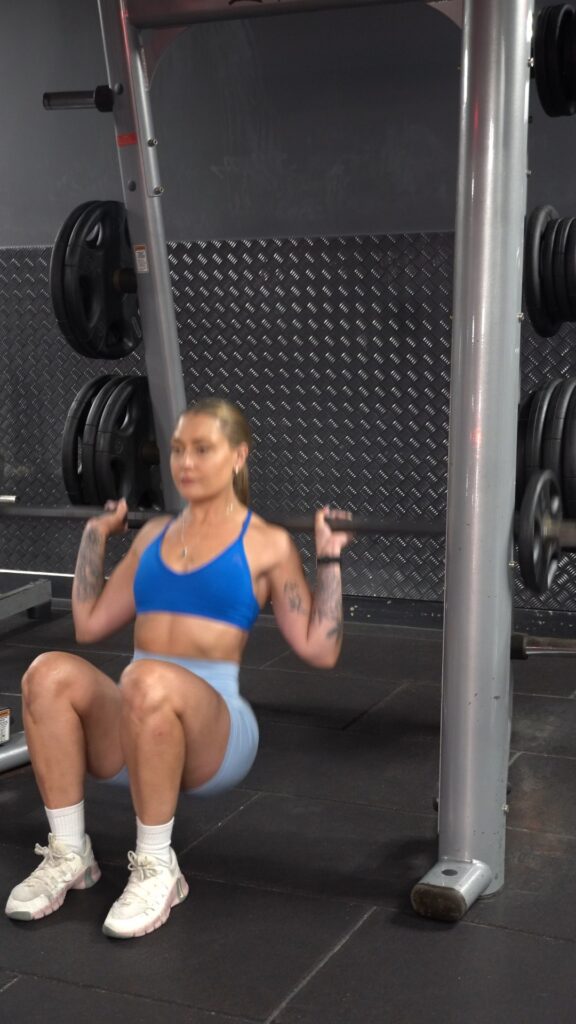
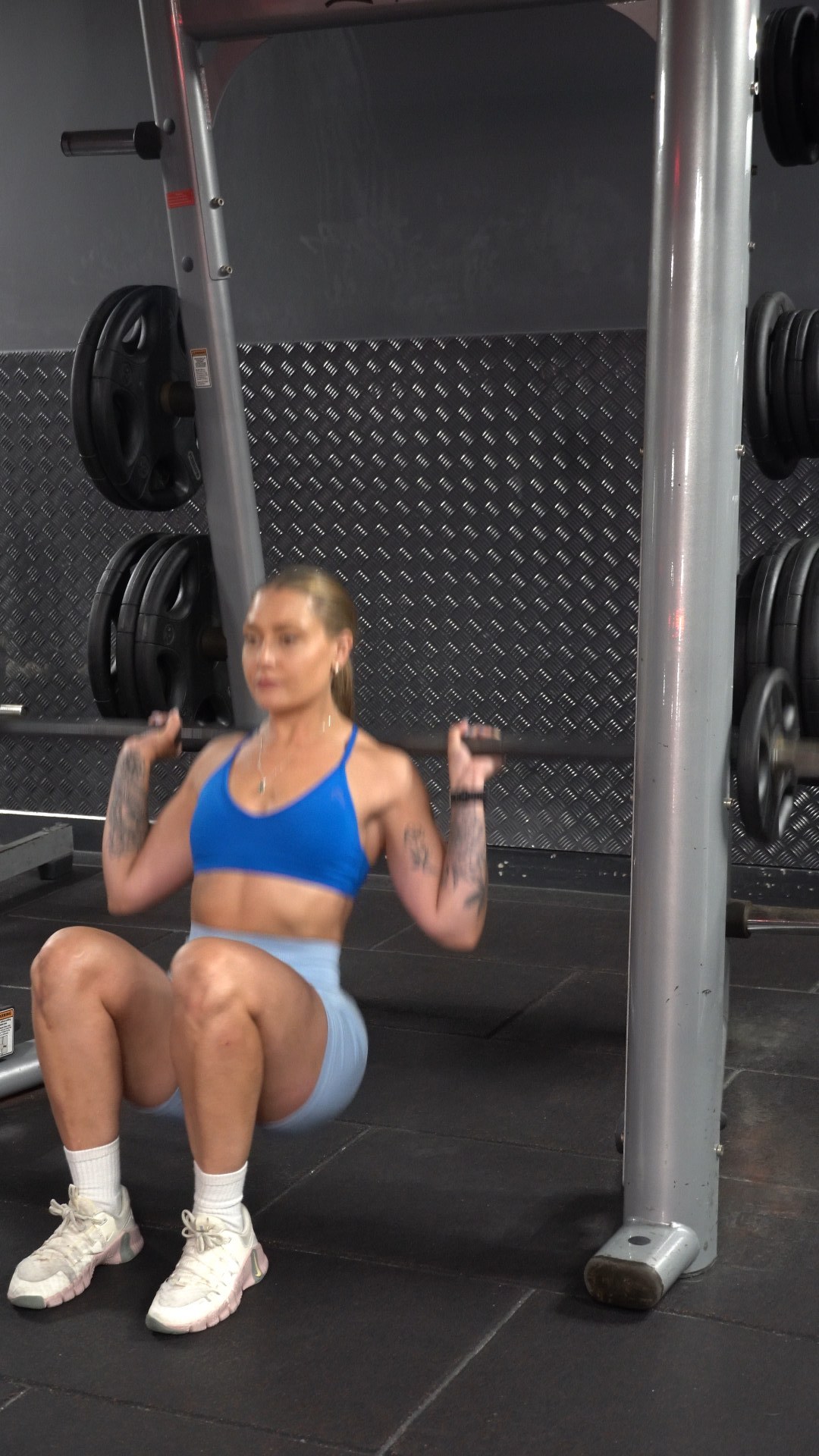
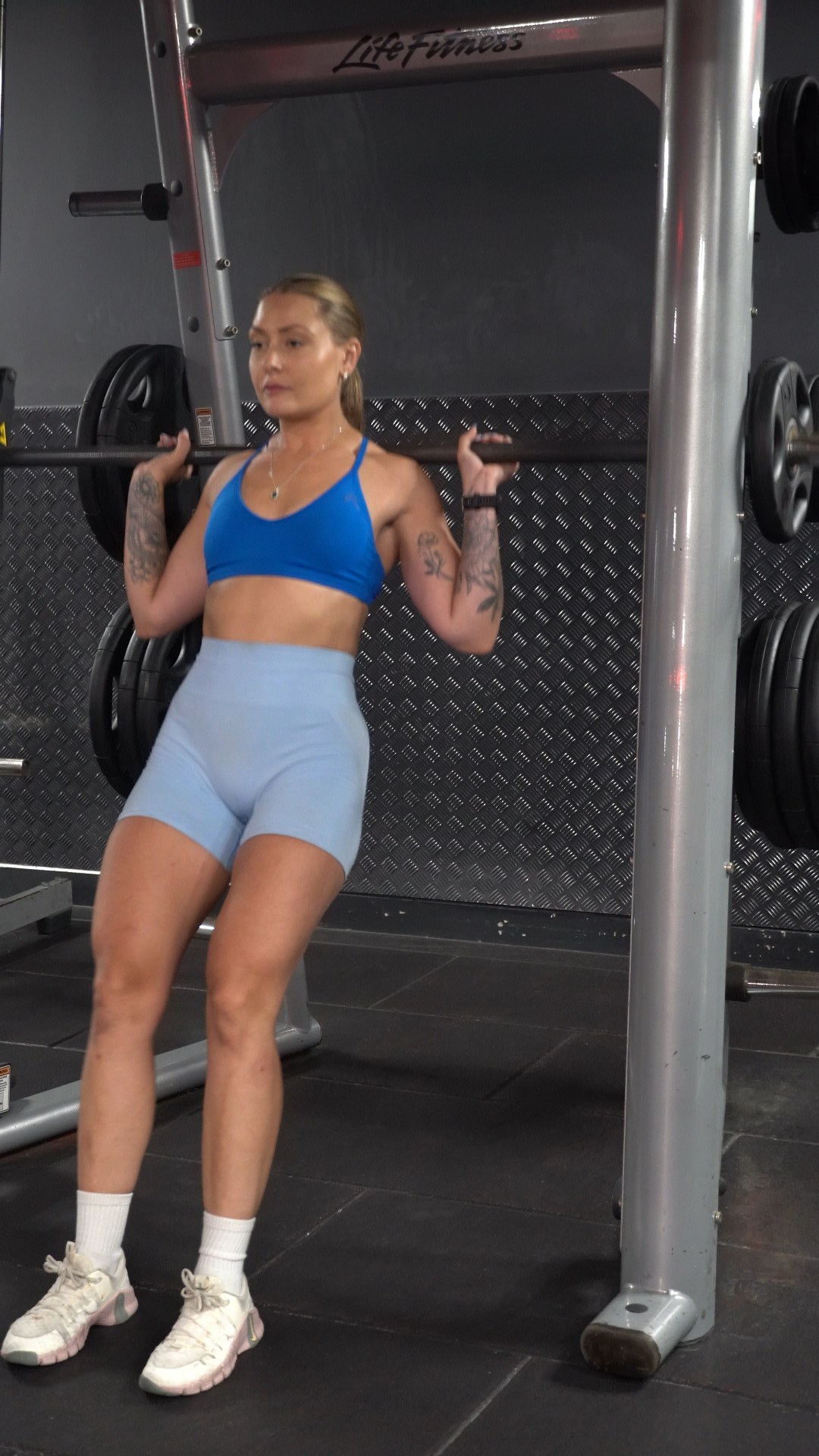
- Smith machine hack squat. Stand under the Smith machine bar with your feet slightly in front of you, as in the photos here, and squat down. It is the closest option in most gyms. My Smith machine workout covers other moves.
- Leg press. Another machine that loads your legs heavily with your back supported.
- Heel-elevated squats. Raising your heels lets your knees travel further forward, similar to a hack squat. See my guide to heel-elevated squats.
Watch: Smith machine squat and back squat
There isn’t a 12REPS hack squat machine video yet. Here are two related demonstrations: the Smith machine squat and the barbell back squat, with form cues.
Summary
- The hack squat is a machine squat that supports your back and guides the bar path.
- It mainly works your quads, with help from your glutes and inner thighs.
- People can lift more on the hack squat than the back squat, but their trunk muscles work less.
- Machine and free-weight squats build similar strength and muscle over weeks of training.
- Use a full range of motion, keep your hips on the pad and re-lock the safety handles when you finish.
Build your leg days with a plan
Choosing between the hack squat, back squat and leg press is easier when your plan fits your gym. That’s what I built 12REPS to help with. You set your goal, your available time and your equipment, and the app builds your workouts. Every exercise comes with a trainer demonstration, and you can log your sets and reps to see your progress over time.
Download 12REPS and see what you’ll get:
Sources
- Clark DR, Lambert MI, Hunter AM. Trunk muscle activation in the back and hack squat at the same relative loads. J Strength Cond Res. 2019;33(Suppl 1):S60–S69.
- Hernández-Belmonte A, Martínez-Cava A, Buendía-Romero Á, Franco-López F, Pallarés JG. Free-weight and machine-based training are equally effective on strength and hypertrophy: challenging a traditional myth. Med Sci Sports Exerc. 2023;55(12):2316–2327.
- Kassiano W, Costa B, Kunevaliki G, Nunes JP, Castro-E-Souza P, et al. Muscle hypertrophy and strength adaptations to systematically varying resistance exercises. Res Q Exerc Sport. 2025;96(2):371–381.
Related reading
- Free Weights vs Machines: Which Is Better for Building Muscle?
- Smith Machine Workout: 5 Exercises and Is It Worth Using?
- Heel-Elevated Squats: Do They Work Your Quads More?
- How Deep Should You Squat? What the Research Says
- Front Squat vs Back Squat: Differences, Benefits and Which to Choose
- Leg Exercises for Women with Upper Body Limitations
I’m Will Duru, a personal trainer and the founder of 12REPS. I hold a BSc (Hons) in Sport and Exercise Science and have more than a decade of experience coaching people in strength training.