
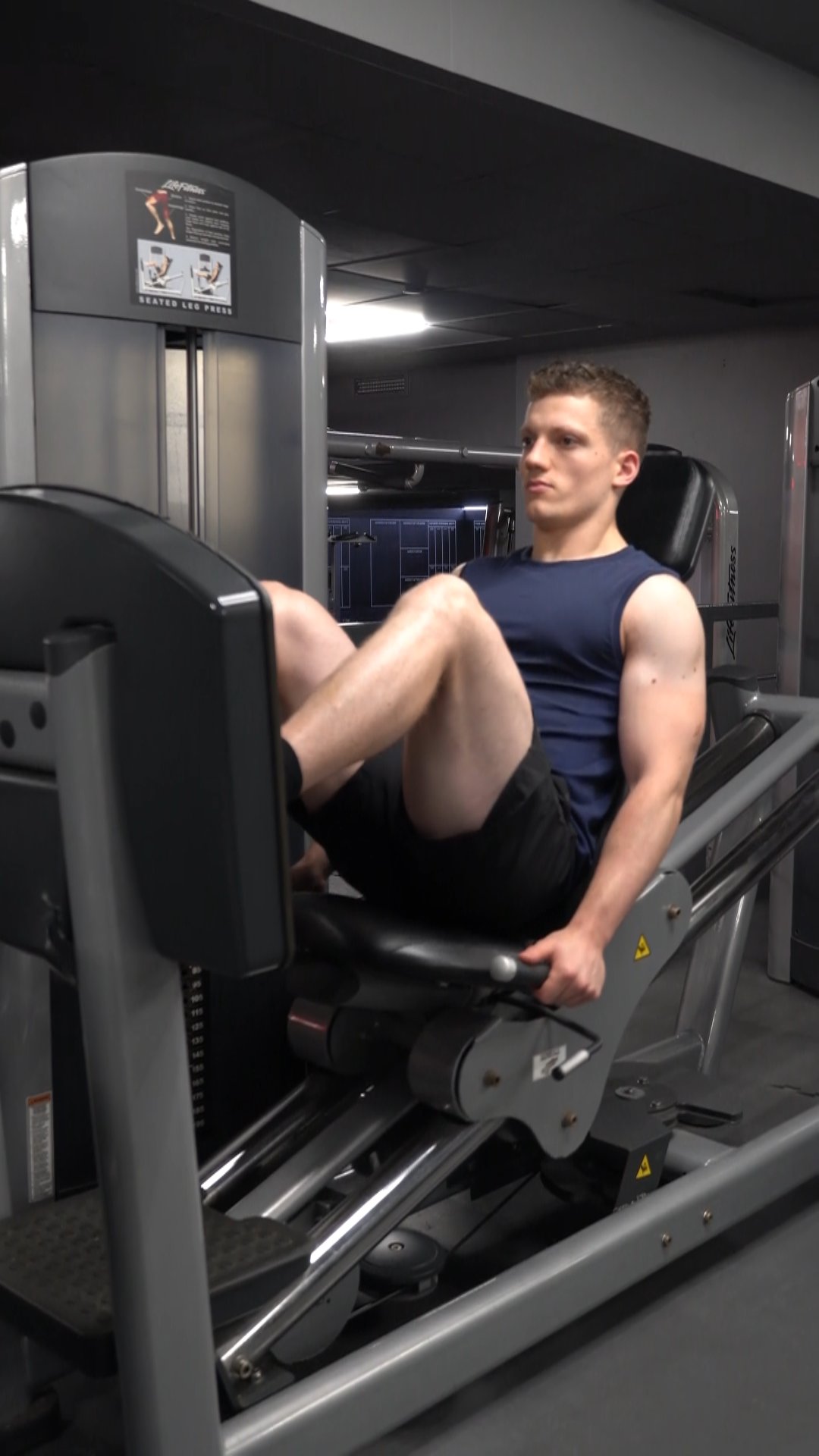



By Will Duru, personal trainer and founder of 12REPS.
The Short Answer
Rest-pause training means doing a set close to failure, resting for about 15 to 20 seconds, then doing a few more reps with the same weight. You usually repeat the short rest and extra reps two or three times.
Research suggests rest-pause builds muscle and strength at least as well as regular sets, and sometimes slightly better, often in less time. It’s hard work, so use it on one or two exercises per session, mainly on machines, cables and dumbbell isolation exercises.
How Rest-Pause Training Works
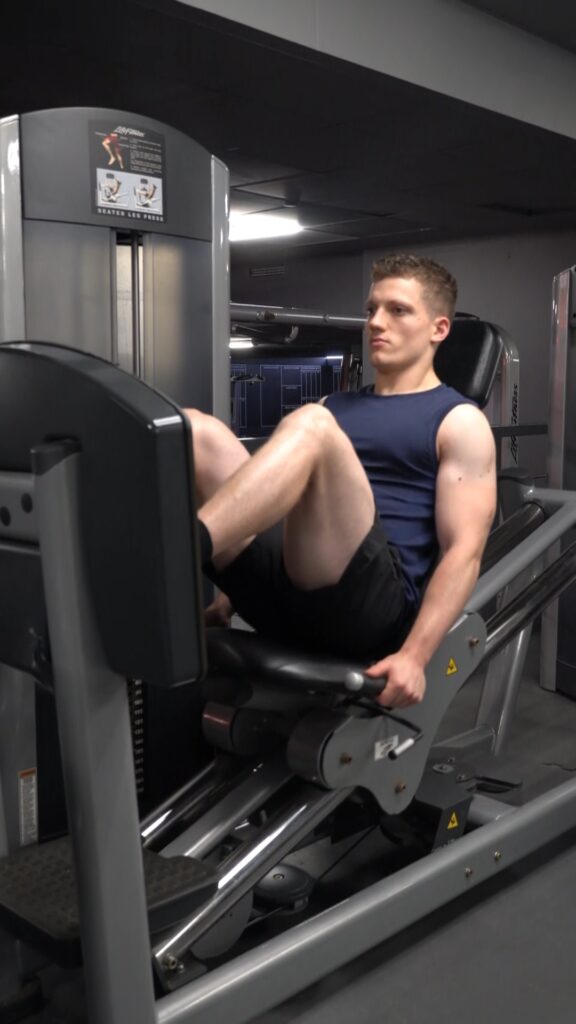
Here’s an example on the leg press with a weight you can lift about 10 times:
- Do 8 to 10 reps, stopping one rep short of failure.
- Rest 15 to 20 seconds while staying in the machine.
- Do as many good reps as you can, usually 3 to 5.
- Rest another 15 to 20 seconds.
- Do another 2 to 4 reps.
- That’s one rest-pause set. Rest normally before your next exercise.
The short rests let you recover just enough to keep going, so you do more hard reps with a heavy weight in less time than several separate sets.
What the Research Says
- More thigh growth in one study. In a 2019 study by Prestes and colleagues, 18 trained adults did either rest-pause or traditional sets (3 sets of 6 reps at 80% of one-rep max with 2-minute rests) for 6 weeks. Strength gains were similar in both groups. The rest-pause group gained more thigh muscle thickness (about 11% vs 1%) and more leg press endurance (about 27% vs 8%).
- Similar growth, slightly more strength in another. In a 2021 study by Enes and colleagues, 28 trained men did rest-pause, drop sets or traditional sets twice a week for 8 weeks, with total training volume equal. Thigh muscle growth was similar in all three groups. The rest-pause group gained more back squat strength than the traditional group.
Both studies were small and short, so the results aren’t definitive. Together they suggest rest-pause is at least as good as regular sets, and a useful way to fit hard work into a short session.
Rest-Pause vs Drop Sets vs Regular Sets
| Rest-pause | Drop sets | Regular sets | |
|---|---|---|---|
| How it works | Short rests, same weight | No rest, lower the weight | Full rest between sets |
| Time needed | Short | Short | Longer |
| Muscle growth in research | Similar or slightly better | Similar | Baseline |
| Fatigue | High | High | Moderate |
| Best for | Saving time, final set of an exercise | Isolation exercises | Main lifts and learning technique |
Read more in my article on drop sets.
Best Exercises for Rest-Pause Sets
- Good choices: leg press, leg extensions, leg curls, lat pulldowns, cable rows, chest press machines, cable flys, lateral raises and curls.
- Use with care: dumbbell presses and rows, as long as you can set the weights down safely.
- Avoid: heavy barbell squats, deadlifts and bench presses without a spotter. Technique tends to break down when you’re this tired, and getting stuck under a barbell is risky.
That last point is my coaching view rather than a research finding, but it’s the same advice I give for any set taken close to failure. See training to failure: should you push every set?
How to Add Rest-Pause to Your Training
- Use it sparingly. Apply it to the last set of one or two exercises per workout.
- Pick the right weight. Choose a load you can lift about 8 to 12 times.
- Keep the rests short. 15 to 20 seconds. Longer and it becomes a regular set.
- Stop with good form. End the set when your technique slips, not when you can’t move the weight at all.
- Track it. Record the total reps across all mini-sets and try to beat that number next time. See my guide to progressive overload.
Common Mistakes
- Resting too long between mini-sets. The method only works if the rest stays short.
- Using it on every exercise. It’s very fatiguing and can affect your next workouts.
- Choosing the wrong exercises. Save it for machines, cables and isolation work.
- Sacrificing form for reps. Extra reps with poor technique don’t help.
Summary
- Rest-pause means taking short 15 to 20 second rests within a set, then continuing with the same weight.
- Research suggests it builds muscle and strength at least as well as regular sets, in less time.
- Use it on the last set of one or two exercises, mainly on machines and cables.
- Avoid using it on heavy barbell lifts without a spotter.
Train Smarter With 12REPS
Short on time? In 12REPS, pick your workout time and equipment, and the app builds a session that fits. Every exercise has a demo and a coach tutorial from me.
Your log shows the weights and reps you did last time, so you can track your rest-pause sets and see your progress.
Download 12REPS and see what you’ll get:
Sources
- Prestes J, Tibana RA, de Araujo Sousa E, et al. Strength and muscular adaptations after 6 weeks of rest-pause vs. traditional multiple-sets resistance training in trained subjects. J Strength Cond Res. 2019;33(7S):S113–S121.
- Enes A, Alves RC, Schoenfeld BJ, et al. Rest-pause and drop-set training elicit similar strength and hypertrophy adaptations compared with traditional sets in resistance-trained males. Appl Physiol Nutr Metab. 2021.
Related Reading
- Drop sets: do they build more muscle?
- Training to failure
- RPE vs RIR
- How long to rest between sets
- Partial reps vs full range of motion
I’m Will Duru, a personal trainer and the founder of 12REPS. I hold a BSc (Hons) in Sport and Exercise Science and have more than a decade of experience coaching people in strength training.
