



Your 18-month-old wakes crying 2am, 4am, 5:30am. You sleep perhaps 6 hours total, broken into fragments. You planned to train this morning but you’re exhausted. You think “I’ll wait until I’m sleeping better.” Six months pass. Still exhausted. Still not training. Still no muscle.
The truth: Waiting for perfect sleep means never training. Research shows sleep-deprived dads can still build muscle—just slower than optimal. Lamon et al. (2021) found sleep deprivation reduces protein synthesis by 18%, not 100%. For fathers with young kids, the choice isn’t optimal sleep vs poor sleep—it’s training sleep-deprived vs not training at all. The latter guarantees zero progress.
I’m Will Duru, a personal trainer with a BSc in Sport & Exercise Science and 10+ years’ experience coaching exhausted new dads in London. I’ve helped hundreds of sleep-deprived fathers build muscle despite broken nights.
What I’ve learned: Dads sleeping 6 hours broken still build muscle—just need volume reduction, recovery optimisation, and protein increase. Client sleeping 8 hours might gain 8kg muscle yearly. Client sleeping 6 hours gains 5-6kg yearly with adjustments. That’s still transformation, not failure. The key is training intelligently when exhausted. This is why 12REPS exists—automatically adjusts volume based on recovery state, prevents overtraining, ensures progress continues despite sleep debt.
The Science of Sleep Deprivation and Muscle
What Sleep Deprivation Does
Lamon et al. (2021) research:
- One night sleep deprivation → 18% reduction muscle protein synthesis
- Cortisol +21%, testosterone -24%
- Hormonal environment shifts catabolic
Dad reality: Sleep-deprived doesn’t stop growth—slows it. Training beats waiting for “perfect conditions.”
Saner et al. (2020): Five nights 4-hour sleep reduced protein synthesis BUT adequate protein + training still built muscle.
Dáttilo et al. (2012): Body partially adapts to chronic restriction. Months 2-6 adaptation occurs.
Training Adjustments for Sleep-Deprived Dads
Adjustment 1: Volume Reduction (Critical)
Normal volume: 16-20 sets per muscle weekly Sleep-deprived volume: 10-14 sets per muscle weekly
Why reduction necessary: Sleep deprivation impairs recovery. Same volume that builds muscle at 8 hours sleep causes overtraining at 6 hours.
Research backing: Russell et al. (2010) confirms reduced recovery capacity requires volume reduction to prevent accumulating fatigue.
Example adjustment:
Muscle Group | Normal Volume | Sleep-Deprived | Reduction |
Chest | 18 sets weekly | 12 sets weekly | 33% |
Back | 18 sets weekly | 12 sets weekly | 33% |
Legs | 20 sets weekly | 14 sets weekly | 30% |
Shoulders | 15 sets weekly | 10 sets weekly | 33% |
Arms | 12 sets weekly | 8 sets weekly | 33% |

Adjustment 2: Frequency Flexibility
Normal frequency: 4-5 days weekly, fixed schedule
Sleep-deprived approach: 3 days weekly minimum, flexible days
Why flexibility matters: Terrible night (baby sick, up every hour) means skip training that day without guilt. Train when recovery adequate.
Client example: “James trains Mon/Wed/Fri usually. Tuesday night baby teething, zero sleep. Skips Wednesday, trains Thursday instead. Flexibility prevents guilt spiral leading to quitting.”
Adjustment 3: Intensity Maintenance
What NOT to reduce: Weight on bar (intensity)
Why intensity stays: Heavy loads (75-85% 1RM) drive muscle growth even with reduced volume. Schoenfeld et al. (2017) confirms load is critical variable for hypertrophy.
Translation: Instead of 4 sets squats at 100kg, do 3 sets at 100kg. Maintain weight, reduce volume.
Adjustment 4: Rest Periods Extended
Normal rest: 90-120 seconds between sets
Sleep-deprived rest: 2-3 minutes between sets
Why longer rest helps: Sleep deprivation reduces work capacity. Extended rest ensures each set performed with adequate intensity despite fatigue.
The Complete Sleep-Deprived Training Programme
3-Day Upper/Lower Split (Reduced Volume)
Monday: Upper Body (12 sets total)
Exercise | Sets × Reps | Rest |
Bench press | 3 × 6-8 | 3 min |
Barbell rows | 3 × 8-10 | 2.5 min |
Shoulder press | 2 × 8-10 | 2 min |
Bicep curls | 2 × 10-12 | 90 sec |
Tricep extensions | 2 × 10-12 | 90 sec |
Wednesday: Lower Body (14 sets total)
Exercise | Sets × Reps | Rest |
Squats | 3 × 6-10 | 3 min |
Romanian deadlift | 3 × 8-10 | 2.5 min |
Leg press | 3 × 10-12 | 2 min |
Leg curls | 2 × 12-15 | 90 sec |
Calf raises | 3 × 15-20 | 90 sec |
Friday: Upper Body (12 sets total)
Exercise | Sets × Reps | Rest |
Incline press | 3 × 8-10 | 3 min |
Pull-ups/Lat pulldown | 3 × 8-10 | 2.5 min |
Dumbbell shoulder press | 2 × 8-10 | 2 min |
Hammer curls | 2 × 10-12 | 90 sec |
Overhead tricep extension | 2 × 10-12 | 90 sec |
Weekly total: 38 sets (reduced from typical 50-60 for well-rested trainees)
Session duration: 35-45 minutes (shorter than normal due to volume reduction)
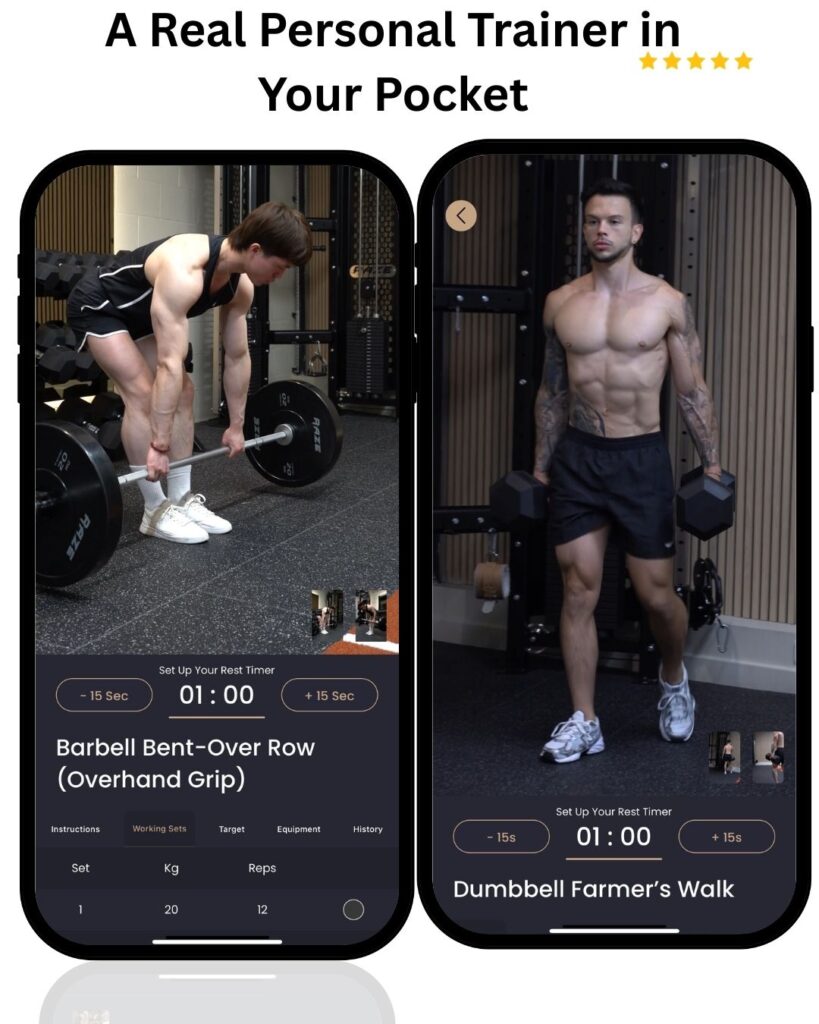
This Is Why 12REPS Saves Sleep-Deprived Dads
Research confirms sleep deprivation reduces protein synthesis 18% (Lamon et al., 2021). For dads, this means volume reduction essential to prevent overtraining. 12REPS automatically adjusts volume based on recovery state—rate sleep/energy, app reduces sets proportionally, preventing burnout whilst ensuring progress.
12REPS offers three trainer-designed weekly programmes:
- Strength Training Programme – 4-day split that adapts to your recovery
- S&C Programme – 4-day split combining strength and conditioning
- Home Programme – 4-day split for training at home when exhausted
All programmes created by certified personal trainers. Each includes:
- Recovery-based volume adjustment (rate sleep quality, app reduces sets automatically)
- Progressive overload despite fatigue
- Flexible scheduling (skip exhausted days without guilt)
- Motivation through visible progress
The exhausted dad’s problem: Wake after terrible night. Feel destroyed. Open training app. It prescribes normal 18-set upper body session. Attempt it, fail halfway through, feel worse, consider quitting entirely.
How 12REPS adapts to recovery state:
Solution 1: Recovery-Based Volume Adjustment
Exhausted dad reality: Tuesday night up every 90 minutes with baby. Wednesday morning destroyed.
How 12REPS solves it: Open app Wednesday morning. Select “Low energy/Poor sleep.” App automatically generates reduced-volume workout: Bench 3×6-8 (not 4×6-8), rows 3×8-10 (not 4×8-10), shoulder press 2×8-10 (not 3×8-10). Twelve sets total instead of 16.
Real example: “Mark rates recovery 3/10 in app. 12REPS reduces upper volume from 16 to 12 sets automatically. Completes session feeling accomplished, not destroyed. Muscle growth continues despite sleep debt.”
Why this matters: Lamon et al. (2021) research shows sleep-deprived muscle synthesis 18% lower. Training at normal volume overtaxes reduced recovery capacity. 12REPS prevents overtraining automatically.
Solution 2: Flexible Scheduling Without Guilt
Dad problem: Programme says “Wednesday: Upper body.” Terrible night means can’t train Wednesday. Feel guilty, confused about whether to skip or shift.
How 12REPS solves it: No fixed “Week 1 Day 3” structure. Wednesday destroyed? Just train Thursday. App adjusts, progress continues.
Client example: “Tom baby teething Tuesday night. Skips Wednesday training. Thursday selects upper body in 12REPS, gets workout, trains normally. No guilt, no confusion, consistent progress over months.”
Solution 3: Automatic Progressive Overload Despite Brain Fog
Sleep-deprived problem: Can’t remember last session’s weights. Brain foggy from exhaustion.
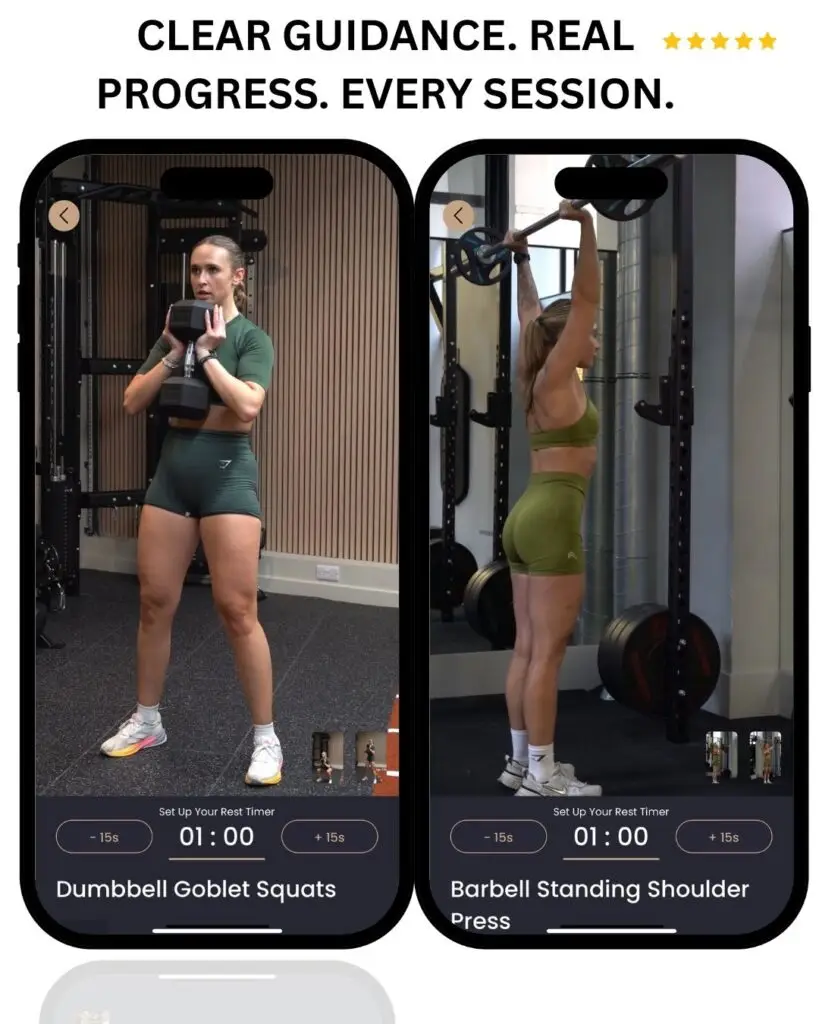
How 12REPS solves it: App shows: “Last session bench 80kg × 8, 7, 6. Today aim 80kg × 8, 8, 7.” Progression happens automatically despite cognitive impairment from sleep loss.
Research backing: Schoenfeld et al. (2017) confirms progressive overload drives hypertrophy. Without tracking, sleep-deprived dads can’t progress systematically. 12REPS ensures it happens.
Solution 4: Session Duration Optimisation
Exhausted dad constraint: Have 45 minutes but only energy for 35 minutes.
How 12REPS helps: Reduced volume (38 weekly sets vs 50) means sessions complete in 35-40 minutes. Achievable when exhausted.
External resource: Stronger by Science research confirms shorter, focused sessions build muscle identically to longer sessions if volume adequate and intensity maintained.
Recovery Optimisation Strategies
Strategy 1: Protein Increase (Non-Negotiable)
Normal protein: 1.8-2.0g per kg bodyweight daily
Sleep-deprived protein: 2.2-2.5g per kg bodyweight daily
Why increase necessary: Lamon et al. (2021) showed sleep deprivation creates “anabolic resistance”—muscles less responsive to protein. Higher intake compensates.
Practical example: 80kg dad normally needs 160g protein. Sleep-deprived needs 200g protein.
Strategy 2: Nap When Possible (Even 20 Minutes)
Research on naps: Short naps (20-30 minutes) improve recovery markers without disrupting night sleep.
Dad application: Kid naps Saturday afternoon? Nap yourself. Twenty minutes significantly aids recovery.
Strategy 3: Training Timing Consideration
Evening training risk: Already exhausted, session quality poor.
Morning training advantage: Cortisol naturally elevated (cortisol awakening response), provides energy despite poor sleep.
Recommendation: If possible, train mornings when energy highest despite sleep debt.
Strategy 4: Deload Weeks Mandatory
Normal training: Deload every 8-10 weeks
Sleep-deprived training: Deload every 5-6 weeks
Deload structure: Reduce volume 40-50% for one week (e.g., 8 sets per session instead of 12-14)
Why more frequent: Accumulated fatigue from sleep debt requires more frequent recovery weeks.
What Results to Expect
Realistic Timeline Comparison
Well-Rested Dad (8 hours sleep):
- Year 1: 7-9kg muscle gained
- Progression: Linear and consistent
- Recovery: Fast (48-72 hours)
Sleep-Deprived Dad (6 hours broken sleep):
- Year 1: 5-6kg muscle gained
- Progression: Slower but still significant
- Recovery: Slower (72-96 hours)
Critical insight: Five to six kg muscle gained = visible transformation. T-shirts tighter, strength impressive, confidence higher. Not optimal, but life-changing.
Client example: “Paul, newborn + toddler. Sleeps 5-6 hours nightly, broken. Trains 3 days weekly with reduced volume, high protein. Year 1: gained 5.2kg muscle. Started 76kg, now 81kg. Genuinely muscular despite exhaustion.”
Common Mistakes Sleep-Deprived Dads Make
Mistake 1: Training Normal Volume Why it fails: Overtraining leads to regression, injuries, burnout. Fix: Reduce volume 30-35%, maintain intensity.
Mistake 2: Waiting for Perfect Sleep Why progress stops: “Perfect sleep” never arrives with young kids. Fix: Train now with adjustments, gain 5-6kg muscle instead of zero.
Mistake 3: Inadequate Protein Why muscle doesn’t grow: Anabolic resistance from sleep debt requires higher protein. Fix: 2.2-2.5g/kg daily, non-negotiable.
Mistake 4: No Deload Weeks Why burnout happens: Accumulated fatigue from sleep debt overtaxes body. Fix: Deload every 5-6 weeks automatically in 12REPS.
Building muscle whilst sleep-deprived requires:
✅ Volume reduction (30-35% less than normal, 12REPS adjusts automatically)
✅ Intensity maintenance (keep weight heavy, reduce sets not load)
✅ Protein increase (2.2-2.5g/kg daily compensates for anabolic resistance)
✅ Flexible scheduling (train when recovery adequate, 12REPS no fixed structure)
✅ Frequent deloads (every 5-6 weeks, 12REPS prompts)
✅ Realistic expectations (5-6kg yearly not 8kg, still transformation)
✅ Morning training preference (cortisol peaks provide energy despite fatigue)
Why 12REPS is THE solution: Research confirms sleep deprivation reduces protein synthesis 18% (Lamon et al., 2021). For dads, this means volume reduction essential to prevent overtraining. 12REPS automatically adjusts volume based on recovery state—rate sleep/energy, app reduces sets proportionally, preventing burnout whilst ensuring progress.
Download the 12REPS app and follow our weekly programmes. Choose from:
- Strength Training Programme (4-day split designed by certified personal trainers)
- S&C Programme (strength and conditioning, 4-day split)
- Home Programme (4-day split for home training)
All programmes designed by our personal trainers adapt to your recovery state—rate sleep quality, app adjusts volume automatically. Each 4-day split keeps you motivated through structured progression. Try 12REPS free for 7 days. Rate recovery each morning (1-10 scale). App adjusts workout volume automatically. Terrible night = reduced sets. Decent night = normal volume. Progressive overload tracked despite brain fog. Five to six kg muscle gained year 1 despite broken sleep.
Stop waiting for perfect sleep that never arrives. Start training intelligently with 12REPS. Recovery-adapted volume. Automatic adjustments. Realistic progress. Build muscle despite exhaustion. Become the strong dad who trains through sleep debt.
References
- Lamon, S., Morabito, A., Arentson-Lantz, E., et al. (2021). The Effect of Acute Sleep Deprivation on Skeletal Muscle Protein Synthesis and the Hormonal Environment. Physiological Reports, 9(1), e14660. https://doi.org/10.14814/phy2.14660
- Saner, N.J., Lee, M.J., Pitchford, N.W., et al. (2020). The Effect of Sleep Restriction on Myofibrillar Protein Synthesis Following Resistance Exercise. Journal of Applied Physiology, 128(4), 1015-1024.
- Dáttilo, M., Antunes, H.K., Medeiros, A., et al. (2012). Paradoxical Sleep Deprivation Induces Muscle Atrophy. Muscle & Nerve, 45(3), 431-433. https://doi.org/10.1002/mus.22322
- Schoenfeld, B.J., Grgic, J., Ogborn, D., et al. (2017). Strength and Hypertrophy Adaptations Between Low vs. High Load Resistance Training. Journal of Strength and Conditioning Research, 31(12), 3508-3523. https://doi.org/10.1519/JSC.0000000000002200
External Resources
- Stronger by Science: Sleep and Muscle Growth – Comprehensive analysis of sleep research
- T-Nation: Training When Exhausted – Practical volume reduction strategies
- Men’s Health UK: Dad Fitness Reality – Sleep-deprived training approaches