
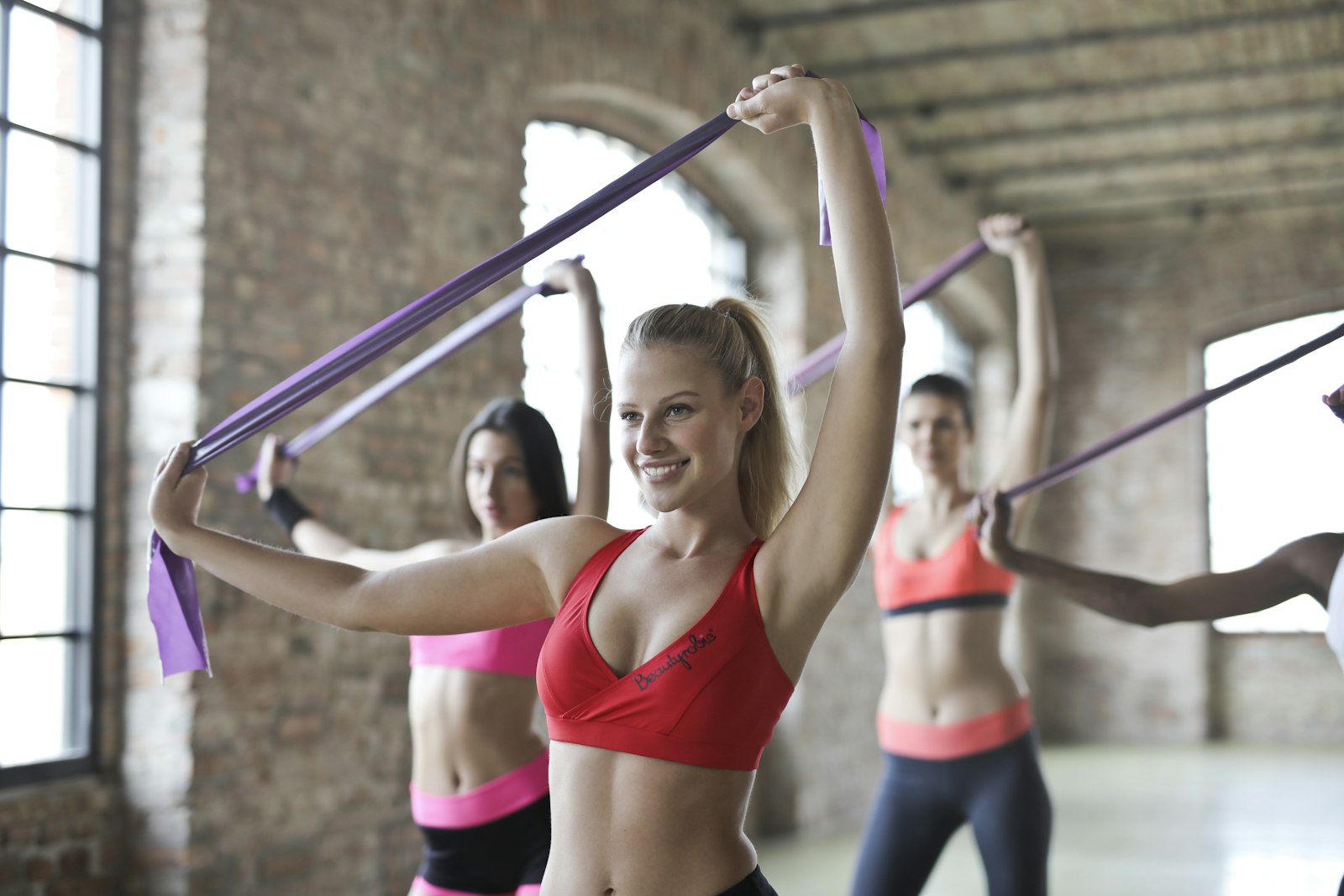



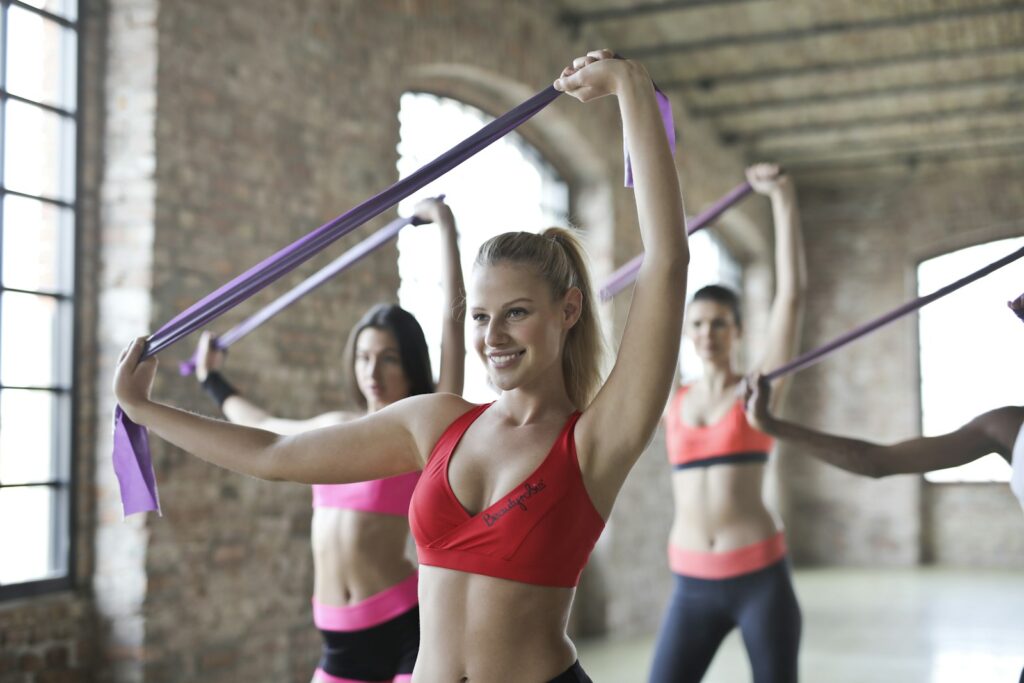
The short answer: band pull-aparts train the muscles at the back of your shoulders and upper back: the rear delts, the middle and lower traps, the rhomboids and the rotator cuff. They’re quick, easy on your joints and need only a light resistance band. Use them in warm-ups, as an upper-back accessory or to balance out a lot of pressing. They won’t build big muscles on their own, and claims that they “fix” posture aren’t backed by research. But they’re a simple, useful way to keep your upper back and shoulders working well.
This guide is for anyone who presses, sits at a desk or just wants healthier shoulders. I’ll cover what pull-aparts work, what the research shows, how to do them, the best variations, common mistakes and how often to do them.
What muscles do band pull-aparts work?
| Muscle | What it does in a pull-apart |
|---|---|
| Rear deltoids | Pull your arms out and back |
| Middle trapezius and rhomboids | Squeeze your shoulder blades together |
| Lower trapezius | Keep your shoulder blades down and stable, especially in diagonal versions |
| Infraspinatus (rotator cuff) | Rotate your upper arm outward and steady the shoulder joint |
| Upper trapezius | Helps, but too much activity often means you are shrugging |
What the research says
There isn’t much research on pull-aparts, but one study looked at them directly.
- Small changes shift which muscles work hardest. A 2022 study of 10 healthy men tested nine pull-apart variations, combining three hand positions (palms up, neutral and palms down) with three directions (diagonal up, horizontal and diagonal down). Muscle activity ranged from about 15% to 73% of maximum. Pulling diagonally up produced the most activity in all three parts of the trapezius. Palms up increased activity in the rotator cuff (infraspinatus) and lower traps, and reduced it in the upper traps and rear delts. Palms down with a diagonal-up pull gave the most rear delt and upper trap activity.
- Bands can match dumbbells for muscle activity. A 2010 study of 16 women with mostly desk-based jobs compared elastic tubing and dumbbells in three shoulder and wrist exercises. Muscle activity was similar with both tools when the resistance was matched, at about 60–87% of maximum.
Those are short-term studies that measure muscle activity, not long-term results. I couldn’t find any study showing that pull-aparts improve posture or build muscle over weeks of training. The advice below comes from my coaching experience.
How to do a band pull-apart
- Stand tall with your feet about hip width apart. Hold a light band in front of you at shoulder height, hands about shoulder width apart, arms straight.
- Brace your stomach lightly and keep your ribs down.
- Pull the band apart by moving your hands out to the sides. Keep your arms almost straight, with a soft bend in your elbows.
- Squeeze your shoulder blades together and stop when the band touches or nearly touches your chest.
- Pause for a second, then return slowly to the start. Don’t let the band snap back.
Coaching cues I use: “shoulders down, away from your ears,” “long arms” and “slow on the way back.” If your neck or the tops of your shoulders take over, you’re shrugging. Use a lighter band.
Band pull-apart variations
| Variation | How to do it | What it emphasizes |
|---|---|---|
| Horizontal, palms down | The standard version. Pull straight out at shoulder height | Rear delts and middle traps |
| Horizontal, palms up | Hold the band with an underhand grip | More rotator cuff and lower trap, less upper trap |
| Diagonal up | One hand finishes high and to the side, the other low. Alternate sides | The most trapezius activity in the 2022 study |
| Diagonal down | Pull down and out so your hands finish by your hips | Lower overall activity. A good starting point |
| Pause pull-apart | Hold for 2–3 seconds with the band at your chest | More time under tension with a light band |
If you have cranky shoulders, the 2022 study suggests a palms-up grip is a good place to start, as it shifted work toward the rotator cuff and lower traps and away from the upper traps.
Common mistakes and how to fix them
| Mistake | Why it matters | Fix |
|---|---|---|
| Shrugging your shoulders | Your upper traps take over | Think “shoulders down and away from your ears” |
| Arching your lower back | Turns it into a back bend rather than a shoulder movement | Brace your stomach and keep your ribs down |
| Bending your elbows a lot | Turns it into a row and takes work off the rear delts | Keep your arms long with just a soft bend |
| Using a band that is too strong | You cut the range short and cheat with momentum | Pick a band you can pull apart fully for 15–20 reps |
| Letting the band snap back | You lose half the work | Take 2 seconds to return |
| Poking your head forward | Adds strain to your neck | Keep your chin slightly tucked |
How often should you do band pull-aparts?
These are starting points I use with most people.
| Use | Sets | Reps | When |
|---|---|---|---|
| Warm-up | 1–2 | 15–20 | Before pressing or overhead work |
| Upper-back accessory | 2–3 | 15–25 | End of an upper-body or pull session |
| Desk break | 1 | 10–15 | Once or twice during a long workday |
Because they’re light and low-stress, most people can do pull-aparts several times a week. You don’t need the “100 reps a day” challenges you see online. A few quality sets with good form beat a hundred rushed reps.
Band pull-aparts vs face pulls
| Band pull-apart | Face pull | |
|---|---|---|
| Equipment | Light band only | Cable machine, or a band anchored at face height |
| Main muscles | Rear delts, mid traps, rhomboids | Rear delts, traps, plus more rotator cuff work |
| Loading | Light | Can go heavier on a cable |
| Best use | Warm-ups, home workouts, desk breaks | Main upper-back accessory in the gym |
They work well together. Use pull-aparts as a quick warm-up and face pulls as a heavier accessory.
If you have shoulder pain or a past shoulder injury, start with a very light band and stop if it hurts. A physical therapist can help if pain persists.
Summary
- Band pull-aparts work your rear delts, middle and lower traps, rhomboids and rotator cuff.
- Research shows that changing your hand position and pulling direction shifts which muscles work hardest.
- Bands can produce similar muscle activity to dumbbells when the resistance is matched.
- There’s no proof that pull-aparts fix posture or build big muscles, but they’re a useful, low-stress shoulder exercise.
- Use a light band, keep your shoulders down and do 15–25 controlled reps.
Build stronger shoulders with a clear plan
Small exercises like pull-aparts work best inside a balanced program, with enough pulling to match your pressing. That’s where 12REPS helps.
12REPS gives you trainer-built programs with two demo videos for every exercise, so you can check your form. Build Your Routine lets you add pull-aparts to your warm-up or upper-body day, the gym log tracks your sets and reps, and the built-in timer keeps your rest periods on track. Every new account starts with a 7-day free trial.
Download 12REPS and see what you’ll get:
Sources
- Fukunaga T, Fedge C, Tyler T, et al. Band pull-apart exercise: effects of movement direction and hand position on shoulder muscle activity. International Journal of Sports Physical Therapy. 2022;17(3):400–408.
- Andersen LL, Andersen CH, Mortensen OS, Poulsen OM, Bjørnlund IBT, Zebis MK. Muscle activation and perceived loading during rehabilitation exercises: comparison of dumbbells and elastic resistance. Physical Therapy. 2010. Summary via Chiropractic Economics.
Related reading
- How to Do Face Pulls: Cable, Rope and Band Versions
- How to Do Lateral Raises: Form, Weight and Common Mistakes
- Strength Training for Desk Workers
- Resistance Band Strength Training: Build Muscle Anywhere
- Loop Band Face Pull: exercise demo
I’m Will Duru, a personal trainer and the founder of 12REPS. I hold a BSc (Hons) in Sport and Exercise Science and have more than a decade of experience coaching people in strength training.
