
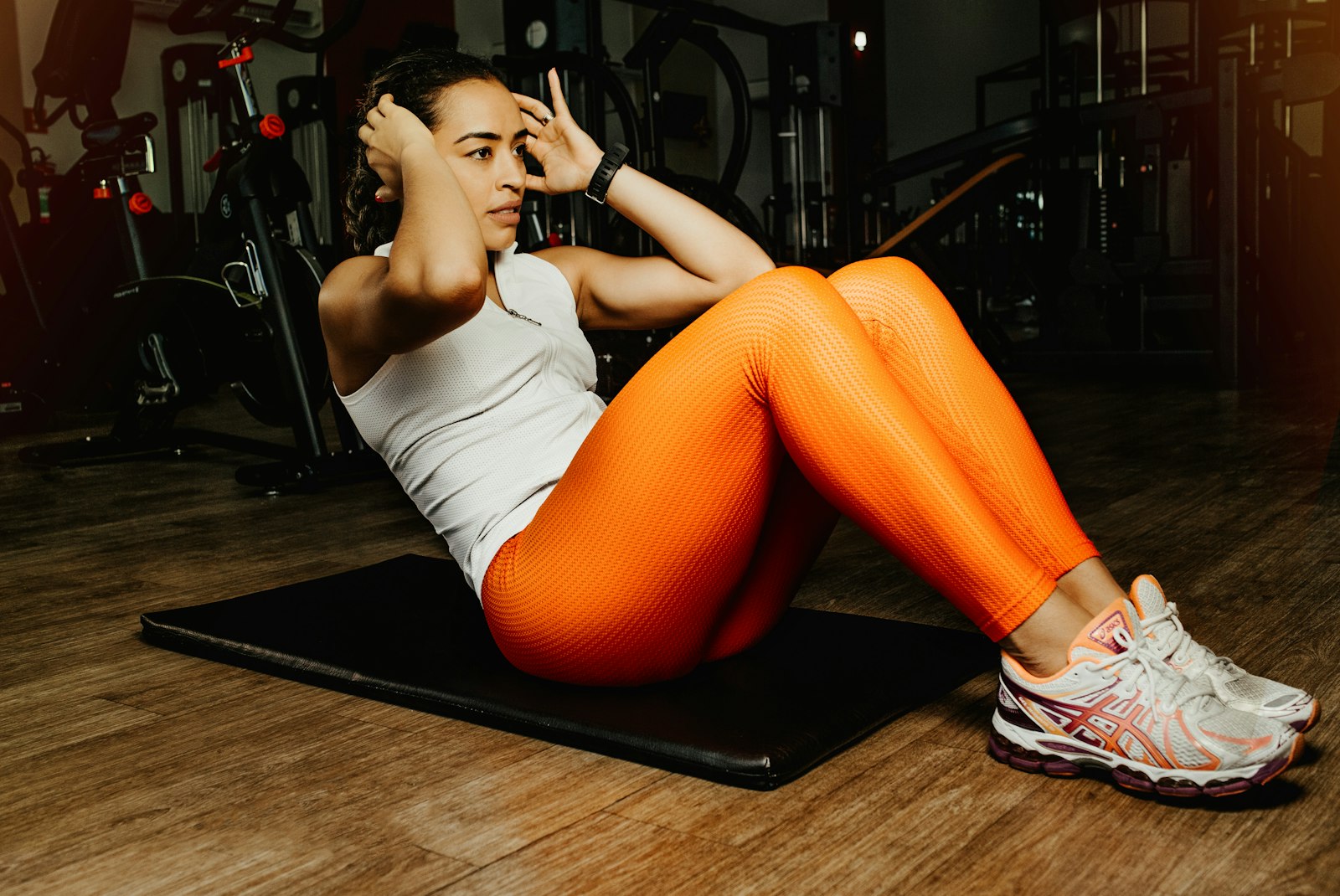



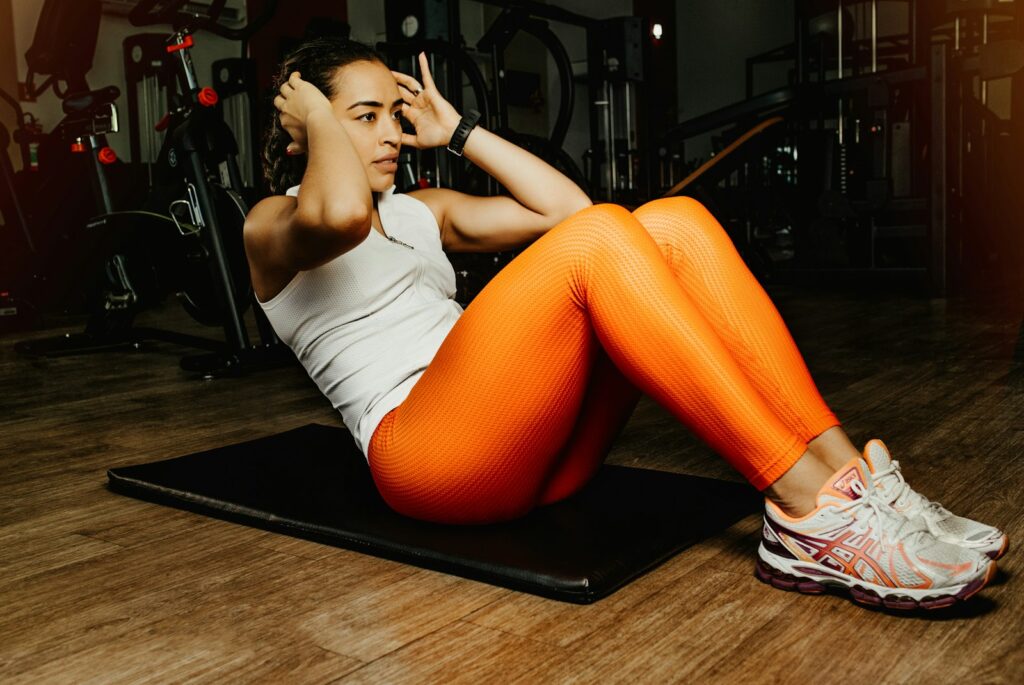
The short answer: a cable crunch is a kneeling crunch you do with a rope on a high cable. It trains your rectus abdominis, the “six-pack” muscle, against a weight you can increase over time, just like any other muscle. Small studies show that loaded ab training can make the ab muscles thicker, so weighted ab exercises do work. But no ab exercise burns belly fat on its own. Your abs show when your body fat is low enough, and that depends on your overall eating, training and activity.
This guide is for anyone who wants to train their abs with more than bodyweight crunches. I’ll cover what the cable crunch works, what the research shows about ab training, how to do it, common mistakes and how to program it.
What muscles does the cable crunch work?
| Muscle | Role |
|---|---|
| Rectus abdominis | Main mover. Curls your ribs down toward your pelvis |
| Obliques | Help with the crunch and keep you stable |
| Lats and triceps | Hold the rope in place by your head |
What the research says
- Ab exercises alone don’t burn belly fat. In a 2011 study of 24 sedentary adults, one group did seven ab exercises, 2 sets of 10 reps, five days a week for 6 weeks. Their abdominal fat, waist size and body composition didn’t change compared with a group that didn’t exercise. Their ab endurance did improve.
- Loaded ab training can build the ab muscles. In a 2024 study of 36 trained women, two groups added an ab exercise three times a week for 9 weeks, training to failure on the last set. Both groups grew their rectus abdominis more than a group that did no direct ab work. This was a university thesis, not a journal paper.
- Even bodyweight training can thicken the abs. A 2018 study found that 4 weeks of slow curl-ups increased the size and thickness of most of the trunk muscles measured.
- Crunches work the six-pack muscle hard. A 2023 ultrasound study of 15 people found that the rectus abdominis thickened more during a crunch than during a leg raise, by about 36%.
So the evidence suggests ab muscles respond to training like other muscles, and adding weight gives you a simple way to keep progressing. But building the muscle and seeing it are two different things. The advice below comes from my coaching experience.
How to do a cable crunch
- Attach a rope to a cable pulley set at its highest position.
- Kneel facing the machine, about an arm’s length away. Hold the rope ends beside your head or in front of your forehead.
- Push your hips back slightly so they sit over your knees or just behind them.
- Keep your hips still and curl your ribs down toward your pelvis, rounding your spine. Think of bringing your elbows toward your thighs.
- Squeeze your abs at the bottom for a second.
- Uncurl slowly back to the start, letting your abs stretch at the top.
Coaching cues I use: “ribs to hips,” “round your back, don’t bow at the hips” and “keep the rope pinned to your head.” If you feel it mostly in your arms or hip flexors, use less weight and focus on curling your spine.
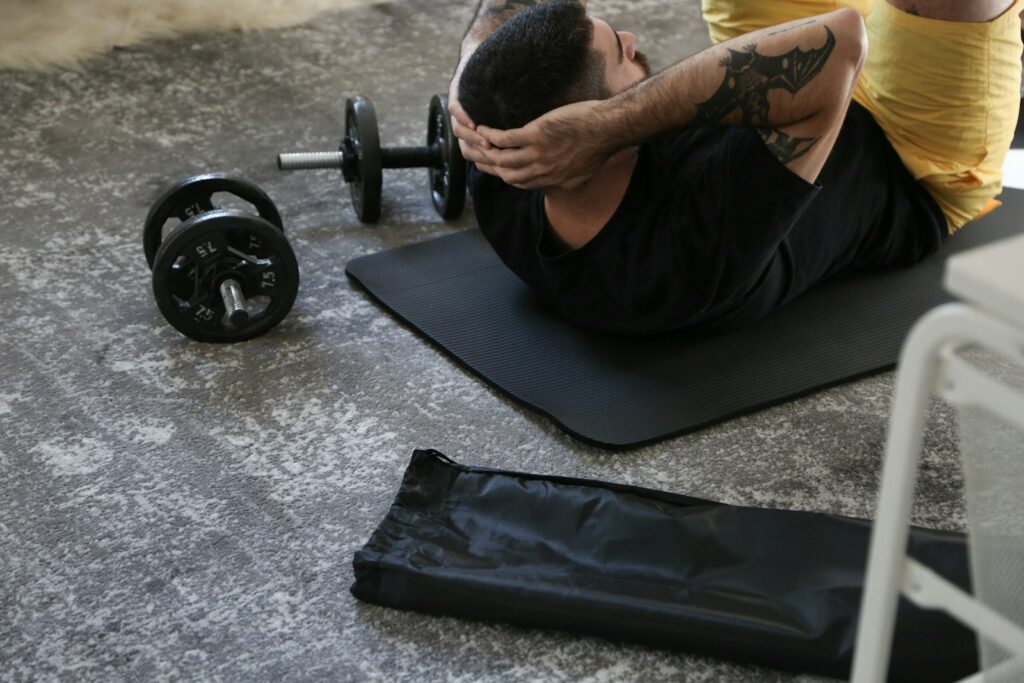
Common mistakes and how to fix them
| Mistake | Why it matters | Fix |
|---|---|---|
| Bending at the hips instead of the spine | Your hip flexors and body weight do the work | Keep your hips still and curl your ribs down |
| Pulling with your arms | Takes work off your abs | Keep the rope fixed beside your head |
| Going too heavy | You lose the curl and just bow forward | Pick a weight you can control for 10–15 reps |
| Sitting back on your heels | Limits how far you can crunch | Keep your hips over or just behind your knees |
| Rushing the return | Misses the stretch at the top | Take 2 seconds to come back up |
Cable crunch vs machine crunch vs sit-ups
| Cable crunch | Machine crunch | Sit-up | |
|---|---|---|---|
| Load | Easy to add weight in small steps | Easy to add weight | Bodyweight, or hold a plate |
| Setup | Needs a cable machine and rope | Needs the machine | Anywhere |
| Range of motion | Full spinal curl | Set by the machine | Includes hip flexion |
| Best for | Progressive ab training in the gym | Beginners who want a guided path | Home workouts and endurance |
If your gym has an ab crunch machine, it’s a good alternative. Here’s my machine ab crunch demo.
Sets, reps and how often
These are starting points I use with most people.
| Goal | Sets | Reps | Rest |
|---|---|---|---|
| Building ab muscle | 3 | 8–15 | 60–90 seconds |
| Ab endurance | 2–3 | 15–25 | 45–60 seconds |
Two or three ab sessions a week is plenty for most people. Add weight when you can do the top of your rep range with good form on every set. Pair cable crunches with an anti-rotation or anti-extension exercise, like a plank or dead bug, for a well-rounded core.
Will weighted ab exercises make your waist bigger?
This is a common worry. Your rectus abdominis is a thin, flat muscle, so building it adds very little to your waist measurement. Most of what changes waist size is body fat. If you’re concerned about your obliques getting thicker, keep your focus on crunching movements rather than heavy side bends.
Summary
- The cable crunch is a kneeling crunch with a rope on a high cable that trains your six-pack muscle.
- Research suggests loaded ab training can make the ab muscles thicker.
- Ab exercises alone don’t burn belly fat. Body fat levels decide how much of your abs you can see.
- Curl your ribs toward your hips, keep your hips still and control the return.
- Do 2–3 sets of 8–15 reps, two or three times a week, and add weight over time.
Train your abs as part of a full plan
Visible abs come from training your whole body, eating well and progressing consistently. That’s where 12REPS helps.
12REPS gives you trainer-built programs with two demo videos for every exercise, so you can check your cable crunch form. The gym log shows the weight you used last time, Build Your Routine lets you add ab work to your own week, and the built-in timer keeps your rest periods on track. Every new account starts with a 7-day free trial.
Download 12REPS and see what you’ll get:
Sources
- Vispute SS, Smith JD, LeCheminant JD, Hurley KS. The effect of abdominal exercise on abdominal fat. Journal of Strength and Conditioning Research. 2011;25(9):2559–2564. Summary via IDEA Health and Fitness Association.
- Lessa FS. Regional muscle hypertrophy of the rectus abdominis: comparing “supra” and “infra 30°” exercises. Master’s dissertation, Universidade Federal de Minas Gerais. 2024.
- Rutkowska-Kucharska A, Szpala A. Journal of Back and Musculoskeletal Rehabilitation. 2018;31(2):355–362.
- Gomirato AP, Grenier SG. Diagnostic ultrasound shows preferential activation of rectus abdominis segments with exercises targeting upper versus lower segments. International Journal of Exercise Science. 2023;16(1):1077–1086.
Related reading
- How to Get Abs: Complete Guide for Men
- How to Do a Plank Properly
- How to Do a Dead Bug
- Are Russian Twists Bad for Your Back?
I’m Will Duru, a personal trainer and the founder of 12REPS. I hold a BSc (Hons) in Sport and Exercise Science and have more than a decade of experience coaching people in strength training.
