
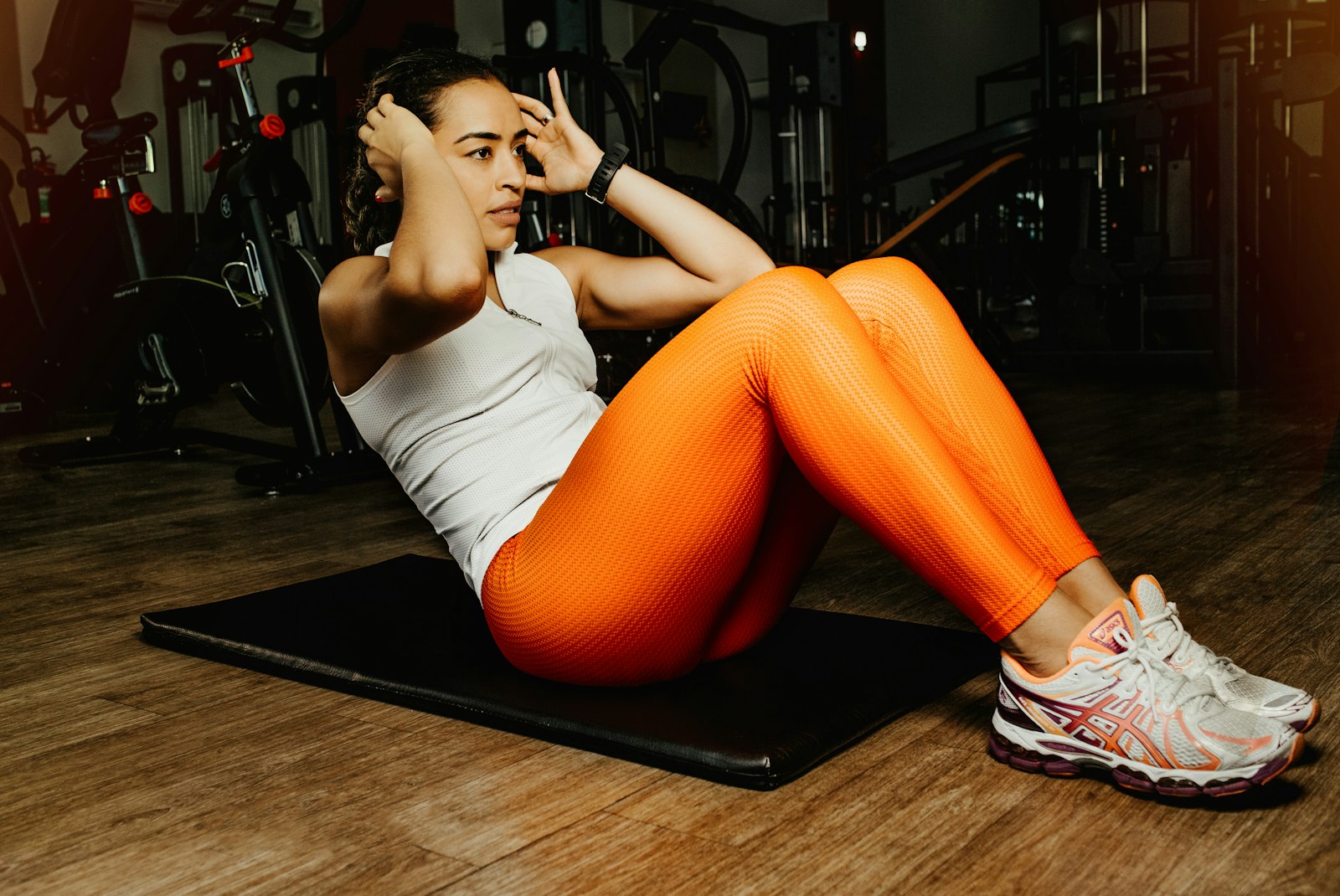



Quick answer: Russian twists aren’t automatically bad for your back, but they’re not the safest core exercise either. They combine a rounded lower back with repeated twisting, and lab studies on animal spines show that combination is hard on the discs. There’s no evidence they injure healthy people who do them with good form. If you have back pain or a disc problem, swap them for side planks, cable woodchops or the dead bug. These train the same muscles with less stress on your lower back.
The Russian twist is a staple of ab workouts and a regular in “is this exercise bad?” debates. This guide is for you if you’ve felt it in your lower back, or you just want to know whether it belongs in your routine. You’ll see what the research says, how to make it safer and which core exercises I’d choose instead.
What is a Russian twist?
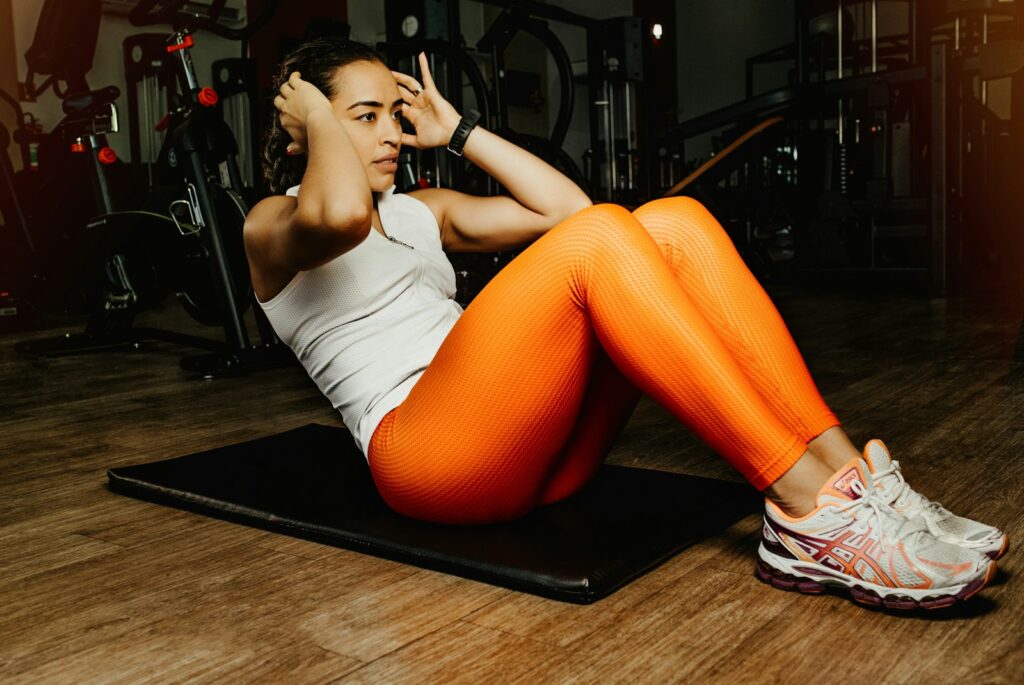
You sit on the floor with your knees bent, lean back a little and rotate your torso from side to side, often holding a weight or medicine ball. It mainly works your obliques (the muscles on the sides of your waist) and your rectus abdominis (the “six-pack” muscle).
Why people worry about Russian twists
Most of your spine’s twisting happens in your upper back. Your lower back is built to rotate only a little. In a Russian twist, your lower back is often rounded while you twist quickly from side to side, sometimes holding a weight.
What the research says
- Bending plus twisting is hard on discs in the lab. Researchers repeatedly bent pig spine segments forward and back, with and without twisting. When twisting was added, 67.5% of the segments showed disc herniation damage, compared with 20% for bending alone. Twisting alone didn’t cause herniation. The authors suggested limiting repeated twisting under load in prevention and rehab (Marshall and McGill, 2010).
- That doesn’t prove Russian twists injure people. These were animal spine segments in a machine, bent thousands of times. Living people, with muscles, rest and recovery, aren’t the same. No study I found has shown that Russian twists cause back injuries in humans.
- Exercise helps back pain overall. A large review of exercise for chronic low back pain found that exercise reduced pain and improved function compared with no treatment or usual care (Hayden et al., 2021).
So the honest answer is: Russian twists aren’t dangerous for everyone, but there are core exercises that give you the same benefits with less risk.
Who should skip or modify them?
- People with current lower back pain, especially pain that gets worse when sitting or bending forward.
- Anyone with a diagnosed disc problem.
- Beginners who can’t yet keep their back straight while leaning back.
- Anyone who feels the exercise in their lower back rather than their sides.
If that’s you, choose the alternatives below. If pain persists, see a doctor or physical therapist, and read how to train around an injury.
How to do a safer Russian twist
If you’re pain-free and want to keep them in your routine, these changes reduce the stress on your lower back:
- Sit tall. Lean back slightly with a long, straight back. Don’t slump.
- Keep your feet on the floor. Lifting them makes it harder to hold a good position.
- Turn your ribcage and shoulders, not just your arms. Your head follows your chest.
- Go slowly. Take about 2 seconds to each side. No fast swinging.
- Use a small range. Turn only as far as you can without your lower back rounding.
- Start with no weight. Add a light plate or ball only when your form is solid.
Do 2 to 3 sets of 8 to 10 slow twists per side.
Better core exercises to try instead
These train your obliques and core while keeping your spine in a steady position.
1. Side plank
Lie on your side, prop yourself up on your forearm and lift your hips so your body forms a straight line. Hold for 20 to 45 seconds per side. Research on the side bridge found it works the obliques and the deep muscles at the side of the lower back, including activity of up to 69% of maximum in the external obliques in one study (Pagé and Descarreaux, 2012, reviewing McGill 1996 and Ekstrom 2007). Make it easier with your knees down.

2. Cable woodchop
Stand side-on to a cable and pull the handle diagonally across your body, from high to low or low to high. Turn through your hips and upper back while your lower back stays long. This trains rotation in a standing position, which is closer to how you twist in sport and daily life.
3. Pallof press
Stand side-on to a cable or band at chest height. Hold the handle at your chest, then press it straight out and hold for 2 seconds without letting it pull you around. This trains your core to resist twisting, which is one of its main jobs.
4. Plank shoulder taps
From a high plank, tap one shoulder with the opposite hand, keeping your hips still. Slow taps are harder than fast ones.
5. Dead bug
A beginner-friendly exercise that teaches you to keep your lower back steady while your arms and legs move. See the dead bug guide.
A simple back-friendly core circuit
| Exercise | Sets | Reps or time |
|---|---|---|
| Dead bug | 2 to 3 | 8 per side |
| Side plank | 2 to 3 | 20 to 45 seconds per side |
| Pallof press | 2 to 3 | 8 to 10 per side, 2-second hold |
| Cable woodchop | 2 to 3 | 10 to 12 per side |
Do this 2 to 3 times a week, at the end of your workout. Add time, reps or a little weight as it gets easier. For more ideas, read the core exercise guide and the plank guide.
Summary
- Russian twists combine a rounded lower back with repeated twisting.
- In lab studies on animal spines, adding twisting to repeated bending caused more disc damage.
- There’s no evidence they injure healthy people with good form, but they’re not the safest core option.
- If you keep them, sit tall, go slowly, use a small range and little or no weight.
- If you have back pain, choose side planks, Pallof presses, woodchops, shoulder taps or dead bugs instead.
Build a stronger core with a plan
A strong core comes from steady, well-chosen exercises, not endless twists. 12REPS gives you trainer-built programs with two demo videos for every exercise. You can swap moves that don’t suit you with Build Your Routine, and track your progress in the gym log. New users get a 7-day free trial.
Download 12REPS and see what you’ll get:
Sources
- Marshall LW, McGill SM. The role of axial torque in disc herniation. Clin Biomech, 2010
- Hayden JA et al. Exercise therapy for chronic low back pain. Cochrane Database Syst Rev, 2021
- Pagé I, Descarreaux M. Trunk muscle fatigue during a lateral isometric hold test: what are we evaluating? Chiropr Man Therap, 2012
Related reading
- How to do a dead bug
- How to do a plank properly
- Farmer’s carry: how to do it and why it works
- Strength training for back pain
- How to get abs: complete guide
I’m Will Duru, a personal trainer and the founder of 12REPS. I hold a BSc (Hons) in Sport and Exercise Science and have more than a decade of experience coaching people in strength training. This article is for general education and isn’t medical advice.
