

By Will Duru, BSc (Hons) Sport and Exercise Science, Award-winning Personal Trainer with over 10 years of experience in strength training
After training hundreds of clients over a decade, I have watched people waste countless hours on ineffective exercises. They perform endless variations, chase novelty, and wonder why certain muscles never develop.
The truth is simple: some exercises work better than others. Much better.
This guide contains the best exercises for every major muscle group. Not random selections. Not trendy movements I saw on social media. These are the exercises that have consistently produced results for my clients across ten years of training.
For each muscle group, I will explain the anatomy, share what I have learned training real people, and give you the exercises that actually work. No filler. No fluff. Just the movements that build muscle and strength.
Chest
Anatomy Overview
The chest consists primarily of the pectoralis major, a large fan-shaped muscle with two heads:
Clavicular head (upper chest). Originates from the collarbone. Responsible for shoulder flexion and the “upper chest” look.
Sternal head (mid and lower chest). Originates from the sternum. The larger portion responsible for most pressing power.
The chest’s primary functions are horizontal adduction (bringing arms across the body) and shoulder flexion (raising arms forward).
From My Training Experience
The chest responds well to pressing movements, but angle matters enormously. I have seen countless clients with decent mid-chest development but flat upper chests because they only flat bench.
Most people need more incline work than they think. The upper chest is stubborn and requires dedicated attention.
Another observation: the stretch position matters. Exercises that load the chest in a stretched position (like dumbbell flyes or deep dumbbell presses) produce excellent growth when programmed correctly.
Best Chest Exercises
1. Barbell Bench Press
The king of chest exercises. Nothing loads the chest, shoulders, and triceps as effectively under heavy weight.
Why it works: Allows maximum loading, trains the entire chest, builds pressing strength that transfers everywhere.
Key technique points: Retract shoulder blades, arch slightly, lower to mid-chest, drive feet into floor.
Sets and reps: 4 sets of 6-8 for strength, 3-4 sets of 8-12 for hypertrophy.
2. Incline Dumbbell Press (30-45 degrees)
The best upper chest builder. Dumbbells allow a deeper stretch than barbells.
Why it works: Targets the clavicular head directly, allows full range of motion, develops each side independently.
Key technique points: Set bench to 30-45 degrees (not higher), lower dumbbells to outer chest, press in a slight arc.
Sets and reps: 3-4 sets of 8-12 reps.
3. Dumbbell Fly or Cable Fly
Pure chest isolation with maximum stretch.
Why it works: Takes triceps out of the movement, loads the chest in the stretched position where muscle damage and growth stimulus are highest.
Key technique points: Maintain slight elbow bend throughout, feel the stretch at the bottom, squeeze at the top.
Sets and reps: 3 sets of 12-15 reps.
4. Dips (Chest Emphasis)
Excellent lower chest and overall chest mass builder.
Why it works: Loads the chest heavily in a stretched position, allows progressive overload with added weight.
Key technique points: Lean forward, go deep (if shoulders allow), keep elbows flared slightly.
Sets and reps: 3 sets of 8-12 reps (add weight when bodyweight becomes easy).
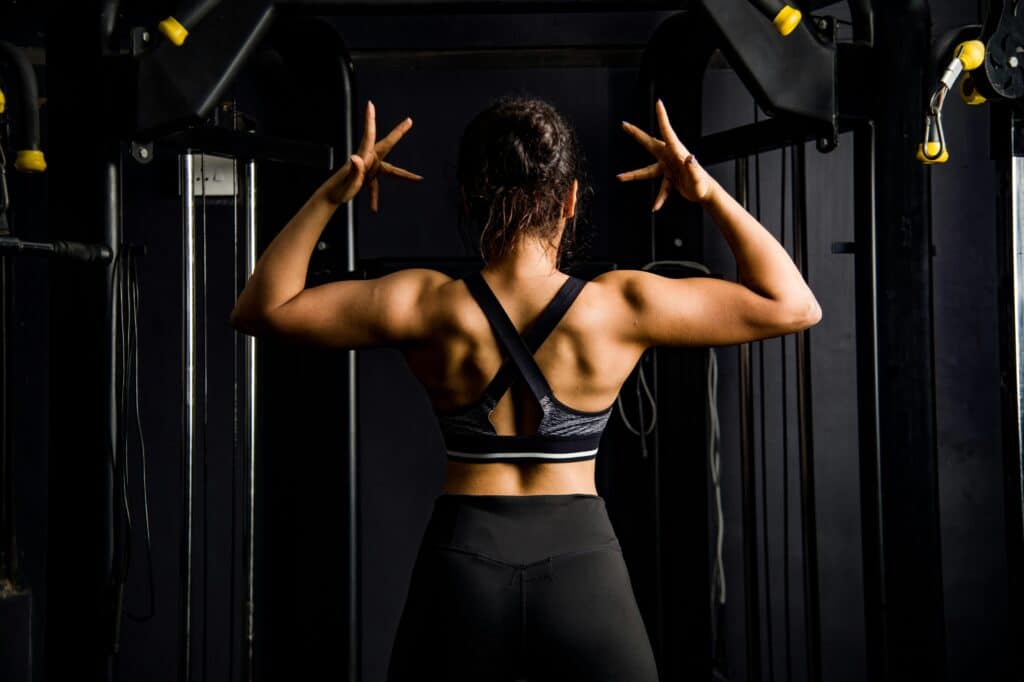
Back
Anatomy Overview
The back is complex, containing multiple muscle groups:
Latissimus dorsi (lats). The large wing-shaped muscles that create width. Responsible for shoulder extension and adduction.
Trapezius (traps). Upper, middle, and lower portions. Controls scapular movement and supports posture.
Rhomboids. Between shoulder blades. Retract the scapula.
Erector spinae. Run along the spine. Extend and stabilise the spine.
Teres major and minor. Assist the lats in pulling movements.
From My Training Experience
Most people work their backs. They cannot see it in the mirror, so they neglect it. This creates postural problems and an unbalanced physique.
The back needs both vertical pulling (pulldowns, pull-ups) and horizontal pulling (rows). Clients who only do one develop unevenly.
Mind-muscle connection matters more for back than almost any other body part. I spend considerable time teaching clients to “pull with their elbows” and feel their lats working rather than just yanking weight.
Deadlifts are technically a posterior chain exercise but deserve mention here. Nothing builds overall back thickness like heavy deadlifts.
Best Back Exercises
1. Pull Up / Chin Up
The ultimate lat builder and test of relative strength.
Why it works: Bodyweight pulling requires full lat engagement, allows progressive overload through added weight, builds functional pulling strength.
Key technique points: Full hang at bottom, pull until chin clears bar, control the descent.
Chin up (underhand): More bicep involvement, often easier for beginners. Pull up (overhand): More lat emphasis, harder for most people.
Sets and reps: 3-4 sets of as many quality reps as possible. Add weight when exceeding 12 reps.
2. Barbell Row
The primary horizontal pulling movement for back thickness.
Why it works: Allows heavy loading, builds entire back including lats, rhomboids, and erectors, transfers to deadlift strength.
Key technique points: Hinge at hips with flat back, pull to lower chest/upper abdomen, squeeze shoulder blades at top.
Sets and reps: 4 sets of 6-10 reps.
3. Lat Pulldown
The machine version of pull-ups, allowing more volume and variation.
Why it works: Easier to achieve mind-muscle connection than pull-ups, allows drop sets and higher reps, accessible for those who cannot do pull-ups yet.
Key technique points: Pull to upper chest (not behind neck), lean back slightly, focus on driving elbows down.
Sets and reps: 3-4 sets of 10-12 reps.
4. Seated Cable Row
Excellent for mid-back thickness and scapular retraction.
Why it works: Constant tension throughout range of motion, easy to feel the back working, allows various grip attachments.
Key technique points: Sit tall, pull to lower chest, squeeze shoulder blades together, control the return.
Sets and reps: 3 sets of 10-12 reps.
5. Face Pull
Essential for rear delts, external rotators, and upper back health.
Why it works: Balances all the pressing most people do, improves posture, protects shoulders.
Key technique points: Pull to face level, externally rotate at the end (thumbs back), squeeze rear delts.
Sets and reps: 3 sets of 15-20 reps.
Shoulders
Anatomy Overview
The deltoid has three heads:
Anterior (front) delt. Responsible for shoulder flexion and assists in pressing.
Lateral (side) delt. Responsible for shoulder abduction. Creates the “capped” shoulder look.
Posterior (rear) delt. Responsible for shoulder extension and external rotation.
The rotator cuff (supraspinatus, infraspinatus, teres minor, subscapularis) stabilises the shoulder joint during all movements.
From My Training Experience
The anterior delt gets hammered by all pressing movements. Most people do not need direct front delt work.
The lateral delt is where most clients need focus. This creates shoulder width and the V-taper look. Light weights with strict form beat heavy swinging every time.
The posterior delt is chronically underdeveloped in most people. Face pulls and rear delt flyes should be in every programme.
Shoulder injuries are common. I always prioritise rotator cuff health and avoid exercises that cause pain (like upright rows and behind-the-neck presses for many people).
Best Shoulder Exercises
1. Overhead Press (Barbell or Dumbbell)
The foundational shoulder strength movement.
Why it works: Builds all three delt heads (especially anterior), requires core stability, allows heavy loading.
Key technique points: Brace core, press straight up, lockout overhead, control the descent.
Barbell: Allows heavier weights, requires mobility. Dumbbell: More range of motion, easier on shoulders for many people.
Sets and reps: 4 sets of 6-8 for strength, 3-4 sets of 8-12 for hypertrophy.
2. Dumbbell Lateral Raise
The best lateral delt isolation exercise.
Why it works: Directly targets the side delt, creates shoulder width, cannot be replicated by pressing.
Key technique points: Light weight, strict form, raise to shoulder height (not higher), control the descent.
Common mistake: Going too heavy and swinging. Use a weight you can control for 12-15 reps.
Sets and reps: 3-4 sets of 12-15 reps.
3. Face Pull
Already mentioned for back, but equally important for rear delts.
Why it works: Hits rear delts and external rotators, balances pressing, improves posture.
Sets and reps: 3 sets of 15-20 reps.
4. Rear Delt Fly (Dumbbell or Machine)
Direct rear delt isolation.
Why it works: Targets the often-neglected posterior head, improves shoulder balance.
Key technique points: Bend at hips or use machine, raise arms to sides, squeeze rear delts at top.
Sets and reps: 3 sets of 12-15 reps.
Arms
Anatomy Overview
Biceps brachii. Two heads (long and short) that flex the elbow and supinate the forearm.
Brachialis. Underneath the biceps. Contributes to arm thickness and elbow flexion.
Triceps brachii. Three heads (long, lateral, medial) that extend the elbow. Makes up approximately two-thirds of arm size.
Forearms. Multiple muscles controlling wrist and finger movement.
From My Training Experience
Clients obsessed with arm size often neglect the triceps, which make up most of the arm. More tricep work usually produces faster arm growth than more bicep work.
The long head of the triceps crosses the shoulder joint, so it needs overhead extension work to be fully developed.
For biceps, both supinated (palms up) and neutral (hammer) grips are important. Hammer curls build the brachialis, which pushes the bicep up and adds thickness.
Forearms often take care of themselves through heavy pulling. Direct forearm work is only necessary if they are a specific weakness.
Best Arm Exercises
Biceps:
1. Barbell Curl
The classic mass builder for biceps.
Why it works: Allows the heaviest loading of any curl variation, trains both bicep heads.
Key technique points: Keep elbows at sides, full range of motion, control the negative.
Sets and reps: 3 sets of 8-12 reps.
2. Incline Dumbbell Curl
Targets the long head with a stretched position.
Why it works: The incline position stretches the bicep, emphasising the long head and creating a fuller peak.
Key technique points: Set bench to 45-60 degrees, let arms hang straight, curl without moving elbows forward.
Sets and reps: 3 sets of 10-12 reps.
3. Hammer Curl
Builds the brachialis and adds arm thickness.
Why it works: Neutral grip targets brachialis, which other curls miss, also hits forearms.
Key technique points: Keep palms facing each other throughout, full range of motion.
Sets and reps: 3 sets of 10-12 reps.
Triceps:
1. Close Grip Bench Press
Heavy compound tricep builder.
Why it works: Allows heavy loading, trains all three tricep heads, builds pressing strength.
Key technique points: Hands shoulder-width apart (not touching), lower to lower chest, lock out fully.
Sets and reps: 3-4 sets of 8-10 reps.
2. Overhead Tricep Extension (Dumbbell or Cable)
Targets the long head, the largest tricep head.
Why it works: Stretches the long head, which requires overhead work for full development.
Key technique points: Keep elbows pointed forward, lower weight behind head, extend fully.
Sets and reps: 3 sets of 10-12 reps.
3. Tricep Pushdown
Isolation exercise for lateral and medial heads.
Why it works: Easy to achieve mind-muscle connection, allows high reps and drop sets.
Key technique points: Keep elbows at sides, extend fully, squeeze at bottom.
Sets and reps: 3 sets of 12-15 reps.
Quadriceps
Anatomy Overview
The quadriceps consist of four muscles on the front of the thigh:
Rectus femoris. Crosses both hip and knee joints. The only quad muscle involved in hip flexion.
Vastus lateralis. Outer quad. Often the most visible portion.
Vastus medialis. Inner quad. The “teardrop” muscle above the knee.
Vastus intermedius. Deep, beneath rectus femoris.
All four converge at the patella and extend the knee.
From My Training Experience
Squats build quads, but depth matters enormously. Half squats build half quads. I insist on proper depth with every client.
The leg press gets dismissed as inferior to squats, but it has value. It allows more quad isolation and can be loaded heavily without the same technique demands.
Many clients have quad imbalances, with the outer quad overdeveloped relative to the inner. Single leg work and focused VMO exercises help.
Leg extensions are often criticised, but used correctly (controlled, moderate weight, full range), they effectively isolate the quads and are useful for hypertrophy.
Best Quadricep Exercises
1. Barbell Back Squat
The undisputed king of leg exercises.
Why it works: Loads the entire lower body heavily, builds all four quad heads, releases anabolic hormones, builds real-world strength.
Key technique points: Feet shoulder-width, break at hips and knees together, descend until hip crease below knee, drive through whole foot.
Sets and reps: 4-5 sets of 5-8 for strength, 3-4 sets of 8-12 for hypertrophy.
2. Front Squat
Shifts emphasis to quads over glutes compared to back squat.
Why it works: More upright torso increases quad demand, easier on lower back for many people, builds core strength.
Key technique points: Elbows high, bar on front delts, maintain upright torso, full depth.
Sets and reps: 3-4 sets of 6-10 reps.
3. Leg Press
High volume quad work without spinal loading.
Why it works: Allows very heavy loading, safe for higher reps, less technique-dependent than squats.
Key technique points: Feet shoulder-width and mid-platform, lower until legs at 90 degrees minimum, drive through heels.
Sets and reps: 3-4 sets of 10-15 reps.
4. Bulgarian Split Squat
Single-leg exercise that builds quads and addresses imbalances.
Why it works: Unilateral work corrects asymmetries, deep stretch on rear leg, high quad activation.
Key technique points: Rear foot elevated, front shin relatively vertical, control the descent.
Sets and reps: 3 sets of 8-12 reps each leg.
5. Leg Extension
Direct quad isolation.
Why it works: Isolates quads completely, allows focus on mind-muscle connection, useful for pre-exhaust or finishing.
Key technique points: Controlled movement, pause at top, avoid swinging.
Sets and reps: 3 sets of 12-15 reps.
Hamstrings
Anatomy Overview
The hamstrings consist of three muscles on the back of the thigh:
Biceps femoris. Outer hamstring with two heads.
Semitendinosus. Inner hamstring, more medial.
Semimembranosus. Deep to semitendinosus.
The hamstrings cross both the hip and knee joints, meaning they extend the hip and flex the knee.
From My Training Experience
Hamstrings are the most commonly underdeveloped muscle I see. People squat and leg press but neglect hip hinge movements and knee flexion exercises.
Because hamstrings cross two joints, you need both hip extension exercises (Romanian deadlifts) and knee flexion exercises (leg curls) for complete development.
Weak hamstrings increase injury risk, particularly for runners and athletes. I prioritise hamstring strength for anyone who runs or plays sports.
The eccentric (lowering) phase is especially important for hamstrings. Slow, controlled negatives build strength and reduce injury risk.
Best Hamstring Exercises
1. Romanian Deadlift
The premier hip hinge movement for hamstrings.
Why it works: Loads the hamstrings eccentrically through a full stretch, builds hip extension strength, develops entire posterior chain.
Key technique points: Slight knee bend (maintain throughout), hinge at hips, feel stretch in hamstrings, keep bar close to legs.
Sets and reps: 3-4 sets of 8-12 reps.
2. Lying Leg Curl
Direct knee flexion exercise.
Why it works: Isolates hamstrings through knee flexion function, easy to load progressively, high muscle activation.
Key technique points: Keep hips down, full range of motion, control the negative.
Sets and reps: 3-4 sets of 10-12 reps.
3. Stiff Leg Deadlift
Similar to Romanian deadlift with even more stretch.
Why it works: Maximum hamstring stretch at bottom, builds flexibility alongside strength.
Key technique points: Straighter legs than RDL, lower the weight as hamstring flexibility allows, maintain flat back.
Sets and reps: 3 sets of 8-10 reps.
4. Nordic Hamstring Curl
Advanced bodyweight hamstring exercise with extreme eccentric loading.
Why it works: Highest hamstring activation of any exercise, builds injury-resistant hamstrings, transfers to sprinting and sport.
Key technique points: Anchor feet, lower body as slowly as possible, catch yourself at bottom.
Sets and reps: 3 sets of 4-8 reps (build up slowly).
Glutes
Anatomy Overview
The gluteal complex includes:
Gluteus maximus. The largest muscle in the body. Responsible for hip extension, external rotation, and abduction.
Gluteus medius. Side of hip. Primary hip abductor and pelvic stabiliser.
Gluteus minimus. Deep to medius. Assists in abduction and stabilisation.
From My Training Experience
Glute training has exploded in popularity, which is positive. Strong glutes improve posture, reduce back pain, and enhance athletic performance.
However, many people chase glute isolation exercises while neglecting the basics. Hip thrusts are excellent, but heavy squats and deadlifts build glutes too.
Activation work matters for glutes. Many clients cannot properly engage their glutes until we spend time on activation drills. Once they can feel their glutes working, exercises become far more effective.
The glute medius is often neglected. Weak glute medius causes knee valgus (knees caving) and hip instability. Band walks and single leg work address this.
Best Glute Exercises
1. Hip Thrust
The most direct glute builder.
Why it works: Loads glutes at peak contraction (hips fully extended), high glute activation, allows progressive overload with barbell.
Key technique points: Back on bench, feet flat, drive hips up, squeeze glutes hard at top, chin tucked.
Sets and reps: 3-4 sets of 8-12 reps.
2. Romanian Deadlift
Already mentioned for hamstrings, equally important for glutes.
Why it works: Heavy hip extension movement, eccentric loading, builds glutes and hamstrings together.
Sets and reps: 3-4 sets of 8-12 reps.
3. Bulgarian Split Squat
Single leg exercise with high glute activation.
Why it works: Deep hip flexion stretches glutes, single leg nature increases glute medius demand, builds each side independently.
Sets and reps: 3 sets of 8-12 reps each leg.
4. Cable Pull Through
Excellent glute exercise with constant tension.
Why it works: Teaches hip hinge pattern, constant cable tension, direct glute focus.
Key technique points: Hinge at hips, push hips back, squeeze glutes to return, avoid using lower back.
Sets and reps: 3 sets of 12-15 reps.
5. Glute Bridge (Single Leg or Weighted)
Foundational glute activation and strength exercise.
Why it works: Easy to learn, develops glute activation, can be progressed with weight or single leg.
Key technique points: Drive through heels, squeeze glutes at top, avoid hyperextending lower back.
Sets and reps: 3 sets of 12-15 reps.
Calves
Anatomy Overview
The calf consists of two primary muscles:
Gastrocnemius. The visible two-headed muscle that creates the calf shape. Crosses the knee joint.
Soleus. Deep to gastrocnemius. Does not cross the knee. Important for endurance activities.
Both muscles plantarflex the ankle (point the toes down).
From My Training Experience
Calves are stubborn for many people. Genetics play a significant role in calf development potential.
That said, most people do not train calves with enough intensity or volume. Two lazy sets at the end of a workout will not develop calves.
Because the gastrocnemius crosses the knee, it is best trained with straight legs (standing calf raise). The soleus is trained with bent knees (seated calf raise). Both need attention.
Full range of motion matters. Most people bounce through partial reps. A full stretch at the bottom and squeeze at the top produces better results.
Best Calf Exercises
1. Standing Calf Raise
Primary gastrocnemius builder.
Why it works: Straight legs maximally engage gastrocnemius, allows heavy loading.
Key technique points: Full stretch at bottom, pause, rise onto balls of feet, squeeze at top.
Sets and reps: 4 sets of 10-15 reps.
2. Seated Calf Raise
Primary soleus builder.
Why it works: Bent knee position takes gastrocnemius out, isolates soleus.
Key technique points: Knees at 90 degrees, full range of motion, controlled tempo.
Sets and reps: 4 sets of 12-15 reps.
3. Donkey Calf Raise
Excellent gastrocnemius builder with deep stretch.
Why it works: Bent-over position allows extreme stretch, high gastrocnemius activation.
Key technique points: Hinge at hips, straight legs, full range of motion.
Sets and reps: 3 sets of 12-15 reps.
Core
Anatomy Overview
The core includes multiple muscles:
Rectus abdominis. The “six pack” muscle. Flexes the spine.
Obliques (internal and external). Sides of the torso. Rotate and laterally flex the spine.
Transverse abdominis. Deep core muscle. Stabilises the spine and compresses the abdomen.
Erector spinae. Back extensors. Extend and stabilise the spine.
From My Training Experience
Most people train core incorrectly. Endless crunches do not build a strong, functional core.
The core’s primary job is stabilisation, not movement. Exercises that resist movement (planks, Pallof press, dead bugs) build real core strength better than exercises that create movement (crunches, sit-ups).
That said, some spinal flexion work is fine for developing the rectus abdominis. The key is balance and variety.
A strong core improves performance on every other exercise. Weak core equals weak squats, deadlifts, and presses.
Best Core Exercises
1. Plank
Foundational anti-extension exercise.
Why it works: Teaches core bracing, builds endurance, safe for all levels.
Key technique points: Straight line from head to heels, squeeze glutes, brace abs.
Sets and duration: 3 sets of 30-60 seconds.
2. Dead Bug
Anti-extension with movement challenge.
Why it works: Maintains core stability while limbs move, coordinates breathing with bracing.
Key technique points: Press lower back into floor, extend opposite arm and leg, maintain position.
Sets and reps: 3 sets of 10 each side.
3. Pallof Press
Anti-rotation exercise.
Why it works: Core must resist rotation, functional for sports and daily life.
Key technique points: Stand perpendicular to cable, press arms forward, resist the rotation.
Sets and reps: 3 sets of 10-12 each side.
4. Ab Wheel Rollout
Advanced anti-extension exercise.
Why it works: Extreme core demand, builds serious core strength, progresses from planks.
Key technique points: Start on knees, roll out as far as controllable, maintain flat back.
Sets and reps: 3 sets of 8-12 reps.
5. Hanging Leg Raise
Dynamic rectus abdominis exercise.
Why it works: Works abs through full range, requires grip strength, can be loaded with weight.
Key technique points: Control the swing, raise legs to parallel or higher, lower with control.
Sets and reps: 3 sets of 10-15 reps.
Building Your Programme
Building Your Programme
Knowing the best exercises is useless without proper programming.
Exercise Selection Guidelines
Compounds first. Start workouts with heavy compound movements (squat, deadlift, bench, row, press).
Isolations after. Finish with isolation exercises for specific muscles.
Balance pushing and pulling. For every push exercise, include a pull exercise.
Include all movement patterns. Squat, hinge, push, pull, carry.
Sample Weekly Split
| Day | Focus | Key Exercises |
|---|---|---|
| Monday | Chest and Triceps | Bench Press, Incline DB Press, Dips, Fly, Pushdown |
| Tuesday | Back and Biceps | Pull Ups, Barbell Row, Lat Pulldown, Cable Row, Curls |
| Wednesday | Rest | Recovery |
| Thursday | Legs | Squat, RDL, Leg Press, Leg Curl, Calf Raises |
| Friday | Shoulders and Arms | Overhead Press, Lateral Raise, Face Pull, Curls, Extensions |
| Saturday | Rest or Light Activity | |
| Sunday | Rest |
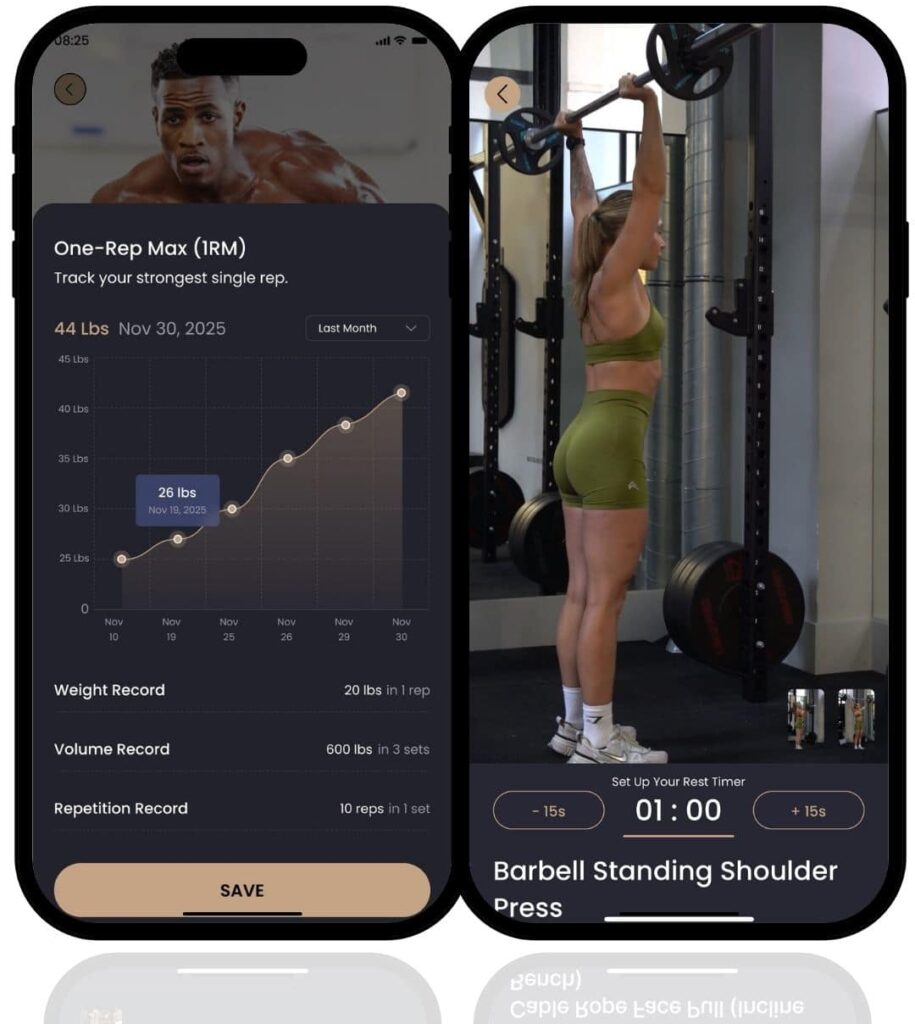
Using the 12REPS App
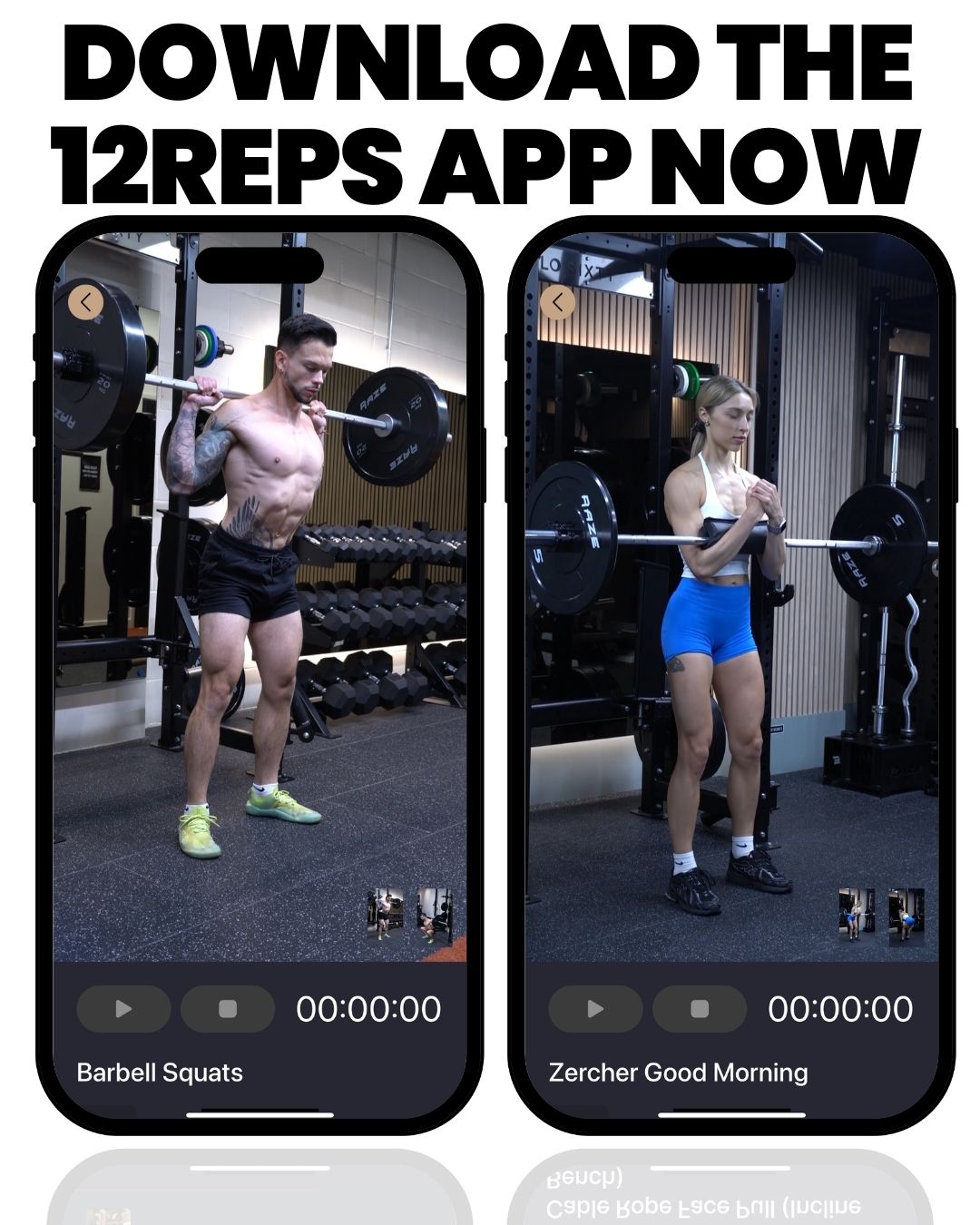
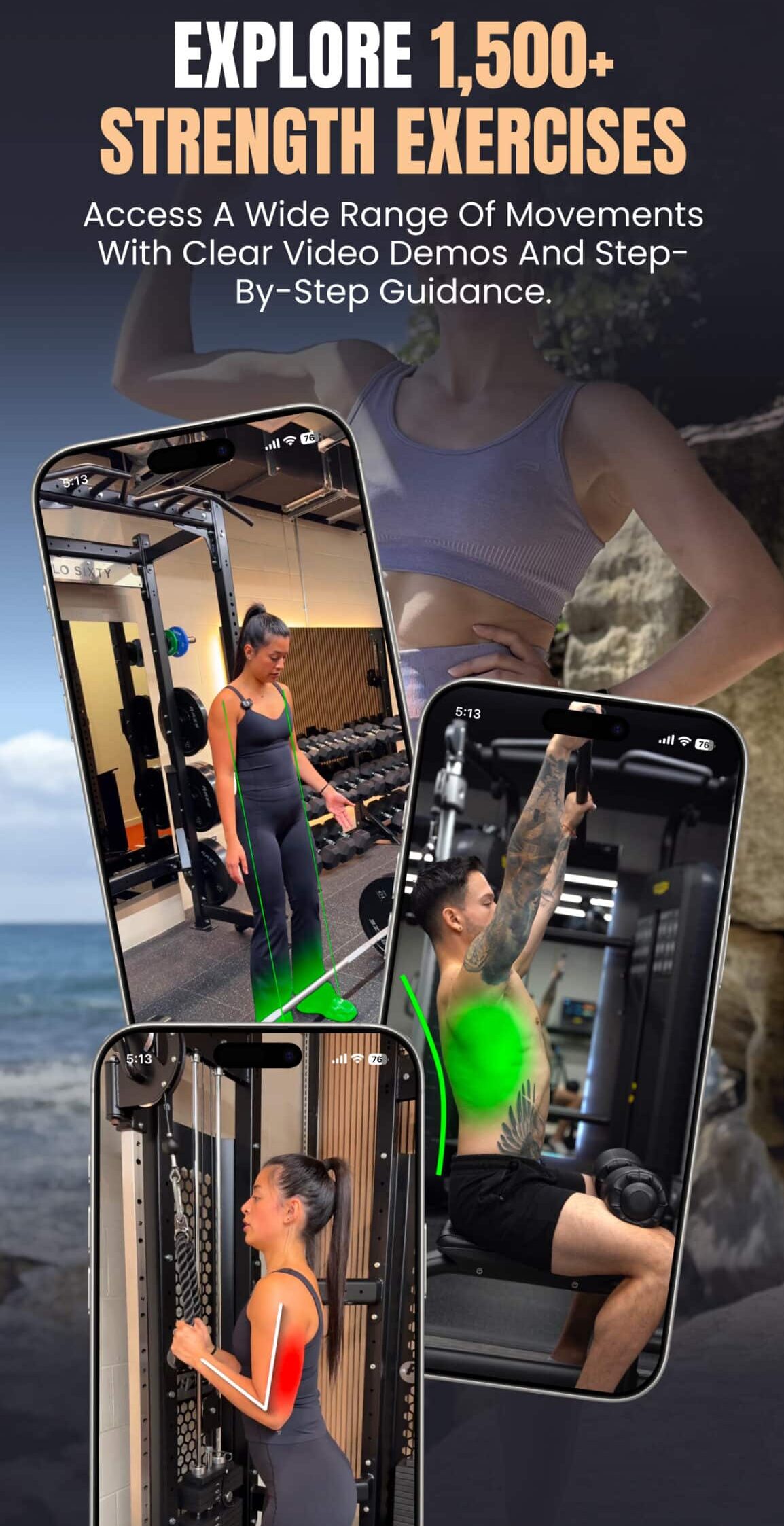
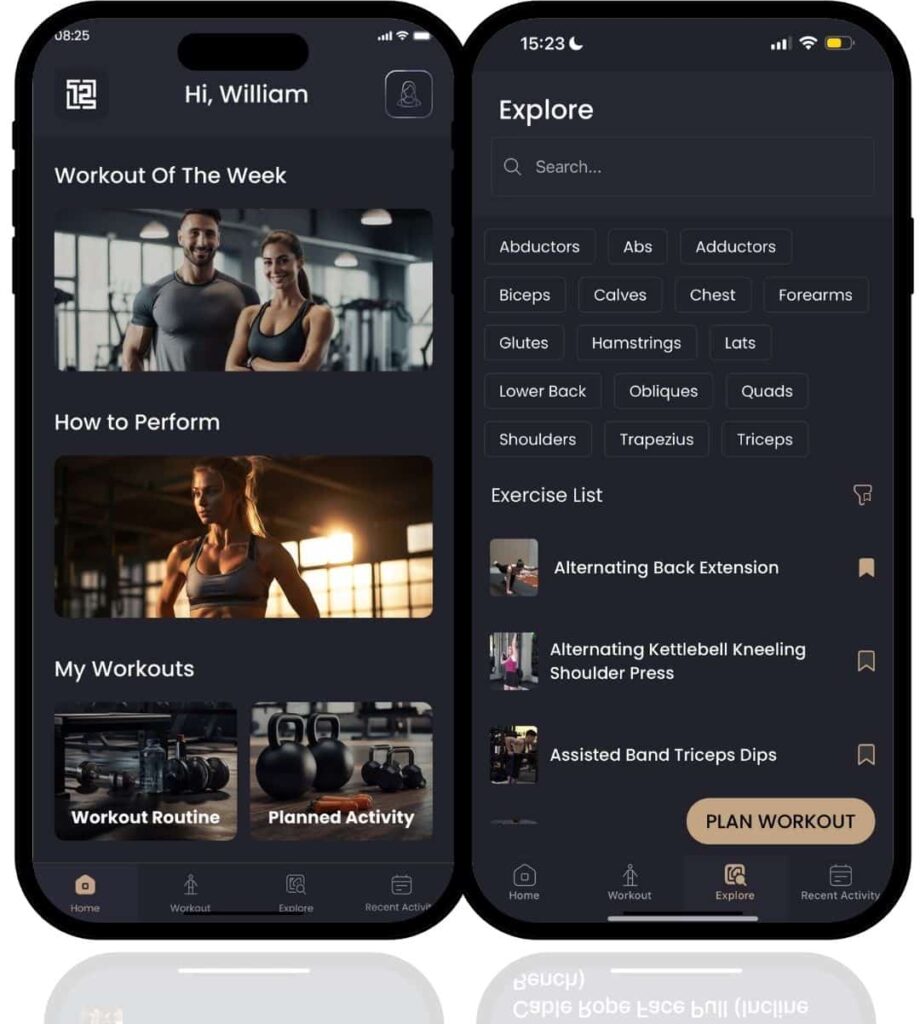
The 12REPS app includes all these exercises with video demonstrations showing proper form.
Features for exercise selection:
- 1,500+ exercises with video demos
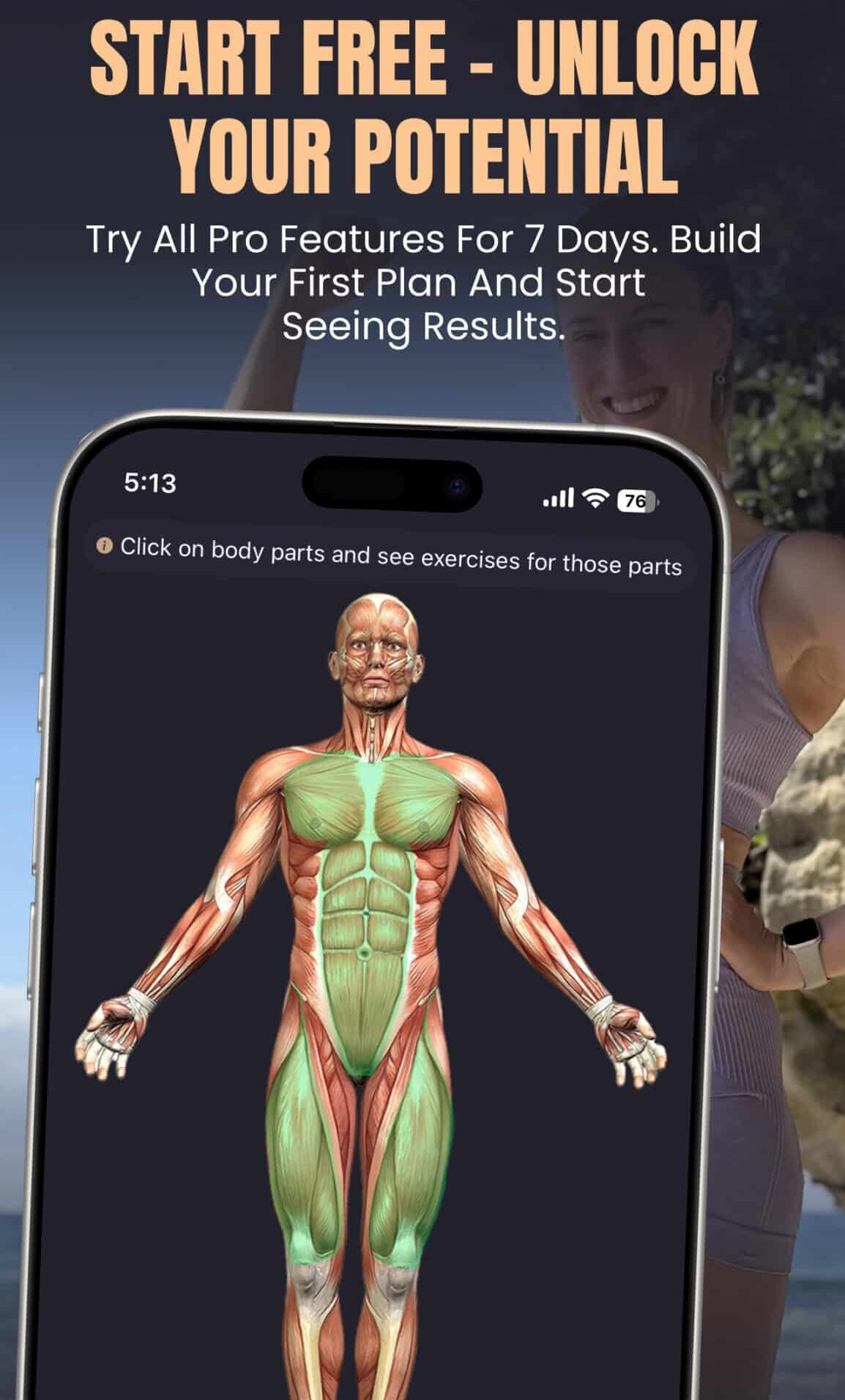
- Filter by muscle group, equipment, and difficulty
- Pre-built programmes using optimal exercise selection
- Track progress on every exercise
Common Mistakes by Muscle Group
Muscle | Common Mistake | The Fix |
Chest | Only flat pressing | Add incline work for upper chest |
Back | Using arms instead of back | Focus on driving elbows, use lighter weight |
Shoulders | Too much front delt, not enough rear | More face pulls and rear delt work |
Biceps | Swinging and using momentum | Lighter weight, strict form |
Triceps | Neglecting long head | Add overhead extension work |
Quads | Half squatting | Full depth on all squats |
Hamstrings | Only doing leg curls | Add hip hinge movements (RDL) |
Glutes | Not activating properly | Warm up with glute activation drills |
Calves | Partial reps, bouncing | Full range of motion, pause at stretch |
Core | Only doing crunches | Add anti-movement exercises |
The Bottom Line
You do not need dozens of exercises. You need the right exercises performed consistently with progressive overload.
The movements in this guide have built countless strong, muscular physiques. They worked for my clients over the past decade, and they will work for you.
Choose 2-4 exercises per muscle group. Master the technique. Progress the weight over time. Be patient.
Download the 12REPS app for video demonstrations of every exercise, pre-built programmes, and tracking to ensure you progress.
Frequently Asked Questions
How many exercises per muscle group?
For most people, 2-4 exercises per muscle group per week is sufficient. Quality beats quantity.
Should I change exercises frequently?
No. Stick with the same exercises for 8-12 weeks to allow adaptation and progressive overload. Change when progress stalls.
Which exercises are best for beginners?
Compound movements: squat, deadlift, bench press, row, overhead press. Master these before adding isolation work.
Can I build muscle with just compound exercises?
Yes. Many people build impressive physiques with primarily compound movements. Isolation exercises help but are not essential.
How do I know if an exercise is working?
You feel the target muscle working during the set, you experience soreness in that muscle 24-48 hours later, and you progressively get stronger over weeks.
References
- Schoenfeld, B.J. et al. (2020). Resistance Training Recommendations to Maximise Muscle Hypertrophy in an Athletic Population. Strength and Conditioning Journal. https://journals.lww.com/nsca-scj/fulltext/2020/12000/resistance_training_recommendations_to_maximize.3.aspx
- Contreras, B. et al. (2015). A Comparison of Gluteus Maximus, Biceps Femoris, and Vastus Lateralis Electromyographic Activity in the Back Squat and Barbell Hip Thrust Exercises. Journal of Applied Biomechanics. https://pubmed.ncbi.nlm.nih.gov/26618062/
- Schoenfeld, B.J. et al. (2014). Effects of different volume-equated resistance training loading strategies on muscular adaptations in well-trained men. Journal of Strength and Conditioning Research. https://pubmed.ncbi.nlm.nih.gov/24714538/
- Youdas, J.W. et al. (2010). Comparison of muscle activation levels during arm abduction in the plane of the scapula vs. proprioceptive neuromuscular facilitation upper extremity patterns. Journal of Strength and Conditioning Research. https://pubmed.ncbi.nlm.nih.gov/20093967/
Related Articles on just12reps.com
Article | Description | Link |
How to Get Stronger | Complete guide to building strength. | |
The Science of Progressive Overload | The principle that drives all progress. | |
Complete Beginner’s Guide to Strength Training | Start your journey properly. | |
Upper Lower vs PPL vs Full Body | Choosing the right split. | |
12REPS App Features | Your intelligent workout planner. |
About the Author: Will Duru holds a BSc (Hons) in Sport and Exercise Science and is an award-winning personal trainer with over 10 years of experience. He has helped hundreds of clients develop balanced, strong physiques using the exercises in this guide. Will created the 12REPS app to provide video demonstrations and programming for every exercise, making expert guidance accessible to everyone.