

By Will Duru, BSc (Hons) Sport and Exercise Science, Award-winning Personal Trainer with over 10 years of experience in strength training and optimising recovery.
Your Rep Range Is Not a Personality Test
Some lifters treat rep ranges like opposing teams. Heavy triples are called serious strength training. Sets of 12 are labelled bodybuilding. Anything above 15 is dismissed as cardio with weights.
That thinking makes training harder than it needs to be. A repetition range is a tool. The right tool depends on the exercise, your goal, your experience and how well you recover.
Twelve reps can be a strong default because it gives you enough load to challenge the muscle, enough repetitions to practise the movement and a simple target to track. But it is not the only useful range, and it is not automatically best for every exercise.
The Question You Should Ask Instead
Do not ask, “Which rep range is best?” Ask, “Which rep range helps me train this exercise safely, reach my goal and progress from week to week?”
- A heavy barbell squat may suit lower repetitions.
- A lateral raise often feels better with moderate or higher repetitions.
- Press-ups may land anywhere from 6 to 25 reps depending on your strength.
- Rehabilitation work may need lighter loads and more control.
- A beginner may benefit from moderate reps because each set gives more practice.
What Different Rep Ranges Actually Do
Rep range | Typical goal | Load | Rest | Main benefit | Main trade-off |
1-5 | Maximum strength | Heavy | 2-5 minutes | Practises producing force with heavy loads | More fatigue, fewer practice reps and longer sessions |
6-8 | Strength and muscle | Moderately heavy | 2-3 minutes | Good balance for compound exercises | Still demanding and technique can break down |
8-12 | Muscle and general strength | Moderate | 60-150 seconds | Useful blend of tension, volume and control | Not specific enough for maximum-strength testing |
12-15 | Muscle and control | Moderate to light | 45-90 seconds | More practice and local muscle fatigue | The final reps can become uncomfortable |
15+ | Endurance and accessory work | Light to moderate | 30-75 seconds | Useful for smaller muscles and conditioning | Sets take longer and can be limited by discomfort |
Low Reps: 1 to 5
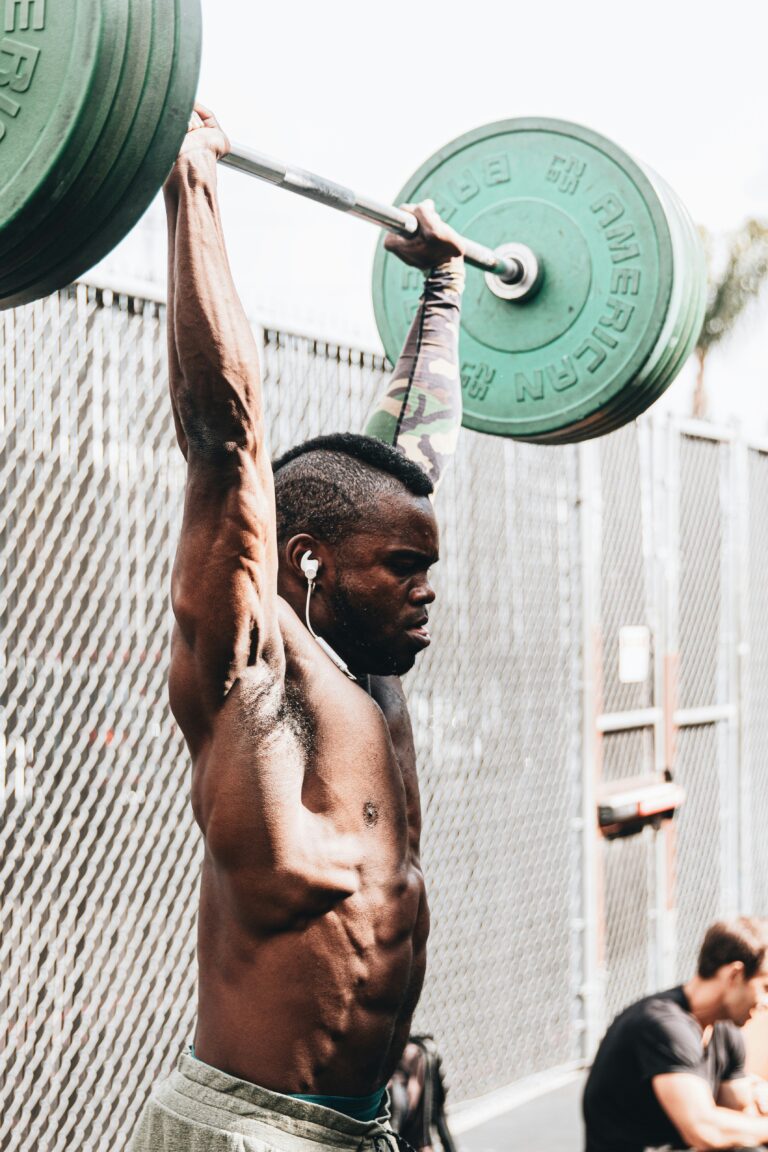
Low-repetition training is useful when the main goal is lifting a heavier weight for one repetition. Powerlifters and strength athletes need regular exposure to heavy loads because strength is specific. You become better at heavy lifting by practising heavy lifting.
The downside is cost. Heavy sets require longer rest, stronger technique and more recovery. A beginner can learn with lower reps, but there are fewer repetitions in each set to practise the movement. Missing a heavy repetition also carries more consequences than stopping a moderate set early.
Moderate-Low Reps: 6 to 8
Six to eight reps work well for compound exercises such as presses, rows, squats and deadlift variations. The load is heavy enough to build strength, while the set still provides enough volume to support muscle growth.
This range is useful for experienced lifters who can maintain good positions under heavier loads. It can also become tiring when every exercise uses the same range. Heavy squats, presses, rows and hinges in one session may create more fatigue than the programme can recover from.
The 8-to-12 Range
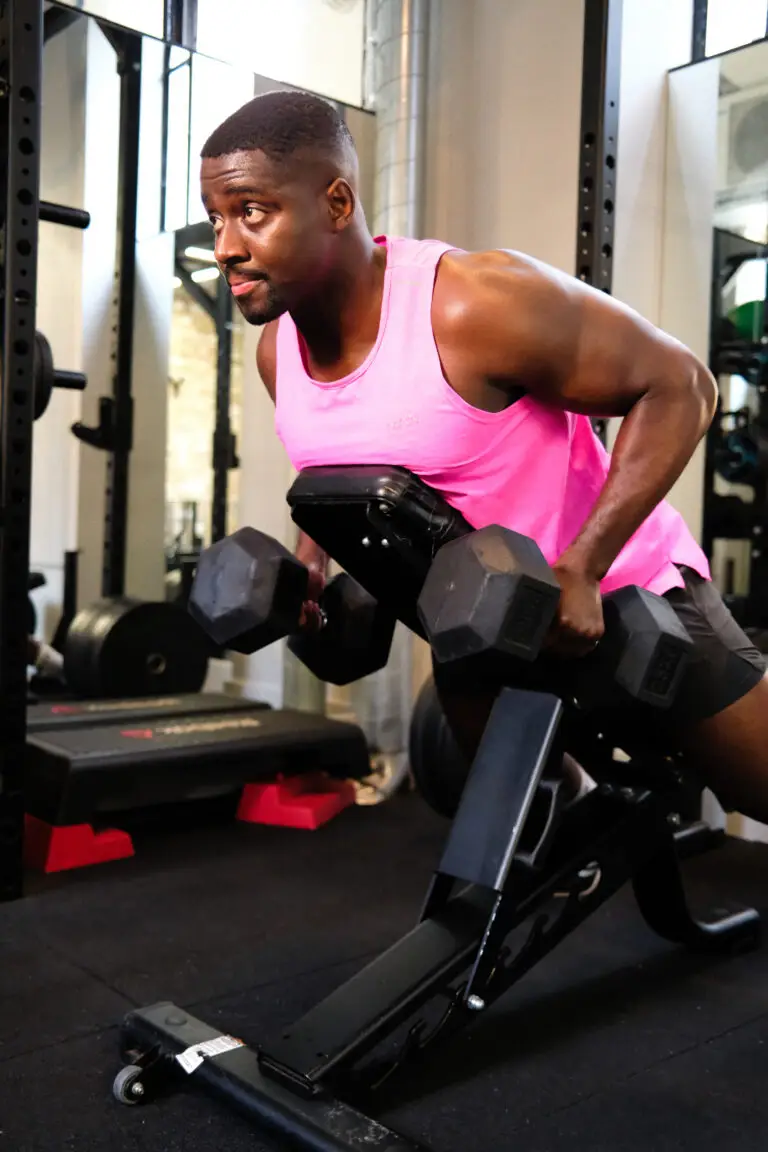
This range is popular because it is practical. The load can be challenging without requiring maximum effort. You can accumulate useful training volume, practise technique and progress by adding repetitions before adding weight.
Twelve reps sit at the upper end. A set of 12 gives you a clear target and works well for many dumbbell, cable, machine and bodyweight exercises. It is especially useful when your goal is muscle growth, general strength or body composition rather than a one-repetition maximum.
Higher Reps: 15 and Above
Higher reps are not pointless. Muscle can grow across a wide range of repetitions when sets are challenging and training volume is appropriate. Higher reps often suit lateral raises, rear-shoulder work, calves, glute accessories and bodyweight exercises.
The limiting factor may become discomfort rather than the target muscle. A set of 25 squats can leave you breathless before your legs receive the best stimulus. Use higher reps where they improve control, comfort or endurance, not because lighter always means safer.
Why 12 Reps Is a Useful Default
- It is simple to remember and program.
- It works for many dumbbell, cable, machine and bodyweight exercises.
- The load is usually manageable enough to protect the technique.
- You can progress from 8 to 12 reps before increasing weight.
- It provides enough repetitions to learn and reinforce a movement.
- It suits people who want muscle, strength and better body composition rather than a specialised competitive goal.
A default is not a rule. You might use 5 reps for a main lift, 8 to 12 for a secondary exercise and 15 to 20 for an accessory movement in the same session.
A Better Way to Program Rep Ranges
The most useful programmes do not force every exercise into one range. They match the range to the movement and the goal.
Exercise role | Suggested reps | Sets | Rest | Example |
Main compound | 4-8 | 3-5 | 2-3 minutes | Squat or press |
Secondary compound | 8-12 | 3-4 | 90-150 seconds | Row or Romanian deadlift |
Accessory | 10-15 | 2-4 | 45-90 seconds | Curl or triceps extension |
Small-muscle or stability | 12-20 | 2-3 | 30-75 seconds | Face pull or lateral raise |
Core or carry | Time or distance | 3-4 | 45-90 seconds | Plank or farmer walk |
How to Choose the Right Weight for 12 Reps
Choose a weight you can lift for 12 controlled repetitions while finishing with around one to three good repetitions left. The set should feel challenging, but the final repetition should still look like the first.
- If you stop at 8 because your technique breaks down, the weight is too heavy for a 12-rep target.
- If you finish 12 and could complete another 10, the weight is too light.
- If you complete 12 with control and could manage one or two more, the load is appropriate.
Use Double Progression
Set a range, such as 8 to 12 repetitions. Start with a weight you can control for eight or nine reps. Over the following sessions, add repetitions. Once every working set reaches 12 with good form, increase the weight and return towards the lower end of the range.
This gives you two ways to progress: more repetitions or more load. It also stops you from gaining weight before you have earned it.
Moderate-Low Rep Training (6-8 Reps): Strength-Hypertrophy
The 6-8 rep range is interesting because it sits right between strength and muscle building. Many people see this as the best of both worlds, but the reality is more nuanced.
The Appeal of 6-8 Reps
This rep range uses about 75-85% of your maximum strength, which is heavy enough to build significant strength but not so heavy that you can only do a few reps. You get solid strength gains while also stimulating some muscle growth.
Many intermediate lifters gravitate toward this range because it feels challenging without being overwhelming. The weights are substantial enough to feel impressive, but manageable enough to maintain good form.
I’ve had clients make excellent progress in the 6-8 rep range, especially those who started with higher reps and wanted to focus more on strength development.
The Limitations Become Apparent
The problem with 6-8 reps is that it’s not optimal for either strength or muscle growth. You’re in a middle ground that doesn’t maximise either adaptation.
For pure strength, 1-5 reps is more effective because you’re training your nervous system to handle maximum loads. For muscle growth, 9-15 reps is superior because you get more volume and metabolic stress.
Recovery can also be challenging. The weights are heavy enough to stress your nervous system significantly, but you’re doing enough reps to create substantial muscle fatigue. This combination can be demanding on your recovery capacity.
Plateau Potential
I’ve noticed that people often plateau quickly in the 6-8 rep range. The weights become too heavy to add reps easily, but adding weight becomes increasingly difficult. Progress can stall, leading to frustration.
With 12 reps, you have more flexibility. You can add reps (go from 12 to 13, then 14), improve form and control, or add weight. This variety keeps progress moving forward.
When 6-8 Reps Makes Sense
The 6-8 rep range works well for:
– Intermediate lifters transitioning from higher to lower reps
– People who want to focus on strength while maintaining some muscle growth
– Those who find 12 reps too easy but aren’t ready for very heavy lifting
– Specific exercises where the rep range feels natural
The 12-Rep Advantage
While 6-8 reps have their place, research consistently shows that 12 reps provide superior muscle growth with similar strength gains [2]. The higher volume and metabolic stress of 12-rep training typically produce better overall results.
The 6-8 rep range offers some benefits, but 12 reps provides superior muscle growth with similar strength gains. For most people, the extra muscle development and lower injury risk of 12-rep training make it the better choice.
20 Strength, Bodyweight and Cable Exercises From the 12REPS Library
The linked exercises below give you a mix of movement patterns. The recommendations are starting points, not fixed rules. Adjust the range to your goal, experience and technique.
Exercise | Main focus | Sets | Recommended reps | Best use |
Chest, shoulders and triceps | 3 | 8-15 | Bodyweight push | |
Upper chest and shoulders | 3-4 | 6-12 | Compound press | |
Chest and triceps | 3-4 | 8-12 | Controlled press | |
Back and biceps | 3-4 | 8-12 | Vertical pull | |
Mid-back | 3-4 | 8-12 | Horizontal pull | |
Upper back | 3-4 | 8-12 | Supported row | |
Rear shoulders and upper back | 3 | 12-20 | Shoulder balance | |
Shoulders and triceps | 3 | 8-12 | Shoulder strength | |
Biceps | 3 | 10-15 | Arm accessory | |
Triceps | 3 | 10-15 | Arm accessory | |
Quadriceps and glutes | 3-4 | 8-15 | Squat pattern | |
Quadriceps and glutes | 3-4 | 8-12 | Cable squat | |
Hamstrings and glutes | 3-4 | 8-12 | Hip hinge | |
Legs and glutes | 3 | 8-12 each leg | Single-leg strength | |
Quadriceps and glutes | 3 | 8-12 each leg | Single-leg progression | |
Glutes and quadriceps | 3 | 8-12 each leg | Loaded step | |
Glutes | 3-4 | 10-20 | Glute strength | |
Glutes | 3 | 12-20 each leg | Glute accessory | |
Mid-section | 3 | 30-60 seconds | Core stability | |
Grip, core and full body | 4 | 20-40 metres | Loaded carry |
A Simple Three-Day Program Using Mixed Rep Ranges
Day One
- Goblet squat: 4 sets of 8 reps.
- Seated cable chest press: 3 sets of 10-12 reps.
- Cable wide-bar row: 3 sets of 10-12 reps.
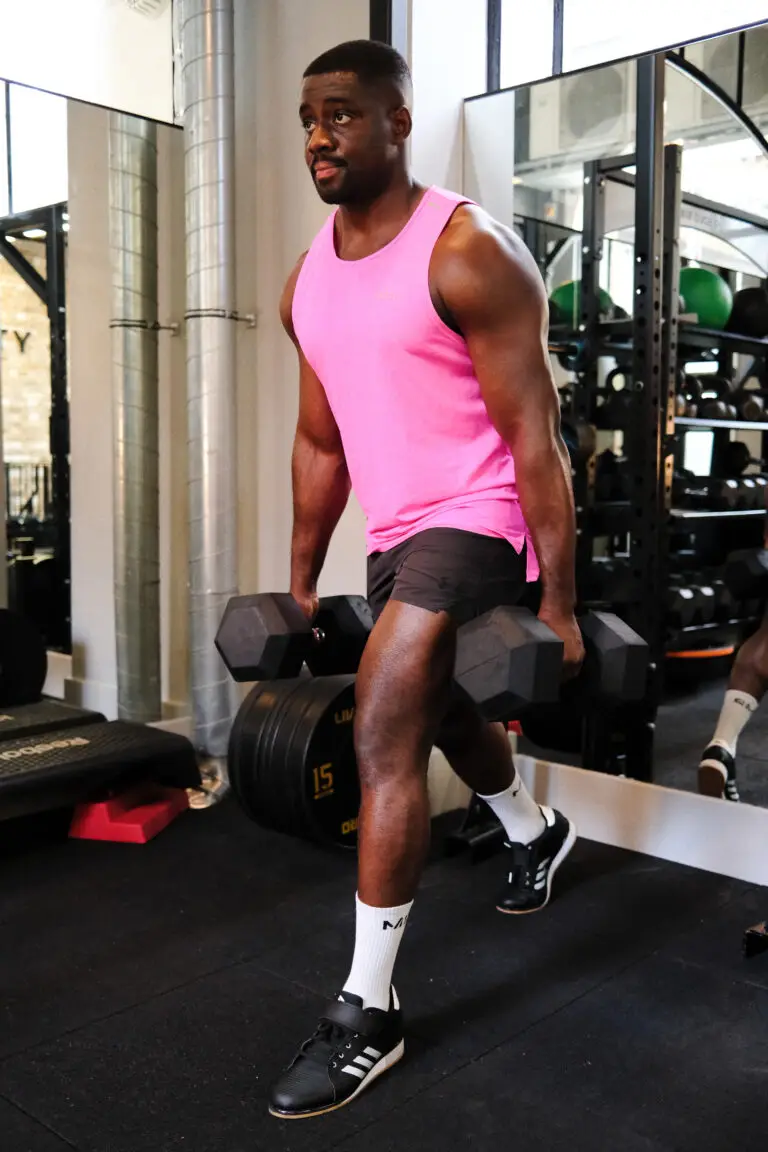
- Reverse lunge: 3 sets of 10 reps per leg.
- Face pull: 3 sets of 15 reps.
- Plank: 3 sets of 30-45 seconds.
Day Two
- Cable Romanian deadlift: 4 sets of 6-8 reps.
- Dumbbell incline press: 3 sets of 8-12 reps.
- Lat pulldown: 3 sets of 8-12 reps.
- Cable step-up: 3 sets of 10 reps per leg.
- Biceps curl: 3 sets of 12-15 reps.
- Farmer walk: 4 sets of 30 metres.
Day Three
- Cable front squat: 3 sets of 10-12 reps.
- Bodyweight press-up: 3 sets of 8-15 reps.
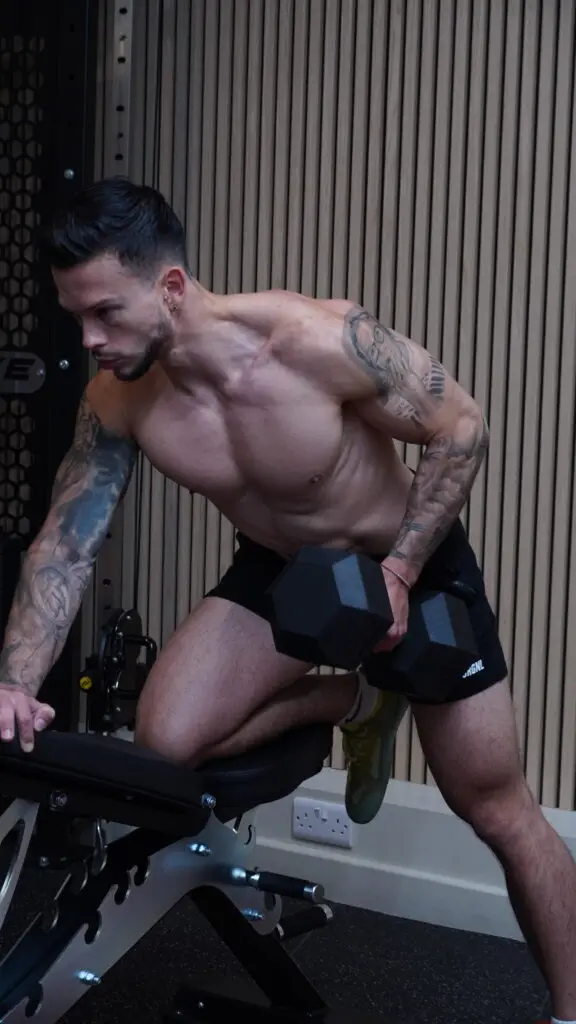
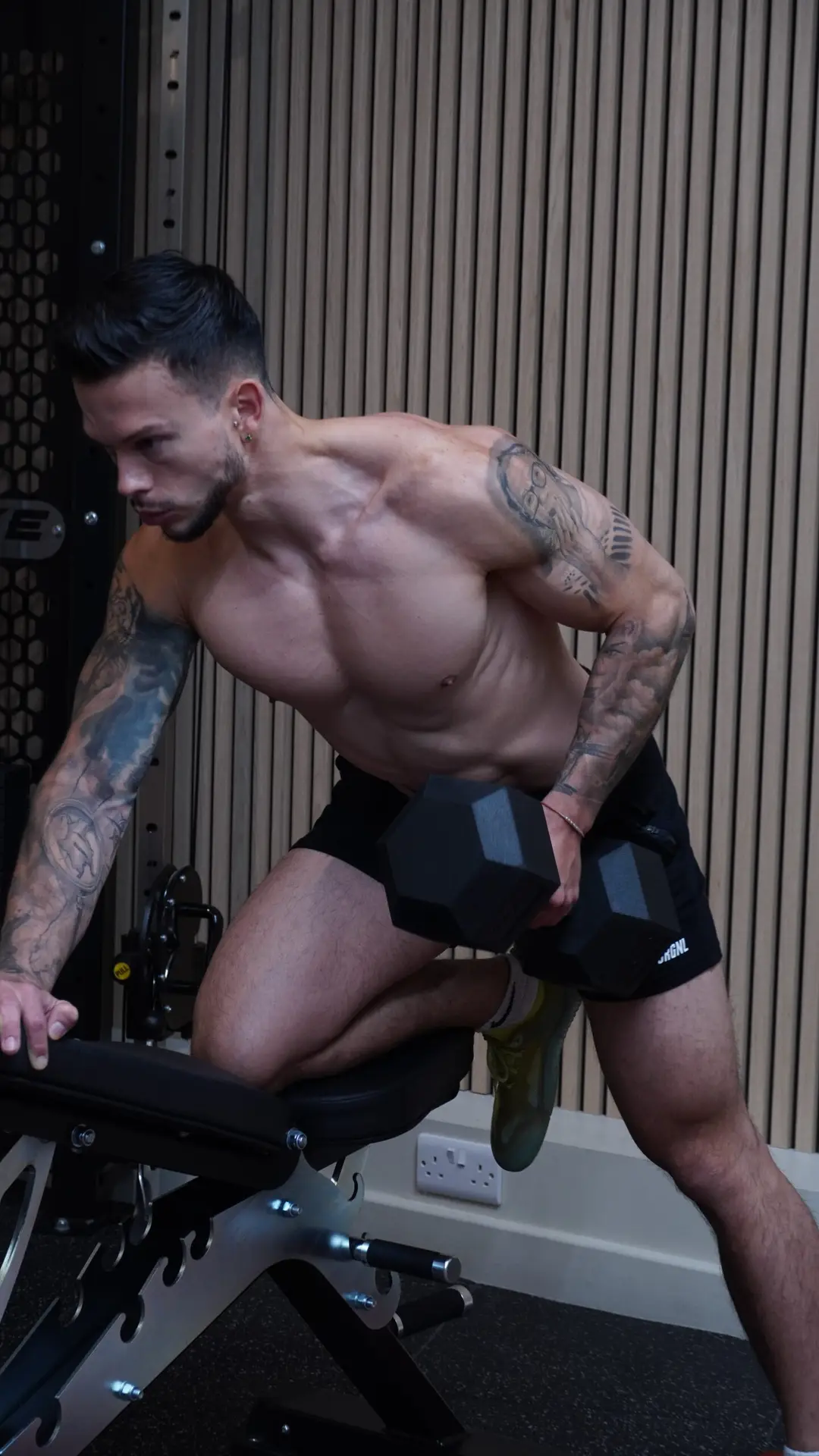
- Dumbbell incline row: 3 sets of 8-12 reps.
- Bodyweight hip thrust: 3 sets of 12-20 reps.
- Triceps extension: 3 sets of 12-15 reps.
- Cable glute kickback: 3 sets of 15 reps per leg.
Why 12REPS Makes Rep Progression Easier
Understanding rep ranges is useful. Applying them every week is where people get stuck. You need to remember the target, record the weight and know when it is time to progress.
- Follow trainer-built programmes with sets and reps already planned.
- Build your own workout from the exercise library.
- Watch the exercise demonstration before the set.
- Record the weight and repetitions you complete.
- Review your previous performance instead of relying on memory.
- Use exercise alternatives when equipment is unavailable.
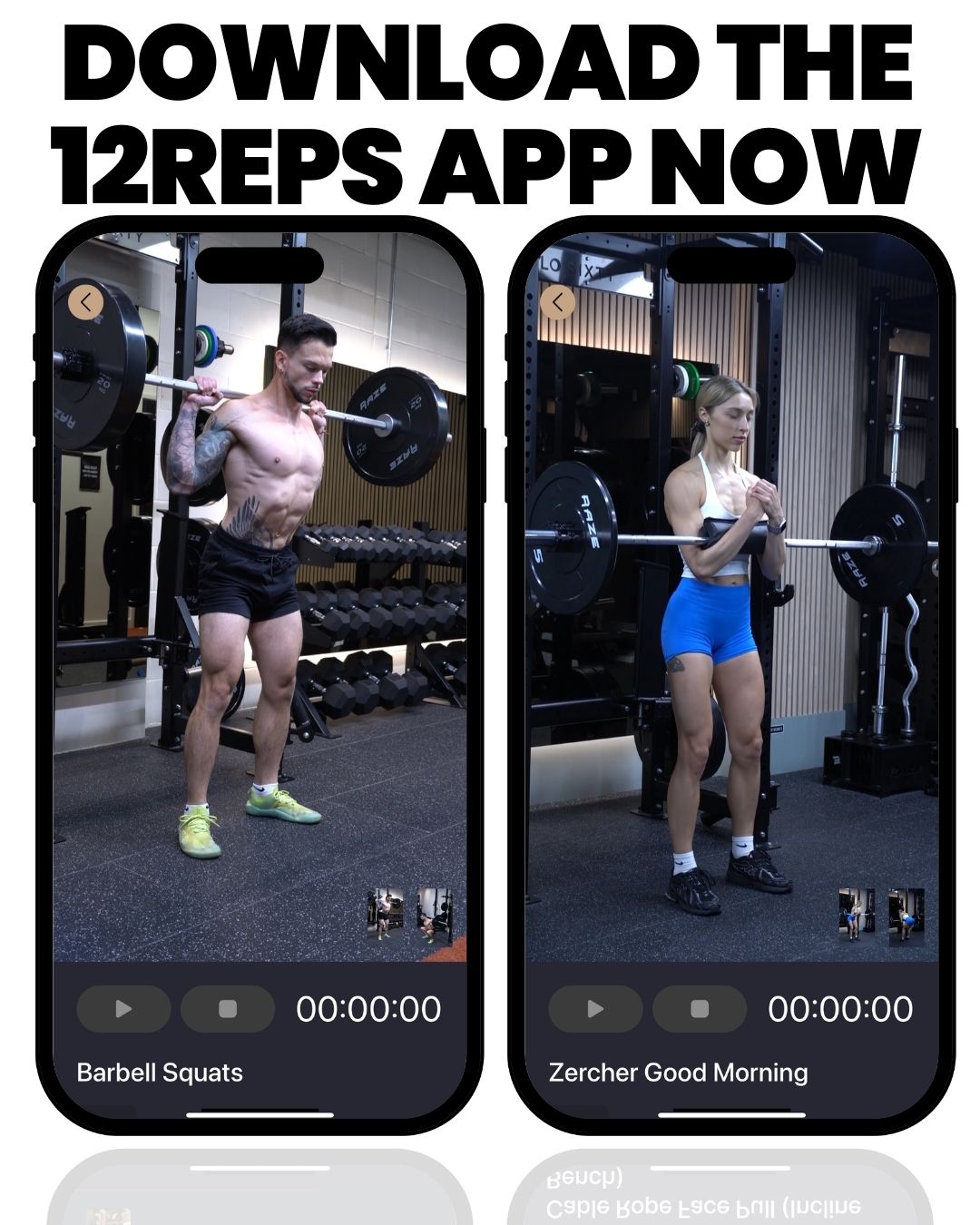
12REPS does not force every exercise into the same rep range. It gives you the structure and tracking needed to use the right range for the workout in front of you.
Choose the range. Track the work. Progress with proof.
Explore the 12REPS strength training exercise library and build your next workout.
About PT Will Duru
Will Duru is a personal trainer with more than a decade of experience and a Sport and Exercise Science BSc (Hons). He created 12REPS to help people follow structured strength training and make measurable progress. Learn more at PTWill.com.
Scientific References
[2] Kubo, K., Ikebukuro, T., & Yata, H. (2021). Effects of 4, 8, and 12 repetition maximum resistance training protocols on muscle volume and strength. *Journal of Strength and Conditioning Research*, 35(4), 879-885. https://journals.lww.com/nsca-jscr/fulltext/2021/04000/Effects_of_4,_8,_and_12_Repetition_Maximum.1.aspx
[3] Schoenfeld, B. J., Grgic, J., Ogborn, D., & Krieger, J. W. (2017). Strength and hypertrophy adaptations between low-vs. high-load resistance training: a systematic review and meta-analysis. *Journal of Strength and Conditioning Research*, 31(12), 3508-3523. https://journals.lww.com/nsca-jscr/fulltext/2017/12000/Strength_and_Hypertropy_Adaptations_Between_Low_.31.aspx