

Written by Will Duru, BSc (Hons) Sport and Exercise Science, award-winning Personal Trainer with over 10 years of experience in strength training and optimising recovery .
This beginner bodyweight leg workout trains your legs and core with no equipment. It uses six moves, including jump squats, curtsy lunges and sit-ups, in a simple plan you can do at home. You get stronger by doing a little more over time, not by owning weights.
Many people want to start training but feel unsure about gyms or where to begin. You do not need a gym membership to build a stronger lower body. The 2026 ACSM resistance training position stand lists bodyweight and home-based training as effective options.
Below you will find each exercise with a 12REPS demonstration video, a workout plan, and ways to make it harder as you improve.
Essential Bodyweight Lower Body Exercises
These six moves build a base of strength in your lower body and core, with no equipment. The press-up also trains your chest, shoulders and arms. Each move can be made easier or harder as you get stronger.
1. Jump Squats
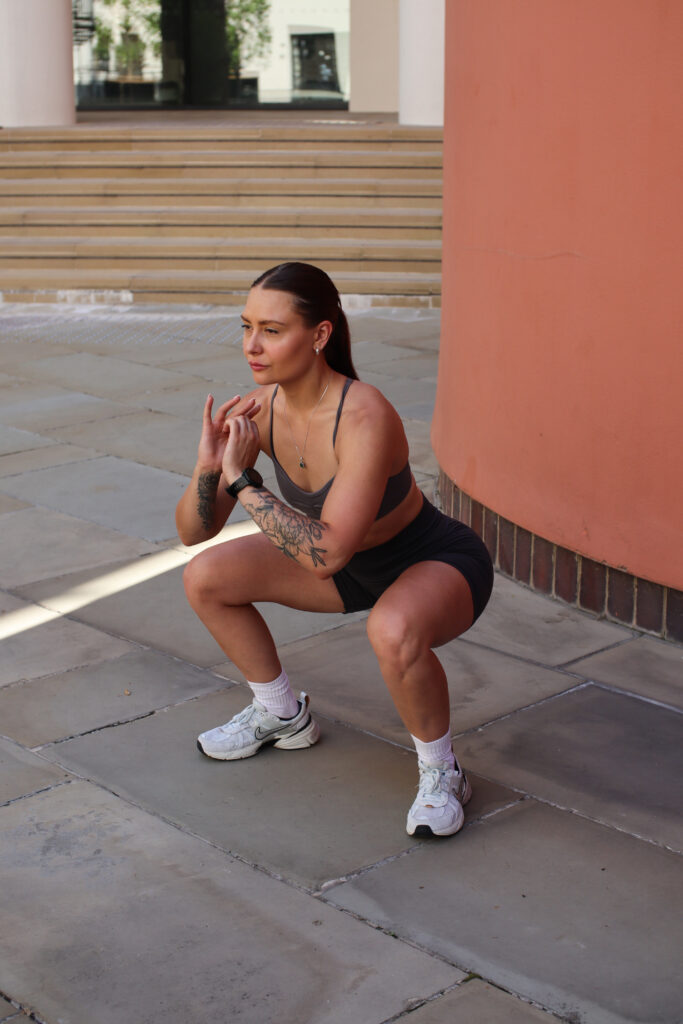
The bodyweight jump squat is a squat that finishes with a jump. It trains your quads and glutes to produce force fast, and it raises your heart rate.
How to do it:
- Stand with your feet about shoulder-width apart.
- Squat down by pushing your hips back and bending your knees.
- Drive up and jump. Land softly, let your knees bend, and sink into the next squat.
Beginner tip: Start with regular bodyweight squats. Add the jump once your squats feel steady and controlled. If you have joint pain or a health condition, check with your doctor or a physical therapist before adding jumps.
2. Press-Ups (or Knee Press-Ups)
The bodyweight press-up (push-up) is an upper-body exercise for your chest, shoulders and triceps. Your core also works to hold your body in a straight line. Doing it from your knees makes it easier.
How to do it:
- Place your hands on the floor, a little wider than your shoulders.
- Brace your core so your body forms a straight line from your head to your heels, or to your knees.
- Lower your chest toward the floor, then push back up.
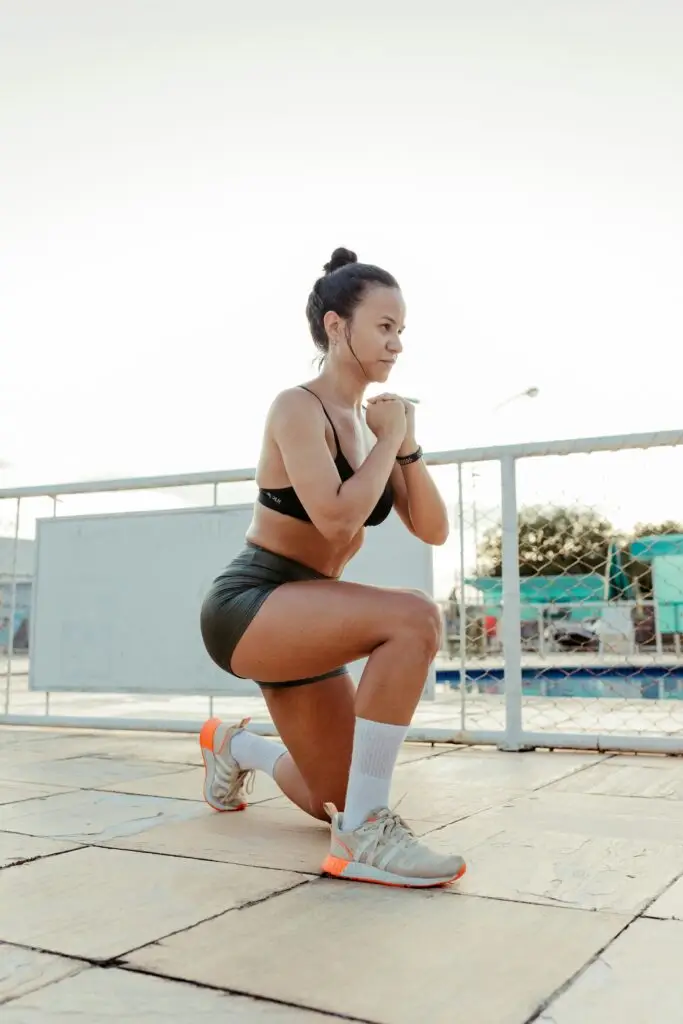
3. Curtsy Lunges
The curtsy lunge is a lunge where you step one leg back and across, behind the other. It works your quads and glutes. Your side glute muscle (gluteus medius) helps keep your hips and front knee steady, so it also tests your balance.
How to do it:
- Stand tall with your feet hip-width apart.
- Step your right leg back and behind your left, as if doing a curtsy.
- Bend both knees and lower as far as you can control.
- Push through your front foot to stand back up. Repeat, then switch sides.
4. High Knees
High knees are a cardio exercise. You run on the spot and drive your knees up toward hip height. They raise your heart rate and work your hip flexors and core, so they make a good warm-up or short cardio burst.
Beginner tip: March on the spot instead of running to make it lower impact.
5. Sit-Ups
Sit-ups train the rectus abdominis (the “six-pack” muscle at the front of your stomach) and your hip flexors.
How to do it:
- Lie on your back with your knees bent and feet flat on the floor.
- Cross your arms over your chest, or rest your fingertips lightly by your ears without pulling on your neck.
- Curl up until your chest is close to your thighs, then lower back down with control.
6. Lying Down Flutter Kicks
Flutter kicks work your abdominal muscles and the muscles at the front of your hips. Lie on your back and lift your legs a few inches off the floor. Kick them up and down in small movements.
Beginner tip: Keep your lower back pressed into the floor. If it starts to lift, raise your legs higher or bend your knees.
Your Beginner Bodyweight Leg Workout Plan
Warm up for a few minutes first, for example with light jogging on the spot or arm circles. Then work through the plan below. The NHS advises strengthening activities on at least 2 days a week.
Warm-up sets are easier practice sets before your working sets. Do fewer reps or an easier version of the move.
| Exercise | Warm-up sets | Working sets | Reps or time | Rest (seconds) |
|---|---|---|---|---|
| Jump squats | 1 to 2 | 4 | 10 to 12 reps | 45 to 60 |
| Press-ups (or knee press-ups) | 1 to 2 | 4 | 10 to 12 reps | 45 to 60 |
| Curtsy lunges | 1 | 4 | 10 to 12 reps per leg | 45 to 60 |
| High knees | 1 | 4 | 30 to 45 seconds | 45 to 60 |
| Sit-ups | 1 | 4 | 10 to 12 reps | 45 to 60 |
| Lying down flutter kicks | 1 | 4 | 30 to 45 seconds | 45 to 60 |

How to Make Bodyweight Workouts Harder
Many people ask, “How can I get stronger if I do not use weights?” The answer is to make your bodyweight exercises harder over time. This is called progressive overload: you challenge your muscles to do a bit more than last time. If you always do the same workout, your body adapts and progress slows.
Lighter loads, like your own body weight, can build muscle when you take your sets close to fatigue. Heavier loads build maximal strength better (Schoenfeld and colleagues, 2017).
Here are some ways to make your bodyweight workouts harder:
- Do more reps and sets: If 12 reps feel comfortable, try 15 next time. Once you can do that every session, think about adding another set.
- Rest less: If you rest for 60 seconds between sets, try 45 seconds. This makes each set more challenging.
- Improve your form and range: Can you squat a little lower with control? Can you lift your knees higher in high knees? A fuller, cleaner movement makes the exercise harder.
- Hold positions: Pause at the hardest point of a move. For example, hold the bottom of a squat for 3 to 5 seconds before standing up.
- Try harder versions: If knee press-ups feel easy, move to full press-ups. If jump squats feel simple, try tuck jumps or a split squat such as the bodyweight Bulgarian split squat.
Logging your reps each session shows you how much you are improving. It also tells you what to beat next time. Our beginner’s guide to progressive overload explains more.
Benefits of Bodyweight Training
Bodyweight training is more than a backup for when you cannot get to a gym. It is a practical way to build strength, especially if you are busy.
- Train anywhere: You can do this workout at home, in a hotel room or in a park. That makes it simpler to fit into your week.
- Strength for daily life: Stronger legs and a stronger core help with everyday tasks, like climbing stairs and carrying shopping.
- Core work in every session: Most of these moves ask your core to keep your body steady, from press-ups to flutter kicks.
- Body awareness: Without weights to manage, you can focus on how each muscle feels and how you move.
Bodyweight training has limits. As you get stronger, your body weight alone may not be enough to keep building maximal strength. When that happens, add load. Our kettlebell exercises at home and machine leg day workout are good next steps.
Next Steps for a Stronger Lower Body
This beginner bodyweight workout builds strength in your legs and core with no equipment. Do it regularly and make it a little harder over time. Consistency matters more than having a gym.
Looking for lower-body plans written for women? Start with our five no-equipment lower-body moves for women or our guide to stronger legs and glutes for women. For gym and dumbbell options, read strength training for women’s lower body and the women’s dumbbell leg day workout.
If you want a plan that grows with you, 12REPS builds sessions around your goal, your equipment and the time you have. Every exercise has a trainer demonstration, and you log your reps and weight for each set so you always have a number to beat. See how the 12REPS app works.
Sources
- 5 Things to Know About Creating an Effective Resistance Training Plan (ACSM position stand infographic). American College of Sports Medicine, 2026. https://acsm.org/wp-content/uploads/2026/03/Resistance-Training-Position-Stand-infographic.pdf
- Physical activity guidelines for adults aged 19 to 64. NHS, 2024. https://www.nhs.uk/live-well/exercise/physical-activity-guidelines-for-adults-aged-19-to-64/
- Strength and hypertrophy adaptations between low- vs. high-load resistance training: a systematic review and meta-analysis (Schoenfeld BJ, Grgic J, Ogborn D, Krieger JW). Journal of Strength and Conditioning Research, 2017. https://www.pubmed.gov/28834797/