



Written by Will Duru, BSc (Hons) Sport and Exercise Science, award-winning Personal Trainer with over 10 years of experience in strength training and optimising recovery
This strength training program for runners is a 12-week push/pull/legs plan you can do with your body weight, a pair of dumbbells and a pull-up bar or band. You train three times a week alongside your running. Each phase adds a little more load or speed, so your muscles, tendons and joints can adapt to the force running puts through them.
It suits runners training for a 5K up to a marathon who want a simple plan for home or a small gym. If you have full gym access and want a shorter block, try the 6-week push/pull/legs gym program for runners instead.
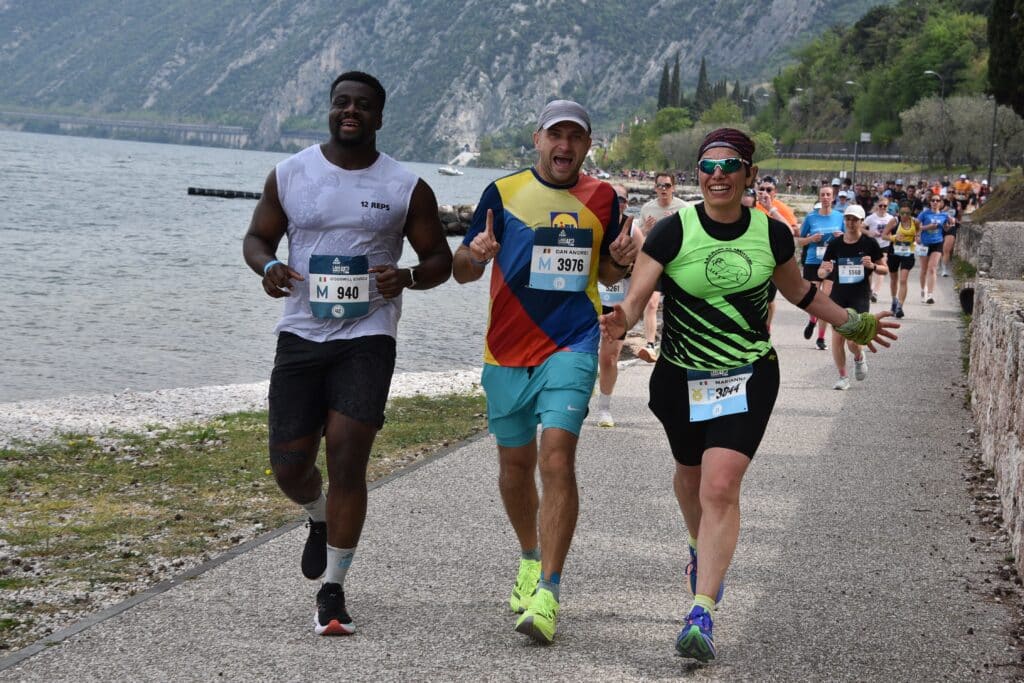
Why runners should strength train
Most runners don’t need to run more. They need a body strong enough to handle the running they already do.
A systematic review of 24 studies found that strength training improved running economy by 2 to 8% in most studies. Running economy is the energy you use at a given pace, so better economy means the same pace costs you less. Time-trial results over 1.5 to 10 km also tended to improve, while VO2max was usually unchanged.
The review covered heavy lifting, explosive lifting and plyometrics (jumps and hops). This program uses a mix of all three, at a level most recreational runners can manage at home.
What about injuries?
The evidence is mixed. A large meta-analysis across several sports found that strength training programs were linked with fewer sports injuries, but it did not include trials in runners. A 2024 meta-analysis of nine studies in endurance runners found that exercise-based programs did not clearly lower running injury risk. Supervised programs looked more promising, but most of the studies were low quality.
So treat strength work as part of good training, not as an injury shield. Consistency matters more than any single exercise.
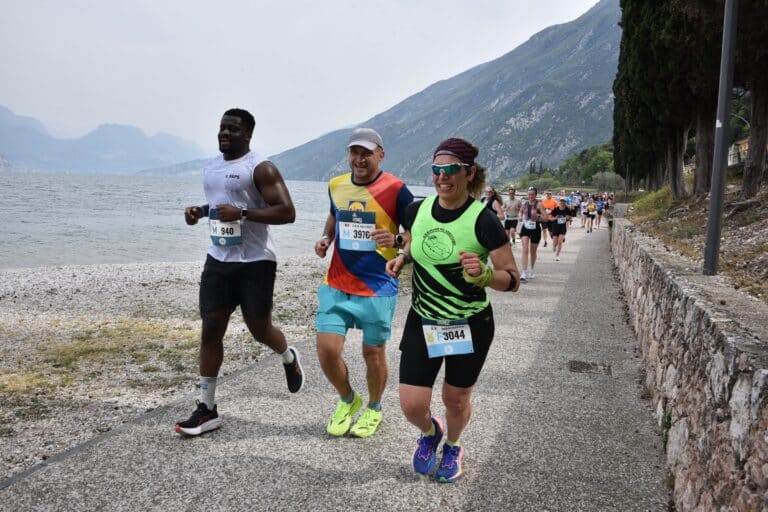
How the 12-week program works
The plan uses a push, pull, legs split. Push days train the chest, shoulders and triceps. Pull days train the back, biceps and rear shoulders. Legs days train the quads, glutes, hamstrings and calves.
- Weeks 1 to 4, Foundation: bodyweight exercises to learn each movement and build control.
- Weeks 5 to 8, Strength: dumbbells replace most bodyweight moves, and you add load week by week.
- Weeks 9 to 12, Power: heavier loads plus explosive moves such as push presses, thrusters and jump squats.
Each session takes about 45 to 60 minutes. Start with a short movement warm-up and one lighter warm-up set per exercise. Then do the working sets in the tables, with about 45 seconds of rest.
The short rests and higher reps make this a strength endurance program. It trains your muscles to keep working when tired, which is what you need late in a race. It is not a maximal strength program, so do not expect big gains in your heaviest lifts.
Equipment
- A set of dumbbells or adjustable dumbbells
- A pull-up bar or resistance band
- A sturdy bench, box or step
How to fit the sessions around your runs
Strength work should support your running, not compete with it. A simple pattern for a runner with three strength days:
- Push and pull days can sit on easy-run days, because they spare your legs.
- Legs day works best two or more days before your long run or your hardest interval session.
- Same-day sessions: if you run and lift on the same day, separate them by a few hours when you can. A meta-analysis found a small drop in explosive strength gains when both were done in the same session, but not when they were at least three hours apart.
Read more about doing cardio and weights on the same day. Before your runs, these warm-up exercises for runners prepare your hips and ankles.
The NHS recommends strength activities on at least 2 days a week for all adults. Three days here gives each muscle group one session a week, with room to drop a day in a heavy running week.

Phase 1: Foundation (weeks 1 to 4), bodyweight and control
Phase 1 teaches you to move well before you move heavy. Use slow, controlled reps and stop each set with one or two good reps left. Progress each exercise using the notes in the table, such as moving from knee to full push-ups.
Phase 1 workouts
Push day, Phase 1
| Exercise | Warm-up set | Working sets | Reps or time | Rest | Progression notes |
|---|---|---|---|---|---|
| Push-ups (knee or full) | 1 x 8 | 4 | 12-15 | 45s | Progress from knee to full to feet elevated |
| Pike push-ups | 1 x 6 | 4 | 8-12 | 45s | Builds shoulder strength |
| Triceps dips (chair or bench) | 1 x 8 | 4 | 10-15 | 45s | Elevate your feet to progress |
| Plank to push-up | 1 x 5 | 3 | 8-12 | 45s | Trains the trunk and pressing together |
| Wall handstand hold | 1 x 10s | 4 | 15-30s | 45s | Builds shoulder stability |
Pull day, Phase 1
| Exercise | Warm-up set | Working sets | Reps or time | Rest | Progression notes |
|---|---|---|---|---|---|
| Inverted rows (table or bar) | 1 x 8 | 4 | 10-15 | 45s | Change your body angle to adjust difficulty |
| Pull-ups or chin-ups (assisted) | 1 x 5 | 4 | 5-12 | 45s | Use a resistance band if needed |
| Superman | 1 x 10 | 4 | 12-15 | 45s | Trains the lower back |
| Reverse fly (lying) | 1 x 10 | 4 | 12-15 | 45s | Bodyweight rear shoulder work |
| Dead hang | 1 x 10s | 4 | 20-45s | 45s | Builds grip strength |
Legs day, Phase 1
| Exercise | Warm-up set | Working sets | Reps or time | Rest | Progression notes |
|---|---|---|---|---|---|
| Bodyweight squats | 1 x 10 | 4 | 15-20 | 45s | Focus on depth and control |
| Single-leg glute bridges | 1 x 8 each | 4 | 12-15 each | 45s | Start with both feet down if needed |
| Alternating lunges | 1 x 6 each | 4 | 12-15 each | 45s | Add a jump later for power |
| Calf raises | 1 x 12 | 4 | 15-20 | 45s | Progress to single leg |
| Wall sit | 1 x 20s | 4 | 30-60s | 45s | Add time each week |
Master each movement before moving to a harder version. Check form against the demonstration on each linked exercise page.
Phase 2: Strength (weeks 5 to 8), adding dumbbells
Phase 2 swaps most bodyweight moves for dumbbells. Pick a weight that makes the last two reps of each set hard but clean. When every set feels comfortable, add a small amount of weight the next week. This is progressive overload.
Video: How to do a dumbbell Romanian deadlift. The Romanian deadlift is the key hip-hinge exercise on Phase 2 legs day. Watch this to see how the hips move back and where the dumbbells travel.
Phase 2 workouts
Push day, Phase 2
| Exercise | Warm-up set | Working sets | Reps or time | Rest | Progression notes |
|---|---|---|---|---|---|
| Dumbbell chest press | 1 x 10 light | 4 | 12-15 | 45s | Add weight each week if form holds |
| Dumbbell overhead press | 1 x 8 light | 4 | 10-12 | 45s | Brace your trunk |
| Dumbbell flyes | 1 x 10 light | 4 | 12-15 | 45s | Control the lowering phase |
| Close-grip push-ups | 1 x 8 | 4 | 10-15 | 45s | Targets the triceps |
| Lateral raises | 1 x 10 light | 4 | 12-15 | 45s | Light weight, strict form |
Pull day, Phase 2
| Exercise | Warm-up set | Working sets | Reps or time | Rest | Progression notes |
|---|---|---|---|---|---|
| Bent-over dumbbell rows | 1 x 10 light | 4 | 12-15 | 45s | Keep your trunk braced |
| Single-arm dumbbell rows | 1 x 8 each light | 4 | 12-15 each | 45s | Pull your elbow toward your hip |
| Reverse flyes (dumbbells) | 1 x 10 light | 4 | 12-15 | 45s | Rear shoulder focus |
| Biceps curls | 1 x 10 light | 4 | 12-15 | 45s | Control the movement |
| Face pulls (resistance band) | 1 x 10 | 4 | 15-20 | 45s | Rotate the shoulders outward at the end |
Legs day, Phase 2
| Exercise | Warm-up set | Working sets | Reps or time | Rest | Progression notes |
|---|---|---|---|---|---|
| Goblet squats | 1 x 10 light | 4 | 12-15 | 45s | Hold one dumbbell at your chest |
| Romanian deadlifts (dumbbells) | 1 x 8 light | 4 | 10-12 | 45s | Hinge at the hips |
| Dumbbell lunges | 1 x 6 each light | 4 | 12-15 each | 45s | Add weight gradually |
| Single-leg calf raises | 1 x 10 each | 4 | 12-15 each | 45s | Hold a dumbbell for load |
| Farmer’s walks | 1 x 20m light | 4 | 30-40m | 45s | Stand tall and walk with control |
Phase 3: Power (weeks 9 to 12), heavier and faster
Phase 3 adds heavier dumbbells and explosive moves. Lift the weight up with speed, then lower it under control. For jumps and plyometric push-ups, land softly and stop the set when your landings get noisy or sloppy.
Video: How to do a dumbbell single-leg RDL. Single-leg deadlifts on Phase 3 legs day train balance and hamstring strength on one leg, much like running. Watch this to see the setup before you load it.
Phase 3 workouts
Push day, Phase 3
| Exercise | Warm-up set | Working sets | Reps or time | Rest | Progression notes |
|---|---|---|---|---|---|
| Dumbbell bench press | 1 x 10 moderate | 4 | 10-12 | 45s | Use heavier loads |
| Push press (dumbbells) | 1 x 8 light | 4 | 8-10 | 45s | Drive with the legs, press fast |
| Incline dumbbell press | 1 x 10 moderate | 4 | 10-12 | 45s | Upper chest focus |
| Dumbbell thrusters | 1 x 8 light | 4 | 10-12 | 45s | Squat into a press in one movement |
| Plyometric push-ups | 1 x 5 | 3 | 6-10 | 45s | Explosive; use a knee version if needed |
Pull day, Phase 3
| Exercise | Warm-up set | Working sets | Reps or time | Rest | Progression notes |
|---|---|---|---|---|---|
| Weighted pull-ups or chin-ups | 1 x 5 bodyweight | 4 | 8-12 | 45s | Add weight only if you can |
| Renegade rows | 1 x 6 light | 4 | 8-12 | 45s | Trunk and pulling combined |
| High pulls (dumbbells) | 1 x 8 light | 4 | 8-10 | 45s | Explosive pulling |
| Hammer curls | 1 x 10 moderate | 4 | 10-12 | 45s | Grip strength focus |
| Band pull-aparts | 1 x 15 | 4 | 15-20 | 45s | Rear shoulder work |
Legs day, Phase 3
| Exercise | Warm-up set | Working sets | Reps or time | Rest | Progression notes |
|---|---|---|---|---|---|
| Dumbbell squats | 1 x 10 moderate | 4 | 10-12 | 45s | Use heavier loads |
| Single-leg deadlifts | 1 x 6 each light | 4 | 8-12 each | 45s | Balance and strength |
| Jump squats | 1 x 8 bodyweight | 4 | 8-12 | 45s | Explosive; land softly |
| Bulgarian split squats | 1 x 8 each light | 4 | 10-12 each | 45s | Single-leg strength |
| Weighted calf raises | 1 x 12 moderate | 4 | 12-15 | 45s | Use a heavy load |
Keep the jump volume as written. If your calves, shins or Achilles feel sore the next day, do fewer jump sets before your next key run.
Common questions
Will this program make me bulky?
Unlikely. The program uses moderate loads and short rests, and it is built for strength endurance rather than muscle size. Running several times a week also uses a lot of energy, which makes large muscle gains harder.
Should I keep strength training during race week?
Keep moving, but cut back. Many runners drop the legs session in race week and keep one light upper-body session.
What should I do after week 12?
Repeat Phase 2 and 3 with heavier weights, or move to a gym-based block. For more exercise ideas, see the best strength exercises for runners. Female runners who prefer two sessions a week can try our 12-week strength program for female runners.
If you are also thinking about Hyrox, read how to train for Hyrox and a marathon at the same time.
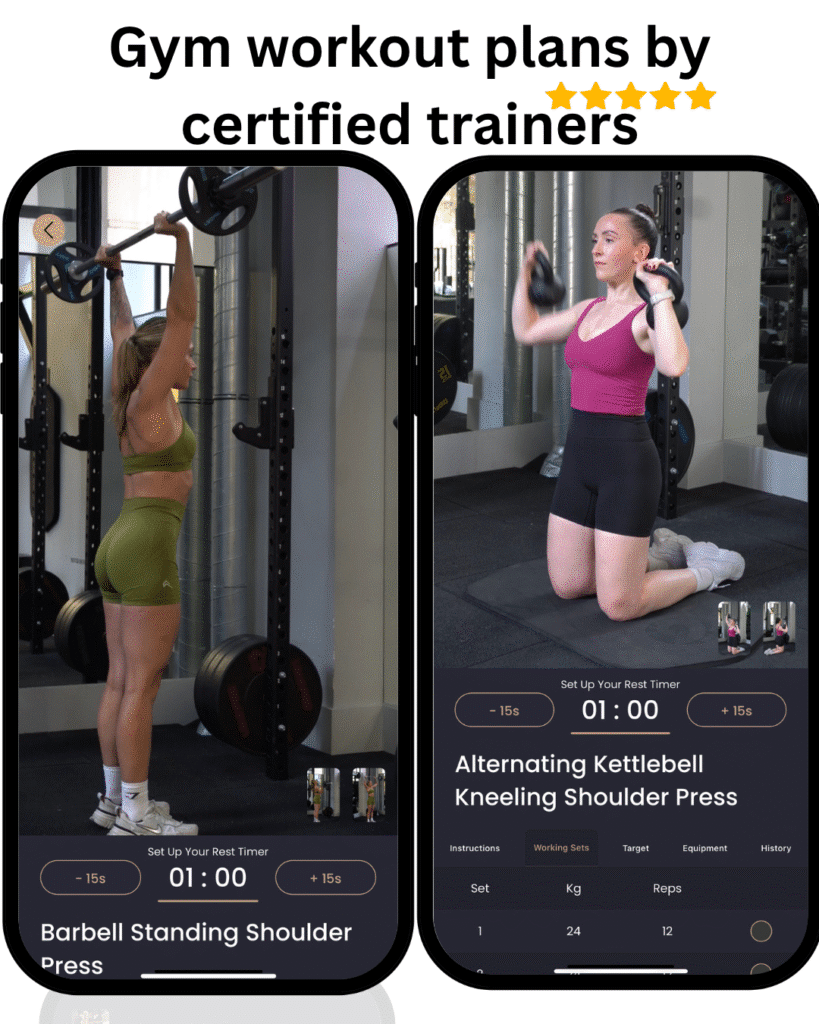
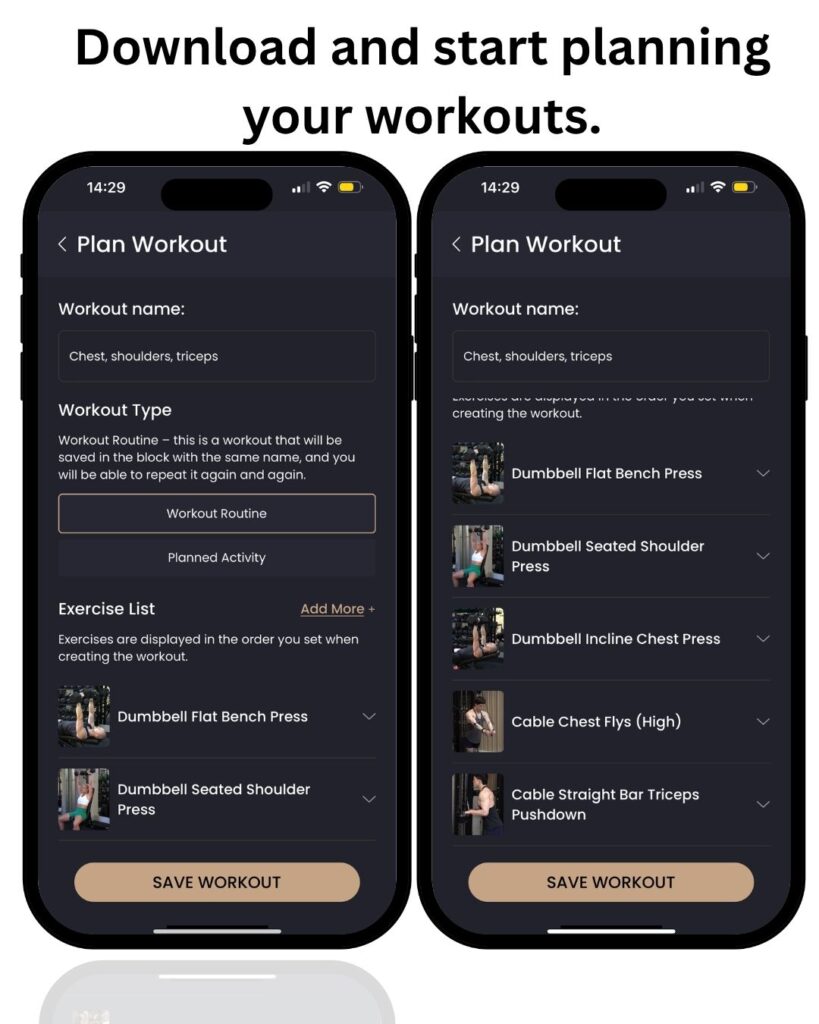
If you would rather open your phone and find the session ready, 12REPS plans your workouts around your goal, equipment and time, and shows a trainer demonstration for every exercise. You log reps and weight as you go, so you always have a number to beat. Learn more about the 12REPS app.
Sources
- Effects of Strength Training on the Physiological Determinants of Middle- and Long-Distance Running Performance: A Systematic Review. Blagrove RC, Howatson G, Hayes PR. Sports Medicine, 2018. https://pmc.ncbi.nlm.nih.gov/articles/PMC5889786
- The effectiveness of exercise interventions to prevent sports injuries: a systematic review and meta-analysis of randomised controlled trials. Lauersen JB, Bertelsen DM, Andersen LB. British Journal of Sports Medicine, 2014. https://pubmed.ncbi.nlm.nih.gov/24100287/
- Do Exercise-Based Prevention Programs Reduce Injury in Endurance Runners? A Systematic Review and Meta-Analysis. Wu H, Brooke-Wavell K, Fong DTP, Paquette MR, Blagrove RC. Sports Medicine, 2024. https://doi.org/10.1007/s40279-024-01993-7
- Compatibility of Concurrent Aerobic and Strength Training for Skeletal Muscle Size and Function: An Updated Systematic Review and Meta-Analysis. Schumann M, et al. Sports Medicine, 2021. https://doi.org/10.1007/s40279-021-01587-7
- Physical activity guidelines for adults aged 19 to 64. NHS, 2024. https://www.nhs.uk/live-well/exercise/physical-activity-guidelines-for-adults-aged-19-to-64/