

Written by Will Duru, BSc (Hons) Sport and Exercise Science, Level 3 Personal Trainer
Strength training for beginners means learning a few basic lifts, doing them with good form two or three times a week, and adding a little more challenge over time. You can use free weights, machines, bands or your own body weight. The World Health Organization and the CDC both recommend muscle-strengthening activity for all major muscle groups on at least two days a week.
This guide covers the fundamentals: form on the key exercises, sets and reps, rest, progressive overload, safety, and a simple beginner workout plan. You can follow it at the gym or at home.
If you have a health condition or an injury, or you take regular medication, check with your doctor before you start.

Why Start Strength Training?
Strength training builds muscle and strength. That makes everyday tasks feel easier, from carrying groceries to climbing stairs.
It also helps your bones. Resistance exercise puts stress on your bones, and the NIH bone health institute (NIAMS) explains that this can help make them stronger.
Large studies link regular muscle-strengthening activity with a 10 to 17% lower risk of early death, heart disease, cancer and diabetes. That finding comes from a 2022 review of cohort studies. These studies show an association, not proof that strength training is the cause.
It may help your mood too. A review of 33 trials found that resistance training was linked to fewer symptoms of depression.
You don’t need to lift heavy right away. Bodyweight exercises and light dumbbells work well when you do them with good form. What matters most is a simple plan, good technique and steady progress.
The American College of Sports Medicine (ACSM) updated its resistance training guidelines in 2026. As McMaster University reported, the biggest gain comes from going from no training to some training, done regularly. You don’t need a perfect program to start.
New to the gym? This short 12REPS video covers what every beginner should know.

Learn the Fundamental Exercises
Start by learning a few compound exercises. A compound exercise works several muscle groups and joints at once, so you get a lot of benefit for your effort. The squat, deadlift and press are the core lifts, along with variations such as the bench press and overhead press.
Figure: A beginner practicing the barbell back squat with good form: feet about shoulder-width apart, back neutral, and thighs about parallel to the floor. Starting with an empty bar or a light weight helps you learn the technique before you add more weight.
Squat
The squat trains your legs and glutes. You can do it with body weight, or hold a dumbbell close to your chest. That version is called a goblet squat, and it’s a good place for beginners to start.
- Stand with your feet about shoulder-width apart.
- Bend your knees and hips to lower down, as if sitting into a chair. Keep your chest up and your back straight.
- Lower until your thighs are about parallel to the floor, or as deep as you can with good form.
- Push through your mid-foot and heels to stand back up.
Keep your knees in line with your toes, not caving inward. If your heels lift or you can’t keep a neutral spine, use a lighter weight or practice box squats first.
Deadlift
The deadlift trains your posterior chain and your core. The posterior chain is the group of muscles along the back of your body, including your back, glutes and hamstrings.
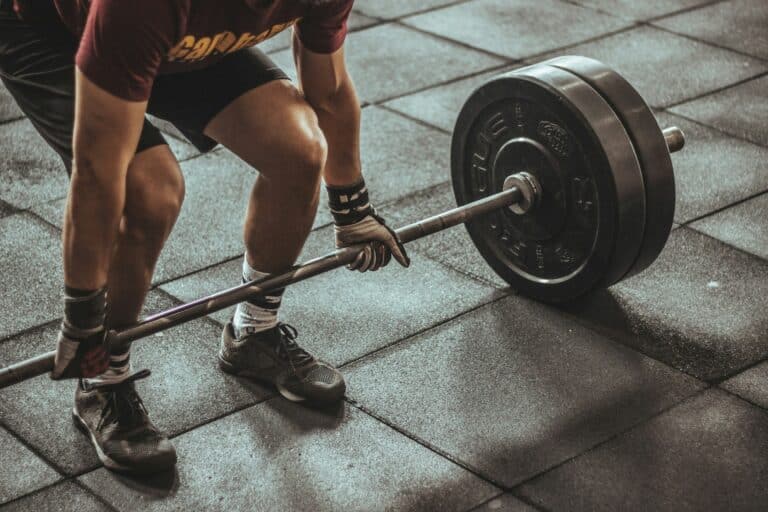
- Stand with your feet hip-width apart and the weight close to your shins.
- Hinge at your hips and bend your knees to grip the barbell or dumbbells. Keep your back flat and your chest up.
- Brace your core and drive through your legs. Extend your hips and knees to stand up, keeping the weight close to your body.
- At the top, squeeze your glutes. Then hinge and lower the weight back down under control.
Avoid rounding your lower back. Start with light weights, or an empty bar, until you feel your legs and hips doing the work rather than just your lower back.
Overhead Press and Bench Press
Pressing movements build upper-body strength.
- Overhead press: Press the weight from shoulder height straight up overhead. Keep your core tight and avoid arching your lower back. Light dumbbells are a good place to start. Keep your elbows slightly in front of you and press in a straight line.
- Bench press: Lie on a bench with your feet flat on the floor and your shoulder blades pulled back and down. Lower the bar or dumbbells to about mid-chest, then press back up.
In both lifts, control the weight through the full range of motion. If you’re new to these lifts, work with a spotter or use a machine, such as a shoulder press machine, while you learn the movement.
Not sure whether to start with free weights or machines? Both can work. ACSM’s 2026 position stand found that the choice of machines or free weights did not consistently change results. Our guide to free weights vs machines explains the pros and cons, or watch this short video.

Tip: It’s normal for these movements to feel awkward at first. Take your time to learn the technique. If you can, have a trainer or an experienced lifter check your form, or compare yourself with a demonstration video.
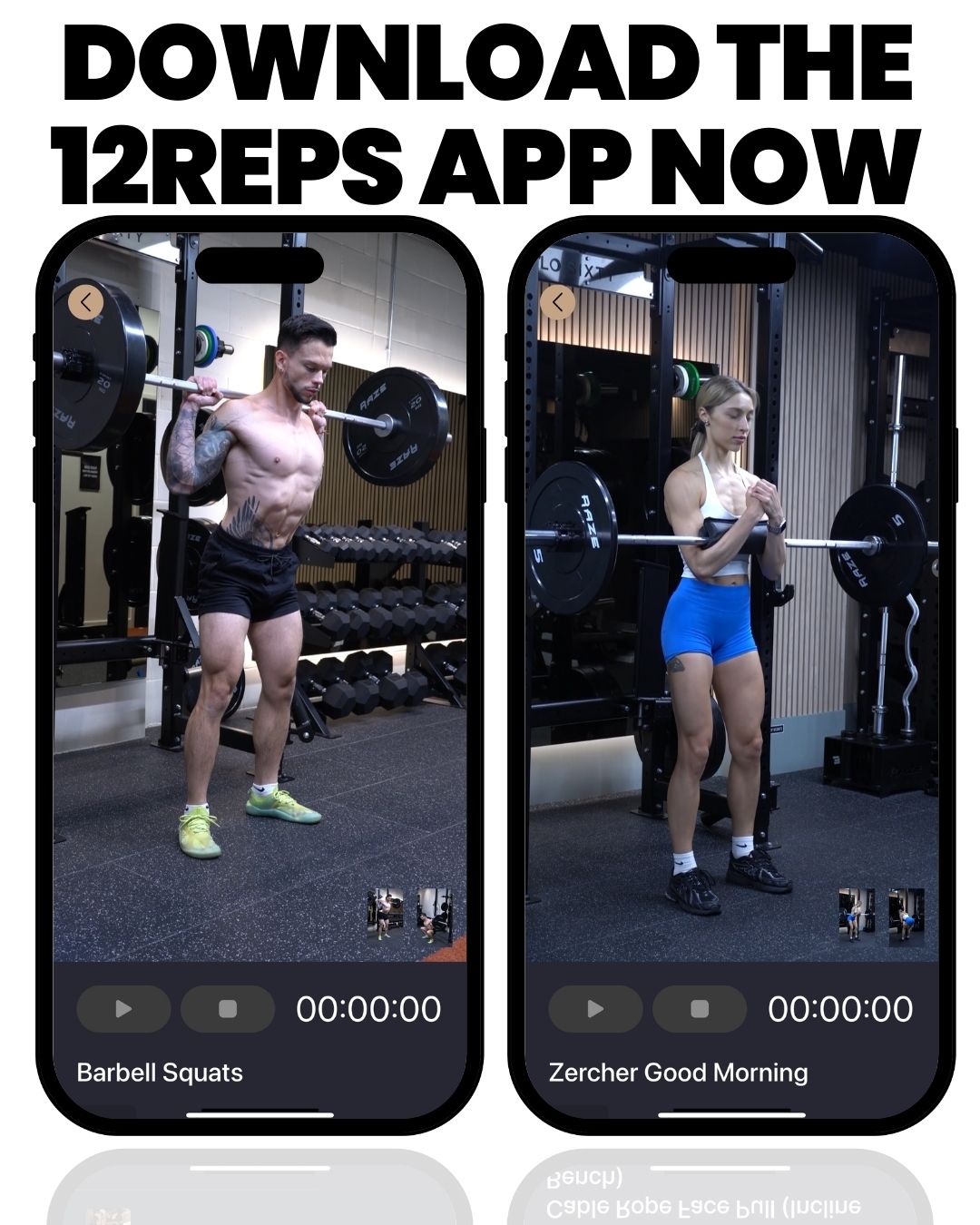
Good form makes each exercise more effective and keeps the work on the right muscles. In the 12REPS app, every exercise comes with a demonstration and technique breakdown from a qualified personal trainer. You can see how a movement should look before you try it.
Figure: A personal trainer guides a beginner on squat form, helping her keep a neutral spine and correct bar placement.

Sets, Reps and Rest: The Basics
A workout plan usually lists a number of sets and reps for each exercise. Here’s what those terms mean:
- Rep (repetition): One complete movement. One squat down and back up is one rep.
- Set: A group of reps done without a break. “3 sets of 10” means you do 10 reps, rest, and repeat for a total of 3 rounds.
Beginners often ask how many sets and reps to do. Start with a moderate number of reps and a low number of sets while you learn the movements.
Mayo Clinic suggests starting with a weight you can lift comfortably 12 to 15 times. ACSM’s progression guidelines suggest one to three sets per exercise for beginners, with a weight you can lift for about 8 to 12 reps.
As your sets get easier, you can add a set or increase the weight (see progressive overload below). You don’t need endless sets at first. Mayo Clinic notes that a single set of 12 to 15 reps, with a weight that tires your muscles, can build strength. Focus on quality over quantity.
Rest Between Sets
Resting between sets lets you do the next set with good form. A 2024 meta-analysis found a small benefit for muscle growth when people rested more than 60 seconds between sets. It found no clear extra benefit past about 90 seconds.
For big lifts with heavier weights, ACSM recommends resting at least 2 to 3 minutes. As a rule, rest long enough to do your next set well.
Rest Between Workouts
Your body recovers and adapts between sessions, so rest days are part of your progress. Mayo Clinic advises against training the same muscles two days in a row.
For example, if you do a full-body workout on Monday, your next one could be on Wednesday or Thursday.
Breathing and Pain
Breathe out as you lift the weight and breathe in as you lower it, as Mayo Clinic advises. Try not to hold your breath.
Muscle fatigue or a “burn” is normal. Sharp pain is not. If an exercise hurts, stop and check your form. If the pain continues, speak to a doctor or physical therapist.
Progressive Overload: The Key to Getting Stronger
Progressive overload means gradually increasing the challenge on your muscles over time. Your body adapts to the work you give it. To keep getting stronger, you make your workouts a little harder, for example by adding weight, reps or sets.
For beginners, this can be simple. If you’ve done 2 sets of 10 reps with good form, try for 12 reps next time, or add a small amount of weight.
Keep the jumps small. ACSM suggests adding 2 to 10% to the load once you can do one or two reps more than your target on two sessions in a row. For example, moving a squat from 50 kg to 52.5 kg is a 5% increase.
For a deeper look at the research, read the science of progressive overload.

Here are some ways to apply progressive overload:
- Add weight: This is the most direct method. If 5 kg dumbbell presses feel easy for your target reps, try 6 kg next session. Small increases count.
- Add reps: Not ready to add weight? Do more reps with the same weight. For example, go from 2 sets of 10 to 2 sets of 12.
- Add sets or sessions: Add an extra set, such as 3 sets instead of 2, once you can do all your reps with good form. Or add one more training day per week, while keeping your rest days.
- Slow the tempo: Tempo is the speed of each rep. A slower lowering phase, such as 3 seconds down on a squat, makes the same weight harder.
Tracking your workouts makes this much simpler. In 12REPS, you enter the reps and weight for each set. The app remembers what you lifted, so next time you have a number to beat.
Keep your increases gradual. Doing too much too soon is a common beginner mistake. It can leave you very sore, worn out or put off training. Consistency and patience matter most, and small, steady improvements add up over time.

Safety First: Training Tips for Beginners
When you’re new to strength training, safety should be a top priority. Good technique and sensible habits help you train safely and keep going for the long term. Follow these key safety tips as you begin:
- Warm up: Don’t jump straight into heavy lifting. Mayo Clinic suggests 5 to 10 minutes of brisk walking or other light aerobic activity first. Then do a few moving stretches or bodyweight exercises, such as arm circles or bodyweight squats. See our guide on how to warm up before lifting weights.
- Put form before weight: Ego lifting means lifting too heavy with poor form, and it’s a common way to get hurt. Choose a weight you can lift with good form for every rep of the set. If your back rounds on a deadlift or your knees cave in on a squat, stop the set or reduce the weight.
- Move with control: Avoid jerky or bouncing movements. Control the weight, especially as you lower it. If you can only lift a weight by using momentum, it’s too heavy for now.
- Don’t hold your breath: Breathe out during the effort (lifting or pushing) and breathe in as you lower the weight. If you keep forgetting, try counting your reps out loud.
- Train all major muscle groups: Don’t focus only on your “mirror muscles,” such as chest and biceps. The CDC lists the major groups as legs, hips, back, abdomen, chest, shoulders and arms. Train opposing muscles in balance, such as chest and back, quads and hamstrings, or biceps and triceps.
- Plan rest and recovery: Aim for at least one or two rest days per week, and avoid working the same muscles two days in a row. On rest days, light walking or stretching is fine. Good sleep and a balanced diet also support your recovery.
- Listen to your body: Some muscle soreness a day or two after lifting is normal, especially at the start. This is called DOMS (delayed onset muscle soreness). Sharp or sudden pain during an exercise is a warning sign. Stop, and get advice from a professional if it continues. Missing one workout is better than pushing through pain.
Figure: Coaches reviewing a workout plan on a smartphone. A clear plan and step-by-step demonstrations help you train with confidence.
Take it slow, stay mindful, and you’ll build a solid base for long-term training.
Building a Beginner Workout Plan
Now that you understand the basics, you can put them into a beginner workout plan. A good beginner routine works all major muscle groups, allows enough recovery, and gets a little harder over time. Use these guidelines:
- Frequency: start with 2 to 3 days per week. The WHO and CDC recommend muscle-strengthening activity on at least two days a week. ACSM suggests beginners train the whole body 2 to 3 days a week. Many beginners train Monday, Wednesday and Friday, or Tuesday and Thursday. Full-body sessions work well for both. With three days, you could also try an upper/lower split. Our guide to full body vs upper/lower vs push/pull/legs explains the options.
- Exercises: focus on compound movements. Each workout should include the fundamental exercises or their variations. A simple full-body template is:
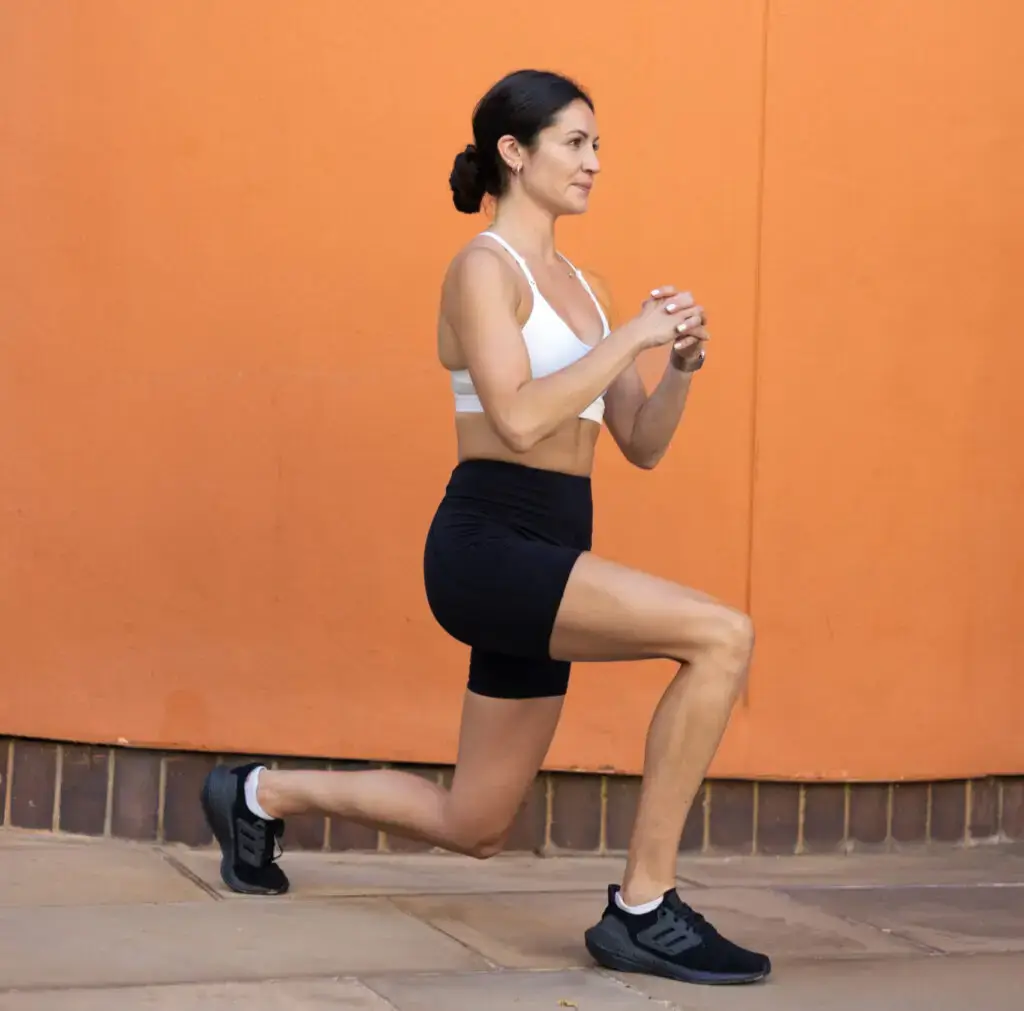
- Lower body: Squats or lunges one day, deadlifts or hip thrusts on another.
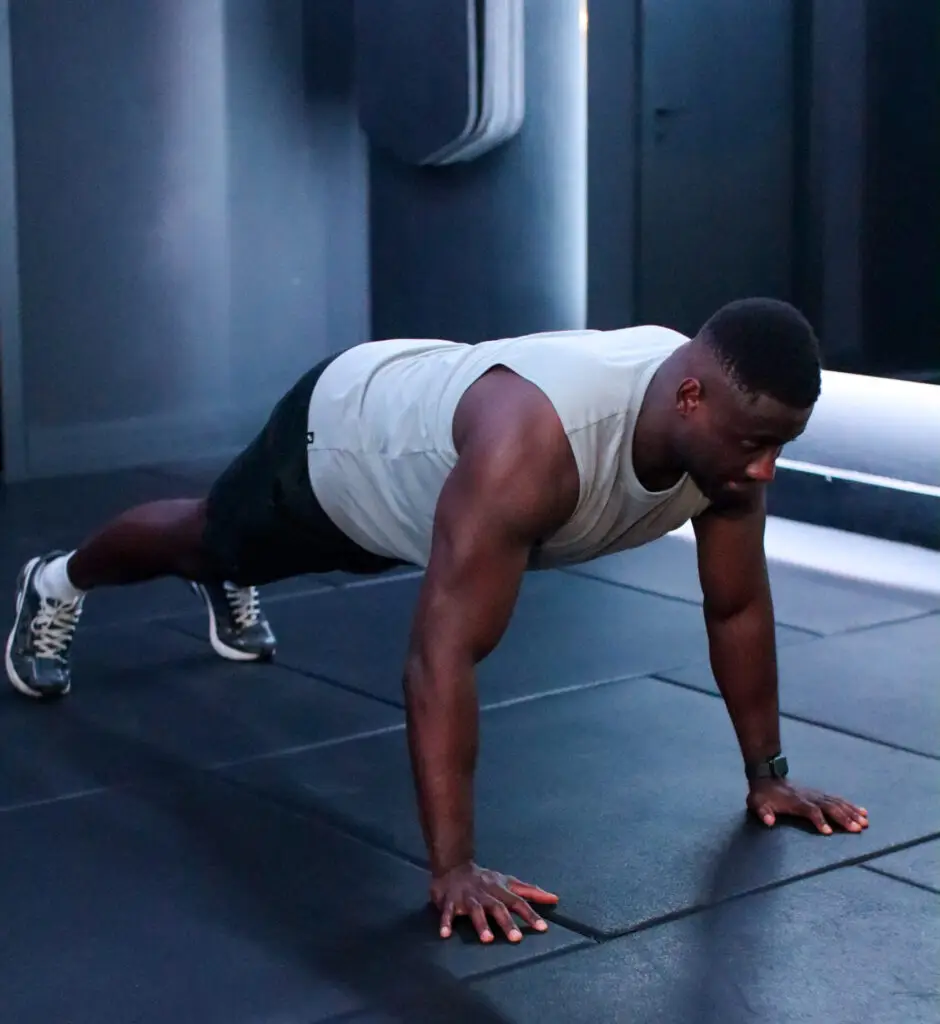
- Push: Bench press or push-ups (horizontal push), and/or overhead press (vertical push).
- Pull: Dumbbell rows or seated cable rows (horizontal pull), and/or lat pulldown or assisted pull-up (vertical pull).
- Core: Planks or bird dogs to train your abs and lower back.
Combining a lower-body move, a push and a pull each session works most major muscles. For example, a 3-day full-body beginner routine might look like this:
| Day | Lower body | Push | Pull | Core |
|---|---|---|---|---|
| Day 1 | Squat | Bench press | Row | Plank |
| Day 2 | Deadlift | Overhead press | Lat pulldown | Side plank |
| Day 3 | Leg press or lunge | Push-ups | Dumbbell row | Bicycle crunches |
This is just one example. The key is balance and simplicity. Start with 4 to 5 exercises per session, because too many can make workouts long and tiring. Each workout might last around 45 minutes, including your warm-up and cool-down.

- Sets and reps: keep volume moderate. Begin with about 1 to 2 sets of 8 to 12 reps for each exercise, and build up to 3 sets as you get comfortable. The weight should feel challenging but let you finish every rep with good form. If you’re aiming for 10 reps, reps 9 and 10 should feel tough but doable. If you can’t reach your target, the weight is too heavy. If you finish with plenty of reps to spare, add a little weight next time.
- Rest and progression: Keep at least one rest day between strength sessions for the same muscles. You can fill other days with walking, cardio or mobility work, or simply rest. Check your progress every week or two. When an exercise feels easier, apply progressive overload by adding a little weight or a couple of reps. Every 4 to 6 weeks, you might swap a few exercises to keep things interesting, such as barbell squats for goblet squats.
An app can do much of this planning for you. 12REPS builds your training around your goal, the equipment you have and the time you’ve got. Open the app and your workout is ready. You can also use the body map to build your own session: choose the muscle, equipment and time, and 12REPS builds it.
Prefer a set plan to follow? Browse the free 12REPS workout plans.
How the 12REPS App Helps Beginners
Starting a new routine can feel like a lot to take in. Here’s how 12REPS helps you train with confidence as a beginner:
- A plan built around you: Your training is built around your goal, your equipment and the time you have. Whether you train at home with dumbbells or at a fully equipped gym, your session matches what you’ve got.
- Trainer demonstrations: Every exercise has a demonstration and technique breakdown from a real, qualified personal trainer. You can check how a movement should look at any point in your workout.
- Simple logging: Tap Start Workout, watch the demo, then enter your reps and weight for each set. The app remembers what you lifted, so you always have a number to beat.
- Build your own session: Use the body map to pick a muscle, your equipment and your time, and 12REPS builds the session. Save it and train.
- Accountability: 12REPS tracks your workouts, sets, reps, weights and streaks. Challenges, awards, a weekly goal and a community help you keep showing up.
- Body progress: Log your body weight to see your trend over time. You can also store private progress photos and compare stages.
Over time, you’ll learn how to lift well and how a good session is put together. That knowledge stays with you.
Start Your Strength Training Journey
Starting strength training is one of the best decisions you can make for your health and fitness. Learn the fundamental exercises, practice good form, and follow progressive overload. Warm up, use sound technique, and give your body the rest it needs.
With each workout, look for small signs of progress. Maybe you can do one more push-up than last week, or a weight feels a bit lighter. Celebrate those small wins.
Strength training is not an overnight change, but steady work adds up over months. Want a plan built around your goal, your equipment and the time you have? 12REPS sets out each session and shows a trainer demonstration for every exercise, so you always know what to do next.
Every experienced lifter was once a beginner. Stay consistent and enjoy getting stronger, one rep at a time.
Sources
- Physical activity. World Health Organization, accessed 2026. https://who.int/initiatives/behealthy/physical-activity
- Adult Activity: An Overview. Centers for Disease Control and Prevention, 2023. https://cdc.gov/physical-activity-basics/guidelines/adults.html
- Resistance Training Prescription for Muscle Function, Hypertrophy, and Physical Performance in Healthy Adults (position stand summary slides). American College of Sports Medicine, 2026. https://acsm.org/wp-content/uploads/2026/03/Pronouncement-ppt-deck_resistance-training-ps.pdf
- Consistency over perfection, new resistance-training guidelines say. McMaster University News, 2026. https://news.mcmaster.ca/?p=30899
- American College of Sports Medicine position stand: Progression models in resistance training for healthy adults. Medicine & Science in Sports & Exercise, 2009. https://pubmed.ncbi.nlm.nih.gov/19204579/
- Weight training: Do’s and don’ts of proper technique. Mayo Clinic, 2026. https://www.mayoclinic.org/healthy-lifestyle/fitness/in-depth/art-20045842
- Exercise for Your Bone Health. National Institute of Arthritis and Musculoskeletal and Skin Diseases (NIH), accessed 2026. https://www.niams.nih.gov/health-topics/exercise-your-bone-health
- Momma H, et al. Muscle-strengthening activities are associated with lower risk and mortality in major non-communicable diseases: a systematic review and meta-analysis of cohort studies. British Journal of Sports Medicine, 2022. https://bjsm.bmj.com/content/56/13/755.abstract
- Gordon B, et al. Association of Efficacy of Resistance Exercise Training With Depressive Symptoms: Meta-analysis and Meta-regression Analysis of Randomized Clinical Trials. JAMA Psychiatry, 2018. https://dr.lib.iastate.edu/entities/publication/678d2a9c-4a2d-4cb3-9170-807faced6055
- Singer A, et al. Give it a rest: a systematic review with Bayesian meta-analysis on the effect of inter-set rest interval duration on muscle hypertrophy. Frontiers in Sports and Active Living, 2024. https://public-pages-files-2025.frontiersin.org/journals/sports-and-active-living/articles/10.3389/fspor.2024.1429789/text