



Short answer: A cluster set splits a normal set into small groups of reps with a short rest in between. For example, instead of 6 reps in a row, you do 2 reps, rest 20 seconds, 2 reps, rest 20 seconds, then 2 more. Research shows cluster sets help you keep bar speed and power higher within a workout, and they feel less tiring. Over weeks of training, though, they build about the same strength and muscle as normal sets. They are a way to manage fatigue, not a shortcut to faster results.
This guide is for lifters who have heard of cluster sets and want to know whether they are worth trying. I explain what they are, what the research shows and how to add them to your training.
What is a cluster set?
In a normal set, also called a traditional set, you do all your reps back to back and then rest. As the set goes on, fatigue builds and each rep usually gets slower.
A cluster set adds short rests inside the set. Those small breaks let you recover a little, so each group of reps starts fresher. Researchers also use a related setup called rest redistribution. Here you take the same total rest time but spread it out across more, shorter sets.
| Set structure | Example | Total reps |
|---|---|---|
| Traditional sets | 4 sets of 6 reps, 3 minutes rest between sets | 24 |
| Cluster sets | 4 sets of 2+2+2 reps, 20 seconds rest inside each set, 3 minutes rest between sets | 24 |
| Rest redistribution | 12 sets of 2 reps, about 1 minute rest between each | 24 |
The reps and weight stay the same. Only the way you spread out the rest changes.
Cluster sets vs rest-pause training
These two look alike, but they have different goals. With rest-pause training, you usually take a set close to failure, rest briefly, then squeeze out more reps. The aim is more effort. With cluster sets, you rest before fatigue builds up. The aim is better-quality reps.
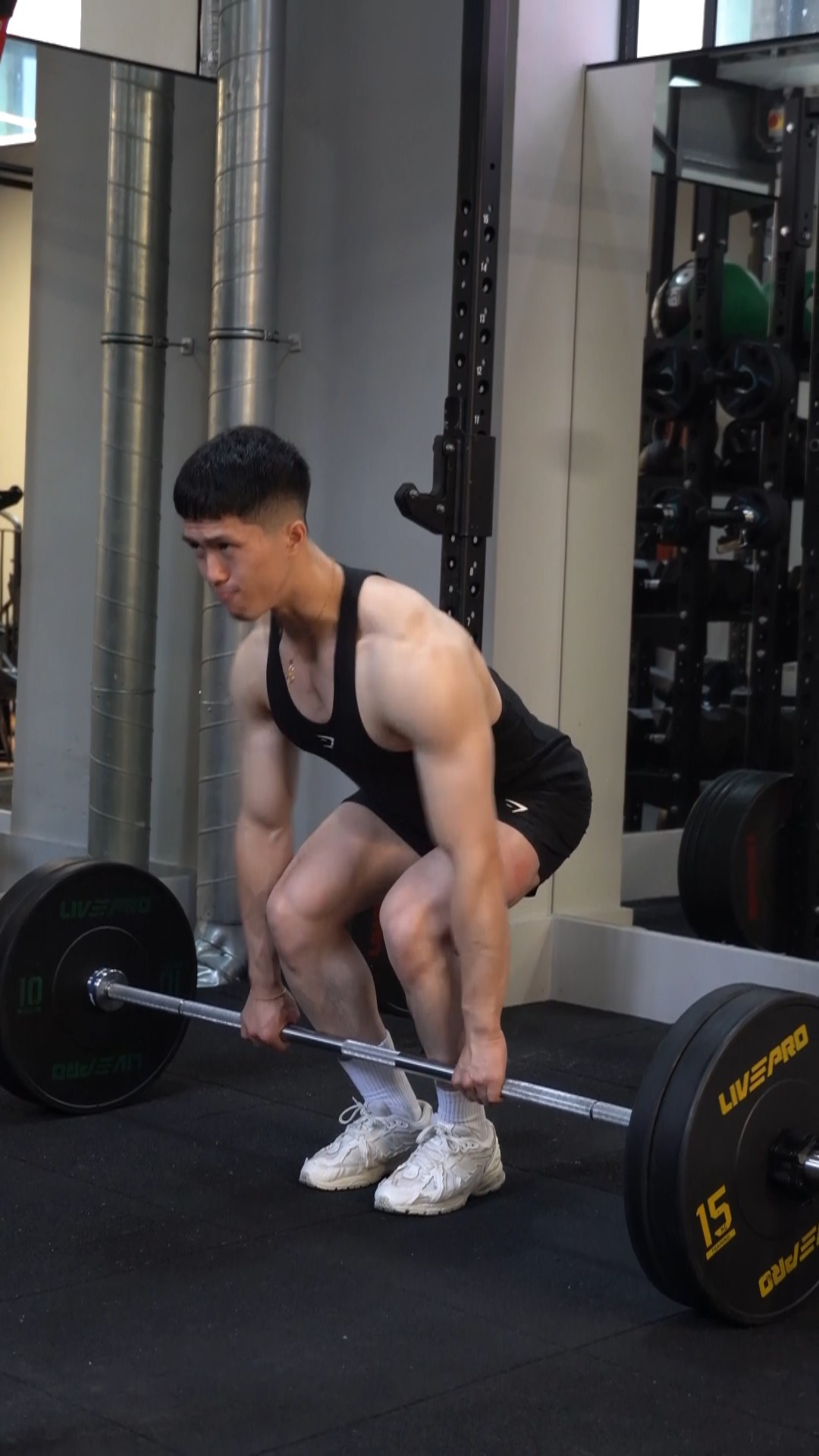
What the research says about cluster sets
Within a workout: faster reps and less fatigue
A 2020 meta-analysis pooled 32 studies comparing traditional sets with cluster sets and rest redistribution (Jukic et al., 2020). Compared with traditional sets, these alternative setups:
- Allowed higher bar speed and power during the workout
- Greatly reduced the drop in speed and power as the sets went on
- Lowered lactate (a marker linked to fatigue in the muscle)
- Lowered perceived effort, meaning the sessions felt easier
When the authors looked at each setup on its own, cluster sets were generally better than rest redistribution at reducing these signs of fatigue.
Over weeks of training: similar results
A 2021 meta-analysis looked at 29 training studies lasting at least three weeks (Davies et al., 2021). It found no difference between cluster sets and traditional sets for gains in:
- Strength
- Power
- Speed
- Muscle size
- Muscular endurance
This held whatever the training volume, the type of cluster set, how trained people were or which body parts they trained. The authors concluded that both setups work equally well, but cluster sets may get there with less fatigue.
Muscle growth when effort is matched
One concern is that cluster sets might feel too easy to build muscle. A 2025 study tested this in 10 trained adults, 7 men and 3 women (Vargas-Molina et al., 2025). Each person trained one leg with traditional sets of 12 reps and the other leg with 3 clusters of 4 reps and 20 seconds rest. Both legs did the same sets and reps, and loads were adjusted so each set was the same distance from failure. After 8 weeks, both legs gained similar muscle thickness and lean mass.
That is a small study, so I would treat it as supporting evidence rather than the final word. It fits the bigger meta-analysis, though.
Who might benefit from cluster sets
This section is my coaching view, not research findings.
- Lifters training for power or speed. If you want every rep to be fast, such as on jump squats, power cleans or speed work, cluster sets help you avoid slow, grinding reps.
- Heavy compound lifts where technique slips late in a set. If your form tends to break down on the last couple of reps of a heavy deadlift or squat, short breaks can help you keep each rep clean.
- Anyone who finds heavy sets draining. Cluster sets can make a hard session feel more manageable, which may help on busy weeks or when you’re coming back from time off.
- Intermediate lifters who want variety. They are a useful way to change how a program feels without changing the exercises.
When normal sets are fine
- You’re a beginner. Straight sets are simpler and work well. You don’t need to add complexity yet.
- You’re short on time. Cluster sets add rest inside each set, so sessions can take a little longer.
- Isolation exercises. On moves like biceps curls or lateral raises, there is less to gain from protecting rep speed.

How to do cluster sets
- Pick a compound lift. Deadlifts, squats, bench presses, overhead presses and rows all work well.
- Choose your total reps. Keep the same number you would do in a normal set, such as 6 reps.
- Split the reps into small groups. Groups of 1 to 3 reps are common for heavy lifts. Groups of 4 suit lighter, higher-rep work.
- Rest briefly between groups. Rack the bar or set it down. The study on muscle growth used 20 seconds. I usually suggest about 15 to 30 seconds, timed so you don’t drift.
- Rest normally between full sets. Keep your usual rest of 2 to 3 minutes for heavy compound lifts. My guide to rest times covers this in more detail.
- Log every set. Write down the weight, the rep groups and the rest, so you can progress the weight over time.
Two example cluster sets
| Exercise | Cluster set | Rest inside the set | Rest between sets |
|---|---|---|---|
| Barbell deadlift | 4 sets of 2+2+2 reps | 20 seconds, bar on the floor | 3 minutes |
| Barbell back squat | 4 sets of 3+3 reps | 20 to 30 seconds, bar in the rack | 2 to 3 minutes |
These are examples of how I would set them up, not a prescription. Use a weight that leaves you a couple of reps short of failure on each set.
Watch: deadlift and squat technique
Here are two 12REPS demonstrations, with form cues, for the lifts in the examples above.
Summary
- A cluster set breaks a set into small groups of reps with short rests in between.
- Within a workout, cluster sets keep bar speed and power higher and feel less tiring than traditional sets.
- Over weeks of training, cluster sets and traditional sets build similar strength, power and muscle.
- They suit power training and heavy compound lifts where technique slips late in a set.
- Beginners and people short on time can stick with normal sets.
Let your plan handle the details
Set structures, rest times and progression are a lot to keep track of. That’s what I built 12REPS to help with. You set your goal, your available time and your equipment, and the app builds your workouts. Every exercise comes with a trainer demonstration, and you can log your sets and reps to see your progress over time.
Download 12REPS and see what you’ll get:
Sources
- Jukic I, García Ramos A, Helms ER, McGuigan MR, Tufano JJ. Acute effects of cluster and rest redistribution set structures on mechanical, metabolic, and perceptual fatigue during and after resistance training: a systematic review and meta-analysis. Sports Med. 2020;50(12):2209–2236.
- Davies TB, Tran DL, Hogan CM, Haff GG, Latella C. Chronic effects of altering resistance training set configurations using cluster sets: a systematic review and meta-analysis. Sports Med. 2021;51(4):707–736.
- Vargas-Molina S, García-Sillero M, Maroto-Izquierdo S, Baz-Valle E, Bautista-Mayorga B, et al. Cluster sets and traditional sets elicit similar muscular hypertrophy: a volume and effort-matched study in resistance-trained individuals. Eur J Appl Physiol. 2025;125(6):1725–1734.
- Tufano JJ, Brown LE, Haff GG. Theoretical and practical aspects of different cluster set structures: a systematic review. J Strength Cond Res. 2017;31(3):848–867.
Related reading
- Rest-Pause Training: What It Is, Does It Work and How to Do It
- How Long to Rest Between Sets: Rest Times by Exercise
- Training to Failure: When It Helps and When to Stop Short
- Drop Sets: Do They Build More Muscle, and How Do You Do Them?
- Deload Week: What It Is, How Often to Take One and How to Do It
I’m Will Duru, a personal trainer and the founder of 12REPS. I hold a BSc (Hons) in Sport and Exercise Science and have more than a decade of experience coaching people in strength training.

