



By Will Duru, personal trainer and founder of 12REPS.
The Short Answer
The easiest way to change how hard a push-up is: raise your hands to make it easier, raise your feet to make it harder. Changing your hand width shifts the work too. A narrow, close-hand push-up works your chest and triceps harder than a wide one.
Below are 7 push-up variations, from easiest to hardest, with demo videos, so you can pick the right level and keep progressing.
What the Research Says
- Body position changes the load. In a 2011 study by Ebben and colleagues, 23 recreationally fit people did six push-up variations on a force plate. Push-ups with the feet raised put the most force through the hands. Push-ups with the hands raised or from the knees put the least.
- Hand width changes muscle activity. In a 2005 study by Cogley and colleagues, 40 people did push-ups with narrow, shoulder-width and wide hand positions. Chest and triceps activity were both higher with the narrow hand position than with the wide one.
Both studies measured single reps, not long-term results, but they give a clear ladder for making push-ups easier or harder. Push-ups can also build muscle about as well as the bench press when they’re hard enough. See push-ups vs bench press.
Push-Up Variations at a Glance
| Level | Variation | Main change |
|---|---|---|
| 1 | Knee push-up | Less body weight on your hands |
| 2 | Incline (hands-raised) push-up | Less body weight on your hands |
| 3 | Standard push-up | The baseline |
| 4 | Medicine ball alternating push-up | One hand higher than the other |
| 5 | Diamond (close-hand) push-up | More chest and triceps activity |
| 6 | Deficit push-up | Deeper range of motion |
| 7 | Decline (feet-raised) push-up | More body weight on your hands |
7 Push-Up Variations (Easiest to Hardest)
1. Knee Push-Up
3 sets x 8–15 reps
- Start on your hands and knees, then walk your hands forward so your body is straight from knees to head.
- Lower your chest toward the floor and push back up.
- Keep your hips in line with your shoulders.
2. Incline (Hands-Raised) Push-Up
3 sets x 8–15 reps
- Place your hands on a bench or sturdy box.
- Keep your body in a straight line and lower your chest to the edge.
- The higher the surface, the easier it is.
3. Standard Push-Up
3 sets x 6–15 reps
- Hands just wider than your shoulders, body in a straight line.
- Lower until your chest is a few inches from the floor, elbows at about 45 degrees.
- Push back up without letting your hips sag. Brace like a plank.
4. Medicine Ball Alternating Push-Up
3 sets x 6–10 reps
- Put one hand on a medicine ball and the other on the floor.
- Do a push-up, then roll the ball to the other hand.
- It adds a balance challenge and works each side differently.
5. Diamond (Close-Hand) Push-Up
3 sets x 6–12 reps
- Bring your hands close together under your chest, or onto a medicine ball as in the video.
- Keep your elbows tucked close to your body as you lower.
- Expect your triceps to work much harder. More in the best triceps exercises.

6. Deficit Push-Up
3 sets x 6–12 reps
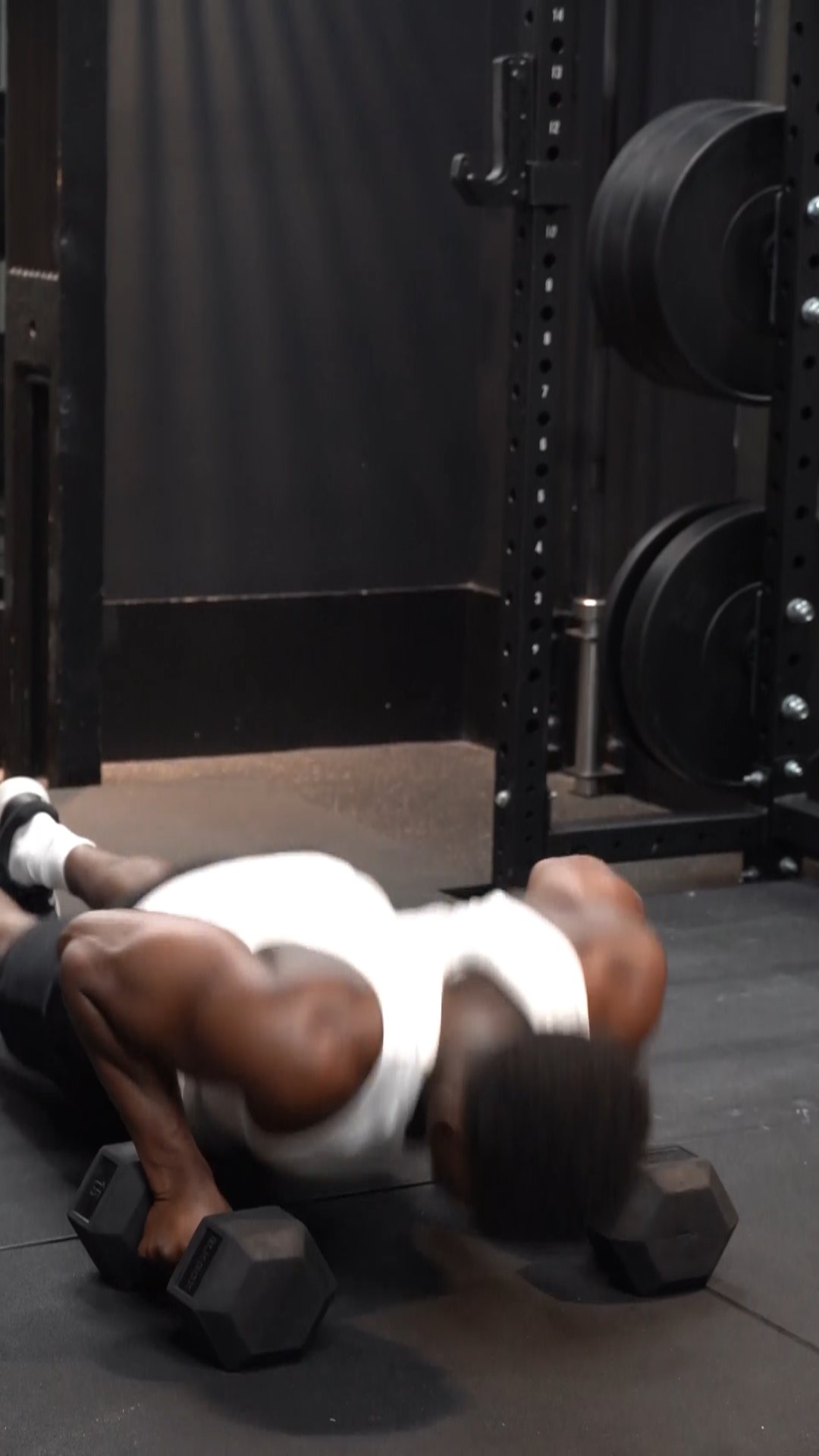
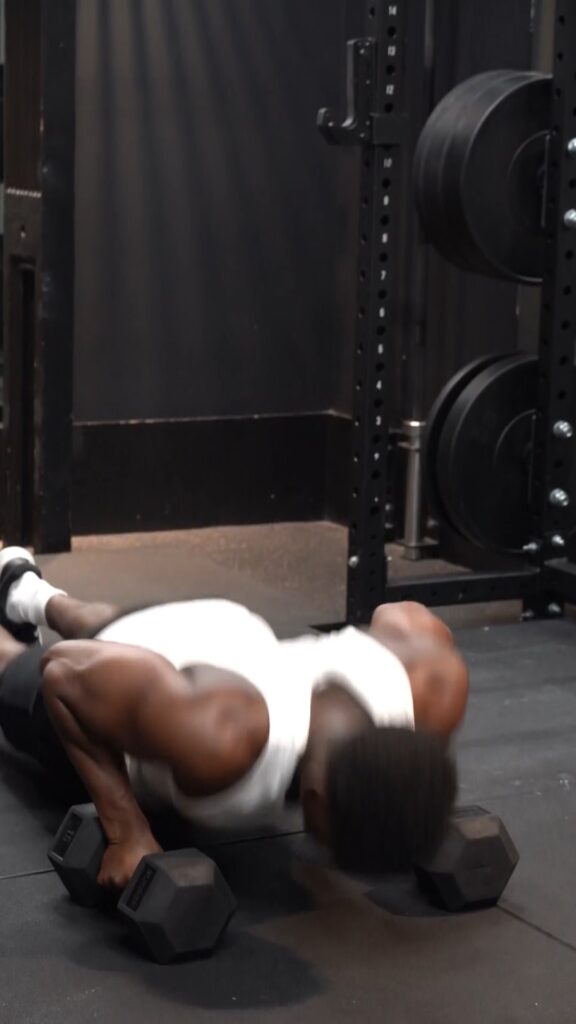
- Place your hands on dumbbells, push-up handles or plates.
- Lower your chest below the level of your hands for a bigger stretch.
- Only go as deep as your shoulders feel comfortable. See partial vs full range of motion.
7. Decline (Feet-Raised) Push-Up
3 sets x 5–12 reps
- Put your feet on a bench or box and your hands on the floor.
- Keep your body straight and lower your chest to the floor.
- Start with a low box and raise it as you get stronger.
How to Progress
These are my coaching recommendations, not rules from the research:
- Find your level: Choose the variation you can do for 6–12 clean reps.
- Move up a level when you can do 3 sets of 15 with good form.
- Add difficulty without changing variation by slowing down the lowering or pausing at the bottom.
- Train them 2–3 times a week as part of a full-body plan. See progressive overload explained.
Common Mistakes
- Sagging hips. Squeeze your glutes and brace your core.
- Flaring your elbows straight out. Keep them at about 45 degrees for standard push-ups.
- Half reps. Lower until your chest is close to the floor or the surface.
- Jumping to hard variations too soon. Master each level first.
- Craning your neck. Keep your head in line with your spine.
Summary
- Raise your hands to make push-ups easier, raise your feet to make them harder.
- A narrow hand position produced more chest and triceps activity than a wide one in research.
- Deficit push-ups add range of motion, and medicine ball versions add balance.
- Work in the 6–15 rep range and move up a level when 3 sets of 15 feel solid.
Train With Your Body Weight in 12REPS
In 12REPS, pick your workout time and the equipment you have, even if that’s just your body weight, and the app builds a session that fits.
Every exercise has a demo and a coach tutorial from me, and your log shows what you did last time, so you know when to move up a level.
Download 12REPS and see what you’ll get:
Sources
- Ebben WP, Wurm B, VanderZanden TL, et al. Kinetic analysis of several variations of push-ups. J Strength Cond Res. 2011;25(10):2891–2894.
- Cogley RM, Archambault TA, Fibeger JF, et al. Comparison of muscle activation using various hand positions during the push-up exercise. J Strength Cond Res. 2005;19(3):628–633.
Related Reading
- Push-ups vs bench press
- The best triceps exercises
- Home workout plan: build muscle without a gym
- Strength training at home for women
- Progressive overload explained
I’m Will Duru, a personal trainer and the founder of 12REPS. I hold a BSc (Hons) in Sport and Exercise Science and have more than a decade of experience coaching people in strength training.
