
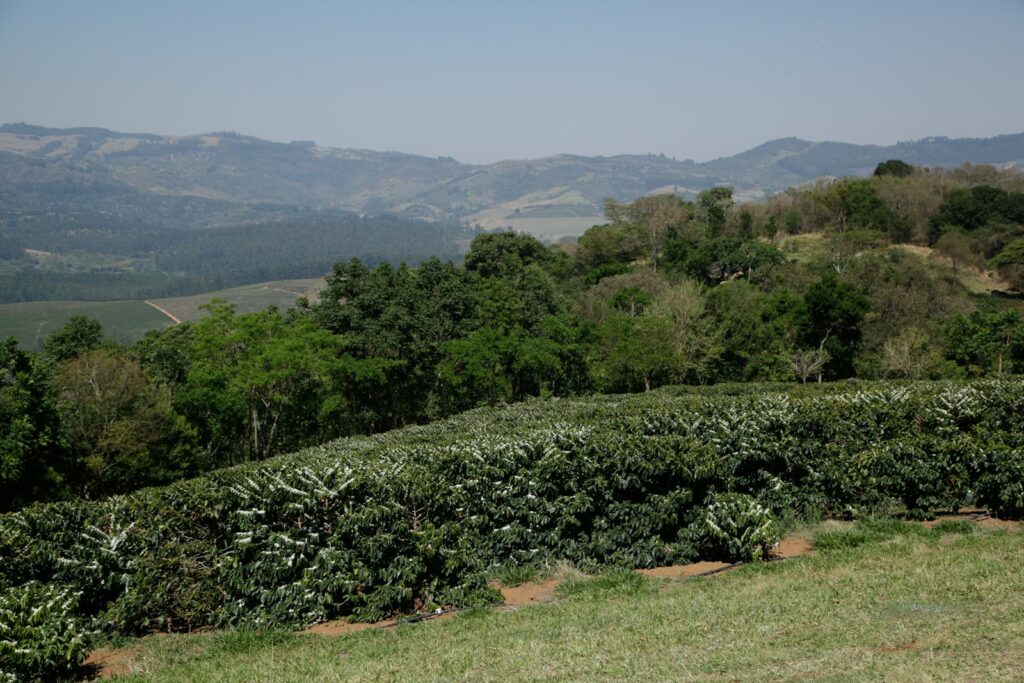
Quick answer: No single country makes “the best” coffee. When experts score coffee blind, the top cups come from Panama, Ethiopia, Kenya, Costa Rica and Guatemala, and the highest-scoring coffee of all is Panama’s Geisha. A 98-point Geisha from Hacienda La Esmeralda sold for a record US$30,204 per kilo (about $13,700 per pound) in 2025 (Global Coffee Report, 2025). But the country on the bag matters less than three things: the variety of coffee plant, how cool and high the farm is, and how the beans are processed.
This is our first coffee article on 12REPS. Most of us drink coffee before training, at work or with friends, so I wanted to dig into what’s actually in the cup. I’m a strength coach, not a coffee professional, so everything here comes from research papers and industry data, with links so you can check it yourself.
You’ll learn which countries grow the best-rated coffee and why, what makes arabica different from robusta, how coffee gets from a tree to your mug, and why so many of us can’t start the day without it.
How do experts decide which coffee tastes best?
Coffee quality has a scoring system. Trained tasters, called cuppers, score coffee out of 100 across categories like aroma, acidity, sweetness and aftertaste. A score of 80 or higher counts as “specialty” coffee. Coffees scoring 85 and up are usually sold as single origins, and 90-plus coffees are rare (Royal Coffee).
The second test is competition. Cup of Excellence holds national contests where only coffees scoring 87 or more win, and the winners are sold at auction. Best of Panama is a separate competition with its own auction.
One change to know about: in April 2025, the Specialty Coffee Association (SCA) took over the coffee grader program and started moving to a new assessment that doesn’t give one total score (Royal Coffee). You’ll still see “90-point coffee” on bags for a while.
Which countries produce the best-tasting coffee?
Here are some of the highest-scoring and most expensive competition coffees from recent years. These are tiny lots bought in prestige bidding, not what you’d pay in a store. But they show where the best-rated coffee comes from.
| Year | Country and competition | Top coffee | Score | Price |
|---|---|---|---|---|
| 2025 | Panama, Best of Panama | Hacienda La Esmeralda washed Geisha | 98 | US$30,204/kg, about $13,700/lb, a world record (GCR) |
| 2024 | Panama, Best of Panama | Lamastus Family Estates natural Geisha | n/a | US$10,013/kg (GCR) |
| 2026 | Costa Rica, Cup of Excellence | Finca Río Blanco, washed Java | 91.36 | US$200.10/lb (Tico Times) |
| 2020 | Guatemala, Cup of Excellence | El Socorro washed Geisha | 97.5 | US$180.20/lb (GCR) |
| 2020 | Ethiopia, first Cup of Excellence | Nigusie Gemeda, Sidama | n/a | US$185.10/lb (BeanScene) |
Look at the top lots and one name keeps appearing: Geisha (also spelled Gesha). It tops the auctions in Panama, Costa Rica and Guatemala. That tells you the variety of the plant matters at least as much as the country.
Ethiopia: where arabica coffee comes from
Ethiopia is coffee’s birthplace. A 2024 study that mapped the arabica genome found the plant formed naturally in Ethiopian forests, as a cross between two other coffee species. People likely started farming it in Yemen around the 15th century (University at Buffalo, 2024). Ethiopia’s wild coffee forests hold most of arabica’s genetic variety (Salojärvi et al., 2024). It’s also a big producer, with a record 12.1 million bags forecast for 2026/27 (USDA, 2026).
Kenya: bright, juicy and fruity
Kenya is famous for intense, fruity coffee. In one Coffee Review tasting of 65 Kenyan coffees, the top 11 scored 94 to 95 and about half scored 90 or more. Their tasters describe the SL28 variety as black currant and berry, with bright, “sparkling” acidity. Those are expert tasting notes, not lab measurements, and the coffees were selected samples (Coffee Review).
Panama, Costa Rica and Guatemala: home of Geisha
These Central American countries grow coffee on high, cool mountain slopes, and Geisha has made Panama the price leader. Costa Rica’s 2026 Cup of Excellence averaged US$45.53 per pound across 30 winners, up about 48% from 2025 (Tico Times, 2026).
What about Brazil, Vietnam, Jamaica and Hawaii?
The biggest producers aren’t the record-setters. The USDA forecasts these top five for 2026/27 (USDA, July 2026):
| Country | Forecast production, 2026/27 | Main type |
|---|---|---|
| Brazil | 71.9 million bags | Mostly arabica |
| Vietnam | 32.5 million bags (a record) | Mostly robusta |
| Colombia | 13.4 million bags | Arabica |
| Ethiopia | 12.1 million bags (a record) | Arabica |
| Indonesia | 11.4 million bags | Mostly robusta |
A bag is 60 kg (132 lb). Brazil and Vietnam together grow over half the world’s coffee, mostly for everyday blends. Brazil also produces specialty lots and runs its own Cup of Excellence.
Jamaica Blue Mountain and Hawaii Kona are famous and expensive. But I found no competition or scientific evidence that they taste better than other top origins. Their price likely reflects how rare they are.
Why does high-altitude coffee taste better?
It’s mostly about temperature. Higher farms are cooler, and cooler weather makes coffee cherries ripen more slowly. That gives the beans more time to build sugars and flavor.
A study in Ethiopia compared farms at about 6,400 to 6,900 feet with farms at about 5,250 to 5,500 feet (Tolessa et al., 2016):
- High-altitude coffee scored 85.5 for quality, compared with 83.0.
- 53% to 67% of high-altitude samples under open or medium shade reached the top grade, compared with 7% to 13% lower down.
- High-grown beans were heavier and denser.
- The best results came at an average temperature of about 64°F (18°C). Too much shade at high altitude made it too cool and lowered the score.
Not every study agrees on the details. For example, studies disagree on whether high-grown coffee has less caffeine. The safest takeaway is that altitude matters because it lowers the temperature. You’ll also see claims like “volcanic soil” on bags. I didn’t find solid research to back those up.
Arabica vs. robusta: what’s the difference?
Two species make up 99% of the world’s coffee (Kew and CIRAD, 2021). For 2026/27, the USDA forecasts about 56% arabica and 44% robusta (USDA, 2026).
| Arabica | Robusta | |
|---|---|---|
| Ideal average temperature | About 66°F (19°C) | About 73°F (23°C) |
| Sugar and aroma compounds | Higher | Lower |
| Caffeine and bitter compounds | Lower | Higher |
| Taste | Sweeter, more acidity and aroma | More bitter, heavier body |
| Typical use | Specialty and single-origin coffee | Everyday blends, instant coffee and espresso blends |
The chemistry here comes from a study of 76 wild coffee plants. It found arabica higher in sucrose (sugar) and trigonelline, which helps create roasted aroma. Robusta was higher in caffeine and chlorogenic acids, which taste bitter (Ky et al., 2001).
You’ll often read that robusta has “twice the caffeine.” I couldn’t find solid proof of that. One 2021 lab study measured green beans and found robusta had only about 12% more caffeine than its arabica sample (Schouten et al., 2021). It’s fair to say robusta generally has more caffeine. The exact amount varies.
Why the best varieties are also the most fragile
Arabica is a young hybrid with very little genetic variety, which makes breeding harder (Salojärvi et al., 2024). World Coffee Research rates varieties like SL34, Bourbon and SL28 highly for cup quality, but lists them as vulnerable to major diseases (World Coffee Research).
Climate change adds pressure. A 2015 projection estimated that about half of today’s arabica-growing land could become unsuitable by 2050 (World Coffee Research, 2015). That’s why scientists are testing heat-tolerant species. One, Coffea stenophylla, scored 80.25 at a 2020 tasting, and 81% of judges mistook it for arabica. It grows at temperatures about 11°F warmer than arabica (Kew and CIRAD, 2021).
How coffee is made, from farm to cup
1. Growing and picking
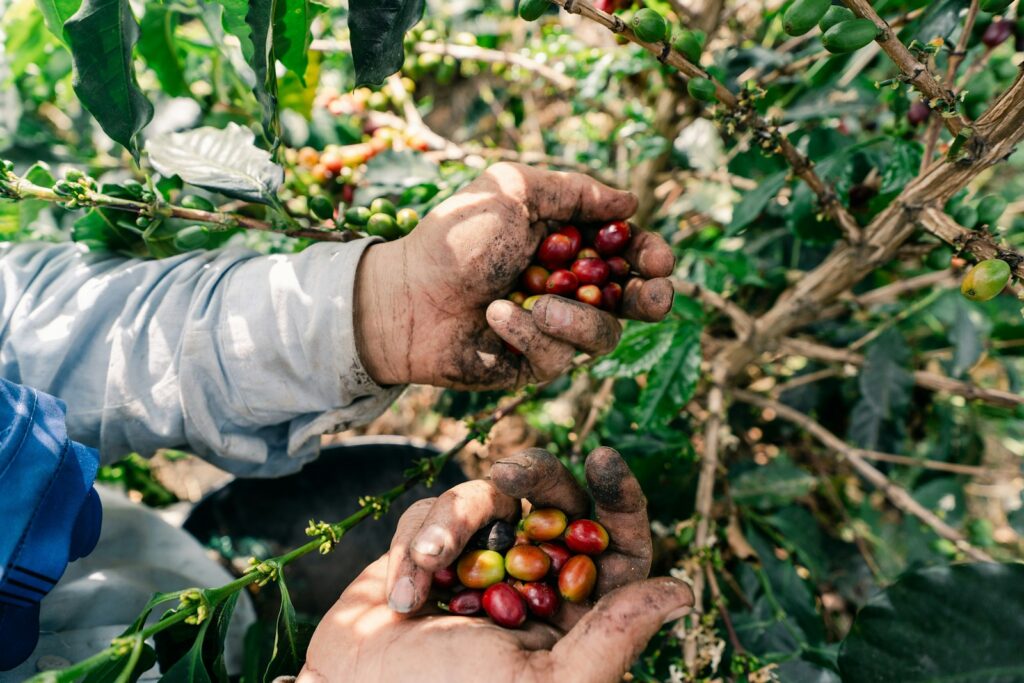
Coffee is a slow crop. A plant usually gives its first useful harvest around year five, and each cherry takes about eight months to ripen after flowering. The best farms pick by hand, returning to the same trees every 8 to 10 days to take only the ripe red cherries. Faster strip picking mixes in unripe fruit, which leads to more defective beans (Coffee production, citing the International Trade Centre Coffee Guide, 2021).
2. Processing: washed, natural and honey
After picking, the seed (the bean) has to be removed from the fruit. Every method involves fermentation. Natural yeasts and bacteria break down the sweet, sticky fruit layer and create acids and flavor compounds (Bernardes et al., 2024). The main difference between methods is how long the bean stays in contact with the fruit.
| Method | What happens | Typical flavor |
|---|---|---|
| Washed (wet) | Fruit is removed. Beans ferment in water for about 24 to 48 hours, then dry | Clean and balanced |
| Natural (dry) | Whole cherries dry in the sun with the fruit still on | Fruity, fragrant, sometimes wine-like |
| Honey | Skin is removed, but the sticky fruit layer stays on while drying | Sweet, with more acidity |
| Anaerobic | Fruit is sealed in a tank with little or no oxygen while it ferments | Often intense and fruity |
The flavor notes come from a small 2026 study of Colombian coffee with three tasters (Ormaza Zapata et al., 2026). Studies show controlled fermentations can raise cup scores by 1.5 to more than 3 points. But most of those trials used Brazilian robusta (Bernardes et al., 2024). So “anaerobic” on a bag doesn’t guarantee a better cup.
3. Drying and sorting
Beans are dried to 10% to 12% moisture. Above 12% is too wet and risks mold and off-flavors. To be graded specialty, a 350-gram sample (about 12 ounces) can have no major defects, like black beans, and no more than five minor ones, like chipped beans (Cropster, citing the SCA).
4. Roasting
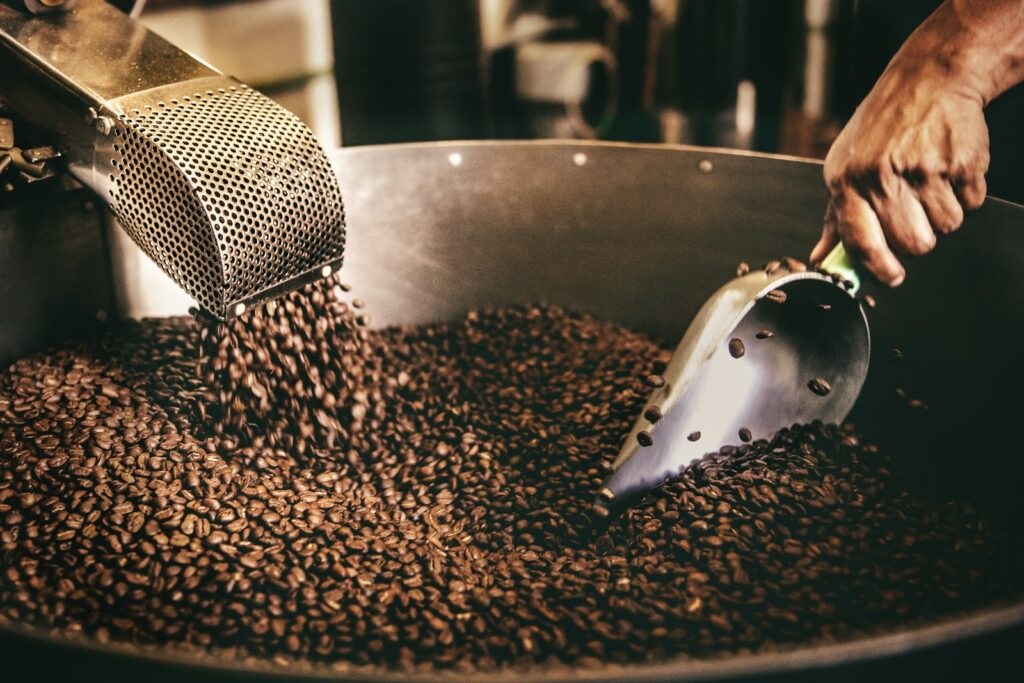
Roasting turns a green, grassy-smelling seed into the brown bean you know. The key chemical reactions peak at about 374 to 410°F (190 to 210°C). The main one is the Maillard reaction, the same browning that happens when you sear a steak or toast bread. Sugars and amino acids react to create color and aroma (Buffo and Cardelli-Freire, 2004).
By 2004, scientists had identified about 900 aroma compounds in coffee. Fewer than 20 of them create most of coffee’s smell, with notes like toast, fruit, vanilla, caramel and clove (Buffo and Cardelli-Freire, 2004).
Roast level changes the chemistry. Light roasts keep more of the bean’s natural acids. By a dark roast, the main chlorogenic acid drops by about 90% (Schouten et al., 2021). That’s why light roasts taste brighter and dark roasts taste roastier and more bitter.
Myth check: does dark roast have more caffeine? No. Caffeine stays fairly stable through roasting (Schouten et al., 2021). Neither light nor dark roast is clearly “stronger” in caffeine.
5. Brewing
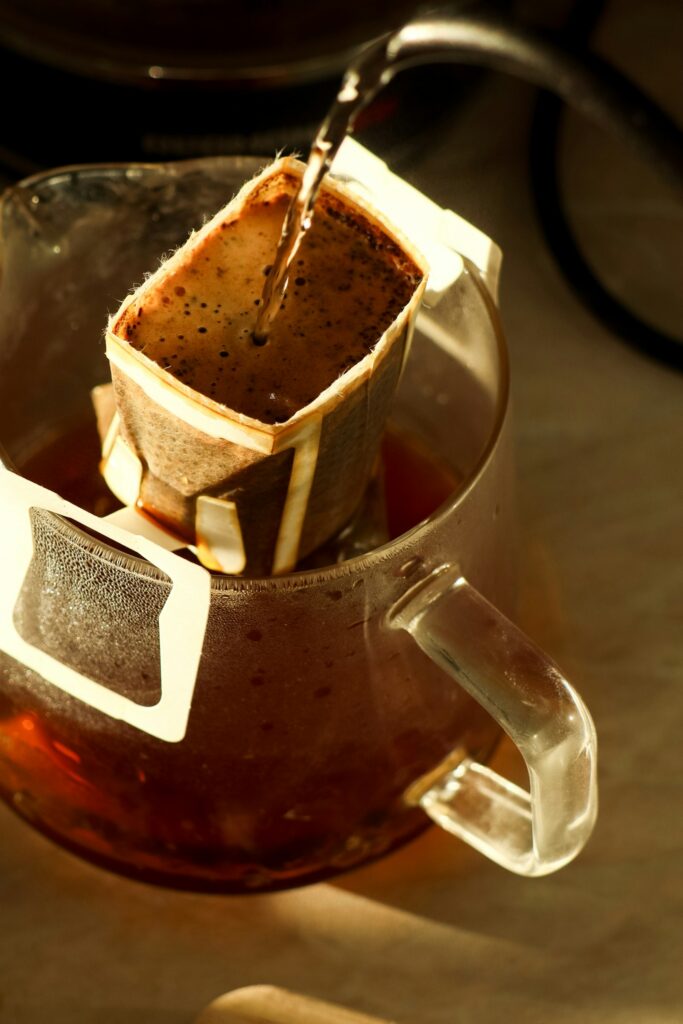
Brewing comes down to two numbers. The first is strength: how much coffee is dissolved in your cup. The second is extraction: how much of the ground coffee dissolved into the water. The SCA’s “Golden Cup” target is 1.15% to 1.35% strength and 18% to 22% extraction (Batali et al., 2020).
What does that mean in your kitchen? If your coffee tastes sour and thin, it’s under-extracted. Grind finer or brew longer. If it tastes bitter and harsh, it’s over-extracted. Grind coarser or brew shorter.
Here’s a surprise. When UC Davis researchers kept strength and extraction the same, brewing at 189°F, 194°F or 199°F made almost no difference to the taste (Batali et al., 2020). Getting your coffee-to-water ratio and grind right matters more than a few degrees of water temperature.
Myth check: is cold brew less acidic? Not in pH. A 2018 study found hot and cold brew had similar pH. Hot brew did have more total acids, which may be why people find cold brew smoother (Rao and Fuller, 2018).
Why do people love coffee so much?
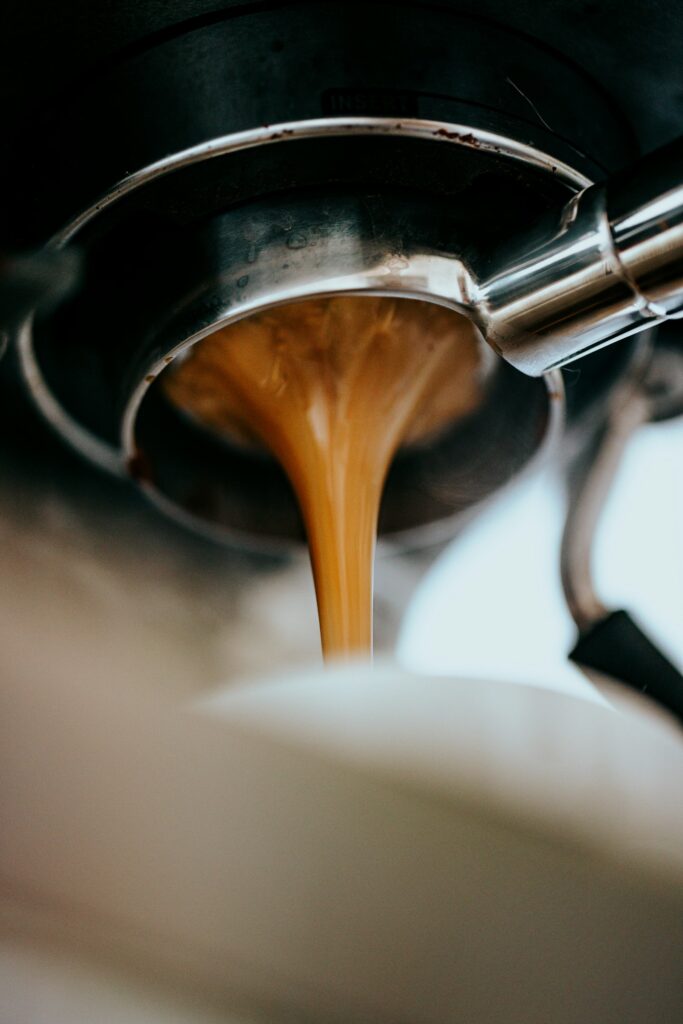
Caffeine blocks the “slow down” signal
During the day, a chemical called adenosine builds up in your brain and tells it to slow down. Caffeine blocks it. That indirectly boosts dopamine and other chemicals that make you feel alert and good (Ferré, 2013).
Your body adapts, too. A Johns Hopkins review found about 50% of people get a headache when they stop caffeine. Symptoms can start after a habit as small as about 100 mg a day, which is less than one cup. They begin 12 to 24 hours after the last dose and can last 2 to 9 days (Juliano and Griffiths, 2004). So part of that morning lift may be your body getting back to normal.
Your genes play a small part
A study of more than 120,000 coffee drinkers found eight gene regions linked to how much coffee people drink. Most affect how fast the body clears caffeine. But together they explain only about 1.3% of the difference between people (Cornelis et al., 2015).
Here’s a strange one. In a study of more than 400,000 adults in the UK, people who were more sensitive to caffeine’s bitter taste drank more coffee, not less. The researchers think we learn to link that bitterness with the lift that follows (Ong et al., 2018).
It’s a daily ritual
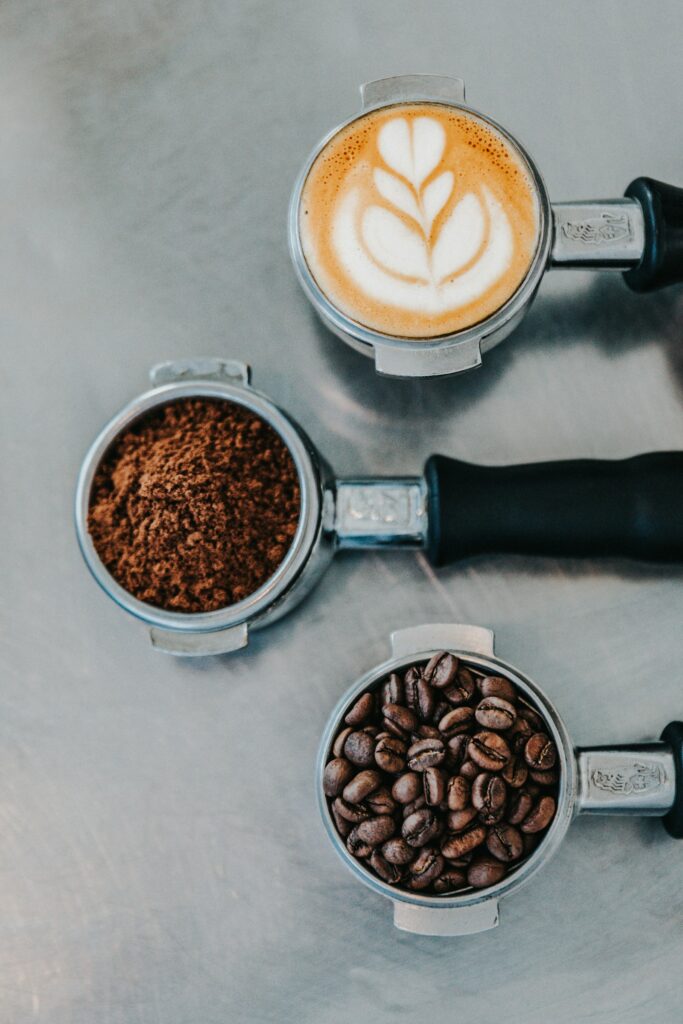
In early 2026, 66% of American adults had coffee in the past day, averaging 2.8 cups. Coffee beat every other drink surveyed, including bottled water. And 85% of daily drinkers had coffee at home, the highest share since 2012 (National Coffee Association, 2026).
Coffee is social, too. In Ethiopia’s coffee ceremony, the host roasts green beans in front of guests, grinds them by hand and brews them in a clay pot called a jebena. Guests share three rounds over about two hours (Barista Magazine, 2026).
Is coffee good for you?
The research is encouraging, with one big limit.
- A 2017 review of more than 200 studies found that drinking 3 to 4 cups a day, compared with none, was linked to a 17% lower risk of death from any cause and a 19% lower risk of death from heart disease. Higher intake was also linked to lower risk of type 2 diabetes, liver disease and Parkinson’s (Poole et al., 2017).
- A 2022 study of nearly 450,000 UK adults found 2 to 3 cups a day linked to a 27% lower risk of death for ground coffee, 14% for decaf and 11% for instant (Chieng et al., 2022).
The limit: these studies are observational. They show coffee drinkers tend to be healthier, but they can’t prove coffee is the reason. In the 2017 review, about 75% of the findings were rated “very low” quality evidence. The same review linked higher intake in pregnancy to lower birth weight and pregnancy loss, and to a higher fracture risk in women (Poole et al., 2017).
How much caffeine is too much?
The FDA says up to 400 mg a day, about two to three 12-ounce cups of brewed coffee, is not generally linked to negative effects in most healthy adults. If you’re pregnant, trying to get pregnant or breastfeeding, the FDA advises talking with your healthcare provider (FDA, 2024).
| Drink (FDA, 2024) | Caffeine |
|---|---|
| Brewed coffee, 12 oz | 113 to 247 mg |
| Black tea, 12 oz | 71 mg |
| Green tea, 12 oz | 37 mg |
| Energy drink, 16 oz | 54 to 328 mg |
| Decaf coffee, 8 oz | 2 to 15 mg |
Notice how wide the coffee range is. One 12-ounce cup can have more than twice the caffeine of another. A large café drink could be close to half of the 400 mg limit.
Summary
- No country wins outright. Panama, Ethiopia, Kenya, Costa Rica and Guatemala produce the highest-scoring coffees, and Panama’s Geisha holds the price record.
- Variety, altitude and processing predict quality better than the country name alone.
- High-altitude coffee often tastes better because cooler weather slows ripening.
- Arabica is sweeter and more aromatic. Robusta has more caffeine and bitterness.
- Washed coffee tastes clean, natural coffee tastes fruity, and honey coffee tastes sweet and bright.
- Dark roast doesn’t have more caffeine. Cold brew isn’t lower in pH.
- For a better cup at home, focus on your coffee-to-water ratio and grind.
- Moderate coffee drinking is linked with lower risk of several diseases, but the research can’t prove coffee causes it.
Have your coffee, then get your workout in
If coffee is part of your morning routine, make training part of it too. 12REPS gives you trainer-built programs, two demo videos for every exercise and a gym log that shows what you lifted last time. New users get a 7-day free trial.
Download 12REPS and see what you’ll get:
Sources
- Global Coffee Report. Best of Panama auction sees world record price, 2025
- Global Coffee Report. Best of Panama auction achieves record-breaking lot price, 2024
- Global Coffee Report. Guatemala Cup of Excellence auction, 2020
- Tico Times. Costa Rica Cup of Excellence 2026
- BeanScene. Ethiopia Cup of Excellence auction, 2020
- Royal Coffee. Scoring specialty coffee
- Coffee Review. The joy of Kenya
- USDA Foreign Agricultural Service. Coffee: World Markets and Trade, July 2026
- Tolessa K et al. Influence of growing altitude, shade and harvest period on quality of Ethiopian specialty coffee. J Sci Food Agric, 2016
- Salojärvi J et al. The genome and population genomics of allopolyploid Coffea arabica. Nature Genetics, 2024
- University at Buffalo. Newly sequenced genome reveals coffee’s prehistoric origin story, 2024
- CIRAD and Royal Botanic Gardens, Kew. Coffea stenophylla, 2021
- Ky CL et al. Caffeine, trigonelline, chlorogenic acids and sucrose diversity in wild Coffea arabica and C. canephora. Food Chemistry, 2001
- Schouten MA et al. Acrylamide in coffee and roasting chemistry. Food Chemistry, 2021
- World Coffee Research. Arabica Coffee Varieties catalog
- World Coffee Research. Climate change: pinpointing the world’s most vulnerable coffee zones, 2015
- Bernardes PC et al. Fermentation in coffee processing. Frontiers in Food Science and Technology, 2024
- Ormaza Zapata AM et al. Processing method and quality of Colombian coffee, 2026
- Cropster. Green coffee grading
- Buffo RA, Cardelli-Freire C. Coffee flavour: an overview. Flavour and Fragrance Journal, 2004
- Batali ME et al. Brew temperature, at fixed brew strength and extraction, has little impact on the sensory profile of drip brew coffee. Scientific Reports, 2020
- Rao NZ, Fuller M. Acidity and antioxidant activity of cold brew coffee, 2018 (press release)
- Ferré S. Caffeine and substance use disorders. Journal of Caffeine Research, 2013
- Juliano LM, Griffiths RR. Caffeine withdrawal review, 2004 (ScienceDaily summary)
- Cornelis MC et al. Genome-wide meta-analysis of coffee consumption. Molecular Psychiatry, 2015
- Ong JS et al. Bitter taste perception and coffee intake, 2018 (ScienceDaily summary)
- National Coffee Association National Coffee Data Trends, Spring 2026 (Daily Coffee News)
- Barista Magazine. The Ethiopian coffee ceremony, 2026
- Poole R et al. Coffee consumption and health: umbrella review. BMJ, 2017
- Chieng D et al. Coffee type and mortality in UK Biobank, 2022 (News-Medical summary)
- FDA. Spilling the beans: how much caffeine is too much? 2024
I’m Will Duru, a personal trainer and the founder of 12REPS. I hold a BSc (Hons) in Sport and Exercise Science and have more than a decade of experience coaching people in strength training. This article is based on published research, not personal coffee expertise.