

Perimenopause changes everything. Your body feels different. Your energy fluctuates. The things that worked before stop working. And nobody tells you what to do about it.
I have trained dozens of women through perimenopause over the past decade. The frustration is real. Weight gathers around the middle despite eating the same way. Sleep becomes unpredictable. Mood swings appear from nowhere. Joints ache for no obvious reason.
Here is what I tell every woman who comes to me during this transition: strength training is not just helpful during perimenopause. It is essential.
The right training approach can reduce symptoms, protect your bones, maintain your muscle mass, and give you back a sense of control over your changing body. This guide shows you exactly how to do it.
What Happens During Perimenopause
Perimenopause typically begins in your early to mid 40s, though it can start earlier or later. It is the transition phase before menopause, lasting anywhere from four to ten years.
During this time, your oestrogen and progesterone levels fluctuate unpredictably. Some months they spike. Other months they drop. This hormonal chaos causes the symptoms that make perimenopause so challenging.
Common symptoms include:
- Hot flushes and night sweats
- Sleep disturbances
- Mood changes and irritability
- Weight gain, especially around the abdomen
- Loss of muscle mass
- Decreased bone density
- Joint pain and stiffness
- Brain fog and difficulty concentrating
- Fatigue and low energy
- Changes in menstrual cycle
These symptoms vary enormously between women. Some sail through with minimal disruption. Others struggle significantly. But regardless of severity, the underlying hormonal changes affect your body composition, bone health, and metabolism.
This is where strength training becomes crucial.

Why Strength Training Matters More Now
The decline in oestrogen during perimenopause triggers several changes that strength training directly addresses.
Muscle Loss Accelerates
Women lose muscle mass naturally as they age, roughly three to eight percent per decade after 30. During perimenopause, this loss accelerates because oestrogen plays a role in maintaining muscle tissue.
Less muscle means a slower metabolism. Your body burns fewer calories at rest. This is why many women notice weight gain despite no changes to their diet or activity levels.
Strength training is the most effective way to maintain and build muscle mass. It sends a signal to your body that muscle is needed. Your body responds by preserving what you have and adding more.
Bone Density Decreases
Oestrogen protects bone density. As levels drop, bones become more vulnerable. The years around menopause are when women lose bone fastest, increasing the risk of osteoporosis and fractures later in life.
Weight bearing exercise stimulates bone formation. When you lift weights, the stress on your bones triggers them to strengthen. This is not something cardio or yoga can replicate. You need to load your skeleton to protect it.
Fat Distribution Changes
Many women notice fat shifting to their midsection during perimenopause. This visceral fat is more metabolically active and associated with higher health risks than fat stored elsewhere.
Strength training helps combat this in two ways. First, building muscle increases your metabolic rate, making it easier to maintain a healthy weight. Second, resistance exercise has been shown to specifically reduce visceral fat, even without weight loss on the scale.
Mood and Sleep Improve
Exercise releases endorphins that improve mood. But strength training also affects hormones like serotonin and dopamine, which regulate mood and sleep. Many of my perimenopausal clients report better sleep quality and more stable moods once they start lifting consistently.

How to Train During Perimenopause
Training during perimenopause requires some adjustments, but the fundamentals remain the same. You need progressive resistance exercise that challenges your muscles and loads your bones.
Prioritise Compound Movements
Compound exercises work multiple muscle groups simultaneously. They give you more benefit per exercise and load your skeleton effectively.
Essential compound movements:
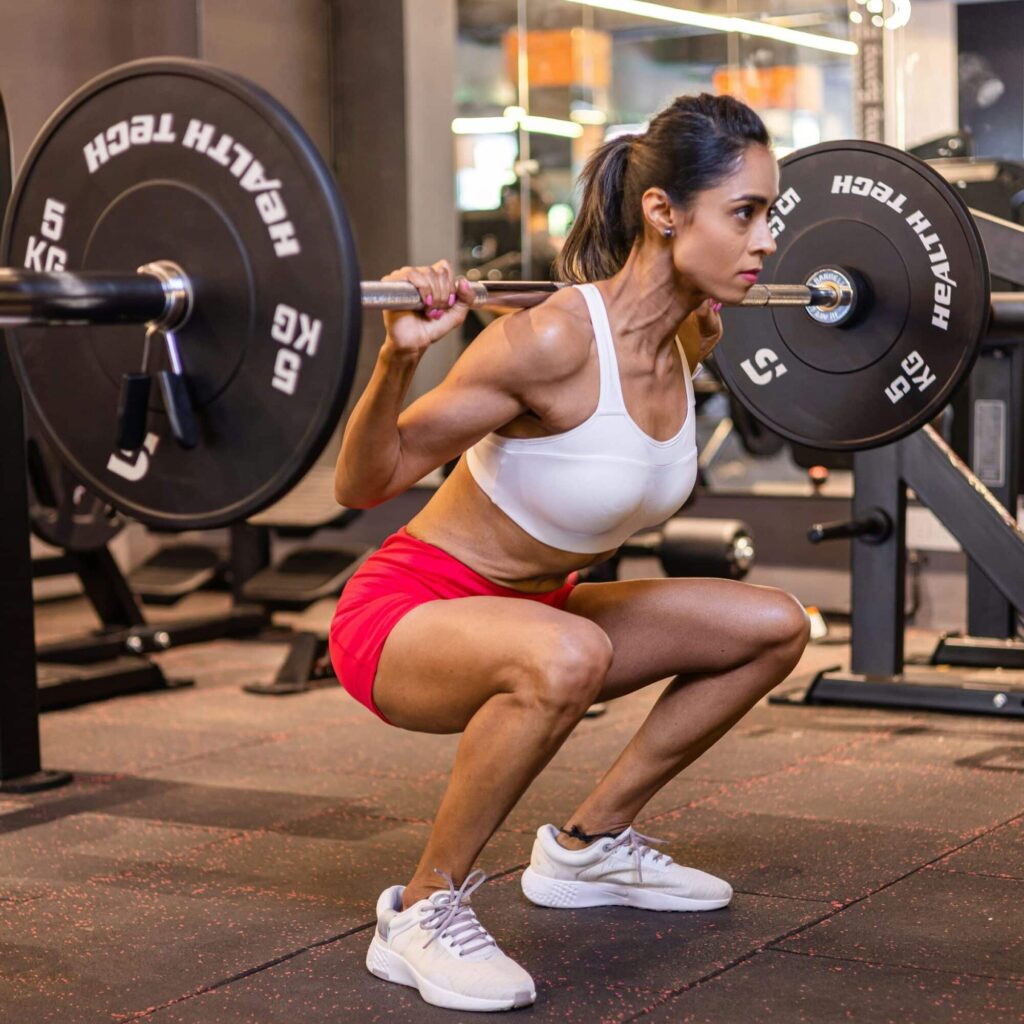
- Squats (goblet, barbell, or leg press variations)
- Deadlifts (conventional, Romanian, or trap bar)
- Hip thrusts and glute bridges
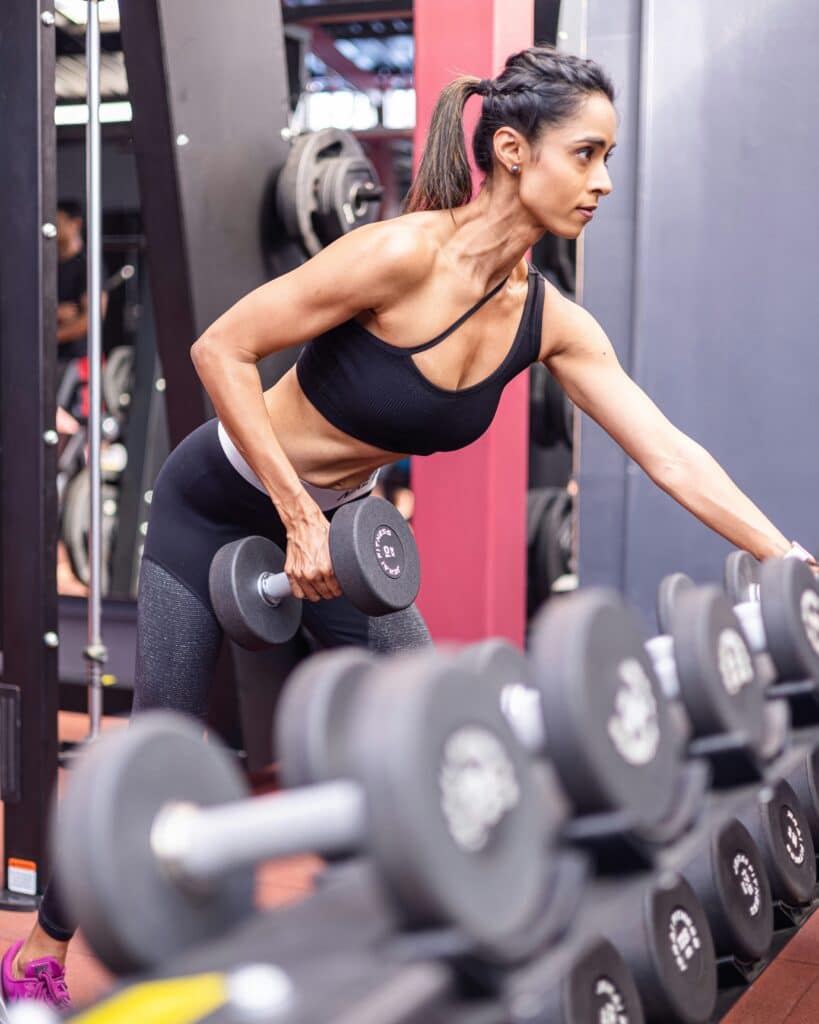
- Rows (cable, dumbbell, or barbell)
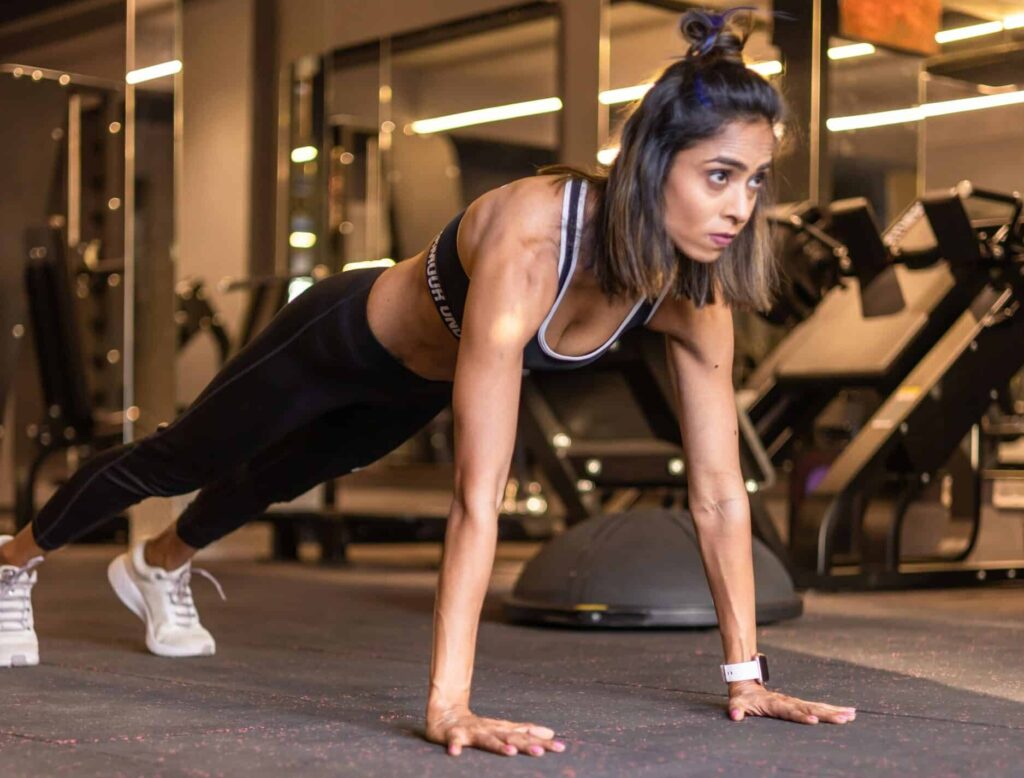
- Presses (bench press, overhead press, push ups)
- Lunges and step ups
- Pull downs or pull ups
These movements should form the core of your programme. They build functional strength, protect bones, and maintain muscle mass throughout your body.
Train Three to Four Days Per Week
This frequency allows enough stimulus for muscle growth while providing adequate recovery. Recovery becomes more important during perimenopause because sleep disruptions and hormonal fluctuations can slow the repair process.
A typical week might look like:
| Day | Focus |
|---|---|
| Monday | Lower Body |
| Tuesday | Rest |
| Wednesday | Upper Body |
| Thursday | Rest |
| Friday | Full Body |
| Saturday | Rest or Light Activity |
| Sunday | Rest |
If you feel recovered and energised, you can add a fourth session. If you are struggling with fatigue or sleep, stick with three.
Adjust Intensity to Your Energy
Perimenopause brings energy fluctuations. Some days you feel strong. Other days you feel drained before you even start.
Learn to adjust your training to match your energy. On high energy days, push harder. Lift heavier. Add sets if you feel good.
On low energy days, reduce the weight slightly. Focus on technique. Complete the session even if the numbers are lower than usual. Consistency matters more than any single workout.
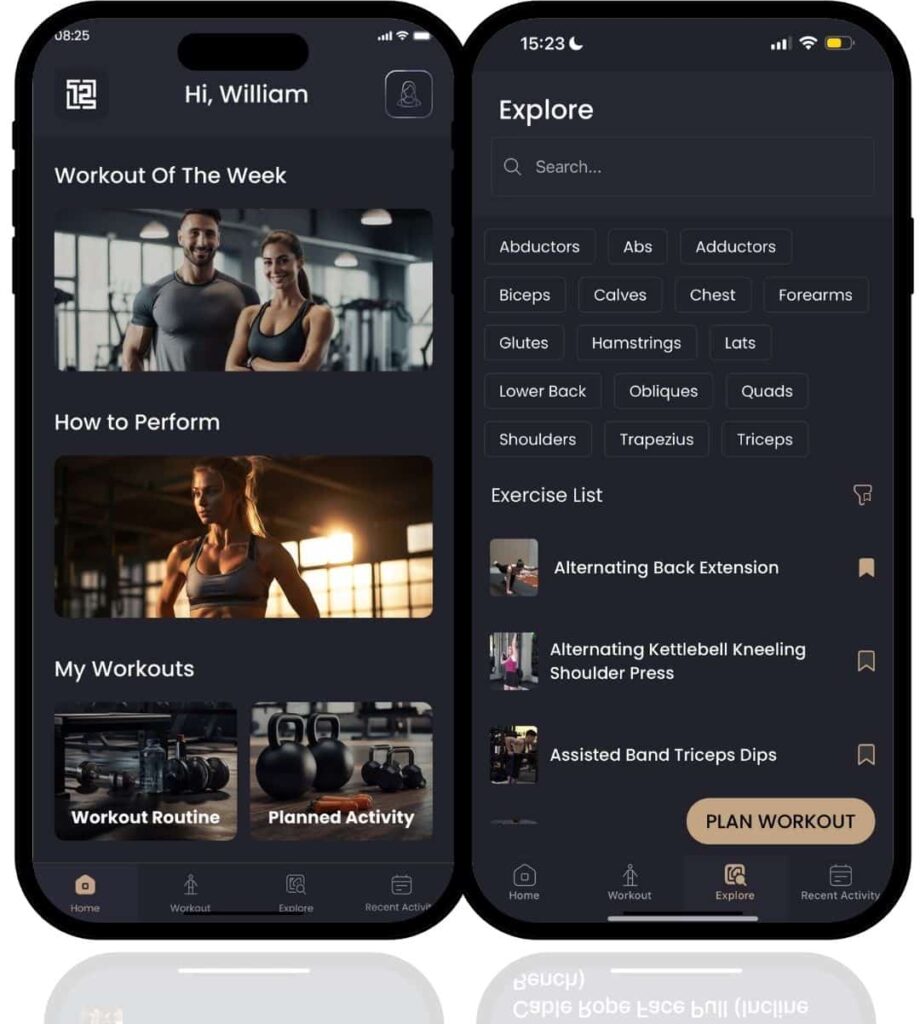
The 12REPS app tracks your performance so you can see patterns. You might notice that certain weeks are consistently harder. This awareness helps you plan training around your cycle and energy levels.
Include Impact for Bone Health
While strength training loads bones, some impact work adds additional benefit. This does not mean high intensity jumping that stresses joints. Simple, controlled impact is enough.
Options include:
- Step ups onto a sturdy platform
- Walking lunges
- Light jumping or skipping (if joints tolerate it)
- Stair climbing
- Brisk walking
Even two to three minutes of impact work at the start of your session provides bone building stimulus beyond what lifting alone offers.
Do Not Neglect Recovery
Recovery is when adaptation happens. Your muscles repair and grow stronger during rest, not during the workout itself.
During perimenopause, prioritise:
Sleep: Do what you can to improve sleep quality. Keep the bedroom cool for hot flushes. Maintain consistent sleep times. Avoid screens before bed.
Protein: Aim for 1.6 to 2 grams of protein per kilogram of body weight. Protein provides the building blocks for muscle repair. Higher protein intake becomes more important as you age.
Stress management: Chronic stress elevates cortisol, which interferes with muscle building and promotes abdominal fat storage. Find ways to manage stress that work for you.
Rest days: Take them. Your body needs them more now than it did ten years ago.
Sample Perimenopause Training Programme
Here is a three day programme designed for women in perimenopause. It prioritises compound movements, includes appropriate volume, and allows adequate recovery.
Day 1: Lower Body
| Exercise | Sets | Reps | Rest |
|---|---|---|---|
| Goblet Squat | 3 | 12, 10, 10 | 90 seconds |
| Romanian Deadlift | 3 | 10, 10, 8 | 90 seconds |
| Hip Thrust | 3 | 12, 10, 10 | 60 seconds |
| Walking Lunge | 3 | 10 each leg | 60 seconds |
| Leg Curl | 3 | 12, 12, 10 | 60 seconds |
| Standing Calf Raise | 3 | 15, 12, 12 | 45 seconds |
Day 2: Upper Body
| Exercise | Sets | Reps | Rest |
|---|---|---|---|
| Dumbbell Bench Press | 3 | 10, 10, 8 | 90 seconds |
| Seated Cable Row | 3 | 12, 10, 10 | 60 seconds |
| Dumbbell Shoulder Press | 3 | 10, 10, 8 | 60 seconds |
| Lat Pulldown | 3 | 12, 10, 10 | 60 seconds |
| Tricep Pushdown | 2 | 12, 12 | 45 seconds |
| Dumbbell Bicep Curl | 2 | 12, 12 | 45 seconds |
| Face Pull | 2 | 15, 15 | 45 seconds |
Day 3: Full Body
| Exercise | Sets | Reps | Rest |
|---|---|---|---|
| Trap Bar Deadlift or Leg Press | 3 | 10, 8, 8 | 120 seconds |
| Push Up or Incline Press | 3 | 10, 10, 8 | 60 seconds |
| Single Arm Dumbbell Row | 3 | 10 each arm | 60 seconds |
| Step Up | 3 | 10 each leg | 60 seconds |
| Cable Pull Through | 3 | 12, 12, 10 | 60 seconds |
| Plank | 3 | 30 to 45 seconds | 45 seconds |
This programme is available in the 12REPS app with video demonstrations for every exercise and automatic tracking of your progress.

Managing Symptoms Through Training
Beyond the physical benefits, strategic training can help manage specific perimenopause symptoms.
Hot Flushes
Some women find that regular exercise reduces the frequency and intensity of hot flushes. The mechanism is not fully understood, but it may relate to improved thermoregulation and reduced stress hormones.
Train in cool environments when possible. Wear breathable clothing. Have cold water available. If a hot flush hits during training, pause, cool down, then continue when it passes.
Sleep Problems
Exercise improves sleep quality, but timing matters. Training too close to bedtime can interfere with sleep for some women. Aim to finish workouts at least three to four hours before bed.
Morning or early afternoon training often works best for sleep. Experiment to find what works for your body.
Mood Changes
The endorphin release from strength training can stabilise mood. Many women report feeling calmer and more emotionally balanced on days they train.
If you are struggling with mood, prioritise getting to the gym even when you do not feel like it. You almost always feel better afterwards.
Joint Pain
Some joint discomfort during perimenopause is normal as oestrogen levels affect joint lubrication. However, strength training often improves joint pain by building the muscles that support and stabilise joints.
Start with lighter weights and higher reps if joints are sensitive. Gradually increase load as your joints adapt. Avoid pushing through sharp pain, but work through mild stiffness.
Brain Fog
Exercise increases blood flow to the brain and may help with cognitive symptoms. Some women find that training in the morning helps them feel sharper throughout the day.
Use the 12REPS app to track your workouts so you do not need to remember what you did last time. The app shows your previous weights and reps, removing the mental load.

What to Expect
Results take time, especially during perimenopause when hormonal fluctuations can affect progress. Here is a realistic timeline.
Weeks 1 to 4: You are learning the movements and establishing the habit. Expect some muscle soreness initially. Energy levels may fluctuate as your body adapts.
Weeks 4 to 8: Strength begins to increase. You lift heavier than when you started. Sleep may improve. Mood becomes more stable on training days.
Weeks 8 to 12: Visible changes begin. Muscles feel firmer. Clothes fit differently. You feel more capable and confident in daily activities.
Months 3 to 6: Significant strength gains. Body composition shifts. Symptoms may reduce. You feel like yourself again.
Long term: Maintained muscle mass, protected bone density, better metabolic health, reduced symptoms, improved quality of life.
The key is consistency. Three sessions per week, every week, for months and years. This is not a quick fix. It is a long term investment in your health and wellbeing.
Getting Started
If you are new to strength training, start conservatively. Learn the movements with lighter weights. Focus on technique before intensity.
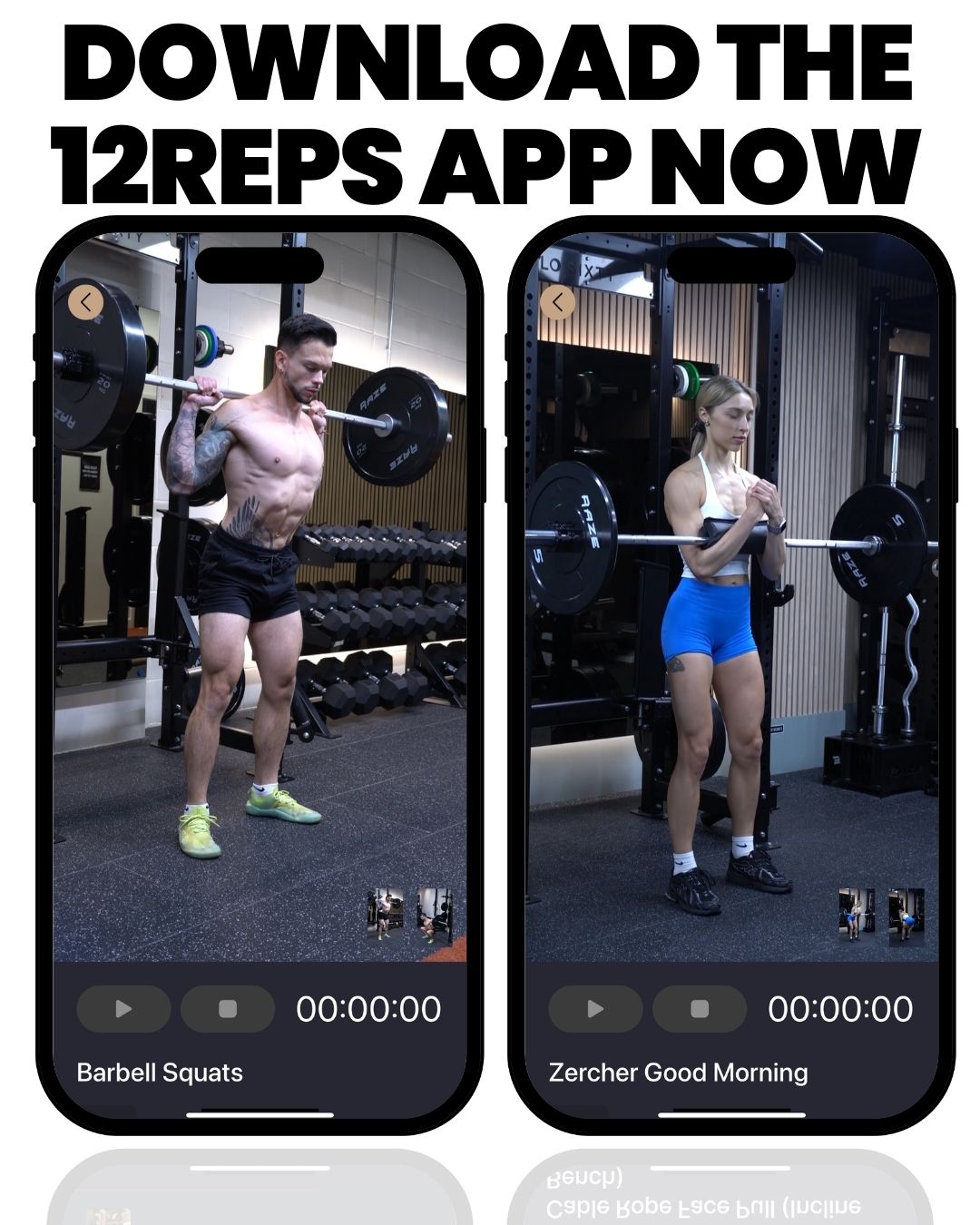
The 12REPS app provides video demonstrations for every exercise so you can see exactly how each movement should be performed. The programmes are designed by certified personal trainers who understand how to progress safely.
Download the app and select a programme appropriate for your experience level. Start your first session. Log your weights and reps. Build the habit.
If you have been training for years, adjust your approach for this new phase. Allow more recovery. Listen to your body more closely. Accept that progress may be slower but is still possible.
Perimenopause is challenging. But you are not powerless. Strength training gives you a tool to manage symptoms, protect your health, and maintain the body you want.
Start today. Your future self will thank you.
Frequently Asked Questions
Is it safe to lift heavy during perimenopause?
Yes, as long as you use proper form and progress gradually. Heavy lifting provides stronger stimulus for muscle and bone building. Start lighter if you are new to training, then increase weight over time.
Will strength training help with weight gain?
Yes. Building muscle increases your metabolic rate, helping you burn more calories at rest. Strength training also reduces visceral fat specifically. Combined with good nutrition, it is the most effective approach for managing perimenopausal weight changes.
How long until I see results?
You will feel stronger within four to six weeks. Visible changes typically appear around eight to twelve weeks. Significant body composition changes take three to six months of consistent training.
Can I train during a hot flush?
Yes, though you may want to pause briefly. Stay hydrated, train in cool environments, and wear breathable clothing. Many women find hot flushes decrease in frequency with regular exercise.
What if I have never lifted weights before?
Start with the beginner programmes in the 12REPS app. The video demonstrations show you exactly how to perform each exercise. Begin with lighter weights and focus on learning proper technique before adding intensity.
Should I take HRT alongside training?
This is a medical decision to discuss with your doctor. Strength training provides benefits regardless of whether you use hormone replacement therapy. Many women find the combination of HRT and exercise particularly effective for managing symptoms.
References
- Maltais, M.L. et al. (2009). Changes in muscle mass and strength after menopause. Journal of Musculoskeletal and Neuronal Interactions. https://pubmed.ncbi.nlm.nih.gov/19827084/
- Watson, S.L. et al. (2018). High-Intensity Resistance and Impact Training Improves Bone Mineral Density and Physical Function in Postmenopausal Women. Journal of Bone and Mineral Research. https://pubmed.ncbi.nlm.nih.gov/28975661/
- Asikainen, T.M. et al. (2004). Exercise for health for early postmenopausal women. Sports Medicine. https://pubmed.ncbi.nlm.nih.gov/15335244/
- Daley, A. et al. (2014). Exercise for vasomotor menopausal symptoms. Cochrane Database of Systematic Reviews. https://pubmed.ncbi.nlm.nih.gov/25376681/
Related Articles on just12reps.com
Article | Description | Link |
Strength Training for Women Over 40 | Build strength and protect your health in midlife. | |
Complete Beginner’s Guide to Strength Training | Start your journey with proper fundamentals. | |
The Science of Progressive Overload | Understand how to keep making gains over time. | |
Best Weightlifting App for Women | Find the right app for your training. | |
Glute Focused Strength Training for Women | Build strong, sculpted glutes with targeted training. |
About the Author: Will Duru holds a BSc (Hons) in Sport and Exercise Science and is an award-winning personal trainer with over 10 years of experience. He has helped dozens of women navigate perimenopause through structured strength training programmes. Will created the 12REPS app to make professional training guidance accessible to women at every stage of life.