



To find the right personal trainer, check three things before you pay. Look for a recognized qualification (in the UK, usually a Level 3 in personal training), experience with goals like yours and a coaching style you feel comfortable with. Then book a consultation or trial session, ask direct questions and walk away from red flags such as unrealistic promises.
Picking the trainer with the best physique, or whoever is free at your preferred time, is a gamble. You can spend months and a lot of money and still feel stuck.
I’m Will Duru, a personal trainer with more than 10 years of experience in London. This guide gives you a step-by-step checklist: what to verify, what to ask, what to watch for in a trial session and when to walk away.

What a good personal trainer does
The National Careers Service personal trainer profile describes the job. A trainer helps you set goals, plans your program and coaches you to follow it safely and effectively. They also give advice on health, nutrition and lifestyle.
Supervision seems to help. An exploratory 2022 review of supervised versus unsupervised resistance training found a moderate benefit for strength when sessions were supervised. The difference for body composition was trivial.
A good trainer should give you:
- A structured plan that progresses over time
- Clear coaching on technique
- Accountability that keeps you consistent
- Changes to the plan as you improve
- Honest, realistic goals and timelines
A poor fit costs you money and time, and it can knock your motivation.
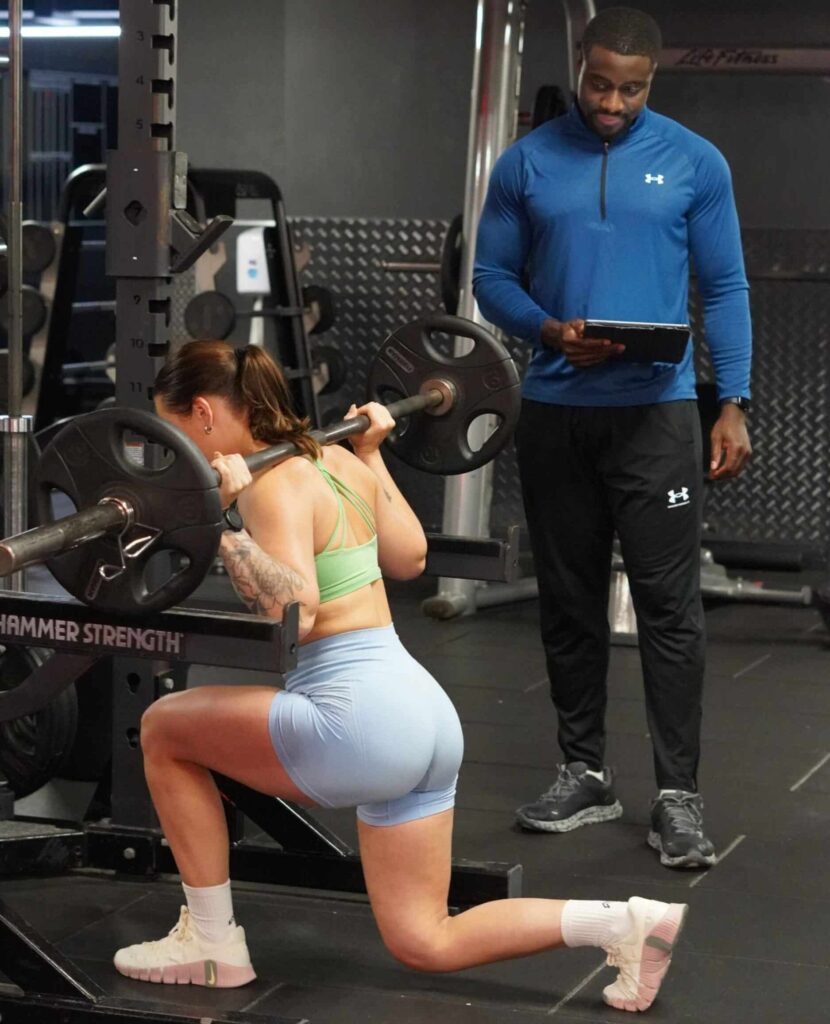
Step 1: Check qualifications
In the UK, the usual qualification is a Level 3 in personal training. CIMSPA’s careers guidance for exercise and fitness lists it alongside a Level 2 in gym instructing. CIMSPA is the Chartered Institute for the Management of Sport and Physical Activity, the professional development body for the sport and physical activity sector.
A Level 3 course usually covers:
- Anatomy and physiology
- Program design
- Health and safety
- Client assessment
- Teaching exercise technique
Ask directly: “What qualification do you hold, and which organization awarded it?” A qualified trainer will answer straight away and can show you the certificate. If they trained abroad, ask which body issued it and whether it is accredited.
Be wary of:
- Certificates from social media courses
- Weekend courses offering an “instant qualification”
- Online-only certificates with no practical assessment
- A vague “fitness diploma” that names no awarding body
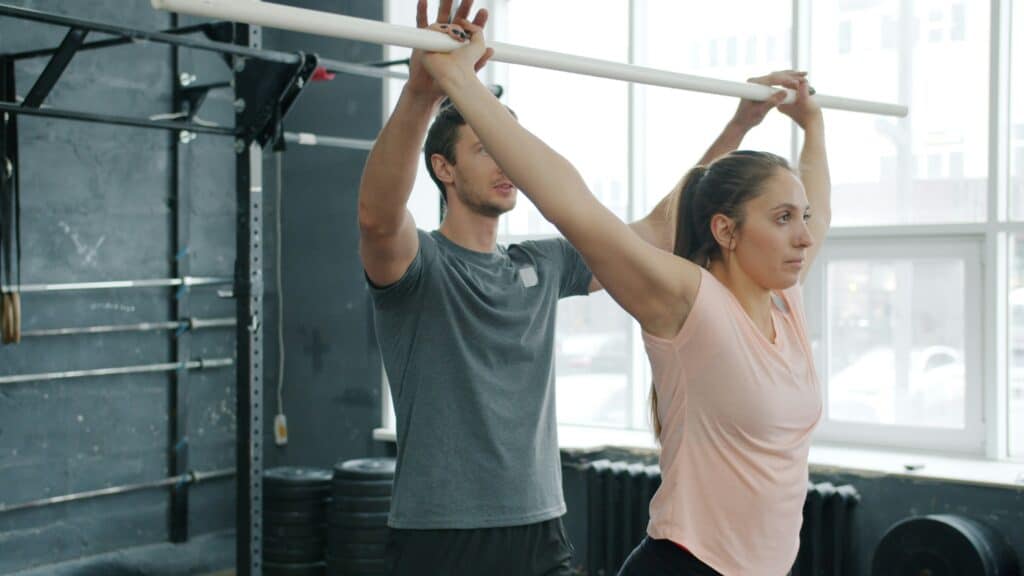
Check the CIMSPA Directory
The CIMSPA Directory lets clients find professionals by the type of activity they offer. A listing shows the endorsed qualifications and training a professional has completed.
A trainer with CIMSPA Personal Trainer Practitioner status has evidenced the personal trainer professional standard. They must complete 10 points of continuing professional development (CPD) each year and follow a member code of conduct. CPD means ongoing courses and learning after the first qualification.
Ask about first aid and insurance
The National Careers Service notes that it is usual for personal trainers to hold a first aid certificate that includes CPR. Ask about it, and ask whether they hold professional insurance. A professional will not mind the question.
Extra qualifications
Some trainers add Level 4 qualifications in specialist areas, such as exercise referral or working with long-term health conditions. A degree in sport and exercise science adds deeper theory. Neither replaces practical coaching skill.
Qualifications are the minimum. They show a trainer has the basic knowledge. Experience, coaching ability and ongoing learning decide whether they are good.
Step 2: Check their experience fits your goal
Years in the job help, but only if the trainer kept learning. Ten years of repeating the same program is not ten years of experience.
Ask: “What kind of clients do you mostly work with?”
Specific answers are a good sign:
- “Mostly women aged 30 to 50 who want to get stronger.”
- “Mainly beginners learning the basic lifts.”
- “I specialize in training after pregnancy.”
“I can help anyone with any goal” is a weaker answer. It often means they have no clear specialism.
Make sure their experience matches what you want. A trainer who mainly coaches older adults on mobility may be excellent, but not the best fit if you want to build muscle.
Look at results and reviews
Ask: “Can you show me examples of people with goals like mine?” Look for:
- Specific, realistic results with timelines of months, not days
- Clients who have stayed with them for a long time
- Reviews on Google, their website or from other gym members
Be cautious if they only show their own transformation, promise huge changes in a few weeks or use before and after photos with very different lighting and poses.

Step 3: Book a consultation or trial session
Always try a consultation or trial session before you buy a package. In the session, check whether the trainer:
- Assesses your current fitness
- Asks about your goals, past injuries and limitations
- Explains what you are doing and why
- Watches your form closely and gives useful feedback
- Makes you feel comfortable
If something feels off, you do not have to continue. “I’ll need to think about it” is a perfectly good answer.
Watching them coach someone else can also help. Are they engaged? Do they watch form closely? How do they give corrections?

Step 4: Choose a coaching style that suits you
A trainer can know their stuff and still be wrong for you. Most trainers mix these styles:
| Style | What it looks like | Suits you if |
|---|---|---|
| Direct | Firm instructions, pushes you hard | You respond well to firm direction |
| Educational | Explains the reasons, invites questions | You want to understand the “why” |
| Supportive | Encouragement, celebrates small wins | You are building confidence |
Ask: “How would you describe your coaching style?”
Good communication
- Asks about your goals, concerns and injuries
- Listens before answering
- Explains things without heavy jargon
- Checks you have understood
- Remembers what you told them last time
Male or female trainer?
It depends on what makes you comfortable. Some women prefer a female trainer when discussing body image or other concerns. Others have no preference. Good and poor trainers exist across genders, so qualifications, experience and how comfortable you feel matter most.

Red flags: when to walk away
- No proof of qualifications or insurance. If they cannot or will not show you, leave.
- Unrealistic promises. “Lose 15 kg in 6 weeks” is a warning sign. The NHS weight loss tips suggest aiming to lose 0.5 to 1 kg a week.
- Pushing supplements or products. If a trainer insists you need their branded powders or fat burners, they may care more about commission. See whether you need supplements for strength training.
- Medical diets outside their scope. General healthy eating advice is part of the job. A diet for a medical condition belongs with a dietitian. The British Dietetic Association explains that “dietitian” is a title protected by law, while “nutritionist” is not.
- The same workout for everyone. Your plan should reflect your assessment, goals and limitations, and get harder over time.
- Unprofessional behavior. Asking for underwear progress photos, touching more than form correction needs, comments about your body or pressure to meet outside sessions are all reasons to leave.
- They cannot explain your program. Ask “Why are we doing this exercise?” A good answer links the exercise to your goal. “Because it’s a good exercise” is not enough.
- Often late or distracted. A professional arrives on time, puts their phone away and stays for the full session.
If you feel uncomfortable for any reason, trust that feeling and find a different trainer.

Questions to ask before you hire
Qualifications and experience
- What qualifications do you hold, and who awarded them?
- How long have you been training clients?
- Do you have professional insurance and a first aid certificate?
- What courses or training have you done recently?
Their approach
- How would you plan training for someone with my goal?
- How do you track progress?
- What happens if I stop progressing?
Results and expectations
- What can I realistically expect in 12 weeks?
- Can you show examples of people with similar goals?
- What do you need from me to make this work?
How they answer tells you as much as what they say. Defensive or vague answers are a red flag.

Practical checks: location, schedule and cost
- Where do you train clients: a gym, a studio, outdoors or at home?
- What times are you available, and how far ahead do I need to book?
- What is your cancellation policy?
- Do you offer packages, and what happens if I need to pause?
A great trainer who is only free while you are at work will not help you. Price varies with experience, location and setting. A higher price does not always mean a better trainer, and a very low one can signal little experience.
If you are looking in London, our guide to choosing a personal trainer in London covers areas, settings and costs there.
Alternatives to one-to-one personal training
| Option | Good for | Trade-offs |
|---|---|---|
| Small group training | Lower cost per person, some individual attention, group motivation | Less personal focus, fixed times |
| Online coaching | Flexible timing, access to coaches anywhere | No hands-on form correction, needs self-motivation |
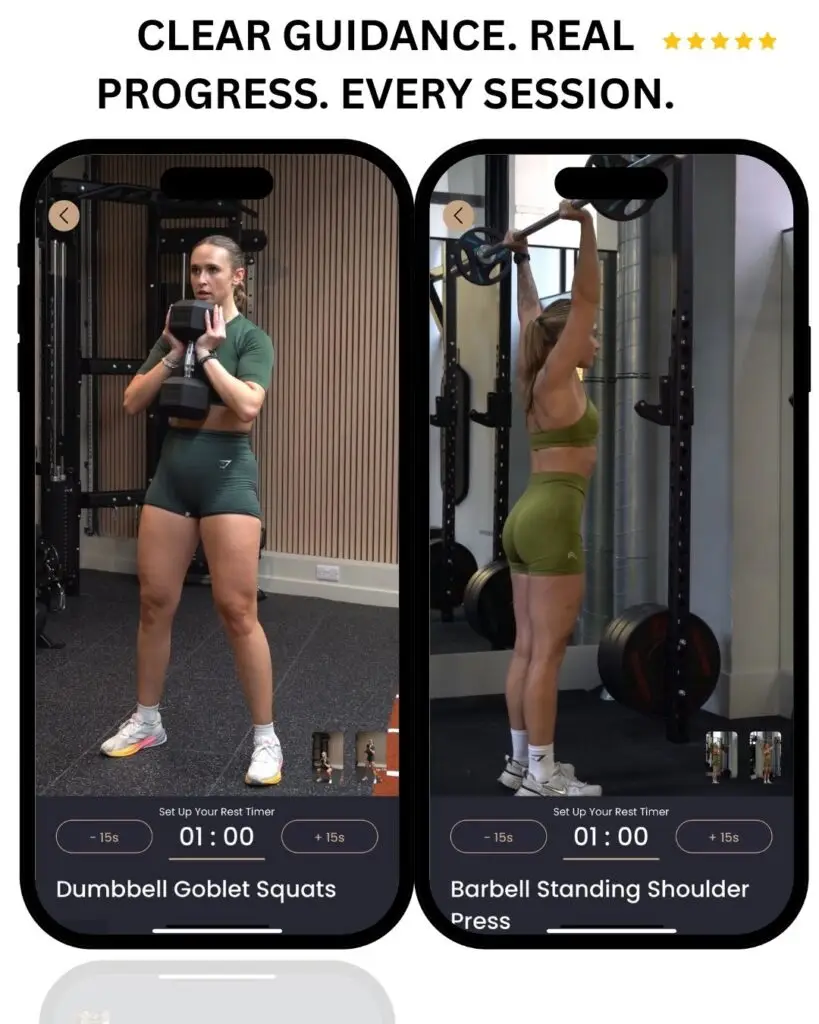
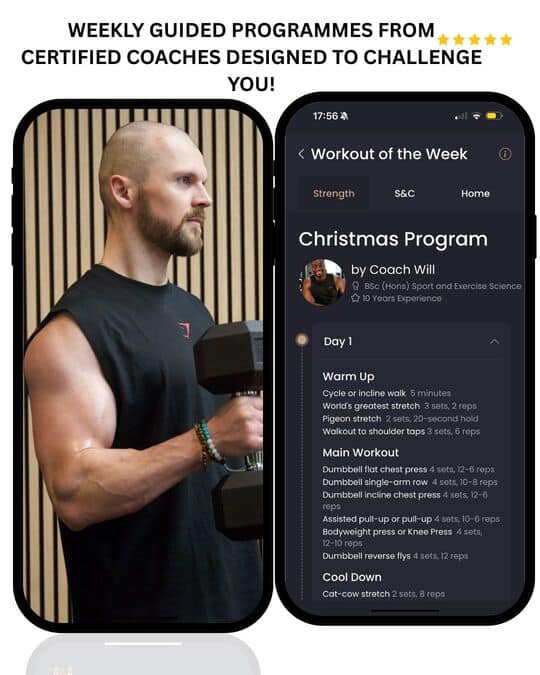
| A trainer-led app such as 12REPS | A structured plan, demonstrations and progress tracking | No real-time form correction, you train on your own |
An app suits you if you are happy to train on your own with clear direction. 12REPS builds training around your goal, your equipment and the time you have. Each exercise has a demonstration from a qualified personal trainer, and the app records your reps and weights so you have a number to beat.
Video: 12REPS, strength training for gym and home. This short video shows how the 12REPS app works. Watch it if you are weighing an app against in-person sessions.
Making your decision
Choose this trainer if:
- They hold a recognized qualification and insurance
- Their experience matches your goal
- They listen and explain clearly
- You like their coaching style
- They set realistic expectations
- The location, schedule and price work for you
- Your instinct says they are trustworthy
Do not hire this trainer if:
- Any red flag came up
- You do not feel comfortable with them
- They cannot explain their approach
- The logistics do not really work for you
You are the paying client. You have every right to ask questions, check qualifications and choose on your own terms.
The bottom line
The right personal trainer is qualified, insured, experienced with goals like yours and easy to talk to. Check their qualifications, book a trial, ask the questions above and walk away from red flags.
Do one-to-one sessions not fit your budget or schedule? 12REPS gives you a plan built by qualified trainers. It shows a demonstration for every exercise and logs every set.
Related reading
Sources
- Personal trainer job profile. National Careers Service, accessed 2026. https://nationalcareers.service.gov.uk/job-profiles/personal-trainer
- Careers Guidance: focus on Exercise and Fitness. CIMSPA, 2024. https://cimspa.co.uk/careers-guidance-focus-on-exercise-and-fitness/
- Discover the CIMSPA Member Directory. CIMSPA, 2024. https://www.cimspa.co.uk/news-blog/news/2024/discover-the-cimspa-member-directory
- Personal Trainer Practitioner. CIMSPA, accessed 2026. https://cimspa.co.uk/membership-products/personal-trainer-practitioner/
- Check HCPC registration. British Dietetic Association, accessed 2026. https://www.bda.uk.com/about-dietetics/what-is-dietitian/check-hcpc-registration.html
- Tips to help you lose weight. NHS, accessed 2026. https://www.nhs.uk/live-well/healthy-weight/managing-your-weight/12-tips-to-help-you-lose-weight/
- The Role of Supervision in Resistance Training; an Exploratory Systematic Review and Meta-Analysis. International Journal of Strength and Conditioning, 2022. https://doi.org/10.47206/ijsc.v2i1.101