

You’ve decided to start lifting weights. Brilliant decision.
Now you’re standing in the gym’s weight area feeling completely out of your depth. Rows of dumbbells you don’t know how to use. Machines with instructions you can’t decipher. Men grunting whilst lifting enormous weights. You feel like an imposter.
Where do you even start? What exercises should you do? How much weight should you use? How many sets? What’s a “rep”? Should you ask someone for help or just leave and stick to the treadmill where you know what you’re doing?
I’m Will Duru, a personal trainer with over 10 years’ experience in London. I’ve taught hundreds of women how to lift weights from absolute zero. Every single one felt intimidated initially. Every single one wondered if they were doing it wrong. Every single one eventually became confident and capable.
Here’s everything you need to know to start lifting weights as a complete beginner.
Why This Matters More Than You Think
Before we get into technique, let’s address why lifting weights is worth the initial discomfort.
Building muscle improves literally everything:
Metabolism: Muscle tissue burns more calories at rest than fat tissue. Adding 2-3kg of muscle to your body increases your resting metabolic rate by roughly 50-100 calories daily. That’s 1,500-3,000 extra calories burnt monthly just existing.
Bone density: Weight-bearing exercise is the single best intervention for preventing osteoporosis. Research shows women who lift weights 2-3 times weekly have significantly higher bone density than those who only do cardio.
Functional strength: Daily activities become easier. Carrying shopping bags, lifting children, moving furniture, opening jars—all require strength that cardio doesn’t build.
Injury prevention: Strong muscles protect joints. Women who strength train have lower rates of knee injuries, back pain, and shoulder problems.
Mental health: Resistance training reduces anxiety and depression more effectively than cardio alone. There’s something uniquely confidence-building about lifting heavy objects.
Body composition: You can weigh the same but look completely different with more muscle and less fat. The scale might not change, but your clothes will fit better and you’ll look more “toned.”
I trained a woman in her early 40s who’d done cardio exclusively for 20 years. Within six months of starting weight training, her bone density scan showed measurable improvement, her chronic back pain disappeared, and she felt stronger than she had in her 20s. She wished she’d started decades earlier.
The Terminology You Need to Know
Walking into a gym without understanding basic terminology is like walking into a foreign country without speaking the language. Let’s fix that.
Rep (Repetition): One complete movement of an exercise. If you pick up a dumbbell, curl it to your shoulder, and lower it back down, that’s one rep.
Set: A group of reps performed consecutively. “3 sets of 10 reps” means you do 10 reps, rest, do another 10 reps, rest, do another 10 reps.
Rest: The break between sets. Usually 30-90 seconds for beginners.
Form: How you perform an exercise. Good form means you’re doing the movement correctly and safely. Poor form means you’re doing it wrong and risking injury.
Progressive overload: Gradually increasing weight, reps, or sets over time. This is what makes you stronger.
Compound movement: Exercise that works multiple muscle groups simultaneously (squats, deadlifts, rows, presses). These are your most important exercises.
Isolation movement: Exercise that targets one specific muscle (bicep curls, tricep extensions). These are less important initially.
Free weights: Dumbbells, barbells, kettlebells—weights that aren’t attached to a machine.
Machines: Equipment with guided movement patterns (leg press, chest press, lat pulldown).
Bodyweight: Using only your body as resistance (push-ups, pull-ups, squats without weights).
Your First Session: What to Actually Do
Right. You’re in the gym. You’re nervous. Here’s exactly what to do.
Step 1: Don’t Touch Anything Heavy Yet
Your first session isn’t about lifting impressive weight. It’s about learning movement patterns with light resistance.
Start with:
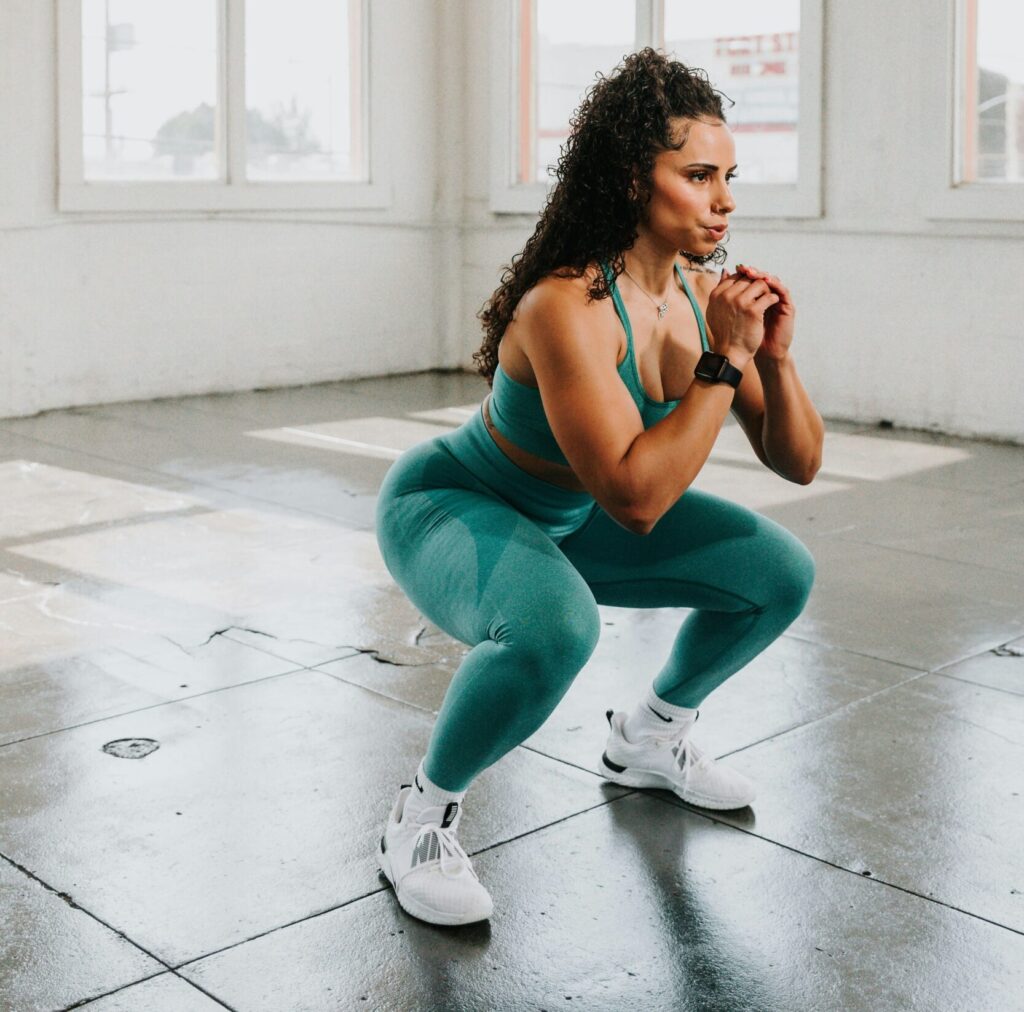
- Bodyweight squats
- Wall push-ups or knee push-ups
- Bodyweight lunges
- Plank holds
- Very light dumbbell rows (3-5kg)
- Very light dumbbell shoulder presses (3-5kg)
Do 2 sets of 10 reps for each exercise. Rest 60 seconds between sets.
This should feel easy. That’s the point. You’re learning how movements feel, where you should feel them working, what good form feels like.
Step 2: Film Yourself
I’m serious. Use your phone. Film yourself doing each exercise from the side.
You think you’re doing a squat correctly. Film it. You’ll see your knees caving inward, or your back rounding, or you’re not going deep enough.
This self-feedback is invaluable. You can’t feel what you’re doing wrong initially. You need to see it.
Step 3: Focus on These 6 Foundational Movements
Every human movement pattern falls into one of six categories. Master these basics before worrying about fancy variations.
1. Squat (Lower body push): Goblet squat with light dumbbell held at chest
2. Hinge (Posterior chain): Romanian deadlift with light dumbbells
3. Horizontal push (Chest, shoulders, triceps): Dumbbell chest press or push-ups
4. Horizontal pull (Back, biceps): Dumbbell rows
5. Vertical push (Shoulders, triceps): Dumbbell shoulder press
6. Vertical pull (Back, biceps): Lat pulldown (or assisted pull-up machine)
Learn these six movement patterns properly and you’ve covered 90% of what matters.
Step 4: Write Everything Down
Track every session. Write down:
- Exercise name
- Weight used
- Sets and reps completed
- How it felt
This serves two purposes: you can see progress over weeks, and you know exactly what to do next session (try to beat previous performance slightly).
How Much Weight Should You Use?
This is the question every beginner asks. The answer is frustratingly individual.
General rule: Use a weight that makes the last 2-3 reps of each set genuinely challenging but still achievable with good form.
Practically:
- If you’re doing 10 reps, reps 1-7 should feel manageable
- Reps 8-9 should feel hard
- Rep 10 should be difficult but achievable
If you can easily do 15 reps, the weight’s too light. If you can only do 5 reps, it’s too heavy.
Starting weights for most women:
- Goblet squats: 8-12kg dumbbell
- Dumbbell rows: 6-10kg per hand
- Dumbbell shoulder press: 4-8kg per hand
- Dumbbell chest press: 6-10kg per hand
- Romanian deadlifts: 8-12kg per hand
These are STARTING weights. Within 4-6 weeks, you should be using noticeably heavier weights.
I trained a woman who started with 4kg dumbbells for shoulder press because she was terrified of lifting anything heavier. Six weeks later she was pressing 10kg dumbbells. She hadn’t magically gained strength overnight—she’d been underestimating her capability the entire time.
Your First 4-Week Programme
Here’s a complete beginner programme. Do this 2-3 times per week with at least one rest day between sessions.
Weeks 1-2: Learning Phase
Workout A (Full Body):
- Goblet squats: 3 sets x 10 reps (8kg dumbbell)
- Dumbbell rows: 3 sets x 10 reps per arm (6kg)
- Push-ups (knee or elevated): 3 sets x 8 reps
- Dumbbell shoulder press: 3 sets x 10 reps (5kg per hand)
- Plank: 3 sets x 20-30 seconds
Rest 60-90 seconds between sets.
Focus: Perfect form. Film yourself. Every rep should look clean.
Weeks 3-4: Building Base Strength
Same exercises, but:
- Increase to 3-4 sets
- Add weight if you can complete all reps with good form
- Reduce rest to 60 seconds
Example progression: Week 1: Goblet squat 8kg x 10 reps Week 2: Goblet squat 8kg x 12 reps Week 3: Goblet squat 10kg x 8 reps Week 4: Goblet squat 10kg x 10 reps
By week 4, you should feel noticeably stronger. Weights that felt heavy in week 1 should feel manageable.
Common Beginner Mistakes (And How to Avoid Them)
Mistake 1: Using Weights That Are Too Light
Most women drastically underestimate their strength. They grab 2kg dumbbells and do 20 reps feeling nothing.
The fix: If you can easily do 15+ reps, the weight’s too light. Increase immediately.
Mistake 2: Not Writing Anything Down
You can’t remember what weight you used last session. So you repeat the same weights week after week making no progress.
The fix: Buy a small notebook. Write down every session. Progress requires tracking.
Mistake 3: Avoiding Leg Exercises
Many women focus exclusively on arms and abs whilst neglecting legs because they “don’t want bigger legs.”
The fix: Your legs are your largest muscle group. Training them burns most calories and builds most strength. Don’t skip legs.
Mistake 4: Doing Only Isolation Exercises
Endless bicep curls and tricep extensions whilst avoiding compound movements.
The fix: Prioritise compound movements (squats, deadlifts, rows, presses). Do isolation work after, if time permits.
Mistake 5: Not Resting Enough Between Sessions
Training every day because “more is better.”
The fix: Muscles grow during rest, not during training. Rest at least 48 hours between sessions training the same muscles.
Mistake 6: Comparing Yourself to Others
Watching the woman next to you lift twice as much and feeling inadequate.
The fix: She’s been training for years. You’ve been training for weeks. Compare yourself to last week’s version of you, not to random strangers.
Mistake 7: Giving Up After 2 Weeks
Expecting dramatic results immediately and quitting when they don’t materialise.
The fix: Meaningful changes take 8-12 weeks minimum. Commit to three months before judging results.
I trained a woman who quit after three weeks because she “wasn’t seeing results.” I convinced her to commit to 12 weeks. By week 12, she’d increased her squat by 20kg, could do proper push-ups for the first time in her life, and her clothes fit completely differently. She’d given up right before results would’ve become obvious.
How to Progress Beyond Beginner Stage
After 4-6 weeks of consistent training, you’re no longer a complete beginner. Here’s how to progress.
Increase Frequency
Move from 2x weekly to 3x weekly. This allows more volume without excessive fatigue per session.
Example split:
- Monday: Lower body focus
- Wednesday: Upper body focus
- Friday: Full body
Add Exercises
Introduce new movement variations:
- Bulgarian split squats (single-leg work)
- Hip thrusts (glute focus)
- Lat pulldowns (back development)
- Walking lunges (leg strength)
Increase Volume
Move from 3 sets to 4 sets per exercise. This accumulates more total work, driving more adaptation.
Systematically Progress Weight
Add 1-2kg to lower body exercises when you can complete all sets with good form.
Add 0.5-1kg to upper body exercises.
This small, consistent progression accumulates into signific
Gym Etiquette: The Unwritten Rules
Here’s what nobody tells beginners about gym behaviour.
1. Rerack your weights. Put dumbbells back where you found them. Don’t leave them scattered on the floor.
2. Wipe down equipment after use. Use the provided antibacterial wipes or towels.
3. Don’t sit on equipment between sets whilst scrolling your phone. Others might be waiting to use it.
4. Ask before “working in.” If someone’s using equipment you want, ask “Can I work in?” (use it between their sets).
5. Don’t stand directly in front of the dumbbell rack. Take your dumbbells and step back so others can access the rack.
6. Don’t drop weights unnecessarily. Lower them with control unless you’re genuinely maxing out.
7. Headphones mean “don’t talk to me.” Respect people’s workout focus time.
8. Asking for a spot is normal. If you need someone to watch you during a heavy set, just ask. Most people are happy to help.
Should You Hire a Personal Trainer?
Honestly? If you can afford even 4-6 sessions with a good trainer, it’s worth it.
What a trainer provides:
- Teaches proper form for basic movements
- Creates a programme specific to your goals
- Provides accountability
- Corrects mistakes you can’t see yourself
- Answers questions without judgment
You don’t need a trainer forever. But 4-6 sessions to learn the fundamentals prevents months of doing exercises incorrectly.
I’ve had clients who trained alone for a year, then hired me and discovered they’d been doing every exercise suboptimally. Fixing ingrained poor form is harder than learning correct form initially.
If you can’t afford a trainer:
- Film yourself and compare to YouTube tutorials
- Ask gym staff for form checks (most commercial gyms include this free)
- Join online communities where people critique form
- Be conservative with weight until you’re confident in technique
What About Home Training?
You don’t need a gym to start lifting weights.
Minimum home equipment:
- Set of dumbbells (adjustable dumbbells are ideal: one set that goes from 5-20kg per hand)
- Resistance bands (optional but useful)
- Sturdy chair or bench
Effective home programme:
- Goblet squats with dumbbell
- Dumbbell Romanian deadlifts
- Dumbbell rows
- Floor press (dumbbell chest press lying on floor)
- Dumbbell shoulder press
- Push-ups
- Lunges with dumbbells
This covers all major movement patterns. Will it be as effective as gym training with full equipment access? No. Will it build meaningful strength? Absolutely.
I trained a woman through lockdown with only 15kg dumbbells total. She made excellent progress for three months until gyms reopened.

Nutrition for Beginners: The Basics
You can’t out-train poor nutrition. Here’s what matters.
Protein: 1.6-2.2g per kg bodyweight daily. For a 65kg woman, that’s 105-145g protein daily.
Why it matters: Muscle repair and growth require adequate protein. Without it, your training stimulus is wasted.
Calories: Slight deficit for fat loss, maintenance for recomposition, slight surplus for muscle gain.
Most beginners can build muscle and lose fat simultaneously (recomposition) eating at maintenance calories with high protein.
Timing: Doesn’t matter as much as people claim. Getting adequate daily protein matters more than having it immediately post-workout.
Supplements: Unnecessary for beginners. Focus on whole food nutrition first.
The Timeline: What to Expect
Weeks 1-2: Feeling awkward, learning movements, possibly sore for days after each session. Strength increases rapidly (mostly neural adaptation, not actual muscle growth yet).
Weeks 3-6: Movements feel more natural, soreness decreases, visible technique improvement, modest strength increases continue.
Weeks 7-12: First visible body composition changes, meaningful strength increases, exercises that felt impossibly hard now feel manageable.
Months 4-6: Clear muscle definition appearing, significant strength gains, confidence in gym environment.
Months 7-12: Substantial body composition changes, ability to lift weights you’d have thought impossible 6 months prior.
This is a realistic timeline if you’re consistent. Not Instagram transformation timeline. Actual human timeline.
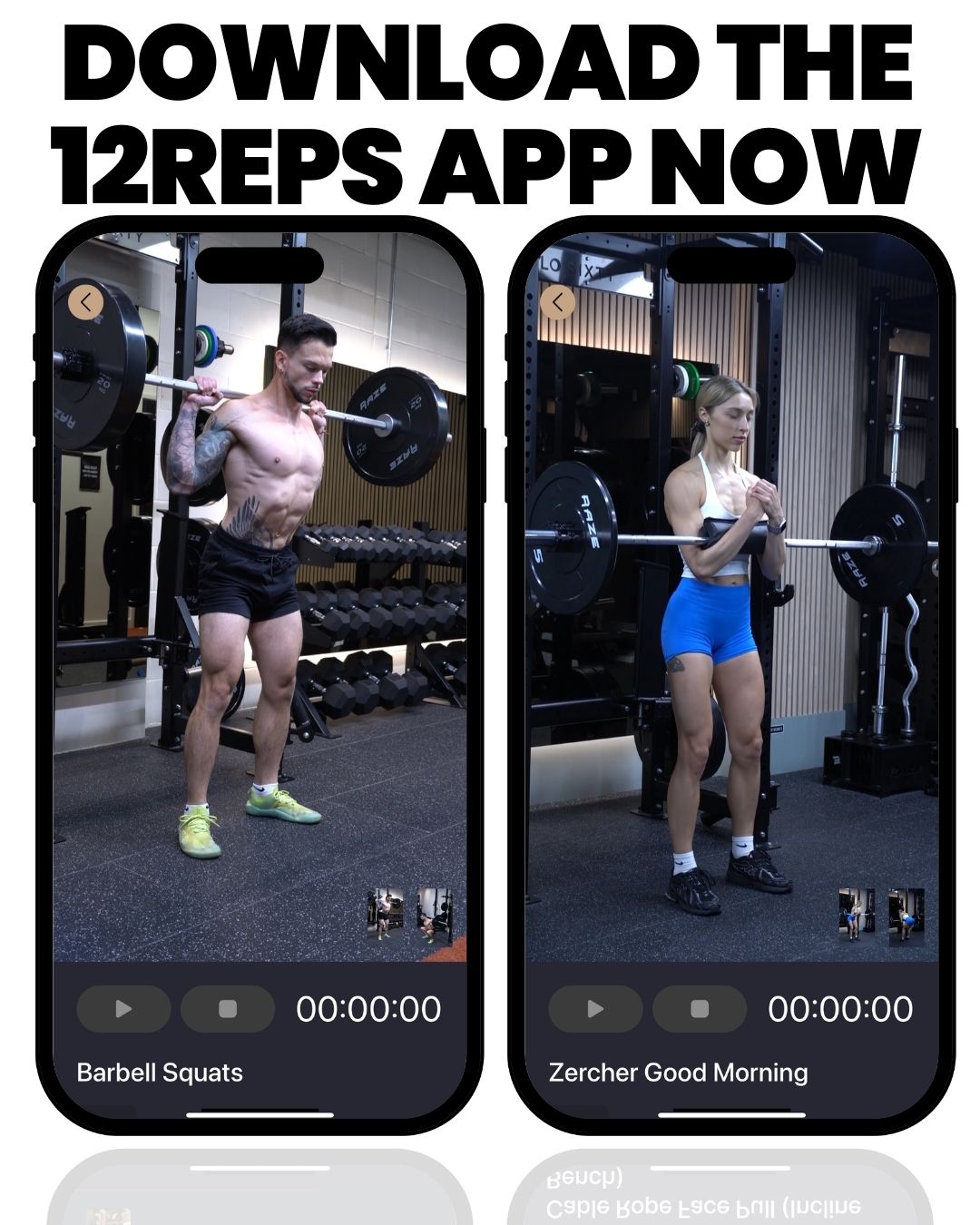
How 12REPS Makes This Easier
The challenge with starting lifting is you need:
- Proper programme design (which exercises, how many sets/reps)
- Progressive overload tracking (did I use 8kg or 10kg last session?)
- Form guidance (am I doing this correctly?)
- Adjustment based on equipment access (gym vs home)
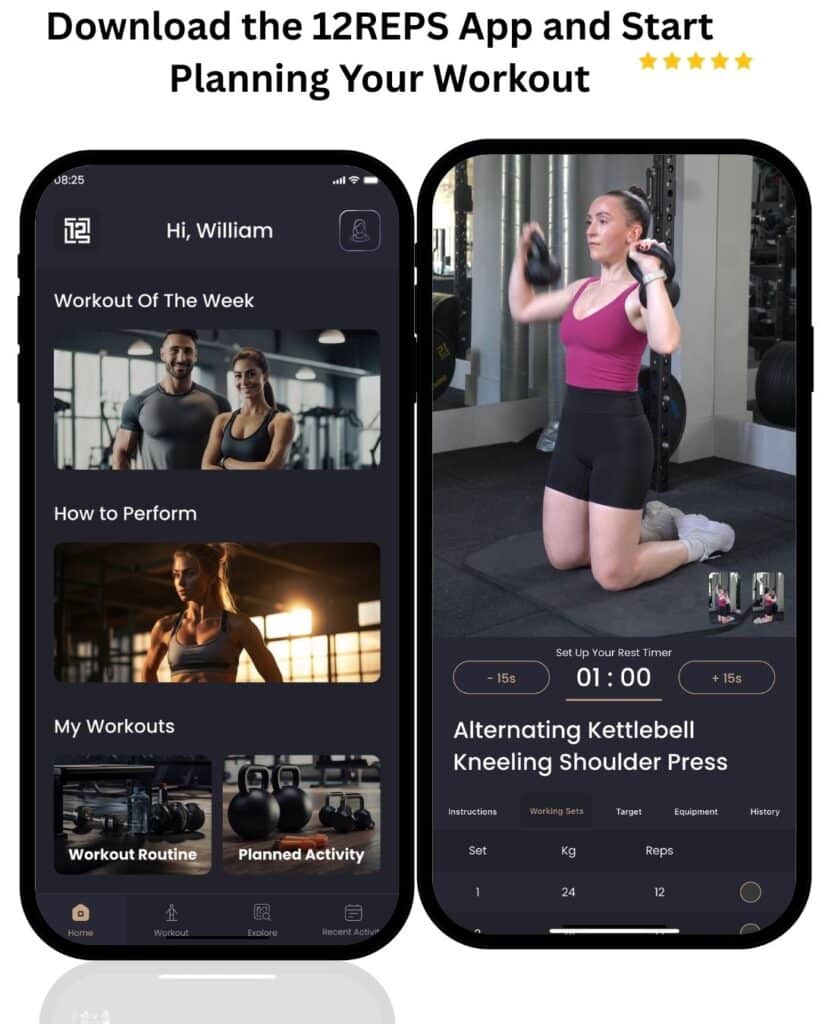
12REPS handles all of this:
Intelligent programming: The app designs your programme based on whether you’re at gym or home, what equipment you have access to, and your experience level.
Automatic progression: When you complete all sets with good form, the app increases weight for next session. You don’t need to remember—it tracks everything.
Exercise demonstrations: Video tutorials for every movement so you can see proper form.
Hybrid training: Training at gym some days, home others? The app adjusts programming accordingly—heavier barbell work at gym, dumbbell work at home.
For complete beginners, this removes the paralysis of not knowing what to do. The app tells you exactly which exercises, how much weight, how many reps. You just execute.
The Bottom Line
Starting to lift weights as a complete beginner is intimidating. Everyone feels this way initially.
But here’s what makes it worth it:
Within 12 weeks, you’ll be noticeably stronger. Daily activities become easier. You’ll look more toned. You’ll feel more capable. Your bone density will improve. Your mental health will benefit.
All you need to do is:
- Start with light weights and perfect form
- Train 2-3 times weekly
- Focus on compound movements
- Progress systematically by adding small amounts of weight
- Be consistent for at least 12 weeks
That’s it. It’s not complicated, even though it feels overwhelming initially.
Two years from now, you could be deadlifting your bodyweight, doing unassisted pull-ups, and feeling strong as hell. Or you could still be intimidated by the weight area, doing the same ineffective cardio sessions.
The only difference is whether you start today.
References
- Westcott, W.L. (2012). Resistance Training is Medicine: Effects of Strength Training on Health. Current Sports Medicine Reports, 11(4), pp.209-216. https://doi.org/10.1249/JSR.0b013e31825dabb8
- Watson, S.L., Weeks, B.K., Weis, L.J., Harding, A.T., Horan, S.A. and Beck, B.R. (2018). High-Intensity Resistance and Impact Training Improves Bone Mineral Density and Physical Function in Postmenopausal Women with Osteopenia and Osteoporosis: The LIFTMOR Randomized Controlled Trial. Journal of Bone and Mineral Research, 33(2), pp.211-220. https://doi.org/10.1002/jbmr.3284
- O’Connor, P.J., Herring, M.P. and Caravalho, A. (2010). Mental Health Benefits of Strength Training in Adults. American Journal of Lifestyle Medicine, 4(5), pp.377-396. https://doi.org/10.1177/1559827610368771
- Schoenfeld, B.J., Grgic, J., Ogborn, D. and Krieger, J.W. (2017). Strength and Hypertrophy Adaptations Between Low- vs. High-Load Resistance Training: A Systematic Review and Meta-Analysis. Journal of Strength and Conditioning Research, 31(12), pp.3508-3523. https://doi.org/10.1519/JSC.0000000000002200
- American College of Sports Medicine (2009). Progression Models in Resistance Training for Healthy Adults. Medicine & Science in Sports & Exercise, 41(3), pp.687-708. https://doi.org/10.1249/MSS.0b013e3181915670
- Morton, R.W., Murphy, K.T., McKellar, S.R., Schoenfeld, B.J., Henselmans, M., Helms, E., Aragon, A.A., Devries, M.C., Banfield, L., Krieger, J.W. and Phillips, S.M. (2018). A Systematic Review, Meta-Analysis and Meta-Regression of the Effect of Protein Supplementation on Resistance Training-Induced Gains in Muscle Mass and Strength in Healthy Adults. British Journal of Sports Medicine, 52(6), pp.376-384. https://doi.org/10.1136/bjsports-2017-097608
- Kraemer, W.J. and Ratamess, N.A. (2004). Fundamentals of Resistance Training: Progression and Exercise Prescription. Medicine & Science in Sports & Exercise, 36(4), pp.674-688. https://doi.org/10.1249/01.MSS.0000121945.36635.61