



You’ve decided to start strength training. You’ve read that training 3-4 days weekly is optimal. But now you’re confused: should you do full body workouts every session, or split your training into upper body and lower body days?
Here’s what usually happens: you Google “best workout split” and find dozens of conflicting opinions. Some trainers swear full body is superior. Others insist upper/lower splits are essential. You’re more confused than when you started.
The frustrating truth: most articles don’t tell you that research shows both approaches work equally well—the “better” choice depends entirely on your specific circumstances, not universal superiority.
I’m Will Duru, a personal trainer with over 10 years’ experience in London. I’ve programmed both full body and upper/lower splits for hundreds of women. Both produce excellent results when properly designed.
This guide explains what full body and upper/lower splits actually are, what research says about effectiveness, the pros and cons of each approach, how to decide which suits you, and how 12REPS implements both options.

What Is a Full Body Workout?
Full body workout: Training all major muscle groups (legs, glutes, back, chest, shoulders, arms) in a single session.
Example full body session:
- Squats (legs, glutes)
- Romanian deadlifts (glutes, hamstrings)
- Bench press (chest, triceps, shoulders)
- Barbell rows (back, biceps)
- Overhead press (shoulders, triceps)
- Bicep curls (biceps)
- Plank (core)
Weekly structure (3 days):
- Monday: Full body
- Wednesday: Full body
- Friday: Full body
Total weekly sessions: 3
Frequency per muscle group: 3× weekly (each muscle trained every session)

What Is an Upper/Lower Split?
Upper/Lower split: Dividing training between upper body sessions (chest, back, shoulders, arms) and lower body sessions (legs, glutes).
Example upper body session:
- Bench press (chest, triceps)
- Barbell rows (back, biceps)
- Overhead press (shoulders, triceps)
- Lat pulldowns (back, biceps)
- Lateral raises (shoulders)
- Bicep curls + Tricep extensions (arms)
Example lower body session:
- Squats (quads, glutes)
- Romanian deadlifts (glutes, hamstrings)
- Hip thrusts (glutes)
- Lunges (quads, glutes, hamstrings)
- Leg curls (hamstrings)
- Calf raises (calves)
Weekly structure (4 days):
- Monday: Lower body
- Tuesday: Upper body
- Thursday: Lower body
- Friday: Upper body
Total weekly sessions: 4
Frequency per muscle group: 2× weekly (upper muscles Monday + Thursday, lower muscles Tuesday + Friday)

What Research Says: Both Work Equally Well
The Definitive Study on Women
A 2022 study in BMC Sports Science compared full body vs upper/lower split training in 50 untrained women over 12 weeks.
Study design:
- Full body group: 2 sessions weekly, training all muscles each session
- Upper/lower group: 4 sessions weekly (2 upper, 2 lower)
- Critical detail: Both groups performed the same total sets and reps weekly
Results after 12 weeks:
Measurement | Full Body | Upper/Lower | Difference |
Bench press strength | +25.5% | +30.0% | Not significant |
Lat pulldown strength | +27.2% | +26.0% | Not significant |
Leg press strength | +29.2% | +30.4% | Not significant |
Muscle mass gain | +1.7% | +1.9% | Not significant |
Conclusion: Both groups made nearly identical strength and muscle gains. No significant difference in any measurement.
2024 Meta-Analysis: 14 Studies, 392 Subjects
A 2024 systematic review and meta-analysis in the Journal of Strength and Conditioning Research examined 14 studies comparing split vs full body training.
Findings:
- Bench press strength gains: No significant difference
- Lower body strength gains: No significant difference
- Elbow extensors (triceps) muscle growth: No significant difference
- Elbow flexors (biceps) muscle growth: No significant difference
- Vastus lateralis (quads) muscle growth: No significant difference
- Lean body mass gains: No significant difference
Conclusion: “The present systematic review and meta-analysis provides solid evidence that the use of split or full body routines within a resistance training programme does not significantly impact either strength gains or muscle hypertrophy when volume is equated.”

The Critical Qualifier: “When Volume Is Equated”
This phrase is crucial. Both approaches work when total weekly sets per muscle group are matched.
Example:
Full body (3× weekly):
- Chest: 3 sets Monday + 3 sets Wednesday + 3 sets Friday = 9 sets weekly
Upper/lower (4× weekly):
- Chest: 5 sets Monday + 4 sets Thursday = 9 sets weekly
If weekly volume matches (both 9 sets for chest), results are similar.
Where many people go wrong: Assuming more frequent sessions automatically means better results. Frequency only matters if it allows you to complete more total weekly volume.
Full Body Workouts: Pros and Cons
Pros of Full Body Training
1. Fewer training days required
Full body typically requires 2-3 sessions weekly vs 4-5 for splits.
Why this matters: More sustainable for busy schedules. According to NASM research on training adherence, dropout rates are higher with higher frequency programmes.
Example: The 2022 study on women found 17% (4 out of 24) in the upper/lower group (4 days weekly) dropped out citing “lack of time.” Zero participants dropped out of the full body group (2 days weekly).
2. Higher frequency per muscle group
Training each muscle 3× weekly (full body 3 days) vs 2× weekly (upper/lower 4 days).
Why this matters: Research shows training each muscle 2-3× weekly optimises growth. Full body easily achieves this.
3. Flexibility with missed sessions
If you miss a full body session, you’ve still trained everything earlier in the week. If you miss leg day on an upper/lower split, you haven’t trained legs that week.
4. Shorter sessions
Full body sessions typically 45-60 minutes vs 60-75 minutes for upper/lower sessions (which have more exercises per muscle group).
Cons of Full Body Training
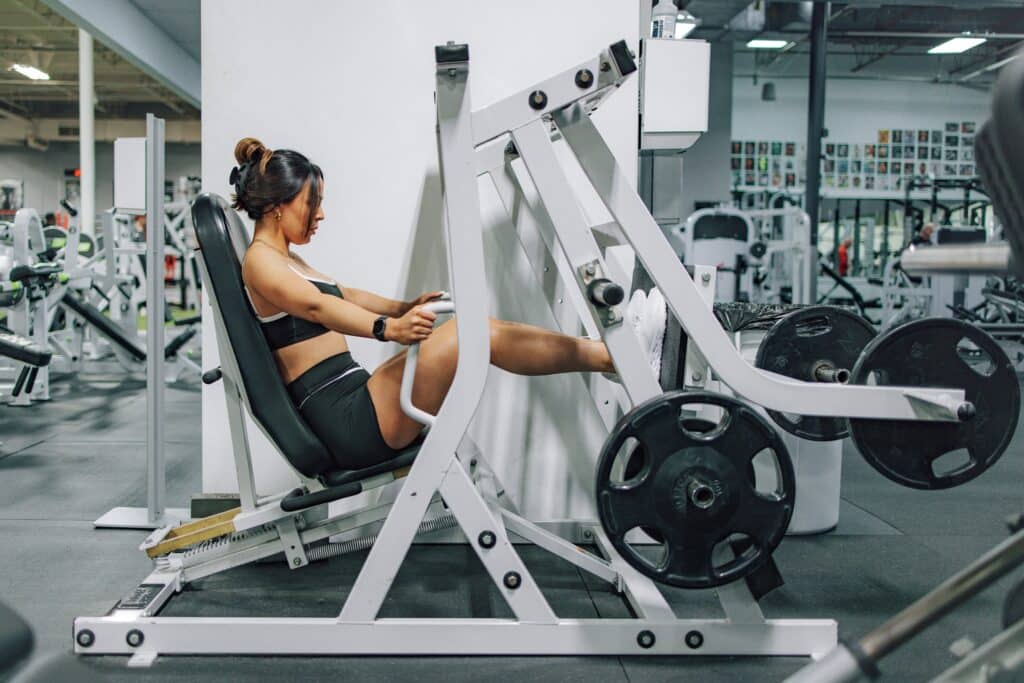
1. More demanding per session
Training your entire body in one session is physically and mentally taxing.
Challenge: Later exercises suffer from accumulated fatigue. Your overhead press at the end suffers because you’re already fatigued from squats, deadlifts, rows, bench.
2. Limited volume per muscle per session
With 7-9 muscle groups to train, you can only do 2-3 sets per muscle group per session before session length becomes excessive.
For advanced trainees: May limit total weekly volume. If you need 15-20 sets per muscle weekly, fitting this into 3 full body sessions becomes difficult.
3. Less exercise variety
Typically use the same exercises each session (squats, deadlifts, bench, rows, etc.) because session time is limited.
4. Fatigue management challenges
Alternating between lower and upper exercises (squat, bench, deadlift, rows) means you never get complete rest for any muscle group during the session.

Upper/Lower Split: Pros and Cons
Pros of Upper/Lower Split
1. Higher volume per muscle per session
Dedicating an entire session to upper or lower body allows 4-6 sets per muscle group per session.
Example upper body:
- Chest: 5 sets Monday + 4 sets Thursday = 9 sets weekly
- Back: 6 sets Monday + 5 sets Thursday = 11 sets weekly
- Shoulders: 4 sets Monday + 4 sets Thursday = 8 sets weekly
Why this matters: Easier to accumulate high weekly volume (15-20 sets) required for advanced progression.
2. Better exercise variety
More time dedicated to upper or lower body allows multiple exercises per muscle group.
Example chest (upper day):
- Bench press (Monday)
- Incline dumbbell press (Monday)
- Flat dumbbell press (Thursday)
- Cable flyes (Thursday)
Full body: Typically only one chest exercise per session (time constraints).
3. More focus and specialisation
Mental focus entirely on upper or lower body. Not switching between muscle groups constantly.
4. Better fatigue management
48-72 hours between training the same muscles. Lower body fully recovers whilst you train upper body.
Cons of Upper/Lower Split
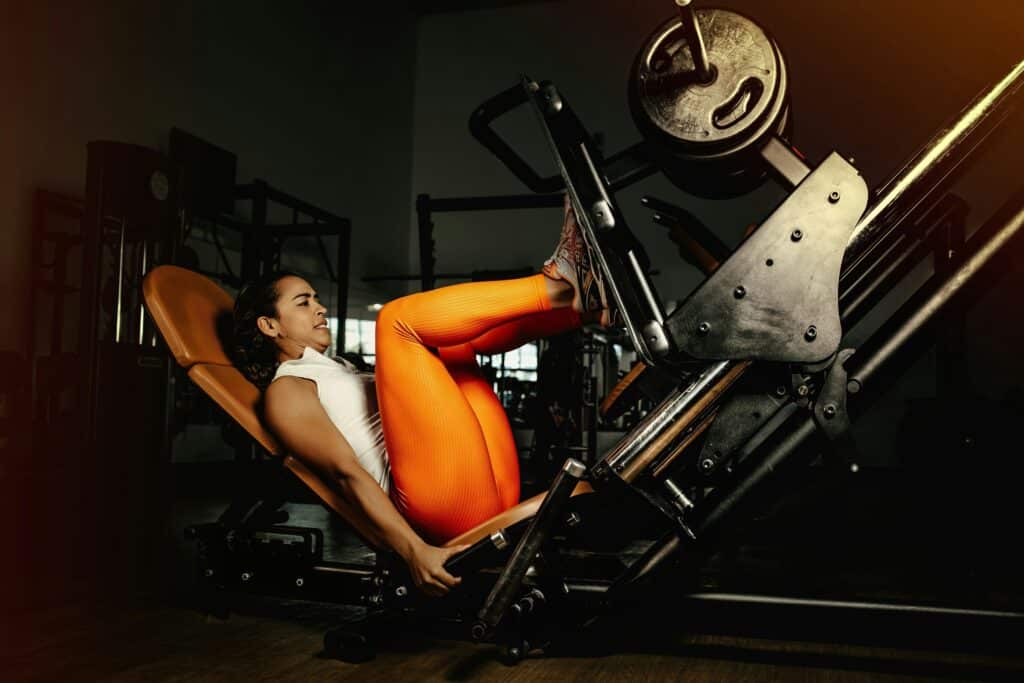
1. Requires more training days
Typically 4 days weekly vs 2-3 for full body.
Impact: Research shows this increases dropout rates for people with limited time.
2. Longer sessions
60-75 minutes typical vs 45-60 for full body (more exercises per session).
3. Less frequency per muscle
Usually 2× weekly per muscle vs 3× for full body.
Why this might matter: Some research suggests higher frequency (3× vs 2×) may benefit muscle growth slightly, though effects are small when volume is matched.
4. Missing sessions is more problematic
If you miss leg day, you haven’t trained lower body that week. This creates imbalances.
How to Decide: Full Body or Upper/Lower?
Choose Full Body If:
✅ You can only train 2-3 days weekly
Full body maximises results with minimal weekly sessions.
✅ You’re a beginner (first 6-12 months)
Full body’s higher frequency (3× per muscle) accelerates learning movement patterns and building base strength.
✅ Your primary goal is overall strength
Full body emphasises compound lifts (squat, deadlift, bench, rows) every session—ideal for strength development.
✅ You prefer shorter, less frequent workouts
Full body allows effective training in 45-60 min sessions, 2-3× weekly.
✅ You want training flexibility
Missing one full body session is less problematic than missing “leg day.”
Choose Upper/Lower Split If:
✅ You can commit to 4 days weekly
Upper/lower requires this frequency to match full body’s effectiveness.
✅ You’re intermediate/advanced (12+ months training)
Higher volume per session allows accumulation of the 15-20 sets weekly needed for continued progression.
✅ You want more exercise variety
Upper/lower allows multiple exercises per muscle group (e.g., 3 different chest exercises weekly).
✅ You want to specialise/prioritise specific muscles
More time dedicated to upper or lower body allows targeted work on lagging muscle groups.
✅ You prefer dedicating full attention to one body region
Mental focus entirely on upper or lower, not constantly switching.
The Reality: Both Work
Here’s the honest truth: if you’re training 3-4 days weekly with proper progressive overload and sufficient volume, both approaches will build muscle and strength effectively.
The research is clear: When weekly volume is matched, results are nearly identical.
The “best” choice depends on:
- Your schedule and time availability
- Your training experience level
- Your personal preferences
- Which approach you’ll actually stick to long-term
Consistency matters more than optimality. The “inferior” split you follow for 12 months produces better results than the “optimal” split you abandon after 6 weeks.
How 12REPS Implements Both Options
12REPS Offers Both Full Body and Upper/Lower Programmes
Why: Because both work, and different women have different schedules and preferences.
Full Body Programmes in 12REPS
2-Day Full Body:
- Monday: Full body
- Thursday: Full body
- Best for: Beginners, extremely busy schedules
- Weekly volume per muscle: 8-12 sets
3-Day Full Body:
- Monday: Full body
- Wednesday: Full body
- Friday: Full body
- Best for: Beginners to intermediate, 3 days available
- Weekly volume per muscle: 12-16 sets
Structure: Each session includes squat variation, hip hinge, horizontal push, horizontal pull, vertical push, plus arms and core.
Progression: Weight increases suggested when you complete all target reps with good form.
Upper/Lower Programmes in 12REPS
4-Day Upper/Lower:
- Monday: Lower body
- Tuesday: Upper body
- Thursday: Lower body
- Friday: Upper body
- Best for: Intermediate to advanced, 4 days available
- Weekly volume per muscle: 14-20 sets
Structure:
Lower days: 2 quad-dominant exercises, 2 hip-dominant exercises, 1-2 isolation exercises (hamstrings, calves)
Upper days: 2 horizontal pushes, 2 horizontal pulls, 1 vertical push, 1 vertical pull, arm work
Progression: Same progressive overload principles—weight increases when target reps achieved.
Hybrid Option: 3-Day Upper/Lower
12REPS also offers a 3-day upper/lower hybrid:
- Monday: Lower body
- Wednesday: Upper body
- Friday: Full body
Why this works: Provides frequency benefits of full body (Friday session trains everything) whilst allowing higher per-session volume on dedicated upper/lower days.
Sample Weekly Programmes
Full Body 3× Weekly (Intermediate)
Monday:
- Barbell squats: 4 sets × 8-10 reps
- Barbell bench press: 4 sets × 8-10 reps
- Romanian deadlifts: 3 sets × 10-12 reps
- Barbell rows: 3 sets × 8-10 reps
- Overhead press: 3 sets × 10-12 reps
- Bicep curls: 2 sets × 12-15 reps
- Tricep pushdowns: 2 sets × 12-15 reps
Wednesday:
- Deadlifts: 4 sets × 6-8 reps
- Incline dumbbell press: 3 sets × 10-12 reps
- Bulgarian split squats: 3 sets × 10 reps each leg
- Lat pulldowns: 3 sets × 10-12 reps
- Lateral raises: 3 sets × 12-15 reps
- Face pulls: 2 sets × 15 reps
- Plank: 3 sets × 45-60 seconds
Friday:
- Front squats: 4 sets × 8-10 reps
- Dumbbell bench press: 3 sets × 10-12 reps
- Hip thrusts: 4 sets × 10-12 reps
- Cable rows: 3 sets × 10-12 reps
- Arnold press: 3 sets × 10-12 reps
- Hammer curls: 2 sets × 12 reps
- Overhead tricep extension: 2 sets × 12 reps
Weekly volume:
- Chest: 10 sets
- Back: 9 sets
- Legs/glutes: 15 sets
- Shoulders: 9 sets
- Arms: 6 sets each
Session duration: 50-60 minutes
Upper/Lower 4× Weekly (Intermediate)
Monday (Lower):
- Barbell squats: 5 sets × 8-10 reps
- Romanian deadlifts: 4 sets × 10-12 reps
- Hip thrusts: 4 sets × 10-12 reps
- Walking lunges: 3 sets × 12 reps each leg
- Leg curls: 3 sets × 12-15 reps
- Calf raises: 3 sets × 15-20 reps
Tuesday (Upper):
- Barbell bench press: 5 sets × 8-10 reps
- Barbell rows: 4 sets × 8-10 reps
- Overhead press: 4 sets × 10-12 reps
- Lat pulldowns: 3 sets × 10-12 reps
- Lateral raises: 3 sets × 12-15 reps
- Bicep curls: 3 sets × 10-12 reps
- Tricep pushdowns: 3 sets × 12-15 reps
Thursday (Lower):
- Deadlifts: 5 sets × 6-8 reps
- Bulgarian split squats: 4 sets × 10 reps each leg
- Leg press: 4 sets × 12-15 reps
- Glute-ham raises: 3 sets × 8-10 reps
- Leg extensions: 3 sets × 12-15 reps
- Seated calf raises: 3 sets × 15-20 reps
Friday (Upper):
- Incline dumbbell press: 4 sets × 10-12 reps
- Cable rows: 4 sets × 10-12 reps
- Dumbbell shoulder press: 4 sets × 10-12 reps
- Pull-ups or assisted pull-ups: 3 sets × AMRAP
- Face pulls: 3 sets × 15 reps
- Hammer curls: 3 sets × 12 reps
- Overhead tricep extension: 3 sets × 12 reps
Weekly volume:
- Chest: 13 sets
- Back: 14 sets
- Legs/glutes: 19 sets
- Shoulders: 11 sets
- Arms: 6 sets each
Session duration: 60-70 minutes

The Bottom Line
The question “full body or upper/lower split?” has a research-backed answer: both work equally well when volume is matched.
What research shows:
✅ 2022 study on 50 untrained women: no significant difference in strength or muscle gains
✅ 2024 meta-analysis of 14 studies: no significant difference when volume equated
✅ Both approaches increase strength 25-30% and muscle mass ~2% over 12 weeks
The real question isn’t “which is better?” but “which suits you better?”
Choose full body if:
✅ You can only train 2-3 days weekly
✅ You’re a beginner (first 6-12 months)
✅ You want shorter, less frequent sessions
✅ You want maximum frequency per muscle (3× weekly)
✅ Your primary goal is overall strength
Choose upper/lower if:
✅ You can commit to 4 days weekly
✅ You’re intermediate/advanced (12+ months training)
✅ You want more exercise variety per muscle group
✅ You want higher volume per session
✅ You prefer dedicating full focus to one body region
12REPS offers both:
✅ Full body programmes (2-day, 3-day options)
✅ Upper/lower programmes (4-day option)
✅ Hybrid 3-day upper/lower/full body
✅ All programmes feature progressive overload
✅ All programmes deliver 10-20 sets per muscle weekly
The most important factor: Consistency. The programme you’ll actually follow long-term is the “best” programme—regardless of whether it’s full body or upper/lower.
Try 12REPS free for 7 days. Test both full body and upper/lower programmes. See which feels better, fits your schedule, and keeps you motivated.
Research says both work. Your personal preference determines which you’ll stick to. And adherence determines results.
References
- Zaroni, R.S., Brigatto, F.A., Schoenfeld, B.J., et al. (2019). High Resistance-Training Frequency Enhances Muscle Thickness in Resistance-Trained Men. Journal of Strength and Conditioning Research, 33(Suppl 1), S140–S151. https://doi.org/10.1519/JSC.0000000000002643
- Ramos-Campo, D.J., Benito-Peinado, P.J., Andreu-Caravaca, L., Rojo-Tirado, M.A., Rubio-Arias, J.Á. (2024). Efficacy of Split Versus Full-Body Resistance Training on Strength and Muscle Growth: A Systematic Review With Meta-Analysis. Journal of Strength and Conditioning Research, 38(7), 1330-1340. https://doi.org/10.1519/JSC.0000000000004774
- Bjørnsen, T., Wernbom, M., Kirketeig, A., et al. (2022). A Randomized Trial on the Efficacy of Split-Body Versus Full-Body Resistance Training in Non-Resistance Trained Women. BMC Sports Science, Medicine and Rehabilitation, 14(1), 87. https://doi.org/10.1186/s13102-022-00481-7
- Evangelista, A.L., Braz, T.V., La Scala Teixeira, C.V., et al. (2021). Split or Full-Body Workout Routine: Which Is Best to Increase Muscle Strength and Hypertrophy? Einstein (São Paulo), 19, eAO5781. https://doi.org/10.31744/einstein_journal/2021AO5781
- Schoenfeld, B.J., Ogborn, D., Krieger, J.W. (2016). Effects of Resistance Training Frequency on Measures of Muscle Hypertrophy: A Systematic Review and Meta-Analysis. Sports Medicine, 46(11), 1689-1697. https://doi.org/10.1007/s40279-016-0543-8