
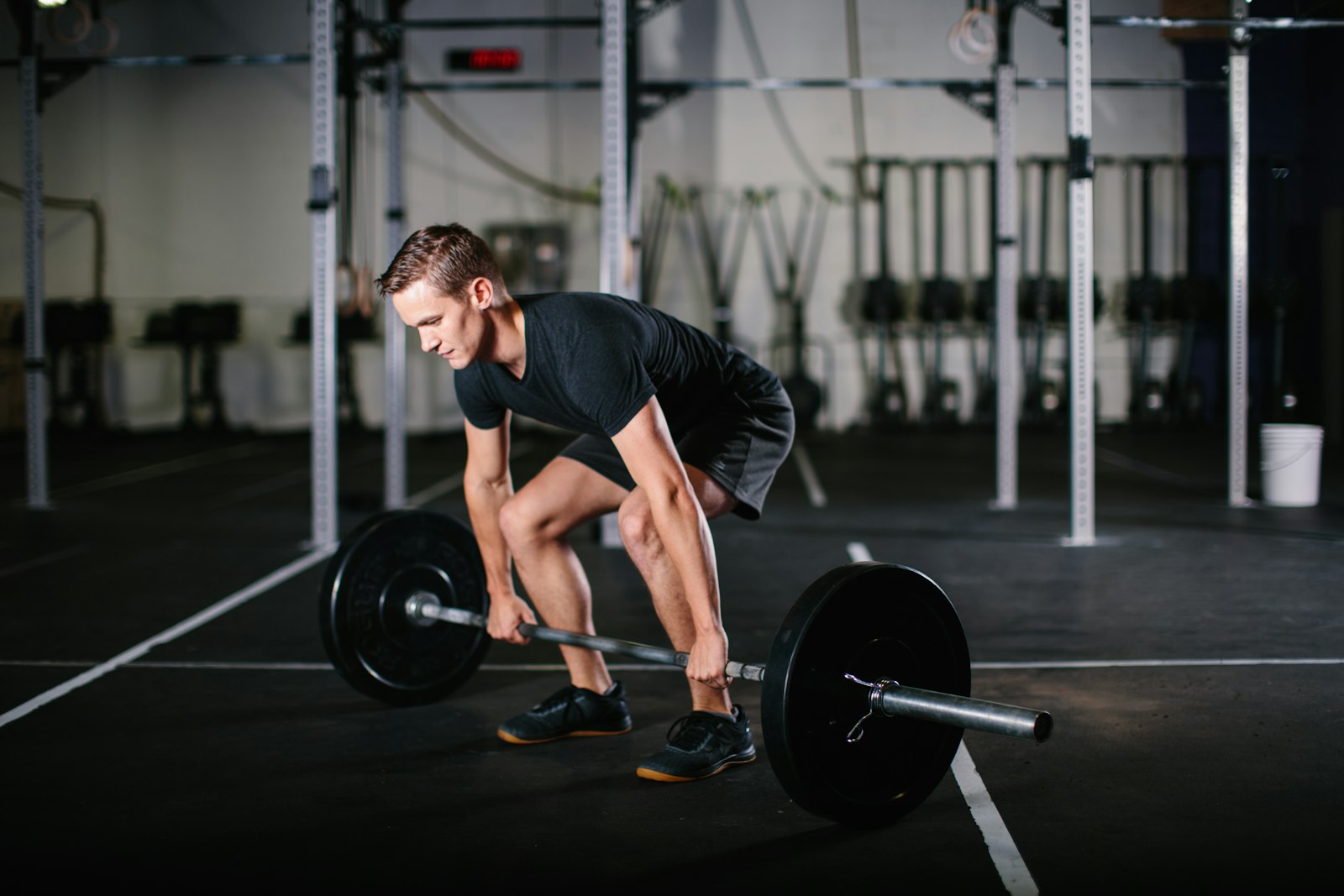



Quick answer: Both are rows using a barbell with one end fixed to the floor or a landmine holder. A T-bar row is done with both hands on a handle under the loaded end, bent over, so you can lift heavy for back thickness. A landmine row is usually done with one hand, which adds core work against twisting and lets you rest your free hand on your knee or a bench to take load off your lower back. No study has compared them directly. Choose the T-bar row for heavy two-arm work and the landmine row for one-arm work or a more back-friendly option.
This guide is for you if your gym has a T-bar or landmine setup and you’re not sure which row to use, or how to do them properly. You’ll see what they train, what the research on rows says about your lower back, how to do each one and how to fit them into your back day.
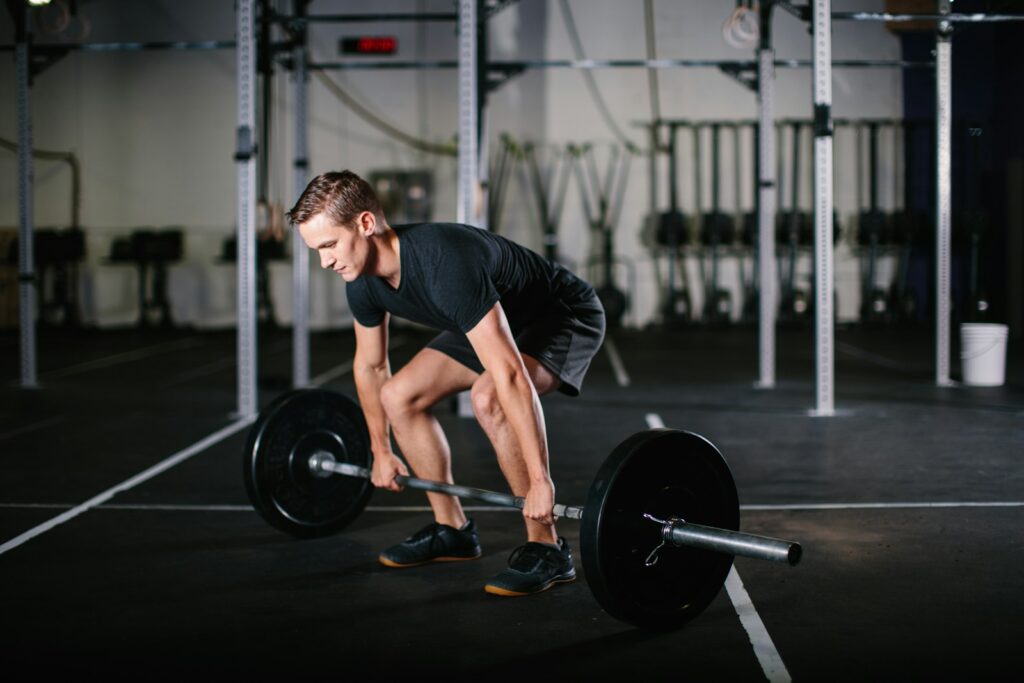
What do T-bar and landmine rows train?
- Lats: the large muscles down the sides of your back.
- Upper and mid back: rhomboids, middle traps and rear delts, which squeeze your shoulder blades together.
- Biceps and grip: they help pull the weight.
- Lower back, hips and core: they hold your bent-over position.
What the research says about rows and your lower back
There’s no research comparing T-bar and landmine rows directly. But a study of three other rows gives useful clues (Fenwick et al., 2009):
- The standing bent-over row put the most load on the lower spine, because your back muscles have to hold your torso up while you pull.
- The inverted row put the least load on the lower spine, and worked the lats and upper back hard.
- The one-arm row challenged the trunk muscles that resist twisting.
The study only had 7 men, so treat it as a guide. The practical takeaway: any free-standing bent-over row loads your lower back. Supporting your chest or a free hand reduces that load. One-arm rows add a core challenge.
How to do a T-bar row
Setup
- Load the free end of the bar and attach a V-handle under it, or use a T-bar machine.
- Stand over the bar with your feet about shoulder-width apart.
- Hinge at your hips until your torso is at about 45 degrees, with a slight bend in your knees.
- Grip the handle, brace your stomach and keep your back flat.
The movement
- Pull the handle toward your lower chest, driving your elbows back.
- Squeeze your shoulder blades together at the top.
- Lower slowly until your arms are straight.
- Keep your torso angle the same throughout. Don’t stand up to finish the rep.
Coaching cues: “Elbows to your back pockets.” “Chest proud, back flat.” “Same angle every rep.”
If your gym has a chest-supported T-bar machine, use it. Resting your chest on a pad takes most of the load off your lower back.
How to do a landmine row
One-arm version (often called a Meadows row)
- Stand side-on to the end of the bar, with your feet staggered.
- Hinge forward and grip the thick end of the bar with one hand.
- Rest your other forearm on your front knee or a bench for support.
- Pull the bar up toward your hip, keeping your elbow close to your body.
- Lower slowly and repeat, then switch sides.
Two-hand version: straddle the bar facing the anchor, hold the bar just below the plates with both hands (or with a handle) and row it to your chest. This version is very similar to a T-bar row.
Coaching cues: “Pull to your hip, not your shoulder.” “Don’t twist to finish.” “Long arm at the bottom.”
T-bar row vs landmine row
| T-bar row | Landmine row (one-arm) | |
|---|---|---|
| Arms | Both | One at a time |
| How heavy | Heavier | Lighter per side |
| Lower-back demand | Higher, unless chest-supported | Lower, with a hand on your knee or a bench |
| Core challenge | Holding your bent-over position | Also resisting rotation |
| Fixes side-to-side differences | No | Yes |
| Best for | Heavy back thickness work | Balanced, back-friendly volume |
Back-friendly alternatives
If your lower back gets tired before your upper back on bent-over rows, try these:
- Chest-supported T-bar row, if your gym has one.
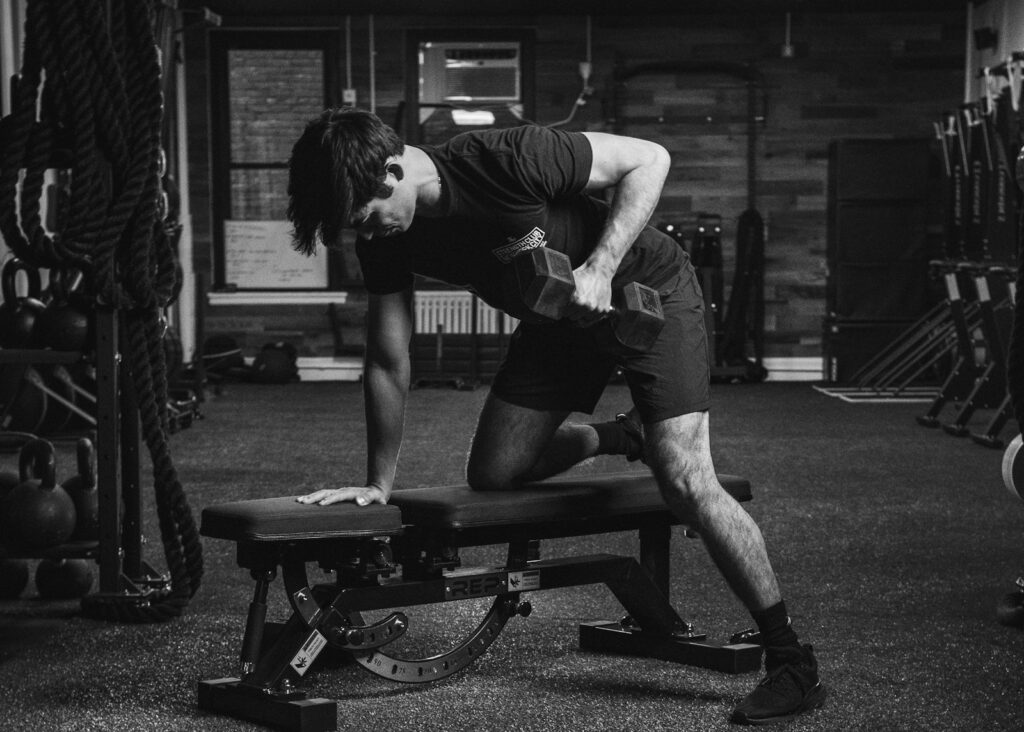
- One-arm dumbbell row with a knee and hand on a bench.
- Inverted row, which had the lowest spine load in research. Also see the ring row demo.
Common mistakes
- Rounding your back. Brace and keep a flat back. Go lighter if you can’t.
- Standing up to finish the rep. That turns it into a shrug. Keep your torso angle fixed.
- Using momentum. Jerking the weight up takes work away from your back.
- Short reps. Let your arms straighten at the bottom and squeeze at the top.
- Twisting on one-arm rows. Keep your hips and shoulders square to the floor.
- Shrugging. Pull your elbows back, not your shoulders up.
Sets and reps
| Goal | Exercise | Sets and reps |
|---|---|---|
| Strength and thickness | T-bar row | 3 to 4 sets of 6 to 10 |
| Muscle and balance | One-arm landmine row | 3 sets of 8 to 12 per side |
| Lower-back friendly volume | Chest-supported row or inverted row | 3 sets of 10 to 15 |
Pick one or two rows per back workout, alongside a vertical pull like the lat pulldown or pull-up. Add weight or reps over time. That’s progressive overload. For a full session, see the pull day workout.
Summary
- T-bar and landmine rows both use a barbell anchored at one end.
- The T-bar row is a heavy two-arm row for back thickness.
- The one-arm landmine row adds core work and is easier on your lower back with a supporting hand.
- No study compares them directly, but research shows free-standing bent-over rows load the lower back most.
- Use a chest-supported row, dumbbell row or inverted row if your lower back limits you.
- Keep a flat back, a fixed torso angle and control every rep.
Build a stronger back with a plan
A thick, strong back comes from the right rows done consistently, with weight added over time. 12REPS gives you trainer-built programs with two demo videos for every exercise, and a gym log that shows what you lifted last time. New users get a 7-day free trial.
Download 12REPS and see what you’ll get:
Sources
Related reading
- Pull day workout: building a stronger back
- How to barbell row: technique guide
- Dumbbell back workout: 4 exercises
- How to do face pulls
- Strength training for back pain
I’m Will Duru, a personal trainer and the founder of 12REPS. I hold a BSc (Hons) in Sport and Exercise Science and have more than a decade of experience coaching people in strength training.
