



You’ve been lifting weights three times weekly for two months. Your form’s improved. Your hip thrust has increased from 40kg to 60kg. You’re eating properly, tracking protein, choosing whole foods, staying in a moderate calorie deficit.
But the scale? The bloody scale hasn’t moved. Not one kilogram.
Frustrating doesn’t cover it. You’re doing everything “right” but the number you’ve obsessed over for years refuses to budge. Meanwhile, a mate who’s only doing cardio has lost 5kg in the same period.
What’s the point of lifting if it doesn’t work for weight loss?
Here’s the thing: strength training IS working. The scale just isn’t measuring what you think it’s measuring.
I’m Will Duru, a personal trainer with over 10 years’ experience in London. I’ve had this conversation with dozens of women. Someone’s strength has skyrocketed, their clothes fit better, they feel brilliant, but they’re genuinely distraught because the scale hasn’t moved.
Here’s what’s actually happening, why the scale is lying to you, and what you should measure instead.
The Scale Doesn't Measure What You Think It Measures
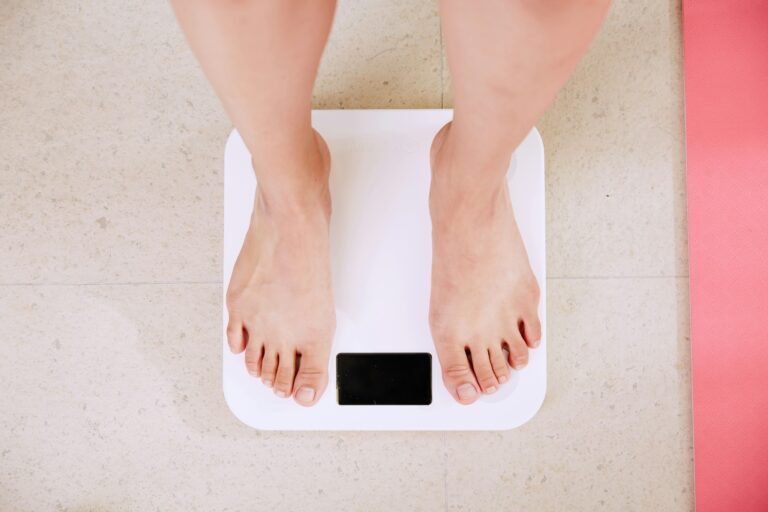
Let’s start with the uncomfortable truth: the scale measures your gravitational pull toward Earth.
That’s it. That’s all it does.
It doesn’t measure:
- How much body fat you have how much muscle you’ve built How your clothes fit
- Your health status Your fitness level Your body composition
The scale gives you one number: total body mass. This includes:
- Muscle Fat Bone Water Organs Glycogen stores Food in your digestive system
- Literally everything in your body
When you step on the scale, you’re getting a snapshot of ALL of that combined. Not just fat. Not just the “bad” weight you want to lose.
I had a client named Rachel who strength trained for three months. Scale didn’t move at all. She was genuinely considering quitting. Then we did a body composition scan. She’d lost 4kg of fat and gained 3.5kg of muscle. Her scale weight changed by 0.5kg, but her body composition transformed dramatically.
The scale couldn’t tell that story. It just showed one meaningless number.
You're Probably Building Muscle Whilst Losing Fat
This is the most common reason the scale doesn’t move when you start strength training properly.
You’re in a calorie deficit. Fat is being lost. Simultaneously, you’re providing your muscles with adequate stimulus (lifting weights) and adequate protein. Muscle is being built.
Fat lost: 2kg Muscle gained: 1.5kg Scale change: -0.5kg
From the scale’s perspective, you’ve “barely” lost weight. From your body’s perspective, you’ve radically changed composition.
This is particularly common in the first 6-12 months of serious strength training. Your body is still highly responsive to the training stimulus. “Newbie gains” are real—you can build muscle relatively easily whilst simultaneously losing fat.
Research shows women can typically gain 0.5-1kg of muscle in their first 4-6 months of proper strength training (training 3+ times weekly, progressive overload, adequate protein). Some women gain more, some less, depending on genetics and training approach.
Meanwhile, a sensible fat loss rate is 0.5-1kg per week maximum. Do the maths: you could lose 8-16kg of fat over four months whilst gaining 0.5-1kg of muscle. Net scale change: 7-15kg. But your body composition change is far more dramatic than the scale suggests.
I trained a woman who was furious she’d “only” lost 6kg in three months. When we measured properly, she’d actually lost 9kg of fat and gained 3kg of muscle. The scale made her progress look modest. The mirror told a completely different story.
Water Weight Fluctuations Mask Fat Loss
Your body weight can fluctuate 1-2kg daily based purely on water retention.
Factors that affect water weight:
- Sodium intake: High-sodium meal yesterday? You’re retaining water today.
- Carbohydrate intake: Every gram of stored glycogen holds roughly 3g of water. Eat more carbs, store more glycogen, retain more water.
- Menstrual cycle: Women retain significantly more water during luteal phase (week before period). This can be 1-3kg of water weight.
- Training intensity: Heavy training causes temporary inflammation and water retention in muscles for repair.
- Sleep quality: Poor sleep increases cortisol, which increases water retention.
- Stress levels: Elevated cortisol from stress causes water retention.
Let’s say you genuinely lost 0.5kg of fat this week (excellent progress). But you also:
- Ate a high-salt takeaway Friday night
- Had an intense leg session Saturday
- Drank insufficient water Sunday
- Are in your luteal phase
You could easily be retaining 1-2kg of water. Step on the scale Monday morning and you’ve “gained” 0.5-1.5kg despite losing actual fat.
The scale shows weight gain. Your body fat decreased. The scale lied.
I’ve had clients absolutely convinced they’re not losing fat because the scale went up 1kg in a week. Then we check their menstrual cycle. Of course—they’re one week pre-period. They’re retaining 2kg of water. They’ve likely lost 1kg of actual fat but the scale can’t distinguish between fat and water.

You're Eating More Than You Think (Common, But Fixable)
Right, let’s address the elephant in the room: sometimes the scale isn’t moving because you’re not actually in a calorie deficit.
This isn’t about moral failure. It’s about human nature and surprisingly inaccurate portion estimation.
Common calorie estimation errors:
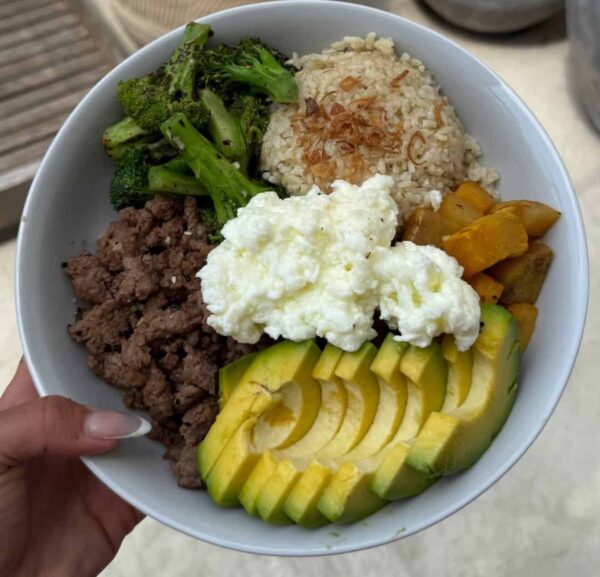
- “Healthy” foods still have calories. Nuts, avocados, olive oil, nut butter—all nutritious, all calorie-dense. A “small handful” of almonds is 200+ calories. Your “drizzle” of olive oil might be 150 calories.
- You’re not tracking everything. The latte with milk. The few bites of your partner’s dinner. The “testing” whilst cooking. The weekend drinks. These add up to hundreds of calories daily that you’re not accounting for.
- Your portions are larger than you think. Research consistently shows people underestimate portion sizes by 30-50%. Your “150g” chicken breast is actually 220g. Your “one serving” of pasta is actually two.
- You’re eating back exercise calories. You burnt 300 calories in your workout. Then you eat an extra 500 calories because “I exercised today.” Net result: you’re in a calorie surplus.
- Weekend eating negates weekday deficit. Monday-Friday you’re in a 300-calorie daily deficit (total: 1,500-calorie deficit). Saturday-Sunday you’re in a 1,000-calorie daily surplus (total: 2,000-calorie surplus). Weekly result: 500-calorie surplus. You’ve gained weight.
I’m not suggesting you need to weigh every morsel of food forever. But if the scale genuinely hasn’t moved in 6-8 weeks and you’re confident about training consistency, it’s worth rigorously tracking intake for 2-3 weeks to see if there’s a discrepancy between estimated and actual calories.
I trained a woman who swore she was eating 1,600 calories daily but not losing weight. We tracked meticulously for two weeks. She was actually eating 2,100-2,300 calories daily. Not because she was lying—because she was genuinely underestimating portions and forgetting to count certain foods.
Your Deficit Is Too Aggressive (The Counterintuitive Problem)
Here’s a paradox: eating TOO little can also prevent fat loss.
If you’re eating 1,000-1,200 calories daily whilst training hard, several things happen:
- Your metabolism adapts downward. Your body reduces thyroid output, increases cortisol, and becomes more efficient at conserving energy. This is metabolic adaptation—your body fighting against the aggressive deficit.
- Training performance suffers. You can’t lift as heavy or for as many reps when you’re severely underfed. Less training stimulus means less muscle retention and development.
- Daily activity unconsciously decreases. You feel lethargic. You sit more, move less, fidget less. Your NEAT (non-exercise activity thermogenesis) plummets. This can be 200-400 fewer calories burned daily without you even realising.
- Cortisol increases chronically. Chronic high cortisol causes water retention, increases appetite, and preferentially stores fat around your midsection.
Net result: you’re eating very little, feeling miserable, and not losing fat effectively.
The solution? Counterintuitively, eat MORE. A moderate deficit (300-500 calories below maintenance) allows better training performance, muscle retention, and more sustainable fat loss than an aggressive deficit.
I trained a woman who’d been eating 1,100 calories daily for six weeks with minimal results. We increased to 1,600 calories (with proper macro split). She felt dramatically better, trained harder, and started losing fat consistently. She was eating 500 more calories daily and losing more fat. Her body stopped fighting the deficit.
You're Not Strength Training Effectively
Let’s be honest: not all “strength training” is created equal.
If your routine looks like this:
- 3 sets of 15 reps with 5kg dumbbells
- Never increasing weight
- Finishing sets feeling like you could do 10 more reps
- No progressive overload whatsoever
You’re not strength training effectively enough to build meaningful muscle. You’re doing very light resistance exercise. Which is fine for general fitness but won’t dramatically change body composition.
Effective strength training for body composition:
- Progressive overload: Systematically increasing weight, reps, or sets over time
- Sufficient intensity: Final reps of each set should be challenging (2-3 reps from failure)
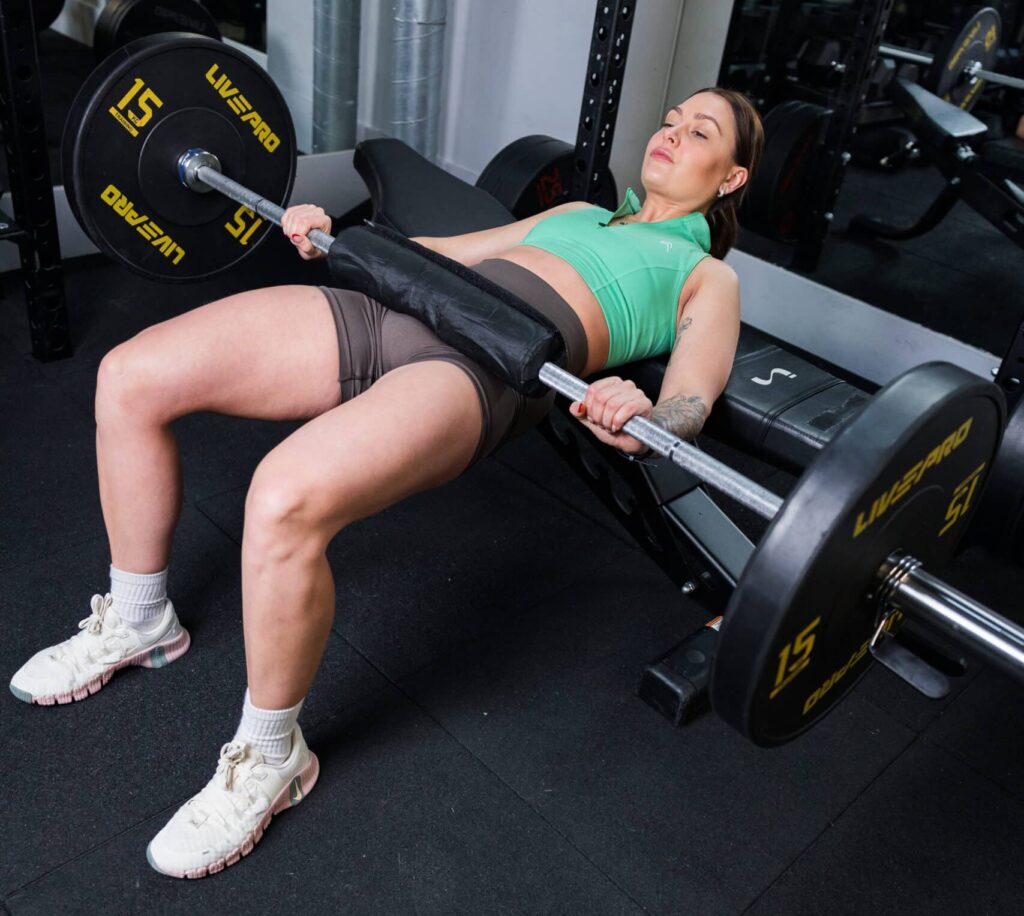
- Compound movements prioritised: Squats, deadlifts, hip thrusts, rows, presses
- Adequate volume: 10-20 sets per muscle group weekly
- Proper recovery: Rest days between training same muscles hard
If you’re not doing the above, your strength training might not be providing enough stimulus to build muscle. Without building muscle, you won’t see the body composition changes that make the scale irrelevant.
I’ve seen women “strength train” for months with no results because they’re using the same light dumbbells forever, never challenging themselves, never progressively overloading. Then we implement proper programming—heavier weights, progressive overload, adequate volume—and suddenly body composition changes dramatically.
What You Should Measure Instead of Scale Weight
If the scale is unreliable for measuring fat loss progress during strength training, what SHOULD you track?
1. Progress Photos (Every 4 Weeks)
Take photos in the same lighting, same location, same time of day (morning is best, before eating).
Front view, side view, back view. Wear the same clothing (or minimal clothing) each time.
Compare photos every 4-8 weeks. Visual changes often appear before scale changes, especially when building muscle and losing fat simultaneously.
I’ve had clients whose scale weight increased by 2kg but their photos showed dramatically leaner physiques. The scale suggested they’d “failed.” The photos proved they’d succeeded.
2. Body Measurements (Every 2-4 Weeks)
Measure:
- Waist (narrowest point)
- Hips (widest point around glutes)
- Thighs (midpoint)
- Arms (midpoint of bicep)
Fat loss typically shows as decreased waist measurement. Muscle gain might show as increased thigh or arm measurements.
If your waist is decreasing but your weight isn’t, you’re losing fat. That’s the goal.
3. Clothing Fit
How do your jeans fit? That’s a better indicator than the scale.
Jeans looser around the waist but tighter around the thighs? You’ve lost fat and built leg muscle. Excellent result that the scale wouldn’t show accurately.
4. Strength Progression
Are your lifts increasing? That’s evidence you’re building muscle and improving body composition.
If your hip thrust has gone from 40kg to 70kg over three months, you’ve built significant glute and hamstring muscle. That muscle has value regardless of what the scale says.
5. How You Feel
More energy? Sleeping better? Feeling stronger in daily activities? These are meaningful improvements that the scale completely ignores.
I trained a woman whose scale weight stayed identical for four months. But she went from struggling with one pull-up to doing sets of five. Her hip thrust increased 40kg. Her waist measurement decreased 8cm. Her clothes fit completely differently. She felt phenomenal.
The scale said “no progress.” Everything else screamed massive progress.

The Body Composition Scan: Actual Useful Data
If you want objective data about fat loss and muscle gain, get a proper body composition assessment.
Options in the UK:
- DEXA scan: Most accurate. Measures bone density, fat mass, lean mass. Costs £50-100. Available at many private clinics in London and major cities.
- BodPod: Air displacement to measure body composition. Fairly accurate. Costs £40-80.
- InBody scan: Bioelectrical impedance. Less accurate than DEXA but still useful for tracking trends. Often available at gyms for £20-40.
Get a baseline scan, then repeat every 8-12 weeks. This gives you actual fat mass and lean mass numbers rather than just total weight.
When clients see they’ve lost 5kg of fat and gained 2kg of muscle, suddenly the “only 3kg” scale change makes sense. They realise they’ve achieved exactly what they wanted—they just couldn’t see it from scale weight alone.
When Scale Weight SHOULD Decrease
Let’s be clear: if you’re in a genuine calorie deficit for an extended period (8+ weeks) and training properly, scale weight WILL eventually decrease.
But the rate might be slower than expected because of:
- Simultaneous muscle gain
- Water retention fluctuations
- Metabolic adaptation
Realistic expectations:
- First month: Scale might not move much due to water retention from new training stimulus and muscle glycogen replenishment
- Months 2-3: 0.5-1kg loss per week if in proper deficit (accounting for water fluctuations)
- Months 4-6: 0.5kg loss per week as metabolic adaptation occurs and muscle gain slows
If you’ve been in a verified calorie deficit (properly tracked, not estimated) for 8+ weeks with zero scale change, something else is happening:
- Medical issue (thyroid, PCOS, insulin resistance)
- Medication side effects
- Severe metabolic adaptation from previous aggressive dieting
- Miscalculated maintenance calories
This is rare but possible. Consulting with a professional (doctor or registered dietitian) would be appropriate.
How 12REPS Handles This Intelligently
The challenge with strength training for body composition is it requires tracking multiple variables:
- Strength progression over time
- Training volume and frequency
- Estimated body composition changes
- Recovery and adaptation
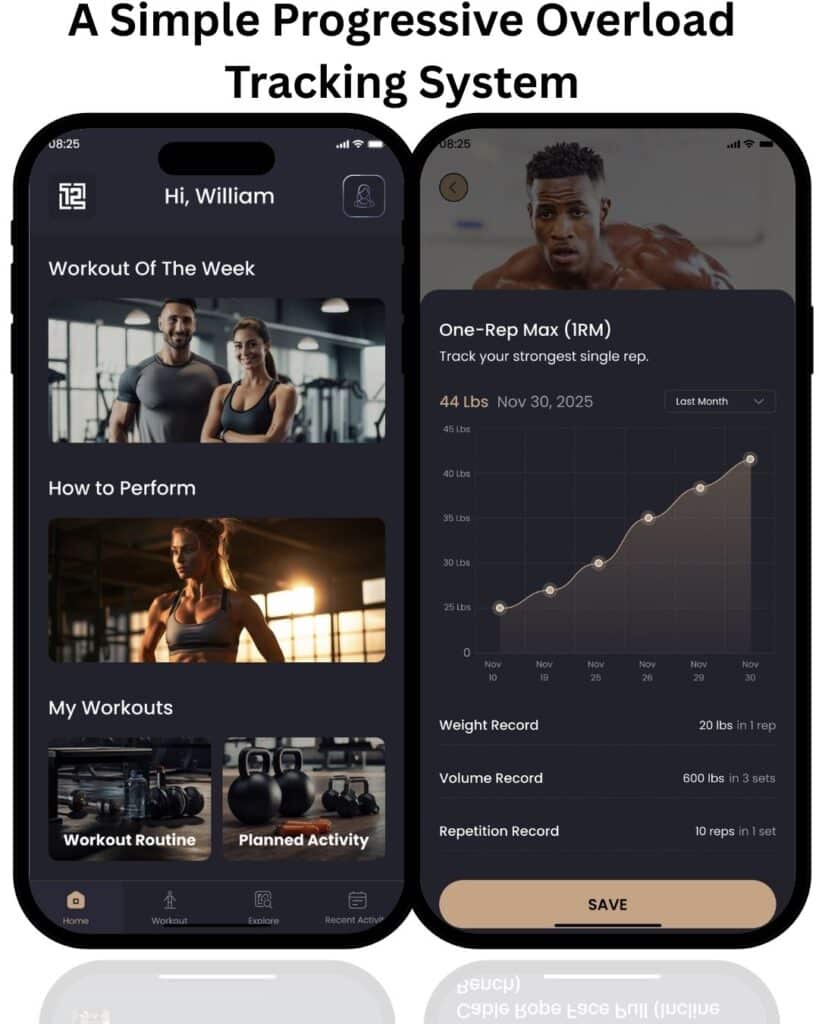
12REPS tracks all of this intelligently:
Strength tracking: Every lift is logged. You can see your hip thrust progression from 40kg to 70kg over three months. This proves you’re building muscle even if the scale hasn’t moved.
Volume management: The app ensures you’re accumulating adequate weekly volume (sets per muscle group) to stimulate muscle growth. Too little volume = no muscle gain. Too much = poor recovery.
Progressive overload: The app systematically increases weights, reps, or sets to ensure continued adaptation. Without progressive overload, you won’t build muscle.
Body composition context: The app can track weight alongside other metrics (measurements, photos, strength). This prevents scale obsession by showing the complete picture.
For women training both at gyms and at home, this is valuable. You might do heavy hip thrusts at the gym (building serious muscle) and lighter isolation work at home (burning calories without excessive fatigue). The app integrates both approaches for optimal body composition changes.
Conculsion
If you’re strength training consistently, eating in a moderate calorie deficit, getting adequate protein, and progressively overloading, you ARE losing fat and likely building muscle.
The scale might not show this accurately because:
- You’re building muscle whilst losing fat (net weight change is small)
- Water retention is masking fat loss
- You’re not actually in a calorie deficit (tracking issue)
- Your deficit is too aggressive (metabolic adaptation)
What matters more than scale weight:
- Progress photos
- Body measurements (especially waist)
- How clothes fit
- Strength progression
- How you feel
If all five of those are improving, ignore the scale. It’s measuring the wrong thing.
I’ve trained dozens of women whose scale weight barely changed but whose body composition transformed dramatically. They went from soft to lean and toned. They built visible muscle. Their clothes fit completely differently. They felt phenomenal.
The scale saw none of it.
Stop letting a number that measures gravitational pull dictate your self-worth and determine whether you’re succeeding. You’re probably doing brilliantly—the scale just can’t tell you that.