



By Will Duru, personal trainer and founder of 12REPS.
The Short Answer
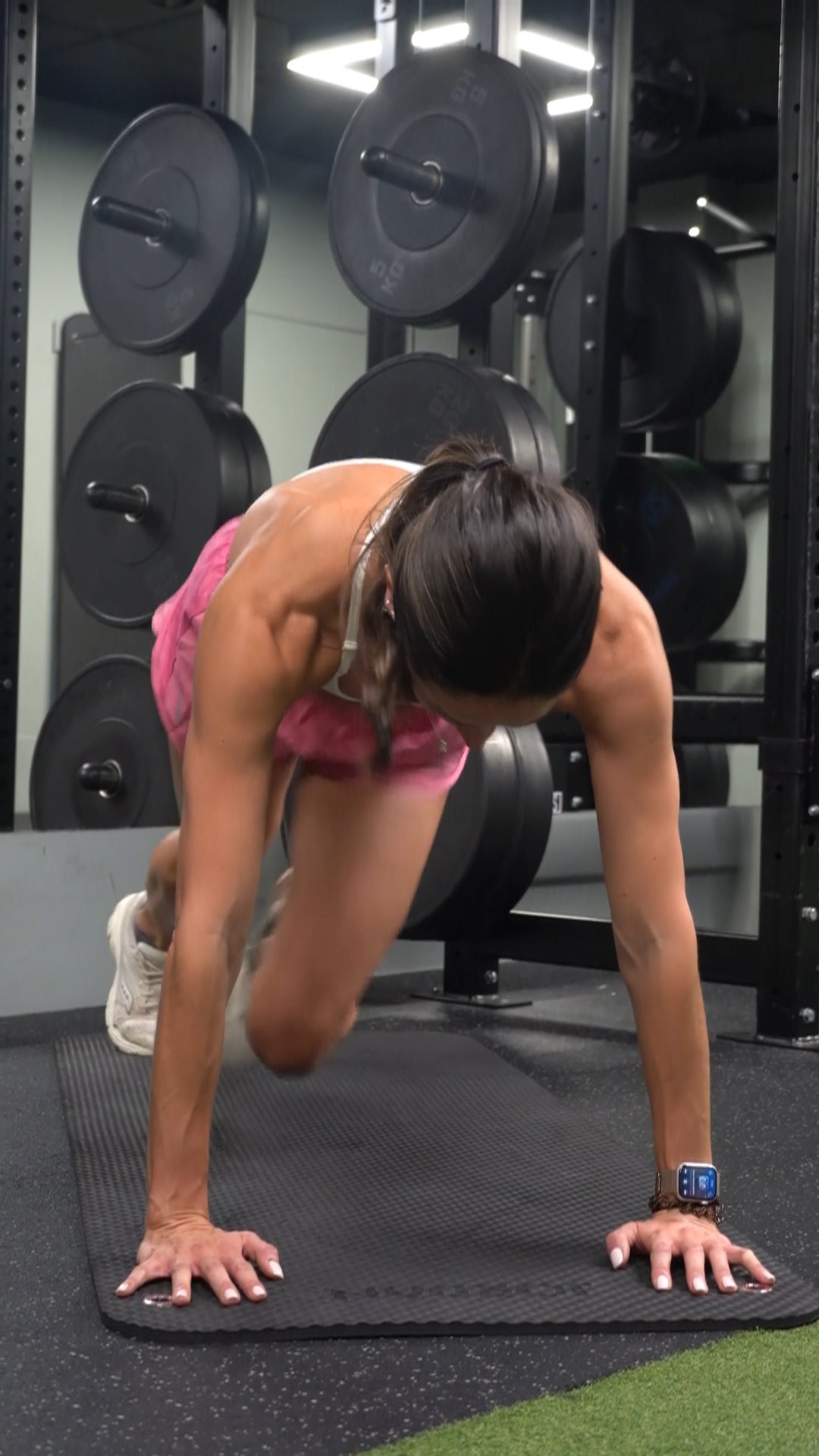
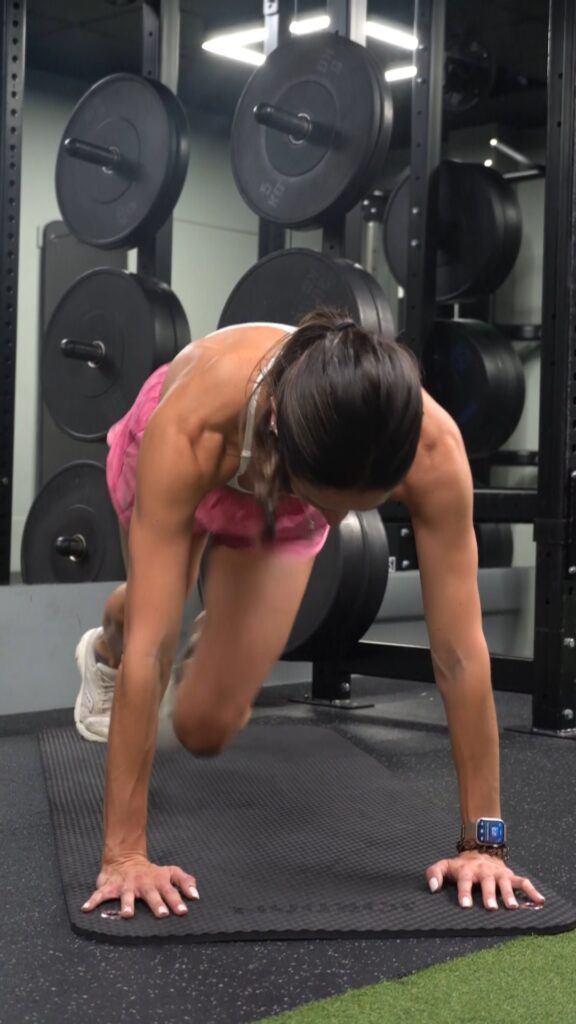
Mountain climbers are a bodyweight exercise where you hold a high plank and drive your knees toward your chest one at a time, as if running on the spot. They work your core, shoulders and hip flexors, and they raise your heart rate quickly.
They’re best used as a conditioning exercise or a core finisher, not as your main strength builder. Below I’ll show you how to do them properly and three variations to try.
What Muscles Do Mountain Climbers Work?
- Core: Your abs and obliques hold your body in a plank and stop your hips bouncing.
- Shoulders and chest: They support your body weight through your arms.
- Hip flexors: They drive your knees toward your chest.
- Legs: Your quads and glutes help push each leg back.
- Heart and lungs: At a fast pace, they work as cardio.
Are Mountain Climbers Good for Fitness?
There isn’t much research on mountain climbers on their own. But there is research on bodyweight interval workouts that use similar moves.
In a 2019 study by Menz and colleagues, moderately trained adults did 4 weeks of short, intense interval sessions (20 seconds of work, 10 seconds of rest). One group ran, and the other did bodyweight exercises like burpees, squats, planks and push-ups. Fitness, measured as VO2max, improved by about 13% with running and 11% with the bodyweight workouts, with no significant difference between them.
It was a small study with only 15 people, and it didn’t include mountain climbers specifically. But it supports what I see in coaching: bodyweight intervals can improve fitness when you don’t want to run. See strength training vs cardio.
How to Do Mountain Climbers
- Start in a high plank with your hands under your shoulders and your body in a straight line.
- Brace your core and keep your hips level with your shoulders.
- Drive one knee toward your chest, then return it as you bring the other knee in.
- Keep alternating at a steady rhythm, landing lightly on the balls of your feet.
- Breathe steadily. Slow down if your hips start to rise or sag.
Coaching cues I use:
- “Shoulders over hands.” Don’t let your body drift backward.
- “Hips down.” Your bum shouldn’t bounce up as your legs move.
- “Quiet feet.” Control each step instead of slamming your feet down.
If holding a plank is hard, master that first. See how to do a plank properly.
3 Mountain Climber Variations
| Variation | Level | What changes |
|---|---|---|
| Slow mountain climber | Beginner | Slow, controlled steps for core strength |
| Slider mountain climber | Intermediate | Feet slide instead of stepping |
| TRX mountain climber | Advanced | Feet suspended in straps, much harder for your core |
1. Slow Mountain Climbers
Bring each knee in slowly and pause for a second. This turns the exercise into a core strength move rather than cardio. Great for beginners.
2. Slider Mountain Climbers
Put your feet on sliders or towels on a smooth floor and slide your knees in and out. It’s smoother on your joints than stepping.
3. TRX Mountain Climbers
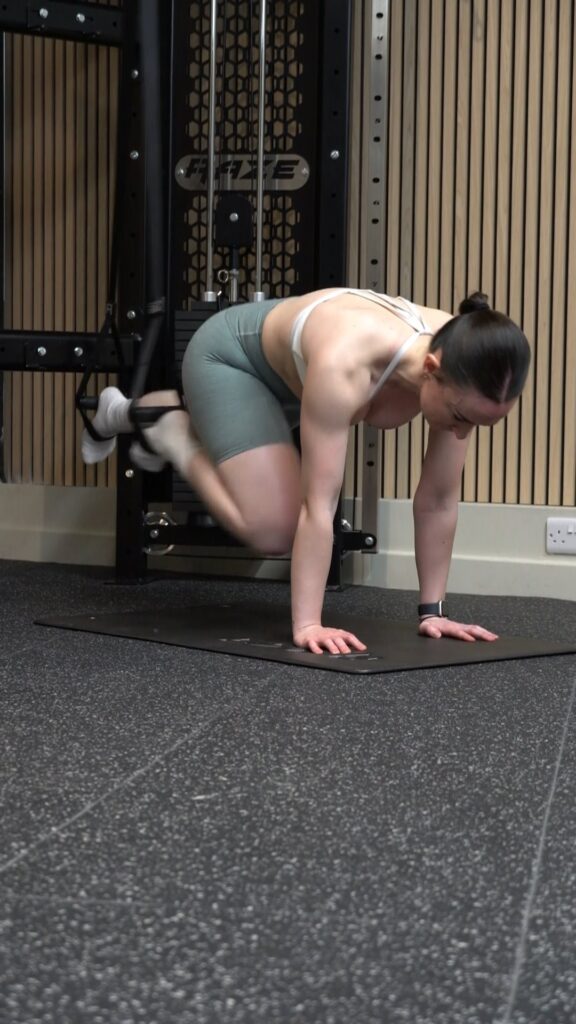
With your feet in TRX straps, your core has to work much harder to keep you stable. Only try this once you can hold a solid plank for 45–60 seconds. See TRX workout for beginners.
How to Use Mountain Climbers in Your Training
These are my coaching recommendations, not rules from the research:
- As a finisher: 3–4 rounds of 20–30 seconds, resting 30–40 seconds.
- In a circuit: Pair with squats, push-ups and battle ropes. See this HIIT workout.
- For core strength: Slow mountain climbers, 3 sets of 8–10 each side.
- Frequency: 2–3 times a week alongside your strength training.
Common Mistakes
- Bouncing your hips. Keep your body in a straight line.
- Hands too far forward. Keep your shoulders stacked over your wrists.
- Going so fast that form breaks. Speed only counts if your plank stays solid.
- Holding your breath. Breathe in a steady rhythm.
- Using them to replace strength training. They build fitness, not much muscle. Keep your main lifts in your plan.
If you have wrist or shoulder pain in a plank, try doing them with your hands on a bench, or get the pain checked first.
Summary
- Mountain climbers work your core, shoulders and hip flexors and raise your heart rate.
- Bodyweight interval training improved fitness about as much as running intervals in a small study.
- Keep your hips level, shoulders over your hands and feet quiet.
- Use them as a finisher, in circuits or slowly for core strength.
- Progress from slow to slider to TRX versions.
Get Workouts That Fit Your Day With 12REPS
In 12REPS, pick your workout time and the equipment you have, even if that’s just your body weight, and the app builds a session that fits.
Every exercise has a demo and a coach tutorial from me, and your log shows what you did last time, so you can keep progressing.
Download 12REPS and see what you’ll get:
Sources
Related Reading
- How to do a plank properly
- How to do a dead bug
- Build a strong core: a beginner’s guide
- HIIT workout to burn calories anywhere
- Home workout plan: build muscle without a gym
I’m Will Duru, a personal trainer and the founder of 12REPS. I hold a BSc (Hons) in Sport and Exercise Science and have more than a decade of experience coaching people in strength training.
