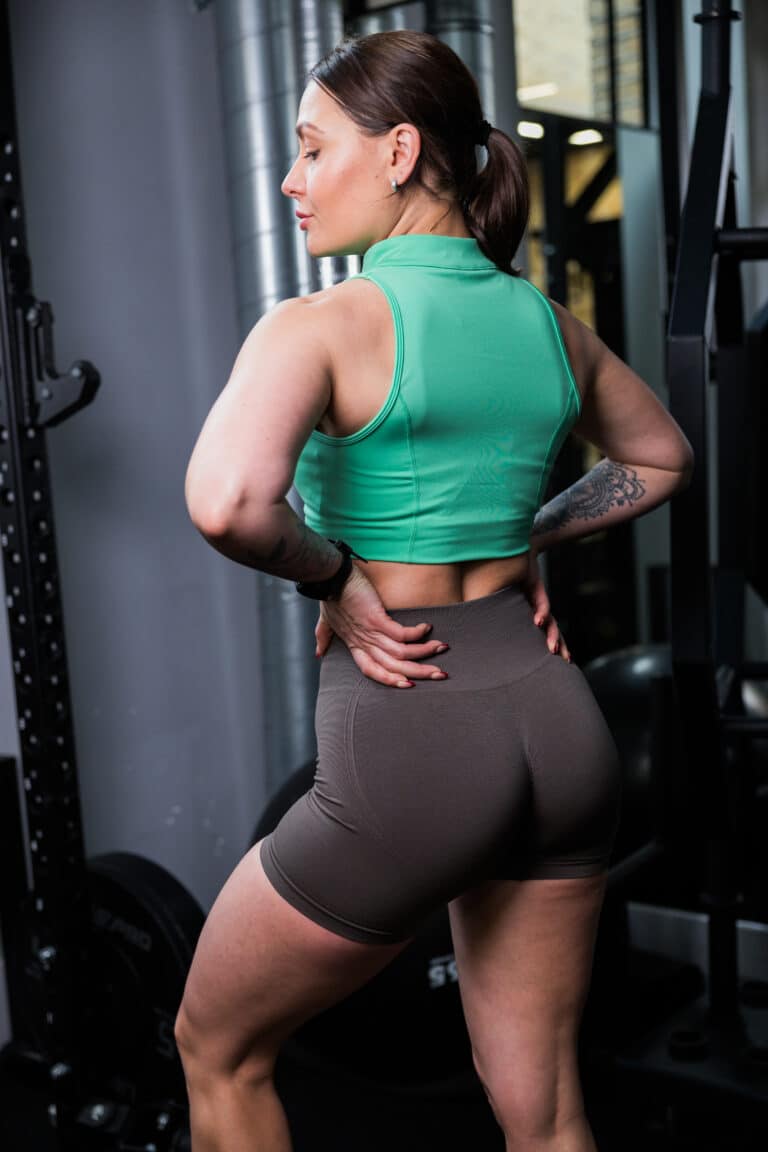
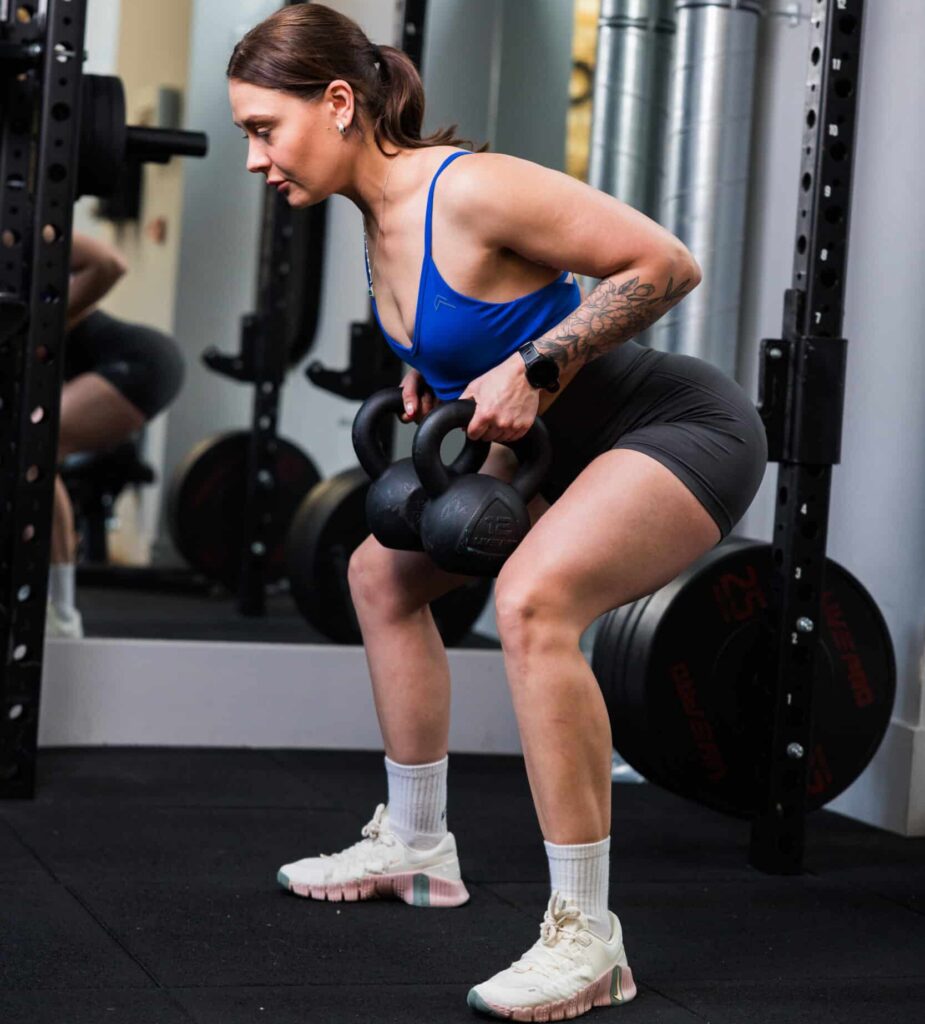
Strength training for busy women can work well as two or three focused sessions a week of about 30 to 45 minutes. Build each one around a few big exercises, and log it so the next session builds on the last. 12REPS helps by planning each workout around your goal, your equipment and the time you have, so it is ready when you open the app.
I’m Will Duru, a personal trainer with over 10 years of experience in London. Busy women I train rarely lack motivation. The problem is programs that assume five long gym sessions a week.
This page shows how to make 30 to 45 minutes work in practice with 12REPS. For the research on session length, read how long should women work out?
What fits into a 30 to 45 minute strength session
A 2021 review in Sports Medicine looked at how to get strength and muscle results in less gym time. Its main points:
- Choose big exercises. Prioritize multi-joint moves that use both sides, with at least one leg exercise, one upper-body push and one upper-body pull.
- Use supersets. A superset means doing two exercises back to back, then resting. Supersets and similar methods roughly halve training time compared with traditional sets.
- Keep the warm-up specific. Warm up with lighter sets of the exercise you are about to do.
- Count weekly sets. The authors suggest at least 4 hard sets per muscle group each week, using weights you could lift about 6 to 15 times.
Put together, a short session can look like this:
- A short warm-up with light sets of your first exercise.
- A superset of a squat or lunge with a push, such as a press-up.
- A superset of a hip hinge, such as a Romanian deadlift, with a row or pulldown.
- One core or accessory exercise if time allows.
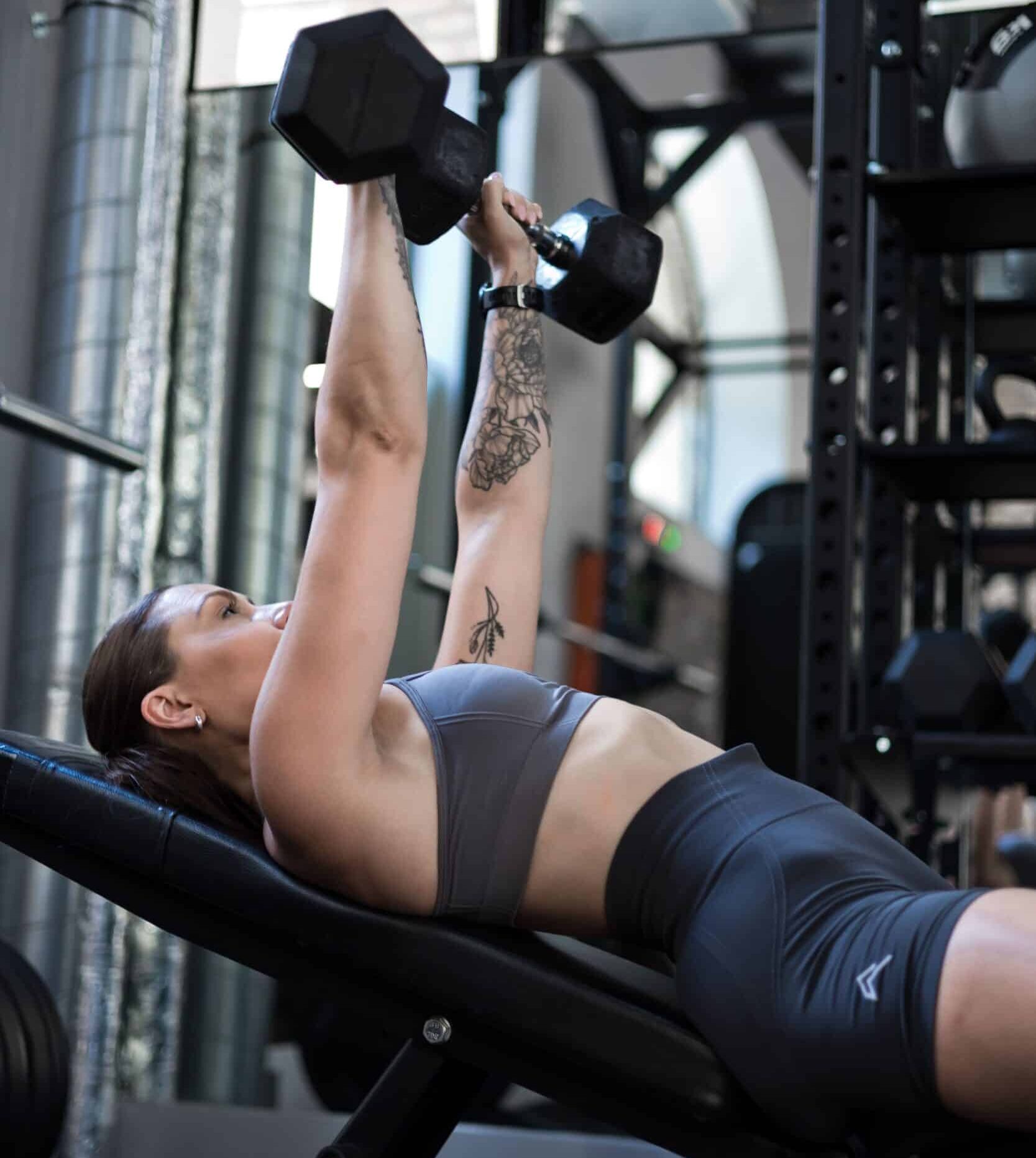
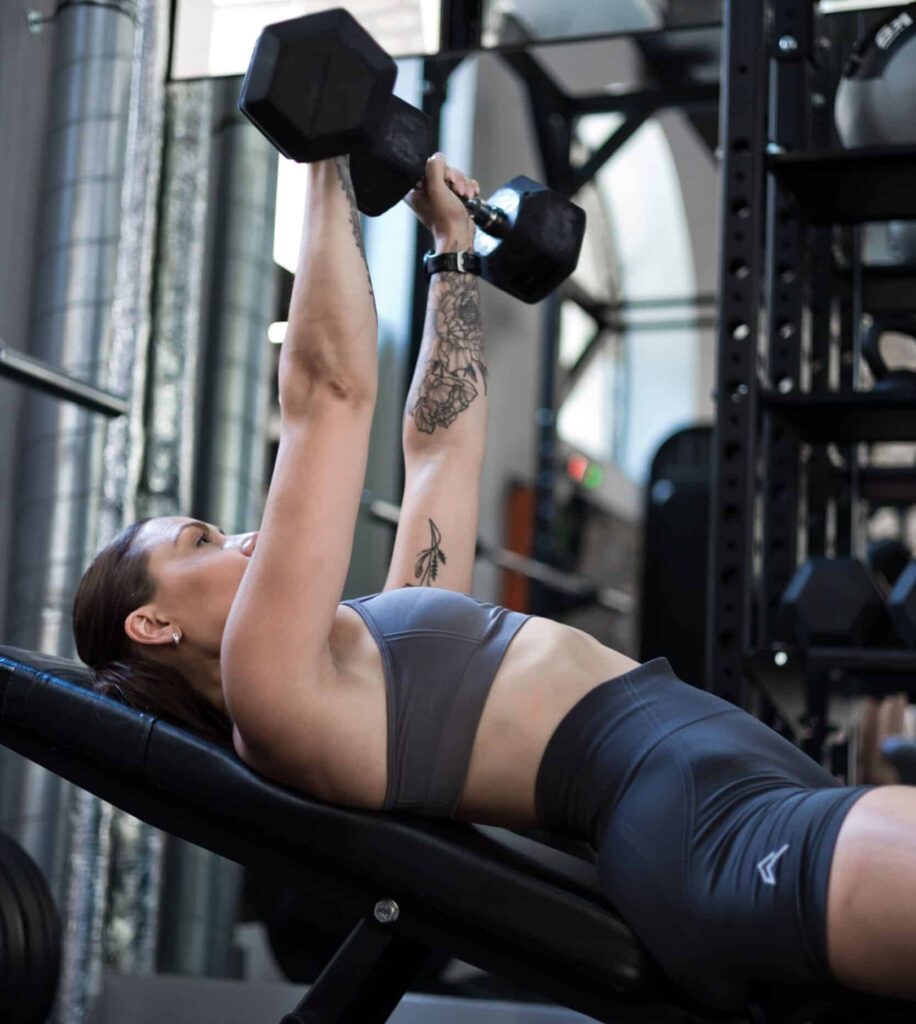
A goblet squat or curtsy lunge works well for the leg slot when you only have dumbbells.
How 12REPS builds a session around your time
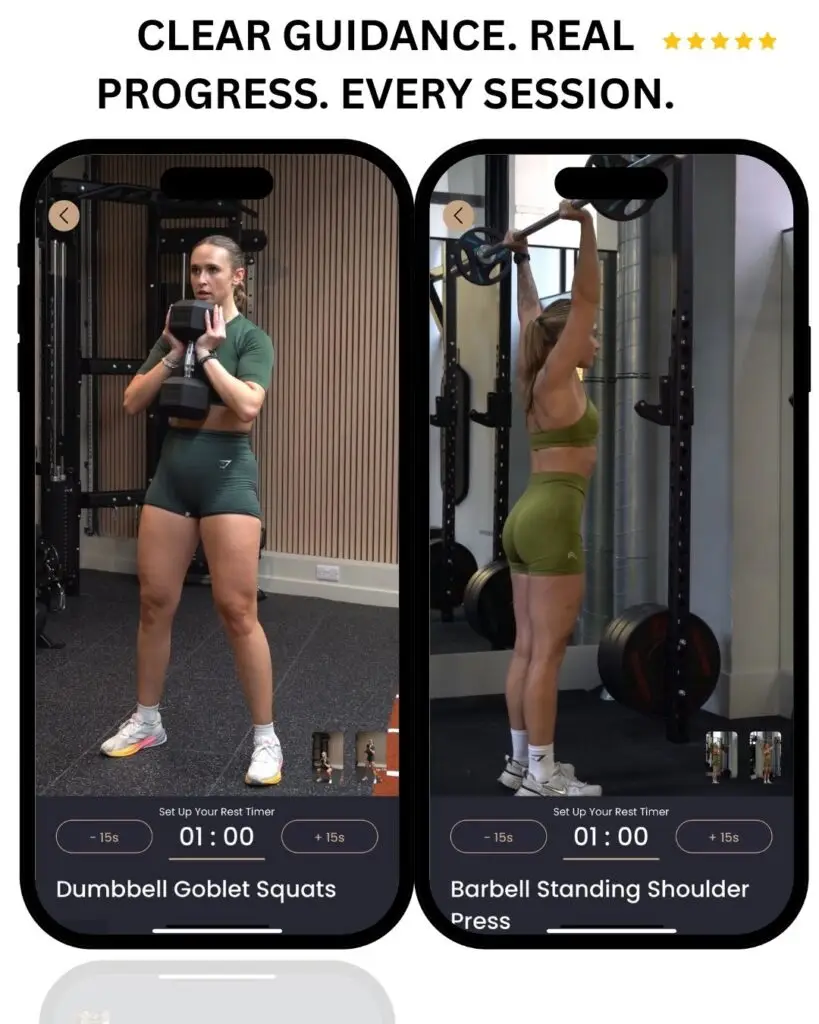
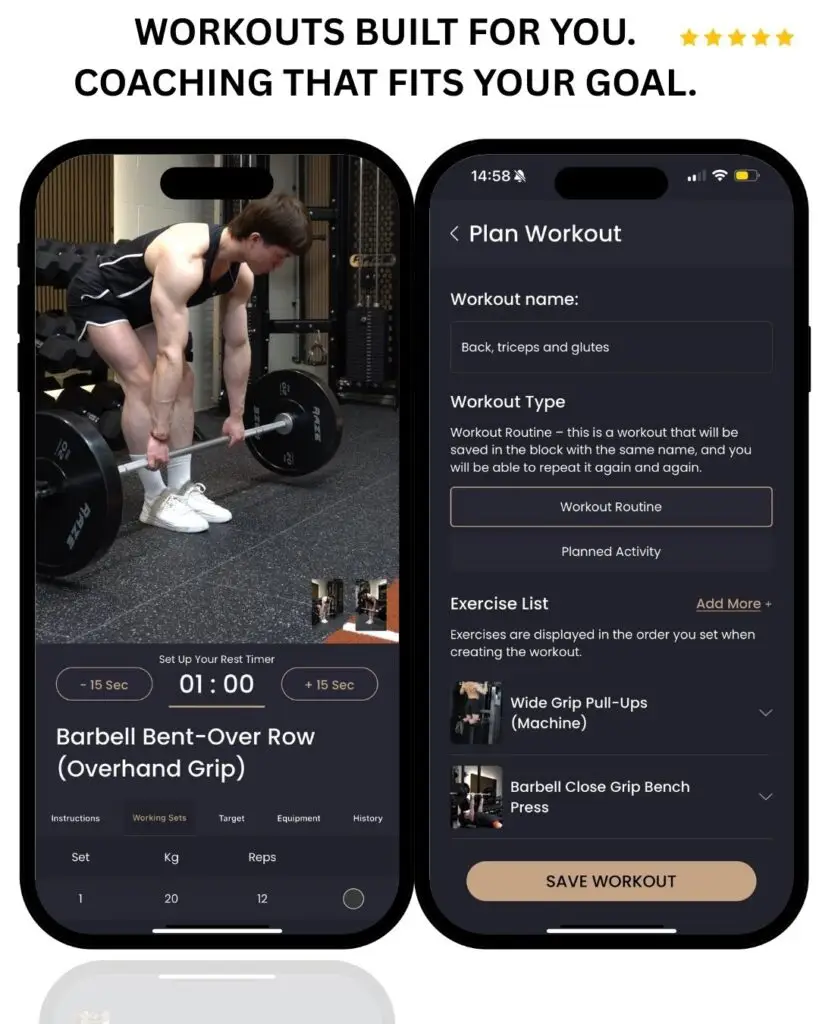
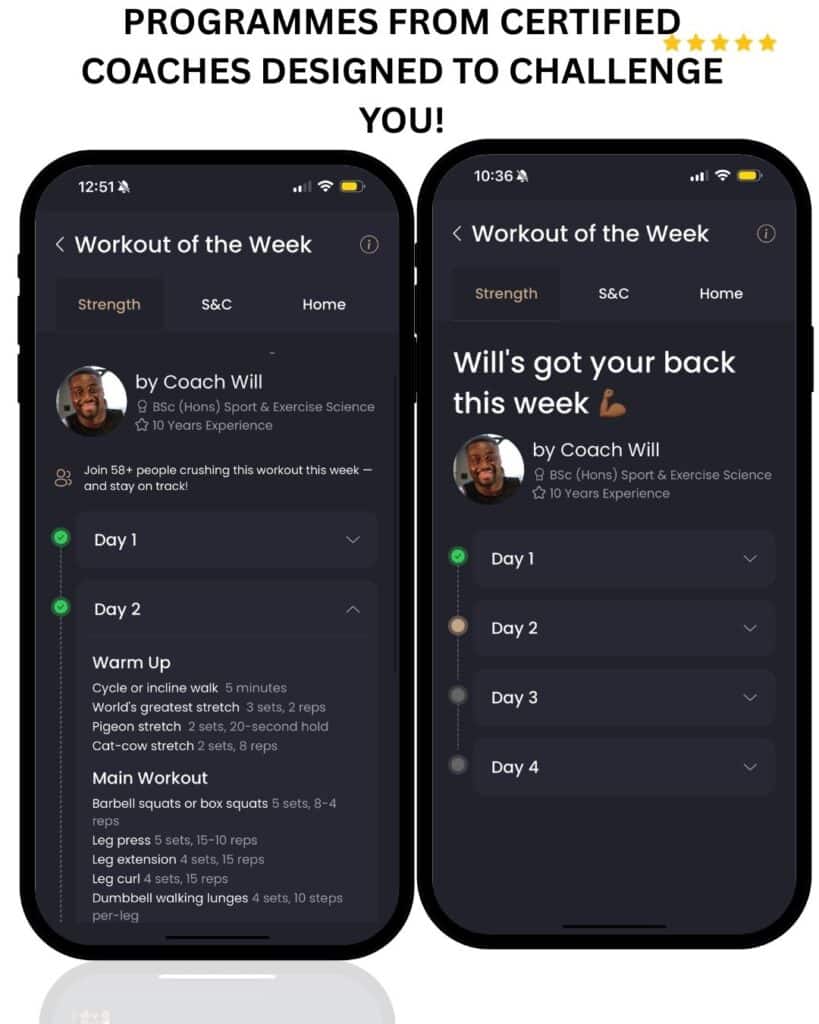
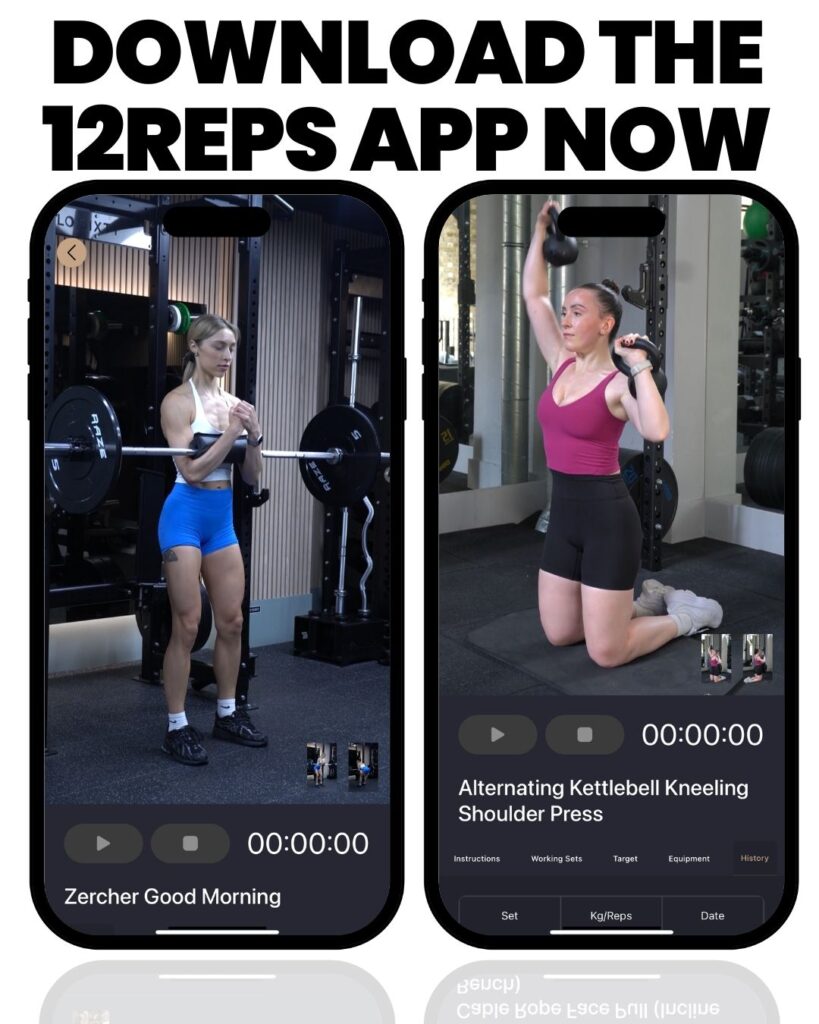
You do not have to plan this yourself. 12REPS builds your training around your goal, your equipment and the time you have. Open the app and your workout is ready, with the session length and the number of exercises shown.
When your day changes, use the body map. Choose the muscle you want to train, the equipment you have and how long you’ve got. 12REPS builds the session, and you can save it and train.
Less time deciding, more time training
Much of a wasted gym session goes on decisions. Which exercise next? Am I doing this right? What did I lift last time? 12REPS answers each one inside the workout.
- What to do: the session is set out in order.
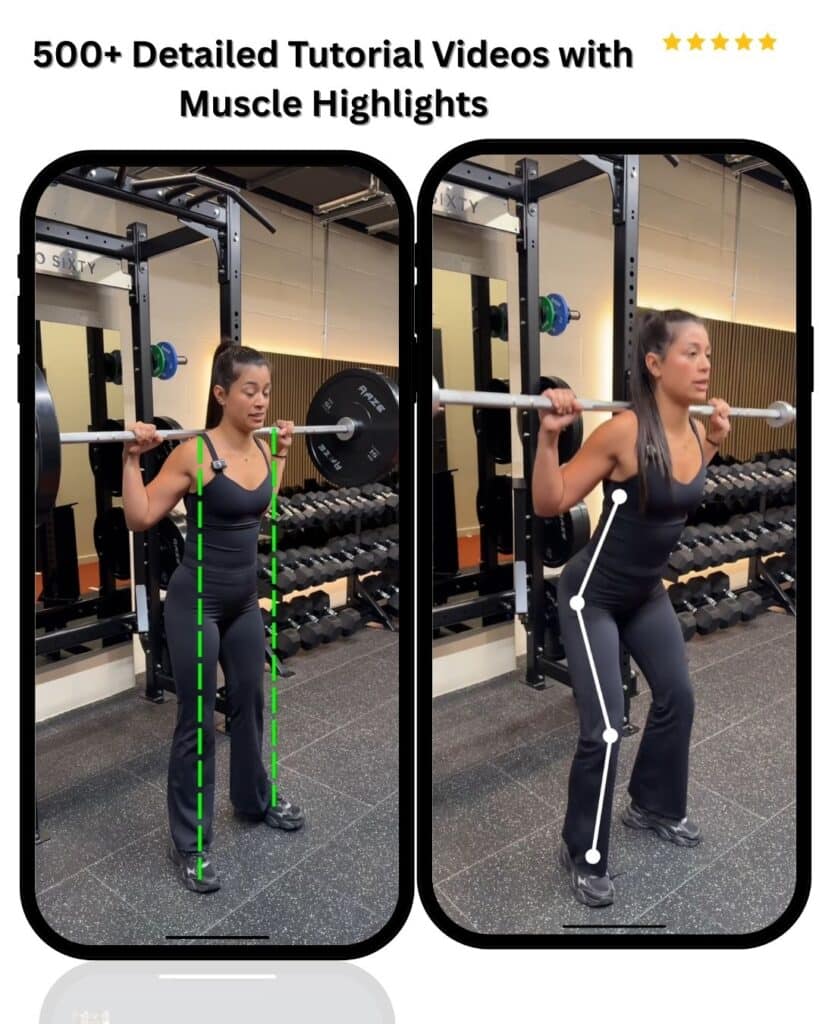
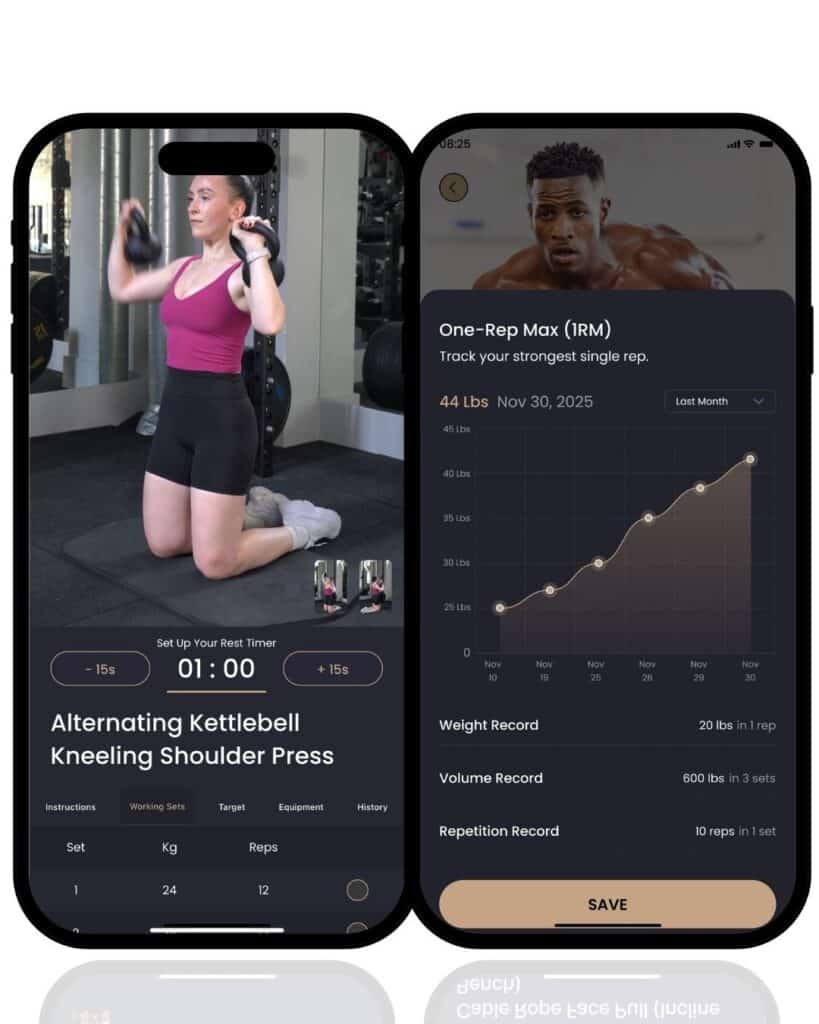
- How to do it: every exercise has a demonstration and technique breakdown from a real, qualified personal trainer.
- What to lift: you enter reps and weight per set, and the app remembers them, so you have a number to beat next time.
For tips on learning a new movement from a video, read our guide to exercise demo videos.
When your week does not go to plan
Some weeks you get three sessions in. Some weeks you get two. Both can work.
- Two sessions a week. Make both full-body. A 2016 meta-analysis found that training each muscle twice a week built more muscle than once a week, when total work was matched. Our 2-day strength training split for women shows one way to do it.
- Three sessions a week. Spread the same weekly work across three shorter sessions. The 2021 review found weekly volume matters more than how many days you train.
- Missed a session? Do the next one. You don’t need to make it up.
- Only 20 minutes? Set the time you have, or pick one or two muscle groups on the body map.
- Training at home? Your plan is built around the equipment you have, from a full gym to a pair of dumbbells.
For help choosing your number of days, read how many days a week women should strength train.
Video: 30-minute kettlebell full-body workout. It shows a complete full-body session that fits a 30-minute slot with one piece of kit.
Track progress without extra admin
Logging happens as you train, so there is nothing to write up afterwards. 12REPS tracks workouts, sets, reps, weights and streaks. You can set a weekly goal, which suits a busy schedule better than a fixed set of days.
Beyond your lifts, you can log your body weight and see the trend over time. You can also take private progress photos and compare them across stages.
Video: How women should track progress, scale or photos. This short clip compares the scale and progress photos as ways to track change, which fits the body weight and progress photo tools above.
Is twice a week enough to get stronger?
Yes, for most people starting out. The NHS recommends strengthening activities that work all the major muscle groups on at least 2 days a week. Two full-body sessions meet that.
Do I have to train on the same days each week?
No. Set a weekly goal and train when your week allows. Leave a day between hard sessions for the same muscles where you can.
Can I make progress with 30-minute sessions?
Yes, if the session is focused. Big exercises, supersets and a specific warm-up keep the work high and the time low.
What if I don't have regular gym access?
Train with what you have. Read how 12REPS works as a home and gym workout app, or try a kettlebell workout for busy people.
Will lifting weights make me bulky?
That is a common worry. Read what the research says for women.
If you are pregnant, recently gave birth or have a health condition, check with your doctor before you start.
Getting started this week
- Decide on two or three days and how long you have on each.
- Open 12REPS and start the session that is ready for you.
- Watch each demo, then log your reps and weight.
- Next session, try to beat one number from last time.
Want a strength session that fits the time you have, with a trainer demo for every exercise and every set saved? See how the 12REPS app works.
Related reading
Sources
- No Time to Lift? Designing Time-Efficient Training Programs for Strength and Hypertrophy: A Narrative Review. Iversen VM, Norum M, Schoenfeld BJ, Fimland MS. Sports Medicine, 2021. https://pubmed.ncbi.nlm.nih.gov/34125411/
- Effects of Resistance Training Frequency on Measures of Muscle Hypertrophy: A Systematic Review and Meta-Analysis. Schoenfeld BJ, Ogborn D, Krieger JW. Sports Medicine, 2016. https://pubmed.ncbi.nlm.nih.gov/27102172/
- Physical activity guidelines for adults aged 19 to 64. NHS, 2024. https://www.nhs.uk/live-well/exercise/physical-activity-guidelines-for-adults-aged-19-to-64/