

By Will Duru, BSc (Hons) Sport and Exercise Science, Award-winning Personal Trainer with over 10 years of experience in strength training
Women are strong. But that strength is not distributed evenly.
If you are a woman who has spent any time in the gym, you have probably noticed something. Your legs progress quickly. Your glutes respond to training. Squats and hip thrusts feel natural and satisfying.
But upper body? That is a different story. Push ups feel impossible. Pull ups seem like a distant dream. Your bench press barely moves while your squat keeps climbing.
This is not in your head. It is biology. And understanding it changes how you approach training.
I have trained hundreds of women over the past decade. The ones who build the most impressive physiques are not the ones who only train what comes easily. They are the ones who understand the gap between upper and lower body strength and work deliberately to close it.
This guide explains why the difference exists, why avoiding upper body training is a mistake, and gives you a complete push/pull programme to build balanced strength.
The Science Behind the Strength Gap
Research consistently shows that women have approximately 50 to 60 percent of men’s upper body strength but 70 to 75 percent of men’s lower body strength. This means women are relatively stronger in their lower body compared to their upper body.
But this comparison to men is not really the point. What matters for you is understanding your own body.
Within women’s bodies, the gap is clear:
Studies show that untrained women typically have lower body strength that is significantly greater than their upper body strength, even relative to muscle mass. Your legs and glutes are naturally more powerful than your chest, shoulders, and arms.
Why Does This Happen?
Several factors create this imbalance:
Muscle mass distribution. Women naturally carry more muscle mass in their lower body. The glutes, quadriceps, and hamstrings make up a larger percentage of total muscle mass in women compared to men. Your upper body muscles (chest, back, shoulders, arms) are proportionally smaller.
Hormonal differences. Testosterone helps build muscle, particularly in the upper body. Women have about one tenth the testosterone of men. This affects upper body muscle development more than lower body.
Daily movement patterns. Your legs work constantly. Walking, climbing stairs, standing up, sitting down. Your lower body gets constant low level training just from daily life. Your upper body does not get this same stimulus unless you deliberately train it.
Evolutionary biology. Women’s bodies evolved to carry children, which requires lower body and core strength. Upper body strength was less essential for survival and reproduction, so it developed less.
Training history. Many women avoid upper body training because it feels hard or because of outdated fears about getting bulky. This creates a cycle where the gap widens because upper body never gets trained.
The Numbers
To put this in perspective, here are typical strength ratios I see with new female clients:
| Measurement | Typical New Client |
|---|---|
| Squat to bench press ratio | 1.5 to 2.0x (squats 1.5 to 2 times heavier than bench) |
| Leg press to shoulder press ratio | 3 to 4x |
| Hip thrust to row ratio | 2 to 2.5x |
Compare this to trained men who typically have much closer ratios between lower and upper body lifts.
The gap is real. But it does not have to stay this wide.
Why You Should Not Avoid Upper Body Training
I understand the temptation. Lower body training feels rewarding. You see progress quickly. The exercises feel more natural. Why bother struggling with upper body when legs are so much more satisfying?
Here is why avoiding upper body is a mistake.
Muscle Imbalances Cause Problems
When your lower body is dramatically stronger than your upper body, imbalances develop. Your posture suffers. Your shoulders round forward. Your upper back weakens. Over time, this leads to pain and injury.
A strong lower body with a weak upper body is not balanced strength. It is lopsided development that will cause problems eventually.
You Miss Half Your Potential
Your upper body contains roughly half your muscle mass potential. By avoiding it, you leave half your physique undeveloped. You also miss the metabolic benefits of building muscle in your chest, back, shoulders, and arms.
More muscle means higher metabolism. Training only legs means less total muscle than training your whole body.
Functional Strength Requires Full Body
Real world strength is not just legs. You need to push, pull, carry, lift, and reach. A woman who can squat 80kg but cannot do a single push up is not functionally strong. She is strong in one pattern and weak in others.
True strength means being capable in all movement patterns.
Upper Body Training Transforms Your Physique
Strong shoulders create the appearance of a smaller waist. Developed back muscles improve posture and create an athletic look. Defined arms look good in everything from tank tops to formal wear.
Many women chase lower body development while ignoring the upper body changes that would transform their overall appearance most dramatically.
It Gets Easier
Upper body feels hard at first because it is untrained. But it responds to training just like your lower body does. Within weeks of consistent upper body work, movements that felt impossible become manageable. Within months, they feel strong.
The discomfort is temporary. The benefits are permanent.
Understanding Push and Pull
The most effective way to train upper body is using a push/pull split. This organises exercises by movement pattern rather than individual muscles.
Push exercises involve pushing weight away from your body. These train your chest, front shoulders, and triceps.
Pull exercises involve pulling weight towards your body. These train your back, rear shoulders, and biceps.
This split works brilliantly for several reasons:
Balanced development. You train pushing and pulling equally, preventing imbalances.
Efficient recovery. Push muscles rest while pull muscles work, and vice versa.
Simple programming. You do not need to think about individual muscles. Just push one day, pull the next.
Progressive overload. Each movement pattern improves consistently because it gets dedicated focus.
The Women's Upper Body Push/Pull Programme
This programme is designed specifically for women who want to build upper body strength while maintaining their lower body training.
Train upper body twice per week: one push day and one pull day. Continue training lower body on separate days.
Sample Weekly Schedule
| Day | Training |
|---|---|
| Monday | Lower Body |
| Tuesday | Push (Upper Body) |
| Wednesday | Rest |
| Thursday | Lower Body |
| Friday | Pull (Upper Body) |
| Saturday | Rest or Active Recovery |
| Sunday | Rest |
This gives you two lower body days and two upper body days, addressing the imbalance while maintaining leg development.
Push Day (Chest, Shoulders, Triceps)
| Exercise | Sets | Reps | Rest | Notes |
|---|---|---|---|---|
| Dumbbell Bench Press | 4 | 10, 8, 8, 6 | 90 seconds | Start light, focus on control |
| Incline Dumbbell Press | 3 | 10, 10, 8 | 90 seconds | 30 degree incline |
| Seated Dumbbell Shoulder Press | 3 | 10, 10, 8 | 60 seconds | Keep core tight |
| Dumbbell Lateral Raise | 3 | 12, 12, 10 | 45 seconds | Light weight, strict form |
| Tricep Pushdown | 3 | 12, 10, 10 | 45 seconds | Full extension at bottom |
| Overhead Tricep Extension | 2 | 12, 12 | 45 seconds | One dumbbell, both hands |
| Push Ups (or Incline Push Ups) | 2 | As many as possible | 60 seconds | Modify angle as needed |
Total time: 45 to 55 minutes
Push Day Notes for Women
Start lighter than you think. Upper body strength builds slower than lower body. There is no shame in starting with 4kg dumbbells if that is what you can control properly.
Push ups are a skill. If you cannot do full push ups, do incline push ups with hands on a bench. Lower the incline as you get stronger until you can do them on the floor.
Shoulder press is hard. Your shoulders may be your weakest link initially. This is normal. They will catch up with consistent training.
Pull Day (Back, Biceps, Rear Delts)
| Exercise | Sets | Reps | Rest | Notes |
|---|---|---|---|---|
| Lat Pulldown | 4 | 10, 10, 8, 8 | 90 seconds | Full stretch at top |
| Seated Cable Row | 3 | 10, 10, 8 | 90 seconds | Squeeze shoulder blades |
| Single Arm Dumbbell Row | 3 | 10 each arm | 60 seconds | Brace on bench |
| Face Pull | 3 | 15, 12, 12 | 45 seconds | High cable, pull to face |
| Rear Delt Fly | 3 | 12, 12, 10 | 45 seconds | Bent over or machine |
| Dumbbell Bicep Curl | 3 | 12, 10, 10 | 45 seconds | Control the negative |
| Hammer Curl | 2 | 12, 12 | 45 seconds | Palms facing each other |
| Dead Hang | 2 | As long as possible | 60 seconds | Builds towards pull ups |
Total time: 45 to 55 minutes
Pull Day Notes for Women
Lat pulldown builds towards pull ups. If pull ups are your goal, the lat pulldown is your primary tool. Get strong here first.
Rows are essential. Rowing movements build the back thickness that improves posture and creates an athletic look.
Dead hangs matter. Hanging from a pull up bar builds grip strength and shoulder stability. Even 10 to 15 seconds is valuable when starting out.
Face pulls prevent shoulder problems. They train the rear delts and rotator cuff muscles that often get neglected. Do not skip them.
Progression Strategy
Upper body strength builds slower than lower body. Accept this and stay patient.
Week 1 to 4: Learning Phase
Focus on form, not weight. Use lighter dumbbells than you think you need. Learn how each exercise should feel. Expect some muscle soreness as your upper body adapts to new stimulus.
Week 5 to 8: Building Phase
Start adding weight when you can complete all reps with good form. Progress in small increments (1 to 2kg jumps for dumbbells). Your strength will increase noticeably during this phase.
Week 9 to 12: Strength Phase
You should be significantly stronger than when you started. Push ups that felt impossible may now be achievable. Weights that felt heavy now feel moderate.
Beyond 12 Weeks
Continue progressing. The gap between upper and lower body will narrow. You may never close it completely, but you can reduce it dramatically.
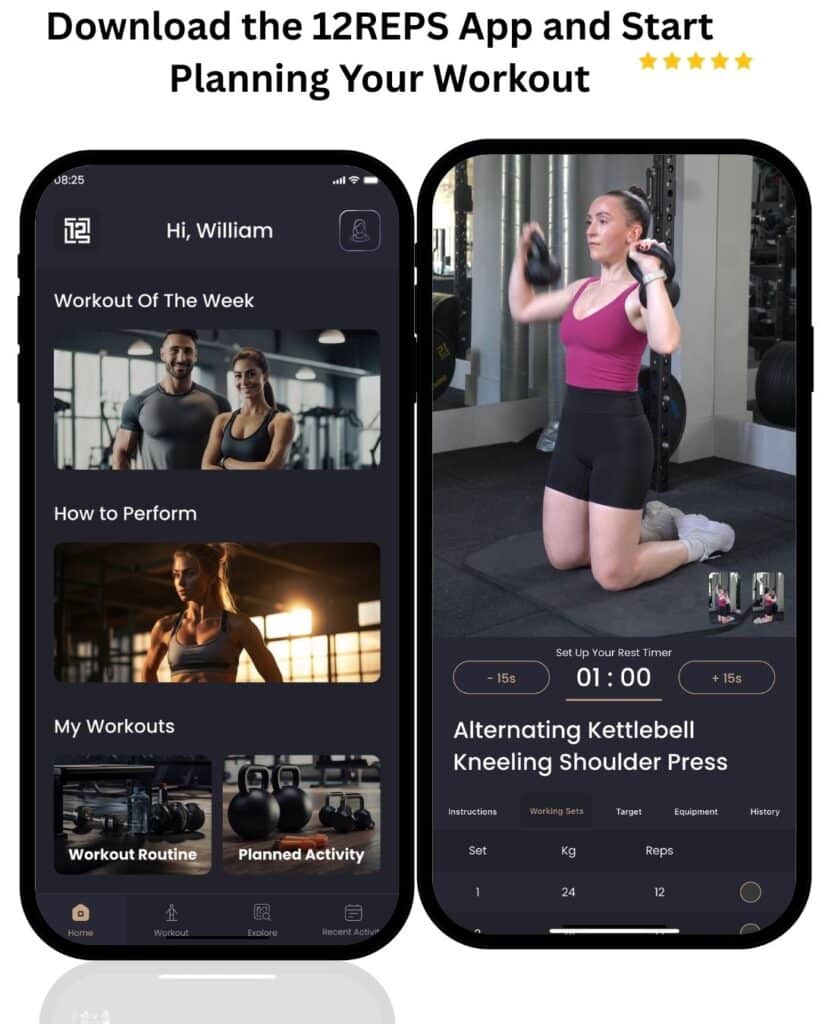
Track everything with the 12REPS app. Seeing your weights increase week by week provides motivation when progress feels slow.
Exercise Modifications for Beginners
If the programme above feels too advanced, here are modifications:
Push Ups
| Level | Modification |
|---|---|
| Beginner | Wall push ups (standing, pushing against wall) |
| Intermediate | Incline push ups (hands on bench) |
| Advanced | Full push ups on floor |
Shoulder Press
| Level | Modification |
|---|---|
| Beginner | Seated with back support, very light weight |
| Intermediate | Seated without back support |
| Advanced | Standing overhead press |
Lat Pulldown (Towards Pull Ups)
| Level | Modification |
|---|---|
| Beginner | Light weight, full range of motion |
| Intermediate | Moderate weight, controlled negatives |
| Advanced | Heavy weight or assisted pull ups |
| Goal | Unassisted pull ups |
Rows
| Level | Modification |
|---|---|
| Beginner | Machine rows or very light cables |
| Intermediate | Cable rows and light dumbbell rows |
| Advanced | Heavy dumbbell rows, barbell rows |
Common Mistakes Women Make with Upper Body Training
Going Too Heavy Too Soon
Your upper body is not as strong as your lower body. Using the same weight selection approach will lead to poor form and frustration. Start lighter.
Avoiding Difficult Exercises
Push ups, pull ups, and overhead press are hard. That is exactly why you need to do them. Modified versions are perfectly acceptable while you build strength.
Training Upper Body Infrequently
Once per week is not enough to build significant upper body strength when you are starting from a low base. Twice per week minimum is needed to see real progress.
Comparing to Lower Body Progress
Your squat will always progress faster than your bench press. This is normal. Stop comparing and focus on upper body progress relative to where you started.
Neglecting Back Training
Many women focus on chest and shoulders while neglecting back. This creates imbalances and poor posture. Pull exercises should get equal or greater attention than push exercises.
Skipping Triceps
Your triceps make up two thirds of your arm. If you want defined arms, tricep work is essential. Do not skip it.
The Results You Can Expect
With consistent training, here is what happens:
Month 1: Exercises feel less awkward. Muscle soreness decreases. You find your working weights.
Month 2: Visible strength gains. Push ups become possible or improve significantly. Weights increase across all exercises.
Month 3: Noticeable muscle development. Shoulders appear more defined. Back feels stronger. Arms show shape.
Month 6: Significant transformation. The strength gap has narrowed. Exercises that felt impossible are now regular parts of your training.
Month 12: Balanced physique. Upper body is no longer a weak point. You feel strong in all movement patterns.
Why This Matters Beyond Aesthetics
A strong upper body is not just about looks.
Daily life becomes easier. Carrying groceries, lifting luggage, moving furniture. Upper body strength makes everything easier.
Injury risk decreases. Balanced strength protects your joints and spine. Weak upper body is a vulnerability.
Confidence increases. There is something powerful about being strong everywhere, not just in your legs.
You become more capable. Upper body strength opens up activities from rock climbing to kayaking to simply playing with your kids without fatigue.
Track Your Progress
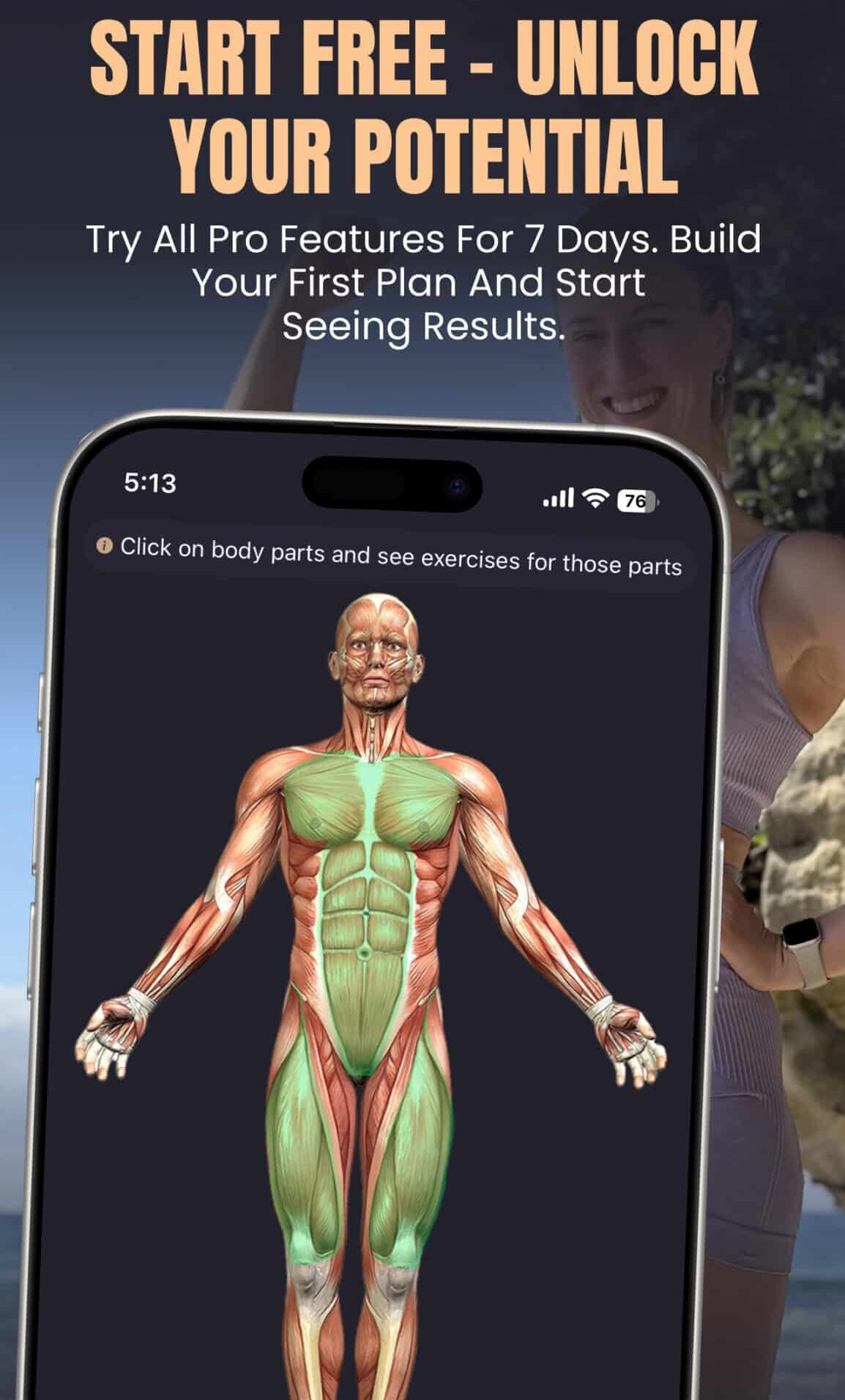
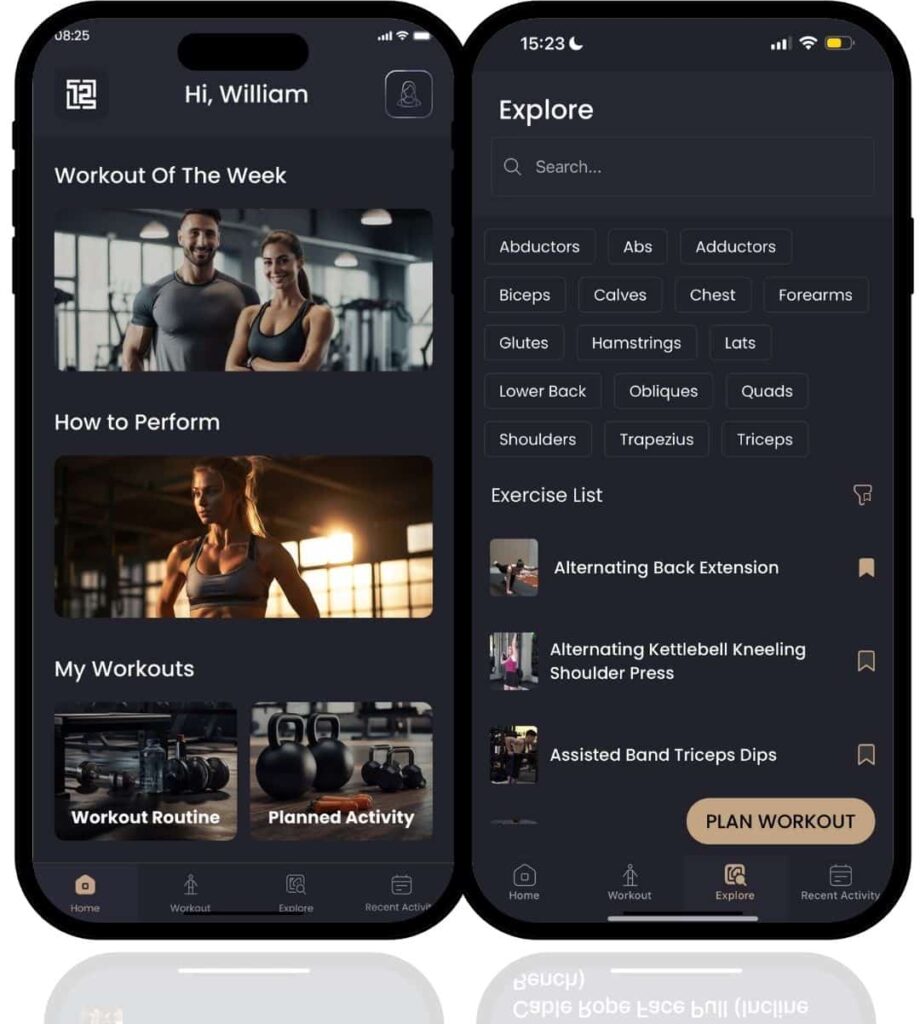
Use the 12REPS app to log every upper body workout. The app shows your previous weights for each exercise so you can see progress over time.
Upper body progress can feel slow compared to lower body. The data proves you are getting stronger even when it does not feel like it. Looking back at where you started provides motivation to keep going.
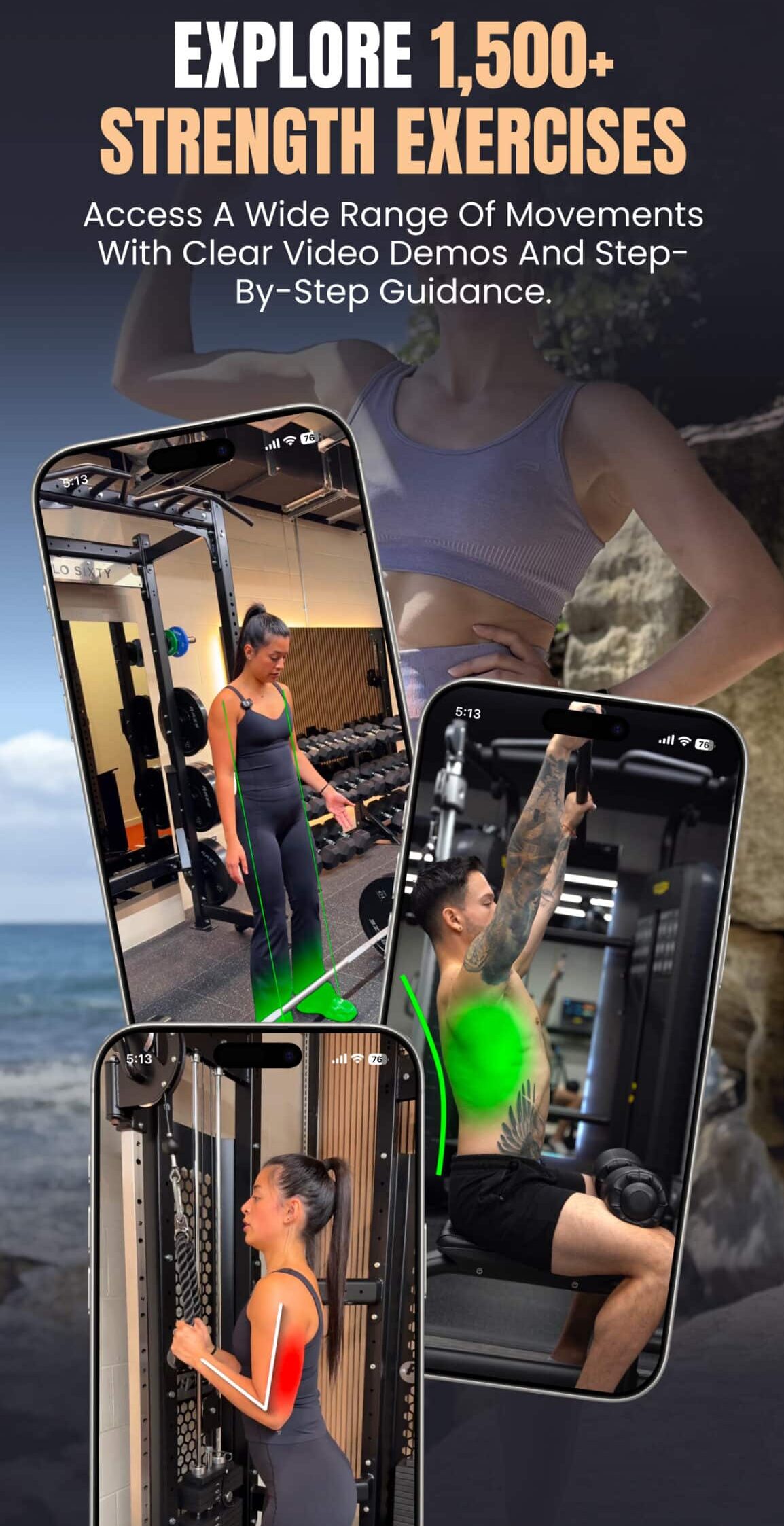
The app includes video demonstrations for every exercise in this programme. If you are unsure about form, watch the demonstration before your set.
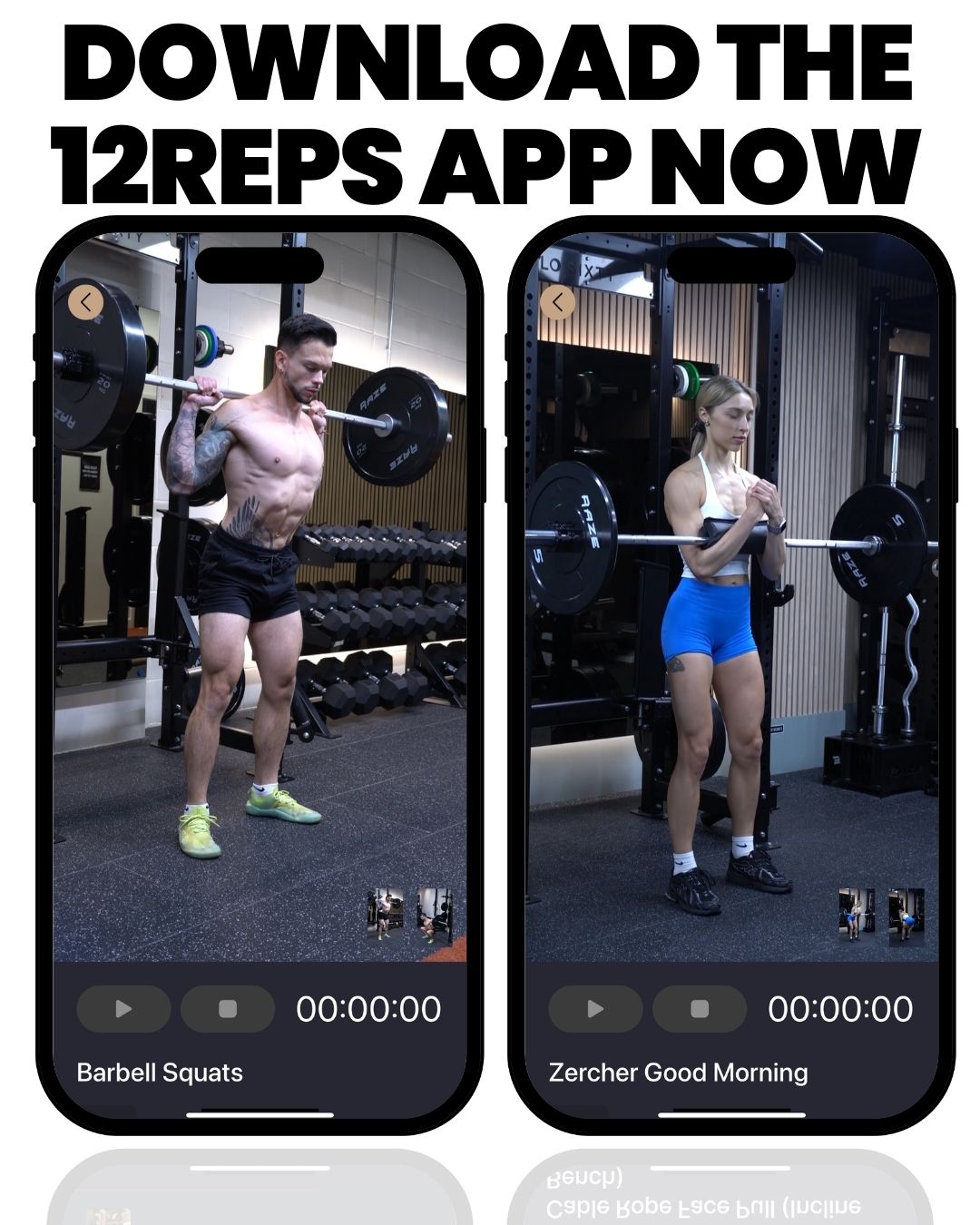
Download the 12REPS app and start building balanced strength today.
Frequently Asked Questions
Will upper-body training make me bulky?
No. Women do not have the hormones to build bulky muscles without extreme effort. You will build lean, defined muscle that looks athletic and feminine.
How long until I can do a pull-up?
This varies greatly. Some women achieve their first pull-up within three to six months of dedicated training. Others take longer. Lat pulldowns and dead hangs are your path there.
Should I train upper body if my goal is just fat loss?
Yes. More muscle means higher metabolism. Training your entire body burns more calories and creates better body composition than training only lower body.
Can I train push and pull on the same day?
Yes, though separate days allow more focus and volume. If time is limited, combining them into one upper-body day works fine.
Why do my shoulders fatigue before my chest on bench press?
This is common in women with undertrained upper bodies. Your shoulders are the weak link. They will catch up with consistent training. Focus on form and let strength build over time.
Should I use machines or free weights?
Both work. Machines are excellent for beginners because they guide the movement. Free weights require more stability and coordination. Use whatever allows you to train consistently and progressively.
References
- Miller, A.E. et al. (1993). Gender differences in strength and muscle fiber characteristics. European Journal of Applied Physiology. https://pubmed.ncbi.nlm.nih.gov/8477683/
- Bishop, P. et al. (1987). Sex difference in muscular strength in equally-trained men and women. Ergonomics. https://pubmed.ncbi.nlm.nih.gov/3678472/
- Janssen, I. et al. (2000). Skeletal muscle mass and distribution in 468 men and women aged 18-88 yr. Journal of Applied Physiology. https://pubmed.ncbi.nlm.nih.gov/10904050/
- Schoenfeld, B.J. et al. (2016). Effects of Resistance Training Frequency on Measures of Muscle Hypertrophy. Sports Medicine. https://pubmed.ncbi.nlm.nih.gov/27102172/
Related Articles on just12reps.com
Article | Description | Link |
Leg Exercises for Women with Upper Body Limitations | Work around grip and arm limitations for leg training. | |
Best Weightlifting App for Women | Find the right app for your training. | |
Strength Training for Petite Women | Training designed for smaller frames. | |
Glute Focused Strength Training for Women | Build strong glutes with targeted training. | |
Complete Beginner’s Guide to Strength Training | Start your journey with proper fundamentals. |
About the Author: Will Duru holds a BSc (Hons) in Sport and Exercise Science and is an award winning personal trainer with over 10 years of experience. He has helped hundreds of women build balanced strength by addressing the natural gap between upper and lower body. Will created the 12REPS app to provide structured programmes and video demonstrations for every exercise.