



By Will Duru, BSc (Hons) Sport and Exercise Science, Award-winning Personal Trainer with over 10 years of experience in strength training and optimising recovery.
For years, the fitness world has been divided: is running or strength training the superior path to weight loss? As a personal trainer with over a decade of experience, including nearly ten years working with women in the bustling City of London, I’ve heard countless stories. Clients often share their frustrations, from those whose bodies broke down after relentless cardio to others who hit frustrating plateaus despite consistent effort. My passion lies in guiding individuals to sustainable fitness, helping them build lasting muscle and achieve their goals. This often means adopting a holistic view, moving beyond a single exercise modality.

Why Running Is Good — and Not So Good — for Weight Loss
Running is an excellent tool for overall health, boosting cardiovascular fitness, enhancing endurance, and serving as a powerful stress reliever. Its role in weight loss, however, is often misunderstood. The fundamental principle behind running’s effectiveness for fat loss is its contribution to energy balance. By engaging large muscle groups and significantly elevating heart rate, running burns a substantial number of calories. This increased energy expenditure makes it easier to create a caloric deficit, a prerequisite for losing body fat.
However, the body is an incredibly adaptive machine. While initial weight loss from running can be significant, many individuals experience a phenomenon known as metabolic adaptation [1]. This occurs when the body, in response to prolonged caloric restriction and increased energy output, downregulates its metabolism to conserve energy. Research, such as a study from the University of Jyväskylä, indicates that while running can effectively prevent long-term weight gain, it doesn’t guarantee continuous weight loss for everyone [2]. This metabolic slowdown can lead to frustrating plateaus, where, despite consistent running, further weight loss becomes challenging. Furthermore, the repetitive impact of running, especially over long distances or with improper form, can lead to overuse injuries affecting joints like knees and hips, making it an unsustainable long-term solution for some.

Why Strength Training Is Good for Weight Loss
Strength training offers a distinct and highly effective pathway to fat loss, primarily through its impact on body composition and resting metabolic rate (RMR). When you lift weights, you create micro-tears in your muscle fibers, which the body then repairs and rebuilds, leading to increased muscle mass. This process is metabolically demanding, meaning your body burns calories not only during the workout but also during the recovery and rebuilding phases. Crucially, muscle tissue is more metabolically active than fat tissue. This means that the more muscle you build, the higher your RMR becomes, leading to more calories burned at rest, even when you’re not actively exercising [3] [4]. This makes muscle building a cornerstone of sustainable fat loss.
My experience with clients consistently demonstrates this principle. Many who initially struggled with weight loss despite years of light exercise saw remarkable transformations once we shifted their focus to progressive overload with compound movements. Exercises like deadlifts, squats, bench presses, and overhead presses, performed with challenging weights, stimulate significant muscle growth. Within weeks, clients reported feeling stronger, seeing their bodies reshape, and experiencing improved posture. A systematic review and meta-analysis published in Sports Medicine confirmed that strength training not only reduces body fat percentage and increases lean body mass but also enhances bone density, reducing the risk of injury and improving overall functional health [5].

The Synergy: Combining Running and Strength Training
From a professional perspective, the most effective strategy for weight loss and overall fitness is concurrent training, integrating both strength training and cardiovascular exercise. This synergistic combination leverages the unique benefits of each modality. Cardiovascular exercise, such as running or cycling, efficiently burns calories during activity, contributing directly to a caloric deficit. Strength training, on the other hand, builds and preserves metabolically active muscle mass, which elevates your RMR and ensures long-term fat burning even outside of your workouts. Research supports this, with studies showing that concurrent training can lead to greater improvements in body composition and fat loss than single-mode training [6] [7].
A practical implementation could involve 2-3 days of strength training per week, complemented by 1-2 days of running or cycling. Alternatively, for those with limited time, a 45-minute strength training session followed by 15-20 minutes of cardio can be highly effective. This balanced approach was instrumental in the transformation of clients like Ola, whose journey, featured in Men’s Fitness, showcased the power of combining strength training, cardio, and even boxing [8].

3-Day Push/Pull/Legs (PPL) Strength Training Plan
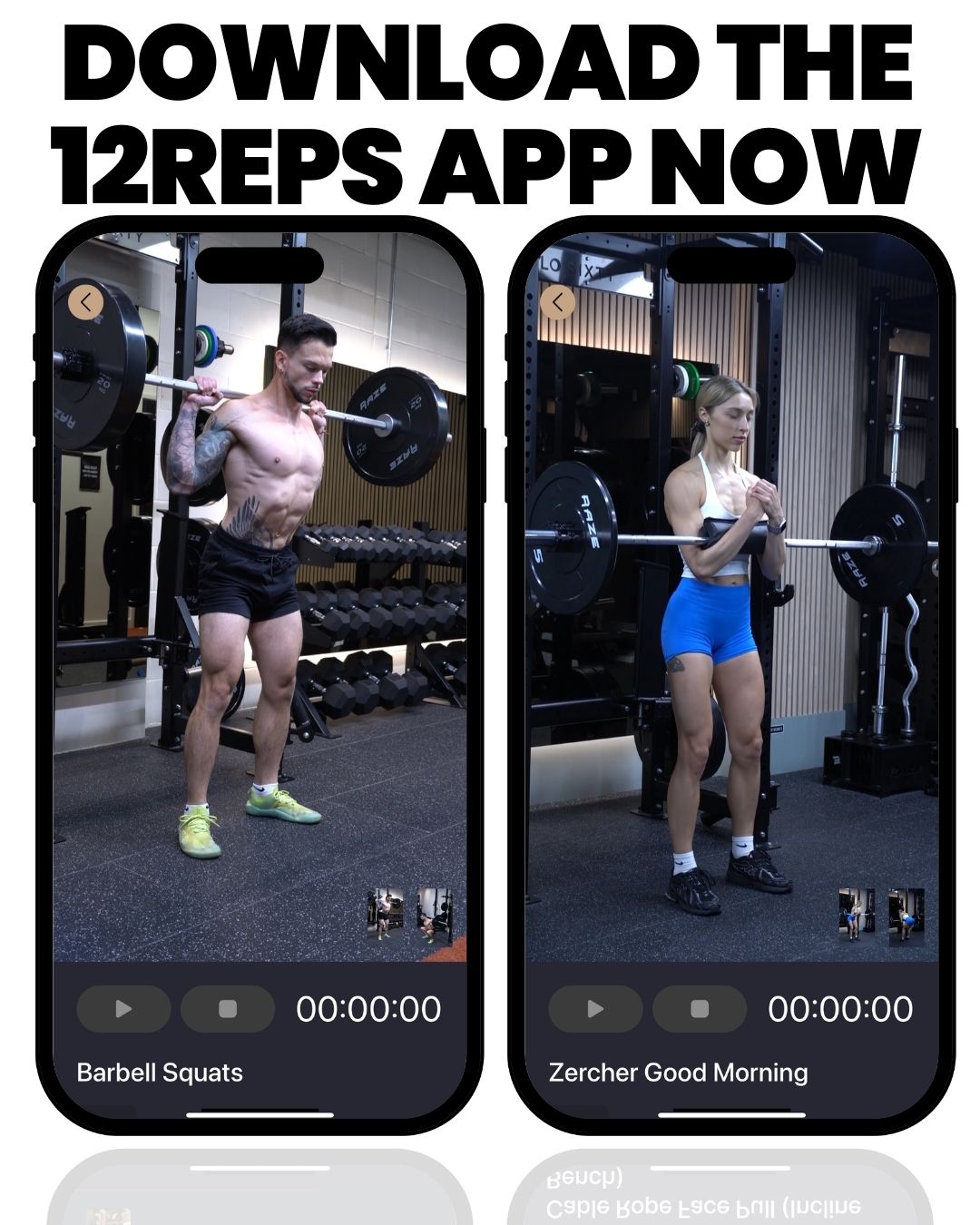
This 3-day Push/Pull/Legs (PPL) plan is meticulously designed for optimal muscle growth and fat loss, ensuring adequate recovery between sessions. Each workout prioritises compound movements to maximise efficiency and engage multiple muscle groups simultaneously. Aim for 3 sets of 8-12 repetitions each, resting 60-90 seconds between sets. Remember, proper form is paramount for preventing injury and maximising muscle activation. If you’re ever unsure about an exercise, the 12reps appprovides detailed video tutorials and guidance.
Day 1: Push (Chest, Shoulders, Triceps)
Exercise | Equipment | Sets | Reps | Focus |
1. Dumbbell Bench Press | Dumbbells | 3 | 8-12 | Chest, Triceps, Shoulders |
2. Kettlebell Overhead Press | Kettlebell | 3 | 8-12 | Shoulders, Triceps |
3. Machine Chest Fly | Machine | 3 | 10-15 | Chest Isolation |
4. TRX Triceps Extension | TRX | 3 | 10-15 | Triceps |
5. Dumbbell Lateral Raise | Dumbbells | 3 | 12-15 | Side Deltoids |
Day 2: Pull (Back, Biceps)
Exercise | Equipment | Sets | Reps | Focus |
1. Dumbbell Bent-Over Row | Dumbbells | 3 | 8-12 | Back, Biceps |
2. Machine Lat Pulldown | Machine | 3 | 8-12 | Lats, Biceps |
3. TRX Inverted Row | TRX | 3 | 10-15 | Upper Back, Biceps |
4. Dumbbell Bicep Curl | Dumbbells | 3 | 10-15 | Biceps |
5. Kettlebell Swings | Kettlebell | 3 | 15-20 | Posterior Chain, Cardio |
Day 3: Legs (Quads, Hamstrings, Glutes, Calves)
Exercise | Equipment | Sets | Reps | Focus |
1. Dumbbell Goblet Squat | Dumbbell | 3 | 8-12 | Quads, Glutes, Core |
2. Machine Leg Press | Machine | 3 | 10-15 | Quads, Glutes, Hamstrings |
3. Kettlebell Romanian Deadlift (RDL) | Kettlebell | 3 | 10-15 | Hamstrings, Glutes |
4. TRX Lunge | TRX | 3 | 10-15 (per leg) | Quads, Glutes, Balance |
5. Machine Calf Raise | Machine | 3 | 15-20 | Calves |
Tracking Your Progress: The Key to Consistent Results
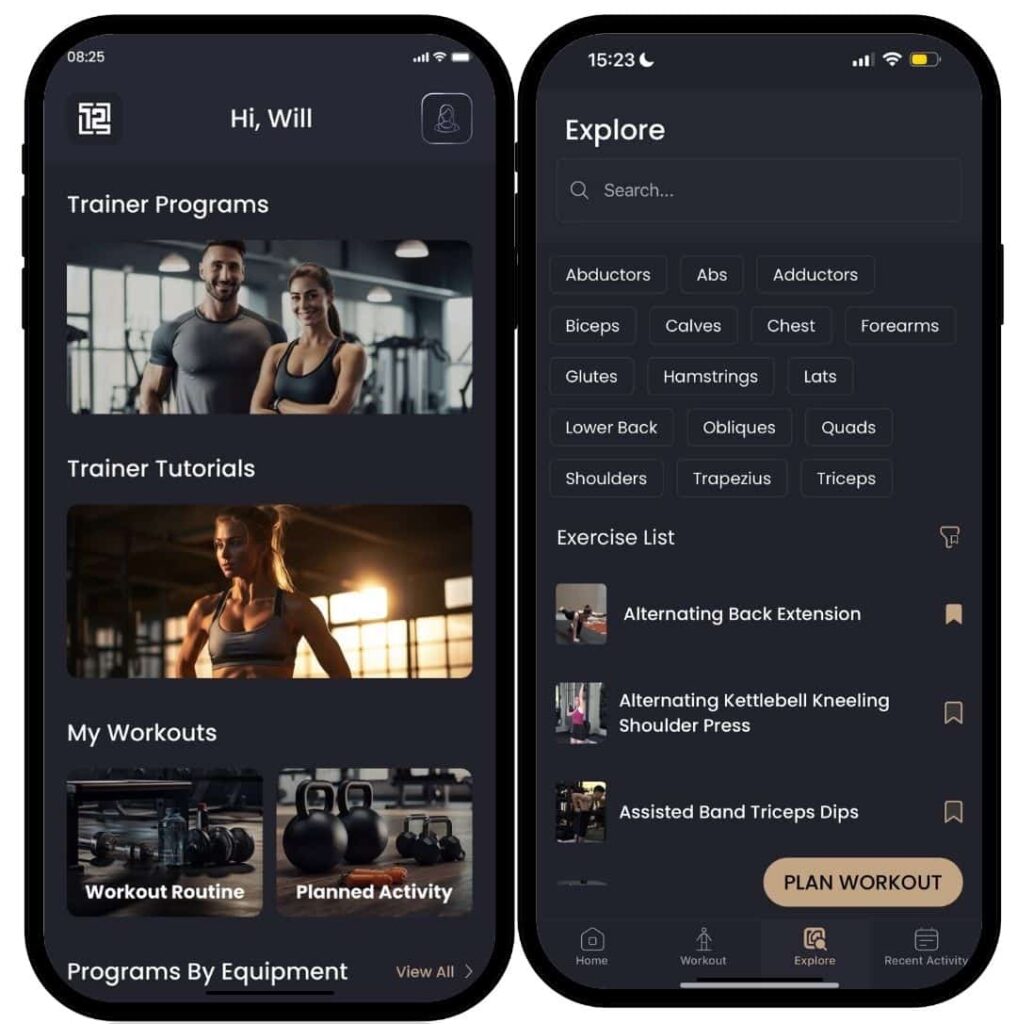
To truly unlock the benefits of this combined approach, consistent tracking is indispensable. How can you objectively measure your progress, confirm you’re getting stronger, and ensure you’re moving closer to your weight loss goals? The answer lies in meticulous record-keeping. The 12reps app serves as your ultimate workout tracker for implementing this plan. It allows you to log every set, repetition, and weight used, providing clear, objective data on your strength training progress week after week. With the 12reps app, you can effortlessly monitor your performance, identify plateaus, and make informed, data-driven decisions about when to increase your weights or adjust your routine. Download it for a free trial and transform your fitness journey from guesswork to systematic progression.
Conclusion: A Balanced Approach for Lasting Results
In conclusion, the perceived conflict between running and strength training for weight loss is a false myth. The most effective and sustainable strategy is to embrace both. Running excels at immediate calorie expenditure and cardiovascular health, while strength training is unparalleled in building metabolism-boosting muscle and reshaping your physique. By integrating both, as demonstrated in this guide and the comprehensive 3-day PPL plan, you are not merely pursuing weight loss; you are investing in improved overall health, enhanced strength, and a body that functions optimally for years to come. Your fitness journey is indeed a marathon, not a sprint, and a balanced, scientifically-backed approach is your most reliable strategy for enduring success. So, lace up your running shoes, grab those weights, diligently track your progress with the 12reps app, and witness your body transform into its strongest, healthiest version.
References
- Trexler, E. T., Smith-Ryan, A. E., & Norton, L. E. (2014). Metabolic adaptation to weight loss: implications for the athlete. Journal of the International Society of Sports Nutrition, 11(1), 7.
- University of Jyväskylä. (2023, January). Running alone does not guarantee continuous weight loss: a systematic review and meta-analysis.
- Pratley, R., et al. (1994). Strength training increases resting metabolic rate and improves body composition. Journal of Applied Physiology, 76(1), 695-700.
- Aristizabal, J. C., et al. (2015). Effect of resistance training on resting metabolic rate and body composition: age and gender comparisons. European Journal of Clinical Nutrition, 69(1), 1-7.
- Lafontant, K., et al. (2025). Comparison of concurrent, resistance, or aerobic training on body fat loss: a systematic review and meta-analysis. Journal of the International Society of Sports Nutrition.
- Bouamra, M., et al. (2022). Concurrent Training Promotes Greater Gains on Body Composition and Components of Physical Fitness Than Single-Mode Training (Endurance or Resistance) in Youth. Frontiers in Physiology, 13, 9164296.
- Amaro-Gahete, F. J., et al. (2021). Effect of a 12-Week Concurrent Training Intervention on Body Composition, Blood Pressure, and Cardiometabolic Risk in Overweight and Obese Adults. Frontiers in Physiology, 12, 630831.
- Ola’s Transformation Story. Men’s Fitness