



By Will Duru, BSc (Hons) Sport and Exercise Science, Award winning Personal Trainer with over 10 years of experience in strength training
Emma was a rock climber who came to me with a specific problem. She wanted to get stronger, much stronger, but she did not want to gain muscle mass. Extra weight on her frame would make climbing harder, not easier. Every kilogram she gained was a kilogram she had to pull up the wall.
Her situation is more common than you might think. Boxers and martial artists need power without moving up weight classes. Runners want leg strength without carrying extra bulk. Gymnasts require incredible strength relative to their body weight. Dancers need power without changing their aesthetic.
Even outside sport, many people simply prefer their current size. They want to lift heavier, feel stronger and perform better without their clothes fitting differently.
The good news is that strength and muscle size, while related, are not the same thing. You can absolutely get stronger without getting bigger. It just requires a different approach to training than what most programmes teach.

Understanding the Difference Between Strength and Size
Muscle size, technically called hypertrophy, refers to how big your muscles are. Strength refers to how much force they can produce. These two qualities are connected but not identical.
A larger muscle has more potential to be strong because there is simply more tissue to generate force. This is why bodybuilders, despite training primarily for size, are still quite strong. But muscle size is only one factor in strength.
Other factors include:
Neural efficiency. Your brain’s ability to recruit muscle fibres and coordinate their firing patterns. A more efficient nervous system can generate more force from the same amount of muscle tissue.
Motor unit recruitment. Your muscles contain thousands of individual motor units. Trained individuals can activate a higher percentage of these units simultaneously, producing more force without additional muscle mass.
Rate coding. How quickly your nervous system can send signals to your muscles. Faster signalling means more explosive force production.
Intermuscular coordination. How well different muscles work together during complex movements. Better coordination means more effective force transfer.
Tendon and connective tissue adaptation. Stronger tendons transmit force more effectively from muscles to bones.
This explains why some smaller individuals can lift more than larger ones. Their nervous systems have become exceptionally efficient at producing force from whatever muscle mass they have.
The key insight is this: training can be biased toward either neural adaptations or muscular adaptations depending on how you structure it. If you want strength without size, you bias your training toward the neural side.
Why Traditional Training Builds Size
Most gym programmes, whether intentionally or not, are designed to maximise muscle growth. They use moderate weights, moderate rep ranges and accumulate significant training volume. This approach works brilliantly for building muscle but is not optimal for pure strength development.
Hypertrophy occurs primarily through three mechanisms:
Mechanical tension. The force placed on muscles during exercise. Both strength and hypertrophy training create mechanical tension, but they do so differently.
Metabolic stress. The accumulation of metabolic byproducts like lactate during sustained muscular effort. This is maximised with moderate weights and higher reps that keep muscles under tension for extended periods.
Muscle damage. Microscopic tears in muscle fibres that trigger repair and growth processes. This is increased with eccentric loading, novel exercises and higher volumes.
Traditional bodybuilding style training, typically 3 to 4 sets of 8 to 12 repetitions with moderate weights, maximises all three of these mechanisms. It creates sufficient tension to stimulate growth while accumulating enough volume and metabolic stress to trigger significant hypertrophy.
If you want to minimise size gains while maximising strength, you need to manipulate these variables differently.

The Strength Without Size Approach
Training for strength without size requires specific modifications to how you lift. Here are the key principles:
Principle 1: Lift Heavy, Keep Reps Low
The most important variable is the weight you use relative to your maximum. For strength without size, you want to work in the 1 to 5 repetition range with weights between 85% and 100% of your one rep maximum.
This rep range creates high mechanical tension, which drives neural adaptations, while minimising the metabolic stress and time under tension that promote hypertrophy. Your muscles experience intense but brief loading rather than prolonged moderate effort.
A typical hypertrophy set might last 30 to 45 seconds. A strength set of 2 to 3 heavy reps might last only 6 to 10 seconds. This dramatic reduction in time under tension significantly reduces the hypertrophy stimulus.
Principle 2: Keep Total Volume Low
Volume, the total amount of work you do, is a primary driver of muscle growth. More sets and more reps generally mean more muscle. For strength without size, you want to find the minimum effective dose of training that still produces strength gains.
Instead of 4 sets of 10 repetitions (40 total reps), you might perform 5 sets of 2 repetitions (10 total reps). The intensity is much higher but the overall volume is drastically lower. This stimulates neural adaptation without creating excessive hypertrophy stimulus.
A practical guideline is to keep your total weekly working sets per muscle group between 6 and 10, compared to the 15 to 25 sets typically recommended for hypertrophy.
Principle 3: Rest Fully Between Sets
Incomplete rest between sets increases metabolic stress, which promotes muscle growth. When you feel the burn and pump during training, that is metabolic stress at work.
For strength without size, you want to avoid this metabolic buildup. Rest 3 to 5 minutes between heavy sets. This allows full recovery of your nervous system and energy stores, enabling maximum force production on each set without accumulating growth promoting fatigue.
Yes, this makes workouts longer in terms of clock time, but the actual working time remains short. You spend more time resting but less time under the bar.
Principle 4: Focus on Compound Movements
Compound exercises that use multiple joints and muscle groups simultaneously are more efficient for building strength than isolation exercises. Squats, deadlifts, presses and pulls should form the foundation of your programme.
These movements train your nervous system to coordinate force production across your entire body, improving that intermuscular coordination mentioned earlier. They also allow you to lift heavier weights than isolation exercises, providing greater neural stimulus.
Principle 5: Prioritise Technique and Speed
When training for pure strength, how you lift matters as much as what you lift. Focus on:
Perfect technique. Efficient movement patterns allow you to express more strength with less effort. Technical improvements alone can increase your lifts without any physiological changes.
Bar speed. Even when weights are heavy, attempt to move them as fast as possible. This intent to accelerate maximises motor unit recruitment and rate of force development. The bar may move slowly because it is heavy, but your effort to move it fast should be maximal.
Compensatory acceleration. As you pass sticking points in a lift, continue accelerating through the entire range of motion rather than slowing down as the lift gets easier.

Sample Strength Without Size Programme
Here is a practical programme structure that applies these principles. It assumes you can train 3 to 4 days per week.
Programme Structure
Frequency: 3 to 4 days per week Focus: Low volume, high intensity compound movements Rep Range: 1 to 5 reps for main lifts Rest: 3 to 5 minutes between heavy sets
Day 1: Lower Body Emphasis
| Exercise | Sets | Reps | Rest |
|---|---|---|---|
| Back Squat | 5 | 3 | 4 min |
| Romanian Deadlift | 5 | 5 | 3 min |
| Walking Lunges | 4 | 6 each leg | 2 min |
Day 2: Upper Body Push
| Exercise | Sets | Reps | Rest |
|---|---|---|---|
| Bench Press | 5 | 3 | 4 min |
| Overhead Press | 4 | 3 | 3 min |
| Dips | 4 | 5 | 2 min |
Day 3: Lower Body Emphasis
| Exercise | Sets | Reps | Rest |
|---|---|---|---|
| Deadlift | 5 | 2 | 5 min |
| Front Squat | 3 | 4 | 3 min |
| Hip Thrust | 4 | 6 | 2 min |
Day 4: Upper Body Pull
| Exercise | Sets | Reps | Rest |
|---|---|---|---|
| Weighted Pull Ups | 5 | 3 | 4 min |
| Barbell Row | 4 | 4 | 3 min |
| Face Pulls | 4 | 8 | 2 min |
Progression Method
For this style of training, progress by adding small amounts of weight when you can complete all prescribed reps with good technique. Increases of 1 to 2.5 kilograms for upper body lifts and 2.5 to 5 kilograms for lower body lifts are appropriate.
Do not rush progression. The nervous system adapts more slowly than muscles in some ways. Consistent, patient loading over months will produce substantial strength gains.
The Role of Nutrition
Your diet significantly influences whether you gain muscle mass alongside strength. To minimise hypertrophy while maximising strength:
Eat at Maintenance Calories
Muscle growth requires a caloric surplus. If you eat at or slightly below your maintenance calorie level, you significantly limit your body’s ability to build new tissue. You will still get stronger because strength relies heavily on neural adaptations, but you will not provide the raw materials for substantial muscle growth.
Calculate your maintenance calories based on your activity level and body weight. Track your intake for a few weeks to ensure you are not accidentally eating in a surplus.
Maintain Adequate Protein
Even without seeking hypertrophy, you need sufficient protein to support recovery and the small amount of tissue repair that occurs with any training. Aim for approximately 1.6 to 2.0 grams of protein per kilogram of body weight daily.
This is lower than the 2.2 to 2.5 grams often recommended for muscle building, but still adequate for strength development and general health.
Stay Hydrated and Recover Well
Strength performance depends heavily on nervous system function, which is sensitive to hydration and sleep quality. Prioritise 7 to 9 hours of sleep nightly and maintain consistent hydration throughout the day.

Common Mistakes to Avoid
Mistake 1: Adding Volume When Progress Stalls
When strength gains slow down, the instinct is often to add more sets and reps. For strength without size, this is counterproductive. More volume pushes you toward hypertrophy.
Instead, try varying exercise selection, adjusting intensity, improving technique or simply being patient. Neural adaptations happen on different timescales than muscular ones.
Mistake 2: Chasing the Pump
That swollen feeling after high rep training is a sign of metabolic stress and fluid accumulation in muscles. It feels productive but actively works against your goal of minimising size. If you finish workouts feeling pumped, you are likely training in a way that promotes hypertrophy.
Mistake 3: Neglecting Skill Practice
Strength is partly a skill. The more you practice heavy lifting, the more efficient your movement patterns become. Do not shy away from frequent exposure to your main lifts at moderate to heavy intensities.
Mistake 4: Ignoring Recovery
Training with high intensity places significant demands on your nervous system. Without adequate recovery, performance deteriorates and injury risk increases. The lower volume approach should allow for solid recovery between sessions. If you feel constantly fatigued, you may need more rest days.
Mistake 5: Expecting Immediate Results
Neural adaptations take time to develop fully. The first few weeks may show minimal progress as your nervous system learns to handle heavier loads. Trust the process and maintain consistency.
Who Should Use This Approach
This strength without size approach is ideal for:
Weight class athletes. Boxers, wrestlers, powerlifters, Olympic weightlifters and martial artists who need to maximise strength within a specific weight category.
Endurance athletes. Runners, cyclists and swimmers who want strength for performance and injury prevention without carrying extra mass that reduces efficiency.
Climbers. Where strength to weight ratio directly determines performance.
Aesthetic preferences. Anyone who likes their current physique but wants to be functionally stronger.
Women concerned about bulk. Though women build muscle more slowly than men regardless, this approach provides extra assurance for those particularly concerned about size increases.
Older adults. Who want strength and function without the joint stress of high volume training.
Who Should Not Use This Approach
Be aware that this approach has limitations:
Beginners. New lifters should focus on building a foundation of muscle and movement competence before specialising in pure strength work. The first 6 to 12 months of training will produce strength gains regardless of approach.
Those wanting muscle growth. Obviously, if hypertrophy is your goal, this is the wrong programme.
People with very low muscle mass. Some baseline muscle is needed to express strength. If you are significantly undermuscled, building some tissue first will improve your strength potential.
Results Timeline
Here is what to expect if you follow this approach consistently:
Weeks 1 to 4: Technique improvements and neural learning. Weights may increase quickly as you become more efficient with movements.
Weeks 5 to 8: Continued strength gains, possibly at a slower rate. Your lifts should feel more controlled and confident.
Weeks 9 to 12: Noticeable strength increases on all main lifts. If eating at maintenance, body weight and measurements should remain relatively stable.
Months 3 to 6: Substantial strength improvements. You may find yourself lifting weights you previously thought impossible at your size.
Long term: Continued but slower progress. Neural adaptations have diminishing returns over time, which is why elite strength athletes eventually accept some mass gain to continue progressing.
Back to Emma
Emma followed a programme similar to the one outlined above for six months. Her body weight stayed within 2 kilograms of her starting point. Her deadlift increased from 70 kilograms to 105 kilograms. Her weighted pull up went from bodyweight to bodyweight plus 15 kilograms.
More importantly for her goals, her climbing performance improved dramatically. She could hold positions that previously exhausted her. She could make dynamic moves that had been impossible. All without the extra weight that would have held her back.
“I am the same size but a completely different athlete,” she told me.
That is the essence of strength without size. You transform what your body can do without transforming what it looks like.
Getting Started
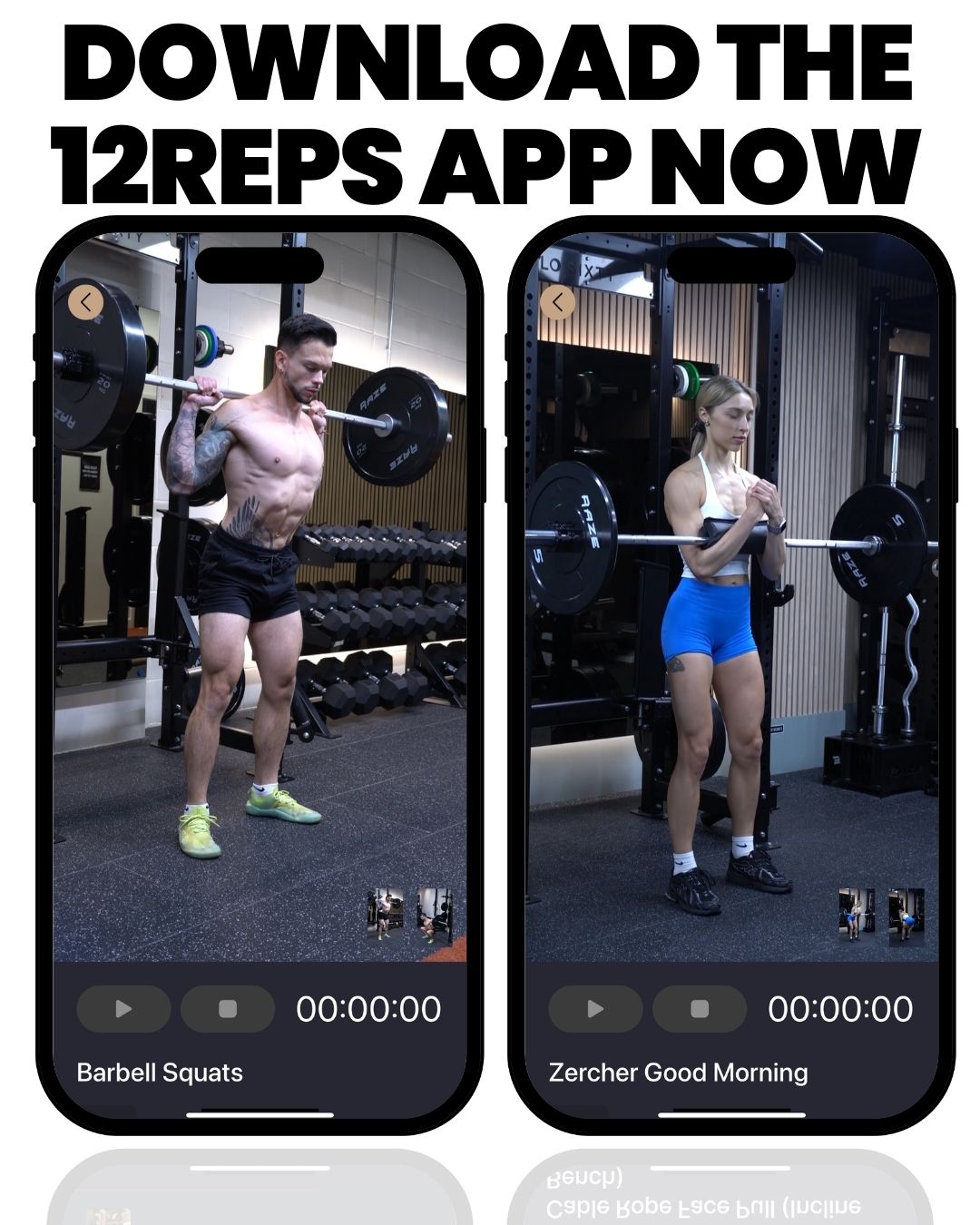
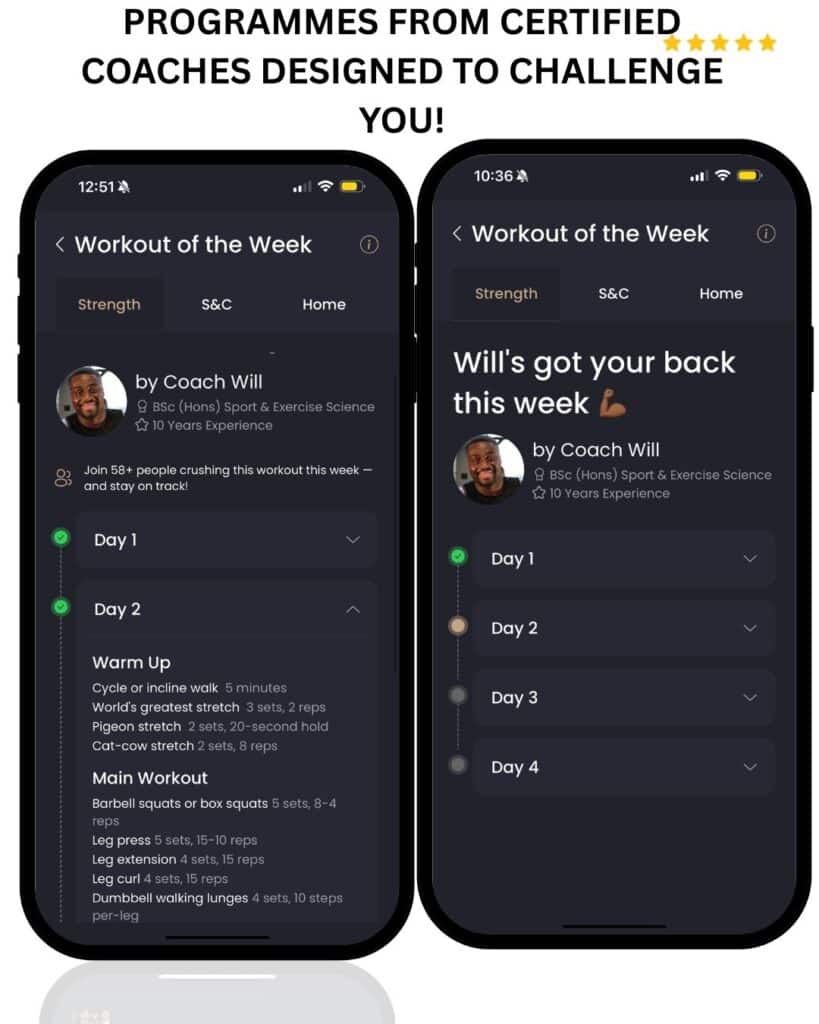
If you want to build strength without adding bulk, the 12REPS app can help you structure your training appropriately. The app allows you to build custom programmes focused on low rep, high intensity work, track your lifts over time and ensure progressive overload without excessive volume.
Start with the programme structure outlined above, adjust based on your specific needs and available equipment, and be patient with the process. Strength built through neural efficiency is real, lasting strength that serves you in any physical endeavour.
Your current body is capable of far more than you realise. This approach helps you unlock that potential.
Related Articles on just12reps.com
| Article | Description | Link |
|---|---|---|
| Science Behind 12 Rep Training | Understanding different rep ranges and their effects on muscle growth. | Read Article |
| Complete Beginner’s Guide to Strength Training | Foundation building for those new to lifting. | Read Article |
| Ultimate 12 Week Push Pull Legs | A comprehensive programme once you are ready for more volume. | Read Article |
| Best Workout Planner and Tracker | How to track your strength progress effectively. | Read Article |
| Strength Training for Women | Building strength with female physiology in mind. | Read Article |
About the Author: Will Duru holds a BSc (Hons) in Sport and Exercise Science and is an award winning personal trainer with over 10 years of experience helping clients achieve their specific strength goals. He is the creator of the 12REPS app, designed to provide personalised training guidance for any fitness objective.