




By Will Duru, BSc (Hons) Sport and Exercise Science, Award-winning Personal Trainer with over 10 years of experience in strength training
Everyone wants to be stronger. Few know how to actually get there.
After a decade of personal training, I have watched hundreds of clients walk through the door wanting strength. Some arrived barely able to lift an empty barbell. Others had trained for years with nothing to show for it. The difference between those who got stronger and those who stayed weak was never genetics or talent. It was understanding and applying the principles that actually build strength.
This guide contains everything I teach my clients about getting stronger. Not theory. Not complicated science. Practical knowledge from ten years of helping real people add weight to the bar, build confidence, and transform what their bodies can do.
If you follow what is in this guide, you will get stronger. It is not complicated. But it does require consistency, patience, and the willingness to do what actually works rather than what feels comfortable.

What Strength Actually Is
Before building strength, understand what you are building.
The Definition
Strength is the ability to produce force against resistance. In practical terms, it is how much weight you can lift for a given movement.
Your squat strength is how much you can squat. Your grip strength is how hard you can squeeze. Your pulling strength is how much you can deadlift or row.
Strength vs Other Qualities
Strength vs muscle size (hypertrophy). You can build muscle without getting much stronger, and you can get significantly stronger without adding much muscle. They overlap but are not the same. Strength is about force production. Hypertrophy is about tissue growth.
Strength vs endurance. Endurance is how long you can sustain effort. Strength is maximum force regardless of duration. A marathon runner has endurance. A powerlifter has strength.
Strength vs power. Power is force multiplied by speed. It is how quickly you can produce force. Olympic lifters need power. Strength is the foundation power builds upon.
Why Strength Matters
Daily life becomes easier. Carrying groceries, moving furniture, climbing stairs with luggage. Everything that requires physical effort becomes less taxing when you are stronger.
Injury prevention. Stronger muscles, tendons, and bones are more resilient. They handle unexpected stress better and recover faster from strain.
Athletic performance. Almost every sport benefits from strength. Even endurance sports improve when athletes can produce more force per stride or stroke.
Ageing well. Strength protects independence. Older adults who maintain strength stay mobile, avoid falls, and live better quality lives.
Confidence. Knowing your body is capable changes how you carry yourself. This is not vanity. It is the quiet confidence of physical competence.
The Science of Getting Stronger
Strength improves through two primary mechanisms.
Neural Adaptations
Your nervous system controls your muscles. When you train for strength, your nervous system becomes more efficient at recruiting muscle fibres and coordinating their contraction.
This is why beginners get stronger quickly without adding much muscle. Their muscles were always capable of producing more force. Their nervous systems just needed to learn how to access that capability.
Neural adaptations include:
- Recruiting more motor units (groups of muscle fibres)
- Firing motor units more synchronously
- Reducing inhibition that limits force production
- Improving coordination between muscles
Muscular Adaptations
Over time, muscles themselves adapt by:
- Increasing cross-sectional area (getting bigger)
- Improving the contractile properties of muscle fibres
- Strengthening connective tissue attachments
Muscular adaptations take longer than neural adaptations. This is why experienced lifters progress more slowly than beginners. They have already captured the neural gains and must rely on actual tissue changes.
What This Means for Training
Early strength gains come fast. Enjoy them but do not expect the pace to continue forever.
Long-term strength requires patience. Building stronger tissue takes months and years, not weeks.
Both heavy weights and moderate weights have roles. Heavy weights maximise neural adaptations. Moderate weights build the muscle that supports long-term strength.
The Principles of Getting Stronger 2
These principles guide effective strength training. Violate them and you will stall. Follow them and you will progress.
Principle 1: Progressive Overload
You must gradually increase the demands on your muscles over time. If you lift the same weight for the same reps forever, you will stay the same strength forever.
Progressive overload means:
- Adding weight to the bar
- Adding reps at the same weight
- Adding sets
- Improving technique to lift more efficiently
- Reducing rest periods (for conditioning, not pure strength)
From my training experience: The clients who get strongest are meticulous about progression. They know exactly what they lifted last session and come determined to beat it. The clients who stall treat each workout as isolated, with no connection to what came before.
Principle 2: Specificity
You get better at what you practice. If you want a stronger squat, you must squat. If you want a stronger deadlift, you must deadlift.
Accessory exercises support main lifts, but they do not replace them. Leg press helps squatting. It does not replace squatting for building squat strength.
From my training experience: I have seen clients obsess over accessory exercises while neglecting main movements. They wonder why their bench press stalls while they do endless cable flys. The main lifts must be the priority.
Principle 3: Recovery
Strength is not built during training. It is built during recovery from training. You break down tissue in the gym. You rebuild stronger tissue while resting, sleeping, and eating.
Without adequate recovery:
- Strength stalls or declines
- Injury risk increases
- Motivation disappears
- Training quality suffers
From my training experience: Overtraining is real, and I see it often in motivated clients. They train six or seven days, wonder why they feel weak, and need convincing to take rest days. When they finally rest, they come back stronger.
Principle 4: Consistency
Sporadic training produces sporadic results. Consistent training produces consistent results.
Three moderate sessions weekly for a year beats six intense sessions weekly for two months followed by quitting.
Strength builds over months and years. Missing occasional sessions does not matter. Missing weeks and months does.
From my training experience: My strongest clients are rarely the most talented. They are the most consistent. They show up week after week, month after month, year after year. Talent without consistency loses to consistency without talent.
Principle 5: Patience
Getting significantly stronger takes time. Not weeks. Months and years.
A beginner might add 50kg to their squat in the first year. An intermediate might add 20kg in a year. An advanced lifter might add 5kg in a year.
The longer you train, the slower progress becomes. This is normal, not failure.
From my training experience: Impatient clients programme-hop, searching for the magic routine that produces fast results. Patient clients follow proven programmes for months, making steady progress while the hoppers spin their wheels.
The Exercises That Build Strength
Some exercises are better than others for building strength.
Compound Movements
Compound exercises work multiple joints and muscle groups simultaneously. They allow you to lift heavy weights and build practical, transferable strength.
The essential compound lifts:
| Exercise | Primary Muscles | Why It Matters |
|---|---|---|
| Squat | Quads, glutes, core | Lower body foundation, transfers to everything |
| Deadlift | Hamstrings, glutes, back, grip | Posterior chain power, real-world strength |
| Bench Press | Chest, shoulders, triceps | Upper body pushing foundation |
| Overhead Press | Shoulders, triceps, core | Overhead strength, shoulder health |
| Barbell Row | Back, biceps, rear delts | Pulling strength, posture, balance |
| Pull Up | Lats, biceps, core | Bodyweight pulling strength |
These six movements, trained consistently and progressively, will make you dramatically stronger than any collection of machines or isolation exercises.
Exercise Selection Hierarchy
Tier 1: Main compound lifts. Squat, deadlift, bench press, overhead press, row, pull up. These are non-negotiable.
Tier 2: Compound variations. Front squat, Romanian deadlift, incline press, dumbbell row. These support and complement main lifts.
Tier 3: Isolation exercises. Curls, tricep extensions, lateral raises. These address specific weaknesses but should not dominate your training.
From my training experience: When clients ask me how to get stronger, I look at their programmes. Almost always, they are heavy on tier 3 exercises and light on tier 1. We flip that ratio and they start progressing.
The Programme: How to Structure Training for Strength
Here is a complete strength-focused programme I use with clients.
Weekly Structure
| Day | Session |
|---|---|
| Monday | Lower Body Strength |
| Tuesday | Upper Body Strength |
| Wednesday | Rest |
| Thursday | Lower Body Strength |
| Friday | Upper Body Strength |
| Saturday | Rest |
| Sunday | Rest |
Four days per week provides excellent frequency for strength development while allowing adequate recovery.
Lower Body Day A
| Exercise | Sets | Reps | Rest | Notes |
|---|---|---|---|---|
| Barbell Back Squat | 5 | 5 | 3-4 minutes | Main strength movement |
| Romanian Deadlift | 4 | 8, 8, 6, 6 | 2-3 minutes | Hamstring and glute strength |
| Leg Press | 3 | 10, 10, 8 | 2 minutes | Additional quad volume |
| Walking Lunge | 3 | 8 each leg | 90 seconds | Single leg strength |
| Standing Calf Raise | 3 | 12, 12, 10 | 60 seconds | Calf development |
| Plank | 3 | 45-60 seconds | 60 seconds | Core stability |
Upper Body Day A
| Exercise | Sets | Reps | Rest | Notes |
|---|---|---|---|---|
| Barbell Bench Press | 5 | 5 | 3-4 minutes | Main strength movement |
| Barbell Row | 4 | 6, 6, 6, 6 | 2-3 minutes | Pulling strength |
| Dumbbell Shoulder Press | 3 | 8, 8, 6 | 2 minutes | Overhead pressing |
| Lat Pulldown | 3 | 10, 10, 8 | 90 seconds | Lat development |
| Face Pull | 3 | 15, 12, 12 | 60 seconds | Shoulder health |
| Barbell Curl | 2 | 10, 10 | 60 seconds | Bicep strength |
Lower Body Day B
| Exercise | Sets | Reps | Rest | Notes |
|---|---|---|---|---|
| Conventional Deadlift | 5 | 5 | 3-4 minutes | Main strength movement |
| Front Squat | 4 | 6, 6, 6, 6 | 2-3 minutes | Quad emphasis, core demand |
| Bulgarian Split Squat | 3 | 8 each leg | 90 seconds | Single leg strength |
| Leg Curl | 3 | 12, 10, 10 | 60 seconds | Hamstring isolation |
| Seated Calf Raise | 3 | 15, 12, 12 | 60 seconds | Soleus emphasis |
| Dead Bug | 3 | 10 each side | 60 seconds | Core stability |
Upper Body Day B
| Exercise | Sets | Reps | Rest | Notes |
|---|---|---|---|---|
| Overhead Press | 5 | 5 | 3-4 minutes | Main strength movement |
| Weighted Pull Up or Lat Pulldown | 4 | 6, 6, 6, 6 | 2-3 minutes | Vertical pulling |
| Incline Dumbbell Press | 3 | 8, 8, 6 | 2 minutes | Upper chest |
| Seated Cable Row | 3 | 10, 10, 8 | 90 seconds | Back thickness |
| Dumbbell Lateral Raise | 3 | 12, 12, 10 | 60 seconds | Shoulder width |
| Tricep Pushdown | 2 | 12, 10 | 60 seconds | Tricep strength |
Progressive Overload: How to Keep Getting Stronger
The programme only works if you progressively overload. Here is exactly how to do it.
The Double Progression Method
This is the method I teach most clients.
Step 1: Start with a weight you can lift for the lower end of the rep range.
Step 2: Each session, try to add reps while keeping form strict.
Step 3: When you reach the top of the rep range for all sets, increase the weight.
Step 4: Drop back to the lower rep range with the new weight and repeat.
Example for Squat (5 sets of 5):
| Week | Weight | Reps Achieved |
|---|---|---|
| 1 | 80kg | 5, 5, 4, 4, 3 |
| 2 | 80kg | 5, 5, 5, 4, 4 |
| 3 | 80kg | 5, 5, 5, 5, 4 |
| 4 | 80kg | 5, 5, 5, 5, 5 |
| 5 | 82.5kg | 5, 5, 4, 4, 4 |
| 6 | 82.5kg | 5, 5, 5, 5, 4 |
| 7 | 82.5kg | 5, 5, 5, 5, 5 |
| 8 | 85kg | 5, 5, 4, 4, 4 |
Over 8 weeks, the squat progressed from 80kg to 85kg. This pace might seem slow, but it represents 2.5kg per month. Over a year, that is 30kg added to your squat.
When Progression Stalls
Stalls happen. Here is how to handle them.
First stall: Take a deload week (reduce weight by 40%), then return and try again.
Second stall at same weight: Add more volume (an extra set) at a slightly lower weight, build up again.
Persistent stall: Evaluate sleep, nutrition, stress, and recovery. Usually the issue is outside the gym.
From my training experience: When clients stall, I check three things first: sleep, protein intake, and life stress. The answer is almost never “the programme is wrong.” It is almost always “recovery is insufficient.”

Nutrition for Strength
You cannot out-train a bad diet, and you certainly cannot get stronger without proper nutrition.
Calories: Enough to Support Training
Strength training in a severe calorie deficit is counterproductive. Your body needs energy to train hard and recover.
For strength gains: Eat at maintenance or a slight surplus (200-300 calories above maintenance).
If you need to lose fat: Use a moderate deficit (300-500 below maintenance) and accept that strength gains will be slower.
Protein: The Priority
Protein provides the building blocks for muscle repair and growth.
Target: 1.6 to 2.2 grams per kilogram of bodyweight daily.
For an 80kg person: 128 to 176 grams of protein per day.
Distribute protein across meals. Four meals with 35-45g protein each works well.
Quality protein sources:
- Chicken breast
- Lean beef
- Fish
- Eggs
- Greek yoghurt
- Cottage cheese
- Whey protein powder
Carbohydrates: Fuel for Training
Carbohydrates fuel intense training. Low-carb diets often compromise strength performance.
Target: 3 to 5 grams per kilogram of bodyweight for active lifters.
Timing: Prioritise carbohydrates around training. Before for energy, after for recovery.
Key Supplements
Most supplements are worthless. A few have solid evidence:
Creatine monohydrate: 3-5g daily. Improves strength, power, and muscle gains. Inexpensive and well-researched.
Vitamin D: If deficient (common in northern climates). Supports muscle function and bone health.
Fish oil: Reduces inflammation, supports recovery.
Everything else is probably unnecessary. Spend money on quality food instead.

Recovery: Where Strength Is Actually Built
Training provides the stimulus. Recovery produces the adaptation.
Sleep
Sleep is when your body repairs and strengthens tissue.
Target: 7-9 hours nightly.
Quality matters: Dark room, cool temperature, consistent schedule.
From my training experience: I can always tell when a client is sleep deprived. Their lifts suffer, their mood suffers, and they wonder why they feel weak. Improving sleep often produces faster strength gains than changing anything about training.
Rest Days
You need days away from the gym.
Minimum: 2-3 rest days per week.
Active recovery: Light walking, stretching, mobility work. Not intense exercise.
Stress Management
Chronic stress impairs recovery. Cortisol, the stress hormone, interferes with muscle building and strength gains.
Address life stress: Work, relationships, finances. These affect your training whether you acknowledge it or not.
Deload Weeks
Every 4-8 weeks, reduce training intensity and volume.
How to deload: Use 50-60% of your normal weights. Keep the routine but make it easy.
Why it works: Accumulated fatigue dissipates, allowing your body to fully adapt to recent training.
Common Mistakes That Keep People Weak
I see these mistakes constantly. Avoid them.
Mistake 1: Programme Hopping
Switching programmes every few weeks prevents adaptation. Strength programmes work over months, not weeks.
The fix: Pick a programme and follow it for 12-16 weeks minimum before evaluating.
Mistake 2: Avoiding Hard Exercises
Squats and deadlifts are difficult. That is why they work. Replacing them with easier exercises produces easier results: none.
The fix: Do the hard exercises first, when you are fresh and focused.
Mistake 3: Not Tracking
If you do not know what you lifted last time, you cannot systematically progress.
The fix: Track every workout. The 12REPS app makes this effortless.
Mistake 4: Too Much Volume, Not Enough Intensity
Doing 20 sets of light weights produces fatigue, not strength. Strength requires heavy loads.
The fix: Prioritise weight on the bar over total sets. Quality over quantity.
Mistake 5: Neglecting Recovery
Training six or seven days, sleeping five hours, eating poorly. Then wondering why strength stalls.
The fix: Treat recovery as seriously as training.
Mistake 6: Expecting Instant Results
Strength takes years to build. Expecting massive gains in weeks leads to frustration and quitting.
The fix: Focus on small, consistent progress. Trust the process.
Tracking Your Strength Progress
What gets measured gets managed.
What to Track
- Exercises performed
- Weight lifted
- Reps completed
- How it felt (RPE or subjective notes)
- Bodyweight (weekly)
How to Track
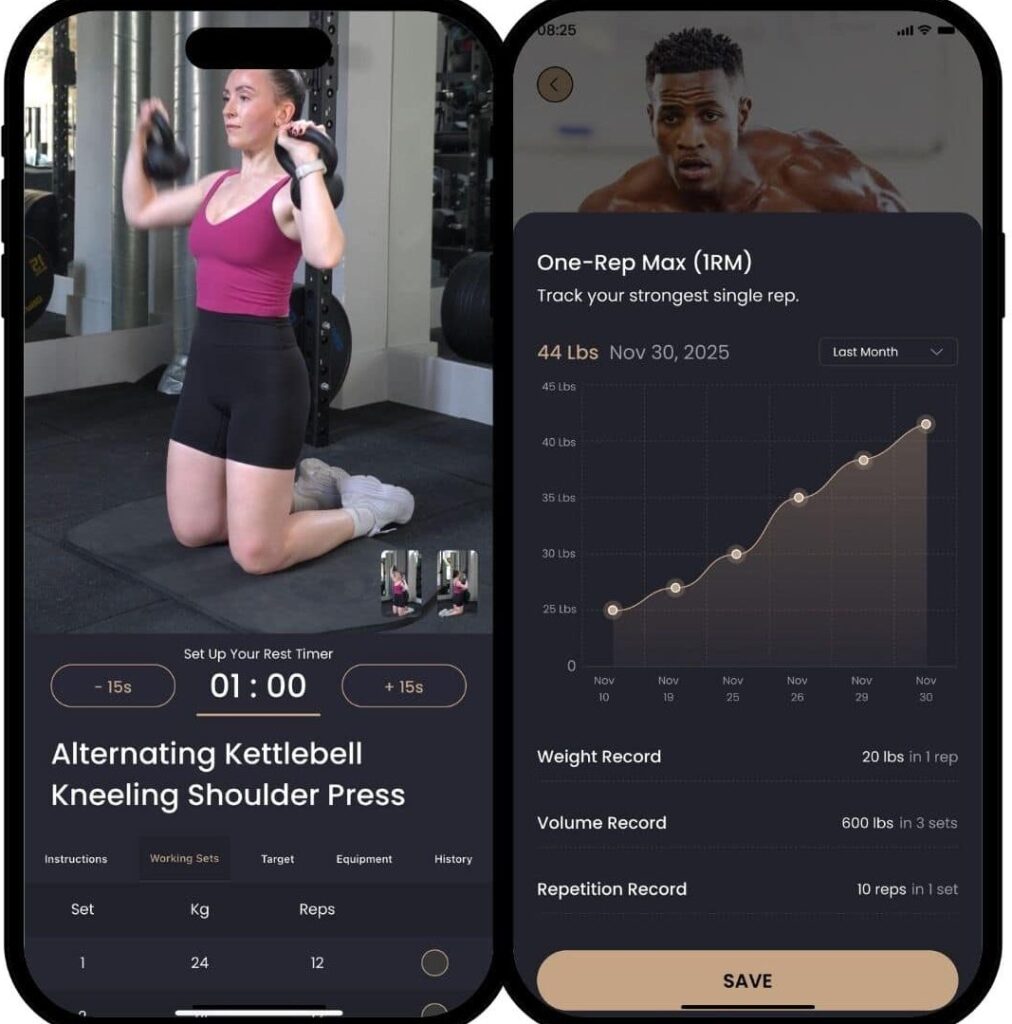
The 12REPS app provides:
- Workout logging that shows your previous performance before each set
- Progress charts visualising your strength gains over time
- PR tracking, celebrating personal records
- 1RM estimates based on your training weights
- Video demonstrations for proper exercise technique
Seeing your numbers improve week over week provides motivation and confirms your programme is working.
Timeline: What to Expect
Realistic expectations prevent frustration.
Beginner (0-12 Months)
Strength gains: Rapid. You might add 2-5kg to major lifts weekly.
Why: Neural adaptations happen quickly. Your nervous system learns to use existing muscle.
Example: Squat from 40kg to 100kg in the first year is common for dedicated male beginners.
Intermediate (1-3 Years)
Strength gains: Moderate. Monthly progression becomes the norm.
Why: Neural adaptations slow. Progress now requires actual tissue changes.
Example: Adding 20-30kg to your squat in a year is solid intermediate progress.
Advanced (3+ Years)
Strength gains: Slow. Annual progress is measured in small increments.
Why: You are approaching your genetic potential. Every gain requires significant effort.
Example: Adding 5-10kg to your squat in a year represents excellent advanced progress.
From my training experience: Managing expectations is crucial. Beginners get spoiled by early rapid gains. When progress slows, they think something is wrong. Nothing is wrong. This is how strength development works for everyone.
Real Client Transformations
These are actual results from clients I have trained.
James, 34, Office Worker
Starting point: Could not squat the empty barbell properly. Had never done structured strength training.
After 18 months: Squatted 120kg, deadlifted 140kg, benched 85kg. Lost 8kg of fat while gaining significant muscle.
Key insight: James never missed more than a week of training in 18 months. Consistency was his superpower.
Sarah, 28, Former Runner
Starting point: “Cardio body” with minimal strength. Could do 3 push ups.
After 12 months: Squatted 70kg, deadlifted 90kg, benched 45kg, performed 8 strict pull ups.
Key insight: Sarah was initially afraid of getting bulky. She got lean and strong instead. Now she encourages other women to lift.
David, 52, Late Starter
Starting point: Never lifted weights. Thought he was too old to start.
After 24 months: Squatted 100kg, deadlifted 120kg. Stronger at 54 than he had ever been.
Key insight: David proved that starting late is better than never starting. Age is not the barrier people think it is.

Getting Started
You now know how to get stronger. The only question is whether you will do it.
Step 1: Choose Your Programme
Use the programme in this guide or download the 12REPS app for trainer-designed strength programmes.
Step 2: Learn the Movements
Master squat, deadlift, bench press, overhead press, and row technique before adding heavy weight. The 12REPS app includes video demonstrations for every exercise.
Step 3: Start Conservatively
Use weights that feel moderate for your first few weeks. Build the habit and dial in technique before pushing intensity.
Step 4: Track Everything
Log every workout. Know what you lifted and aim to beat it.
Step 5: Be Patient and Consistent
Show up week after week. Progress will come. Trust the process.
Step 6: Adjust as Needed
If progress stalls, evaluate recovery first. Then consider programme modifications.
The Bottom Line
Getting stronger is simple but not easy.
Lift heavy compound exercises. Add weight progressively over time. Eat enough protein. Sleep enough. Be consistent for months and years.
That is it. No secrets. No shortcuts. Just principles that have worked for every strong person throughout history.
The clients who get strongest in my gym are not the most talented. They are the most consistent. They follow proven principles, track their progress, trust the process, and show up week after week.
You can be one of them.
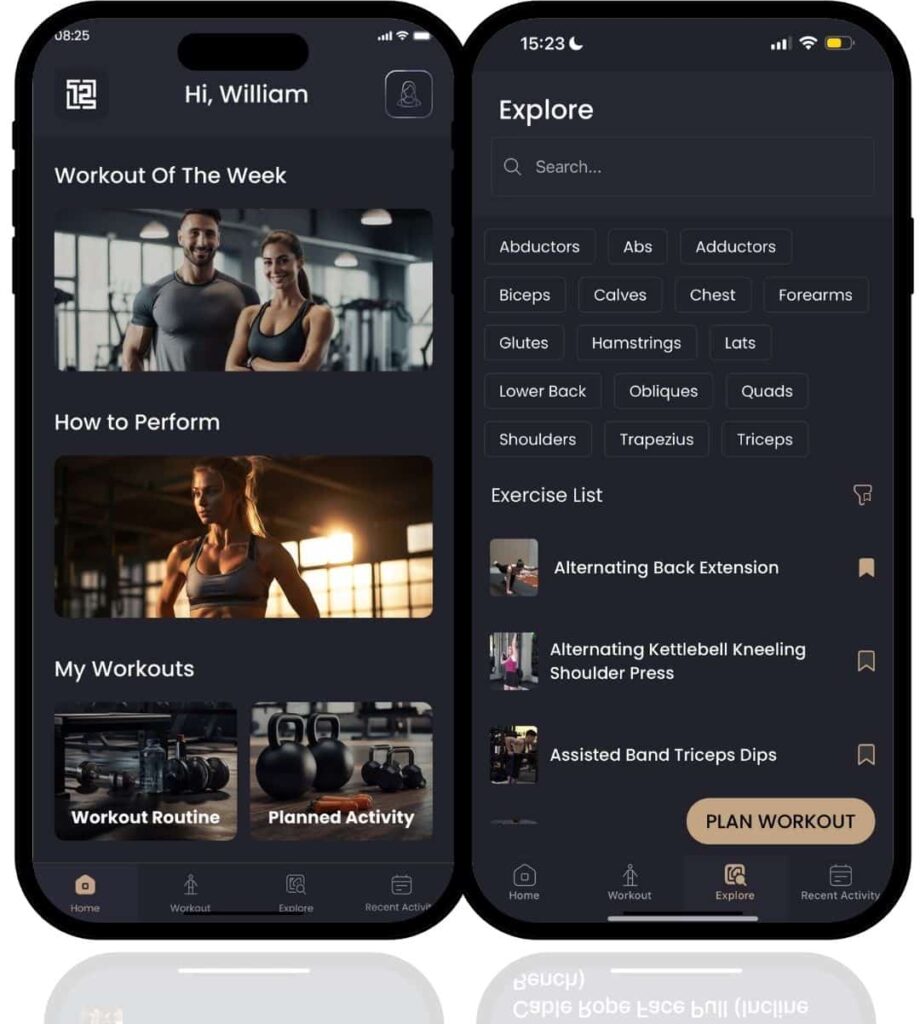
Download the 12REPS app and start your strength journey with professional programming, progress tracking, and video demonstrations for every exercise.
Frequently Asked Questions
How long does it take to get stronger?
You will notice strength improvements within 4-6 weeks. Significant strength (doubling your lifts) takes 1-2 years of consistent training.
Can I get stronger without getting bigger?
Yes, especially initially. Neural adaptations increase strength without much muscle growth. Long-term, some muscle growth is necessary for continued strength gains.
How many days per week should I train for strength?
Three to four days works well for most people. This provides enough frequency and volume while allowing adequate recovery.
Should I do cardio if I want to get stronger?
Light cardio is fine and supports overall health. Excessive cardio can interfere with strength gains by compromising recovery.
What if I cannot do a proper squat or deadlift?
Work on mobility and start with easier variations. Goblet squats, trap bar deadlifts, and elevated deadlifts are good starting points.
How important is sleep for strength?
Extremely important. Poor sleep directly impairs strength performance and recovery. Prioritise 7-9 hours nightly.
References
- Schoenfeld, B.J. et al. (2017). Strength and Hypertrophy Adaptations Between Low- vs. High-Load Resistance Training. Journal of Strength and Conditioning Research. https://pubmed.ncbi.nlm.nih.gov/28834797/
- Grgic, J. et al. (2018). Effect of Resistance Training Frequency on Gains in Muscular Strength. Sports Medicine. https://pubmed.ncbi.nlm.nih.gov/29470825/
- Morton, R.W. et al. (2018). A systematic review, meta-analysis and meta-regression of the effect of protein supplementation on resistance training-induced gains in muscle mass and strength. British Journal of Sports Medicine. https://pubmed.ncbi.nlm.nih.gov/28698222/
- Ralston, G.W. et al. (2017). The Effect of Weekly Set Volume on Strength Gain. Sports Medicine. https://pubmed.ncbi.nlm.nih.gov/28755103/
Related Articles on just12reps.com
Article | Description | Link |
The Science of Progressive Overload | Deep dive into the principle that drives strength. | |
Complete Beginner’s Guide to Strength Training | Start your journey with proper fundamentals. | |
Strength Training vs Hypertrophy | Understanding different training approaches. | |
Best Workout Split for Natural Lifters | Optimising training for natural athletes. | |
3 Day vs 5 Day Workout Split | Choosing the right training frequency. |
About the Author: Will Duru holds a BSc (Hons) in Sport and Exercise Science and is an award-winning personal trainer with over 10 years of experience helping clients build real strength. From beginners who could not squat the bar to experienced lifters breaking through plateaus, Will has guided hundreds of people to become the strongest versions of themselves. He created the 12REPS app to make professional strength programming accessible to everyone.