




By Will Duru, BSc (Hons) Sport and Exercise Science, Award-winning Personal Trainer with over 10 years of experience in strength training
Three days or five days. It is one of the most common questions I get from clients.
Some believe more is always better. Train five days, get five days of results. Others think three hard sessions beat five mediocre ones.
The truth? Both can work brilliantly. Both can fail completely. The right choice depends on your goals, your schedule, your recovery capacity, and your training experience.
After a decade of training clients with every schedule imaginable, I have seen people transform their bodies on three days per week. I have also seen people spin their wheels training five days because they chose the wrong approach.
This guide compares three day and five day splits honestly. I will show you exactly what each looks like, explain who should use which, and help you make the right decision for your situation.
The Core Difference
Before diving into details, understand the fundamental difference.
3 day splits typically use full body or upper/lower structures. You train more muscle groups per session but have fewer total sessions.
5 day splits typically use body part splits or push/pull/legs structures. You train fewer muscle groups per session but have more total sessions.
Both can hit each muscle with similar weekly frequency and volume. They just distribute the work differently.

3 Day Workout Splits
How They Work
Three day splits condense your training into fewer, more comprehensive sessions. Each workout trains multiple muscle groups, often your entire body or half of it.
Common 3 day structures:
- Full body (train everything each session)
- Upper/lower/full body
- Push/pull/legs (once each)
Sample 3 Day Full Body Split
Day | Session | Focus |
Monday | Full Body A | Squat pattern, horizontal push, horizontal pull |
Wednesday | Full Body B | Hinge pattern, vertical push, vertical pull |
Friday | Full Body C | Single leg, chest focus, back focus |
Full Body A:
Exercise | Sets | Reps | Rest |
Barbell Back Squat | 4 | 8, 6, 6, 6 | 3 minutes |
Barbell Bench Press | 4 | 8, 6, 6, 6 | 3 minutes |
Barbell Row | 4 | 8, 8, 6, 6 | 2 minutes |
Romanian Deadlift | 3 | 10, 8, 8 | 2 minutes |
Dumbbell Shoulder Press | 3 | 10, 8, 8 | 90 seconds |
Face Pull | 3 | 15, 12, 12 | 60 seconds |
Full Body B:
Exercise | Sets | Reps | Rest |
Trap Bar Deadlift | 4 | 6, 6, 5, 5 | 3 minutes |
Overhead Press | 4 | 8, 6, 6, 6 | 2 minutes |
Weighted Pull Up or Lat Pulldown | 4 | 8, 8, 6, 6 | 2 minutes |
Leg Press | 3 | 12, 10, 10 | 2 minutes |
Incline Dumbbell Press | 3 | 10, 10, 8 | 90 seconds |
Barbell Curl | 2 | 12, 10 | 60 seconds |
Full Body C:
Exercise | Sets | Reps | Rest |
Bulgarian Split Squat | 3 | 10 each leg | 90 seconds |
Dumbbell Bench Press | 4 | 10, 10, 8, 8 | 2 minutes |
Cable Row | 4 | 10, 10, 8, 8 | 2 minutes |
Hip Thrust | 3 | 12, 10, 10 | 90 seconds |
Lateral Raise | 3 | 15, 12, 12 | 60 seconds |
Tricep Pushdown | 2 | 12, 12 | 60 seconds |

Advantages of 3 Day Splits
More recovery time. Four days off per week allows substantial recovery. This matters for natural lifters, older trainees, and those with demanding jobs or stress.
Higher frequency per muscle. Full body training hits each muscle three times per week. Research shows higher frequency can produce better results, especially for beginners and intermediates.
Time efficient overall. Three sessions of 60 to 75 minutes totals 3 to 4 hours weekly. This fits easily into busy schedules.
Flexibility. Miss a session? You still trained twice that week. With five day splits, missing two sessions creates significant gaps.
Hormonal optimisation. Full body sessions create larger hormonal responses than isolation work. More muscle mass trained equals greater testosterone and growth hormone release.
Better for beginners. New lifters benefit from practising movements frequently. Squatting three times per week builds technique faster than once per week.
Easier consistency. Fewer sessions means fewer opportunities to skip. The psychological barrier of “I only need to train three times” is lower than five.
Disadvantages of 3 Day Splits
Longer individual sessions. Training everything in one session takes time. Sessions often run 60 to 90 minutes.
Accumulated fatigue. By exercise five or six, you are tired. The final exercises may suffer compared to a fresh session.
Less specialisation. If you want to prioritise one body part, three days limits how much extra volume you can add.
Can feel rushed. Some people dislike cramming everything into fewer sessions. They prefer the focused feeling of body part training.
Who Should Use 3 Day Splits
- Beginners (first 6 to 12 months of training)
- People with busy schedules
- Those over 40 who need more recovery
- Natural lifters who recover slower
- Anyone prioritising consistency over optimisation
- People returning after a layoff
5 Day Workout Splits
How They Work
Five day splits spread training across more sessions, each focusing on fewer muscle groups. This allows more volume per body part while keeping individual sessions manageable.
Common 5 day structures:
- Push/pull/legs/upper/lower
- Chest/back/shoulders/legs/arms
- Push/pull/legs/push/pull (repeat)
Sample 5 Day Push/Pull/Legs/Upper/Lower Split
Day | Session | Focus |
Monday | Push | Chest, shoulders, triceps |
Tuesday | Pull | Back, biceps, rear delts |
Wednesday | Legs | Quads, hamstrings, glutes, calves |
Thursday | Rest | Recovery |
Friday | Upper | Chest, back, shoulders, arms |
Saturday | Lower | Legs and core |
Sunday | Rest | Recovery |
Day 1: Push
Exercise | Sets | Reps | Rest |
Barbell Bench Press | 4 | 8, 6, 6, 6 | 3 minutes |
Incline Dumbbell Press | 3 | 10, 10, 8 | 2 minutes |
Seated Dumbbell Shoulder Press | 3 | 10, 8, 8 | 2 minutes |
Cable Fly | 3 | 12, 12, 10 | 60 seconds |
Lateral Raise | 3 | 15, 12, 12 | 60 seconds |
Tricep Pushdown | 3 | 12, 10, 10 | 60 seconds |
Overhead Tricep Extension | 2 | 12, 12 | 60 seconds |
Day 2: Pull
Exercise | Sets | Reps | Rest |
Barbell Row | 4 | 8, 8, 6, 6 | 2 minutes |
Lat Pulldown | 3 | 10, 10, 8 | 2 minutes |
Seated Cable Row | 3 | 10, 10, 8 | 90 seconds |
Face Pull | 3 | 15, 12, 12 | 60 seconds |
Rear Delt Fly | 3 | 12, 12, 10 | 60 seconds |
Barbell Curl | 3 | 10, 10, 8 | 60 seconds |
Hammer Curl | 2 | 12, 12 | 60 seconds |
Day 3: Legs
Exercise | Sets | Reps | Rest |
Barbell Back Squat | 4 | 8, 6, 6, 6 | 3 minutes |
Romanian Deadlift | 4 | 10, 8, 8, 8 | 2 minutes |
Leg Press | 3 | 12, 10, 10 | 2 minutes |
Leg Curl | 3 | 12, 12, 10 | 60 seconds |
Walking Lunge | 3 | 10 each leg | 90 seconds |
Standing Calf Raise | 4 | 15, 12, 12, 10 | 60 seconds |
Day 5: Upper
Exercise | Sets | Reps | Rest |
Incline Barbell Press | 4 | 8, 8, 6, 6 | 2 minutes |
Weighted Pull Up or Lat Pulldown | 4 | 8, 8, 6, 6 | 2 minutes |
Dumbbell Shoulder Press | 3 | 10, 8, 8 | 90 seconds |
Cable Row | 3 | 10, 10, 8 | 90 seconds |
Dumbbell Curl | 2 | 12, 10 | 60 seconds |
Skull Crusher | 2 | 12, 10 | 60 seconds |
Day 6: Lower
Exercise | Sets | Reps | Rest |
Trap Bar Deadlift | 4 | 6, 6, 5, 5 | 3 minutes |
Bulgarian Split Squat | 3 | 10 each leg | 90 seconds |
Hip Thrust | 4 | 12, 10, 10, 8 | 90 seconds |
Leg Extension | 3 | 15, 12, 12 | 60 seconds |
Seated Leg Curl | 3 | 12, 12, 10 | 60 seconds |
Hanging Leg Raise | 3 | 12, 12, 10 | 60 seconds |
Advantages of 5 Day Splits
More volume per muscle. Dedicated sessions allow higher volume for each body part. If you need 20 sets per week for chest, it is easier to fit into two focused sessions than three full-body days.
Shorter individual sessions. Training one or two muscle groups means sessions can be 45 to 60 minutes. Easier to fit into a lunch break or busy schedule day by day.
Better recovery between muscle groups. Your chest fully recovers while you train legs. By the time you train chest again, it is completely fresh.
More exercise variety. More sessions means room for more exercises. You can include isolation work and variations that do not fit into condensed sessions.
Psychological satisfaction. Some people love the pump from dedicated body part training. The focused destruction of one muscle group feels more satisfying than spreading work around.
Better for advanced lifters. Those who have been training for years often need more volume to continue progressing. Five days accommodates this better.
Allows specialisation. Want to bring up lagging shoulders? Add extra shoulder work across multiple sessions. Easier than cramming it into three full-body days.
Disadvantages of 5 Day Splits
Less flexibility. Miss two sessions and you have trained three times that week. Miss two sessions on a three day split and you still trained once, maintaining the habit.
More time commitment. Five hours per week in the gym versus three to four. For busy people, this matters.
Lower frequency per muscle. Many five day splits hit each muscle once or twice weekly. Research suggests this may be suboptimal for some people.
Requires more discipline. Five gym visits weekly demands consistent scheduling. Life interruptions derail five day splits more easily.
Recovery demands. Training five days leaves only two rest days. For natural lifters, older trainees, or those with high stress, this may not be enough.
Overtraining risk. More sessions creates more opportunity to exceed your recovery capacity. Many five day lifters train too much and wonder why they plateau.
Who Should Use 5 Day Splits
- Intermediate to advanced lifters (2+ years experience)
- People with consistent schedules
- Those who recover well from training
- Anyone with specific body parts to prioritise
- People who prefer shorter daily sessions
- Competitive bodybuilders or physique athletes
Direct Comparison
| Factor | 3 Day Split | 5 Day Split |
|---|---|---|
| Sessions per week | 3 | 5 |
| Session length | 60 to 90 minutes | 45 to 60 minutes |
| Weekly time | 3 to 4.5 hours | 4 to 5 hours |
| Muscle frequency | 2 to 3x per week | 1 to 2x per week |
| Recovery days | 4 | 2 |
| Flexibility | Higher | Lower |
| Volume per session | Higher | Lower |
| Volume per muscle | Moderate | Higher potential |
| Best for beginners | Yes | Not ideal |
| Best for advanced | Good | Better |
| Consistency | Easier | Harder |
| Specialisation | Limited | Better |
What the Research Says
Studies on training frequency show interesting patterns.
A 2016 meta-analysis found that training muscles twice per week produced greater hypertrophy than once per week. This favours three day full body splits over traditional five day body part splits that hit each muscle once.
However, the same research found no significant difference between twice and three times weekly training. This means a well-designed five day split with twice weekly frequency (like push/pull/legs/upper/lower) can match full body training.
The key insight: frequency matters more than total days. A three day full body split and a five day upper/lower or push/pull/legs split can produce similar results if they achieve similar frequency and volume.
What differs is the practical application. Three days is easier to sustain. Five days allows more specialisation.
My Honest Recommendation
After training hundreds of clients, here is my genuine advice.
Start with 3 Days
If you are:
- New to training (under 2 years)
- Returning after a long break
- Uncertain if you can commit to more
- Over 40 or recovering slowly
- Very busy with work or family
Three days builds the foundation. It establishes consistency. It teaches your body to adapt to training stress. It produces excellent results without excessive time commitment.
Most of my clients start with three day programmes. Many stay there permanently because it works and fits their lives.
Progress to 5 Days If
After 1 to 2 years of consistent three day training:
- You want more and can handle more
- You have specific body parts to develop
- Your schedule allows five consistent sessions
- You recover well and want additional volume
- You genuinely enjoy training and want more time in the gym
Do not progress to five days because you think you should. Progress because you want to and can sustain it.
The Hybrid Approach
Many of my most successful clients use a flexible approach.
Normal weeks: Three day full body High motivation weeks: Four or five days with added sessions Busy or stressful weeks: Two or three days
The 12REPS app supports this flexibility. You can set your programme for three days and add sessions when time allows. The app tracks everything regardless of how many days you train.
How to Decide
Ask yourself these questions:
1. How many days can I realistically train every week for the next year?
Not your ideal. Your realistic minimum. If the answer is three, use a three-day split. Setting up a five-day split you cannot sustain is worse than a three-day split you follow perfectly.
2. How long have I been training consistently?
Under two years? Three days. Over two years with stalled progress? Consider five days.
3. How do I recover?
If you feel beaten up, sore, and tired between sessions, you need more recovery. Three days provides this.
4. Do I have specific weak points to address?
If your chest is lagging and you need extra chest volume, five days accommodate this better.
5. What do I actually enjoy?
If you love the gym and want to be there more, five days feeds that desire. If training is a means to an end, three days gets you results efficiently.
Tracking Either Approach
Regardless of which split you choose, track everything.
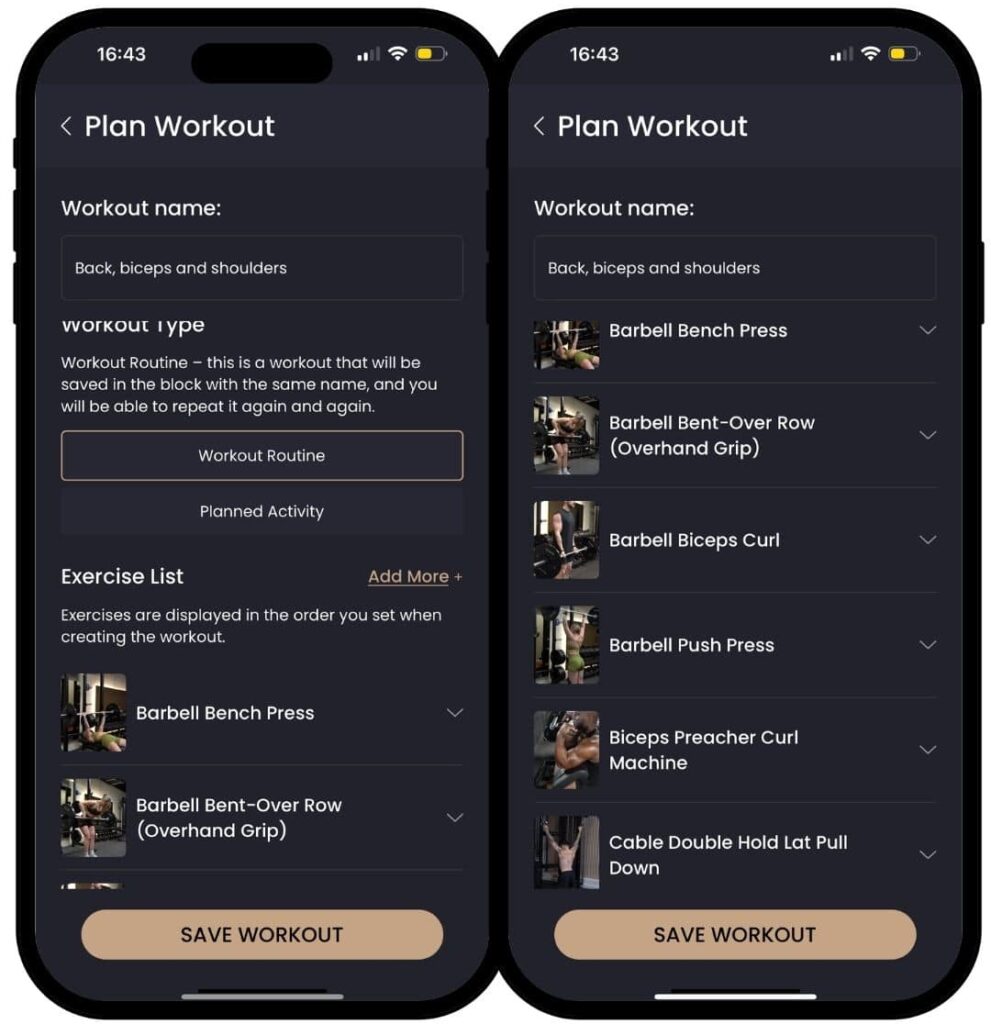
The 12REPS app provides programmes for both three and five day structures. You see your previous weights, track your progress, and ensure progressive overload happens.
Without tracking, you cannot know if your split is working. The app removes guesswork and shows you exactly what is happening with your training.
The Bottom Line
Three day splits are underrated. They work brilliantly for most people, especially beginners and busy adults.
Five day splits have their place. For advanced lifters with time and recovery capacity, they allow more volume and specialisation.
Neither is objectively better. The best split is the one you follow consistently for months and years.
Choose based on your reality, not your ideal. Start conservative. Add more only when you genuinely want and can sustain it.
Download the 12REPS app and start with a programme matched to your available training days. The app adapts to your schedule and ensures every session counts.
Frequently Asked Questions
Can I build muscle training only 3 days per week?
Absolutely. Research shows three well-structured sessions produce excellent muscle and strength gains. Many natural lifters achieve impressive physiques on three days.
Is 5 days per week too much?
It depends on the individual. For those who recover well, five days works fine. For others, especially natural lifters over 40, it may exceed recovery capacity.
Should beginners use 5 day splits?
Generally no. Beginners benefit from higher frequency full body training. Three days teaches movements better and allows adequate recovery while the body adapts.
What if I can only train 2 days per week?
Two days can work with full body training. Progress will be slower but still significant. The 12REPS app includes two day programme options.
Can I mix 3 and 5 day approaches?
Yes. Many people train three days most weeks and add sessions when time allows. Flexibility beats rigid adherence to a specific number.
Which split burns more fat?
Neither inherently burns more fat. Fat loss comes from nutrition. Both splits support fat loss equally when combined with appropriate calorie deficit.
References
- Schoenfeld, B.J. et al. (2016). Effects of Resistance Training Frequency on Measures of Muscle Hypertrophy. Sports Medicine. https://pubmed.ncbi.nlm.nih.gov/27102172/
- Grgic, J. et al. (2018). Effect of Resistance Training Frequency on Gains in Muscular Strength. Sports Medicine. https://pubmed.ncbi.nlm.nih.gov/29470825/
- Ralston, G.W. et al. (2017). The Effect of Weekly Set Volume on Strength Gain. Sports Medicine. https://pubmed.ncbi.nlm.nih.gov/28755103/
- Schoenfeld, B.J. et al. (2017). Dose-response relationship between weekly resistance training volume and increases in muscle mass. International Journal of Sports Nutrition and Exercise Metabolism. https://pubmed.ncbi.nlm.nih.gov/28834797/
Related Articles on just12reps.com
Article | Description | Link |
Best Workout Split for Natural Lifters | 4 day programme for natural lifters. | |
3 Day Strength Training Split for Men | Complete 3 day programme. | |
Complete Beginner’s Guide to Strength Training | Start your journey with proper fundamentals. | |
Strength Training vs Hypertrophy | Understanding different training approaches. | |
The Science of Progressive Overload | Understand the principle that drives all progress. |
About the Author: Will Duru holds a BSc (Hons) in Sport and Exercise Science and is an award winning personal trainer with over 10 years of experience. He has trained clients using every split imaginable and believes the best programme is the one you actually follow. Will created the 12REPS app to provide structured programmes for any training frequency.